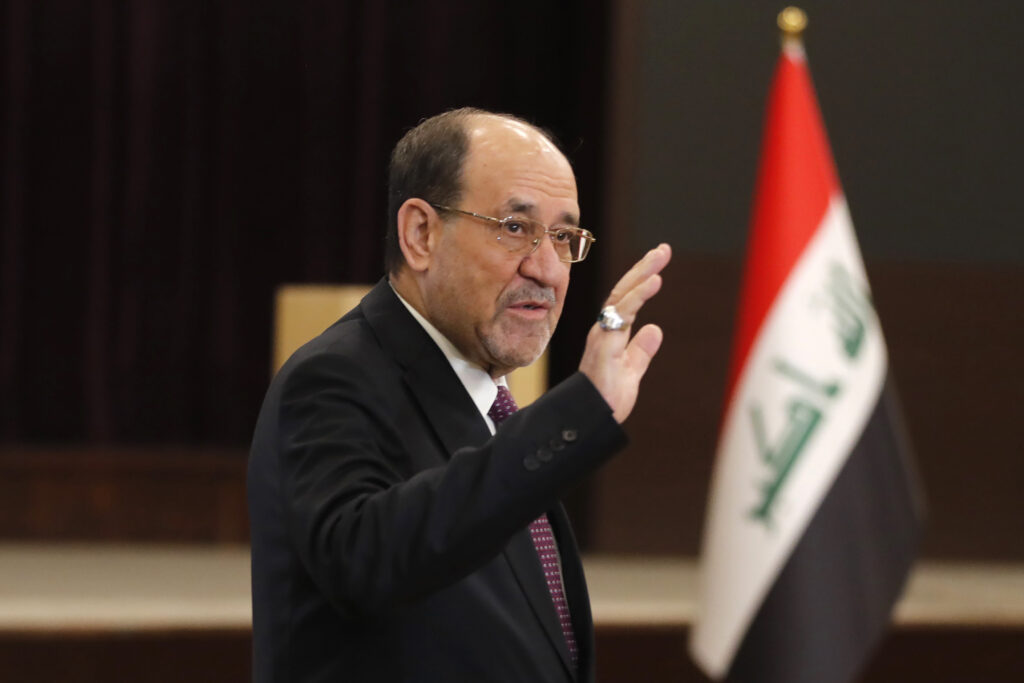
Iraq’s main candidate for the premiership Nouri al-Maliki on Wednesday denounced Washington’s “blatant interference”, after President Donald Trump threatened to end all support to the country if Maliki took the post.The US has held significant sway over Iraqi politics since leading the 2003 invasion that ousted long-time ruler Saddam Hussein.”We categorically reject the blatant American interference in Iraq’s internal affairs,” said Maliki, the only former Iraqi prime minister to have served two terms since the invasion.”We consider it a violation” of Iraq’s “democratic system”, in place since 2003, he added on X.In response to Trump’s threat, several hundred people protested in the evening near the US embassy in Baghdad, chanting “Yes for Maliki”, while some burned a poster bearing the image of Trump and an American flag, an AFP journalist said.Maliki fell out with Washington during his premiership (2006-2014) over growing ties with Iran and accusations that he pushed a sectarian agenda. But the 75-year-old shrewd politician has remained a central figure in Iraq’s politics and a powerbroker whose approval is considered indispensable to any governing coalition.On Tuesday, Trump said that Iraq would make a “very bad choice” if Maliki were selected for the top post.He warned that because of Maliki’s “insane policies and ideologies, if elected, the United States of America will no longer help Iraq”. Maliki was endorsed as Iraq’s next prime minister by the Coordination Framework, an alliance of Shiite groups with varying links to Iran that has emerged in recent years as the main ruling coalition.- ‘Until the end’ -Since the invasion, Iraq has long been a proxy battleground between the US and Iran, with successive governments negotiating a delicate balance between the two foes.But Iraq’s new prime minister is set to return to power at a time of seismic changes in the Middle East, as Tehran’s regional influence wanes and as Washington threatens possible military intervention in Iran.In his post on Wednesday, Maliki said the US involvement “infringes upon the Coordination Framework’s decision to nominate” its candidate. He added that, in line with that decision, he “will continue to work until the end, in a way that achieves the higher interests of the Iraqi people”.Several Iraqi political sources told AFP that the coalition is set to meet soon to discuss Trump’s ultimatum.It is “a complicated situation”, said a source close to the Framework, adding that there had been internal divisions within the coalition over supporting Maliki, but that a majority vote ultimately settled the issue.Maliki’s backers are now pushing to maintain his candidacy and “not back down”, he added.Trump’s statement came days after Secretary of State Marco Rubio voiced similar concerns in a telephone call with outgoing Prime Minister Mohammed Shia al-Sudani.Sudani’s parliamentary bloc said on Wednesday that choosing a prime minister is an “Iraqi affair”, while stressing the need “for positive, balanced relations with friendly and allied countries, especially the United States, based on mutual respect”.The US had also sent a letter to Iraqi politicians saying that Washington views Maliki negatively, political sources told AFP.Iraq’s new premier will be expected to address Washington’s longstanding demand that Baghdad disarm Tehran-backed factions, many of which are designated terrorist groups by the United States.- ‘Precarious moment’ -Two US-sanctioned armed groups that are part of the Coordination Framework on Wednesday slammed Trump’s meddling in Iraq’s affairs.”We reject all attempts to interfere in our country’s internal affairs or influence the peaceful transfer of power, and we refuse any external dictates,” said the Asaib Ahl al-Haq faction, while Kataeb Sayyid al-Shuhada also expressed its rejection of Trump’s remarks.Last month, Iraqi officials and diplomats told AFP that Washington demanded that the incoming government exclude Iran-backed armed groups.Before Trump’s call, an Iraqi political source said that the Coordination Framework was set on moving forward with the nomination, believing that Maliki could eventually allay Washington’s concerns.Maliki “thinks differently today”, an Iraqi politician told AFP.After decades of conflicts and chaos, Iraq has recently regained a sense of stability.But it is struggling with weak economic growth and cannot risk punitive measures by the US, which has already sanctioned several Iraqi entities, accusing them of helping Tehran evade sanctions.Political scientist Renad Mansour warned that the US might use its leverage over Iraq. “Sanctions, access to US dollars… and of course, the military threat is there,” he said, referring to strikes against pro-Iran groups.”Iraq is now in a very precarious moment… and there’s a lot of concerns over the relatively newfound stability.”
Iraq’s main candidate for the premiership Nouri al-Maliki on Wednesday denounced Washington’s “blatant interference”, after President Donald Trump threatened to end all support to the country if Maliki took the post.The US has held significant sway over Iraqi politics since leading the 2003 invasion that ousted long-time ruler Saddam Hussein.”We categorically reject the blatant American interference in Iraq’s internal affairs,” said Maliki, the only former Iraqi prime minister to have served two terms since the invasion.”We consider it a violation” of Iraq’s “democratic system”, in place since 2003, he added on X.In response to Trump’s threat, several hundred people protested in the evening near the US embassy in Baghdad, chanting “Yes for Maliki”, while some burned a poster bearing the image of Trump and an American flag, an AFP journalist said.Maliki fell out with Washington during his premiership (2006-2014) over growing ties with Iran and accusations that he pushed a sectarian agenda. But the 75-year-old shrewd politician has remained a central figure in Iraq’s politics and a powerbroker whose approval is considered indispensable to any governing coalition.On Tuesday, Trump said that Iraq would make a “very bad choice” if Maliki were selected for the top post.He warned that because of Maliki’s “insane policies and ideologies, if elected, the United States of America will no longer help Iraq”. Maliki was endorsed as Iraq’s next prime minister by the Coordination Framework, an alliance of Shiite groups with varying links to Iran that has emerged in recent years as the main ruling coalition.- ‘Until the end’ -Since the invasion, Iraq has long been a proxy battleground between the US and Iran, with successive governments negotiating a delicate balance between the two foes.But Iraq’s new prime minister is set to return to power at a time of seismic changes in the Middle East, as Tehran’s regional influence wanes and as Washington threatens possible military intervention in Iran.In his post on Wednesday, Maliki said the US involvement “infringes upon the Coordination Framework’s decision to nominate” its candidate. He added that, in line with that decision, he “will continue to work until the end, in a way that achieves the higher interests of the Iraqi people”.Several Iraqi political sources told AFP that the coalition is set to meet soon to discuss Trump’s ultimatum.It is “a complicated situation”, said a source close to the Framework, adding that there had been internal divisions within the coalition over supporting Maliki, but that a majority vote ultimately settled the issue.Maliki’s backers are now pushing to maintain his candidacy and “not back down”, he added.Trump’s statement came days after Secretary of State Marco Rubio voiced similar concerns in a telephone call with outgoing Prime Minister Mohammed Shia al-Sudani.Sudani’s parliamentary bloc said on Wednesday that choosing a prime minister is an “Iraqi affair”, while stressing the need “for positive, balanced relations with friendly and allied countries, especially the United States, based on mutual respect”.The US had also sent a letter to Iraqi politicians saying that Washington views Maliki negatively, political sources told AFP.Iraq’s new premier will be expected to address Washington’s longstanding demand that Baghdad disarm Tehran-backed factions, many of which are designated terrorist groups by the United States.- ‘Precarious moment’ -Two US-sanctioned armed groups that are part of the Coordination Framework on Wednesday slammed Trump’s meddling in Iraq’s affairs.”We reject all attempts to interfere in our country’s internal affairs or influence the peaceful transfer of power, and we refuse any external dictates,” said the Asaib Ahl al-Haq faction, while Kataeb Sayyid al-Shuhada also expressed its rejection of Trump’s remarks.Last month, Iraqi officials and diplomats told AFP that Washington demanded that the incoming government exclude Iran-backed armed groups.Before Trump’s call, an Iraqi political source said that the Coordination Framework was set on moving forward with the nomination, believing that Maliki could eventually allay Washington’s concerns.Maliki “thinks differently today”, an Iraqi politician told AFP.After decades of conflicts and chaos, Iraq has recently regained a sense of stability.But it is struggling with weak economic growth and cannot risk punitive measures by the US, which has already sanctioned several Iraqi entities, accusing them of helping Tehran evade sanctions.Political scientist Renad Mansour warned that the US might use its leverage over Iraq. “Sanctions, access to US dollars… and of course, the military threat is there,” he said, referring to strikes against pro-Iran groups.”Iraq is now in a very precarious moment… and there’s a lot of concerns over the relatively newfound stability.”