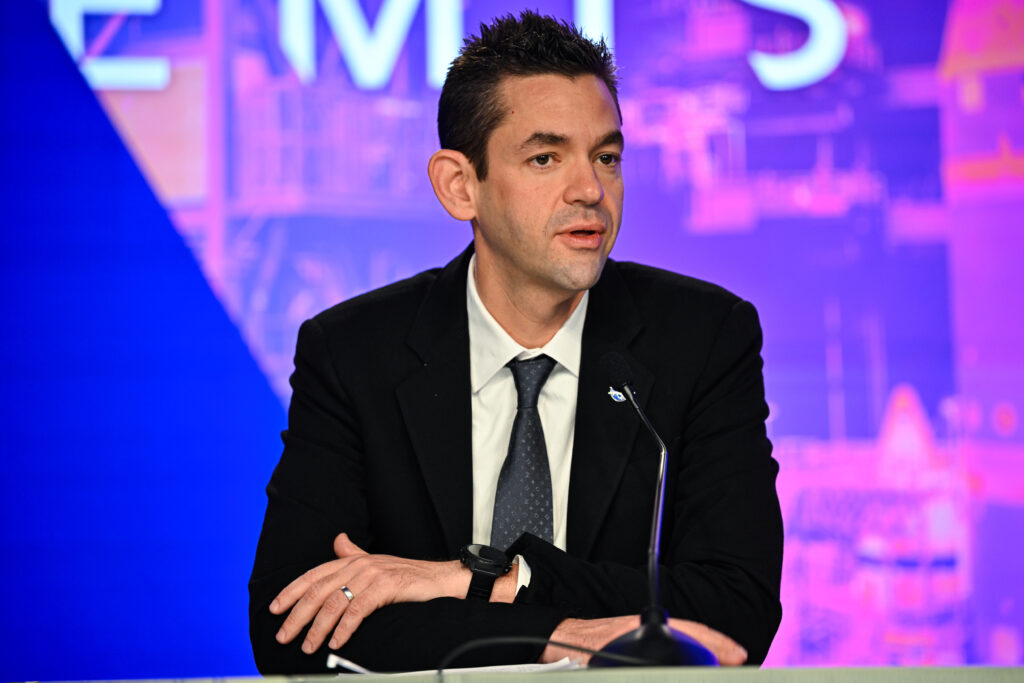
NASA on Friday abruptly said it was shaking up its Artemis lunar program that has suffered multiple delays in recent years, a bid to ensure Americans can return to the Moon’s surface by 2028.That goal remains unchanged, but the US space agency is shifting its flight lineup to include a test mission before an eventual lunar landing to improve launch “muscle memory,” NASA administrator Jared Isaacman said.That strategic revision comes amid repeated delays to the Artemis 2 mission, which was originally due to take off as early as February, but now will not launch before April. It is meant to see the first flyby of the Moon in more than half a century.Earlier this week that mission faced another setback when NASA rolled back its towering SLS rocket and Orion spacecraft off the launchpad to investigate problems and make necessary repairs.The announced changes mean that Artemis 3, which was meant to send astronauts to the Moon’s surface, will now have the different test goal of “rendezvous in low-Earth orbit” of at least one lunar lander.The next phase, Artemis 4, will aim for a lunar landing in early 2028. Isaacman said he hoped that mission could be followed relatively quickly by a second landing within the year.”We’re not necessarily committing to launching two missions in 2028,” he told a briefing, “but we want to have the opportunity to be able to do that.”- ‘Back to basics’ -The announcement comes two days after NASA’s independent Aerospace Safety Advisory Panel said in its annual report that the Artemis 3 Moon landing plan carried “significant risk” including for the number of “firsts” it was attempting.The NASA chief said Friday speeding up the cadence of Artemis launches would allow for building more institutional knowledge in the model of the Apollo program, which originally put Americans on the Moon.”Mercury, Gemini, Apollo, through the shuttle program — I don’t think it would surprise many of the folks in the room that our average launch cadence was closer to three months throughout all those programs, not three years,” he said. “We need to start getting back to basics and moving in this direction.””Launching every three years, your skills atrophy, you lose muscle memory.” Scott Pace, director of the Space Policy Insistute, told AFP at first glance it seemed Isaacman was “making some realistic and necessary decisions.”But Clayton Swope of the Center for Strategic and International Studies told AFP it left him with “a lot of question marks,” namely in terms of both the SLS rocket or the SpaceX landing system being ready according to NASA’s timeline.Still, with the revised architecture, “you will potentially be buying down some risk that we would have carried all the way to the Moon had we gone straight to the Moon with the original plan,” he said.- ‘Space race’? -During his first term President Donald Trump announced he wanted Americans to once again set foot on the lunar surface.NASA hopes to put humans back on the Moon as China forges ahead with its own effort, which is targeting 2030 at the latest for a first crewed mission.China’s uncrewed Chang’e 7 mission is expected to be launched in 2026 for an exploration of the Moon’s south pole, and testing of its crewed spacecraft Mengzhou is also set to go ahead this year.Queried on the so-called “space race,” Isaacman said Friday that “I think competition is good.” “We’re here talking to you about what is a common-sense approach to achieve the objective, whether we had a great rival in the running or not.”But delays to space travel are not uncommon — and could also stem from the progress of NASA’s private partners.SpaceX and Blue Origin, the respective space companies of dueling billionaires Elon Musk and Jeff Bezos, are contracted to develop lunar landers used in the Artemis program.Both companies posted praise of NASA’s plans on social media Friday.”We’re all in!” wrote Blue Origin on X, while SpaceX said it “shares the same goal as NASA of returning to the Moon with a permanent presence as expeditiously and safely as possible.””Frequent human exploration flights help establish a sustainable presence for humans in space,” SpaceX said.
NASA on Friday abruptly said it was shaking up its Artemis lunar program that has suffered multiple delays in recent years, a bid to ensure Americans can return to the Moon’s surface by 2028.That goal remains unchanged, but the US space agency is shifting its flight lineup to include a test mission before an eventual lunar landing to improve launch “muscle memory,” NASA administrator Jared Isaacman said.That strategic revision comes amid repeated delays to the Artemis 2 mission, which was originally due to take off as early as February, but now will not launch before April. It is meant to see the first flyby of the Moon in more than half a century.Earlier this week that mission faced another setback when NASA rolled back its towering SLS rocket and Orion spacecraft off the launchpad to investigate problems and make necessary repairs.The announced changes mean that Artemis 3, which was meant to send astronauts to the Moon’s surface, will now have the different test goal of “rendezvous in low-Earth orbit” of at least one lunar lander.The next phase, Artemis 4, will aim for a lunar landing in early 2028. Isaacman said he hoped that mission could be followed relatively quickly by a second landing within the year.”We’re not necessarily committing to launching two missions in 2028,” he told a briefing, “but we want to have the opportunity to be able to do that.”- ‘Back to basics’ -The announcement comes two days after NASA’s independent Aerospace Safety Advisory Panel said in its annual report that the Artemis 3 Moon landing plan carried “significant risk” including for the number of “firsts” it was attempting.The NASA chief said Friday speeding up the cadence of Artemis launches would allow for building more institutional knowledge in the model of the Apollo program, which originally put Americans on the Moon.”Mercury, Gemini, Apollo, through the shuttle program — I don’t think it would surprise many of the folks in the room that our average launch cadence was closer to three months throughout all those programs, not three years,” he said. “We need to start getting back to basics and moving in this direction.””Launching every three years, your skills atrophy, you lose muscle memory.” Scott Pace, director of the Space Policy Insistute, told AFP at first glance it seemed Isaacman was “making some realistic and necessary decisions.”But Clayton Swope of the Center for Strategic and International Studies told AFP it left him with “a lot of question marks,” namely in terms of both the SLS rocket or the SpaceX landing system being ready according to NASA’s timeline.Still, with the revised architecture, “you will potentially be buying down some risk that we would have carried all the way to the Moon had we gone straight to the Moon with the original plan,” he said.- ‘Space race’? -During his first term President Donald Trump announced he wanted Americans to once again set foot on the lunar surface.NASA hopes to put humans back on the Moon as China forges ahead with its own effort, which is targeting 2030 at the latest for a first crewed mission.China’s uncrewed Chang’e 7 mission is expected to be launched in 2026 for an exploration of the Moon’s south pole, and testing of its crewed spacecraft Mengzhou is also set to go ahead this year.Queried on the so-called “space race,” Isaacman said Friday that “I think competition is good.” “We’re here talking to you about what is a common-sense approach to achieve the objective, whether we had a great rival in the running or not.”But delays to space travel are not uncommon — and could also stem from the progress of NASA’s private partners.SpaceX and Blue Origin, the respective space companies of dueling billionaires Elon Musk and Jeff Bezos, are contracted to develop lunar landers used in the Artemis program.Both companies posted praise of NASA’s plans on social media Friday.”We’re all in!” wrote Blue Origin on X, while SpaceX said it “shares the same goal as NASA of returning to the Moon with a permanent presence as expeditiously and safely as possible.””Frequent human exploration flights help establish a sustainable presence for humans in space,” SpaceX said.