

Trump says US freeze on asylum decisions will last ‘a long time’
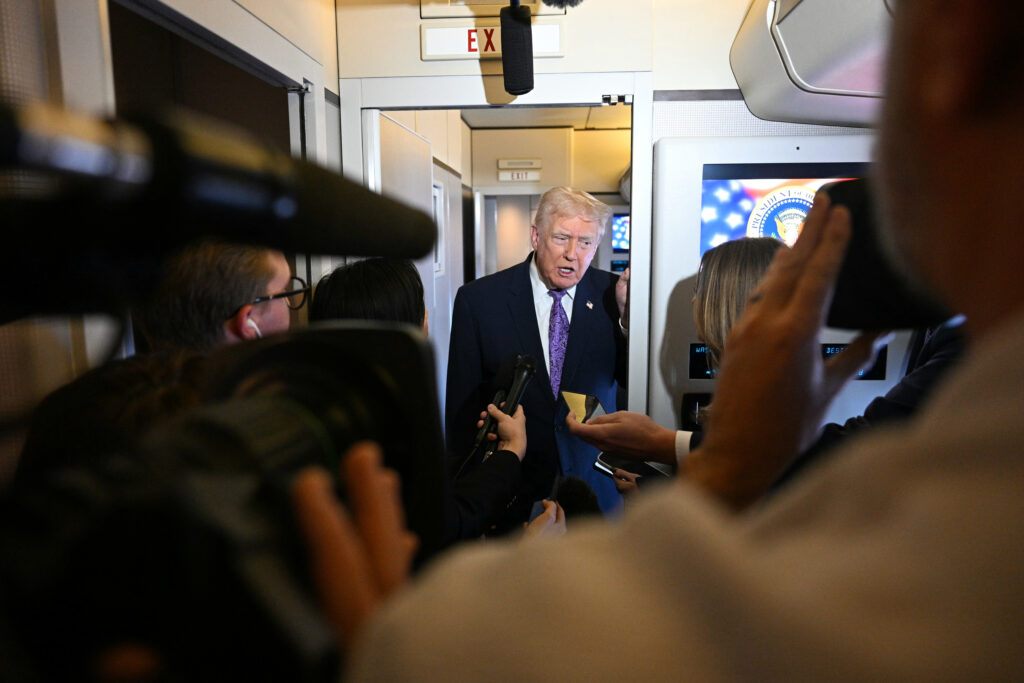
US President Donald Trump said Sunday his administration intends to maintain a pause on asylum decisions for “a long time” after an Afghan national allegedly shot two National Guard members near the White House, killing one of them. When asked to specify how long it would last, Trump said he had “no time limit” in mind for the measure, which the Department of Homeland Security says is linked to a list of 19 countries already facing US travel restrictions. “We don’t want those people,” Trump continued. “You know why we don’t want them? Because many have been no good, and they shouldn’t be in our country.” The Trump administration issued the pause in the aftermath of the shooting in Washington on November 26, that left 20-year-old Sarah Beckstrom dead and another guardsman critically wounded.A 29-year-old Afghan national, Rahmanullah Lakanwal, has been arrested and charged with first degree murder in connection with the incident. Lakanwal had been part of a CIA-backed “partner force” fighting the Taliban in Afghanistan, and entered the United States as part of a resettlement program following the American military withdrawal from Afghanistan in 2021.Lakanwal had been granted asylum in April 2025, under the Trump administration, but officials have blamed what they called lax vetting by the government of Trump’s predecessor Joe Biden for his admission to US soil during the Afghan airlift.Trump wrote after the shooting he planned to “permanently pause migration from all Third World Countries to allow the US system to fully recover.” Asked which nationalities would be affected, the Department of Homeland Security pointed AFP to a list of 19 countries — including Afghanistan, Cuba, Haiti, Iran and Myanmar — which since June have all faced travel restrictions to the United States.

Three minors among four dead in California party shooting: authorities
Four people including three children were killed and 11 more were wounded in a shooting at a birthday party in the US state of California late Saturday, authorities said, calling it a “targeted incident.”The shooting took place inside a banquet hall in Stockton, a city northeast of San Francisco, just before 6:00 pm (0200 GMT Sunday), San Joaquin County Sheriff’s Office spokesperson Heather Brent told reporters at a news briefing.The four slain victims were aged eight, nine, 14 and 21, Brent told AFP on Sunday. The 11 wounded victims were taken to hospital, Brent said, without giving more detailed information about their injuries. Between 100 and 150 people were attending the party at the time of the shooting, she said. “Early indications suggest that this may be a targeted incident,” Brent noted.When asked whether this could have been a gang-involved shooting, Brent said that investigators were looking into all possibilities.The sheriff’s office urged anyone with information or video footage to come forward.No suspect has been identified or arrested so far, Brent said, adding that the possibility of multiple shooters has not been ruled out.California Governor Gavin Newsom was briefed on the shooting, his office said on social media.There have been 504 mass shootings in the United States so far this year including the Stockton incident, according to the Gun Violence Archive — which defines a mass shooting as four or more people shot.burs-nr-rfo/iv/sst
Trump threat overshadows Honduras vote
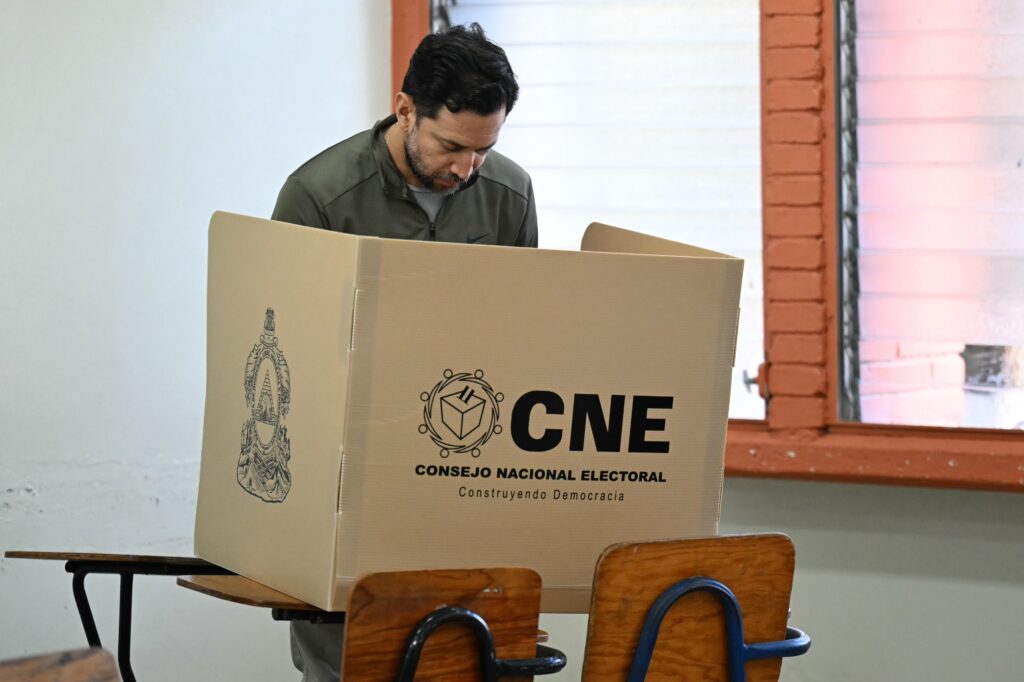
Polls closed Sunday in Honduras’ knife-edge presidential election, after a campaign dominated by US President Donald Trump’s threat to cut aid if a conservative candidate loses.Trump threw his weight behind 67-year-old Nasry “Tito” Asfura in the final days of the race, upending a contest that is too close to call in a country plagued by drug trafficking and gang activity.Asfura’s main challengers are 60-year-old lawyer Rixi Moncada from the ruling leftist Libre party and 72-year-old TV host Salvador Nasralla of the Liberal Party.Lawmakers and hundreds of mayors will also be elected in the fiercely polarized nation, which is also one of the most violent countries in Latin America.An Asfura victory would see Honduras become the latest country in Latin America — after Argentina and Bolivia — to swing right after years of leftist rule.”If he (Asfura) doesn’t win, the United States will not be throwing good money after bad,” Trump wrote Friday on his Truth Social platform, echoing threats he made in support of Argentine President Javier Milei’s party in that country’s recent midterms.Trump also made the shock announcement that he would pardon former Honduran president Juan Orlando Hernandez, of Asfura’s National Party, who is serving a 45-year prison sentence in the United States for cocaine trafficking and other charges.Some Hondurans have welcomed Trump’s interventionism, saying they hope it might mean Honduran migrants will be allowed to remain in the United States.But others have rejected his meddling in the vote.”I vote for whomever I please, not because of what Trump has said, because the truth is I live off my work, not off politicians,” Esmeralda Rodriguez, a 56-year-old fruit seller, told AFP.Nearly 30,000 Honduran migrants have been deported from the United States since Trump returned to office in January.The clampdown has dealt a severe blow to the country of 11 million people, where remittances represented 27 percent of GDP last year.After voting in the capital Tegucigalpa, Asfura denied that the planned pardon would benefit him, saying: “This issue has been circulating for months, and it has nothing to do with the elections.”- Fears of election fraud -Leftist Rixi Moncada — who represents outgoing President Xiomara Castro’s ruling Libre party — has portrayed the election as a choice between her and a “coup-plotting oligarchy.”That is a reference to the right’s backing of the 2009 military ouster of leftist Manuel Zelaya, Castro’s husband.Preemptive accusations of election fraud, made both by the ruling party and opposition, have sown mistrust in the vote and sparked fears of post-election unrest.The president of the National Electoral Council, Ana Paola Hall, warned all parties “not to fan the flames of confrontation or violence” at the start of the single-round election.Moncada, who has held ministerial portfolios under both Zelaya and Castro, said she will only acknowledge the final results, not preliminary counts.Nasralla also served in Castro’s government but fell out with the ruling party and has since shifted to the right. The 67-year-old Asfura was in the construction business before being elected mayor of Tegucigalpa, serving two terms.- ‘Escape poverty’ -Long a transit point for cocaine exported from Colombia to the United States, Honduras is now also a producer of the drug.But the candidates barely addressed the fears of Hondurans about drug trafficking, poverty and violence during the campaign. “I hope the new government will have good lines of communication with Trump, and that he will also support us,” said Maria Velasquez, who is 58.”I just want to escape poverty.”
Trump optimistic after Ukraine talks as Rubio says ‘more work’ needed
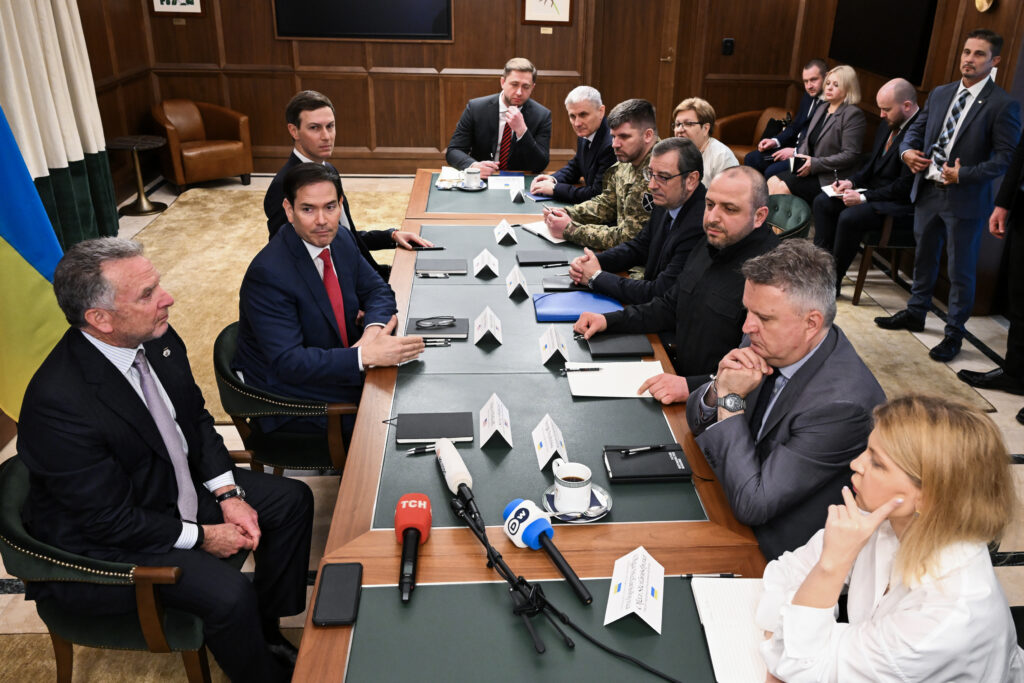
US President Donald Trump said Sunday there was a “good chance” of a deal to end the war in Ukraine after the latest US negotiations with Kyiv, as his envoy prepares to travel to Russia for follow-up talks.After hours of what both sides called “productive” discussions in Hallandale Beach, north of Miami, US Secretary of State Marco Rubio said that more work was required, and a source in Kyiv’s delegation characterized the discussions as “not easy.”The talks, which come as Kyiv battles military pressure and reels from a domestic corruption scandal, set the stage for a visit to Moscow by Trump’s envoy Steve Witkoff, who is expected to discuss Ukraine with Russian President Vladimir Putin on Tuesday.Washington has put forward a plan to end the nearly four-year conflict and is seeking to finalize it with Moscow and Kyiv’s approval.”Ukraine’s got some difficult little problems,” Trump told reporters aboard Air Force One, referring to a corruption probe that recently forced Ukrainian President Volodymyr Zelensky to sack his chief of staff and top negotiator.”But I think that there’s a good chance we can make a deal.”Rubio earlier told reporters the Florida talks — also attended by Witkoff and Trump’s son-in-law Jared Kushner — were “very productive” but “there’s more work to be done.””This is delicate. It’s complicated,” Rubio said.”There are a lot of moving parts, and obviously there’s another party involved here that will have to be a part of the equation, and that will continue later this week when Mr. Witkoff travels to Moscow.”Ukraine’s security council secretary Rustem Umerov led Kyiv’s delegation, which also included Andrii Hnatov, the chief of staff of Ukraine’s armed forces, and presidential adviser Oleksandr Bevz.Umerov wrote on Facebook that he had briefed Zelensky on the “substantial progress” made in the talks.”It is important that the talks have a constructive dynamic and that all issues were discussed openly and with a clear focus on ensuring Ukraine’s sovereignty and national interests,” Zelensky wrote on X after the talks.- Flurry of diplomacy -An initial 28-point US proposal — drafted without input from Ukraine’s European allies — would have required Kyiv to withdraw from its eastern Donetsk region, and the United States then would de facto recognize the Donetsk, Crimea and Lugansk regions as Russian.The United States pared back the original draft following criticism from Kyiv and Europe, but the current contents remain unclear.A source close to the Kyiv delegation in Florida told AFP on Sunday that “the process is not easy because the search for formulations and solutions continues.” Another source briefed on the developments told AFP that “the Americans really want the final points to be agreed upon” ahead of the US talks in Moscow.After the Florida negotiations, French President Emmanuel Macron is set to host Zelensky for talks in Paris on Monday.Rubio is set to skip a meeting of NATO foreign ministers on Wednesday and Thursday in Brussels, despite allies’ concerns about the US plan for Ukraine. But Witkoff will head to Russia on Monday and is expected to meet Putin on Tuesday.The flurry of diplomacy comes as the war — which has killed tens of thousands of civilians and military personnel and displaced millions of Ukrainians — shows no sign of easing.- Russian oil terminal hit – Ahead of the Florida talks, Russia’s forces targeted Ukraine’s capital and the region for two nights in a row as they advanced on the front line. A drone attack in the outskirts of Kyiv killed one person and wounded 11 late Saturday, the regional governor said.Hours earlier, a Ukrainian security source said Kyiv was responsible for attacks on two oil tankers in the Black Sea that it believed were covertly transporting sanctioned Russian oil.One of Russia’s largest oil terminals halted operations on Saturday following a drone attack.The Caspian Pipeline Consortium (CPC), a group that includes US oil majors Chevron and ExxonMobil and which owns the terminal, called the strike a “terrorist attack.”Ukraine, which did not comment on the incident, regularly targets Russian energy facilities in a bid to sap the country’s war chest.burs-ac/sst

Espagne: le Real Madrid cale encore à Gérone, le Barça seul leader
Malgré un Kylian Mbappé encore buteur, le Real Madrid a enchaîné un troisième match nul consécutif en Liga dimanche à Gérone (1-1), laissant le FC Barcelone, son éternel rival, s’installer en tête du championnat espagnol.Le répit offert mercredi à Athènes par un quadruplé de Mbappé (4-3) n’aura duré que quatre jours pour l’entraîneur madrilène Xabi Alonso. Abattu, le technicien basque a fini le match à genoux, les mains sur la tête, après la balle de match manquée à la 93e minute par le même Mbappé, pas assez précis cette fois-ci pour offrir la victoire à son équipe.Déjà accrochés à Vallecas (0-0) puis Elche (2-2), ses hommes ont dilapidé leur avance de cinq points en l’espace de trois journées et voient ainsi le Barça (1er, 34 points), vainqueur samedi face à Alavés (2-1), reprendre la première place avec une longueur d’avance.Mbappé, auteur de son 14e but de la saison en Liga, le 23e toutes compétitions confondues, a cependant évité le pire en transformant un pénalty provoqué par son compère brésilien Vinicius Junior (67e, 1-1), répondant à la frappe limpide du milieu marocain Azzedine Ounahi (45e, 1-0).L’attaquant français, plein de réussite lors d’un cafouillage dans la surface, pensait avoir ouvert le score en poussant le ballon au fond des filets du gauche, mais son but a été annulé après intervention de la VAR pour une main (41e).Le géant espagnol, incapable de prendre l’avantage malgré plusieurs occasions, a réclamé un deuxième pénalty en fin de partie, mais l’arbitre a estimé que le contact sur le Brésilien Rodrygo était trop léger pour siffler (80e).Sous pression, le club merengue aura cependant l’opportunité de se relancer mercredi à Bilbao en match avancé de la 19e journée, alors que ses deux rivaux, le Barça et l’Atlético Madrid, s’affronteront mardi.- Villarreal enchaîne, tensions à Séville -Plus tôt dans l’après-midi, Villarreal (3e, 32 points) s’était provisoirement installé à la deuxième place en arrachant une cinquième victoire de rang en Liga à Anoeta (3-2) face à la Real Sociedad au terme d’une fin de match de folie, grâce à une reprise de volée libératrice du jeune ailier espagnol Alberto Moleiro à la 95e minute.Le club basque, mené 2-0 à l’heure de jeu, pensait avoir fait le plus dur en revenant à 2-2 sur un coup franc sublime d’Ander Barrenetxea (87e), mais reste neuvième, loin de ses ambitions européennes.L’autre choc de cette 14e journée, un derby andalou bouillant entre le Séville FC et le Betis, a tourné en la faveur des Verdiblancos (2-0), vainqueurs pour la première fois depuis 2018 sur la pelouse de leur rivaux en championnat et toujours cinquièmes (24 points).Le match avait été interrompu une quinzaine de minutes par l’arbitre pour des jets de projectiles sur le terrain de la part des supporters sévillans, frustrés par les résultats décevants de leur équipe, coincée en deuxième partie de tableau (13e, 16 points).
Trump threats dominate as Hondurans vote for president
Hondurans cast ballots for their next president on Sunday amid threats by US President Donald Trump to cut aid to the country if his preferred candidate loses.Honduras could be the next country in Latin America, after Argentina and Bolivia, to swing right after years of leftist rule.Polls show three candidates neck-and-neck in the race to succeed leftist President Xiomara Castro, whose husband, Manuel Zelaya, also led the country before being toppled in a 2009 coup.Lawmakers and hundreds of mayors will also be elected in the fiercely polarized nation, which is one of the most violent countries in Latin America, mainly due to drug trafficking and gang activity.Polls opened at 7:00 am (1300 GMT) for 10 hours of voting, with the first results expected late Sunday.Trump has thrown his support behind 67-year-old Nasry “Tito” Asfura of the right-wing National Party — and said continued US support for one of Latin America’s poorest countries will be contingent on Asfura winning.”If he (Asfura) doesn’t win, the United States will not be throwing good money after bad,” he wrote Friday on his Truth Social platform, echoing threats he made in support of Argentine President Javier Milei’s party in that country’s recent midterms.Asfura’s main challengers are 60-year-old lawyer Rixi Moncada from Castro’s ruling Libre party and 72-year-old TV host Salvador Nasralla of the Liberal Party.The 66-year-old Castro, in power since 2022, is barred by the constitution from seeking a second consecutive term.Some Hondurans have welcomed Trump’s interventionism, saying they hope it might mean Honduran migrants will be allowed to remain in the United States.But others have rejected his meddling in the vote.”I vote for whomever I please, not because of what Trump has said, because the truth is I live off my work, not off politicians,” Esmeralda Rodriguez, a 56-year-old fruit seller, told AFP.Nearly 30,000 Honduran migrants have been deported from the United States since Trump returned to office in January.The clampdown has dealt a severe blow to the country of 11 million people, where remittances represented 27 percent of GDP last year.In a stunning move on Friday, Trump also announced he would pardon former Honduran president Juan Orlando Hernandez, of Asfura’s National Party, who is serving a 45-year prison sentence in the United States for cocaine trafficking and other charges.After voting in the capital Tegucigalpa, Asfura denied that the planned pardon would benefit him, saying: “This issue has been circulating for months, and it has nothing to do with the elections.”- Fears of election fraud -Moncada has portrayed the election as a choice between a “coup-plotting oligarchy” — a reference to the right’s backing of the 2009 military ouster of Zelaya — and democratic socialism.Moncada, who has held ministerial portfolios under both Zelaya and Castro, said she will only acknowledge the final results, not preliminary counts.Nasralla also served in Castro’s government but fell out with the ruling party and has since shifted to the right. The 67-year-old Asfura was in the construction business before being elected mayor of Tegucigalpa, serving two terms.Preemptive accusations of election fraud, made both by the ruling party and opposition, have sown mistrust in the vote and sparked fears of post-election unrest.The president of the National Electoral Council, Ana Paola Hall, warned all parties “not to fan the flames of confrontation or violence” at the start of the single-round election.- ‘Escape poverty’ -Long a transit point for cocaine exported from Colombia to the United States, Honduras is now also a producer of the drug.But the candidates barely addressed the fears of Hondurans about drug trafficking, poverty and violence during the campaign. “I hope the new government will have good lines of communication with Trump, and that he will also support us,” said Maria Velasquez, who is 58.”I just want to escape poverty.”

Ligue 1: Lens prend la tête, Nice n’en finit plus de perdre, l’OL se relance
Grâce à son succès à Angers (2-1), les Lensois ont pris dimanche la tête de la Ligue 1, l’OL s’est relancé, et Nice s’est enfoncé un peu plus dans la crise, enregistrant son 6e revers consécutif, cette fois contre Lorient (3-1).Profitant de la défaite du PSG (30 pts) à Monaco (1-0) samedi et du match nul de l’OM (29 pts) face à Toulouse (2-2), Lens retrouve, 21 ans après l’avoir quitté, le fauteuil de leader de la L1.Sans Jonathan Gradit, gravement blessé cette semaine à l’entraînement, ils enregistrent leur 10e victoire en quatorze matches, grâce à un doublé de Florian Thauvin, en grande forme (2-1). Les joueurs de Pierre Sage, pressés par les Angevins en fin de match, ont bien résisté aux assauts angevins pour tenir ce résultat, avec quelques arrêts déterminant du gardien lensois. – Nice, la crise se poursuit-Les Lillois, eux, grimpent à la 4e place grâce à leur succès au Havre, signé en toute fin de match sur un but d’Hamza Igamane servi par Ethan Mbappé (1-0). Une victoire importante pour le Losc, acquise alors que les Lillois ont joué à dix quasiment la moitié du match après l’exclusion d’Ayyoub Bouaddi à la 51e minute. Sur sa lancée de sa démonstration en Ligue Europa jeudi soir face au Maccabi Tel Aviv (6-0), l’OL est resté au contact du haut de tableau (6e, 24 pts) avec cette large victoire dimanche soir face à Nantes (3-0), réduit à dix juste avant la mi-temps. Pour son retour au Groupama stadium, le gardien nantais Anthony Lopes a empêché une défaite plus sévère pour les Nantais, qui restent barragistes.A égalité de points de Rennes et à deux points des Lillois, les Lyonnais – qui fêtaient les 75 ans du club – se sont relancés, après série de quatre matches sans victoire en championnat depuis fin octobre (trois nuls, une défaite). L’autre bonne nouvelle pour les Rhodaniens est le doublé de l’avant-centre uruguayen Martin Satriano (dix buts cette saison), silencieux depuis début octobre. En revanche, la crise se poursuit à Nice: les hommes de Franck Haise qui pointent à la 10e place avec 17 points enchainent leur 4e défaite en Ligue 1, la 6e toutes compétitions confondues. Cette nouvelle défaite vient conclure un mois de novembre catastrophique, et complique encore un peu plus la situation du coach Franck Haise. Au Moustoir, Lorient a eu la maitrise tout au long du match et les Niçois ont manqué beaucoup de consistance dans le jeu, ne montrant aucun signe de révolte (3-1). Ils ont encaissé 11 buts cette semaine, après Marseille (5-1) et Porto (3-0). En bas de classement, Brest a fait une bonne opération dimanche en renversant Strasbourg (2-1) grâce à un magnifique but d’Hugo Magnetti, une frappe de 25 mètres en pleine lucarne. Chez eux à la Meinau, les Alsaciens enchainent leur deuxième revers consécutif et restent provisoirement à la 7e place, avant le match de l’OL contre Nantes.