Trump says will talk to Venezuela’s Maduro, ‘OK’ with US strikes on Mexico

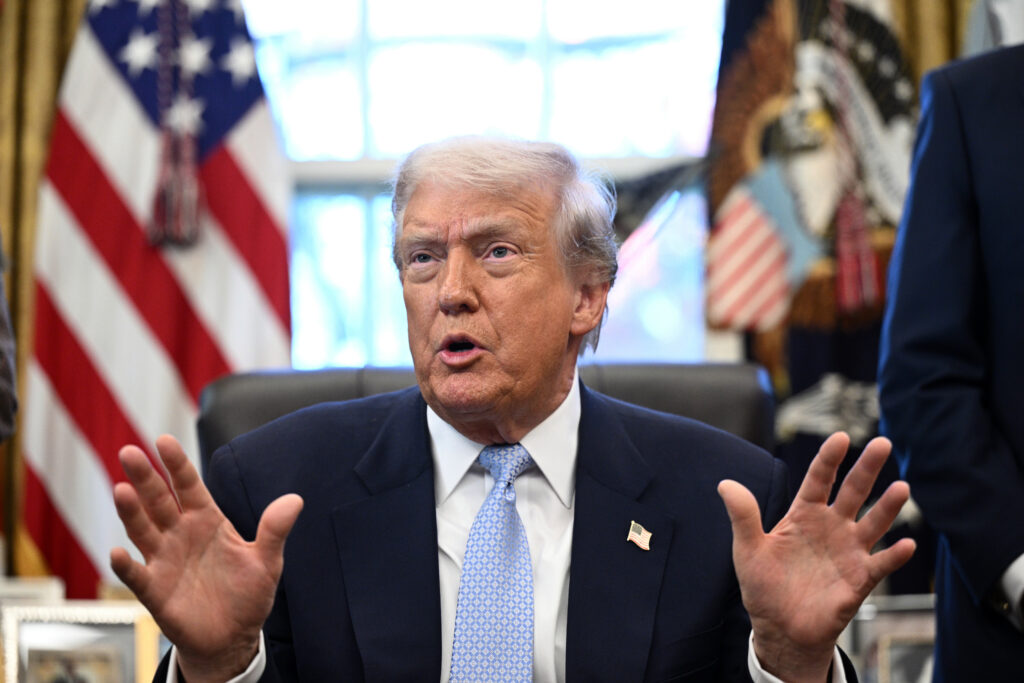
President Donald Trump said Monday he will talk to Venezuela’s Nicolas Maduro, as Washington’s military buildup stokes tensions, and added that he would be “OK” with US anti-drug strikes inside Mexico.Trump has dramatically increased the number of US forces in the Caribbean region to tackle what he calls drug traffickers based in a number of Latin American countries including Venezuela and Mexico.”At a certain period of time, I’ll be talking to him,” Trump told reporters in the Oval Office when asked if he would speak to Maduro, while adding that the Venezuelan president “has not been good to the United States.”Asked if he would rule out US troops on the ground in Venezuela, Trump replied: “No, I don’t rule out that, I don’t rule out anything.”We just have to take care of Venezuela,” he added. “They dumped hundreds of thousands of people into our country from prisons.” Hours later, Maduro said on his weekly television show that he was ready to talk “face to face” with anyone in the United States “who wants to talk to Venezuela.”A contingent of US Marines is currently conducting military exercises in Trinidad and Tobago, the second such maneuvers in less than a month between Washington and the small English-speaking archipelago located about 10 kilometers (six miles) from the Venezuelan coast.But Trinidad and Tobago’s leader said Monday that the small island nation would not allow its territory to be used to attack Venezuela, nor was it ever asked to.”The US has NEVER requested use of our territory to launch any attacks against the people of Venezuela,” said Prime Minister Kamla Persad-Bissessar, a close Trump ally, in a WhatsApp message to AFP.”Trinidad and Tobago will not participate in any act that could harm the Venezuelan people,” she added, emphasizing that Washington and Caracas should resolve their differences through dialogue.Venezuela has accused Washington of seeking regime change in Caracas with its military build-up including an aircraft carrier group, warships and several stealth jets.Washington accuses Maduro of leading a “terrorist” drug cartel, a charge he denies.Since September, US forces have killed at least 83 people via air strikes on boats accused of ferrying drugs in international waters, according to an AFP tally of publicly released figures.The United States has released no details to back up its claims that the people targeted in both the Caribbean and eastern Pacific in the more than 20 strikes were actually traffickers.- ‘OK with me’ -Trump has also accused Mexico of failing to tackle drug trafficking groups, and stepped up his rhetoric towards the United States’s southern neighbor.”Would I launch strikes in Mexico to stop drugs? It’s OK with me. Whatever we have to do to stop drugs,” Trump said when asked by reporters at the White House whether he would sanction a US counter-drug operation in Mexico.”I didn’t say I’m doing it, but I’d be proud to do it. Because we’re going to save millions of lives by doing it.”Since August, Washington has maintained a significant military presence in the Caribbean, including half a dozen warships, officially to combat drug trafficking destined for the United States.
Trump unveils fast-track visas for World Cup ticket holders

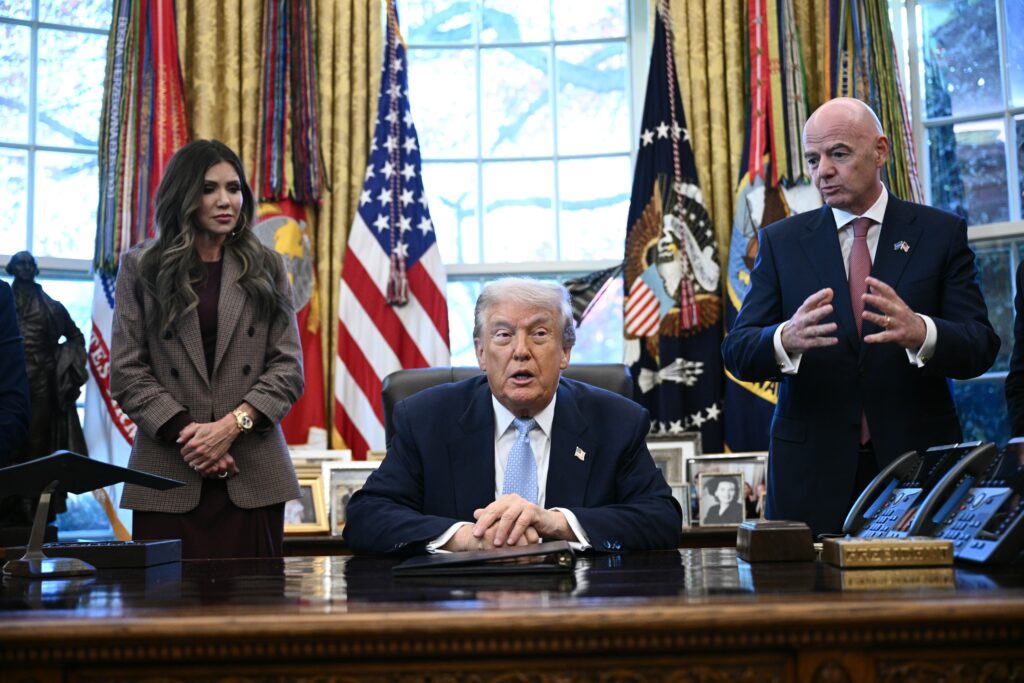
President Donald Trump on Monday unveiled special fast-track visas for people with tickets to the 2026 World Cup — but his administration warned it was no guarantee of entry to the United States.The United States has promised a seamless experience for next year’s tournament despite concerns that Trump’s border crackdown could hurt fans.”For those who intend to join us for the World Cup, I strongly encourage you to apply right away,” Trump said as he announced the scheme in the Oval Office with Gianni Infantino, the boss of global soccer body FIFA.Infantino — who has repeatedly appeared at Trump’s side since the Republican’s return to the White House in January — said the so-called “FIFA Pass” was a “very important announcement.””If you have a ticket for the World Cup, you can have a prioritized appointment to get your visa,” Infantino said.”We’ll have between five and 10 million people coming to America from from all over the world to enjoy the World Cup, and with this FIFA pass, we can make sure that those who buy a ticket, that are legitimate football fans or soccer fans, they can come and attend the World Cup in the best conditions.” US Secretary of State Marco Rubio however issued a warning to those hoping to come for the tournament.”Your ticket is not a visa,” Rubio said at the announcement. “It doesn’t guarantee admission to the US. It guarantees you an expedited appointment, you’re still going to go through the same vetting.”Rubio said ticket holders would get an interview within six to eight weeks under the plan but urged people to act now. “Don’t wait till the last minute,” he said.Trump has made the World Cup a centerpiece event of both his second presidency and the 250th anniversary of US independence next year.But the giant sporting extravaganza has not escaped the political turmoil caused by Trump’s hardline stance on a host of issues.Trump has raised the possibility of moving games from certain host cities amid a crackdown on what he says is crime and migration in some Democratic-run cities.The draw for the World Cup is due to take place in Washington on December 5.FIFA will present a new peace prize on the same day, with widespread speculation that it it could go to Trump.

‘Stranded, stressed’ giraffes in Kenya relocated as habitats encroachedTue, 18 Nov 2025 01:02:11 GMT

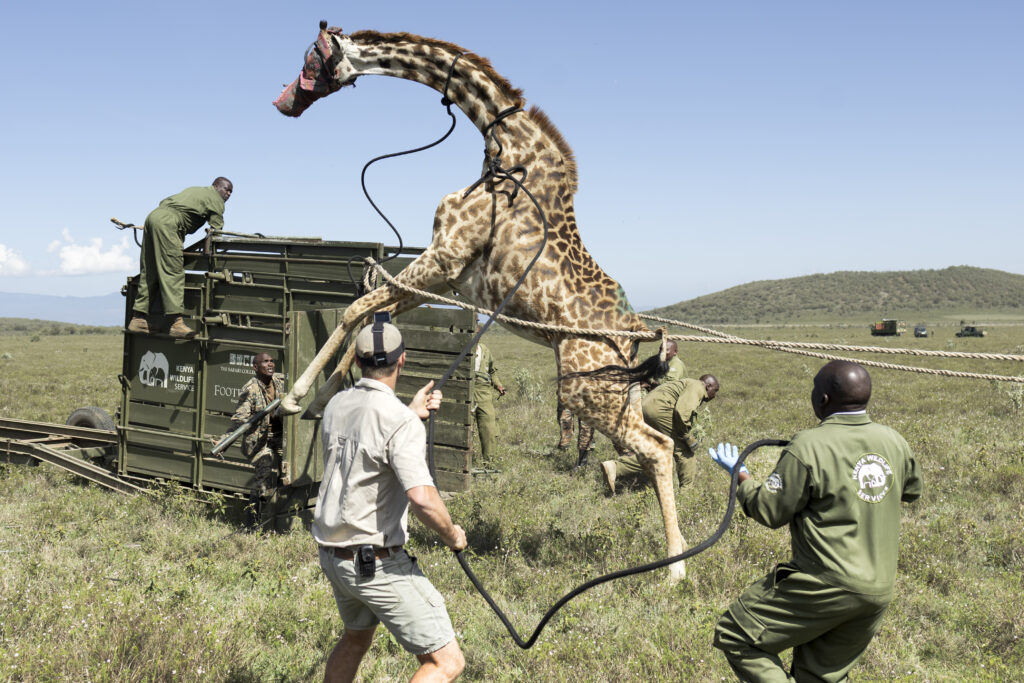
Coaxed and tugged by rangers, a blindfolded giraffe totters into the specialised vehicle that will transport it away from an increasingly hostile environment to a new home in Kenya’s eastern Rift Valley.Such relocations are a last resort when human activities or climate change threaten the survival of wildlife or peaceful coexistence with humans, say conservationists.But …

‘Stranded, stressed’ giraffes in Kenya relocated as habitats encroachedTue, 18 Nov 2025 01:02:11 GMT Read More »

La COP30 passe en “mode nuit” pour sa dernière semaine

Désormais dans sa deuxième et dernière semaine, la COP30 en Amazonie brésilienne est passée en “mode nuit” lundi, la présidence brésilienne espérant obtenir des accords rapidement malgré les divisions persistantes entre pays. “Nous proposons d’achever une partie significative de notre travail d’ici demain (mardi) soir, pour qu’une plénière pour le paquet politique de Belem puisse avoir …

La COP30 passe en “mode nuit” pour sa dernière semaine Read More »

UN Security Council votes for international force for Gaza

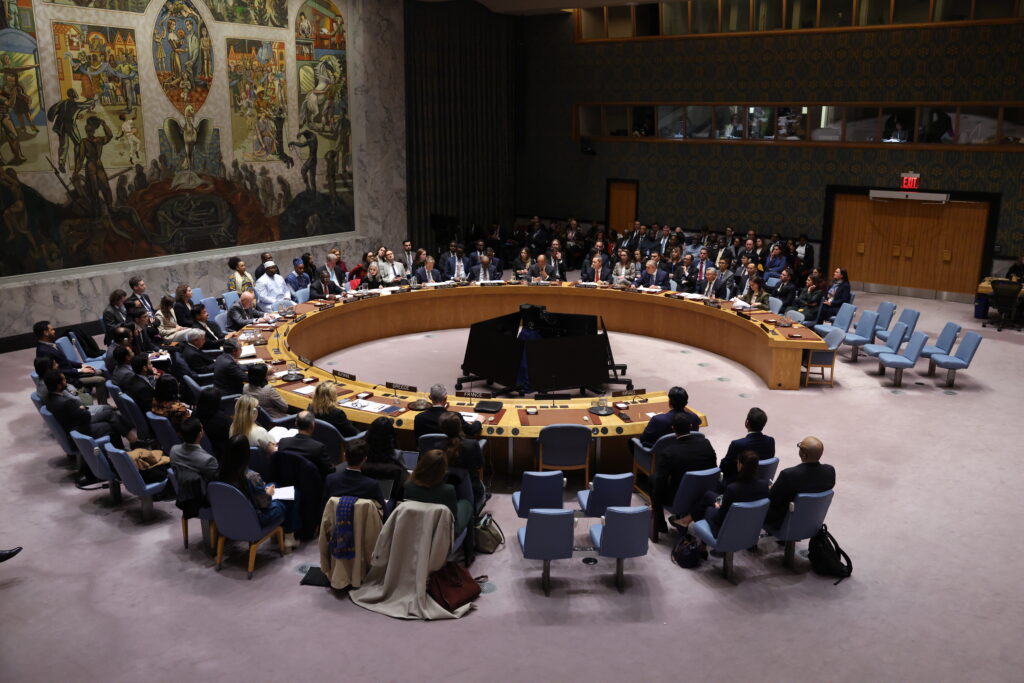
The UN Security Council voted Monday in favor of a US-drafted resolution bolstering Donald Trump’s Gaza peace plan that includes the deployment of an international force and a path to a future Palestinian state.There were 13 votes in favor of the text, which US President Trump claimed would lead to “further Peace all over the World,” with only Russia and China abstaining — but no vetoes.Trump posted on social media that the vote “acknowledging and endorsing the BOARD OF PEACE, which will be chaired by me…will go down as one of the biggest approvals in the History of the United Nations, (and) will lead to further Peace all over the World.”US ambassador to the UN Mike Waltz said after the vote that “today’s resolution represents another significant step that will enable Gaza to prosper and an environment that will allow Israel to live in security.”But Hamas, which is excluded by the resolution from any governance role in Gaza, said the resolution did not meet Palestinians’ “political and humanitarian demands and rights.”The text, which was revised several times as a result of high-stakes negotiations, “endorses” the US president’s plan, which allowed for a fragile ceasefire between Israel and Hamas to take hold on October 10 in the war-wracked Palestinian territory.The Gaza Strip has been largely reduced to rubble after two years of fighting, sparked by Hamas’s attack on Israel on October 7, 2023.The peace plan authorizes the creation of an International Stabilization Force (ISF) that would work with Israel and Egypt and newly trained Palestinian police to help secure border areas and demilitarize the Gaza Strip.The ISF is mandated to work on the “permanent decommissioning of weapons from non-state armed groups,” protecting civilians and securing humanitarian aid corridors.- Palestinian statehood pathway -It also authorizes the formation of a “Board of Peace,” a transitional governing body for Gaza — which Trump would theoretically chair — with a mandate running until the end of 2027.In convoluted language, the resolution does mention a possible future Palestinian state.Once the Palestinian Authority has carried out requested reforms and the rebuilding of Gaza is underway, “the conditions may finally be in place for a credible pathway to Palestinian self-determination and statehood,” the text says.That eventuality has been firmly rejected by Israel.The resolution also calls for the resumption of humanitarian aid deliveries at scale through the UN, ICRC and Red Crescent.”We must also substantially step up our work to support the UN humanitarian effort. That requires opening all crossings and ensuring that aid agencies and international NGOs can operate without obstruction,” said a British ambassador to the UN, James Kariuki.Israeli ambassador to the UN Danny Danon said ahead of the vote that the resolution would “make sure that Hamas will not pose a threat against Israel anymore.”Veto-wielding Russia circulated a competing draft, saying the US document does not go far enough towards backing the creation of a Palestinian state.Moscow’s text, seen by AFP, asked the Council to express its “unwavering commitment to the vision of the two-state solution.”It would not have authorized a Board of Peace or the deployment of an international force for the time being, instead asking UN Secretary-General Antonio Guterres to offer “options” on those issues.”Security Council members were, in practice, not given the time to do the work in good faith,” Moscow’s ambassador Vasily Nebenzya said.”The US document is yet another pig in a poke. In essence, the Council is giving its blessing to a US initiative on the basis of Washington’s promises, giving complete control over the Gaza strip to the Board of Peace.” The US won the backing of several Arab and Muslim-majority nations, publishing a joint statement of support for the text signed by Qatar, Egypt, the United Arab Emirates, Saudi Arabia, Indonesia, Pakistan, Jordan, and Turkey.

UN Security Council votes for international force for Gaza

The UN Security Council voted Monday in favor of a US-drafted resolution bolstering Donald Trump’s Gaza peace plan that includes the deployment of an international force and a path to a future Palestinian state.There were 13 votes in favor of the text, which US President Trump claimed would lead to “further Peace all over the World,” with only Russia and China abstaining — but no vetoes.Trump posted on social media that the vote “acknowledging and endorsing the BOARD OF PEACE, which will be chaired by me…will go down as one of the biggest approvals in the History of the United Nations, (and) will lead to further Peace all over the World.”US ambassador to the UN Mike Waltz said after the vote that “today’s resolution represents another significant step that will enable Gaza to prosper and an environment that will allow Israel to live in security.”But Hamas, which is excluded by the resolution from any governance role in Gaza, said the resolution did not meet Palestinians’ “political and humanitarian demands and rights.”The text, which was revised several times as a result of high-stakes negotiations, “endorses” the US president’s plan, which allowed for a fragile ceasefire between Israel and Hamas to take hold on October 10 in the war-wracked Palestinian territory.The Gaza Strip has been largely reduced to rubble after two years of fighting, sparked by Hamas’s attack on Israel on October 7, 2023.The peace plan authorizes the creation of an International Stabilization Force (ISF) that would work with Israel and Egypt and newly trained Palestinian police to help secure border areas and demilitarize the Gaza Strip.The ISF is mandated to work on the “permanent decommissioning of weapons from non-state armed groups,” protecting civilians and securing humanitarian aid corridors.- Palestinian statehood pathway -It also authorizes the formation of a “Board of Peace,” a transitional governing body for Gaza — which Trump would theoretically chair — with a mandate running until the end of 2027.In convoluted language, the resolution does mention a possible future Palestinian state.Once the Palestinian Authority has carried out requested reforms and the rebuilding of Gaza is underway, “the conditions may finally be in place for a credible pathway to Palestinian self-determination and statehood,” the text says.That eventuality has been firmly rejected by Israel.The resolution also calls for the resumption of humanitarian aid deliveries at scale through the UN, ICRC and Red Crescent.”We must also substantially step up our work to support the UN humanitarian effort. That requires opening all crossings and ensuring that aid agencies and international NGOs can operate without obstruction,” said a British ambassador to the UN, James Kariuki.Israeli ambassador to the UN Danny Danon said ahead of the vote that the resolution would “make sure that Hamas will not pose a threat against Israel anymore.”Veto-wielding Russia circulated a competing draft, saying the US document does not go far enough towards backing the creation of a Palestinian state.Moscow’s text, seen by AFP, asked the Council to express its “unwavering commitment to the vision of the two-state solution.”It would not have authorized a Board of Peace or the deployment of an international force for the time being, instead asking UN Secretary-General Antonio Guterres to offer “options” on those issues.”Security Council members were, in practice, not given the time to do the work in good faith,” Moscow’s ambassador Vasily Nebenzya said.”The US document is yet another pig in a poke. In essence, the Council is giving its blessing to a US initiative on the basis of Washington’s promises, giving complete control over the Gaza strip to the Board of Peace.” The US won the backing of several Arab and Muslim-majority nations, publishing a joint statement of support for the text signed by Qatar, Egypt, the United Arab Emirates, Saudi Arabia, Indonesia, Pakistan, Jordan, and Turkey.

Climate talks run into night as COP30 hosts seek breakthrough

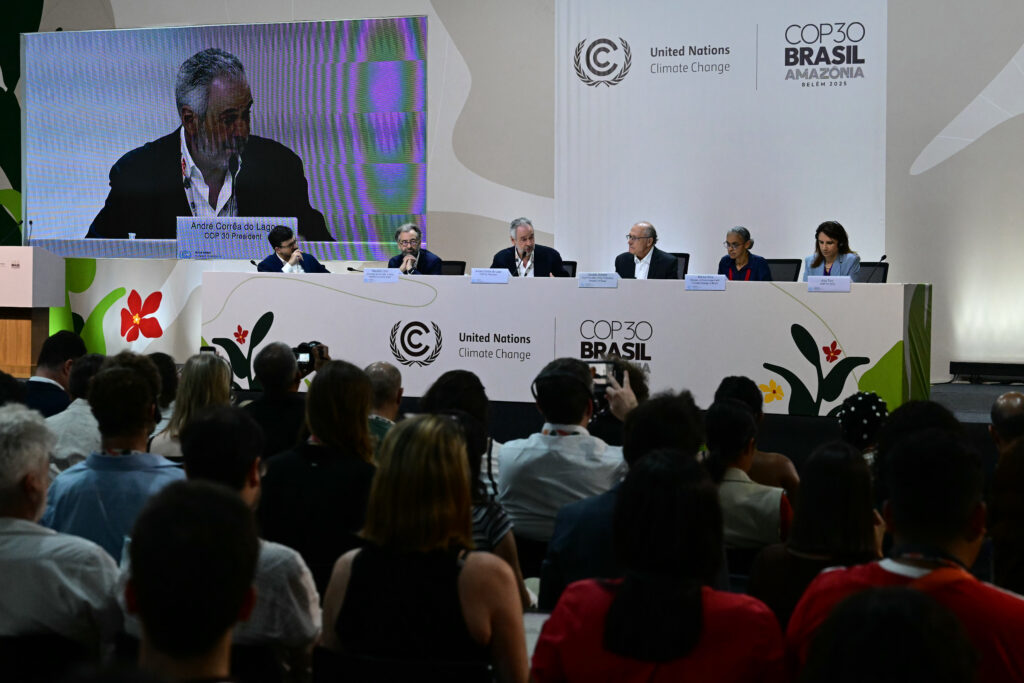
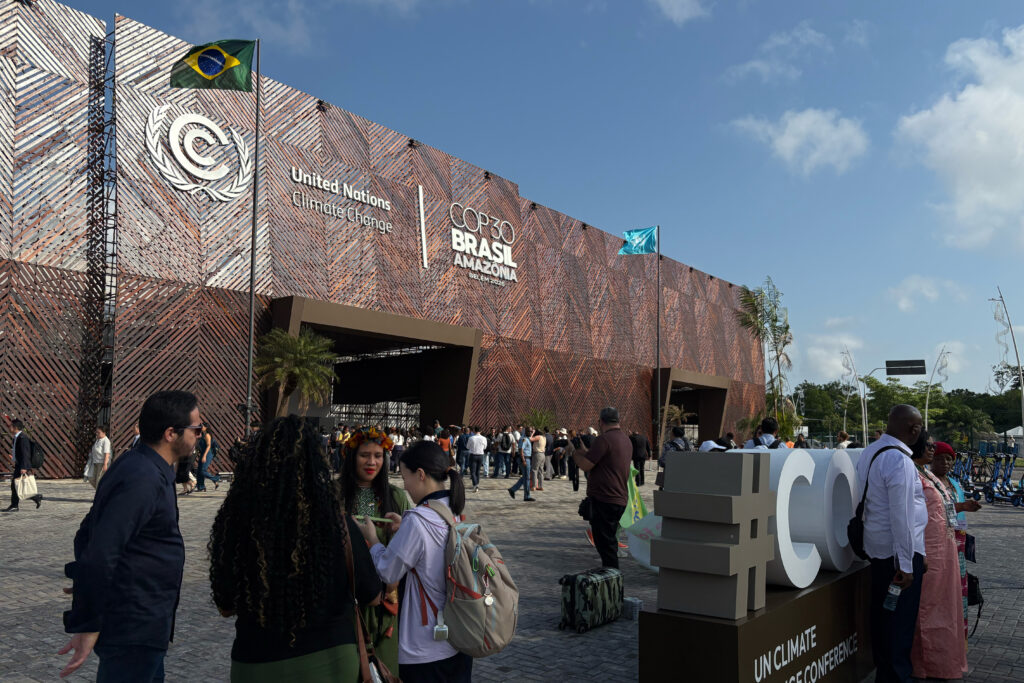
COP30 hosts Brazil on Monday extended negotiations into the night at the UN climate talks as they pushed for a rapid compromise among countries very much at deep odds. Following a difficult first week, Brazil set a deadline for nations to finalize “a significant part” of the negotiations by Tuesday evening for approval the following day.”It’s super difficult as you know… but all involved thought that it’s worth a try” said COP30 President Andre Correa do Lago in the rainforest city of Belem where the talks are underway.Sleepless nights are assured, with Correa do Lago extending the program so negotiators were “able to continue working at night.”They have their work cut out.No progress has been made to reconcile differences over weak climate commitments, insufficient financial pledges and trade measures.China and India are leading a push for COP30 to adopt a decision against unilateral trade barriers, singling out the EU’s Carbon Border Adjustment Mechanism (CBAM) for attack.Tested since 2023 and set to become fully operational in 2026, CBAM targets imports of carbon-intensive goods such as steel, aluminum, cement, fertilizers, electricity and hydrogen.The head of China’s COP30 delegation, Li Gao, told AFP last week that nations should “avoid the negative impact of, for example, geopolitical unilateralism or protectionism.”But the EU’s climate commissioner, Wopke Hoekstra, hit back at attacks over the bloc’s flagship policy and defended carbon pricing as “something that we need”.”We’re not going to be lured into the suggestion that actually CBAM is a unilateral trade measure. And in that realm, we’re also not going to discuss it,” Hoekstra said in a news conference.EU and Chinese officials were due to hold talks later Monday.- Sleepless in Belem -UN climate chief Simon Stiell urged negotiators to tackle “the hardest issues fast” to avoid going into overtime at the summit’s close on Friday.”When these issues get pushed deep into extra time, everybody loses. We absolutely cannot afford to waste time on tactical delays or stonewalling,” he said.The COP30 presidency published a memo Sunday evening summarizing the divergent viewpoints and proposing options.Money is again at the heart of the negotiations, after last year’s summit in Baku ended with an agreement for developed countries to provide $300 billion annually in climate finance to poorer nations — a figure criticized as greatly insufficient.Developing countries, especially from Africa, want COP30 to point the finger at developed nations for falling short on providing financing to help adapt to climate change and cut emissions.Another divisive issue was a push by island states — backed by Latin American nations and the EU — for COP30 to respond to the latest projections showing the world will fail to limit warming to 1.5C.But major emerging countries, from China to Saudi Arabia, are wary of any text that implies they are not doing enough to curb climate change.”For Small Island Developing States, 1.5C is not a political slogan. It is a non-negotiable survival threshold for our people, our culture, and our livelihoods,” said Steven Victor, the environment minister of Palau, which is chairing the Alliance of Small Island States (AOSIS).- Fossil fight -Victor told fellow ministers that AOSIS was disappointed over a lack of progress since nations agreed in 2023 at COP28 in Dubai to transition away from fossil fuels.Host nation Brazil wants COP30 to send an ambitious signal on fossil fuels, but it remains unclear what form this might take.Even supporters are doubtful that stronger language on fossil fuels could be agreed by all countries at COP30 given fierce opposition from major oil-producing nations, among others.”At the end of the day… it’s about phasing out fossil fuels if we are to solve this problem,” a delegate from a European country supportive of Brazil’s fossil fuel push told AFP.”They are not talking about it in the negotiating rooms. Someone has to do something about it.” Brazil’s Vice President Geraldo Alckmin urged ministers on Monday to agree to “integrated action plans” for transitioning away from fossil fuels.Alckmin said President Luiz Inacio Lula da Silva might come to Belem this week, which would be “extremely positive.””Brazil is committed to combating climate change,” he said.ia-ico-alb-lth-np/bjt

La COP30 passe en “mode nuit” pour sa dernière semaine

Désormais dans sa deuxième et dernière semaine, la COP30 en Amazonie brésilienne est passée en “mode nuit” lundi, la présidence brésilienne espérant obtenir des accords rapidement malgré les divisions persistantes entre pays. “Nous proposons d’achever une partie significative de notre travail d’ici demain (mardi) soir, pour qu’une plénière pour le paquet politique de Belem puisse avoir lieu d’ici le milieu de la semaine”, a dit le président de la COP André Correa do Lago dans une lettre aux pays.”C’est super difficile”, a-t-il reconnu devant la presse. “Mais tous ceux qui sont concernés ont pensé que ça valait la peine d’essayer”.Face à l’important travail restant, il a réorganisé le programme pour “pouvoir continuer à travailler de nuit”. La négociatrice en chef brésilienne, Liliam Chagas, a indiqué que les réunions dureraient aussi longtemps que nécessaire lundi soir.La tâche est ardue car les négociations restent entravées par des sujets de blocage majeurs, dont la taxe carbone aux frontières européennes attaquée par la Chine et d’autres pays, mais déclarée non négociable par l’Union européenne.”La tarification du carbone est une mesure que nous devons mettre en œuvre avec le plus grand nombre possible, et le plus rapidement possible”, a lancé lundi Wopke Hoekstra, commissaire européen au climat, à son arrivée à Belem.Le Néerlandais a opposé une fin de non-recevoir à toute discussion de la taxe dans le cadre des débats sur les “mesures commerciales unilatérales”.Une question plane au-dessus de la conférence: le président Lula reviendra-t-il pour peser sur les négociations, après avoir ouvert le sommet? “S’il pouvait venir, ce serait très positif”, a déclaré lundi son vice-président, Geraldo Alckmin.- Acier, aluminium, ciment… -Pour verdir ses importations, l’UE imposera à partir de janvier un “mécanisme d’ajustement carbone” aux frontières (MACF) sur l’acier, l’aluminium, le ciment, les engrais, l’électricité et l’hydrogène, des secteurs extrêmement polluants et exposés à une forte concurrence internationale.Elle vise à imposer aux importations dans l’UE un prix du carbone similaire à celui en vigueur en Europe, où les entreprises payent déjà pour polluer. Plusieurs pays, dont les États-Unis et la Chine, y voient une mesure protectionniste déguisée. Certains ont décidé d’élever le sujet dans les négociations climatiques.”Le meilleur MACF est en fait celui qui ne rapporte pas d’argent, c’est là son essence même”, a répondu M. Hoekstra au cours d’une conférence de presse.  Il a souligné que l’idée d’une tarification du carbone faisait son chemin au Brésil et dans une trentaine d’autres pays.- Obstructions -Il reste cinq jours aux ministres, arrivés lundi, pour sortir au niveau politique de l’impasse.”Nous ne pouvons absolument pas nous permettre de perdre du temps à cause de retards tactiques ou d’obstructions”, a lancé le chef de l’ONU Climat, Simon Stiell, dans un appel qui fait écho à d’autres similaires aux COP précédentes à mi-parcours.Peu après lui, le ministre de l’Agriculture de l’archipel pacifique des Palaos et représentant des petits États insulaires Steven Victor a affirmé que “1,5°C n’est pas un slogan politique. C’est un seuil de survie non négociable pour notre peuple”, en référence à l’objectif de réchauffement fixé par l’accord de Paris il y a dix ans, désormais clairement hors de portée à moyen terme.Une semaine de consultations ont montré qu’en plus des “mesures commerciales unilatérales”, deux sujets bloquent encore les tractations.D’une part, les États insulaires, soutenus par des pays d’Amérique latine et les Européens, estiment évident que la COP doit appeler les pays à rehausser leurs engagements climatiques. Mais de grandes économies, de la Chine à l’Arabie saoudite, ne veulent pas d’une décision qui sous-entendrait qu’elles n’en font pas assez.D’autre part, de nombreux pays du Sud, notamment les africains, veulent rappeler aux pays développés l’insuffisance de leurs financements vers les pays en développement.Le Brésil s’est aussi montré ambitieux sur son désir d’envoyer un signal sur la sortie des énergies fossiles, même si la forme exacte de ce signal reste à clarifier.