Mercosur: face au risque politique, Macron choisit de dire non malgré des concessions “incontestables”

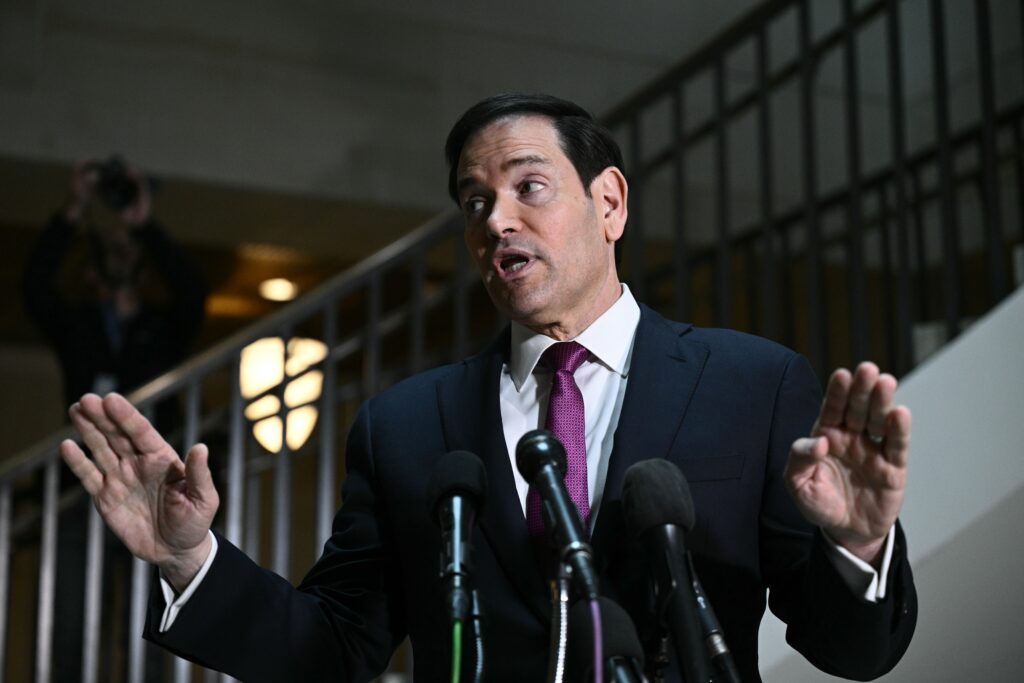
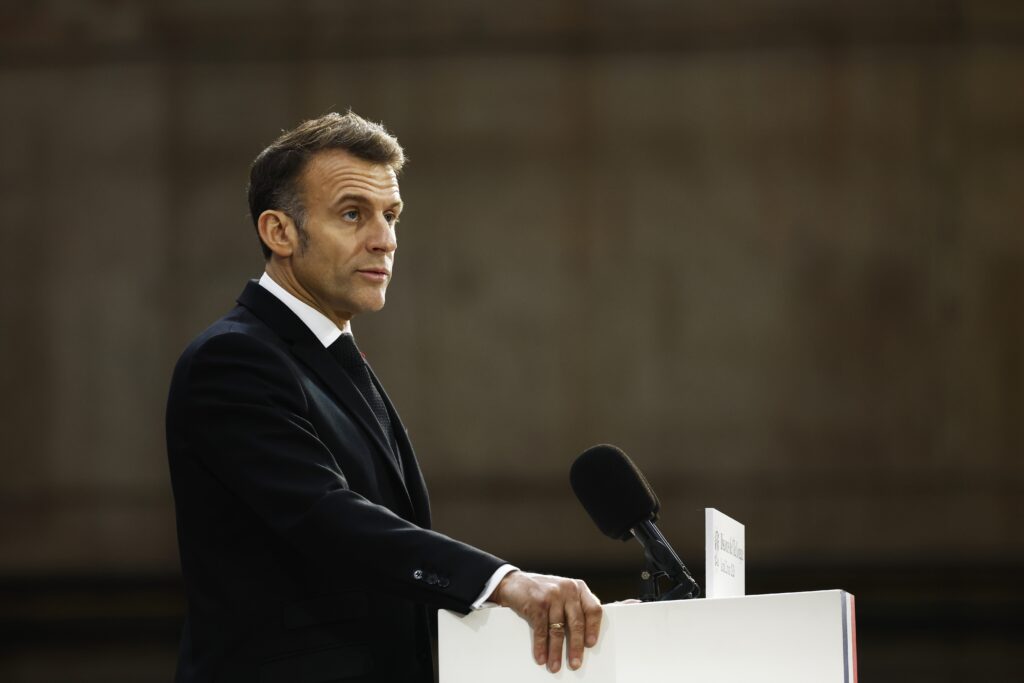
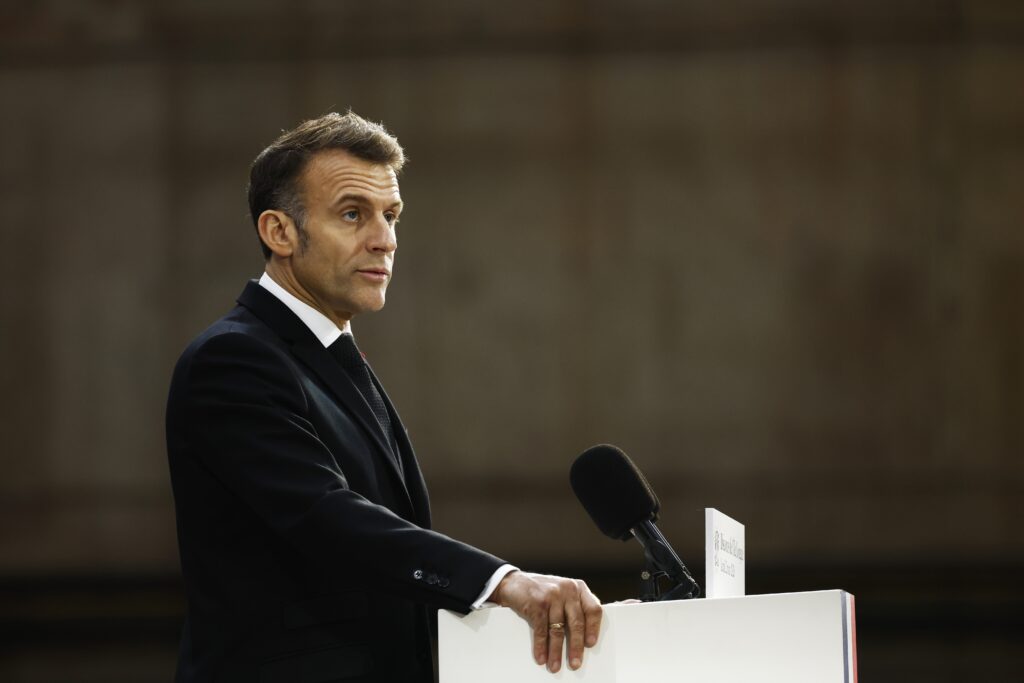
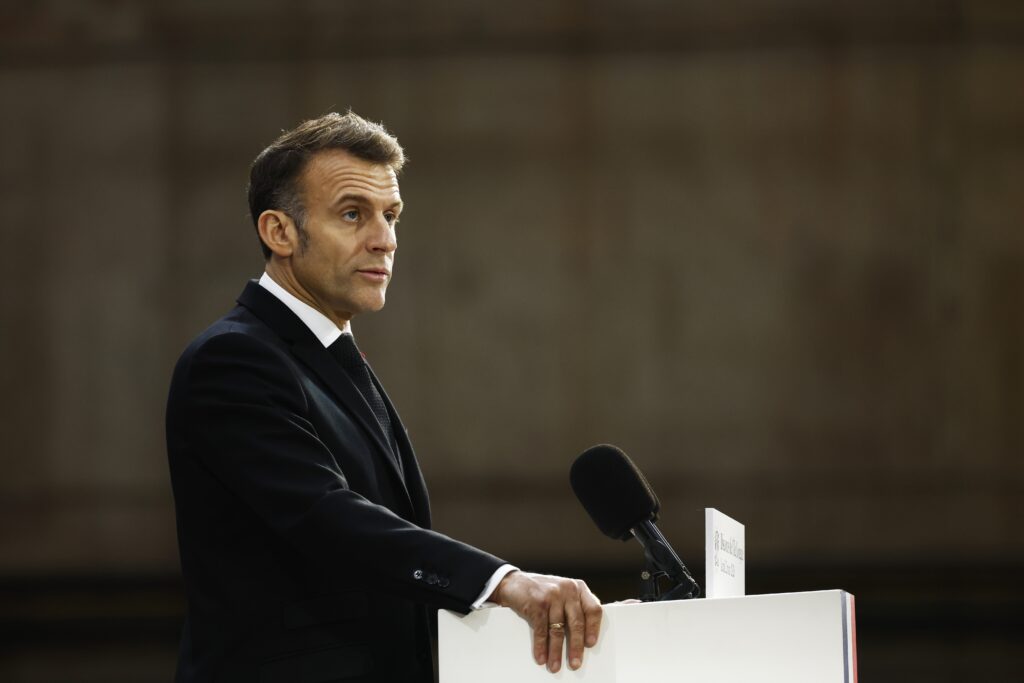
Emmanuel Macron a tranché: malgré les concessions “incontestables” de Bruxelles, la France votera “contre” l’accord commercial avec le Mercosur, un choix qui ne bloquera pas le traité et qui l’expose à un procès en perte d’influence mais qui devrait permettre de sauver le gouvernement.”Le constat doit être dressé d’un rejet politique unanime de l’accord”, a déclaré jeudi soir le chef de l’Etat dans un communiqué annonçant sa décision, après un appel à la présidente de la Commission européenne Ursula von der Leyen pour l’informer.Le président du Rassemblement national Jordan Bardella a estimé que ce “non” était “une manœuvre de communication aussi tardive qu’hypocrite, “une mise en scène”, et donc “une trahison des agriculteurs”. Il a donc annoncé que le parti d’extrême droite déposerait une motion de censure contre le gouvernement de Sébastien Lecornu, qui n’a toutefois que peu de chances d’aboutir.Le patron du parti Les Républicains Bruno Retailleau avait lui aussi fait planer le “risque d’une censure” mais uniquement si Emmanuel Macron avait choisi de voter en faveur du texte.Avec une classe politique hostile et des manifestations agitées d’agriculteurs venus en tracteurs à Paris, la pression était forte contre cet accord de libre-échange sur lequel les Vingt-Sept doivent se prononcer vendredi, pour une signature avec le bloc latino-américain prévue la semaine prochaine.Face à cette équation, le président de la République, qui évoque un traité “d’un autre âge” à l’impact limité, a fait le calcul politique qu’il valait mieux aller dans le sens des opposants, pour préserver son Premier ministre et lui éviter de chuter avant même d’avoir réussi à faire adopter un budget pour l’année en cours.Et tant pis si, au fond, et contrairement aux manifestants, il ne juge pas cet accord commercial si néfaste.Début novembre, depuis le Brésil, Emmanuel Macron avait insisté sur les bienfaits du texte pour “notre filière viticole qui est heurtée par les tarifs américains” et pour “beaucoup de secteurs industriels” en quête de “diversification”.Il avait aussi salué le “paquet” de mesures “tout à fait acceptable” proposé par Bruxelles, notamment sur une “clause de sauvegarde” pour protéger les filières agricoles en cas de perturbation du marché. “Je suis plutôt positif mais je reste vigilant”, avait-il lâché, laissant entrevoir un possible feu vert français à terme, si d’autres exigences étaient satisfaites.Ses déclarations avaient toutefois mis le feu aux poudres en France.Le président était donc vite revenu sur la position des mois précédents: un “non très ferme de la France” à l’accord “en l’état”. Et redoublé d’efforts dans son bras de fer pour obtenir plus de garanties de la Commission européenne.Avant Noël, à Bruxelles, grâce au soutien de l’Italie, il avait même réussi à arracher un bref report de la signature qui semblait imminente.- Impuissance -Depuis, l’exécutif français se targue d’avoir engrangé des victoires pour ses agriculteurs, sur le coût des engrais comme sur le futur budget de la politique agricole commune (PAC) pour sécuriser les aides européennes à leur revenu.”C’est le résultat de notre mobilisation déterminée et de mon engagement constant pour nos agriculteurs”, s’est-il félicité cette semaine. Des “avancées incontestables” dont “il faut donner acte à la Commission européenne”, a-t-il abondé jeudi.Mais la France n’a pas réussi, a priori, a réunir une minorité de blocage, et l’accord devrait donc être entériné par l’UE à la majorité qualifiée.De quoi nourrir les accusations d’impuissance d’un chef de l’Etat en fin de règne, voire d’une entente tacite avec les instances européennes, très favorables au Mercosur qui est aussi plébiscité par l’Allemagne et l’Espagne.”Emmanuel Macron a une responsabilité directe si ce traité passe”, puisque “depuis huit ans, il aurait pu et il aurait dû bloquer cet accord”, a affirmé la cheffe des députés La France insoumise Mathilde Panot à l’issue d’une réunion à l’Elysée.Si Emmanuel Macron a un temps espéré que la “pédagogie” permettrait de mettre en avant les avantages du traité et d’en relativiser les méfaits, le débat public est resté totalement défavorable.Jusqu’au bout, le gouvernement a donc dit que “le compte n’y est pas”. Le président a lui préféré jeudi pointer l’équation politique pour justifier son refus.

Senegal PM says country’s debt is ‘sustainable’, no restructuring neededThu, 08 Jan 2026 20:10:25 GMT

Senegal’s prime minister insisted on Thursday that his country’s substantial debt was “sustainable”, in a press conference during which he ruled out any restructuring.The west African nation faces a worrisome economic situation, with a budget deficit of nearly 14 percent of GDP and public sector debt estimated at 132 percent of national output at the …

Senegal PM says country’s debt is ‘sustainable’, no restructuring neededThu, 08 Jan 2026 20:10:25 GMT Read More »

Aleppo clashes between Syria govt, Kurdish forces rage into third night

Clashes between Syrian government and Kurdish forces in Aleppo raged into the night Thursday on the third day of fighting, as Syrian Kurdish leader Mazloum Abdi warned the violence undermined talks with Damascus.Both sides have traded blame over who started the clashes on Tuesday, which comes as implementation stalls on a deal to merge the Kurds’ administration and military in the northeast into the government.The worst violence in Aleppo since Syria’s Islamist authorities took power has also highlighted regional tensions between Damascus ally Turkey and Israel, which condemned what it described as attacks against the Kurds.An AFP correspondent reported fierce fighting across the Kurdish-majority Ashrafiyeh and Sheikh Maqsud districts into the night, while authorities announced a curfew in the two districts and several others nearby “until further notice”.”We’ve gone through very difficult times… my children were terrified,” said Rana Issa, 43, whose family fled Ashrafiyeh earlier Thursday.”Many people want to leave”, but are afraid of the snipers, she told AFP.Abdi — who leads the US-backed, Kurdish-led Syrian Democratic Forces (SDF) — said attacks on Kurdish areas “undermine the chances of reaching understandings”, days after he visited Damascus for talks on the March integration deal.State television, citing a civil defence official, said some 16,000 people fled the two Kurdish districts on Thursday, with at least 21 people dead over three days, according to government and Kurdish force figures.A government source told AFP on condition of anonymity that the army started entering the outskirts of Sheikh Maqsud after an agreement with residents from non-Kurdish clans.- Turkey, Israel -Earlier Thursday, state news agency SANA, citing a military source, said the army launched “intense and concentrated bombardment towards SDF positions” in the two Kurdish districts.A flight suspension at Aleppo airport was extended until late Friday, while AFP correspondents said shops, universities and schools remained closed and civilians fled the Kurdish neighbourhoods via safe corridors before an afternoon deadline for them to leave.US special envoy to Syria Tom Barrack said on X that Washington was following developments “with grave concern” and issued an urgent appeal to all sides to “pause hostilities, reduce tensions immediately, and commit to de-escalation”.The European Union, whose top officials are due to visit Syria on Friday, urged restraint.A Turkish defence ministry official said that “should Syria request assistance, Turkey will provide the necessary support”.Israel and Turkey have been vying for influence in Syria since the December 2024 toppling of longtime ruler Bashar al-Assad. Foreign Minister Hakan Fidan said Turkey had been in “intensive consultations” with Syria and the United States to resolve the deadlock. Turkey, which shares a 900-kilometre (550-mile) border with Syria, has launched successive offensives to push Kurdish forces from the frontier.Israeli Foreign Minister Gideon Saar meanwhile said “attacks by the Syrian regime’s forces against the Kurdish minority… are grave and dangerous”.Israel and Syria are in talks to reach a security agreement and this week agreed to establish an intelligence-sharing mechanism.Israel bombed Syrian forces in July when they clashed with the Druze community, saying it was acting to defend the minority, who are also present in Israel.- ‘No to war’ -The SDF controls swathes of Syria’s oil-rich north and northeast, and was key to the territorial defeat of the Islamic State group in Syria in 2019.The March integration agreement was to be implemented last year, but differences including Kurdish demands for decentralised rule have stymied progress.Sheikh Maqsud and Ashrafiyeh have remained under the control of Kurdish units linked to the SDF, despite Kurdish fighters agreeing to withdraw from the areas in April.Aron Lund, a fellow at the Century International research centre, told AFP that “Aleppo is the SDF’s most vulnerable area”.”Both sides are still trying to put pressure on each other and rally international support,” he said.He warned that if the hostilities spiral, “a full Damascus-SDF conflict across northern Syria, potentially with Turkish and Israeli involvement, could be devastating for Syria’s stability”.In Qamishli in the Kurdish-held northeast, hundreds of people protested against the Aleppo violence, AFP correspondents said. “We call on the international community to intervene,” said protester Salaheddine Cheikhmous, 61, while others held banners reading “no to war” and “no to ethnic cleansing”.In Turkey, several hundred protested in Kurdish-majority Diyarbakir, AFP correspondents there said.

Hôpital: “tension dans tous les services d’urgences”, selon la ministre de la Santé

La ministre de la Santé Stéphanie Rist a fait état jeudi soir d’une “tension dans tous les services d’urgences” liée aux épidémies hivernales, à la neige et à la grève des médecins libéraux, qui s’est intensifiée selon les chiffres de l’Assurance maladie.”Il y a une tension dans tous les services d’urgences” du pays, a déclaré Stéphanie Rist lors d’une visite aux urgences de l’hôpital Saint-Antoine à Paris.”On arrive à réquisitionner s’il y a besoin”, a-t-elle ajouté, évoquant un “moment compliqué où il y a l’épidémie de grippe, où il y a eu l’épisode neigeux et la grève des médecins qui entraîne une augmentation d’activité dans tous les services d’urgence”.Concernant la grève des médecins libéraux débutée lundi, qui est censée monter crescendo et durer dix jours, l’activité était en baisse de 19% chez les généralistes mardi par rapport à l’activité habituelle, et celle des spécialistes de 12%, selon les données de l’Assurance maladie, a-t-elle indiqué, faisant état de “chiffres importants”.Ils correspondent au volume de feuilles de soin électroniques télétransmises à l’Assurance maladie par les médecins, par rapport au même mardi l’année dernière.Lundi, l’activité avait moins baissé: 15% chez les généralistes, et 6% chez les spécialistes, selon des chiffres donnés précédemment par la ministre.Pour les urgences de l’hôpital Saint-Antoine, qui subissent un pic de fréquentation, “c’était +40% d’activité hier, qui ont été absorbées”, avec des patients qui “ont été correctement pris en charge dans le service”, a indiqué Stéphanie Rist.Entre mardi minuit et mercredi minuit, le service a enregistré 240 passages contre 180 en moyenne habituellement. La nuit de mardi à mercredi a été particulièrement difficile, ont indiqué à la ministre le chef de service Pierre-Alexis Raynal et une urgentiste.De nombreux services d’urgences et les Samu-SAS (Services d’accès aux soins, qui répondent aux appels au 15) ont été débordés ces derniers jours par un pic de fréquentation intense, du “jamais vu” depuis la pandémie de Covid-19 selon plusieurs urgentistes.Divers hôpitaux ont déclenché des plans blancs (dispositif permettant notamment le rappel de soignants en repos, ou la déprogrammation de soins non-urgents), comme le CHU de Toulouse, qui dit dans son communiqué jeudi vouloir “anticiper et gérer” le report d’activité lié à la grève des praticiens des cliniques.

Iran forces accused of firing on protesters as death toll mounts

Rights groups accused Iranian security forces of shooting at demonstrators as the death toll mounted on Thursday from a crackdown on economic protests and a watchdog reported an internet blackout across the Islamic republic.Twelve days of protests have troubled the clerical authorities under Ayatollah Ali Khamenei already battling an economic crisis after years of sanctions and recovering from the June war against Israel.US President Donald Trump meanwhile threatened on Thursday to take severe action against Iran if its authorities “start killing people”, warning Washington would “hit them very hard”.The movement, which originated with a shutdown on the Tehran bazaar on December 28 after the rial plunged to record lows, has spread nationwide and is now being marked by larger-scale demonstrations.Videos on social media showed that protests were again taking place Thursday. A large crowd was seen gathering on the vast Ayatollah Kashani Boulevard in the northwest of capital Tehran, according to social media images verified by AFP, while other images showed a crowd demonstrating in the western city of Abadan.Local media and official statements have reported at least 21 people, including security forces, killed since the unrest began, according to an AFP tally. On Wednesday, an Iranian police officer was stabbed to death west of Tehran “during efforts to control unrest”, the Iranian Fars news agency said.But raising its own toll based on verified deaths, the Norway-based NGO Iran Human Rights said security forces had killed at least 45 protesters, including eight minors.The NGO said Wednesday was the bloodiest day since the demonstrations began, with 13 protesters confirmed to have been killed. “The evidence shows that the scope of the crackdown is becoming more violent and more extensive every day,” said IHR director Mahmood Amiry-Moghaddam, adding hundreds more have been wounded and more than 2,000 arrested.Online watchdog Netblocks said on Thursday that “live metrics show Iran is now in the midst of a nationwide internet blackout”. – ‘Utmost restraint’ -Iran’s President Masoud Pezeshkian called for “utmost restraint” in handling demonstrations, saying “any violent or coercive behaviour should be avoided”.German Foreign Minister Johann Wadephul, meanwhile, condemned the “excessive use of force” against protesters.With the protests now spreading across Iran, the US-based Human Rights Activists News Agency said rallies had taken place in 348 locations in all of Iran’s 31 provinces.Reza Pahlavi, the son of the shah ousted by the 1979 Islamic revolution and a key exiled opposition figure, urged major new protests on Thursday.Before the blackout, he warned that the “frightened” authorities could cut internet access to prevent information filtering out.Iraq-based Iranian Kurdish opposition parties called for a general strike on Thursday in Kurdish-populated areas in western Iran.The Hengaw rights group said the call had been widely followed in some 30 towns and cities, posting footage of shuttered shops in the western provinces of Ilam, Kermanshah and Lorestan.It accused authorities of firing on demonstrators in Kermanshah and the nearby town of Kamyaran to the north, injuring several protesters, as well as cutting the internet in the region.HRANA also posted footage it said showed security forces firing on protesters with handguns in Kermanshah.IHR said a woman protester was shot directly in the eye during a protest late Wednesday in Abadan.Protesters in Kuhchenar in the southern Fars province cheered overnight as they pulled down a statue of the former foreign operations commander of the Revolutionary Guards, Qassem Soleimani, who was killed in a US strike in January 2020, in a video verified by AFP.- ‘Unlawful force’ -Demonstrators are repeating slogans against the clerical leadership, including “Pahlavi will return” and “Seyyed Ali will be toppled”, in reference to Khamenei.The movement has also spread to universities and final exams at a major university in Tehran, the Amir Kabir university, have been postponed for a week, according to ISNA news agency.The protests are the biggest in Iran since the last major protest wave in 2022-2023 which was sparked by the custody death of Mahsa Amini, who had been arrested for allegedly violating the strict dress code for women.Rights groups have also accused authorities of resorting to tactics including raiding hospitals to detain wounded protesters.”Iran’s security forces have injured and killed both protesters and bystanders,” said Amnesty International, accusing authorities of using “unlawful force”. 

Chinese, Iranian warships in South Africa for exercisesThu, 08 Jan 2026 19:50:01 GMT

Chinese and Iranian warships were docked off South Africa’s main navy base Thursday ahead of exercises that officials said were also meant to involve Russia.The January 9-16 “Will for Peace” drill hosted by South Africa risks further straining its ties with the United States, which is in dispute with many of the countries taking part.AFP …

Chinese, Iranian warships in South Africa for exercisesThu, 08 Jan 2026 19:50:01 GMT Read More »

Chinese, Iranian warships in South Africa for exercises

Chinese and Iranian warships were docked off South Africa’s main navy base Thursday ahead of exercises that officials said were also meant to involve Russia.The January 9-16 “Will for Peace” drill hosted by South Africa risks further straining its ties with the United States, which is in dispute with many of the countries taking part.AFP journalists saw two Chinese ships in Cape Town’s False Bay harbour on Wednesday, joined by an Iranian vessel on Thursday. South African navy officials said warships from Russia were also expected to take part in the China-led exercises.The drill was focused on the “safety of shipping and maritime economic activities”, the South African defence force said in December when it announced the manoeuvres.It was intended to “deepen cooperation in support of peaceful maritime security initiatives,” it said.The statement said the exercise would involve navies from BRICS countries.BRICS, originally made up of Brazil, Russia, India, China and South Africa, has expanded to include Egypt, Ethiopia, Iran, Saudi Arabia, the United Arab Emirates and, more recently, Indonesia. The joint drills — previously known as Exercise Mosi — were initially scheduled for November 2025 but were postponed due to a clash with the G20 summit in Johannesburg.South Africa’s Democratic Alliance (DA), a member of the ruling unity government, said parliament had not been “properly briefed” on the drills, including cost, command structure and diplomatic consequences. “South Africa’s defence and foreign policy must be transparent, constitutional, and principled and certainly not being quietly reshaped through military exercises that contradict our stated neutrality and damage our standing in the world,” DA spokesperson on defence, Chris Hattingh, said in a statement. The centre-right party — which joined government after the African National Congress lost its majority in 2024 due to voter disillusionment with corruption and mismanagement — vowed to demand full transparency in parliament.President Donald Trump has accused countries in the BRICS group of emerging nations of “anti-American” policies.South Africa has drawn US criticism for its close ties with Russia and a range of other policies, including its decision to bring a genocide case against Israel at the International Court of Justice over the Gaza war.South Africa’s military was criticised for hosting naval exercises with Russia and China in 2023 that coincided with the one-year anniversary of the Kremlin’s invasion of Ukraine.The three countries first conducted joint naval drills in 2019.

From sci-fi to sidewalk: exoskeletons go mainstream

Exoskeletons are shedding their bulky, sci-fi image to become lightweight, AI-powered consumer devices that manufacturers hope will become as commonplace as smartwatches, targeting everyone from hikers to seniors seeking to stay active.The metal contraptions are impossible to miss in the aisles of the CES consumer technology show in Las Vegas, with visitors eager to try out devices that, depending on the model, help to train the legs, support the knees, and strengthen the back. Some say they do all three at once.The Hardiman suit, the first exoskeleton of the modern era created by engineer Ralph Mosher for General Electric in the mid-1960s, is a far cry from these new models.It was massive in appearance, resembling the boxy “Transformers” characters from the toys and movies. By contrast, several models presented in Las Vegas weigh less than two kilograms (4.4 pounds) without batteries.Although exoskeletons gradually made their way into industry and healthcare more than 20 years ago to relieve warehouse workers or assist in patient rehabilitation, they have remained niche products until now.Today, a host of startups are looking to capitalize on equipment more adapted to everyday use, with improved battery life and more affordable prices.Several of them offer products costing around $1,000 each, equipped with sensors that use artificial intelligence to adapt the mechanical assistance to the terrain and walking pace.Some are also designed for running, such as an offering from Dnsys, which claims a maximum speed of 27 kilometers (16.8 miles) per hour — faster than the sprinting pace of the vast majority of humans.Casual walkers and experienced hikers alike are being targeted by exoskeleton manufacturers, which are almost exclusively Chinese and dream of success in the vast US market.”We’re working hard to make exoskeletons commonplace so people don’t feel that social anxiety of wearing something like this,” said Toby Knisely, communications manager at Hypershell, which says it has already sold 20,000 units.”It’ll hit a critical mass at some point, and maybe become as commonplace as smartwatches or glasses,” he said.- You do the work -After trying out an Ascentiz exoskeleton, Trevor Bills, a Canadian entrepreneur visiting CES, was quite impressed.”You hardly feel it, because it seems to be very good at keeping up with you,” he said.”It was only when I slowed down that I was fighting it a little bit.”One of the obstacles to overcome is the idea that exoskeletons reduce physical effort and diminish the health benefits of exercise.”It doesn’t do the work for you,” said Bills, his forehead glistening with sweat.”If it gets people out and about and makes them more active, that’s a good thing.”Half of Dnsys’s customers are over-50s “who enjoy walking but do so less as they get older,” says Xiangyu Li, co-founder of the company.Hypershell states on its website that users must be able to walk and balance on their own to ensure that everyone uses the device safely and not as a crutch or walking aid.When these machines become more common on the streets, “social anxiety, or the embarrassment associated with wearing an exoskeleton” will fade, said Knisely.”People don’t want to look like robots,” said Xiangyu Li.