Deep roots of rage as India’s Ladakh seeks self-rule

India’s remote high-altitude desert region of Ladakh has been in turmoil since four people were killed in violent protests demanding greater political autonomy for the Himalayan territory.Growing resentment with New Delhi’s direct rule over the territory, and fears of losing livelihoods boiled over on Wednesday as crowds took to the streets in the main city Leh, torching a police vehicle and the offices of Prime Minister Narendra Modi’s Hindu-nationalist Bharatiya Janata Party (BJP).Initially police said five people had died but later revised the toll to four.The sparsely populated region, home to some 300,000 people, borders both China and Pakistan and is a strategic enclave for India. Around half of Ladakh’s residents are Muslim and about 40 percent are Buddhist. AFP looks at some of the issues.Why are people protesting?Modi’s government split Ladakh off from Indian-administered Kashmir in 2019, imposing direct rule on both after cancelling the region’s partial autonomy.Since then, resentment has been growing in Ladakh over Delhi’s rule, with concerns about losing traditional livelihoods, land rights, and cultural identity.Residents say the end of semi-autonomy stripped them of protections over land, jobs, and resources.Decisions on development are made in Delhi and implemented by officials sent from outside, leaving the local elected council sidelined.”All the protections we had within Jammu and Kashmir were all gone,” lawyer Mustafa Haji told AFP.Who is leading the demonstrations?The Apex Body Leh, led by veteran leader Chering Dorjay, has become the main voice of the protesters.”We have been used like slaves,” Dorjay, 77, said, vowing to continue the struggle in the days to come.Wednesday’s demonstrations were also organised in solidarity with prominent activist Sonam Wangchuk, who had been on hunger strike for two weeks.New Delhi blamed the unrest on “provocative speeches” by Wangchuk who was detained by police on Friday.What are the core demands?The protesters are demanding protection of land rights and to stop outsiders from buying property in Ladakh.They also want constitutional autonomy under the “Sixth Schedule” of India’s constitution, which would allow a local legislature to make laws on land use and jobs.Constitutional protections sought by Ladakhis may seem far off, but sustained negotiations with New Delhi have yielded some “small victories”, Dorjay said.The government has already reserved 85 percent of jobs for locals and frozen acquisition of domicile status for Indians from outside Ladakh until 2036.But Dorjay says “there is a long way to go.”Why is land a sensitive issue?The government has announced large-scale solar projects and industrial plans in Ladakh that require thousands of acres of land. Locals fear this will endanger grazing grounds critical for pashmina goat herding, already under pressure from climate change and military buffer zones established with China. “The danger to this centuries-old livelihood undermining lives of thousands of pashmina goat herders is another issue now,” Dorjay said.Ladakh is heavily militarised, with Indian troops guarding its disputed borders with Pakistan and China.Tensions soared after deadly clashes with Chinese forces in 2020, and new buffer zones have further reduced land available to herders.”A situation where you don’t have any protection for your land and identity is not a happy one,” lawyer Haji said. How do Ladakhis view relationship with India?Unlike in Kashmir where opposition to Indian rule runs deep, Ladakhis have historically aligned with India, backing its troops in past conflicts with Pakistan and China. But many now say they feel betrayed. “For 70 years we have helped protect India’s borders,” Haji told AFP. “Now we want ourselves to be protected.”

Pakistani parents rebuff HPV vaccine over infertility fears

Misinformation plagued the first rollout of a vaccine to protect Pakistani girls against cervical cancer, with parents slamming their doors on healthcare workers and some schools shutting for days over false claims it causes infertility.The country’s first HPV vaccine campaign aimed to administer jabs to 11 million girls — but by the time it ended Saturday only around half the intended doses were administered.A long-standing conspiracy theory that Western-produced vaccines are used to curb the Muslim population has been circulating online in Pakistan.Misinformation has also spread that the vaccine disrupts the hormones of young girls and encourages sexual activity, in a country where sex before marriage is forbidden.”Some people have refused, closed their gates on us, and even hid information about their daughter’s age,” vaccinator Ambreen Zehra told AFP while going door to door in a lower-middle-income neighbourhood in Karachi.Only around half the intended vaccines had been administered, according to a federal health department official who spoke to AFP on condition of anonymity.”Many girls we aimed to reach are still unvaccinated, but we are committed to ensuring the vaccine remains available even after the campaign concludes so that more women and girls get vaccinated,” they said on Friday.One teacher told AFP on condition of anonymity that not a single vaccine had been administered in her school on the outskirts of Rawalpindi because parents would not give consent, something she said other rural schools had also experienced.A health official who asked not to be named said some private schools had resorted to closing for several days to snub vaccine workers.”On the first day we reached 29 percent of our target, it was not good, but it was fine,” said Syeda Rashida Batool, Islamabad’s top health official who started the campaign by inoculating her daughter.”The evening of that first day, videos started circulating online and after that it dipped. It all changed.”A video of schoolgirls doubled over in pain after teargas wafted into their classroom during a protest several years ago was re-shared online purporting to show the after-effects of the vaccine.The popular leader of a right-wing religious party, Rashid Mehmood Soomro, said last week the vaccine, which is voluntary, was being forced on girls by the government.”In reality, our daughters are being made infertile,” he told a rally in Karachi.- ‘This will control the population’ -In 95 percent of cases, cervical cancer is caused by persistent infection with Human Papillomavirus (HPV) –- a virus that spreads through sexual activity, including non-penetrative sex, that affects almost everyone in their lifetime.The HPV vaccine, approved by the World Health Organization, is a safe and science-based protection against cervical cancer and has a long history of saving lives more than 150 countries.Cervical cancer is particularly deadly in low and middle income countries such as Pakistan, where UNICEF says around two-thirds of the 5,000 women diagnosed annually will die, although the figure is likely under-reported.This is because of a significant lack of awareness around the disease, cultural taboos around sexual health and poor screening and treatment services.It is underlined by the damaging belief that only women with many sexual partners can contract sexually transmitted infections.In Europe, where the HPV vaccine has been highly effective, there were around 30,000 diagnoses across all 27 EU nations in 2020, of which around one-third of women died, according to the European Commission.”My husband won’t allow it,” said Maryam Bibi, a 30-year-old mother in Karachi who told AFP her three daughters would not be vaccinated.”It is being said that this vaccine will make children infertile. This will control the population.”Humna Saleem, a 42-year-old housewife in Lahore, said she thought the vaccine was “unnecessary”.”All cancers are terrible. Why don’t we tell our boys to be loyal to their wives instead of telling our girls to get more vaccines?” she told AFP.Pakistan –- one of only two countries along with Afghanistan where polio is endemic -– remains stubbornly resistant to vaccines as a result of misinformation and conspiracy theories.After marking one year without polio cases for the first time in 2023, the crippling disease has resurged with 27 cases reported in 2025 so far.In response to overwhelming misinformation about the HPV vaccine, Pakistan’s minister of health, Syed Mustafa Kamal, took the bold move to have his teenage daughter vaccinated in front of television cameras.”In my 30-year political career I have never made my family public,” he told reporters.”But the way my daughter is dear to me, the nation’s daughters are also dear to me, so I brought her in front of the media.”zz-stm-sma-nz-ecl/dhw

Women’s cricket set for ‘seismic’ breakthrough at World Cup

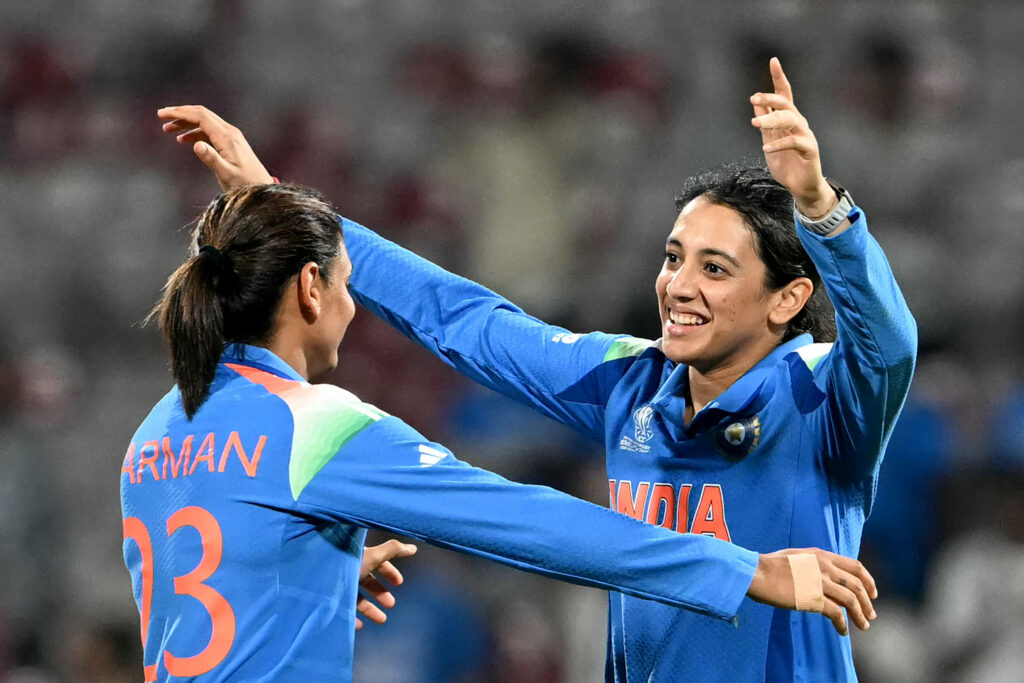
Women’s cricket is set to take a giant leap as the World Cup begins Tuesday, with stars from eight nations aiming to break new ground both on and off the field.The tournament opens in Guwahati with co-hosts India and Sri Lanka ushering in what many believe could be a transformative moment for the women’s game. The 13th edition of the tournament will have Pakistan playing all their matches in Colombo as part of a compromise deal that allows both India and Pakistan to play at neutral venues in multi-nation tournaments.The 50-over showcase boasts an unprecedented total prize purse of $13.88 million, surpassing even the $10 million awarded in the men’s World Cup two years earlier.”You do get the feeling this could be a seismic moment for the women’s game,” England captain Nat Sciver-Brunt said on the International Cricket Council website. “I think we’ll all look back on our careers when we’re retired and mark the World Cup in India as a game-changer.”Sciver-Brunt is seeking a fifth title for England who were last winners in 2017 and lost in the final in 2022.Defending champions Australia, who have won a record seven Women’s World Cups, enter as favourites but expect stiff competition, said captain Alyssa Healy.”This is going to be the toughest World Cup we’ve ever been a part of,” said Healy.”Australia has a rich history in this format and in World Cups, but I think every single team is going to be tough to beat.”India, twice runners-up but never champions, are hunting an elusive maiden title in front of a cricket-obsessed home audience in the country of 1.4 billion people. – Gender parity -Victory could bring millions of new fans to the sport, further elevating its prominence.The past decade has seen women’s cricket surge in talent and visibility. Australia’s women’s Big Bash League, launched in 2015, paved the way before a financial windfall arrived with India’s Women’s Premier League (WPL). Staged first in 2023, the WPL delivered the Board of Control for Cricket in India (BCCI) roughly $700 million in franchise and media rights alone.India’s cricketing stars, including Harmanpreet Kaur and Smriti Mandhana, have become household names, attracting major sponsorships and wide media coverage. A move toward gender parity was championed by ICC chairman Jay Shah, who introduced equal match fees for women and men — a shift hailed as transformative by BCCI secretary Devajit Saikia.”You cannot make out whether the boys are playing or girls,” Saikia told AFP. “The top class skill and the technique will attract eyeballs on television and get the game more fans. Expect packed stadiums at centres across India,” he added.On the pitch, this World Cup could witness a run-fest. Since 2022, participating teams have breached the 300-run mark 34 times, with Australia and India each surpassing 400 once. Young Indian fast bowler Kranti Goud, New Zealand batter Georgia Plimmer, England quick Lauren Bell and South African all-rounder Annerie Dercksen are tipped as players to watch.India are hosting the Women’s ODI World Cup for the fourth time after 1978, 1997 and 2013.The final will be played on November 2 either in Mumbai or Colombo, depending on whether Pakistan go all the way.

Sarkozy n’espère “en aucun cas” être gracié, veut que son “honnêteté” soit reconnue

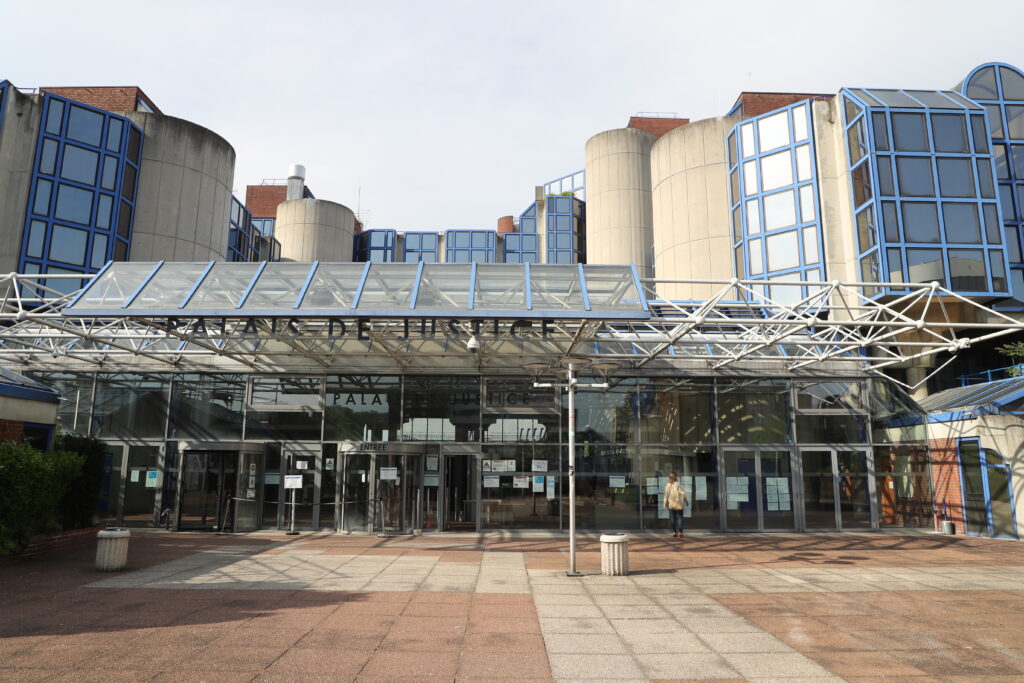
Nicolas Sarkozy affirme qu’il n’espère “en aucun cas” être gracié après sa condamnation dans l’affaire dite du financement libyen, dans un entretien au JDD où il redit qu’il se battra jusqu’à son “dernier souffle pour faire reconnaître” son “honnêteté”.Le tribunal correctionnel de Paris a condamné jeudi l’ancien président à cinq ans de prison avec incarcération prochaine pour avoir “laissé ses plus proches” collaborateurs démarcher la Libye de Mouammar Kadhafi pour financer sa campagne victorieuse de 2007.Comme le Journal du dimanche lui demande s’il espère une grâce d’Emmanuel Macron, l’ex-chef de l’Etat répond: “En aucun cas”.”Pour être gracié, il faut accepter sa peine, et donc reconnaître sa culpabilité. Jamais je ne reconnaîtrai ma culpabilité pour quelque chose que je n’ai pas fait. Je me battrai jusqu’à mon dernier souffle pour faire reconnaître mon honnêteté”, ajoute-t-il, en concluant d’un “je vaincrai”. La grâce ne s’applique qu’à une condamnation définitive et exécutoire, et n’est donc pas envisageable pour l’instant, Nicolas Sarkozy ayant fait appel du jugement.Dans cet entretien fleuve, il cite les mots de la présidente du tribunal à propos du document publié par le site d’information Mediapart en 2012 à l’origine de la procédure – une note en arabe sur un accord pour appuyer la campagne du candidat à l’Elysée. Selon la magistrate, “le plus probable est que ce document soit un faux”.”S’il y a un faux, c’est qu’il y a eu des faussaires, des manipulateurs et donc un complot”, estime Nicolas Sarkozy. “Dans un monde normal, c’est l’ensemble de l’accusation qui aurait dû s’écrouler. Or le tribunal a fait exactement le contraire. Je rappelle que j’ai perdu la présidentielle de 2012 de très peu. Le faux de Mediapart y a joué un grand rôle. Qui réparera cette injustice?”, poursuit-il.Interrogé sur l’exécution provisoire dont est assortie sa peine de cinq ans d’emprisonnement avec mandat de dépôt à effet différé, Nicolas Sarkozy indique qu’il s’attendait “à tout, mais pas à cela”.”Toutes les limites de l’État de droit ont été violées. C’est tellement invraisemblable. Même dans ses réquisitions pourtant violentes, le PNF (parquet national financier, NDLR) ne l’avait pas demandé !”, relève-t-il.En attendant, l’ancien chef de l’Etat reste libre et était présent au Parc des Princes samedi soir pour assister au match PSG-Auxerre, où il a été vu dans les tribunes par un photographe de l’AFP, adressant des gestes de salut au public.Nicolas Sarkozy a été convoqué le 13 octobre par le PNF, qui lui indiquera alors à quelle date il sera incarcéré, probablement dans un “délai relativement proche” selon une source judiciaire.