Trump tells Zelensky to ‘make a deal’ as Tomahawk plea misfires

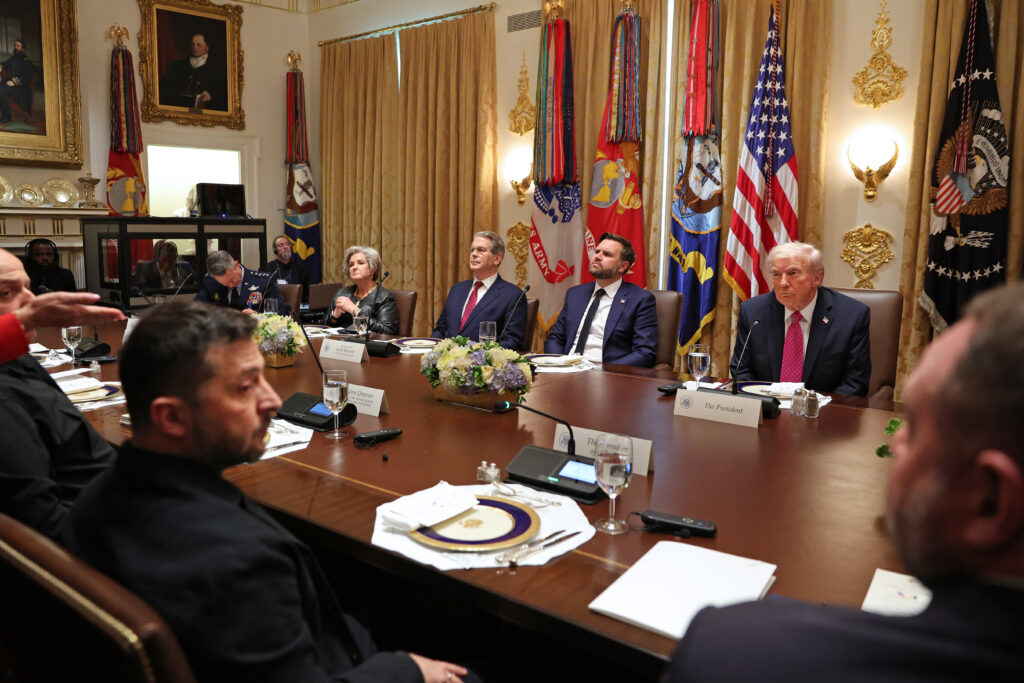
Donald Trump told Ukrainian President Volodymyr Zelensky on Friday to make a deal with Russia, pouring cold water on Kyiv’s hopes for Tomahawk missiles as the US leader renews a push to settle the war.Trump said as recently as last month that he believed Ukraine could take back all its territory — but a day after agreeing to meet Russian President Vladimir Putin for a new summit, the American had changed his tune, though Zelensky did not rule out Trump changing his mind again in the future.”It’s good that President Trump didn’t say ‘no,’ but for today, (he) didn’t say ‘yes'” to providing Kyiv with Tomahawks, Zelensky told US broadcaster NBC on Friday.After meeting with Zelensky at the White House, Trump said on social media that their talks were “very interesting, and cordial, but I told him, as I likewise strongly suggested to President Putin, that it is time to stop the killing, and make a DEAL!””They should stop where they are. Let both claim Victory, let History decide!” he posted online, while flying to his Florida estate.Upon landing, he told reporters that Ukraine and Russia should “stop right now at the battle line.””Go by the battle line wherever it is or else it gets too complicated,” he added.Zelensky meanwhile said after the meeting that Russia was “afraid” of the US-made long-range Tomahawk cruise missiles, and that he was “realistic” about receiving the weapons from Washington.He told reporters that while he and Trump discussed long-range weapons they “decided that we don’t speak about it because… the United States doesn’t want escalation.”- ‘Get the war over’ -Zelensky came to Washington after weeks of calls for Tomahawks, hoping to capitalize on Trump’s growing frustration with Putin after a summit in Alaska failed to produce a breakthrough.But the Ukrainian left empty-handed as Trump eyes a fresh diplomatic breakthrough on the back of last week’s Gaza peace deal.Trump has appeared far more upbeat about the prospects of a deal since his lengthy call Thursday with Putin, in which they agreed to meet soon in Budapest.”Hopefully we’ll be able to get the war over with, without thinking about Tomahawks,” Trump told journalists as he hosted Zelensky.Trump added that he believed Putin “wants to end the war.”Zelensky, who came to push for the long-range US-made weapons, said however that he would be ready to swap “thousands” of Ukrainian drones in exchange for Tomahawks.Zelensky congratulated Trump on his recent Middle East peace deal in Gaza and said he hoped he would do the same for Ukraine. “I hope that President Trump can manage it,” he said.- ‘Many questions’ -Diplomatic talks on ending Russia’s invasion have stalled since the Alaska summit.The Kremlin said Friday that “many questions” needed resolving before Putin and Trump could meet, including who would be on each negotiating team.But it brushed off suggestions Putin would have difficulty flying over European airspace.Hungary said it would ensure Putin could enter and “hold successful talks” with the United States despite an International Criminal Court arrest warrant against him for alleged war crimes.Since the start of his second term, Trump’s position on the Ukraine war has shifted dramatically back and forth.Initially Trump and Putin reached out to each other as the US leader derided Zelensky as a “dictator without elections.”Tensions came to a head in February, when Trump accused his Ukrainian counterpart of “not having the cards” in a rancorous Oval Office meeting.Relations between the two have since warmed as Trump has expressed growing frustration with Putin.But Trump has kept a dialogue channel open with Putin, saying they “get along.”The US leader has repeatedly changed his position on sanctions and other steps against Moscow following calls with the Russian president.Putin ordered a full-scale invasion of Ukraine in February 2022, describing it as a “special military operation” to demilitarize the country and prevent the expansion of NATO.Russia now occupies around a fifth of Ukrainian territory — much of it ravaged by fighting. On Friday the Russian defense ministry announced it had captured three villages in Ukraine’s Dnipropetrovsk and Kharkiv regions.

Chinese leaders to hash out strategic blueprint at key meeting

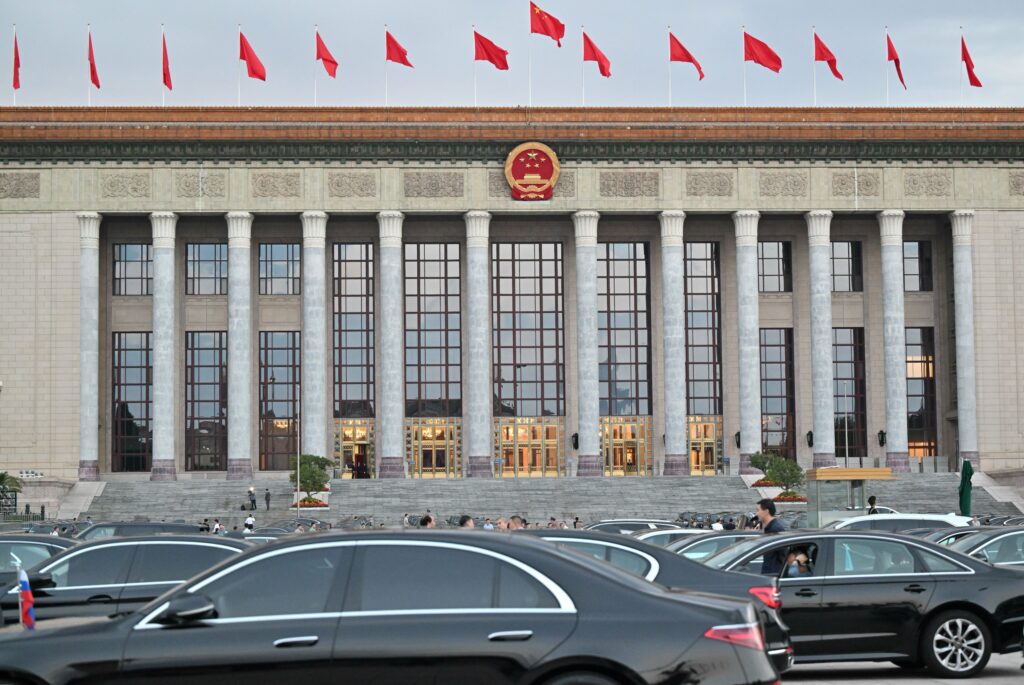
China’s ruling Communist Party will on Monday kick off four days of key closed-door discussions, formulating core economic strategy for coming years as growth flags and trade headwinds mount.The gathering of the Central Committee — an elite body composed of around 200 members and 170 alternates — will be crucial in determining longstanding policy objectives in the world’s second-largest economy.Foreign media access to attending officials is highly restricted during the event, which typically opens and closes in Beijing’s grandiose Great Hall of the People on Tiananmen Square.The fourth such “plenum” to be held during the current committee’s 2022-2027 term, this session will focus on proposals for the 15th five-year plan on economic and social development, state media say.That plan, which covers the period from next year until 2030, will play a central role in the pursuit of President Xi Jinping’s core aims, including technological self-sufficiency and military and economic might.The plenum, chaired by Xi, is scheduled to conclude on Thursday, after which authorities are expected to release a lengthy document summarising major outcomes.The wide-ranging plan encompassing political, economic, social and environmental goals will then be approved in March by the legislature.This month’s meeting comes at an uncertain time for the Chinese economy, beset by sluggish domestic spending, a protracted crisis in the property sector and a turbulent trade war with the United States.”While plenums generally attract less attention than other political events, it is during those plenums that major policies are discussed and being decided upon,” wrote Teeuwe Mevissen, senior China economist at Rabobank, in a recent note.”Given the sheer size of China’s economy these decisions also impact the rest of the world,” he said.- Economy in focus -Typically, it is at the Communist Party’s fifth plenum that officials chart the next five-year economic blueprint.But after an unexplained nine-month delay to the third plenum until July 2024, that monumental task is now expected to fall on the upcoming conclave.Experts have in recent years argued that China must shift towards an economic model propelled more by domestic consumption as opposed to infrastructure investment and exports — long key drivers of growth.Household demand has been sluggish, however, with official data showing this month that consumer prices fell again in September after reaching a half-year low in August.Another prominent issue officials will likely be seeking to address at the plenum is industrial overcapacity, causing domestic gluts of cheap goods in certain sectors and exacerbating friction with trading partners.”We look for a more coordinated policy push that addresses overcapacity and strengthens downstream demand,” Sarah Tan, economist at Moody’s Analytics, told AFP.”The key test will be whether officials can move beyond rhetoric to deliver concrete measures that revive household spending and confidence,” she added.Just as Monday’s secretive proceedings kick off, authorities are also due to announce closely watched economic figures for the third quarter.An AFP survey of analysts forecasts the data to show overall growth during the July-September period of 4.8 percent — the slowest in a year.The fourth plenum will also be closely monitored by observers for any high-level personnel changes as Xi’s relentless crackdown on alleged corruption persists.Tang Renjian, China’s former agricultural minister who was sentenced to death with a two-year reprieve last month, is expected to be formally dismissed by the Central Committee at the plenum, according to the Brookings Institution think tank.The official document released by authorities following the plenum’s conclusion on Thursday represents a high-profile messaging opportunity for leaders, Heron Lim, lecturer of economics at ESSEC Business School in Singapore, told AFP.”Beijing could use this opportunity to address both domestic and international audiences that China’s growth ambitions remain intact despite the geopolitical headwinds,” said Lim.

Crise avec le Venezuela: Trump assure que Maduro a “tout” proposé, nouvelle frappe

Le président américain Donald Trump a assuré vendredi que son homologue vénézuélien, Nicolas Maduro, avait proposé de faire des concessions majeures pour apaiser les tensions entre les deux pays, alors que les Etats-Unis poursuivent leurs frappes contre des narcotrafiquants présumés.Les Etats-Unis ont déployé sept navires de guerre dans les Caraïbes, et un dans le Golfe du Mexique officiellement dans le cadre d’une opération contre le narcotrafic, visant particulièrement le Venezuela et M. Maduro.”Il (Maduro) a tout mis sur la table. Vous avez raison. Vous savez pourquoi ? Parce qu’il ne veut pas jouer au con avec les Etats-Unis”, a déclaré le président américain à la Maison Blanche, en réponse à la question d’un journaliste suggérant que le Venezuela aurait offert de mettre certaines de ses ressources naturelles dans la balance. Peu avant, le président a révélé qu’un “sous-marin transportant de la drogue” avait été la cible d’une des frappes américaines menées dernièrement dans les Caraïbes.”Nous avons attaqué un sous-marin, et c’était un sous-marin transportant de la drogue, construit spécifiquement pour transporter d’énormes quantités de drogue”, a-t-il affirmé, après une question sur l’existence de survivants rapportée dans la presse américaine. Deux survivants sont actuellement détenus par la marine américaine, affirment plusieurs médias américains, sans plus de précisions. “Ce n’était pas un groupe de gens innocents”, a insisté le président américain, qui a indiqué cette semaine avoir autorisé des opérations clandestines de la CIA sur le territoire du Venezuela.  Au moins 27 personnes au total ont été tuées lors de frappes, au moins six depuis le début du déploiement.La crise, qui menace d’entraîner les deux pays dans la guerre, provoque de part et d’autre des soubresauts au cœur des appareils d’Etat.Aux Etats-Unis, l’amiral chargé de superviser les frappes a annoncé jeudi sa retraite prochaine, après seulement un an en poste. Et au Venezuela, la vice-présidente Delcy Rodriguez a dû nier des informations de presse l’accusant d’avoir négocié avec Washington une éviction de M. Maduro. Ce dernier a pris la parole en soirée mais n’a pas réagi aux dernières déclarations de M. Trump.M. Maduro, qui a promis des déploiements dans tout le pays depuis le début de la crise, a annoncé vendredi des manoeuvres dans quatre nouveaux Etats de l’ouest (Mérida, Trujillo, Yaracuy et Lara). “De minuit à cinq heures du matin, il y avait d’immenses marches, mais impressionnantes, gigantesques”, a-t-il assuré.Les États vénézuéliens de Tachira et Amazonas avaient annoncé jeudi le déploiement de patrouilles et des procédures de contrôle aux passages frontaliers avec la Colombie. Selon le commandant de la Zone opérationnelle de Défense intégrée (Zodi) de Tachira, le général Michell Valladares, pas moins de 17.000 soldats ont été déployés. Toutefois, ces annonces fréquentes et fortement médiatisées par le pouvoir ne se traduisent pas forcément par des opérations visibles sur le terrain.- “Imbéciles” -Donald Trump accuse le président vénézuélien d’implication directe dans les trafics, ce qu’il dément formellement. L’arrestation de Nicolas Maduro, inculpé par la justice américaine, fait l’objet d’une prime de 50 millions de dollars.L’amiral Alvin Holsey a de son côté annoncé qu’il allait quitter son poste de commandement des forces américaines pour l’Amérique du Sud et l’Amérique centrale le 12 décembre pour “prendre sa retraite de la Marine”, sur le réseau social X. Il rejoint une longue liste de hauts responsables militaires américains évincés ou partis depuis le début du second mandat de Trump à la Maison Blanche. Le journal américain Miami Herald a affirmé jeudi, sans citer de sources, que la vice-présidente Delcy Rodriguez et son frère Jorge, président de l’Assemblée nationale, négociaient par l’intermédiaire du Qatar avec Washington pour évincer M. Maduro en échange de leur maintien au pouvoir.”C’est tout simplement impossible. Nous sommes unis dans le plus grand amour pour notre histoire, pour notre peuple et pour l’avenir et l’espoir du Venezuela. Mes amis de Miami et du Miami Herald: vous êtes des imbéciles!”, a lancé vendredi M. Maduro, ironisant en anglais: “Stupid, stupid, stupid, you’re very stupid”.Mme Rodriguez avait déjà réagi sur Telegram avec une photo d’elle et du président, qualifiant l’article de “FAKE !!” et de “guerre psychologique”.

Trump says Venezuela’s Maduro offered ‘everything’ to ease tensions

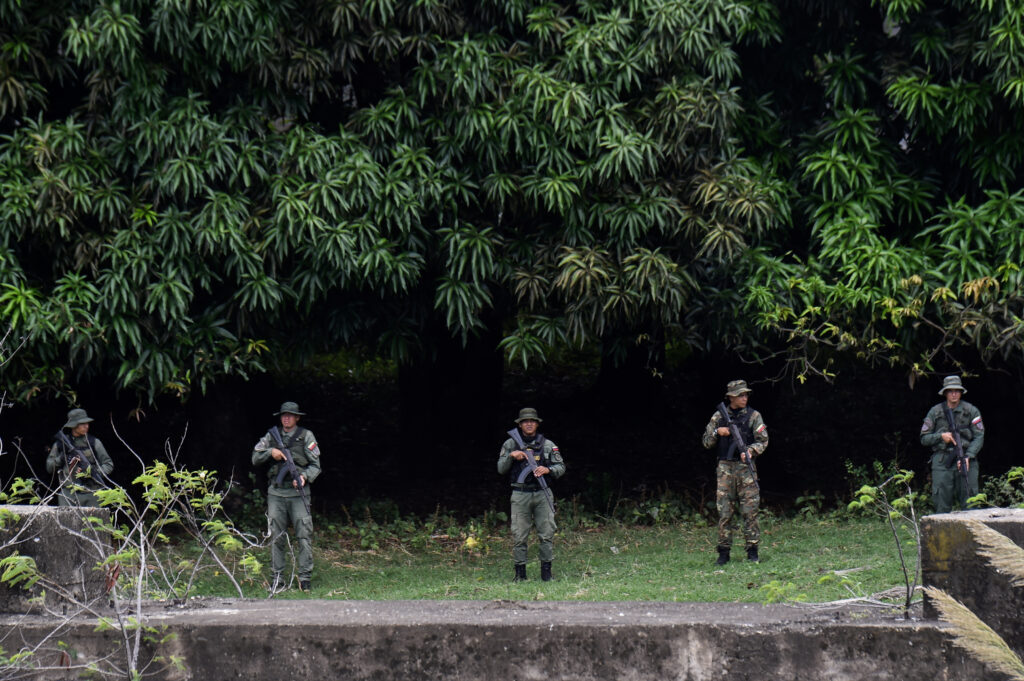
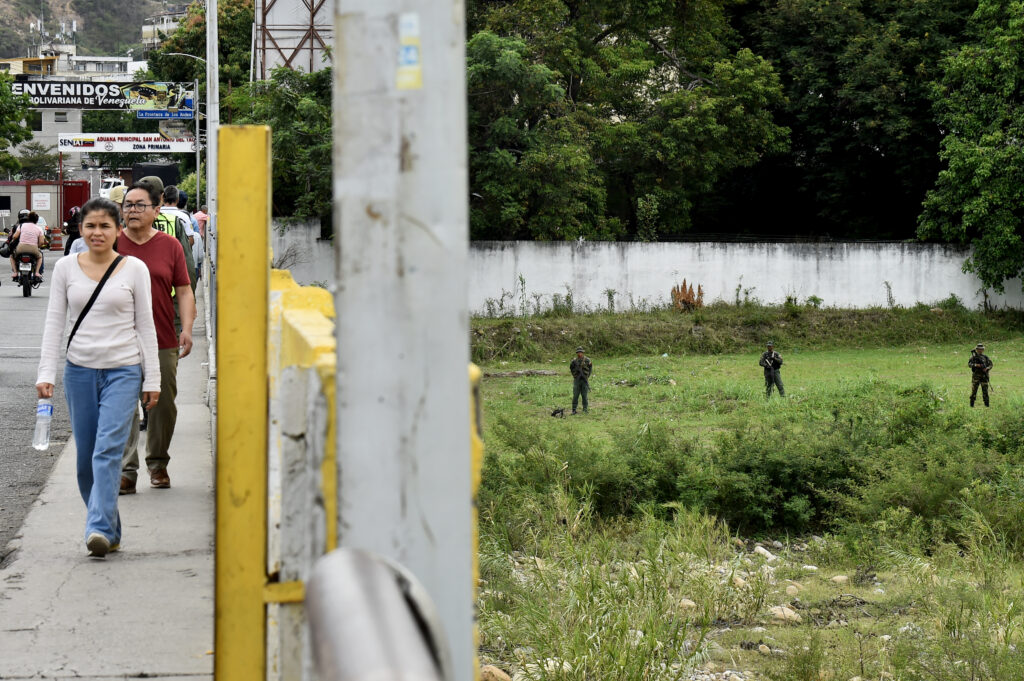
US President Donald Trump said Friday that Venezuelan leader Nicolas Maduro had offered major concessions to ease tensions with Washington and confirmed a new strike on a drug-smuggling vessel, which reportedly left survivors.Washington accuses Maduro of heading a drug cartel and has deployed significant military assets — including stealth warplanes and seven US Navy ships — as part of what it says are counter-narcotics efforts in the region.Maduro, an authoritarian socialist who is widely accused of stealing elections last year, claims Washington is plotting regime change.Asked at the White House about reports that Caracas had floated de-escalation plans, Trump was scathing.”He has offered everything, you’re right. You know why? Because he doesn’t want to fuck around with the United States,” he said.Venezuela’s vice president, Delcy Rodriguez, on Thursday denied a Miami Herald report that she had negotiated with Washington on a plan to oust Maduro.Venezuela is the alleged origin of some of the vessels, at least six of which have been targeted and mostly involving speedboats, in an unprecedented campaign of US strikes in the Caribbean since September.The latest attack left survivors on board, media outlets including CBS and NBC reported, citing unidentified US officials.US media later reported Friday the two survivors were in the custody of the US Navy, with no further details available on their conditions or circumstances.Trump said the target was a “drug-carrying submarine built specifically for the transportation of massive amounts of drugs.”Semi-submersibles built in clandestine jungle shipyards have for years been used to ferry cocaine from South America, particularly Colombia, to Central America or Mexico, usually via the Pacific Ocean.Washington says its Caribbean campaign is dealing a decisive blow to drug trafficking, but it has provided no evidence that the people killed — at least 27 so far — were drug smugglers.Experts say such summary killings are illegal even if they target confirmed narcotics traffickers.The US campaign has drawn in some of Venezuela’s neighbors.Police in Trinidad and Tobago, located off the coast of Venezuela, is investigating whether two of its citizens were killed in a strike on Wednesday.And Colombian President Gustavo Petro says he believes Colombians have also died in the attacks.A defiant Trump this week announced plans to ramp up operations against Venezuela, fuelling speculation that his administration aims to topple Maduro.Trump indicated he had authorized covert CIA operations against Venezuela and was considering strikes on land targets.Earlier this week, in a show of force, US-based B-52 bombers circled over the Caribbean off Venezuela’s coast for several hours, data from tracking website Flightradar24 showed.Venezuela has deployed 17,000 troops to Tachira state, which borders Colombia, in response to the US threats.Venezuelan forces are also stationed in southern Amazonas state, which borders both Colombia and Brazil, and multiple coastal areas. While Trump weighs whether to expand US military action from the sea onto land, the admiral overseeing the naval strikes in the Caribbean announced he will step down.The head of US Southern Command gave no reason for retiring just a year into his tenure, which follows multiple top US military officers being dismissed in recent months.burs-cb/jgc/mlm

US court bars NSO Group from installing spyware on WhatsApp

A US judge on Friday granted an injunction barring Israeli spyware maker NSO Group from targeting WhatsApp users but slashed a $168 million damages award at trial to just $4 million.District Judge Phyllis Hamilton ruled that NSO Group’s behavior fell short of a “particularly egregious” standard needed to support the jury’s calculations on a financial penalty.But in the ruling, seen by AFP, she said the court “concluded that defendants’ conduct causes irreparable harm, and there being no dispute that the conduct is ongoing” the judge granted WhatsApp owner Meta an injunction to stop NSO Group’s snooping tactics at the messaging service.”Today’s ruling bans spyware maker NSO from ever targeting WhatsApp and our global users again,” WhatsApp boss Will Cathcart said in a statement.”We applaud this decision that comes after six years of litigation to hold NSO accountable for targeting members of civil society.”Evidence at trial showed that NSO Group reverse-engineered WhatsApp code to stealthily install spyware targeting users, according to the ruling.The spyware was repeatedly redesigned to escape detection and bypass security fixes at WhatsApp, the court concluded.The lawsuit, filed in late 2019, accused NSO Group of cyberespionage targeting journalists, lawyers, human rights activists and others using the encrypted messaging service.Hamilton ruled however that the $168 million damages verdict awarded to Meta earlier this year was excessive.”There have simply not yet been enough cases involving unlawful electronic surveillance in the smartphone era for the court to be able to conclude that defendants’ conduct was ‘particularly egregious’,” Hamilton wrote in the ruling which was seen by AFP.”As time goes on, more of a shared societal consensus may emerge about the acceptability of defendants’ conduct.”- ‘Malicious code’ -Founded in 2010 by Israelis Shalev Hulio and Omri Lavie, NSO Group is based in the seaside high-tech hub of Herzliya, near Tel Aviv.Media website TechCrunch reported Friday that a US investment group has acquired controlling interest in NSO Group.The Israeli firm produces Pegasus, a highly invasive tool that can reportedly switch on a target’s cell phone camera and microphone and access data on it, effectively turning the phone into a pocket spy.The suit filed in a California federal court contended that NSO tried to infect approximately 1,400 “target devices” with malicious software to steal valuable information.Infecting smartphones or other gadgets being used for WhatsApp messages meant the content of messages encrypted during transmission could be accessed after they were unscrambled.The complaint said the attackers “developed a program to enable them to emulate legitimate WhatsApp network traffic in order to transmit malicious code” to take over the devices.The software has been pinpointed by independent experts as being used by nation states, some of them with poor human rights records.NSO Group has maintained it only licenses its software to governments for fighting crime and terrorism.

US court bars NSO Group from installing spyware on WhatsApp

A US judge on Friday granted an injunction barring Israeli spyware maker NSO Group from targeting WhatsApp users but slashed a $168 million damages award at trial to just $4 million.District Judge Phyllis Hamilton ruled that NSO Group’s behavior fell short of a “particularly egregious” standard needed to support the jury’s calculations on a financial penalty.But in the ruling, seen by AFP, she said the court “concluded that defendants’ conduct causes irreparable harm, and there being no dispute that the conduct is ongoing” the judge granted WhatsApp owner Meta an injunction to stop NSO Group’s snooping tactics at the messaging service.”Today’s ruling bans spyware maker NSO from ever targeting WhatsApp and our global users again,” WhatsApp boss Will Cathcart said in a statement.”We applaud this decision that comes after six years of litigation to hold NSO accountable for targeting members of civil society.”Evidence at trial showed that NSO Group reverse-engineered WhatsApp code to stealthily install spyware targeting users, according to the ruling.The spyware was repeatedly redesigned to escape detection and bypass security fixes at WhatsApp, the court concluded.The lawsuit, filed in late 2019, accused NSO Group of cyberespionage targeting journalists, lawyers, human rights activists and others using the encrypted messaging service.Hamilton ruled however that the $168 million damages verdict awarded to Meta earlier this year was excessive.”There have simply not yet been enough cases involving unlawful electronic surveillance in the smartphone era for the court to be able to conclude that defendants’ conduct was ‘particularly egregious’,” Hamilton wrote in the ruling which was seen by AFP.”As time goes on, more of a shared societal consensus may emerge about the acceptability of defendants’ conduct.”- ‘Malicious code’ -Founded in 2010 by Israelis Shalev Hulio and Omri Lavie, NSO Group is based in the seaside high-tech hub of Herzliya, near Tel Aviv.Media website TechCrunch reported Friday that a US investment group has acquired controlling interest in NSO Group.The Israeli firm produces Pegasus, a highly invasive tool that can reportedly switch on a target’s cell phone camera and microphone and access data on it, effectively turning the phone into a pocket spy.The suit filed in a California federal court contended that NSO tried to infect approximately 1,400 “target devices” with malicious software to steal valuable information.Infecting smartphones or other gadgets being used for WhatsApp messages meant the content of messages encrypted during transmission could be accessed after they were unscrambled.The complaint said the attackers “developed a program to enable them to emulate legitimate WhatsApp network traffic in order to transmit malicious code” to take over the devices.The software has been pinpointed by independent experts as being used by nation states, some of them with poor human rights records.NSO Group has maintained it only licenses its software to governments for fighting crime and terrorism.

Brewing crisis: java-loving NY confronts soaring coffee costs

New Yorkers run on coffee. From high-end experimental boutique cafes to the humble sidewalk cart, millions of cups of java are sold every day.But coffee-lovers are facing increasing pain as they pay for their simple espresso shots and elaborate pumpkin spiced lattes as the cost of beans has jumped 21 percent between August 2024 and August 2025 in the United States — the world’s largest market for coffee.Climate shocks drove the cost of arabica soaring, with the beans hitting an all-time high in February 2025. That has been compounded by elevated transport costs and the 50 percent tariffs imposed by President Donald Trump since August 6 on many products from Brazil.Brazil, the largest coffee producer, has been sanctioned by the Trump administration for its prosecution of former president Jair Bolsonaro for a coup attempt. It supplies 30 percent of the United States’s unroasted beans.”It’s having a major impact on us, on small business owners, on farmers, across the board,” Jeremy Lyman, co-founder of the New York-based chain Birch Coffee, told AFP.Founded in 2009, the brand has 14 outlets citywide, roasting its own specialty coffee in Queens since 2015.”The price of coffee on the market has just been on a steady incline over the last probably year. I think it’s gone up about 55 percent from this time last year…it’s impacting the prices that we charge,” Lyman said.He said that Brazil’s production had become “unaffordable” forcing Birch to look elsewhere for beans with its importer “pushing pause” on its orders unless specially requested.Cecafe, the Council of Coffee Exporters of Brazil, reports that exports to the United States have dropped almost 53 percent as of September compared to the year before with importers looking instead to Mexico, Peru and Ethiopia.- United by coffee -Lyman acknowledges market forces have meant price hikes for his customers, with Birch adding 50 cents to cups sold in-store, and $2 to $3 per bag of roasted coffee sold online. “Typically, it’ll be small, incremental (increases) because it also helps us get a little bit more time to navigate how we’re going to be sourcing,” he said, adding that he tried to give customers two weeks of warning.Other cafes have adopted a novel approach: adding an adjustable premium to the base price of each cup according to what level Trump has set tariffs that day, Lyman said.But customers will only swallow so much, the Birch founder warned, warning of a real risk of losing customers.Jason Nickel, 45, said that while he still seeks out a daily caffeine hit, he is “a little more careful about where I go.” He cannot imagine paying more than $6 a cup, including tip, for cortado — an espresso shot with a dash of milk foam.Anna Simonovsky, 32, said that her upper limit had gone from $7 for a latte — a milkier, frothier drink than a cortado — to as much as $10. She enjoys coffee as a treat for special occasions, like a visit with a friend.Trump recently threw a lifeline to the two-thirds of Americans who drink coffee daily when he placed coffee on a list of products not cultivated by US farmers in sufficient quantity — potentially exempting it from tariffs, alongside tea and cocoa.And in a rare glimmer of bipartisanship, coffee-loving Republicans and Democrats are jointly sponsoring a bill intended to protect coffee products.

Exiled dissident encourages Cubans to stay and fight

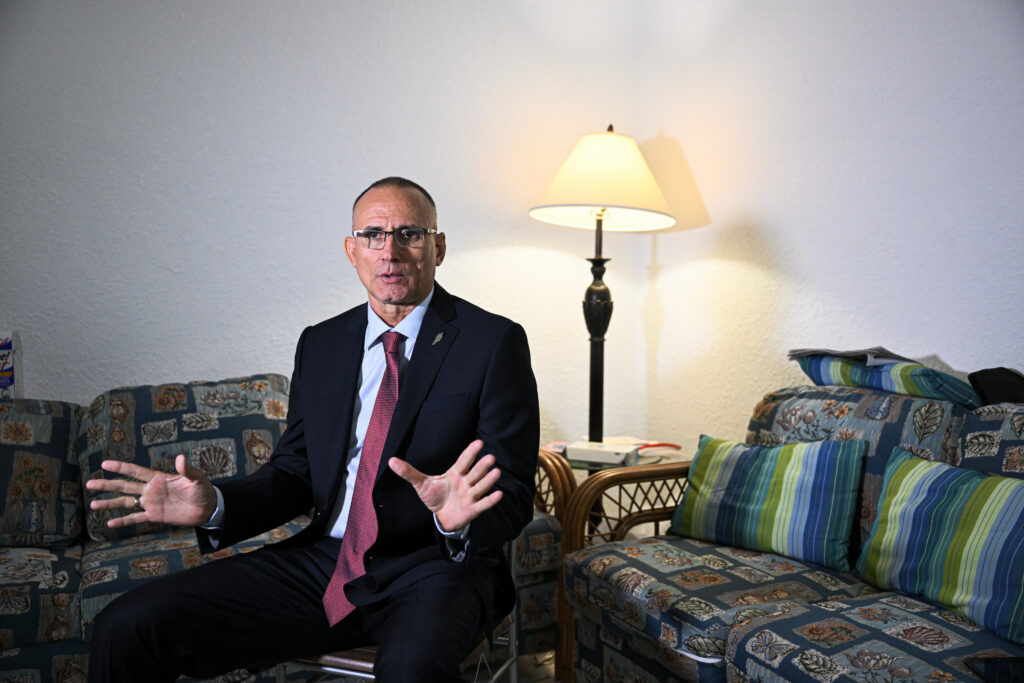
There’s no rest for Jose Daniel Ferrer, a Cuban dissident who arrived in the United States this week and is determined to work with other exiles to democratically unseat the communist government in Havana.”We have to be proactive if we want to encourage Cubans to fight for their rights, for their freedom, instead of leaving the country with a ‘save yourself if you can’ type of mentality,” the longtime activist told AFP from his new home in Miami.Ferrer is the founder of the pro-democracy movement Patriotic Union of Cuba (UNPACU), and has paid a price for his efforts.The 55-year-old was detained during Cuba’s July 11, 2021 protests — the largest protests the island has seen since the 1959 communist revolution —  and was released in January of this year. He was imprisoned again in April until he was again released Monday, when he fled into exile.- Family and country -Ultimately, Ferrer said it wasn’t until Cuban authorities began pressuring his loved ones — threatening merchants that sold them goods and raiding his home — that he made the “very tough” decision to accept exile to the United States.”That whole situation, knowing that the government is going to increase the level of harassment toward my family — it caused a pain that is difficult to bear,” he said.In prison, Ferrer said he was beaten and forced to eat rotten food, and he struggled to engage with his network of activists as well as an apathetic population.”It hurts that my compatriots don’t care about my sacrifice or that of other opponents, and only think about leaving the country,” he said. “The fact that so many people are leaving Cuba, and that mentality of ‘nobody can fix this,’ has done a lot of harm,” he said.Ferrer was also imprisoned between 2003 and 2011, after being arrested with 74 others during the so-called “Black Spring” protests, and knows how hard it is to go against a government that uses “excessive repression.” But he believes “if more people were involved in the resistance, it would be harder to repress them.”- Creative activism -Despite the disappointments and hardships he’s faced, Ferrer vows to continue his fight from Miami.”With the exile community, we are going to promote creative and non-violent activism throughout the island, from Guantanamo to Pinar del Rio,” he said enthusiastically.Through a network of contacts, Ferrer wants to distribute flyers, spread graffiti and use other messaging tactics to inspire the people to question those in power.”We are going to tell the people: ‘The primary culprit isn’t simply the government that imposes its will, but also you who endure it. The solution is not to escape, but to fight for your rights,” he said.The activist believes the opposition hasn’t been able to address “what affects the population the most, and offer them solutions” to the daily problems Cubans face, like lack of access to food, medicine and electricity.”Amid so many needs, freedom and democracy seem like a dream that is too far off.”- Dream of return -For his dreams to come true, Ferrer believes it’s crucial to train activists and organize aid from the international community. “If we were more unified inside and outside Cuba, we would have convinced Europeans and other Western governments that we deserve more solidarity, as Maria Corina Machado did,” he said, referring to the recent Nobel Peace Prize laureate who is leading the opposition in Venezuela against leftist president Nicolas Maduro.Ferrer added that he hopes to return to Cuba soon.”I don’t want to go back when everything is done. I want to return to Cuba to make the regime end and begin the transition process toward democracy,” he said.