A Tours, la gauche unitaire en route pour la primaire, le PS en observateur

La primaire de la gauche non mélenchoniste tente de passer la vitesse supérieure samedi à Tours, où ses représentants vont annoncer la date et une partie des modalités de ce long processus en vue de la présidentielle de 2027, même si le PS, divisé en interne, reste pour l’heure en observateur.Après leur serment fait en juillet à Bagneux (Hauts-de-Seine) d’avoir un “candidat commun” pour 2027, le patron du PS Olivier Faure, la cheffe des Ecologistes Marine Tondelier, les députés Clémentine Autain (L’Après) et François Ruffin (Debout!) notamment, réunis autour de l’égérie de la Gauche en 2024 Lucie Castets, font un pas de plus pour rendre inéluctable cette primaire, qui doit selon eux leur permettre d’accéder au second tour de la présidentielle.Dans leur agenda, la date du 11 octobre 2026 se profile, même si le mode de scrutin n’a pas encore été tranché.Les membres du Front Populaire 2027, nom de leur alliance, doivent aussi acter les modalités pour pouvoir se présenter à la primaire.Mais les embuches sont nombreuses. Tout d’abord, les deux candidats de gauche les mieux placés dans les sondages, le leader de LFI Jean-Luc Mélenchon et le dirigeant de Place publique Raphaël Glucksmann, sur deux lignes antagonistes, continuent de refuser toute participation à ce processus, persuadés de pouvoir s’imposer en incarnant le vote utile. Le PCF n’est pas de l’aventure non plus, même si PS et Ecologistes sont persuadés qu’il rentrera tôt ou tard dans le dispositif.Quant au PS, son premier secrétaire Olivier Faure, favorable à la primaire, n’a pas les coudées franches pour s’engager pleinement dans le processus.Ce n’est qu’au terme d’un vote des adhérents socialistes, après les municipales, que le parti à la rose pourra, ou non, s’impliquer dans l’aventure unitaire.Car en interne, les opposants au chef socialiste, et notamment le camp du maire de Rouen Nicolas Mayer-Rossignol qui a échoué de peu à prendre le parti en juin 2025, ont exprimé leur désaccord lors d’un bureau national.”Olivier Faure va aller à Tours mais le mandat qu’il a reçu, ce n’est pas de cautionner les annonces qui pourraient y être faites. Il pourra simplement dire que les socialistes prendront leur décision le moment venu”, a expliqué le chef des sénateurs socialistes Patrick Kanner sur Radio J.”Mais quel est le chemin politique que proposent les autres pour éviter l’éparpillement de la gauche?”, interroge le secrétaire général du PS Pierre Jouvet.- “Mémoire de poisson rouge” -Certains, dont François Hollande, penchent pour une fédération de la gauche réformiste allant du PS à Raphaël Glucksmann, Bernard Cazeneuve et Yannick Jadot, qui désignerait un candidat au consensus.Pour M. Hollande, “la preuve que la primaire n’a pas de sens, c’est bien ce qui se passe à l’Assemblée, où Ecologistes, Autain et Ruffin ont voté pour la censure de LFI et contre le budget au risque de faire sauter le gouvernement quand les socialistes cherchaient une issue”.Et, en l’absence de Raphaël Glucksmann dans le dispositif, le camp de Boris Vallaud, charnière pour faire ou défaire une majorité au PS, avoue ne pas être “emballé” non plus par cette primaire “de bric et de broc”, selon les mots d’un proche du chef des députés socialistes.Les mêmes réclament par ailleurs que le PS désigne en amont son propre candidat, sans faire mystère de l’ambition de Boris Vallaud. “Il sera OK pour la primaire de la gauche s’il gagne celle du PS”, ironise un pro-primaire.Pour la maire de Nantes, Johanna Rolland, “on va gagner aux municipales là où on mène des listes de rassemblement. Pourquoi il faudrait bazarder cette stratégie à la présidentielle?”.Marine Tondelier, qui “suit les turpitudes du PS”, note que ceux qui ont adhéré au parti après le Nouveau Front populaire, “sont ceux qui ont aimé ce qu’Olivier Faure a fait” et devraient choisir la primaire.”On peut espérer que les militants socialistes n’ont pas la mémoire d’un poisson rouge et se souviennent du score d’Anne Hidalgo à la dernière présidentielle”, commente aussi Clémentine Autain.

A Tours, la gauche unitaire en route pour la primaire, le PS en observateur

La primaire de la gauche non mélenchoniste tente de passer la vitesse supérieure samedi à Tours, où ses représentants vont annoncer la date et une partie des modalités de ce long processus en vue de la présidentielle de 2027, même si le PS, divisé en interne, reste pour l’heure en observateur.Après leur serment fait en juillet à Bagneux (Hauts-de-Seine) d’avoir un “candidat commun” pour 2027, le patron du PS Olivier Faure, la cheffe des Ecologistes Marine Tondelier, les députés Clémentine Autain (L’Après) et François Ruffin (Debout!) notamment, réunis autour de l’égérie de la Gauche en 2024 Lucie Castets, font un pas de plus pour rendre inéluctable cette primaire, qui doit selon eux leur permettre d’accéder au second tour de la présidentielle.Dans leur agenda, la date du 11 octobre 2026 se profile, même si le mode de scrutin n’a pas encore été tranché.Les membres du Front Populaire 2027, nom de leur alliance, doivent aussi acter les modalités pour pouvoir se présenter à la primaire.Mais les embuches sont nombreuses. Tout d’abord, les deux candidats de gauche les mieux placés dans les sondages, le leader de LFI Jean-Luc Mélenchon et le dirigeant de Place publique Raphaël Glucksmann, sur deux lignes antagonistes, continuent de refuser toute participation à ce processus, persuadés de pouvoir s’imposer en incarnant le vote utile. Le PCF n’est pas de l’aventure non plus, même si PS et Ecologistes sont persuadés qu’il rentrera tôt ou tard dans le dispositif.Quant au PS, son premier secrétaire Olivier Faure, favorable à la primaire, n’a pas les coudées franches pour s’engager pleinement dans le processus.Ce n’est qu’au terme d’un vote des adhérents socialistes, après les municipales, que le parti à la rose pourra, ou non, s’impliquer dans l’aventure unitaire.Car en interne, les opposants au chef socialiste, et notamment le camp du maire de Rouen Nicolas Mayer-Rossignol qui a échoué de peu à prendre le parti en juin 2025, ont exprimé leur désaccord lors d’un bureau national.”Olivier Faure va aller à Tours mais le mandat qu’il a reçu, ce n’est pas de cautionner les annonces qui pourraient y être faites. Il pourra simplement dire que les socialistes prendront leur décision le moment venu”, a expliqué le chef des sénateurs socialistes Patrick Kanner sur Radio J.”Mais quel est le chemin politique que proposent les autres pour éviter l’éparpillement de la gauche?”, interroge le secrétaire général du PS Pierre Jouvet.- “Mémoire de poisson rouge” -Certains, dont François Hollande, penchent pour une fédération de la gauche réformiste allant du PS à Raphaël Glucksmann, Bernard Cazeneuve et Yannick Jadot, qui désignerait un candidat au consensus.Pour M. Hollande, “la preuve que la primaire n’a pas de sens, c’est bien ce qui se passe à l’Assemblée, où Ecologistes, Autain et Ruffin ont voté pour la censure de LFI et contre le budget au risque de faire sauter le gouvernement quand les socialistes cherchaient une issue”.Et, en l’absence de Raphaël Glucksmann dans le dispositif, le camp de Boris Vallaud, charnière pour faire ou défaire une majorité au PS, avoue ne pas être “emballé” non plus par cette primaire “de bric et de broc”, selon les mots d’un proche du chef des députés socialistes.Les mêmes réclament par ailleurs que le PS désigne en amont son propre candidat, sans faire mystère de l’ambition de Boris Vallaud. “Il sera OK pour la primaire de la gauche s’il gagne celle du PS”, ironise un pro-primaire.Pour la maire de Nantes, Johanna Rolland, “on va gagner aux municipales là où on mène des listes de rassemblement. Pourquoi il faudrait bazarder cette stratégie à la présidentielle?”.Marine Tondelier, qui “suit les turpitudes du PS”, note que ceux qui ont adhéré au parti après le Nouveau Front populaire, “sont ceux qui ont aimé ce qu’Olivier Faure a fait” et devraient choisir la primaire.”On peut espérer que les militants socialistes n’ont pas la mémoire d’un poisson rouge et se souviennent du score d’Anne Hidalgo à la dernière présidentielle”, commente aussi Clémentine Autain.

Bangladesh readies for polls, worry among Hasina supporters

Bangladesh is preparing for the first election since the overthrow of Sheikh Hasina, but supporters of her banned Awami League (AL) are struggling to decide whether to shift their allegiance. In Gopalganj, south of the capital Dhaka and a strong bastion of Hasina’s iron-grip rule, residents are grappling with an election without the party that shaped their political lives for decades. “Sheikh Hasina may have done wrong — she and her friends and allies — but what did the millions of Awami League supporters do?” said tricycle delivery driver Mohammad Shahjahan Fakir, 68, adding that he would not vote.”Why won’t the ‘boat’ symbol be there on the ballot paper?” he said, referring to AL’s former election icon.The Muslim-majority nation of 170 million people will hold elections on February 12, its first since the uprising.Hasina, who crushed opposition parties during her rule, won landslide victories in Gopalganj in every election since 1991.After a failed attempt to cling to power and a brutal crackdown on protesters, she was ousted as prime minister in August 2024 and fled to India.She was sentenced to death in absentia for crimes against humanity by a court in Dhaka in November, and her former ruling party, once the country’s most popular, has been outlawed.Human Rights Watch has condemned the AL ban as “draconian”.”There’s so much confusion right now,” said Mohammad Shafayet Biswas, 46, a banana and betel leaf seller in Gopalganj.”A couple of candidates are running from this constituency — I don’t even know who they are.”As a crowd gathered in the district, one man shouted: “Who is going to the polling centres? We don’t even have our candidates this time.”- ‘Dehumanise’ -Hasina’s father, Sheikh Mujibur Rahman, the founding president of Bangladesh, hailed from Gopalganj and is buried in the town.Statues of Rahman have been torn down nationwide, but in Gopalganj, murals and statues are well-maintained.Since Hasina’s downfall, clashes have broken out during campaigning by other parties, including one between police and AL supporters in July 2025, after which authorities filed more than 8,000 cases against residents.Sazzad Siddiqui, a professor at Dhaka University, believes voter turnout in Gopalganj could be the lowest in the country.”Many people here are still in denial that Sheikh Hasina did something very wrong,” said Siddiqui, who sat on a government commission formed after the 2025 unrest.”At the same time, the government has constantly tried to dehumanise them.”This time, frontrunners include candidates from the Bangladesh Nationalist Party (BNP) and Jamaat-e-Islami, the country’s largest Islamist party.Both are from Hasina’s arch-rivals, now eyeing power. “I am going door to door,” BNP candidate S.M Zilany, 57, told AFP, saying many would-be voters had never had a candidate canvass for their backing.”I promise them I will stand by them.” Zilany said he had run twice against Hasina — and was struck down by 34 legal cases he claimed had been politically motivated.This time, he said that there was “a campaign to discourage voters from turning up”.Jamaat candidate M.M Rezaul Karim, 53, said that under Hasina, the party had been driven underground.”People want a change in leadership,” Karim told AFP, saying he was open to all voters, whatever their previous loyalties.”We believe in coexistence; those involved in crimes should be punished; others must be spared,” Karim said. Those once loyal to Hasina appear disillusioned.Some say they had abandoned the AL, but remain unsure whom to support.”I am not going to vote,” said one woman, who asked not to be named.”Who should I vote for except Hasina? She is like a sister.”

Venezuela: le pouvoir annonce plus de libérations de prisonniers politiques, les familles s’impatientent

“Qu’ils les libèrent!”, s’impatientent des proches de détenus politiques au Venezuela alors que la présidente par intérim Delcy Rodriguez, qui a succédé à Nicolas Maduro capturé par les Etats-Unis le 3 janvier, annonce plus de 600 libérations et en appelle à l’ONU pour confirmer ces chiffres.La controverse autour du nombre libérations de détenus politiques, jamais …

Venezuela: le pouvoir annonce plus de libérations de prisonniers politiques, les familles s’impatientent Read More »

Starmer dénonce des propos “insultants” de Trump sur le rôle des alliés de l’Otan en Afghanistan

Le Premier ministre britannique Keir Starmer, à l’unisson de toute la classe politique du Royaume-Uni, a estimé vendredi “insultants” et “franchement consternants” des propos de Donald Trump affirmant que les alliés de l’Otan étaient “restés un peu loin des lignes de front” en Afghanistan.Dans une interview jeudi à la chaîne américaine Fox News, le président …

Starmer dénonce des propos “insultants” de Trump sur le rôle des alliés de l’Otan en Afghanistan Read More »

Du Texas à New York, avis de forte tempête hivernale sur les Etats-Unis

Une tempête hivernale majeure s’apprête vendredi à frapper les Etats-Unis et pourrait causer des “accumulations de glace catastrophiques”, des “températures glaciales” et toucher au moins 160 millions de personnes à travers le pays, selon les services météo.La tempête, qui doit balayer à partir de vendredi soir les Grandes plaines du centre et se déplacer jusqu’à …

Du Texas à New York, avis de forte tempête hivernale sur les Etats-Unis Read More »

Greenland, Denmark set aside troubled history to face down Trump

Greenland and Denmark have formed a united front to face down US President Donald Trump, momentarily setting aside the troubled history between them.The Arctic island, a Danish colony for three centuries, still has a complicated relationship with Denmark, which now rules it as an autonomous territory.Greenland’s main political parties all want independence, but disagree on how exactly to get there. Trump’s designs on the island led them to forge a coalition government in March last year.Greenland’s leaders made clear last week they had no interest in Trump’s bid to take over the vast island — an idea he pushed hard, before backing off on Wednesday after reaching what he called a framework deal on Arctic security with NATO’s secretary-general.”Greenlanders still have a lot of grievances concerning Denmark’s lack of ability to reconsider its colonial past,” said Ulrik Pram Gad, a researcher at the Danish Institute for International Studies (DIIS).”But Trump’s pressure has prompted the wide majority of the political spectrum that forms (Greenland’s) coalition government to put independence preparations — always a long-term project — aside for now,” he told AFP.”The clear European support has made this easier in the sense that the relation to Denmark feels a lot less claustrophobic when joined by others,” he added.While the main Greenland parties differ on how to achieve independence, the growing US pressure led them in March 2025 to put their differences to one side to form their coalition.Only the Naleraq party, which wants a fast track to independence, stayed in opposition.At the height of the crisis, Greenland’s Prime Minister Jens-Frederik Nielsen made it clear that if the government had to choose between the United States and Denmark, it would choose Denmark.- Colonial past -Trump’s talk of a framework deal negotiated with NATO chief Mark Rutte prompted Denmark and Greenland to reiterate that only they can take decisions concerning them.In the last month of diplomatic back-and-forth, Greenland and Denmark have presented a united front, speaking with one voice.On January 14, Greenland’s Foreign Minister Vivian Motzfeldt was in Washington alongside her Danish counterpart Lars Lokke Rasmussen for talks with US Vice President JD Vance and Secretary of State Marco Rubio.By Monday, she was in Brussels for talks with Rutte, this time with Denmark’s Defence Minister Troels Lund Poulsen.But that unity conceals the scars of their colonial past.Greenland was a Danish colony from the early 18th century. It became a Danish territory in 1953, a full part of Denmark — before becoming an autonomous territory in 1979, a status that was strengthened in 2009.”It’s a long history. It has gone through different stages,” said Astrid Andersen, a specialist in Danish-Greenlandic relations at the Danish Institute for International Studies.”Any colonial relation is a question of domination and there have been some injustices committed.”- Forced sterilisation -Those injustices include a 1951 social experiment in which 22 Inuit children were forcibly separated from their families and prevented from speaking Greenlandic — part of bid to create a Danish-speaking elite.In 2021, the six still alive were each awarded compensation of 250,000 crowns (33,500 euros).Another dark chapter was Denmark’s efforts from the 1960s and for three decades on to reduce the birth rate in Greenland. Several thousand women and teenagers — at least 4,000 — had IUDs fitted without their consent to prevent them conceiving.Prime Minister Mette Frederiksen has presented her apologies to the women concerned — nearly half of whom were unable to have children — and a compensation procedure is underway.Denmark’s social services even used controversial psychological tests to — as they saw it — evaluate if Greenlandic mothers were fit to be parents.A 2022 study showed that in metropolitan Denmark, children born to Greenlandic families were five to seven times more at risk of being placed in children’s homes than those born to Danish families.The use of such tests was only discontinued last year.The recent debate over these issues has, for the moment, been put to one side, said Andersen.”Right now I think there’s a general agreement with a few exceptions that the common opponent right now is Trump and we kind of need to face this together somehow.”

Defiant protests over US immigration crackdown, child’s detention

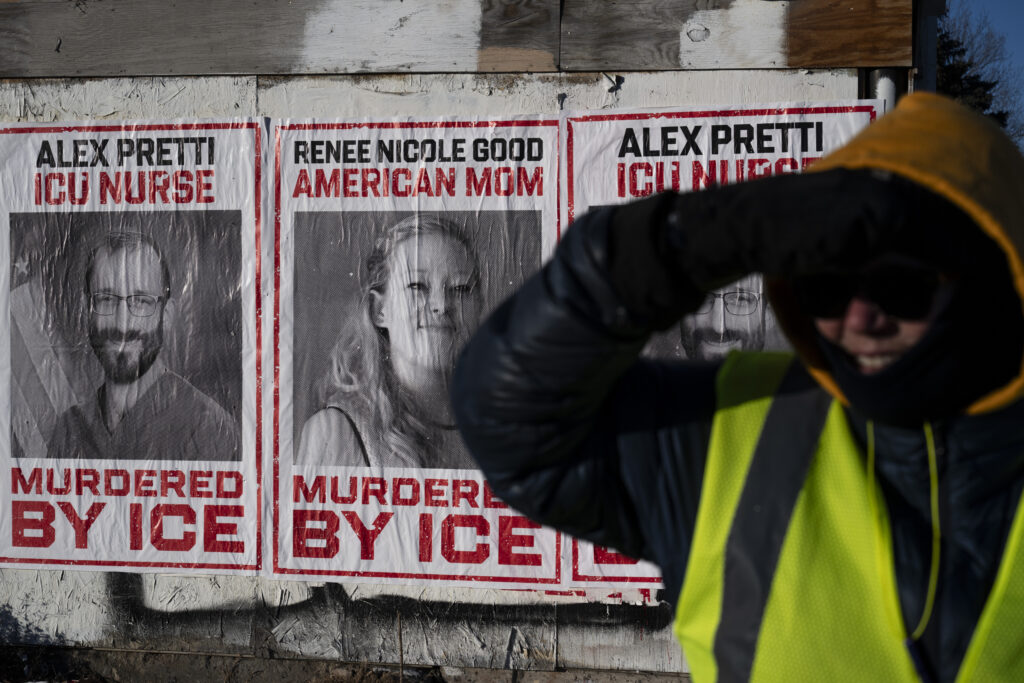
Thousands of people braved icy conditions on Friday to protest the Trump administration’s immigration crackdown in Minneapolis and businesses closed their doors amid anger over the detention of a five-year-old migrant boy.Dozens of eateries, attraction sites and other businesses shuttered as part of a day of coordinated action to defy the weeks-long federal immigration operation underway in Minnesota.Images of an apparently terrified pre-schooler, Liam Conejo Ramos, being held by immigration officers who were seeking to arrest the boy’s father have rekindled public outrage at the federal crackdown, during which an agent shot and killed a US citizen.The superintendent of Columbia Heights Public Schools, where Ramos was a preschool student, said the child and his Ecuadoran father, Adrian Conejo Arias — both asylum seekers — were taken from their driveway as they arrived home on Tuesday.Ramos was then used as “bait” by officers to draw out those inside his home, superintendent Zena Stenvik added.One protester, who declined to be named, told AFP he was marching “because if we don’t fight, we don’t win. If we don’t fight, fascism wins.”The local man held a sign reading “five-years-old, dude,” a reference to Ramos.Thousands of Immigration and Customs Enforcement (ICE) agents have been deployed to the Democratic-led city, as President Donald Trump presses his campaign to deport undocumented immigrants across the country.On a visit to Minneapolis on Thursday, Vice President JD Vance confirmed Ramos was among those detained. But he argued that agents were protecting him after his father “ran” from officers.”What are they supposed to do? Are they supposed to let a five-year-old child freeze to death?” he said.UN human rights chief Volker Turk called on US authorities to end the “harmful treatment of migrants and refugees.”Arias, the father of the boy, was at a Texas detention facility, according to an ICE database that does not list the whereabouts of under-18s.- ‘Dealing with children’ -Border Patrol senior official Gregory Bovino defended his officers’ treatment of Ramos, telling reporters Friday: “I will say unequivocally that we are experts in dealing with children.”ICE commander Marcos Charles said Friday “my officers did everything they could to reunite him with his family” and alleged that Ramos’s family refused to open the door to him after his father left him and ran from officers.They would be detained “pending their immigration proceedings,” he added after alleging they entered the United States illegally and were “deportable.”Ramos’s teacher, whose name was given as Ella, called him “a bright young student.” In Minneapolis, where temperatures touched -23C (-9F) on Friday, protesters wrapped in hats, gloves and scarves chanted “ICE out” as part of a broader anti-ICE day of action.Separately, protesters picketed outside Minneapolis-St. Paul airport over the facility’s use for deporting those swept up in immigration raids. Methodist pastor Mariah Furness Tollgaard said in a statement that 100 members of clergy were arrested and charged with trespassing and disobeying a peace officer on Friday, while demonstrating at the airport.”As a faith leader in Minnesota, my tradition teaches that every person bears the image of God and is worthy of dignity and safety, and in this moment, all people of faith and moral conscience must stand up,” she said.- ‘Just a baby’ -Former US vice president Kamala Harris said she was “outraged” by Ramos’s detention and called him “just a baby.”Ramos is one of at least four children detained in the same Minneapolis school district this month, administrators said.Minneapolis has been rocked by increasingly tense protests since federal agents shot and killed US citizen Renee Good on January 7.An autopsy concluded that the killing was a homicide, a classification that does not automatically mean a crime was committed.The officer who fired the shots that killed Good, Jonathan Ross, has neither been suspended nor charged.Marc Prokosch, the lawyer for Ramos and his father, said they followed the law in applying for asylum in Minneapolis, a sanctuary city where police do not cooperate with federal immigration authorities.Children have been caught up in immigration enforcement under both Republican and Democratic administrations.Minnesota has sought a temporary restraining order for the ICE operation in the state which, if granted by a federal judge, would pause the sweeps. There will be a hearing on the application Monday.