Ballon d’Or: du dribbleur chambreur à l’attaquant modèle, la mue spectaculaire de Dembélé

Longtemps freiné par les blessures et moqué pour ses imprécisions récurrentes, Ousmane Dembélé s’est transformé en attaquant modèle, premier à défendre et à marquer, pour mieux hisser le PSG sur le toit de l’Europe et devenir lundi le sixième Français lauréat du Ballon d’Or.Cette récompense individuelle couronne l’incroyable saison 2024-2025 de “Dembouz”, ponctuée des trophées de meilleur joueur de Ligue 1 et de la Ligue des champions.On connaissait de l’attaquant parisien sa capacité à déséquilibrer l’adversaire avec ses dribbles déroutants, son altruisme naturel (16 passes décisives toutes compétitions confondues, dont deux en finale de la Ligue des champions) aussi. A son arc, il a ajouté la corde du buteur, en témoignent ses 35 buts en 53 matches (L1, C1, Coupe de France, Mondial des clubs, Trophée des champions).Une ligne statistique bien au-dessus des 14 buts qui constituaient son précédent record en 2018-2019 avec le FC Barcelone… Dire que Dembélé, actuellement blessé à une cuisse, a signé de loin la meilleure saison de sa carrière à 28 ans est un euphémisme.Au coeur de l’hiver dernier, l’ambidextre a notamment réussi à enchaîner deux triplés consécutifs contre Stuttgart en Ligue des champions, puis contre Brest en championnat, le début d’un sprint vers le Ballon d’Or.”Il a fait une saison hors norme, efficace devant le but, mais quand on regarde son apport sur le terrain pour construire les actions, tout ce qu’il fait en efforts défensifs, c’est juste extraordinaire”, détaille Désiré Doué, son acolyte au PSG.- Sacré “Graal” -Au-delà des chiffres, son influence sur le jeu a marqué les esprits dans ce rôle de faux 9, mélange de meneur de jeu et d’avant-centre, que lui a confié l’entraîneur Luis Enrique.”Moi je donnerais le Ballon d’Or à Ousmane Dembélé, simplement pour sa manière de défendre”, avait plaidé le coach après le sacre à Munich contre l’Inter Milan (5-0), saluant ses efforts pour déclencher le pressing.Dembélé, qui a emmené le club de la capitale vers son premier titre en Ligue des champions, succède à Karim Benzema (2022), Zinédine Zidane (1998), Jean-Pierre Papin (1991), Michel Platini (1983, 1984, 1985) et Raymond Kopa (1958) dans le club fermé des Français distingués. Une performance dont il mesure la valeur, puisqu’il a comparé le Ballon d’Or au “Graal” dans un entretien au journal Le Monde fin août.Après son arrivée à Paris à l’été 2023, Dembélé a changé de statut au fil des mois sur le terrain et en dehors.D’abord considéré par Luis Enrique comme le “joueur le plus déséquilibrant” du monde, il est devenu le leader offensif de l’équipe à la demande de son coach à l’été 2024, après le départ de son copain Kylian Mbappé au Real Madrid.Il aura cependant fallu que Luis Enrique le mette à l’écart face à Arsenal en Ligue des champions début octobre 2024, en raison de son manque d'”engagement” envers l’équipe, et le repositionne à la pointe de l’attaque pour que le déclic se produise.”J’ai fait une petite bêtise (…) il a pris la bonne décision. J’ai fait un des meilleurs débuts de saison de ma carrière, et en 2025 j’ai complètement explosé”, a-t-il reconnu lundi.Mais cette mue en joueur décisif n’est pas due uniquement à Luis Enrique. Le natif de Vernon (Eure), qui a grandi avec sa mère dans le quartier populaire de la Madeleine, à Evreux, au coeur d’une fratrie de cinq, est aujourd’hui entouré par un staff complet.- “Un clown” -Un préparateur physique, un nutritionniste, un analyste vidéo, son agent Moussa Sissoko et son fidèle ami avec qui il a grandi, Moustapha Diatta, lui ont permis de franchir un cap, en adoptant une meilleure hygiène de vie. Ce qui a eu pour effet de raréfier les blessures. L’ex-Rennais au physique peu imposant, qui a toujours eu une intelligence du placement pour sortir de la densité, a changé aussi sa façon de jouer.Moins de longues courses et de dribbles, davantage de passes ont favorisé un meilleur positionnement devant le but, avec pour effet de mieux cadrer en position de frappe. Mais le sourire, lui, reste de rigueur chez cet espiègle. Dans les vestiaires, “je suis un clown avec tout le monde”, aime raconter Dembélé, d’un naturel parfois déconcertant dans un milieu de plus en plus aseptisé.Celui qui aime s’habiller chic – chose vérifiée lors de la cérémonie – aime aussi chambrer depuis l’enfance, témoignent ses formateurs dont le recruteur du Stade Rennais Armand Djire, qui l’a repéré à neuf ans.Volontiers “tête en l’air”, fan de variété française, en particulier de Charles Aznavour, mais aussi de documentaires animaliers ou historiques, ce père d’une petite fille est du genre “casanier”. Surtout, le voilà désormais tout en haut de l’affiche.

Singapore firm rejects paying $1bn Sri Lankan pollution damages

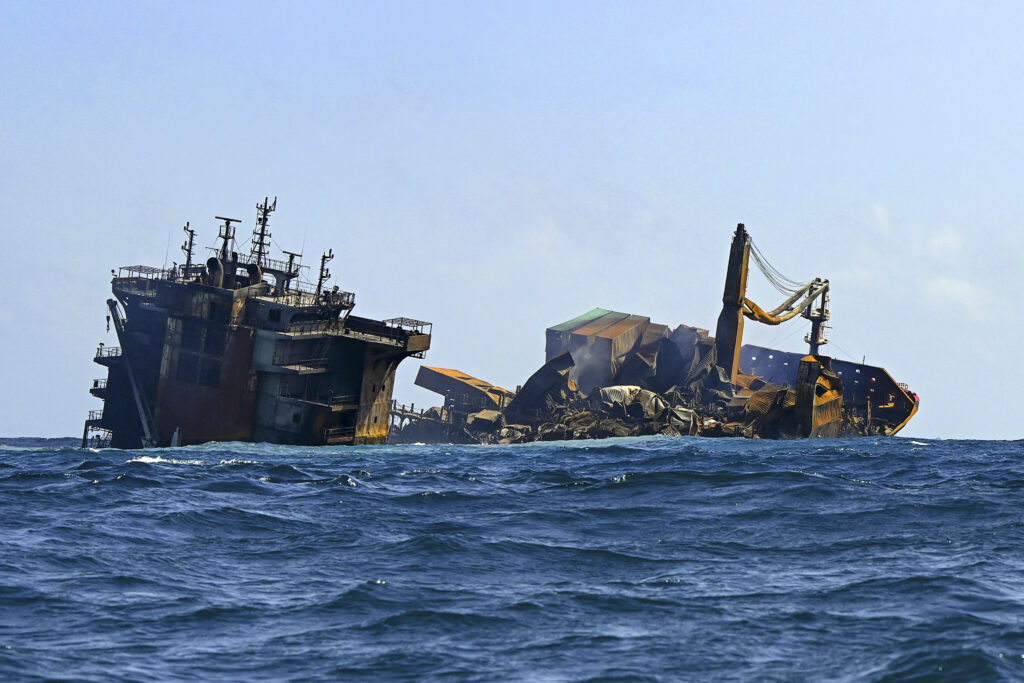
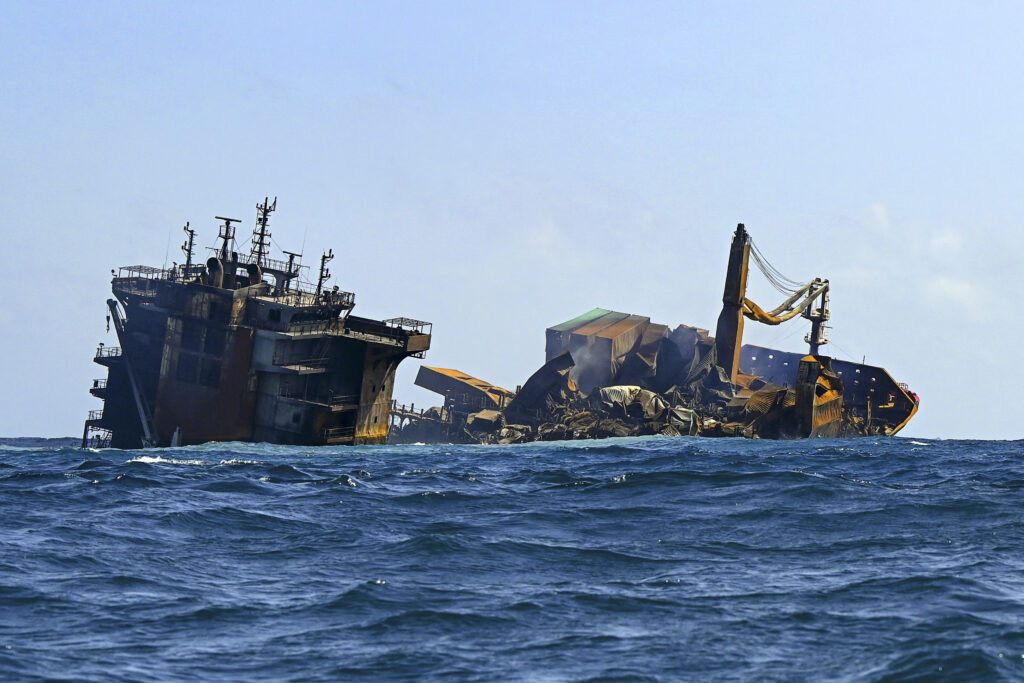
A Singapore shipping company told AFP on Tuesday it will refuse to pay Sri Lankan court-ordered damages of US$1 billion for causing that country’s worst case of environmental pollution.In an exclusive interview, X-Press Feeders chief executive Shmuel Yoskovitz said he believed paying would have wide-ranging implications on global shipping and “set a dangerous precedent”.The company operated the MV X-Press Pearl that sank off Colombo Port in June 2021 after a fire — believed caused by a nitric acid leak — that raged for nearly two weeks.Its cargo included 81 containers of hazardous goods, including acids and lead ingots, and hundreds of tonnes of plastic pellets.The ship was refused permission by ports in Qatar and India to offload the leaking nitric acid before it arrived in Sri Lankan waters. Tonnes of microplastic granules from the ship inundated an 80-kilometre (50-mile) stretch of beach along Sri Lanka’s western coast. Fishing was prohibited for months.Sri Lanka’s Supreme Court in July ordered the company to pay Colombo an “initial” US$1 billion in damages within a year, with the first tranche of US$250 million to be paid by Tuesday.It also ordered the company “to make such other and further payments” in the future as the court may direct.- ‘Hanging guillotine’ -Yoskovitz rejected the open-ended nature of the penalty. “We are not paying because the whole base of maritime trade is based on the limitation of liability. This judgment undermines this limitation of liability,” he told AFP.”Any payment towards the judgment could set a dangerous precedent for how maritime incidents will be resolved in the future,” he said.Sri Lanka’s government said it would ask its chief prosecutor what action it could take.”We will be guided by the advice of the attorney general on what further steps to take,” government spokesman and media minister Nalinda Jayatissa told reporters in Colombo.The United Nations office in Colombo noted that the “polluter pays” principle was enshrined in global agreements, including the UN Convention on the Law of the Sea.”The Supreme Court’s ruling is a vital step toward justice and accountability,” the UN in Sri Lanka said on X.Yoskovitz said the absence of limitations could lead to higher insurance premiums, which would be ultimately passed on to consumers.The chief executive again apologised for the incident, saying the company recognised the disaster and was trying to make amends. He said X-Press Feeders had already spent $170 million to remove the wreck, clean up the seabed and beaches, and compensate affected fishermen.”We are not trying to hide… We are willing to pay more, but it has to be under certain marine conventions and an amount that is full and final and then it can be settled, and we can move on,” he said.”But to live under this hanging guillotine — it is simply impossible to operate like this.”- Long-term effects -In Colombo, Sri Lanka’s Supreme Court has scheduled a hearing on Thursday about the implementation of its decision.One of the petitioners who sought compensation for the pollution has called for further research to determine the full extent of the damage to the island’s marine ecosystems.”If you visit the coastlines today, there is nothing visible in terms of plastic pollution. A major clean-up took place soon after the X-Press Pearl incident, but the effects of the pollution will be felt for a long time,” said Hemantha Withanage from the Centre for Environmental Justice.It remains unclear how Sri Lanka’s Supreme Court could enforce its decision. However, in its 361-page decision in July, the court ordered the police and the state prosecutor to initiate criminal proceedings for non-compliance if the parties were present in Sri Lanka.Yoskovitz expressed concern over the ship’s Russian captain, Vitaly Tyutkalo, who has been banned from leaving Sri Lanka for more than four years, as well as the company’s third-party agents there. The firm had offered to pay a fine for the skipper’s release, but this was refused, according to Yoskovitz. X-Press Feeders obtained an order from London’s Admiralty Court in July 2023, limiting its liability to a maximum of 19 million pounds (US$25 million), but Sri Lanka has challenged that.The Sri Lankan government also filed a lawsuit against the ship’s owners in the Singapore International Commercial Court. But that has been stayed pending the result of the case in London, with a pre-trial hearing expected in May 2026. 

Singapore firm rejects paying $1bn Sri Lankan pollution damages

A Singapore shipping company told AFP on Tuesday it will refuse to pay Sri Lankan court-ordered damages of US$1 billion for causing that country’s worst case of environmental pollution.In an exclusive interview, X-Press Feeders chief executive Shmuel Yoskovitz said he believed paying would have wide-ranging implications on global shipping and “set a dangerous precedent”.The company operated the MV X-Press Pearl that sank off Colombo Port in June 2021 after a fire — believed caused by a nitric acid leak — that raged for nearly two weeks.Its cargo included 81 containers of hazardous goods, including acids and lead ingots, and hundreds of tonnes of plastic pellets.The ship was refused permission by ports in Qatar and India to offload the leaking nitric acid before it arrived in Sri Lankan waters. Tonnes of microplastic granules from the ship inundated an 80-kilometre (50-mile) stretch of beach along Sri Lanka’s western coast. Fishing was prohibited for months.Sri Lanka’s Supreme Court in July ordered the company to pay Colombo an “initial” US$1 billion in damages within a year, with the first tranche of US$250 million to be paid by Tuesday.It also ordered the company “to make such other and further payments” in the future as the court may direct.- ‘Hanging guillotine’ -Yoskovitz rejected the open-ended nature of the penalty. “We are not paying because the whole base of maritime trade is based on the limitation of liability. This judgment undermines this limitation of liability,” he told AFP.”Any payment towards the judgment could set a dangerous precedent for how maritime incidents will be resolved in the future,” he said.Sri Lanka’s government said it would ask its chief prosecutor what action it could take.”We will be guided by the advice of the attorney general on what further steps to take,” government spokesman and media minister Nalinda Jayatissa told reporters in Colombo.The United Nations office in Colombo noted that the “polluter pays” principle was enshrined in global agreements, including the UN Convention on the Law of the Sea.”The Supreme Court’s ruling is a vital step toward justice and accountability,” the UN in Sri Lanka said on X.Yoskovitz said the absence of limitations could lead to higher insurance premiums, which would be ultimately passed on to consumers.The chief executive again apologised for the incident, saying the company recognised the disaster and was trying to make amends. He said X-Press Feeders had already spent $170 million to remove the wreck, clean up the seabed and beaches, and compensate affected fishermen.”We are not trying to hide… We are willing to pay more, but it has to be under certain marine conventions and an amount that is full and final and then it can be settled, and we can move on,” he said.”But to live under this hanging guillotine — it is simply impossible to operate like this.”- Long-term effects -In Colombo, Sri Lanka’s Supreme Court has scheduled a hearing on Thursday about the implementation of its decision.One of the petitioners who sought compensation for the pollution has called for further research to determine the full extent of the damage to the island’s marine ecosystems.”If you visit the coastlines today, there is nothing visible in terms of plastic pollution. A major clean-up took place soon after the X-Press Pearl incident, but the effects of the pollution will be felt for a long time,” said Hemantha Withanage from the Centre for Environmental Justice.It remains unclear how Sri Lanka’s Supreme Court could enforce its decision. However, in its 361-page decision in July, the court ordered the police and the state prosecutor to initiate criminal proceedings for non-compliance if the parties were present in Sri Lanka.Yoskovitz expressed concern over the ship’s Russian captain, Vitaly Tyutkalo, who has been banned from leaving Sri Lanka for more than four years, as well as the company’s third-party agents there. The firm had offered to pay a fine for the skipper’s release, but this was refused, according to Yoskovitz. X-Press Feeders obtained an order from London’s Admiralty Court in July 2023, limiting its liability to a maximum of 19 million pounds (US$25 million), but Sri Lanka has challenged that.The Sri Lankan government also filed a lawsuit against the ship’s owners in the Singapore International Commercial Court. But that has been stayed pending the result of the case in London, with a pre-trial hearing expected in May 2026. 

A close-up of a stack of newspapers resting on a desk, symbolizing information and media.

En Autriche, l’élan Emil frappé d’une obligation de quitter le territoire

En Autriche, même les élans sont reconduits à la frontière, titrent les tabloïds autrichiens mardi, évoquant “l’opération Emil”, qui a vu les autorités appliquer une mesure d’éloignement à l’encontre d’un cervidé entré sans autorisation sur le territoire. “Au revoir, Emil!”: le quotidien Kurier évoque le départ “pas vraiment volontaire” de l’animal, qui a fait parler de lui durant plusieurs semaines avant d’être endormi ce week-end pour être relâché à la frontière tchèque dans l’espoir qu’il la repasse.”Scandale autour du célèbre élan : Emil drogué et abandonné”, s’indigne le journal gratuit Österreich, tandis que la Kronen Zeitung pleure la fin d’un “conte d’été” avec le départ de cette “superstar”.Les autorités ont expliqué que le jeune mâle, en recherche de territoire, s’était approché trop près d’une autoroute dans la région de Haute-Autriche et qu’il serait mieux chez les voisins, où une population d’élans est recensée.Mais l’occasion est trop belle pour les médias du pays de dresser un parallèle avec la politique d’expulsion du pays. L’Autriche renvoie des Tchétchènes en Russie, prend langue avec les talibans pour négocier le retour d’Afghans et expulse aussi des Syriens. L’association de protection des animaux Tierschutz s’émeut d’avoir été tenue à l’écart et déplore le “manque de transparence” de l’opération, dans un communiqué. Au lieu de “créer davantage de corridors pour la faune le long des autoroutes et des lignes de chemin de fer”, on préfère refouler la vie sauvage à l’étranger, regrette-t-elle.

OECD ups world economic outlook as tariffs contained, for now

The world economy will grow more than previously forecast this year after absorbing the shock of US President Donald Trump’s tariffs, but their full impact remains uncertain, the OECD said Tuesday.In June, the Paris-based organisation had cut its forecast from 3.1 percent to 2.9 percent, warning at the time that Trump’s tariffs would stifle the world economy.But in an updated outlook on Tuesday, it raised the projection to 3.2 percent, saying the economy “proved more resilient than anticipated” in the first half of 2025.The OECD said “front-loading” — companies rushing to import goods ahead of Trump’s tariffs — “was an important source of support”.The economy also got a boost from strong AI-related investments in the United States and government spending in China.The updated figure is still a slight slowdown from 3.3 percent in 2024.”The full effects of tariff increases have yet to be felt — with many changes being phased in over time and companies initially absorbing some tariff increases through (profit) margins,” the Organisation for Economic Co-operation and Development said.”But (they) are becoming increasingly visible in spending choices, labour markets and consumer prices,” the report.- ‘Significant risks remain’ -World growth is due to slow to 2.9 percent in 2026 “as front-loading ceases and higher tariff rates and still-high policy uncertainty dampen investment and trade”, the OECD said.Trump imposed a baseline 10 percent tariff on imports from around the world in April.He later hit dozens of countries with even higher duties, but the US leader also left the door open for negotiations, striking deals with Britain, Japan and the European Union, among others.The United States has yet to find a compromise with China, though the world’s two biggest economies have temporarily de-escalated their tit-for-tat tariffs while they negotiate.The overall effective US tariff rate rose to an estimated 19.5 percent in August, the highest level since 1933, the OECD said.”Significant risks to the economic outlook remain,” the OECD said.”Amid ongoing policy uncertainty, a key concern is that bilateral tariff rates could be raised further on merchandise imports,” it said.The OECD also warned that inflation could rise as food prices increase, geopolitical tensions push energy prices higher and companies begin to pass the cost of higher tariffs to consumers.Other concerns include high levels of public debt as well as risks to financial markets.”On the upside, reductions in trade restrictions or faster development and adoption of artificial intelligence technologies could strengthen growth prospects,” it said.- Growth due to slow -The OECD also upgraded the growth outlook of the United States for 2025 from 1.6 percent to 1.8 percent.But it warned that growth in the world’s biggest economy is expected to slow as “higher effective tariff rates further come into effect and policy uncertainty remains elevated.”A drop in net immigration and cuts in the federal workforce “are also anticipated to soften economic growth”.The OECD raised the growth outlook of other major economies: to 4.9 percent in China, 1.2 percent in the eurozone and 1.1 percent in Japan.But the OECD flagged a drop in industrial production in recent months in several countries, including Brazil, Germany and South Korea, and moderating consumption in the United States, China and the eurozone.

Asian markets struggle as focus turns to US inflation

Asian markets struggled Tuesday to track another record day on Wall Street, with traders now awaiting the release of US inflation data that could dictate Federal Reserve policy in coming weeks.The tepid performance came after a hot couple of weeks on trading floors fuelled by optimism over an easing of US monetary policy.Last week’s interest rate cut came with Fed forecasts for two more before the end of the year as officials aim to shore up the stuttering labour market despite elevated inflation.That puts in focus Friday’s report on personal consumption expenditures, the Fed’s preferred measure of inflation.With trade subdued by a holiday in Japan and an approaching typhoon in Hong Kong, Asian markets drifted.Hong Kong and Shanghai slipped with Manila, Bangkok and Wellington, while Sydney, Seoul, Singapore and Jakarta rose.Paris and Frankfurt started with gains as data showed eurozone business activity growth hit a 16-month high in September.Taipei jumped more than one percent with chip titan TSMC soaring more than three percent as it tracked US counterpart Nvidia, which announced a $100 billion investment in OpenAI for next-generation artificial intelligence.However, there are growing worries that the surge may have gone too far and markets are due a pull-back with eyes on a possible government shutdown in Washington.Senators failed to pass a stopgap funding bill Friday after the Republican-controlled House of Representatives narrowly passed it.The bill was shot down by Democrats and with both chambers scheduled to be in recess next week, time is running out to keep the government running after the end of the fiscal year September 30.A shutdown would see non-essential operations start to grind to a halt and hundreds of thousands of civil servants temporarily left without pay.”There are rickety bridges ahead. The US government shutdown drama remains unresolved—another potential rockslide on the tracks,” said SPI Asset Management’s Stephen Innes. “The Senate’s failure to bridge the gap between competing proposals leaves traders watching the Sept. 30 deadline with one eye, even as the other scans record-high tickers. “Markets rarely derail on the first warning, but complacency can turn into chaos when the train rounds a blind corner.”- Key figures at around 0810 GMT -Hong Kong – Hang Seng Index: DOWN 0.7 percent at 26,159.12 (close)Shanghai – Composite: DOWN 0.2 percent at 3,821.83 (close)London – FTSE 100: UP 0.3 percent at 9,249.95Tokyo – Nikkei 225: Closed for a holidayEuro/dollar: DOWN at $1.1790 from $1.1799 on MondayPound/dollar: UP at $1.3518 from $1.3515Dollar/yen: DOWN at 147.74 yen from 147.87 yenEuro/pound: DOWN at 87.21 pence from 87.30 penceWest Texas Intermediate: DOWN 0.3 percent at $62.12  per barrelBrent North Sea Crude: DOWN 0.3 percent at $66.39 per barrelNew York – Dow: UP 0.1 percent at 46,381.54 (close)

Asian markets struggle as focus turns to US inflation

Asian markets struggled Tuesday to track another record day on Wall Street, with traders now awaiting the release of US inflation data that could dictate Federal Reserve policy in coming weeks.The tepid performance came after a hot couple of weeks on trading floors fuelled by optimism over an easing of US monetary policy.Last week’s interest rate cut came with Fed forecasts for two more before the end of the year as officials aim to shore up the stuttering labour market despite elevated inflation.That puts in focus Friday’s report on personal consumption expenditures, the Fed’s preferred measure of inflation.With trade subdued by a holiday in Japan and an approaching typhoon in Hong Kong, Asian markets drifted.Hong Kong and Shanghai slipped with Manila, Bangkok and Wellington, while Sydney, Seoul, Singapore and Jakarta rose.Paris and Frankfurt started with gains as data showed eurozone business activity growth hit a 16-month high in September.Taipei jumped more than one percent with chip titan TSMC soaring more than three percent as it tracked US counterpart Nvidia, which announced a $100 billion investment in OpenAI for next-generation artificial intelligence.However, there are growing worries that the surge may have gone too far and markets are due a pull-back with eyes on a possible government shutdown in Washington.Senators failed to pass a stopgap funding bill Friday after the Republican-controlled House of Representatives narrowly passed it.The bill was shot down by Democrats and with both chambers scheduled to be in recess next week, time is running out to keep the government running after the end of the fiscal year September 30.A shutdown would see non-essential operations start to grind to a halt and hundreds of thousands of civil servants temporarily left without pay.”There are rickety bridges ahead. The US government shutdown drama remains unresolved—another potential rockslide on the tracks,” said SPI Asset Management’s Stephen Innes. “The Senate’s failure to bridge the gap between competing proposals leaves traders watching the Sept. 30 deadline with one eye, even as the other scans record-high tickers. “Markets rarely derail on the first warning, but complacency can turn into chaos when the train rounds a blind corner.”- Key figures at around 0810 GMT -Hong Kong – Hang Seng Index: DOWN 0.7 percent at 26,159.12 (close)Shanghai – Composite: DOWN 0.2 percent at 3,821.83 (close)London – FTSE 100: UP 0.3 percent at 9,249.95Tokyo – Nikkei 225: Closed for a holidayEuro/dollar: DOWN at $1.1790 from $1.1799 on MondayPound/dollar: UP at $1.3518 from $1.3515Dollar/yen: DOWN at 147.74 yen from 147.87 yenEuro/pound: DOWN at 87.21 pence from 87.30 penceWest Texas Intermediate: DOWN 0.3 percent at $62.12  per barrelBrent North Sea Crude: DOWN 0.3 percent at $66.39 per barrelNew York – Dow: UP 0.1 percent at 46,381.54 (close)