La CNCDH dénonce une gestion “essentiellement répressive” de la crise calédonienne en 2024

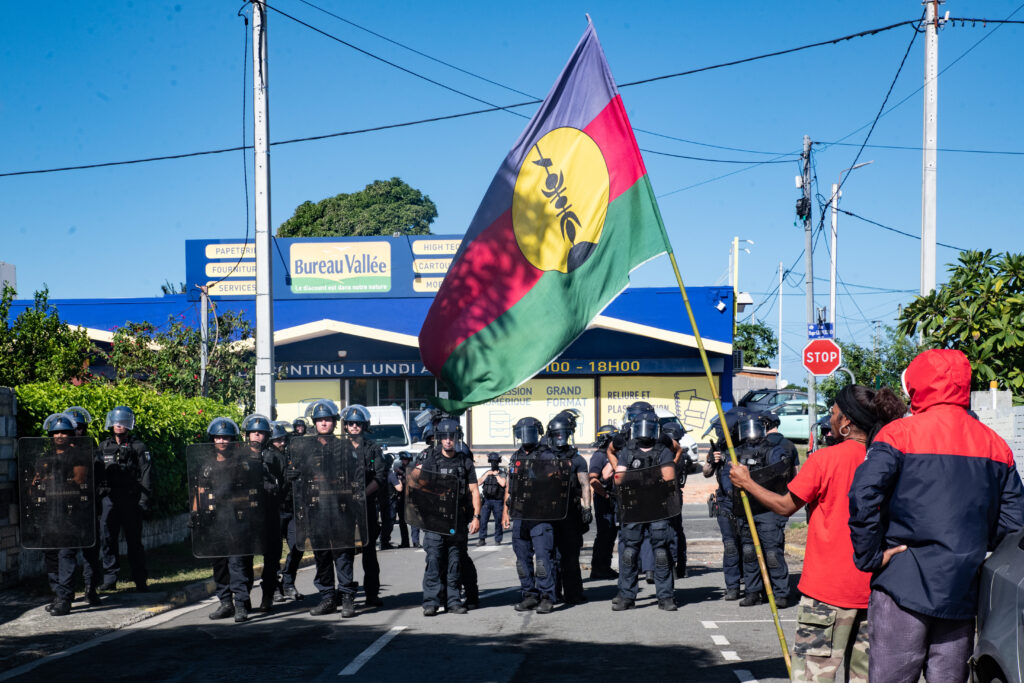
La gestion de la crise qui a embrasé la Nouvelle-Calédonie en mai 2024 a été “essentiellement répressive”, estime la Commission nationale consultative des droits de l’Homme (CNCDH) dans un avis publié jeudi, jugeant que l’État n’a durant la crise pas respecté plusieurs droits humains fondamentaux.”Les réponses des pouvoirs publics ont essentiellement été répressives, s’appuyant sur des mesures de police administrative, une intervention massive des forces de l’ordre, des mesures judiciaires exceptionnelles et des mesures (…) perçues comme de rétorsion collective”, pointe l’instance indépendante dans cet avis.La CNCDH avait été saisie par le Sénat coutumier, instance consultative de représentation des Kanak, après ces violences qui avaient fait 14 morts et plus de deux milliards d’euros de dégâts, en réponse à un projet de réforme électorale votée à Paris.Elle formule six recommandations pour “rétablir la confiance”, appelant notamment à “respecter pleinement l’intégrité” du processus de décolonisation de l’archipel français du Pacifique sud.  Parmi celle-ci, la Commission demande des “mesures effectives visant à remédier aux discriminations systémiques et aux inégalités structurelles” subies par les Kanak. Selon la CNCDH, le déploiement massif des forces de l’ordre après les premières violences du 13 mai 2024, l’état d’urgence imposé sur l’archipel du 15 au 28 mai ou les transferts de détenus vers l’Hexagone ont alimenté les tensions.L’avis évoque “un traitement judiciaire hors normes” et souligne que “la majorité des affaires a été jugée en comparution immédiate”, une procédure appliquée “quasi-exclusivement à la population kanak” qui soulève “des interrogations” sur d’éventuels “biais”.Il relève aussi une “présomption de culpabilité” pesant de manière disproportionnée sur cette population. Le rapport s’attarde également sur des décisions prises après les violences par la province Sud, dirigée par les loyalistes, et “perçues comme autant de mesures de rétorsion collective”.Le gouvernement avait défendu à l’époque le déploiement des forces de l’ordre et l’état d’urgence comme une réponse aux violences. De son côté, la province Sud avait justifié ses décisions post-émeutes, notamment une forte baisse des aides scolaires, par la perte de recettes fiscales après les émeutes.La commission a mené de nombreuses auditions et “ce n’est pas un avis écrit sur un bureau à Paris”, insiste auprès de l’AFP le président de la commission, Jean-Marie Burguburu, déplorant que plusieurs responsables n’aient cependant pas répondu à ses sollicitations.La réponse de l’État a présenté un “caractère partisan”, estime le vice-président Pierre Tartakowsky. Les pouvoirs publics “savaient que ça risquait de dégénérer” mais ont “appelé les renforts (…) au lieu de déminer politiquement le conflit”, estime-t-il.La CNCDH formule six recommandations visant à “rétablir la confiance” et “restaurer la proportionnalité” de l’action publique. Anticipant des critiques, M. Burguburu assure qu'”aucune orientation partisane” ne guide la commission. L’avis de la CNCDH devait être initialement publié le 20 novembre mais son adoption avait été reporté in extremis par l’assemblée plénière.

Ligue 1: “Mon doublé contre Paris a été le déclic”, assure Panichelli à l’AFP

Le doublé au Parc des Princes contre le PSG (3-3) en octobre “a été le déclic pour que mon nom commence à résonner”, assure l’Argentin de Strasbourg Joaquin Panichelli, qui retrouve dimanche le club champion d’Europe en L1, dans un entretien avec l’AFP.De la neige fondue tombe sur une Meinau vide et Panichelli se penche vers la tribune pour montrer le virage où se masseront les ultras. “C’est là que je veux marquer !”, dit l’avant-centre de 23 ans – 11 buts en Ligue 1 – à propos de son nouveau rendez-vous avec le champion d’Europe. Question : Comment digère-t-on le fait d’être passé en quelques mois de la deuxième division espagnole à star de la Ligue 1 ?Réponse : « Star quand même pas… Mais oui, au final, en très peu de temps, j’ai franchi des étapes qui prennent peut-être des années à d’autres joueurs. J’ai toujours eu confiance en mes qualités. Le passage à Mirandés (D2 espagnole) a été clé, on m’a donné 10 ou 15 matchs pour prendre confiance. J’avais besoin de cet espace pour me développer parce que je savais que j’avais les qualités. Je me préparais pour l’étape suivante et c’est ce que je fais aujourd’hui aussi ici. »Q : Quelle est la clé de votre adaptation rapide à Strasbourg ? R : « On m’a donné beaucoup de confiance. C’est un club en croissance, chaque match est un plaisir parce que le stade est toujours plein, c’est fondamental. Et nous avons un groupe très jeune, avec une très bonne ambiance. » Q : Vous affrontez dimanche le PSG, contre lequel vous vous êtes illustré au Parc des Princes. R : « Au final, on se prépare pour ces moments-là, pour affronter les meilleurs et être à la hauteur. Ce soir-là, c’est tombé sur moi et c’était peut-être le déclic pour que le nom de Panichelli commence à résonner en France et en Europe. » Q : Vous considérez-vous comme un attaquant vintage, une espèce en voie de disparition ? R : « Oui, j’aime ça. Mon profil sur le terrain va avec ce que je suis en dehors. J’aime les choses classiques, comme lire et le rock. Mais bon, j’essaie de combiner un peu ce style vintage avec les exigences de notre époque, qui demande beaucoup physiquement, beaucoup de volume de course. J’essaie d’avoir un mélange. Dans la surface, j’ai des armes pour marquer, je me débrouille du pied droit, du pied gauche, de la tête… et l’humilité pour accompagner l’équipe: si d’autres doivent briller et marquer, ça ne me pose aucun problème. » Q : Quelles sont vos références ? R : « Je regardais (Olivier) Giroud à l’époque d’Arsenal, (Karim) Benzema, un joueur de classe mondiale… Mais évidemment (Erling) Haaland est le prototype du numéro neuf de surface que tout le monde regarde pour s’améliorer et s’inspirer. » Q : Comment s’est passé votre première avec l’Argentine, lorsque vous êtes entré à la place de Lionel Messi ? (Il a fait ses débuts en novembre contre l’Angola – 2-0)R : « Représenter son pays, pour moi qui me sens tellement argentin, c’est un rêve. Pouvoir avoir au moins quelques minutes et remplacer Messi, c’était une folie, un rêve devenu réalité. » Q : La Coupe du monde commence dans moins de cinq mois… Vous voyez-vous dans la liste de Lionel Scaloni ? R : « Je dois continuer comme je le fais, ni plus ni moins. Au final, si l’on fait les choses bien, tôt ou tard, ce qui doit arriver arrive. Je ne veux pas me mettre cette pression parce qu’on risque de jouer autrement ou de faire des choses auxquelles on n’est pas habitué. » 

Another Arctic blast bears down on US as snow cleanup drags on

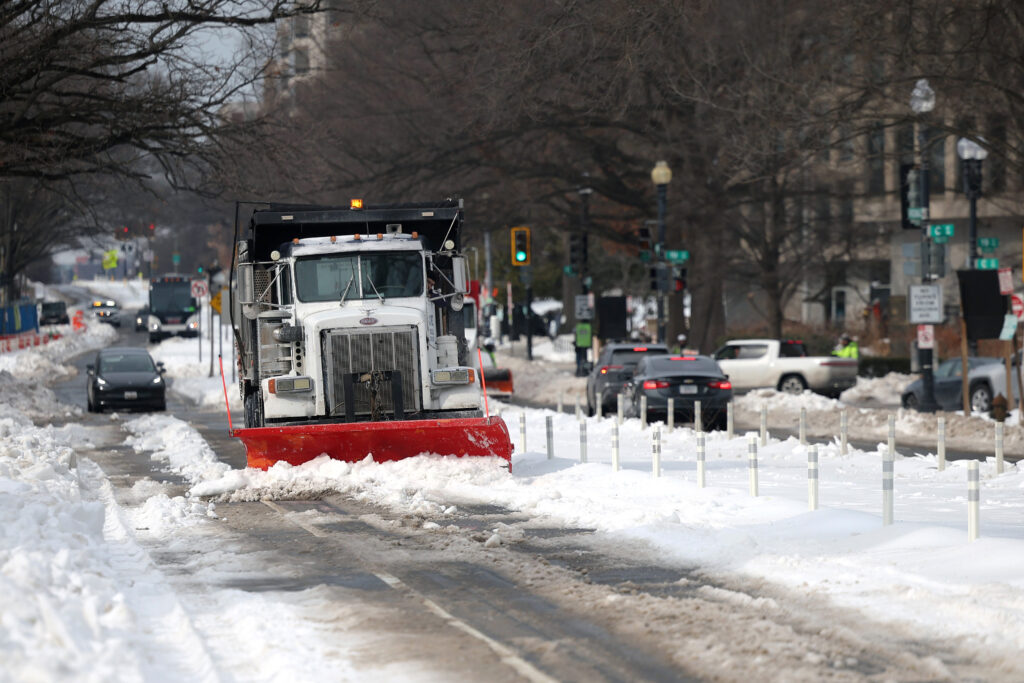
Another blast of Arctic air was set to spread across much of the United States from Thursday night, even as local authorities struggled to dig out from mounds of snow and ice days after a giant storm passed. The National Weather Service said polar winds would surge down from the Northern Plains across the Midwest and through the Gulf Coast, with a significant storm set to bring more heavy snowfall to parts of the southeastern US by the weekend.Temperature lows could be broken, especially in Florida, the agency said, warning of statewide impacts on vulnerable populations as well as the crucial agriculture industry.Frigid temperatures in the largely subtropical state can “cold-stun” iguanas, causing them to fall off trees in what has been referred to as a “lizard blizzard.”The new cold front comes just days after a major winter storm, killing more than 100 people, according to tally of official figures and local media reports, as it blanketed a vast swath from New Mexico in the southwest to Maine in the northeast in snow, sleet and icy rain.In the southern United States, hundreds of thousands of customers remained without power Thursday, according to poweroutage.us, with Tennessee, Mississippi and Louisiana hardest hit. The Tennessee Emergency Management Agency said it had cleared more than 3,000 downed trees “because clearing trees is the gateway to recovery — protecting lives, restoring critical services, and helping power get back on.”Meanwhile millions were still digging out from hardened snow. In New York, excavators scooped piles of snow into steaming orange trailers known as “hot tubs,” which send the meltwater down into the city’s sewer system.New York Mayor Zohran Mamdani was spotted traversing the city to shovel snow, earning praise but also criticism for not wearing a hat. In the capital Washington, authorities were dumping truckloads of ice and snow at the site of the demolished Robert F. Kennedy stadium. Washington residents have roundly criticized the official response, as numerous streets remained unplowed, snowbanks blocked road crossings and schools stayed shut for a full three days after the storm had passed.Some research suggests climate change could be playing a role in disruptions to the polar vortex — a vast region of cold, low-pressure air that normally circulates high above the Arctic.Scientists advancing this theory argue that uneven Arctic warming across Europe and Asia can amplify large atmospheric waves, making it more likely for the polar vortex to wobble and spill south over North America.

Israeli settler leader lauds Jewish prayer at contested West Bank tomb

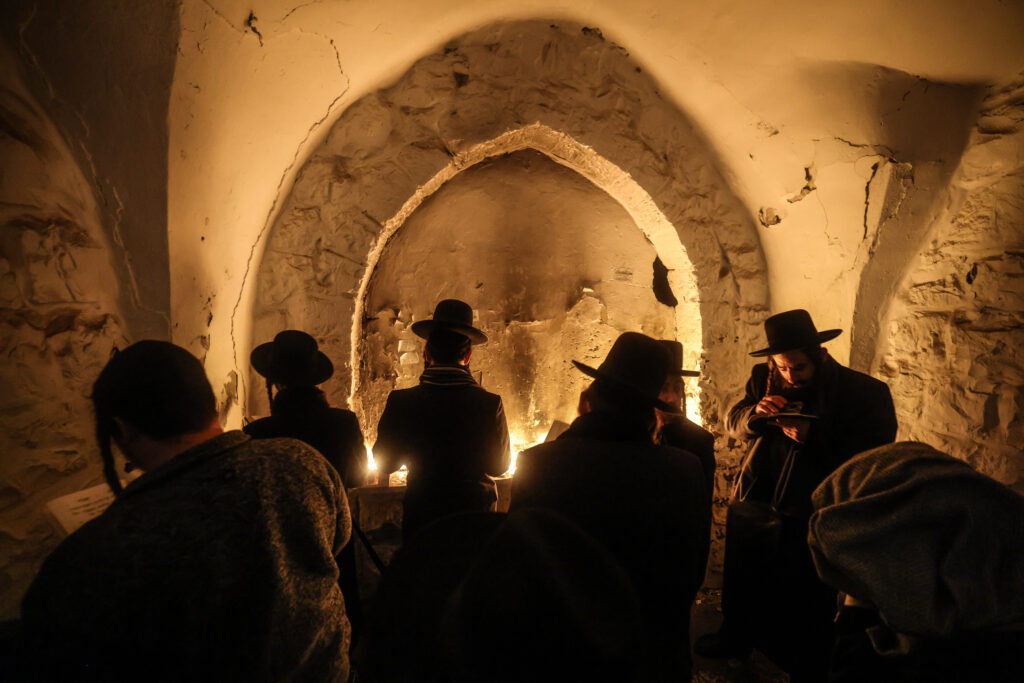
Around 1,500 Israeli Jews prayed at a contested tomb in the occupied West Bank city of Nablus on Thursday morning, and a settler leader hailed an “important step” towards establishing Israeli sovereignty over the site.Jews believe Joseph’s Tomb in the north of the Palestinian territory is the burial site of the Biblical patriarch Joseph. Muslims consider it the burial place of a local religious figure.The entry of Jewish pilgrims often sparks clashes with Palestinians, who claim the visits are a provocation.Thursday’s prayer was exceptional as worshippers performed the Jewish morning service known as the Shacharit, which is celebrated after sunrise.For a quarter of a century, Israeli authorities have only allowed Jews to come and pray at the site at night. “This is a significant and important step toward… ensuring the full return of the people of Israel and the State of Israel to this holy place,” said Yossi Dagan, the head of the Shomron regional council which administers Israeli settlements in the northern West Bank.”For the first time in 25 years, Jews prayed in broad daylight at Joseph’s Tomb,” the council said in a statement.The tomb lies within the built up area of Nablus in the West Bank’s Area A, which under the Oslo Accords signed in the 1990s falls under the administration of the Palestinian Authority.- Dawn prayer -Since the Israeli military vacated the site in 2000, Jewish pilgrims can only visit in groups escorted by troops.AFP footage from the site on Thursday morning showed crowds of Jewish pilgrims praying, some wearing small leather boxes called tefillin, containing religious verses, on their heads.The Israeli army has long supervised the entry of ultra-Orthodox Jews for a nighttime prayer on the first day of each month of the Hebrew calendar.But Israeli media reported that, in December, Defence Minister Israel Katz had issued directives to the military to allow more visits to the tomb and not only at night.Previously, buses of visitors escorted by the army had to leave the site by 4:00 am at the latest.An AFP journalist at the scene said around 25 full buses arrived during the night carrying ultra-nationalists from Israeli settlements in the West Bank, as well as ultra-Orthodox Jews from settlements and from inside Israel.The buses departed at 7:00 am, escorted by military vehicles, the journalist said.Israel has occupied the West Bank since 1967 and Israeli settlements there are considered illegal under international law.An Israeli military spokesperson told AFP that “all was done according to the orders of the political echelon, not an army initiative.””The political echelon decided to extend the opening hours and (the military) is subordinate to their instructions.”

Iran’s IRGC: the feared ‘Pasdaran’ behind deadly crackdown

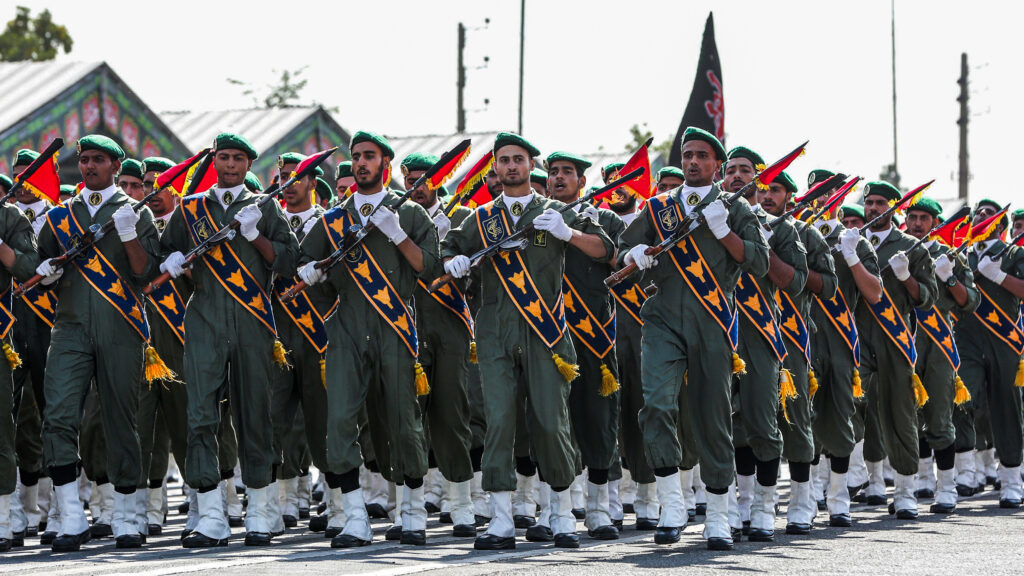
Iran’s Islamic Revolutionary Guard Corps, which EU ministers agreed on Thursday to designate as a terrorist organisation, is the ideological army of the Islamic republic tasked with preserving the future of the revolution but which activists say played a frontline role in suppressing protests.Celebrated as a pillar of the theocratic system by the Iranian authorities, it is accused by the West of militant activity abroad and serial rights violations at home.Rights groups have accused the Guards of taking a lead role in the deadly crackdown on protests against Iran’s clerical leadership under Ayatollah Ali Khamenei that has left thousands dead according to verified tolls.Matching similar classifications enacted by the United States, Canada and Australia, the EU’s move comes after years of pressure on the bloc by campaigners.”The intolerable repression of the peaceful uprising of the Iranian people cannot go unanswered,” said French Foreign Minister Jean-Noel Barrot as he announced late on Wednesday that Paris would back the terror designation, in a hardening of French policy.Amnesty International said this week its evidence showed that, alongside regular police and plain clothes agents, the IRGC and its volunteer paramilitary force known as the Basij, were “involved in the deadly crackdown”.Known in Iran as the “Pasdaran” (“The Guards”) or simply as “Sepah” (“The Corps”), the IRGC is a vast and complex organisation whose branches reach into many aspects of Iranian politics and society as well as the military.Its international unit, the Quds Force, whose then-chief Qasem Soleimani was killed by the United States in 2020, has been accused by the West of carrying out attacks in the Middle East, while analysts say it is a key economic player, benefitting from illicit transactions that circumvent sanctions.- ‘Control the economy’ -The Guards’ mission is “to propagate the ideas of the Islamic revolution”, said Clement Therme, a researcher at the International Institute of Iranian Studies. A Western diplomat, who requested anonymity to speak, said its membership was thought to be around 200,000.”It’s an armed force that functions like an elite military with terrestrial, maritime and aerospace capabilities, while it is better trained, better equipped and better paid than the regular military,” the diplomat said.The IRGC also serves as Tehran’s link to its regional allies, such as Hezbollah in Lebanon and pro-Iran militias in Iraq.”It’s an empire within an empire,” said David Khalfa, a researcher at the France-based Jean-Jaures Foundation.The Guards control or own companies across the Iranian economy, including major strategic sectors.Their annual military budget is estimated at around $6-9 billion, or 40 percent of Iran’s official military budget, according to data collated by Khalfa.”They effectively control the Iranian economy,” he added.For enforcement on the ground, the Guards rely on the Basij, a force hundreds of thousands strong which is recruited mainly from young Iranians and acts as an ideological organisation embedded in all institutions and levels of society.- Leader ‘dearer than our lives’ -A research paper published this month by Saeid Golkar and Kasra Aarabi of the US-based think tank United Against Nuclear Iran (UANI) said a shadowy IRGC unit known as the Tharallah Headquarters, responsible for security in Tehran, was the “most critical cog in the IRGC’s security and suppressive apparatus”.”It coordinates intelligence, policing, Basij militia, IRGC units and psychological operations, ensuring that repression is not improvised but calibrated,” said Golkar and Aarabi, adding that it “functions as the regime’s operational brain during moments of unrest”.The Guards are led by General Mohammad Pakpour, who was appointed by Khamenei after his predecessor Hossein Salami was one of several key military figures killed in an Israeli strike during the 12-day war in June 2025.These losses revealed Israel’s deep intelligence penetration of the Islamic republic, including within the IRGC.On January 22, when the Islamic republic marks an annual day celebrating the Guards, Pakpour warned Israel and the United States “to avoid any miscalculations, by learning from historical experiences and what they learned in the 12-day imposed war, so that they do not face a more painful and regrettable fate”.In a show of bravado, given the fate of his predecessor, Pakpour that day also attended a public gathering with other generals from the IRGC and the regular army to show the unity within the Iranian armed forces.”The Islamic Revolutionary Guard Corps and dear Iran have their finger on the trigger, more prepared than ever, ready to carry out the orders and measures of the supreme commander-in-chief — a leader dearer than their own lives,” he said, referring to Khamenei.

Iran : l’UE désigne les Gardiens de la Révolution comme organisation terroriste

Les ministres des Affaires étrangères des 27 pays de l’Union européenne sont tombés d’accord jeudi pour désigner les Gardiens de la révolution comme une “organisation terroriste”, après la répression sanglante des manifestations en Iran, a annoncé la cheffe de la diplomatie de l’UE Kaja Kallas.”+Terroriste+, c’est bien ainsi que l’on qualifie un régime qui réprime …

Iran : l’UE désigne les Gardiens de la Révolution comme organisation terroriste Read More »

L’Allemagne veut mieux protéger ses infrastructures face à la menace russe

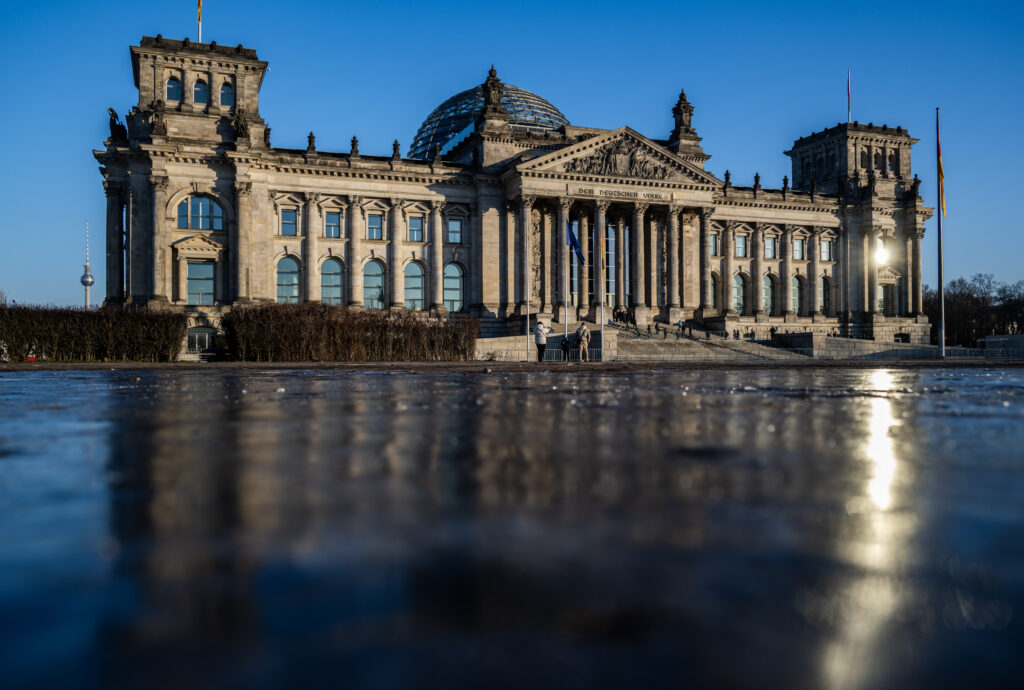
Les députés allemands ont adopté jeudi une loi visant à renforcer la “résilience” des infrastructures critiques du pays, un texte longuement attendu mais aussi critiqué, dans un contexte d’actes de sabotage, notamment imputés à la Russie.La nouvelle loi doit permettre d’identifier les infrastructures indispensables à la population et à l’économie, pour ensuite obliger leurs exploitants …

L’Allemagne veut mieux protéger ses infrastructures face à la menace russe Read More »

Iran blasts EU ‘mistake’ after Guards terror designation

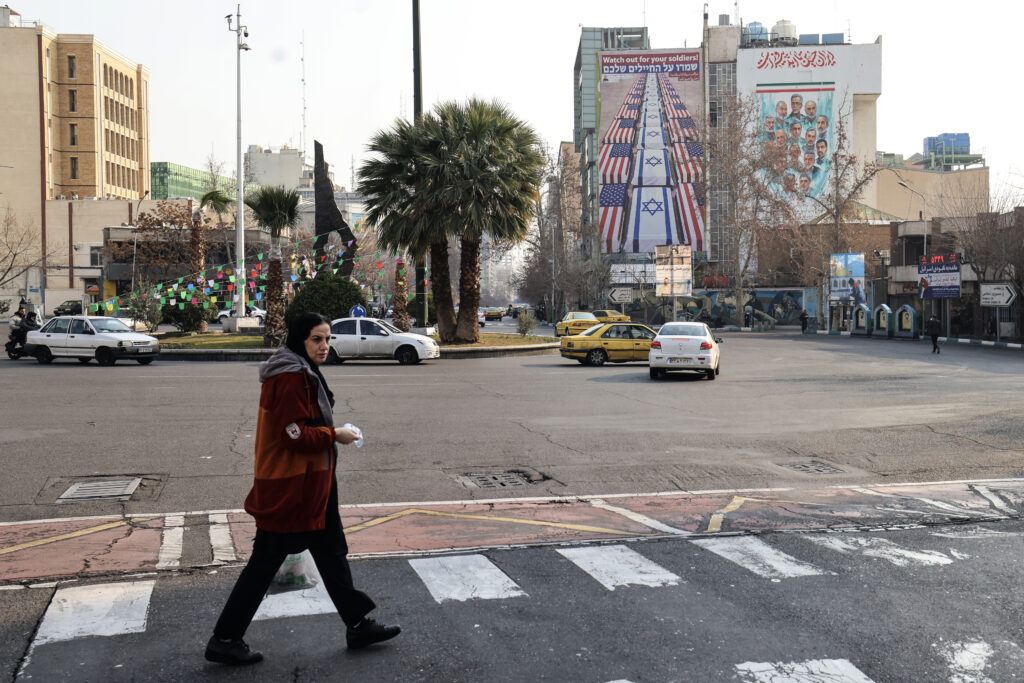
Iran reacted with fury on Thursday after the EU blacklisted the country’s Revolutionary Guards as a terror group, as Tehran faced off with Washington after US President Donald Trump warned time was running out for a nuclear deal. The European Union piled on mounting pressure on Iran on Thursday by designating the Islamic Revolutionary Guard Corps (IRGC) a “terrorist organisation” over a deadly crackdown on recent mass protests”‘Terrorist’ is indeed how you call a regime that crushes its own people’s protests in blood,” said EU chief Ursula von der Leyen, welcoming the “overdue” decision. Though largely symbolic, the EU decision has already drawn a warning from Tehran that it would have “destructive consequences”. Iranian Foreign Minister Abbas Araghchi called it a “another major strategic mistake” after key European powers last year triggered the return of UN sanctions on Iran over its nuclear programme. Iran’s military slammed “the illogical, irresponsible and spite-driven action of the European Union”, alleging the bloc was acting out of “obedience” to Tehran’s arch-foes the United States and Israel. Iranian officials have blamed the recent protest wave on the two countries, claiming their agents spurred “riots” and a “terrorist operation” that hijacked peaceful rallies sparked over economic grievances. Rights groups have said thousands of people were killed during the protests by security forces, including the IRGC — the ideological arm of Tehran’s military. Trump had threatened military action if protesters were killed in the anti-government demonstrations that erupted in late December and peaked on January 8 and 9. But his recent statements have turned to Iran’s nuclear programme, which the West believes is aimed at making an atomic bomb.- Diplomatic push -On Wednesday he said “time is running out” for Tehran to make a deal, warning a US naval strike group that arrived in Middle East waters on Monday was “ready, willing and able” to hit Iran. The United States had hit Iranian nuclear targets when it briefly joined Israel’s war against Iran in June. Iranian officials have also ratcheted up warnings that Tehran would respond forcefully to any US military action, while not ruling out diplomatic solutions.Iran’s army chief Amir Hatami on Thursday vowed a “crushing response” to any attack, according to state television, which reported 1,000 “strategic drones” had joined the combat regiments. Iranian First Vice President Mohammad Reza Aref said the country “must be prepared for a state of war”, according to the official IRNA news agency. “Our strategy is that we will never start a war, but if it is imposed, we will defend ourselves,” he said, adding that Iran was “ready” for negotiations with the United States but wanted unspecified guarantees.The face-off has sent diplomatic shock waves across the region, with calls for negotiations to defuse tensions drawing in key regional actors. An official in the Gulf — where states host US military sites — told AFP that fears of a US strike on Iran are “very clear”. “It would bring the region into chaos, it would hurt the economy not just in the region but in the US and cause oil and gas prices to skyrocket,” the official added. Turkey said it would offer to mediate between Washington and Tehran during an upcoming visit by Araghchi, after Ankara’s top diplomat urged Washington to start nuclear talks with Tehran. Iran ally Russia on Thursday also said “the potential for negotiations is not exhausted”.”Any use of force can only create chaos in the region and lead to very dangerous consequences,” Kremlin spokesman Dmitry Peskov told journalists. – Region doesn’t need ‘new war’ -Despite the EU’s IRGC designation and addition of another 15 Iranian officials and six entities to its asset freeze and visa ban blacklist, the bloc’s top diplomat warned the United States against starting a new Middle East conflict. “When it comes to attacks, then I think the region does not need a new war,” foreign policy chief Kaja Kallas said. However, she hit out at Iran’s clerical leadership, saying on X that “any regime that kills thousands of its own people is working toward its own demise”. The US-based Human Rights Activists News Agency (HRANA) said it has confirmed 6,373 people were killed in the protests, as internet restrictions imposed on January 8 continue to slow verification. But rights groups warn the toll is likely far higher, with estimates in the tens of thousands. Iranian authorities acknowledge that thousands were killed during the protests, giving a toll of more than 3,000 deaths, but say the majority were members of the security forces or bystanders killed by “rioters”. Billboards and banners have gone up in the capital Tehran to bolster the authorities’ messages. One massive poster appears to show an American aircraft carrier being destroyed.burs-sw/sjw/dc

20-year sentence for US deputy who shot dead Black woman in her home

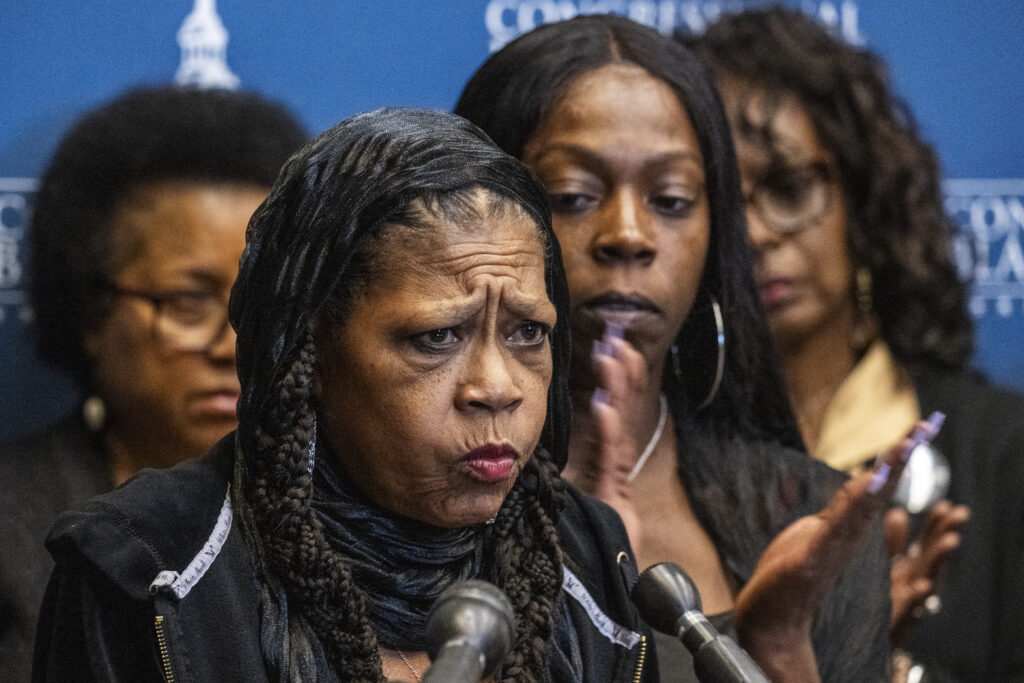
A former Illinois sheriff’s deputy was sentenced to 20 years in prison on Thursday for the fatal shooting of a Black woman inside her home, a case that drew national attention and calls for police reform.Sean Grayson, 31, who is white, was found guilty in October of second-degree murder by a jury after two days of deliberations.Grayson was charged with first-degree murder, which carried a potential life sentence, and second-degree murder for the July 2024 shooting of Sonya Massey, 36, a mother of two.The jury opted to convict him only of the lesser charge and Judge Ryan Cadigan sentenced Grayson to the maximum 20 years in prison on Thursday at a hearing attended by members of the Massey family, including her children. Massey’s shooting drew attention to police violence against African-Americans and prompted then-US president Joe Biden to say she “should be alive today.”Massey, who had received treatment in the past for mental health issues, had called the 911 emergency line to report a possible intruder in her home. Two Sangamon County sheriff’s deputies arrived shortly after midnight.Police body camera footage showed Massey talking to the officers and searching through her purse after they asked her for identification.Grayson then asked her to check on a pot of boiling water on the stove, saying “we don’t need a fire while we’re here.”Holding the pot, Massey responded “I rebuke you in the name of Jesus” — prompting the deputy to draw his weapon and say: “You better fucking not. I swear to God I’ll fucking shoot you in your fucking face.”Apologizing, Massey crouched behind a counter as the officer screamed “drop the fucking pot” and fired three shots, killing Massey with a bullet to the face.Grayson took the stand during his one-week trial and testified that he had felt threatened by the pot of boiling water Massey was holding.The Sangamon County Board approved a $10 million settlement with Massey’s estate last year.The United States was rocked by protests in 2020 following the murder of George Floyd, a Black man, by a white police officer in Minnesota.Floyd’s death revived scrutiny of race relations and sparked nationwide calls for police reform.