Madagascar’s president denounces ‘coup’ attempt in day of fresh protestsFri, 03 Oct 2025 13:00:20 GMT

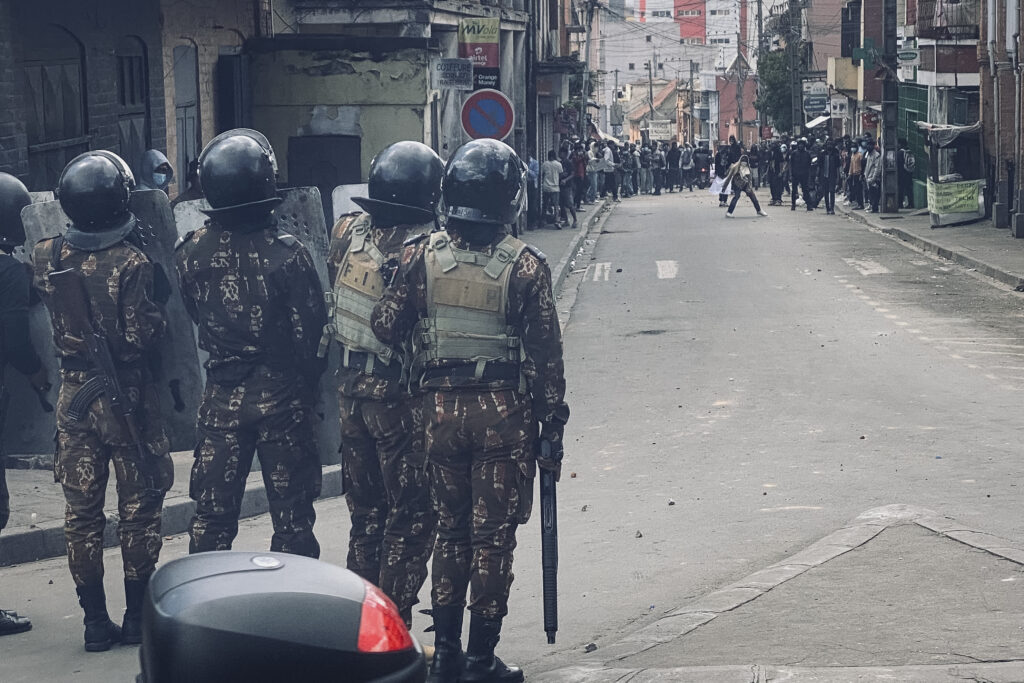
Madagascan President Andry Rajoelina condemned on Friday what he said was an attempt to topple his government as fresh protests flared against the political elite and years of misrule. The poor Indian Ocean island has been rocked by days of fatal clashes between demonstrators and security forces, who have responded with arrests, tear gas and bullets. Called to …

Madagascar’s president denounces ‘coup’ attempt in day of fresh protestsFri, 03 Oct 2025 13:00:20 GMT Read More »

En Chine, on plonge les centres de données dans la mer

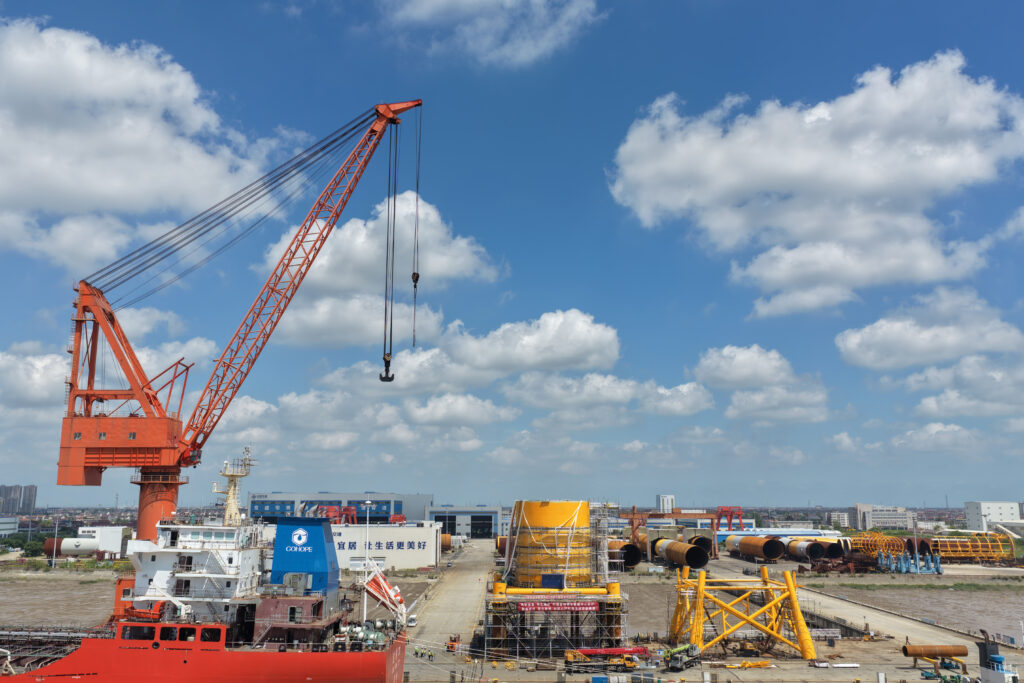
Moteurs indispensables pour internet, les centres de données génèrent beaucoup de chaleur indésirable. Près de Shanghai, une entreprise s’apprête à en immerger un en mer, avec l’espoir d’alléger la facture énergétique et environnementale de ces infrastructures.La société Highlander met les dernières touches aux équipements, câbles et structures qui doivent être plongés mi-octobre dans la mer Jaune, au large de la métropole chinoise de 24 millions d’habitants.L’entreprise, un des leaders chinois de la fourniture de services de stockage de données dans ces infrastructures sous-marines, veut avec ces tests valider la viabilité commerciale de cette technique d’immersion – qui pose toutefois des questions d’impact environnemental.Sites internet et applications mobiles reposent sur des centres de données physiques pour stocker les informations. L’essor fulgurant de l’intelligence artificielle (IA) accentue encore l’énorme demande pour ces installations.”Le milieu sous-marin bénéficie de certains avantages naturels”, explique Yang Ye, le vice-président de Highlander, qui mène le projet avec des entreprises publiques.Sous l’eau, les serveurs profitent du refroidissement naturel par les courants marins, à l’inverse des systèmes classiques sur terre qui ont recours à la climatisation, laquelle alourdit fortement le coût énergétique et environnemental.En 2018, le géant américain Microsoft a expérimenté une installation similaire, placée dans une capsule, au large de l’Ecosse. Mais le projet chinois est l’un des premiers au monde à proposer des services commerciaux.Clients ciblés: les entreprises de télécommunications et spécialisées dans l’IA, notamment. Des initiatives encouragées par le gouvernement chinois afin de réduire l’empreinte carbone de ces centres. Highlander a reçu 40 millions de yuans (4,8 millions d’euros) pour un projet similaire, lancé à Hainan (sud du pays) en 2022.- Alimentation éolienne -“Les installations sous-marines permettent d’économiser environ 90% de l’énergie dévolue au refroidissement”, assure M. Yang. Selon Shaolei Ren, professeur en génie électrique et informatique à l’Université de Californie à Riverside, aux États-Unis, ces projets visent pour l’heure à démontrer leur “faisabilité technologique”.Car d’importants défis en termes de construction et des préoccupations environnementales doivent être surmontés avant que ces centres sous-marins puissent être déployés à grande échelle, souligne-t-il.”Nous avons fait face durant la construction de ce centre de données sous-marin (à Shanghai) à des défis plus importants qu’attendu”, confie à l’AFP Zhou Jun, un ingénieur sur le projet.Assemblé à terre en plusieurs composants avant son immersion, le centre de données sera alimenté presque exclusivement par des parcs éoliens en mer situés à proximité. Highlander affirme que plus de 95% de l’énergie utilisée proviendra de sources renouvelables.L’un des défis du projet reste d’assurer l’étanchéité de l’ensemble et de le protéger de la corrosion. L’entreprise mise sur un revêtement spécial, constitué de particules de verre, appliqué sur la capsule en acier contenant les serveurs.Le professeur Shaolei Ren souligne que le raccordement internet entre un centre de données en mer et le continent est plus complexe qu’avec des serveurs terrestres.- Pollution thermique -Autre écueil: des chercheurs de l’Université de Floride et de l’Université d’électrocommunication au Japon ont démontré que ces structures pouvaient être vulnérables à des attaques par ondes sonores en milieu marin.Mais au-delà des aspects techniques, c’est l’impact thermique de ces centres sur l’écosystème qui interroge. Car la chaleur dégagée pourrait attirer certaines espèces et en repousser d’autres, explique Andrew Want, écologiste marin à l’Université de Hull, en Angleterre.”Les recherches menées à ce jour sont encore insuffisantes”, souligne-t-il.Highlander affirme qu’une évaluation indépendante menée en 2020 lors d’un test près de Zhuhai (sud de la Chine) a montré que la température de l’eau environnante restait largement sous les seuils acceptables.Mais, prévient Shaolei Ren, plus ces centres sont développés à grande échelle, plus la chaleur dégagée augmente. Pour des gros centres de données sous-marins, “la question de la pollution thermique doit ainsi être étudiée de près”, note-t-il.Il estime que ces infrastructures devraient compléter, et non remplacer, les centres traditionnels.”Elles ne vont sans doute pas se substituer aux installations existantes”, affirme-t-il. “Mais elles peuvent répondre à certains besoins spécifiques.”

Jurel, Jadeja tons put India in firm command of West Indies Test

Dhruv Jurel and Ravindra Jadeja hit attacking centuries to put India in total control with a lead of 286 against the West Indies in the first Test on Friday.KL Rahul led the batting show with his 100 before Jurel, who made 125, and Jadeja piled on the agony for the opposition bowlers in a marathon stand of 206 on day two in Ahmedabad.India reached 448-5 at stumps in response to West Indies’ first-innings total of 162.Jadeja, on 104, was batting alongside fellow left-hander Washington Sundar, on nine, at close of play.Wicketkeeper-batsman Jurel raised his first Test ton with a boundary off West Indies skipper Roston Chase and the son of a war veteran celebrated with an army-like tribute with his bat.Jurel took the attack to the visitors with 15 fours and three sixes before he became the first Test wicket of debutant left-arm spinner Khary Pierre.Jadeja plundered his sixth Test hundred and raised the noise of a sparse crowd at the world’s biggest cricket stadium with his trademark sword celebration. He hit six fours and five sixes.The right-left batting pair of Jurel and Jadeja wore down the opposition bowlers on a deteriorating pitch.A delivery from Jomel Warrican went past Jadeja at ankle length after hitting a rough patch formed due to bowlers’ footmarks.Warrican had Rahul caught at short extra-cover with his left-arm spin on the fifth ball after the lunch break. The opener did not trouble the scorers after reaching his 11th Test century.Rahul reached the ton in the morning session, kissing the India flag on his helmet and soaking in the applause from the few hundred fans sprinkled in a sea of orange seats at the 132,000-capacity stadium.Starting the day on 121-2, Rahul and skipper Shubman Gill, who made 50, put on 98 runs to pile on the agony for the West Indies.The two overnight batters had a few nervy moments.Rahul survived a reprieve on 57 when an edge from his bat went between the wicketkeeper and slip in the first over.Rahul, who started the day on 53, hit regular boundaries with his exquisite timing and technique.Gill looked to find his mojo after a cautious start and reached his eighth Test fifty with a single off Pierre.The captain soon got out to Chase’s off-spin after he attempted a reverse sweep but lobbed it to Justin Greaves at slip.The West Indies have struggled in the absence of premier fast bowler Alzarri Joseph and Shamar Joseph — both ruled out ahead of the series with injury.India are strong favourites to win 2-0 against an opposition that is a pale shadow of the team that once ruled world cricket.

Stocks gain on AI optimism, US rate-cut hopes

Stock markets mostly rose Friday driven by investor optimism over AI and US rate-cut hopes, which overshadowed concerns about a government shutdown dragging on. A rally in tech stocks was given another lift on Friday by an agreement between Japan’s Hitachi and ChatGPT developer OpenAI to work on AI and energy.  Shares in Hitachi jumped more than 10 percent, with other Japanese tech firms and investment giant SoftBank following suit. The advance helped push Tokyo’s Nikkei 1.9 percent higher.European markets also advanced, led by banks and mining stocks. Hong Kong retreated, while Shanghai was closed for a holiday.A surge in AI investment this year has helped push the valuations of some of the sector’s biggest names to eye-watering levels — with US chip titan Nvidia topping $4 trillion — and several stock markets to record highs.This week has seen extra momentum after South Korean semiconductor giants Samsung and SK hynix said they had struck a preliminary deal with the OpenAI to supply chips and other equipment for its Stargate project.Wall Street stocks finished at fresh records again Thursday.Positive sentiment has also been supported by data in recent months pointing to a slowdown in the US labour market, which led the Federal Reserve to cut borrowing costs and indicate more to come.Traders brushed off a standoff in Washington that has seen the government partially shut down, leading to the closure of some services and the likely delay of the release of key jobs figures later in the day.While the readings on non-farm payrolls (NFPs) is a major guide for the Fed when deciding monetary policy, analysts said the shutdown was unlikely to deter the bank from an expected second rate cut this month.”Markets seem to have taken this political impasse in their stride, showing little sign of stress,” said Joshua Mahony, chief market analyst at Scope Markets.”The lack of market reaction highlights how little investors believe the shutdown will matter for the medium-term outlook on growth or interest rates,” he added.A Senate vote is expected Friday on a House-passed resolution to keep the government funded at current levels through November 21.In company news, Japanese beer titan Asahi fell more than one percent after a cyberattack that hit its ordering and delivery system this week forced it to stop production at some factories.Its shares have fallen around seven percent this week. Officials at the firm said they did not know when they would be back up and running.The positive mood on trading floors has also helped bitcoin regain some of its mojo, striking back above $120,000 for the first time since mid-August when it hit a record 124,515.- Key figures at around 1100 GMT -London – FTSE 100: UP 0.7 percent at 9,464.95 pointsParis – CAC 40: UP 0.3 percent at 8,079.64Frankfurt – DAX: UP 0.1 percent at 24,431.87Tokyo – Nikkei 225: UP 1.9 percent at 45,769.50 (close)Hong Kong – Hang Seng Index: DOWN 0.5 percent at 27,140.92 (close)Shanghai – Composite: Closed for a holidayNew York – Dow: UP 0.2 percent at 46,519.72 (close)Euro/dollar: UP at $1.1736 from $1.1720 on ThursdayPound/dollar: UP at $1.3453 from $1.3446Dollar/yen: UP at 147.33 yen from 147.19 yenEuro/pound: UP at 87.25 pence from 87.17 penceWest Texas Intermediate: UP 0.5 percent at $60.76 per barrelBrent North Sea Crude: UP 0.5 percent at $64.37 per barrel

Madagascar capital under tight security for new anti-government protestFri, 03 Oct 2025 09:59:10 GMT

Riot police locked down the centre of Madagascar’s capital on Friday ahead of planned fresh protests against President Andry Rajoelina, the political elite and years of misrule.The near-daily rallies, which began on September 25 in Antananarivo, have since spread to other parts of the Indian Ocean island, posing the most significant challenge yet to Rajoelina’s …

Madagascar capital under tight security for new anti-government protestFri, 03 Oct 2025 09:59:10 GMT Read More »

Carrefour name disappears from Arab stores as Israel boycotters claim victory

The Carrefour name has disappeared from storefronts in some Arab countries, with pro-Palestinian shoppers and activists hailing the shift as a victory for their boycott of brands perceived as being linked to Israel.The French multinational has long been in the crosshairs of Palestinian supporters, who accuse it of selling products from Israeli settlements and partnering with Israeli firms operating there.The group has denied operating in the settlements in the occupied West Bank, which are considered illegal under international law.But in the past year Majid Al Futtaim, the group that operates the Carrefour franchise in the Middle East, has closed the brand’s supermarkets in Jordan, Oman, Kuwait and Bahrain.It has since reopened under the new name HyperMax, citing “growing demand for locally sourced products and services in a number of our markets”.It did not explicitly link the rebranding to the boycotts, and experts are divided over how much of a role they played in the closures.But pro-Palestinian shoppers have nonetheless claimed victoryHuda Ahmed, a 45-year-old mother of three, said she stepped into the Carrefour-turned-HyperMax store in Manama, Bahrain last week for the first time in almost two years.”I am glad they actually listened to their customers and disengaged from the Carrefour brand. Things can’t be business as usual with a genocide going on at our doorsteps,” Ahmed told AFP.”We still made sure not to buy the products that are on the boycott lists… but the company deserves credit for making the move,” she added.- ‘Broader scaling down’ -The Boycott, Divestment, Sanctions (BDS) campaign, which began two decades ago, has accused Carrefour of “profiting from Israel’s illegal settlements” through its franchise partnership with Israeli retailer Electra Consumer Products and its subsidiary, supermarket chain Yenot Bitan.According to BDS, Yenot Bitan has stores in settlements and both firms are “directly involved in a number of projects fostering Israel’s illegal settlements enterprise”.It has accused Carrefour-Israel of supporting Israeli soldiers “partaking in the unfolding genocide of Palestinians in Gaza with gifts of personal packages”.It also demanded that Carrefour stop selling products from the settlements.Carrefour chief executive Alexandre Bompard has said previously that no Carrefour stores are operating in West Bank settlements and has denied having any “partisan or political ties”.The Israeli government accuses supporters of the BDS movement of being antisemitic.In Bahrain, which has ties to Israel, activists have held weekly protests and vigils for Gaza.According to a HyperMax employee in the country, foot traffic slowed noticeably after the start of the Gaza war, when the store was still operating under the Carrefour brand.”Almost all our customers stopped coming,” he said, requesting anonymity to discuss the sensitive matter. Since the rebranding, “I am seeing more customers coming in, particularly Bahrainis and Arabs.”For M.R. Raghu, who heads the Marmore Mena Intelligence consulting firm, the Carrefour closures are part of a “broader scaling down of operations by the retailer, amid weakening financial health” as its stores also shut elsewhere in the world.And Majid Al Futtaim has maintained Carrefour franchises elsewhere in the Middle East, including in the Gulf’s two biggest economies, Saudi Arabia and the United Arab Emirates.- ‘Brand concerns’ -Ghassan Nasaif, a pro-Palestinian activist in Bahrain, called Majid Al Futtaim’s decision a “great victory” for the movement, saying “this is exactly what we were asking” from the group.Majid Al Futtaim saw its retail revenue, which includes Carrefour, drop 10 percent last year following a four percent decline in 2023, with the company citing “geopolitical tensions” affecting consumer sentiment, among other factors.In the first half of this year, retail revenues have softened one percent from the same period a year earlier.”Consumer demand is currently strong and growing across the Gulf, and the fact that the regional franchise holder, MAF, has been rebranding many Carrefour stores as HyperMax does seem to imply a link to boycott-related brand concerns,” according to Justin Alexander, director of Khalij Economics, a consulting firm.For Musab al-Otaibi, an activist in Kuwait, people have “no other weapon than boycotts” as the death toll climbs in Gaza. Bader al-Saif, an assistant professor at Kuwait University, called the Carrefour closures “a microcosm of a bigger story”. “It shows that the voices of people in the Gulf do matter… that there are ways to express yourself even if you’re in a restricted space,” he said.strs-aya/ds/smw/ser

Des milliards par centaines dans l’IA, comment est-ce possible et jusqu’à quand ?

Les géants de la tech multiplient les investissements vertigineux dans l’intelligence artificielle (IA). La semaine dernière, le numéro un des puces du secteur, Nvidia, annonçait encore injecter 100 milliards de dollars pour qu’OpenAI puisse construire ses centres de données. Comment ces montants mirobolants sont-ils possibles? Ces partenariats tiendront-ils ou alimentent-ils une bulle?- Des investissements colossaux -Les dépenses dans l’IA explosent. Elles devraient atteindre dans le monde environ 1.500 milliards de dollars en 2025, selon le cabinet américain Gartner, puis plus de 2.000 en 2026, soit près de 2% du PIB mondial.Même si les premiers gains de productivité affichés sont très loin de compenser les coûts, “il n’y a pas de doute chez les investisseurs que l’IA est la grande technologie de rupture”, comparable à l’électrification, commente Denis Barrier, à la tête du fonds Cathay Innovation. “C’est plus le moment de ne pas rater l’occasion que de juguler tous les risques”, analyse-t-il.La compétition économique et géopolitique entraîne une frénésie d’investissements, destinés en premier lieu à construire des entrepôts géants abritant des milliers de puces coûteuses et énergivores.De 2013 à 2024, l’investissement privé dans l’IA a atteint 470 milliards de dollars aux Etats-Unis dont près d’un quart l’an dernier, suivi par 119 milliards en Chine, selon un rapport de Stanford.Une poignée de géants en capte l’essentiel, OpenAI en tête. Le créateur de ChatGPT vient d’atteindre une valorisation estimée à 500 milliards de dollars, devenant la start-up non cotée la plus valorisée au monde, devant l’entreprise aérospatiale SpaceX d’Elon Musk.- Des “financements circulaires” contestés -Au-delà de cette valorisation, OpenAI est au coeur de partenariats aux chiffres retentissants. Il pilote Stargate, qui a déjà réuni 400 des 500 milliards de dollars d’investissement prévus d’ici 2029 dans un projet de centres de données au Texas de la superficie de Manhattan, avec un consortium comprenant Softbank, Oracle, Microsoft et, encore, Nvidia.Alors comment ce dernier a-t-il pu à nouveau allonger le carnet de chèques? Les géants de la tech ont une large trésorerie et “Nvidia donne 100 milliards à OpenAI en sachant qu’il en vaudra forcément 200 demain”, résume un investisseur expérimenté de la Silicon Valley.Nvidia est un habitué des “financements circulaires”, investissant ou nouant des partenariats dans des dizaines de start-ups ayant besoin d’acheter ses puces. Certains analystes critiquent cette pratique, craignant de la voir alimenter une bulle. Son récent accord avec OpenAI “alimentera probablement ces inquiétudes bien plus qu’auparavant, et soulèvera (peut-être à juste titre) des questions sur son bien-fondé”, estime Stacy Rasgon, analyste chez Bernstein Research.- Des revenus assurés ? -Tous ces montants dépassent très largement les revenus actuels d’OpenAI, estimés à 13 milliards de dollars, et de ses concurrents, comme Anthropic et Mistral, tous contraints de nouer des partenariats pour tenir le rythme de la course.Pour les partenaires d’OpenAI, l’explosion des recettes n’est qu’une question de temps. L’assistant IA de l’entreprise, ChatGPT, est déjà utilisé par 700 millions de personnes, soit près de 9% de l’humanité.La majorité utilise ses services gratuitement, mais si l’outil devient un indispensable du quotidien, alors particuliers, entreprises et administrations paieront cher, comme aujourd’hui pour l’informatique.Mais les investisseurs devront être patients: maintenir l’appétit de l’IA en puissance de calcul d’ici 2030 coûtera plus de 500 milliards de dollars par an d’investissements mondiaux dans les centres de données, adossés à 2.000 milliards de revenus annuels pour les rendre soutenables, selon le cabinet Bain.Même dans ces hypothèses plus optimistes, Bain estime que l’industrie accusera encore un déficit de 800 milliards. Et OpenAI prévoit de brûler plus de 100 milliards de dollars de trésorerie d’ici 2029.Côté énergie, l’empreinte mondiale de l’IA pourrait atteindre 200 gigawatts d’ici 2030 (plus de trois fois la puissance du parc nucléaire français), dont la moitié aux États-Unis. Avec l’augmentation continuelle de la puissance des puces, le silicium haut de gamme pourrait rester rare et cher encore longtemps.Certains analystes restent néanmoins optimistes. “Même s’il existe des inquiétudes sur une possible +bulle de l’IA+ et des valorisations gonflées, nous estimons que la tech vit son année 1996”, au moment du boom d’internet, “et absolument pas son 1999” à la veille de l’éclatement de cette célèbre bulle, estime Dan Ives, analyste chez Wedbush Securities.A terme, “beaucoup de dollars vont partir en fumée et il y aura beaucoup de perdants, comme à l’époque de l’explosion de la bulle internet, mais internet est resté”, souligne l’investisseur de la Silicon Valley. 

Jurel, Jadeja power India’s lead to 164 against West Indies

Wicketkeeper-batsman Dhruv Jurel and Ravindra Jadeja hit half-centuries to stretch India’s lead to 164 against the West Indies on day two of the first Test on Friday.A dominant India reached 326-4 at tea after the hosts lost KL Rahul for 100 in the first over of the second session at the world’s biggest cricket stadium in Ahmedabad.Jurel, on 68, and the left-handed Jadeja (50) then put on an unbeaten stand of 108 to further grind down the West Indies bowlers.Jurel raised his second Test fifty with a boundary off Justin Greaves and celebrated with a salute to the Indian dressing room.Jadeja hit four sixes en route to his fifty on a pitch that already seems to be breaking away.A delivery from Jomel Warrican snaked past Jadeja at ankle length after hitting a rough patch formed due to bowlers’ footmarks.Warrican had Rahul caught at short extra-cover with his left-arm spin on the fifth ball after lunch.The opener did not trouble the scorers after reaching his 11th Test century.Rahul reached the ton in the morning, kissing the India flag on his helmet and getting applause from the few hundred fans sprinkled in a sea of orange seats at the 132,000-capacity stadium.Starting the day on 121-2 in response to West Indies’ 162, Rahul and skipper Shubman Gill, who made 50, put on 98 runs to pile on the agony against the opposition bowlers.The two overnight batters had a few nervy moments.Rahul survived a reprieve on 57 when an edge from his bat went between the wicketkeeper and slip in the first over.Rahul, who started the day on 53, hit regular boundaries with his exquisite timing and technique.Gill looked to find his mojo after a cautious start and reached his eighth Test fifty with a single off debutant spinner Khary Pierre.The captain soon got out to skipper Roston Chase’s off-spin after he attempted a reverse sweep but lobbed it to Greaves at slip.India are hot favourites to sweep the two-Test series.