Broadway jeering Caesars Times Square casino bet
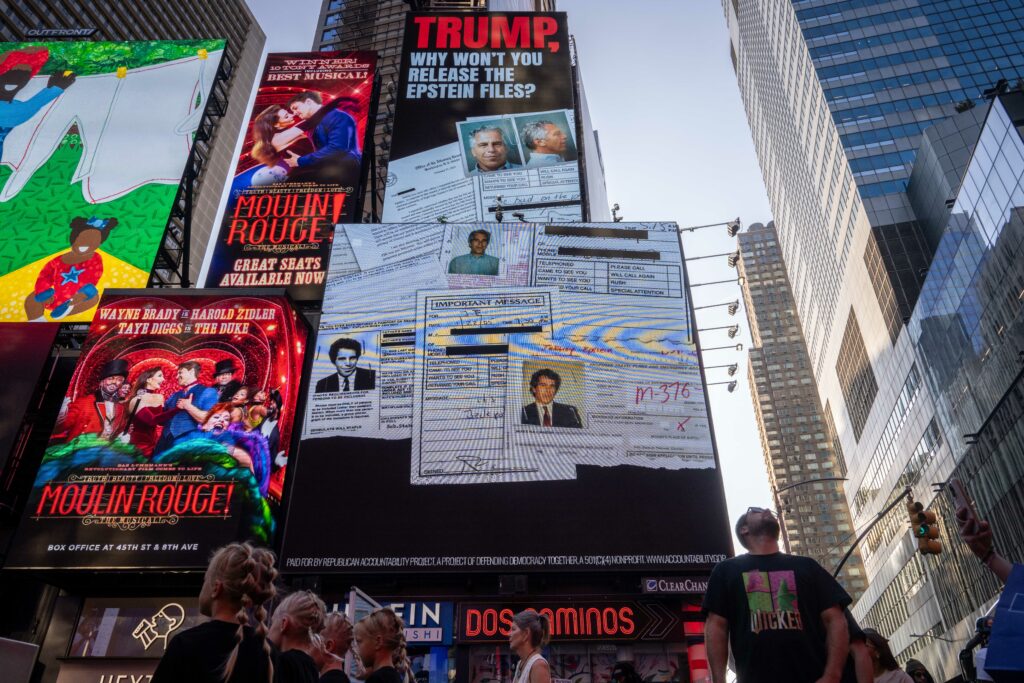
The casino industry’s quest to bring gambling to Manhattan faces a key test this week when an advisory panel weighs a Times Square proposal that has enraged much of Broadway.Backers of the venture, including the rap musician and entrepreneur Jay-Z, have characterized the proposed $5.4 billion Caesars Entertainment gaming and hospitality venture a boon to New York, bringing an infusion of customers to a theater district whose restaurants and small businesses suffered during the pandemic. But opponents of the site, led by the Broadway League and some neighborhood groups, are battling a project they see as cutting into theater ticket sales and attracting unsavory characters to New York’s theater mecca.The two sides squared off last week at a rowdy public hearing, where Broadway League President Jason Laks was cheered by a sea of theater union workers in red “Vote No” t-shirts as he made his case.”We represent 100,000 New Yorkers who work in our industry,” said Laks, who has described the casino as an “existential” threat. “Please protect Broadway and its workers and vote down this casino.” But gaming giant Caesars and real estate firm SL Green have amassed a formidable coalition of their own, including a construction workers union and the Reverend Al Sharpton, whose organization will oversee a new $15 million civil rights museum financed by the casino coalition if the Times Square proposal goes through.Addressing the panel, Sharpton hailed Jay-Z’s stake in the venture through his Roc Nation company as a vital step towards greater diversity.”Let us be real clear that with all of the stuff that’s gone out against this proposal, there is not one Black or Brown owner of a Broadway theater in 2025,” said Sharpton. “So if this casino is established, it will be the first time we will have an institution on Broadway that has diversity at an ownership level.”The Caesars Palace Times Square Community Advisory Committee is set to vote on the project Wednesday morning at a public meeting, held near an office highrise that would be converted into a site that would also house 992 hotel rooms and restaurants by celebrity chefs.- Community largess -The Times Square project is one of eight candidates in metropolitan New York vying for up to three state casino licenses. The competition includes a Manhattan site near the United Nations Building, as well as a Queens venue championed by billionaire Steve Cohen, who has aggressively courted community and political support.Those chosen will pay at least $500 million for a license, plus tax payments that will help fortify New York’s fiscal profile at a time when President Donald Trump has pushed through social program cuts that will hit the state budget. Caesars estimates its project will bring New York $7 billion in direct taxes in its first decade.The process follows through on a 2013 state constitutional approved by voters expanding casino gambling that was cast by then-Governor Andrew Cuomo as a means to create jobs in economically depressed upstate regions. New York state has already granted the four upstate licenses. Downstate casino candidates approved by their community boards would then be considered by a state gaming facility location board in a process expected to yield licenses by the end of 2025.Backers of the Caesars project have argued that the proposal will create a “halo effect” beyond the casino walls by bringing more consumers than can be handled by the site’s lodging and dining capacity. The venture has promised $250 million in community investments, including Broadway ticket vouchers for casino customers, funding for tuition and health programs and millions in public safety and public bathrooms. This includes $10 million to support historic Black theaters in New York in a project with the actor Wendell Pierce.Some speakers backing Caesars called Times Square a “perfect” place for a casino compared to a residential neighborhood, alluding to billboards and other flashy fare that already dominate the area.But opponents described a casino as a beyond-the-pale solution that preys on seniors and other vulnerable populations, hitting out at Caesars’ largesse as cover for a bad idea. Some warned of a rise in crime, prostitution and child trafficking.”What we’re talking about is allowing a parasite to come into our community and take from it, because that’s what casinos are about,” said long-term theater workers union member Bill Hubner. “They’re about making money. It’s not about art. It’s not about culture.”