Drug cheats put India Olympic bid and careers at risk

Indian sport is battling to shake off its reputation for being one of the world’s worst doping offenders as the country pushes an ambitious bid to host the 2036 Olympics.The International Olympic Committee (IOC) has raised concerns about the number of Indian competitors taking performance-enhancing drugs and so too has the country’s best-known athlete.The 2021 Olympic javelin champion Neeraj Chopra made a blunt admission earlier this year.”Doping is a big problem in India among our athletes,” he told local media, saying they instead should “eat well, rest well and work hard”.The Indian Olympic Association (IOA) last month formed a new anti-doping panel after the IOC flagged India’s poor record.The government has passed a new national anti-doping bill aiming to tighten enforcement, expand testing facilities and “ensure the highest standards of integrity” in sports.”Obviously the IOC would want to make sure that in awarding the Games to a country, the host has a robust doping policy and governance,” Michael Payne, former IOC marketing director, told AFP.The World Anti-Doping Agency (WADA) lists India among the worst offenders among nations submitting more than 1,000 samples.India’s national anti-doping agency, NADA, insists the figures reflect more aggressive testing in the nation of 1.4 billion people.From 5,606 samples collected in 2023, 213 came back positive.The synthetic steroid stanozolol is the most widely used banned substance taken by Indian athletes, experts say.                                      – Careers at stake -Despite its vast population India has won only 10 Olympic golds in its history. Experts say desperation to add to that and escape poverty is one reason why some Indian athletes are prepared to risk doping.Success in sports can be a ticket to coveted government jobs, often with the police or armed forces.That provides life-long financial security after their sporting careers end.”Athletes know that they can be punished but still put their careers at stake,” lawyer Saurabh Mishra, who has defended athletes in doping scandals, said.”(They know that) getting a medal will help them clinch a government job.”Athletics leads India’s doping violations, followed by wrestling, where 19 athletes were recently banned.In July under-23 wrestling champion and Paris Olympics quarter-finalist Reetika Hooda tested positive and was provisionally suspended.Mishra said some athletes are victims of ignorance, consuming banned substances through supplements or medicines, but others take risks knowingly.Sometimes they are encouraged by their coaches to dope.Sports medicine expert Saranjeet Singh, who has written extensively on doping in India, said a recent surge in violations was only partly due to stricter testing.”They cannot achieve the level of performance that they want at international level and use banned drugs for a short cut,” Singh told AFP.- Bigger hurdles -India now faces a race to prove its credibility, as it competes with the likes of Indonesia, Turkey, Chile and Qatar for the 2036 Games.The former IOC marketing director Payne noted that many past Olympic hosts had chequered doping histories.While doping is an issue, India’s greater obstacle to staging an Olympics lies elsewhere, he said.”The bigger issue is confidence in the overall operational delivery capabilities of the host, and there India has a lot of work to do,” Payne said.He was referring to the corruption-riddled 2010 Commonwealth Games in New Delhi, memories of which still linger. “That is the biggest hurdle facing India’s bid,” Payne said.

Floods devastate India’s breadbasket of Punjab

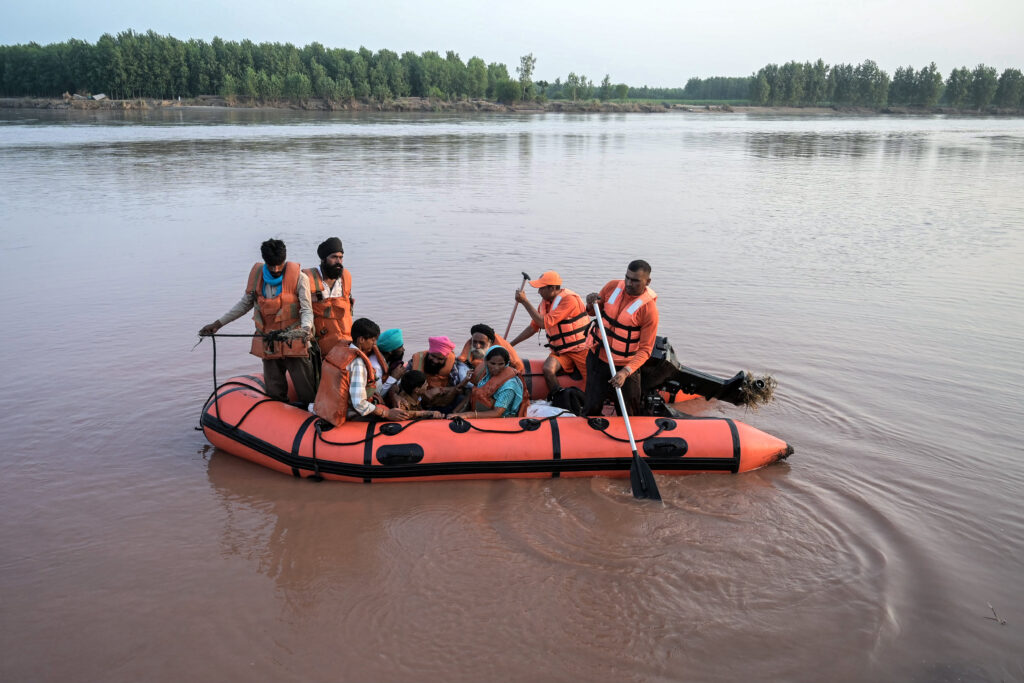
The fields are full but the paddy brown and wilted, and the air thick with the stench of rotting crops and livestock — the aftermath of record monsoon rains that have devastated India’s breadbasket.In Punjab, often dubbed the country’s granary, the damage is unprecedented: floods have swallowed farmlands almost the size of London and New York City combined.India’s agriculture minister said in a recent visit to the state that “the crops have been destroyed and ruined”, and Punjab’s chief minister called the deluge “one of the worst flood disasters in decades”.Old-timers agree.”The last time we saw such an all-consuming flood was in 1988,” said 70-year-old Balkar Singh in the village of Shehzada, 30 kilometres (19 miles) north of the holy Sikh city of Amritsar.The gushing waters have reduced Singh’s paddy field to marshland and opened ominous cracks in the walls of his house. Floods and landslides are common during the June-September monsoon season on the subcontinent, but experts say climate change, coupled with poorly planned development, is increasing their frequency, severity and impact.Punjab saw rainfall surge by almost two-thirds compared with the average rate for August, according to the national weather department, killing at least 52 people and affecting over 400,000.Prime Minister Narendra Modi has announced a relief package worth around $180 million for Punjab.- ’10 feet high’ -The village of Toor, sandwiched between the Ravi river and Pakistan, is in tatters — strewn with collapsing crops, livestock carcasses and destroyed homes.”The water came past midnight on August 26,” said farm worker Surjan Lal. “It rose up to at least 10 feet (three metres) in a matter of minutes.”Lal said the village in Punjab’s worst-affected Gurdaspur district was marooned for nearly a week. “We were all on rooftops,” he said. “We could do nothing as the water carried away everything from our animals and beds.”In adjacent Lassia, the last Indian village before the frontier, farmer Rakesh Kumar counted his losses. “In addition to the land I own, I had taken some more on lease this year,” said the 37-year-old. “All my investment has just gone down the drain.”To make things worse, Kumar said, the future looked bleak.He said he feared his fields would not be ready in time to sow wheat, the winter crop of choice in Punjab.”All the muck has to first dry up and only then can the big machines clear up the silt,” he said.Even at the best of times, bringing heavy earth-movers into the area is a tall order, as a pontoon bridge connecting it to the mainland only operates in the lean months.For landless labourers like 50-year-old Mandeep Kaur, the uncertainty is even greater. “We used to earn a living by working in the big landlords’ fields but now they are all gone,” said Kaur.Her house was washed away by the water, forcing her to sleep in the courtyard under a tarpaulin sheet — an arrangement fraught with danger as snakes slither all over the damp land.- Basmati blues -Punjab is the largest supplier of rice and wheat to India’s food security programme, which provides subsidised grain to more than 800 million people.Analysts say this year’s losses are unlikely to threaten domestic supplies thanks to large buffer stocks, but exports of premium basmati rice are expected to suffer.”The main effect will be on basmati rice production, prices and exports because of lower output in Indian and Pakistan Punjab,” said Avinash Kishore of the International Food Policy Research Institute in New Delhi.Punishing US tariffs have already made Indian basmati less competitive, and the floods risk worsening that squeeze.The road to recovery for Punjab’s embattled farmers, analysts say, will be particularly steep because the state opted out of the federal government’s insurance scheme, citing high costs and a low-risk profile because of its robust irrigation network.Singh, the septuagenarian farmer, said the water on his farm was “still knee-deep”.”I don’t know what the future holds for us,” he said.

A Lagos, mourir par manque d’ambulances et excès d’embouteillages

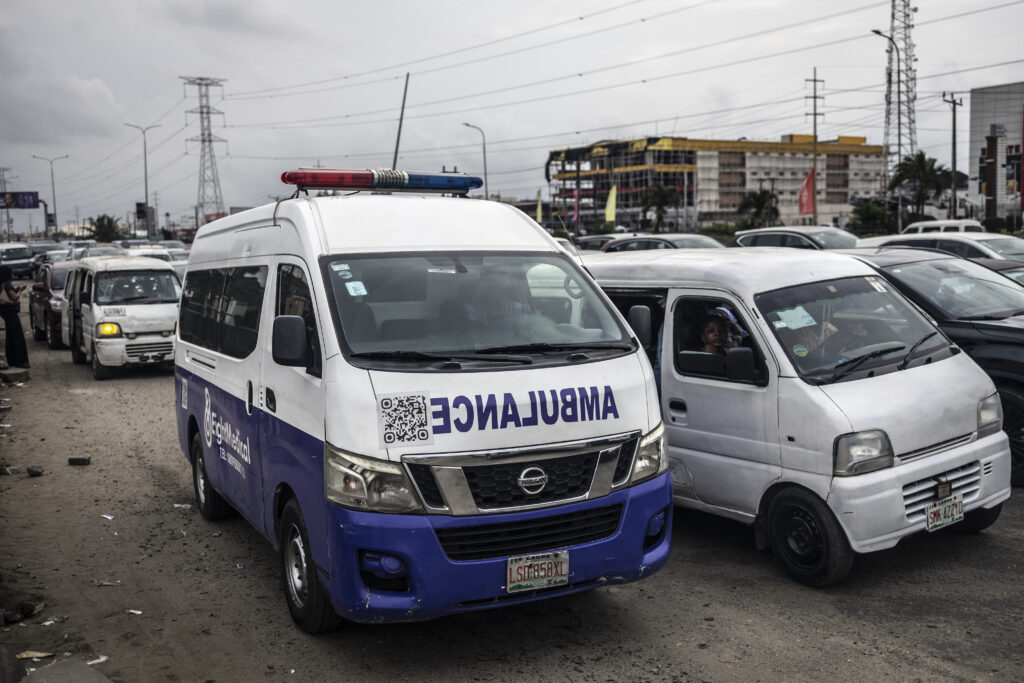
Une centaine d’ambulances pour plus de 20 millions d’habitants : à Lagos, il n’est pas rare de mourir avant l’arrivée des secours ou coincé dans les embouteillages monstres qui paralysent la capitale économique du Nigeria.La maman de Michelin Hunsa a survécu, mais retrouvée inconsciente par ses voisins, elle a d’abord attendu plus de deux heures pour une ambulance et à l’arrivée, le médecin a diagnostiqué “une hémorragie cérébrale”.”C’est un problème grave, on a attendu beaucoup trop longtemps”, se lamente la jeune femme de 25 ans, désemparée, devant un hôpital public.Contrairement aux personnalités publiques escortées par des voitures de sécurité privée ou la police qui leur ouvrent la voie, les ambulanciers ne peuvent compter que sur eux-mêmes.Lagos ne dispose quasiment pas de voies réservées aux véhicules d’urgence et malgré leurs sirènes, les raccourcis, leurs talkies-walkies reliés à des mégaphones et une conduite agressive, ils peinent à se frayer un chemin.”La plupart des gens ne veulent pas céder le passage, ce qui affecte notre temps d’intervention”, explique Opeyemi Queen Soetan, 33 ans, ambulancière depuis neuf ans.”Quand on est coincé dans les embouteillages et que l’état du patient se dégrade, c’est frustrant. Vraiment frustrant”, poursuit-elle.Certains automobilistes comme Anthony Folayinka, estiment que les ambulances utilisent leurs sirènes sans raison. “Je suis sûr que la plupart du temps, ils ne transportent pas de vrais cas d’urgence, c’est pourquoi je ne me bouge pas”, explique le chauffeur de VTC de 38 ans. Derrière le volant, l’ambulancier Saheed Ayandeji, 42 ans, confie que le plus difficile, ce sont “les heures de pointe”, généralement entre 6h00 et 8h00 le matin, et entre 16h00 et 18h00 l’après-midi.L’Etat de Lagos fournit “35 ambulances” publiques, a indiqué à l’AFP Olusegun Ogboye, secrétaire permanent du ministère de la Santé de la mégalopole, auxquelles s’ajoutent “80 à 90 ambulances” appartenant à des sociétés privées.Soit un ratio d’une ambulance pour 200.000 habitants. – Objectif: 8 minutes -Depuis sa création en 2021, Eight Médical assure le fonctionnement continu de 34 ambulances, jour et nuit.”Le nom fait référence au délai idéal de 8 à 10 minutes recommandé par les experts pour intervenir en cas d’urgence. À Lagos, nous en sommes encore loin, mais c’est l’objectif visé avec mon équipe”, détaille Ibukun Tunde Oni, 36 ans, fondateur de cette start-up et médecin généraliste de formation.Deux de ses oncles sont morts il y a quelques années, l’un d’une crise cardiaque pendant les fêtes de Noël, et l’autre d’une crise d’asthme dans une ambulance. Marqué par ces deux événements, il a aussi été victime d’un accident de la route et attendu l’ambulance trois heures sur la chaussée.Aucune donnée n’est disponible sur le nombre de patients décédés à cause de la circulation chaotique à Lagos.  Mais il y en a “beaucoup car 100 ambulances pour Lagos ce n’est pas assez”, estime M. Oni. La forte croissance démographique de la mégapole rend la situation encore plus critique.Lagos sera peuplée de 88 millions d’habitants en 2100, ce qui en fera la ville la plus peuplée du monde, d’après une étude du Global Cities Institute de Toronto.Outre le manque de véhicules, les services d’urgences médicales doivent aussi composer avec le mauvais état des routes et la pénurie de personnel médical exacerbée par la crise économique et les piètres conditions de travail.La mauvaise coordination entre hôpitaux et services d’ambulances complique également la connaissance en temps réel des lits disponibles pour l’hospitalisation.En 2022, les autorités de Lagos ont mis en place un bateau-ambulance et une clinique flottante, permettant de desservir “15 des 20 collectivités locales via les voies navigables” de la lagune, et éviter les embouteillages, selon Ibrahim Famuyiwa, chef des opérations de l’autorité des voies navigables de l’État.Mais faute d’argent pour développer cette alternative, la priorité des autorités locales va pour l’instant à l’augmentation du nombre de camions-ambulances, notamment via des partenariats publics-privés.

In mega-city Lagos, 20 million count on just 100 ambulancesTue, 16 Sep 2025 06:55:10 GMT

Standing outside a public hospital in Lagos, Nigeria’s biggest city, Michelin Hunsa is still “traumatised” from the two-hour wait it took to get an ambulance for her mother, found unconscious by her neighbours.Such waits can be deadly and are not unusual in the mega-city, where notorious traffic jams snarl commutes and only about 100 ambulances …

In mega-city Lagos, 20 million count on just 100 ambulancesTue, 16 Sep 2025 06:55:10 GMT Read More »

Présidentielle au Malawi: duel de vétérans sur fond d’économie moribonde

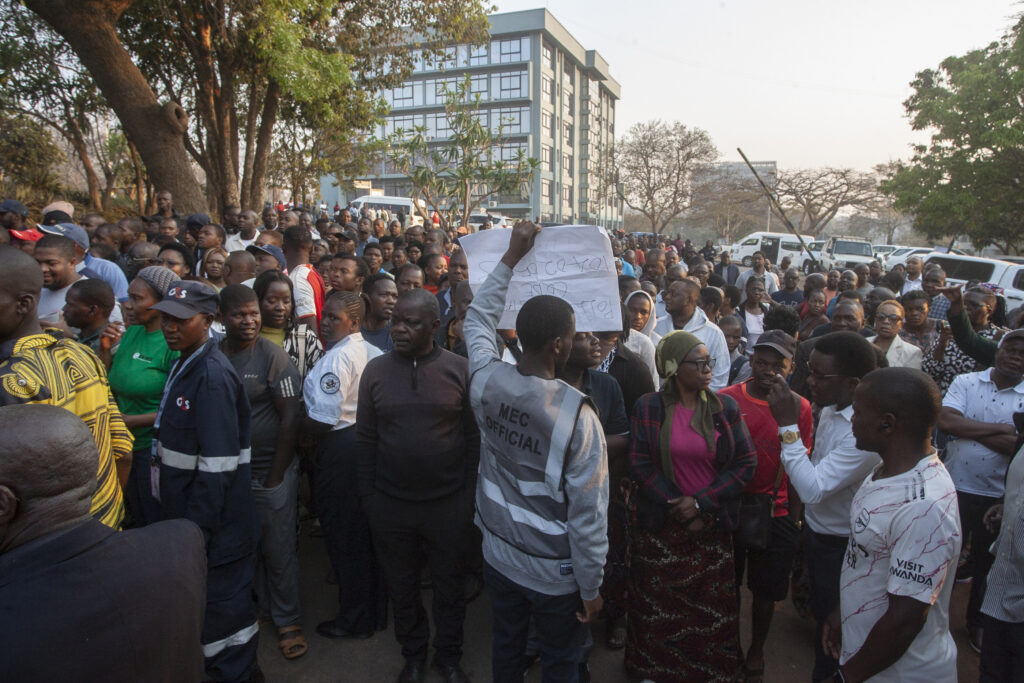
Le président sortant du Malawi affronte son prédécesseur mardi lors d’élections présidentielle et législatives dans un pays où la population, majoritairement pauvre, fait face au quotidien à de nombreuses pénuries.Les électeurs ont commencé à voter  à 6H00 locales (4H00 GMT), a constaté une équipe de l’AFP présente dans un bureau de vote du centre de la capitale Lilongwe.Le vainqueur devra relever le défi d’une économie moribonde. Quelque 70% des 21 millions d’habitants vivent avec moins de 2,15 dollars par jour selon la Banque mondiale. L’inflation dépasse 27% en rythme annuel et le secteur agricole, qui emploie plus de 80% de la main d’œuvre, a été durement affecté par deux sécheresses et un cyclone dévastateurs depuis 2023.Dix-sept candidats sont en lice pour la magistrature suprême dans ce pays enclavé d’Afrique australe. Mais selon les analystes, la bataille électorale va de nouveau se jouer entre le sortant et pasteur évangélique Lazarus Chakwera, 70 ans, et son prédécesseur, l’ex-professeur de droit Peter Mutharika, 85 ans.Premier dans une file d’attente à Lilongwe, Lindani Kitchini, cadre de 47 ans, dit souhaiter un nouveau mandat de cinq ans de Lazarus Chakwera. “Donnons-lui une chance de faire passer le pays à un niveau supérieur. Il y a des problèmes dans tous les pays. On a pu voir des progrès significatifs”, a-t-il assuré à l’AFP.L’élection se résume à un choix entre “deux déceptions”, explique à l’AFP le commentateur politique Chris Nhlane.”Les deux hommes incarnent un potentiel inexploité et des espoirs déçus, et pourtant, les Malawiens doivent choisir le moindre mal entre les deux”, ajoute-t-il.Les deux hommes, qui se sont affrontés une première fois lors de l’élection 2014 remportée par Mutharika, ont attiré de larges foules lors de leurs derniers meetings de campagne ce weekend. Mais de nombreux jeunes électeurs ne cachent pas leur désenchantement.”Je préfèrerais aller travailler plutôt que de voter”, explique Joseph, auto-entrepreneur de 30 ans qui préfère ne pas donner son nom. “Rien ne change”, résume-t-il.Environ 60% des 7,2 millions d’électeurs inscrits ont moins de 35 ans. Des groupes de la société civile se sont mobilisés pour les convaincre d’aller voter mardi, entre 06H00 et 16H00 (de 04H00 GMT à 14H00 GMT).”Nous n’avons pas besoin d’un leader, nous avons besoin de quelqu’un qui puisse redresser l’économie”, explique à l’AFP l’un de ces activistes, Charles Chisambo, 34 ans. – Pénuries d’essence -Chakwera, issu du Parti du Congrès du Malawi, a fait campagne sur le thème de la continuité, mettant en avant la livraison de plusieurs chantiers d’infrastructures (routes, écoles, hôpitaux…).”Il y a eu des plaintes à propos du coût de la vie, du manque de ressources, des pénuries alimentaires”, a-t-il reconnu samedi en meeting à Lilongwe, la capitale. “On va tout redresser”, a-t-il promis. Quelques jours auparavant, il avait annoncé une forte diminution du prix des engrais.La population doit s’adapter à des pénuries de carburants récurrentes, alimentées par le manque de devises étrangères pour s’acquitter de ces importations, conséquence d’un déficit commercial marqué et d’une dette aussi élevée que coûteuse.En quête d’un deuxième mandat, Chakwera avait accédé au pouvoir après l’annulation des résultats des élections de 2019 pour des irrégularités. Lors du nouveau scrutin en 2020, il avait obtenu près de 59% des voix et privé d’un second mandat Mutharika, du Parti démocrate-progressiste.Cinq ans plus tard, une forme de nostalgie des années Mutharika, synonymes d’une “relativement meilleure administration”, s’est installée, selon l’analyste Mavuto Bamusi.”La prime au sortant Chakwera a été largement entamée par de mauvais résultats économiques”, souligne-t-il.En meeting à Blantyre, la deuxième ville du pays, Mutharika a déclaré vouloir “sauver ce pays”.”Je vais voter pour APM (Mutharika) car il sait comment gérer l’économie et il a le bien-être des Malawiens à cœur”, déclare à l’AFP Thula Jere, étudiant de 31 ans.Si aucun des candidats ne recueille plus de 50% des voix, un second tour est prévu dans les 60 jours.

FBI chief Kash Patel faces Senate panel

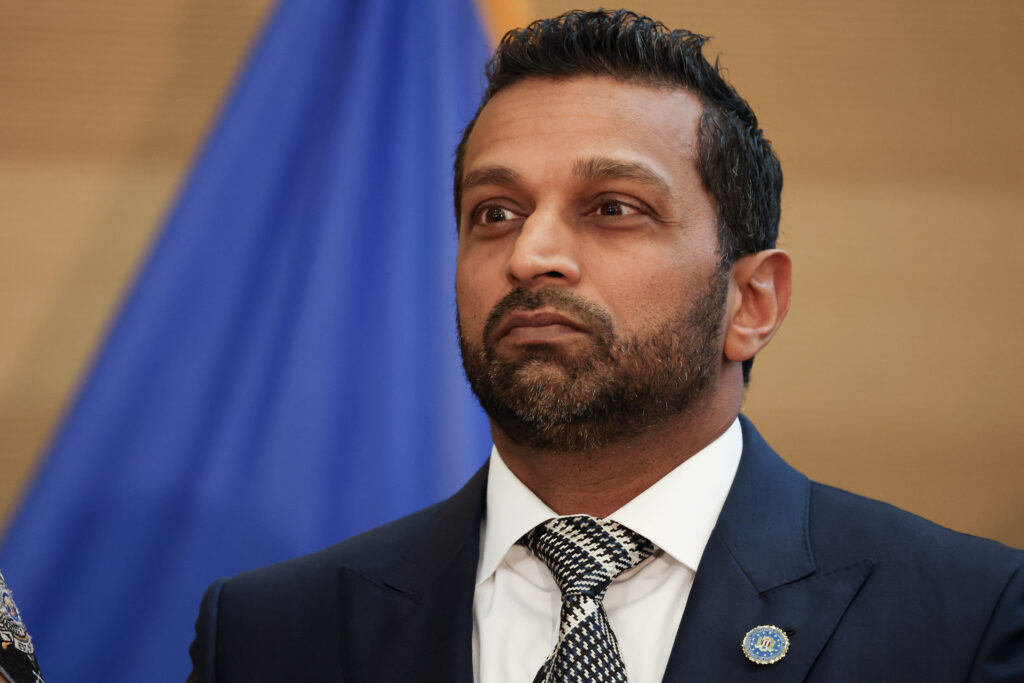
FBI Director Kash Patel faces a Senate panel on Tuesday amid criticism of his handling of the investigation into the murder of conservative activist Charlie Kirk and the case of sex offender Jeffrey Epstein.Democrats on the Senate Judiciary Committee are also expected to grill Patel over an ongoing purge of FBI ranks of agents seen as disloyal to President Donald Trump.Patel has come under fire from both the right and the left since being named by Trump to head the Federal Bureau of Investigation, the nation’s premier law enforcement agency.He angered many Trump supporters with a memo in July that effectively closed the investigation into the activities of Epstein, who died in a New York jail cell in 2019 while awaiting trial for sex trafficking of underage girls.In the memo, the FBI and Justice Department said that the well-connected financier had committed suicide, did not blackmail any prominent figures, and did not keep a “client list.”Trump’s supporters have been obsessed with the Epstein case for years and held as an article of faith that “deep state” elites have been protecting Epstein associates in the Democratic Party and Hollywood.Trump’s one-time close relationship with Epstein has also proved to be potent fodder for his political opponents, with the president and his allies seeking to downplay the whole saga as a Democratic “hoax.”Patel has also been heavily criticized for his actions in the immediate aftermath of last week’s assassination of Kirk during a speaking event at a Utah university.Patel announced the arrest of a suspect a few hours after the shooting, only to turn around two hours later and say that individual had been released and the manhunt was continuing.The actual suspected assailant, Tyler Robinson, was arrested 33 hours after the shooting.Robinson is to be formally charged in Provo, Utah, on Tuesday with the murder of Kirk, the founder of the influential conservative youth political group Turning Point USA.- Right man? -Among those critical of Patel in the wake of the bungled announcement is conservative activist Christopher Rufo, who wrote on X whether “it is time for Republicans to assess whether Kash Patel is the right man to run the FBI.”According to Fox News, Patel’s relationship with Attorney General Pam Bondi is particularly strained, although he continues to enjoy the confidence of the White House for the time being.Since taking office in January, Trump has taken a number of punitive measures against his perceived enemies, purging government officials deemed to be disloyal, targeting FBI agents and law firms involved in past cases against him, and pulling federal funding from universities.Among those summarily dismissed from government service have been scores of FBI agents, including three former senior bureau officials who filed a lawsuit against Patel last week over their firing.The former agents said they were victims of a “campaign of retribution” over a perceived “failure to demonstrate sufficient political loyalty.””Patel not only acted unlawfully but deliberately chose to prioritize politicizing the FBI over protecting the American people,” they said.Following his appearance before the Senate panel on Tuesday, Patel will testify before the House Judiciary Committee on Wednesday.