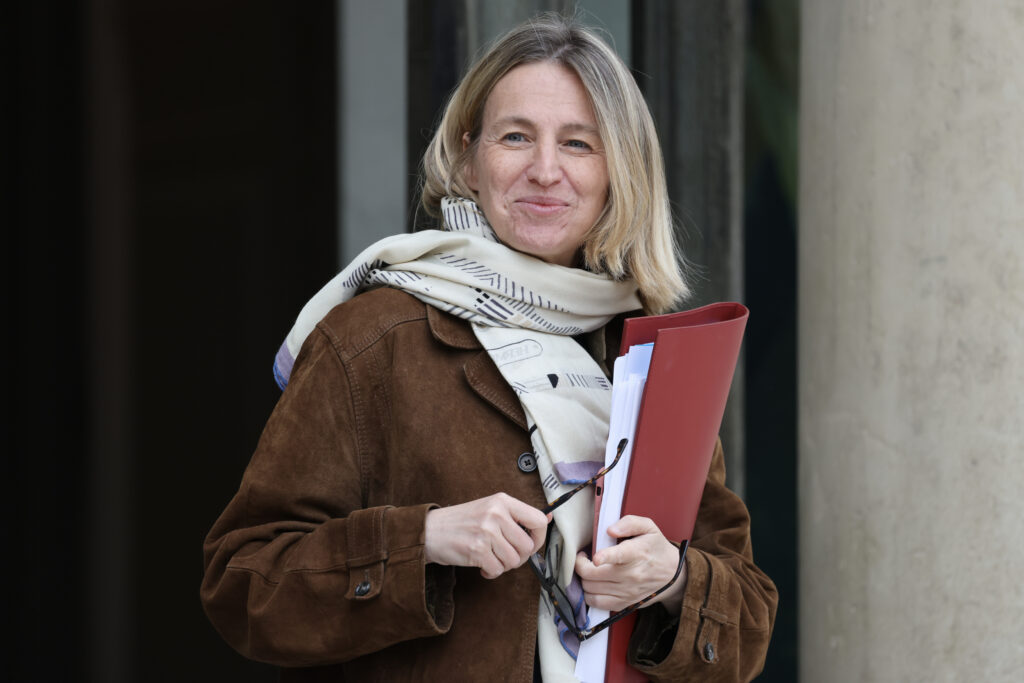
Accusée de corruption, Panosyan-Bouvet dépose plainte pour “dénonciation calomnieuse”

La ministre du Travail, Astrid Panosyan-Bouvet, a porté plainte vendredi “pour dénonciation calomnieuse à l’encontre de l’association +AC !! Anti-corruption+”, qui l’a récemment accusée d’être intervenue pour faire baisser les cotisations dues par une entreprise, ce que revendique la ministre démissionnaire.C’était un “acte de gestion justifié”, selon la ministre du Travail.Selon la plainte de l’association, Mme Panosyan-Bouvet est intervenue pour faire baisser les cotisations dues par l’entreprise Setforge à l’Urssaf, et ce possiblement malgré une décision de justice défavorable à la société, comme l’avait écrit Mediapart début septembre.Cette plainte contre X dénonce plusieurs infractions possibles comme la prise illégale d’intérêts, le détournement de fonds publics ou la concussion, mais aussi l’abus d’autorité, l’abus de biens sociaux ou la présentation inexacte des comptes annuels.”Cette plainte porte sur une décision que j’ai prise en avril dernier à la requête de délégués syndicaux (CFDT, CGT), d’élus locaux (maire et président d’intercommunalité, sénatrice) et d’autorités locales et nationales (préfet, directeur de l’industrie de défense à la Direction générale de l’armement)”, rappelle Astrid Panosyan-Bouvet, dans un communiqué transmis à l’AFP.Elle indique avoir agi “en concertation avec Matignon et Bercy, comme il est d’usage dans ce genre de cas, et dans le respect du droit, pour autoriser une modification d’un taux de cotisation sociale d’un des sites de Moselle d’une entreprise industrielle, avec laquelle je n’ai strictement aucun lien”.La fragile situation de la société menaçait alors d’entraîner la suppression d’une centaine d’emplois, a fait valoir le ministère.”Cette plainte a été déposée par une association sans agrément, en énumérant des infractions aussi graves qu’hétéroclites”, regrette Astrid Panosyan-Bouvet.”Quand la probité est mise en doute avec la volonté manifeste non pas de questionner une décision mais de nuire et cultiver une défiance malsaine, c’est la possibilité même de l’action publique qui est fragilisée”, estime la ministre qui accuse “l’association +AC !! Anti-corruption+ d’avoir élaboré et diffusé cette plainte mensongère”.Dans une réponse adressée à l’AFP lundi, l’Urssaf avait précisé qu’à la “suite d’un arbitrage rendu par la ministre du Travail, la Carsat d’Alsace-Moselle a régularisé les taux de cotisation ATMP (accidents du travail et maladies professionnelles) applicables à l’établissement de l’entreprise Setforge sur les exercices 2022 à 2025. Suite au recalcul effectué en mai 2025, l’Urssaf a remboursé les cotisations trop perçues”.”Préalablement à ce remboursement, l’entreprise n’avait aucune dette vis-à-vis de l’Urssaf et n’avait pas fait l’objet d’un redressement de la part de l’Urssaf”, selon cette source.Pour AC !! Anti-corruption, l’intervention de la ministre sur les taux de cotisation “a eu pour conséquence directe de soustraire à la Sécurité sociale des sommes qui lui étaient dues et de faire bénéficier Setforge d’un effacement de dette sociale injustifié”.

India and Pakistan meet again at Asia Cup after handshake row

India and Pakistan clash again in the Asia Cup on Sunday, renewing one of cricket’s fiercest rivalries a week after their last match was overshadowed by a handshake row.India won the September 14 group match by seven wickets in Dubai and afterwards refused to shake hands with their opponents, angering Pakistan.It was the first meeting between the neighbours since a four-day cross-border conflict in May left more than 70 people dead.The Pakistan Cricket Board lodged a protest with the International Cricket Council alleging that match referee Andy Pycroft had told skipper Salman Agha not to approach Indian counterpart Suryakumar Yadav for a handshake at the toss. The PCB demanded Pycroft be removed from their matches and threatened to withdraw from the eight-team Twenty20 competition. Their last group game was held up for an hour before the PCB said Pycroft had apologised and the match, with the Zimbabwean in charge, eventually went ahead.Pakistan beat hosts the United Arab Emirates to qualify for the next stage, the Super Fours, and set up another meeting with India in Dubai.Indian media has reported that the team plans to stick to its no-handshake policy for Sunday’s clash.India spinner Kuldeep Yadav sought to defuse the controversy. “When you step onto the field it’s just a batter in front of you. I have always approached it this way against Pakistan,” he said ahead of India’s last group game, against Oman on Friday.Agha also stuck to sport. “If we play good cricket like we have played in the last few months I think we’ll be good against any side,” the Pakistan captain told reporters.- Simmering tensions -Because of fraught political ties, nuclear-armed neighbours India and Pakistan only meet at neutral venues during multi-team tournaments.Tensions soared ahead of the Asia Cup after the two countries engaged in their worst conflict since 1999.The hostilities in May left more than 70 people dead in missile, drone and artillery exchanges, before a ceasefire.The conflict was triggered by an April attack on civilians in Pahalgam in Indian-administered Kashmir that New Delhi accused Pakistan of backing, a charge Islamabad denies.India resisted calls to boycott the first Pakistan match.A potential third India-Pakistan showdown looms if both sides qualify for the final on September 28 in Dubai.India lifted the Asia Cup in its last, 50-over edition and are favourites to retain the crown.India and Pakistan advanced to the next stage from Group A while Sri Lanka and Bangladesh qualified from Group B. Sri Lanka face Bangladesh on Saturday in the first Super Fours fixture.Sri Lanka, unbeaten so far, look dangerous while Bangladesh carry the underdog tag under skipper Litton Das.Along with regional bragging rights, the Asia Cup serves as build-up towards the T20 World Cup in February-March in India and Sri Lanka.

Affaire Kimmel : des humoristes américains dénoncent la “censure”

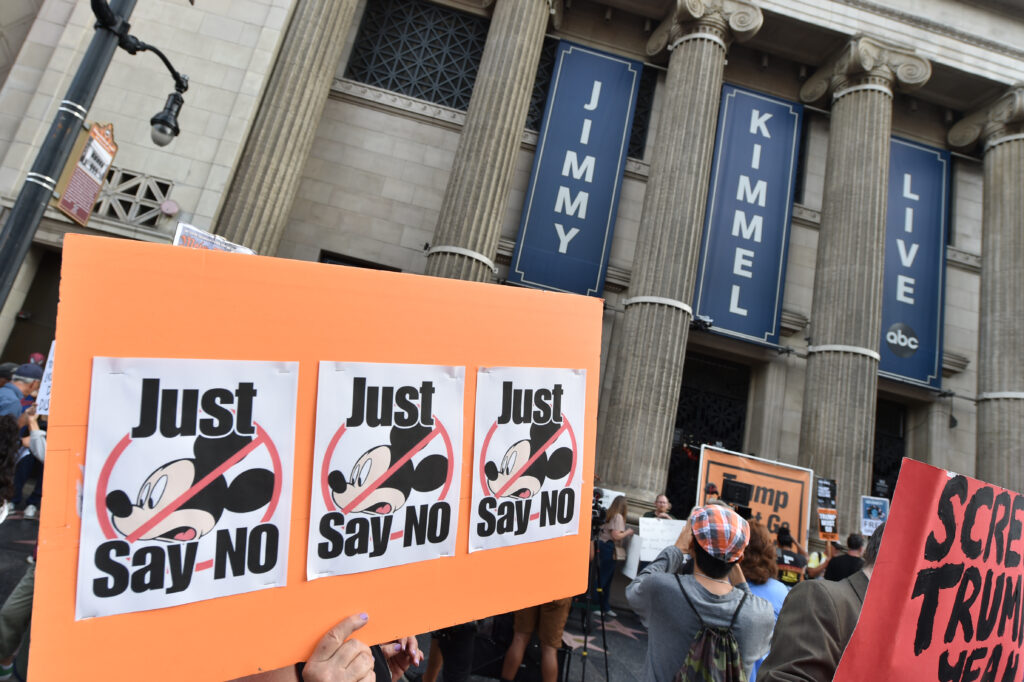
Les humoristes qui animent les soirées télévisées américaines ne cachaient pas leur stupéfaction et leur inquiétude, jeudi, après l’éviction brutale de leur collègue Jimmy Kimmel par la chaîne ABC, sous pression du président Donald Trump qu’il s’appliquait comme eux à combattre quotidiennement.”Ce soir, nous sommes tous Jimmy Kimmel !”: Stephen Colbert, lui même sur la sellette, a ouvert son émission “The Late Show”, sur la chaîne CBS, en dénonçant “une censure flagrante”.Critique virulent du président américain, comme son confrère privé d’antenne, Stephen Colbert s’était vu en juillet notifier la fin de la diffusion de son émission en mai 2026, officiellement pour raisons financières. Et ce, même si son audience reste au premier rang des émissions de fin de soirée. Son talk-show vient même d’être récompensé d’un Emmy Awards.De fait, les talk-shows souffrent: les dépenses publicitaires en fin de soirée sur ABC, CBS et NBC ont été quasiment réduites de moitié entre 2018 et 2024 (439 à 221 millions de dollars), selon le le New York Times, qui citait en mai la société de données publicitaires Guideline.”Avec un autocrate, on ne peut pas céder d’un pouce, et si ABC pense que (l’éviction de Kimmel) va satisfaire le régime, ils sont terriblement naïfs”, a mis en garde Stephen Colbert.Comme lui, tout le microcosme médiatique américain est secoué par l’éviction du très populaire Jimmy Kimmel, dont l’émission a été annulée mercredi juste avant la prise d’antenne. “Une grande nouvelle pour l’Amérique”, a salué le président républicain.Depuis, l’incident occupe les chaînes américaines. Le “Daily Show” de l’animateur Jon Stewart, sur Comedy Central, a débuté avec un film parodique saluant un “présentateur patriotiquement obéissant” et une émission “approuvée par le gouvernement”.”Certains esprits chagrins pourraient argumenter que les raisons avancées par le gouvernement (dans l’affaire Kimmel, ndlr) ne sont qu’un stratagème cynique pour cacher un renforcement sans précédent du pouvoir (…). Mais pas moi. Je pense que c’est fantastique”, a ironisé l’humoriste.- “S’en prendre à Trump” -Sur le chemin du retour après sa visite d’Etat au Royaume-Uni, Donald Trump a de nouveau fustigé ces talk-shows. “Ils ne font que s’en prendre à Trump”, s’est plaint le locataire de la Maison Blanche, relevant que leur autorisation de diffusion “peut leur être retirée” par Brendan Carr, patron de l’autorité de régulation des télécoms et de l’audiovisuel.Le président avait déjà émis le souhait, sur son réseau Truth Social, que NBC prive d’antenne deux autres humoristes célèbres, Jimmy Fallon et Seth Meyers, qualifiés de “minables absolus”.Dans “Tonight Show” jeudi, Jimmy Fallon a rendu hommage à Jimmy Kimmel, un homme “bien, drôle et aimant”.”Beaucoup de gens craignent que nous soyons censurés, mais je vais couvrir le voyage du président au Royaume-Uni comme je le ferais normalement”, a assuré l’humoriste tandis qu’une voix off couvrait ses propos en soulignant, narquoise, combien Trump était “incroyablement beau”.Le gouvernement “s’attaque à la liberté d’expression” dans le pays, a dénoncé de son côté Seth Meyers dans “Late Night”. Avant d’embrayer, lui aussi, sur le registre de l’ironie. “J’ai toujours admiré et respecté M. Trump” (…). Si jamais vous m’entendez dire quelque chose de négatif à son propos, c’est de l’intelligence artificielle”.Figure légendaire du paysage audiovisuel américain, des émissions de fin de soirée, David Letterman a pour sa part jugé “ridicule” l’éviction de Jimmy Kimmel.”Vous ne pouvez pas virer quelqu’un en passant, parce que vous avez peur ou essayez de faire des courbettes à une administration criminelle autoritaire dans le bureau ovale”, a lancé le doyen des animateurs.Même la très conservatrice Fox News, très favorable à Trump, choisissait l’ironie. Mais avec une bien différente signification. Après avoir traité Jimmy Kimmel de “clown”, Greg Gutfeld a assuré qu’il n’avait pas été “censuré”. Le présentateur d’ABC “peut toujours raconter des blagues, critiquer (le militant ultra-conservateur récemment assassiné) Charlie (Kirk) et mentir à propos de son meurtrier”, a-t-il affirmé. “Il doit juste trouver un autre endroit pour le faire. J’ai entendu dire que Gaza était agréable à cette période de l’année”.

La coopération météo internationale, elle aussi chamboulée par Trump

Pertes de budgets, de données et de partage d’informations: les experts mondiaux en satellites météorologiques, réunis en congrès à Lyon, déplorent l’effet délétère pour la recherche sur le changement climatique de la politique de Donald Trump.”Nous risquons de perdre des preuves qui permettront à la prochaine génération de comprendre le changement climatique”, s’alarme le chercheur coréen Sang Seo Park, de l’institut de sciences et technologie d’Ulsan, lors d’un échange avec l’AFP. Depuis l’entrée en fonction du président républicain, certains sites internet gouvernementaux contenant des données sur la météo et le climat ont été supprimés, et ce spécialiste de l’observation de la qualité de l’air est particulièrement scandalisé par la fermeture d’une page dédiée à la surveillance de l’ozone. “Cela signifie la perte de toutes les données historiques. Et ce n’est qu’un exemple parmi d’autres”, s’indigne le chercheur. “On souffre du manque de communication des Etats-Unis et de la diminution des données” des satellites qui nous sont transmises. Quelque 500 représentants de services météorologiques nationaux, agences spatiales et centres de recherches sont présents depuis lundi à Lyon à l’initiative de l’organisation européenne pour l’exploitation des satellites météorologiques, Eumetsat. Beaucoup partagent la confusion et l’inquiétude de M. Park.L’agence spatiale américaine NASA et l’agence chargée des prévisions météo, de l’analyse du climat et de la conservation des océans NOAA ont récemment annoncé des coupes budgétaires, dont les fonds alloués à un satellite qui mesure les concentrations de gaz à effet de serre.”Le mot climat n’est pas très bienvenu à Washington, aujourd’hui”, regrette Paul Counet, chef de la stratégie et de la communication d’Eumetsat.”Continuer à faire de la prévision météorologique va rester une priorité” aux Etats-Unis, où le gouvernement veut toujours connaître les températures et pluies attendues à court-terme, dit-il.Mais, selon lui, “pour la détection du changement climatique, on voit déjà des impacts” de la politique de Donald Trump, qui veut réduire la taille des agences gouvernementales et sabrer dans les dépenses consacrées à l’environnement.Dans “les équipes américaines, il y a une perte de compétences, une perte de personnel” et “dans les interactions, c’est plus compliqué”, constate-t-il. “On progresse moins rapidement, c’est clair.”- Réécriture -Christophe Maréchal, ingénieur au Centre national d’études spatiales (CNES) en est bien conscient: “si on veut continuer à travailler avec (nos partenaires américains), il faut insister sur les aspects non-climatiques”, le sujet étant devenu “très sensible”.”Tout peut s’arrêter du jour au lendemain”, affirme ce chef de projet français. “On est sur le qui-vive, on sait que les décisions budgétaires arrivent en fin d’année pour les différents projets”, explique-t-il.Pour l’exercice 2026, que le Congrès doit voter avant le 30 septembre, l’administration Trump a proposé de réduire le budget de la NOAA d’environ 25% et de supprimer totalement sa division de recherches.D’ores et déjà, “beaucoup de programmes ont été abandonnés, beaucoup de gens vont être mutés”, confie à l’AFP un chercheur de la NOAA qui a requis l’anonymat de peur de perdre son emploi. “On nous a demandé de supprimer toute référence au changement climatique” de nos demandes de subventions, poursuit-il. “Notre bureau nous a aidés à réécrire tous nos projets pour s’assurer qu’ils aient les meilleures chances possibles d’être financés.”Pour lui “cela a fonctionné” et il a réussi à conserver ses financements, mais ses recherches sont quasiment à l’arrêt, en attendant sa nouvelle équipe de travail après cette restructuration. Paul Counet sent aussi le vent tourner à l’Eumetsat. Pour obtenir des financements européens, il doit développer “de plus en plus un argumentaire sur les applications de sécurité et de défense”. “La guerre en Ukraine nous a appris que pour piloter des drones, il fallait connaître les vents, l’atmosphère…”, explique-t-il. “Aujourd’hui, vous n’envoyez pas un avion bombarder sans une bonne prévision météo.”Le discours a changé en conséquence, dit-il: “il y a dix ans on vendait des satellites météorologiques pour sauver le climat, aujourd’hui on les vend pour sauver l’Ukraine”.

Asian markets mixed ahead of Trump-Xi talks

Asian markets were mixed Friday at the end of a strong week for investors following a US interest rate cut, with attention now turning to a call between Donald Trump and Xi Jinping due later in the day.Adding to selling pressure were expectations that Japan’s central bank would hike interest rates later this year, despite holding them at its latest meeting.While the Federal Reserve and boss Jerome Powell were not as forthright as hoped on future rate reductions, the mood on trading floors remained upbeat.The US central bank lowered borrowing costs Wednesday for the first time since December after a series of reports pointed to a slowdown in the country’s labour market, which offset stubbornly high inflation.A closely watched gauge of future moves indicated two more this year, but Powell warned decisions would be data-dependent. With that in mind, even figures showing a sharp drop in initial jobless claims for last week did little to dampen expectations that rates will continue to be cut.”The underlying trend remains one of only a gentle drift higher in claims, reinforcing the view that the US labour market is not showing signs of sudden weakness,” said National Australia Bank’s Rodrigo Catril.All three main indexes ended Thursday at records, continuing a trend that has characterised markets in recent months, thanks to another surge in tech giants.That came after news that chip titan Nvidia will invest $5 billion in struggling US rival Intel and jointly develop processors for PCs and data centres.Asian traders moved cautiously in the morning, but selling picked up after the Bank of Japan’s latest meeting.Monetary policymakers kept rates on hold but only after a surprise 7-2 vote that indicated two members wanted a hike. That boosted bets on such a move before the end of the year.The move came amid lingering political uncertainty and economic concerns fuelled by US tariffs.The bank also said it would start offloading exchange-traded funds bought as part of its earlier monetary easing campaign that had helped boost equities.Catril said the dissenters were “a strong signal that the BOJ will be hiking once political uncertainty is removed”.Before the announcement, official data showed inflation in the fourth-largest economy slowing to 2.7 percent in August, with rice price rises easing following a sharp spike that rattled the government.Traders are now awaiting a news conference from bank boss Kazuo Ueda due later in the day.Tokyo ended in the red, having enjoyed a strong start to the day. There were also losses in Shanghai, Singapore, Seoul, Taipei, Mumbai and Jakarta, while Hong Kong was flat.Sydney, Wellington, Bangkok and Manila rose with London, Paris and Frankfurt.Talks between president Trump and Chinese counterpart Xi — their first since June — are due to take place later Friday, with the US president telling reporters they would discuss a deal to change ownership of the hugely popular video-sharing app TikTok.The phone call also comes after high level officials from both sides met in Madrid where they spoke about trade between the economic superpowers, with the deadline for a US tariff pause approaching in November.- Key figures at around 0810 GMT -Tokyo – Nikkei 225: DOWN 0.6 percent at 45,045.81 (close)Hong Kong – Hang Seng Index: FLAT at 26,545.10 (close)Shanghai – Composite: DOWN 0.3 percent at 3,820.09 (close)London – FTSE 100: UP 0.1 percent at 9,233.69 Euro/dollar: DOWN at $1.1761 from $1.1785 on ThursdayPound/dollar: DOWN at $1.3485 from $1.3550Dollar/yen: UP at 147.91 yen from 147.97 yenEuro/pound: UP at 87.22 pence from 86.96 penceWest Texas Intermediate: DOWN 0.4 percent at $63.29 per barrelBrent North Sea Crude: DOWN 0.3 percent at $67.27 per barrelNew York – Dow: UP 0.3 percent at 46,142.42 (close)

BoJ holds interest rates but to sell funds in shift from easing policy

The Bank of Japan kept interest rates on hold Friday amid lingering political uncertainty and economic concerns but said it would start offloading funds bought as part of its earlier monetary easing campaign.The announcement came hours after official data showed inflation in the fourth-largest economy slowed to 2.7 percent in August, with rice price rises slowing following a sharp spike that rattled the government.In a widely expected decision the central bank decided against hiking borrowing costs, keeping them at 0.5 percent, but said it would begin reducing its exchange-traded fund and real estate investment trust holdings.The BoJ began buying the funds — in a bid to boost liquidity and reduce the cost of capital for firms, among other things — more than a decade ago as part of its campaign to kickstart the torpid economy and end years of almost non-existent inflation.Officials began hiking rates from below zero in March last year as figures signalled an end to the country’s “lost decades” of stagnation, with inflation surging.However, with worries about the global outlook and US tariffs growing, the bank paused its tightening measures at the start of 2025, with the last increase in January, taking rates to their highest level in 17 years.The yen rose against the dollar but Tokyo’s Nikkei 225 index fell around 0.5 percent.In a statement following Friday’s announcement, the BoJ said: “Japan’s economic growth is likely to moderate, as trade and other policies in each jurisdiction lead to a slowdown in overseas economies and to a decline in domestic corporate profits and other factors.”Japanese exports to the United States face a 15 percent levy imposed by President Donald Trump’s administration, causing huge pain for the nation’s industries, particularly the auto sector.But BoJ governor Kazuo Ueda told a news conference that “although US tariffs are having a negative impact, particularly on the revenues of the manufacturing industry, so far they don’t appear to be affecting the economy as a whole including capital investment, employment and wages”.- Leadership race -The rate decision was carried by seven votes to two, with the dissent described as “a bit of surprise” by Tsuyoshi Ueno of NLI Research Institute.”Governor Ueda has said he wants to see the impact of Trump tariffs, but maybe there is a division in their opinions, as inflation continues,” he told AFP.The move comes as the ruling Liberal Democratic Party (LDP) prepares for an election for a new leader following the resignation of Prime Minister Shigeru Ishiba.The government has come under pressure from voters angry about the rising cost of rice and Ishiba’s coalition lost its majority in both chambers. A race for his successor will be decided on October 4. Figures Friday showed core inflation — stripping out food costs –hit 2.7 percent in August.While that was down on July’s 3.1 percent, it is still well above the BoJ’s target of two percent, and analysts have said the bank will likely announce another hike this year or in early 2026.Rice prices had skyrocketed because of supply problems linked to a very hot summer in 2023 and panic-buying after a “megaquake” warning last year, amongst other factors.Abhijit Surya of Capital Economics said the main factor behind the fall in inflation was “a deepening of energy price deflation… due to the resumption of electricity and gas subsidies”.But Taro Kimura, an analyst with Bloomberg Economics, said a pullback in inflation “won’t change the big picture”.”Consumer prices will remain warm enough to keep the Bank of Japan on track to pare stimulus, likely as soon as October,” he added.