


Seize morts et beaucoup de questions après le spectaculaire déraillement d’un funiculaire à Lisbonne
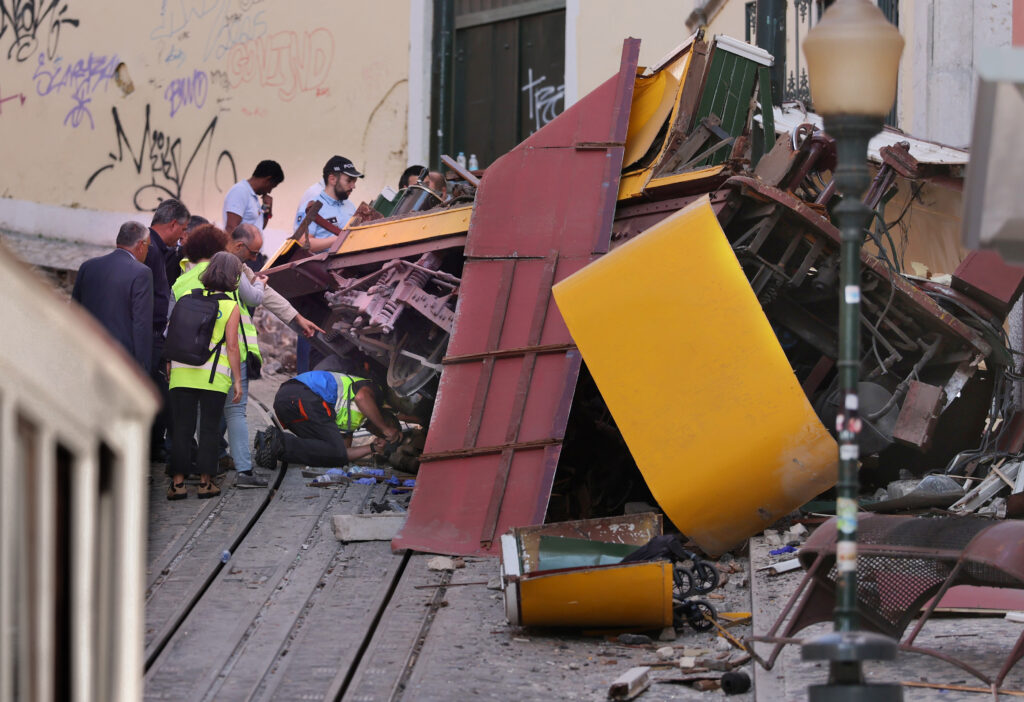
Les enquêteurs cherchent à déterminer jeudi les causes précises du spectaculaire déraillement d’un funiculaire de Lisbonne emprunté par de nombreux touristes, qui a endeuillé la ville, faisant 16 morts, dont au moins cinq Portugais, deux Coréens et un Suisse.- Que s’est-il passé? – “Je peux garantir que la sécurité est une priorité absolue de la Carris depuis 152 ans et que nous serons intraitables dans la recherche des causes et des responsabilités de cet accident”, a promis lors d’une conférence de presse Pedro de Brito Boga, le patron de Carris, gestionnaire des transports de la capitale portugaise.Quelques heures avant lui, le Premier ministre Luis Montenegro avait lui aussi promis lors d’une allocution télévisée que les autorités allaient “établir toutes les responsabilités” dans le drame survenu peu après 18H00 locale mercredi (17H00 GMT).D’après le témoignage d’une femme relayé par les médias locaux, l’un des deux wagons jaunes du célèbre ascenseur de la Gloria, qui montent et descendent ce dénivelé de 48 mètres alternativement, en système de contrepoids, est arrivé brutalement au bout de son parcours de 265 mètres, dépassant légèrement sa station d’arrêt habituelle au pied de la chaussée.Cette femme et d’autres personnes ont alors aperçu l’autre véhicule dévaler la rue pentue à toute allure, avant de dérailler au niveau d’un léger virage et de se fracasser contre un immeuble.- Qui sont les victimes? – Jeudi en début d’après-midi, le bilan a été établi à 16 morts et cinq blessés graves selon le Premier ministre, qui a évoqué “une des plus grandes tragédies humaines de notre histoire récente” et qui avait décrété une journée de deuil national dans la foulée du drame.Le service municipal de protection civile avait précédemment évoqué par erreur un bilan de 17 morts.Parmi les personnes mortes dans l’accident se trouvent cinq Portugais, deux Coréens et un Suisse, a précisé le parquet en fin de journée jeudi, précisant travailler à l’identification des autres victimes et sans préciser si les victimes asiatiques étaient originaires de Corée du Nord ou Corée du Sud.Les secours avaient aussi évoqué une vingtaine de blessés, dont un enfant de trois ans et au moins 11 étrangers: deux Allemands, deux Espagnols, une Française, un Italien, un Suisse, un Canadien, un Sud-coréen, un Marocain et un Cap-verdien.Le nombre total de ces victimes, décédées ou blessées, correspond presque exactement à la capacité maximale du funiculaire, qui peut transporter une quarantaine de personnes.- Quel était l’état du funiculaire? – Plusieurs médias ont rapidement évoqué l’éventuelle rupture d’un câble de sécurité, une hypothèse que le patron de Carris n’a pas confirmée en fin d’après-midi jeudi, laissant le soin à l’enquête en cours de le déterminer.Par souci de prévention, la mairie a suspendu le fonctionnement des trois autres funiculaires de la ville, “pour vérification de leurs conditions de fonctionnement et de leur sécurité”, a précisé Margarida Castro, responsable de la protection civile municipale de la capitale portugaise.La question de l’entretien du funiculaire, confié à un sous-traitant par Carris, est aussi sur toutes les lèvres.”La maintenance de cet équipement (…) est externalisée depuis au moins 2007. Actuellement, elle est effectuée dans le cadre d’un contrat conclu le 20 août, entré en vigueur le 31 août”, a précisé M. de Brito Bogas jeudi.”Les inspections périodiques se sont déroulées sans aucune faille (…) Le plan de maintenance de cet équipement a été scrupuleusement respecté”, a aussi insisté le patron du gestionnaire des transports lisboètes. – Lisbonne sous le choc- Après cet “accident sans précédent”, “la ville a besoin de réponses”, a déclaré jeudi le maire de Lisbonne, Carlos Moedas, soulignant que les hypothèses avancées jusqu’ici pour expliquer le drame n’étaient que “simple spéculation”.Dans les rues de Lisbonne, l’accident a choqué touristes et habitants.”Je n’arrive même pas à croire qu’une chose pareille ait pu arriver, et pourtant c’est vrai… C’est un désastre, une catastrophe”, témoigne Eduardo Carrilho, qui tient un kiosque à journaux à quelques centaines de mètres.Jeudi, la rue du funiculaire était toujours fermée à ses deux extrémités, où ont été déposés quelques bouquets de fleurs en hommage aux victimes.Autour de la carcasse disloquée du véhicule, des enquêteurs équipés de gants bleus et de gilets fluorescents ont recueilli des indices puis, en fin de journée, les travaux de déblayage ont commencé et une grue a été positionnée au pied de la chaussée.
Seize morts et beaucoup de questions après le spectaculaire déraillement d’un funiculaire à Lisbonne
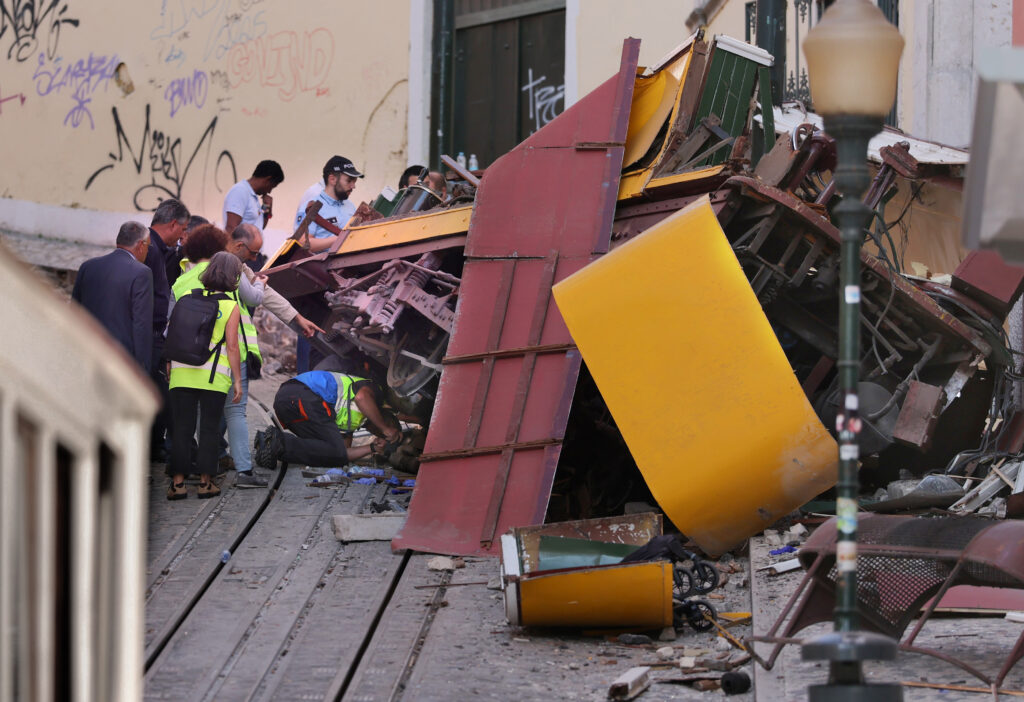
Les enquêteurs cherchent à déterminer jeudi les causes précises du spectaculaire déraillement d’un funiculaire de Lisbonne emprunté par de nombreux touristes, qui a endeuillé la ville, faisant 16 morts, dont au moins cinq Portugais, deux Coréens et un Suisse.- Que s’est-il passé? – “Je peux garantir que la sécurité est une priorité absolue de la Carris depuis 152 ans et que nous serons intraitables dans la recherche des causes et des responsabilités de cet accident”, a promis lors d’une conférence de presse Pedro de Brito Boga, le patron de Carris, gestionnaire des transports de la capitale portugaise.Quelques heures avant lui, le Premier ministre Luis Montenegro avait lui aussi promis lors d’une allocution télévisée que les autorités allaient “établir toutes les responsabilités” dans le drame survenu peu après 18H00 locale mercredi (17H00 GMT).D’après le témoignage d’une femme relayé par les médias locaux, l’un des deux wagons jaunes du célèbre ascenseur de la Gloria, qui montent et descendent ce dénivelé de 48 mètres alternativement, en système de contrepoids, est arrivé brutalement au bout de son parcours de 265 mètres, dépassant légèrement sa station d’arrêt habituelle au pied de la chaussée.Cette femme et d’autres personnes ont alors aperçu l’autre véhicule dévaler la rue pentue à toute allure, avant de dérailler au niveau d’un léger virage et de se fracasser contre un immeuble.- Qui sont les victimes? – Jeudi en début d’après-midi, le bilan a été établi à 16 morts et cinq blessés graves selon le Premier ministre, qui a évoqué “une des plus grandes tragédies humaines de notre histoire récente” et qui avait décrété une journée de deuil national dans la foulée du drame.Le service municipal de protection civile avait précédemment évoqué par erreur un bilan de 17 morts.Parmi les personnes mortes dans l’accident se trouvent cinq Portugais, deux Coréens et un Suisse, a précisé le parquet en fin de journée jeudi, précisant travailler à l’identification des autres victimes et sans préciser si les victimes asiatiques étaient originaires de Corée du Nord ou Corée du Sud.Les secours avaient aussi évoqué une vingtaine de blessés, dont un enfant de trois ans et au moins 11 étrangers: deux Allemands, deux Espagnols, une Française, un Italien, un Suisse, un Canadien, un Sud-coréen, un Marocain et un Cap-verdien.Le nombre total de ces victimes, décédées ou blessées, correspond presque exactement à la capacité maximale du funiculaire, qui peut transporter une quarantaine de personnes.- Quel était l’état du funiculaire? – Plusieurs médias ont rapidement évoqué l’éventuelle rupture d’un câble de sécurité, une hypothèse que le patron de Carris n’a pas confirmée en fin d’après-midi jeudi, laissant le soin à l’enquête en cours de le déterminer.Par souci de prévention, la mairie a suspendu le fonctionnement des trois autres funiculaires de la ville, “pour vérification de leurs conditions de fonctionnement et de leur sécurité”, a précisé Margarida Castro, responsable de la protection civile municipale de la capitale portugaise.La question de l’entretien du funiculaire, confié à un sous-traitant par Carris, est aussi sur toutes les lèvres.”La maintenance de cet équipement (…) est externalisée depuis au moins 2007. Actuellement, elle est effectuée dans le cadre d’un contrat conclu le 20 août, entré en vigueur le 31 août”, a précisé M. de Brito Bogas jeudi.”Les inspections périodiques se sont déroulées sans aucune faille (…) Le plan de maintenance de cet équipement a été scrupuleusement respecté”, a aussi insisté le patron du gestionnaire des transports lisboètes. – Lisbonne sous le choc- Après cet “accident sans précédent”, “la ville a besoin de réponses”, a déclaré jeudi le maire de Lisbonne, Carlos Moedas, soulignant que les hypothèses avancées jusqu’ici pour expliquer le drame n’étaient que “simple spéculation”.Dans les rues de Lisbonne, l’accident a choqué touristes et habitants.”Je n’arrive même pas à croire qu’une chose pareille ait pu arriver, et pourtant c’est vrai… C’est un désastre, une catastrophe”, témoigne Eduardo Carrilho, qui tient un kiosque à journaux à quelques centaines de mètres.Jeudi, la rue du funiculaire était toujours fermée à ses deux extrémités, où ont été déposés quelques bouquets de fleurs en hommage aux victimes.Autour de la carcasse disloquée du véhicule, des enquêteurs équipés de gants bleus et de gilets fluorescents ont recueilli des indices puis, en fin de journée, les travaux de déblayage ont commencé et une grue a été positionnée au pied de la chaussée.

Jugé pour viols, un homme sage-femme nie tout geste inadapté à son second procès
Un maïeuticien déjà condamné pour 11 viols sur des patientes a contesté jeudi avoir “masturbé” deux des six autres femmes qu’il est accusé d’avoir violées, évoquant des gestes “médicaux” devant la cour criminelle de l’Hérault.Lionel Charvin, 54 ans, qui exerçait en libéral et dans une clinique à Montpellier jusqu’en 2016, encourt 20 ans de réclusion. Le verdict est attendu vendredi.”Ca a dérapé lors d’une séance: il s’est mis à faire des mouvements de va-et-vient de plus en plus rapides. Ce n’était plus médical, c’était de la masturbation”, a expliqué devant la cour l’une de ses ancienne patientes, une assistante vétérinaire de 39 ans qui l’avait consulté pendant et après sa grossesse en 2015.”Ce n’est pas pour moi un viol, puisque ce n’est pas une masturbation. Je suis désolé si elle a pu ressentir quelque-chose de négatif”, a déclaré depuis le box des accusés ce père de trois enfants, crâne rasé, barbe bien taillée et chemise vert bouteille.”Elle m’avait dit qu’elle n’éprouvait plus de plaisir. Mon intention était de lui montrer que son périnée était sain. Elle a peut-être trouvé que c’était masturbatoire, mais ce n’est pas du tout une masturbation”, s’est-t-il défendu.”C’est une sollicitation des muscles du périnée”, a-t-il ensuite précisé, assurant qu’il s’agissait d’un geste médical banal.”Donc vous plaidez non coupable?”, lui a lancé Iris Christol, une des avocates des parties civiles. “Exactement”, a répondu Lionel Charvin.Auditionnée à son tour, une infirmière de 42 ans a expliqué que l’ex-soignant, placé derrière elle lors jour de son accouchement en janvier 2013, l’avait “masturbée pendant 3 à 5 minutes” alors qu’elle était en plein travail à l’hôpital.”J’ai eu un orgasme. Il a dit +Ah, ben voilà+”, et j’ai perdu les eaux”, a expliqué cette femme, la voix tremblante.- “jamais retrouvé une sexualité apaisée” -“Je lui avais expliqué que j’allais faire un massage du périnée pour lui montrer quels muscles allaient être sollicités pendant l’accouchement”, s’est défendu M. Charvin. “C’était tout à fait adapté au moment où je l’ai fait”, a-t-il a assuré, se lançant à plusieurs reprises dans des leçons d’anatomie devant ses juges.”Je n’ai jamais retrouvé de sexualité appaisée. A chaque fois, il est là” et “la plupart de mes relations sexuelles ont ensuite été alcoolisées”, a ensuite expliqué une troisième plaignante, professeure des écoles de 43 ans. “J’ai décidé de porter plainte aussi pour montrer à ma fille que quand notre consentement n’est pas respecté, il y a la loi qui nous protège”, a ajouté cette femme toujours sous anti-dépresseurs et pétrie d’un sentiment de culpabilité.En mars 2021, M. Charvin avait déjà été condamné à 12 ans de prison pour “viols commis par une personne abusant de l’autorité que lui confère sa fonction” et n’avait pas fait appel.La médiatisation de ce premier procès avait conduit une dizaine d’autres femmes à se manifester pour dénoncer des faits de même nature commis entre 2010 et 2016 à Montpellier.Certains des faits dénoncés étant prescrits, et d’autres pas suffisamment étayés, Lionel Charvin a finalement été renvoyé une seconde fois pour les viols de six patientes, dont cinq se sont portées parties civiles.Les nouvelles plaignantes, comme les premières, ont expliqué aux enquêteurs avoir été “tétanisées” ou “paralysées” et n’avoir rien osé dire dans un premier temps. Lors de la seconde instruction, Lionel Charvin, qui répète n’avoir jamais eu “l’intention de violer”, avait expliqué aux enquêteurs avoir agi de la sorte avec “beaucoup” de patientes, potentiellement une cinquantaine sur les plus de 1.500 qu’il avait accompagnées en 17 ans de pratique.Entendu par la cour criminelle, le psychologue Alain Penin, qui l’a expertisé en détention en mai 2023, a relevé un “début d’évolution psychique” depuis son incarcération. “Mais il reste des éléments à travailler: la minimisation de ses actes, une tendance à l’auto-justification”, évoquant une “perversion du cadre thérapeutique, détourné au profit de son propre plaisir à lui”.

Après les obsèques de Caroline Grandjean, le monde enseignant bouleversé
Le suicide de Caroline Grandjean, directrice d’école harcelée pour son homosexualité et dont les obsèques ont eu lieu jeudi, continue de bouleverser un monde enseignant en colère contre l’Education nationale.Une trentaine de personnes ont assisté à une cérémonie dans le petit crématorium de Saint-Cernin, village de 1.000 habitants dans le Cantal.Sous une pluie battante, proches et anonymes sont entrés vers midi dans le bâtiment, alors que la presse était tenue à l’écart, selon les souhaits de la famille.”J’ai voulu être là (…) je ne comprends pas le fonctionnement de ce monde plein de méchanceté, d’ignorance et de bêtise qui conduit à des événements pareils”, a déclaré Christiane, une “anonyme”.Tous sont ressortis peu avant 13H00, certains visiblement très émus. Christine Paccoud, l’épouse de cette enseignante, n’a pas voulu s’exprimer. Elle avait déclaré mercredi sur France 2 que “la hiérarchie n'(avait) pas compris la souffrance de Caroline”, qu’elle décrit comme “une enseignante passionnée”.Selon elle, les insultes ont “commencé par +sale gouine+ et un(e) qui était grave dans une école, c’était gouine=pédophile”. “Je me suis battue” pour qu’elle ne retourne pas à Moussages, le village où elle enseignait, insiste-t-elle.Le ministère de l’Education n’a pas souhaité organiser de minute de silence au niveau national, évoquant le “caractère profondément intime de ce drame”, tout en respectant le souhait d’établissements ou d’enseignants qui voudraient le faire, a-t-il indiqué à l’AFP.Christian Vert, le maire de Moussages, a exprimé jeudi à l’AFP sa “consternation”, présentant ses “condoléances” à la famille, devant la petite école où résonnent les cris de quelques enfants.Il a assuré que la mairie l’avait “soutenue” et qu’il avait déposé lui-même plusieurs plaintes.”Aujourd’hui cette situation n’est plus soutenable, il faut que ça cesse et que la justice arrive à trouver et identifier” l’auteur des inscriptions, a-t-il ajouté.- Les suicides, “sujet tabou” -La section du Cantal du syndicat du premier degré FSU-Snuipp avait de son côté lancé un appel à observer une minute de silence.Mardi, elle avait dénoncé les “attaques homophobes répétées” d’une “violence inouïe” subies par l’enseignante à partir de septembre 2023. Elle demande une enquête de santé et sécurité indépendante.Le syndicat des directrices et directeurs d’école S2DÉ avait appelé à se recueillir également et à poser à l’entrée de l’école de chacun de ses membres un portrait dessiné de Caroline Grandjean.Il avait été réalisé par le dessinateur et enseignant Remedium, qui avait fait une BD de l’histoire de Mme Grandjean.”En se réduisant elle-même au silence, elle a hurlé cette réalité simple: elle a été tuée par l’Education nationale”, accuse Remedium sur le réseau social X (Christophe Tardieux de son vrai nom).Il affirme à l’AFP que sa BD sur Mme Grandjean avait fait l’objet d’une plainte en diffamation “par l’inspectrice de circonscription, sous couvert de l’Education nationale”. Mais d’après le ministère, il s’agissait d’une plainte “déposée par l’inspectrice en son nom propre à l’encontre de l’auteur de la bande dessinée”. Directeur d’une école à Nice et secrétaire général du syndicat, Thierry Pajot a observé une minute de recueillement avec les instituteurs en salle des maîtres, précédée d’un “temps de parole (…) parce que certains enseignants ne savaient toujours pas qui était Caroline”.Pour Charlotte Girardon, porte-parole du S2DÉ interrogée par l’AFP, sa mort est “un échec flagrant de l’institution”. “Caroline a vraiment appelé à l’aide. Sa grande détresse, c’est qu’elle ne se sentait pas soutenue”, estime-t-elle.”Il faut une prise de conscience institutionnelle, pour que ça ne se reproduise plus”, insiste-t-elle.Le rectorat de Clermont-Ferrand assure pourtant avoir suivi “de près” la situation de l’enseignante qui avait bénéficié d’une protection fonctionnelle.Une enquête avait été ouverte à la suite de la découverte des inscriptions homophobes mais avait été classée sans suite en mars 2025 “en l’absence de nouveaux faits”, selon le parquet.”Ce cas tragique montre des problématiques systémiques liées à la santé et la sécurité des personnels et relatif aux suicides” dans l’enseignement, affirme Aurelie Gagnier, porte-parole du FSU-Snuipp au niveau national. Pour elle, c’est “un sujet tabou”.Le ministère de l’Education a diligenté une enquête administrative sur le décès de Mme Grandjean. cca-ved-jwi-ito/epe/gvy
Trump’s Fed governor pick vows to uphold central bank independence
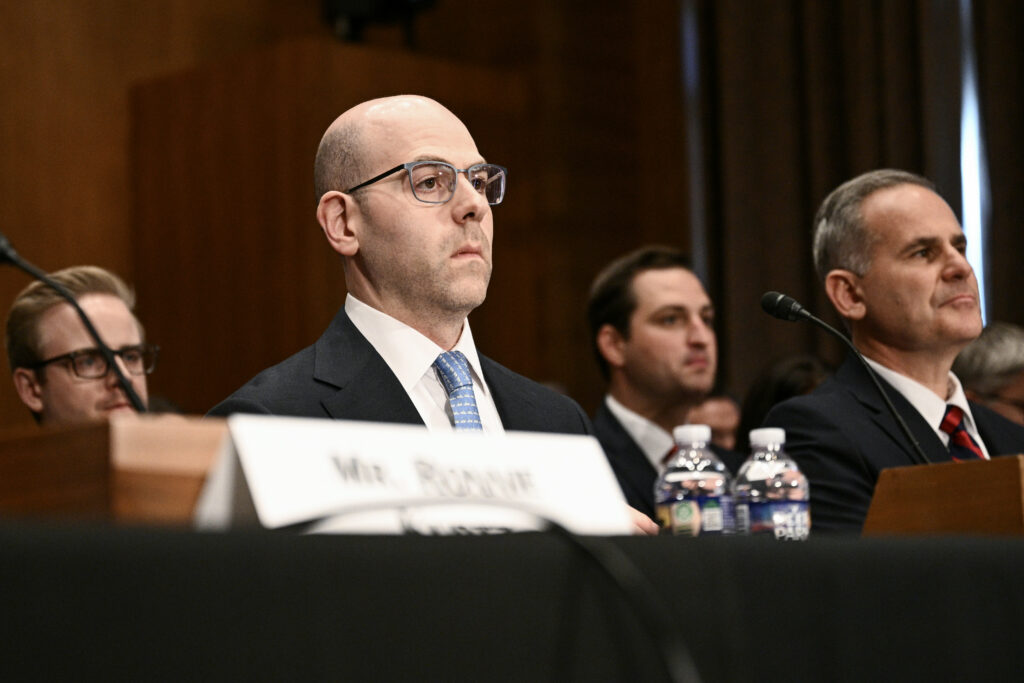
Donald Trump’s pick to join the Federal Reserve’s board of governors pledged to uphold US central bank independence if confirmed — but was coy about leaving his current White House role in the process, as the institution faces growing pressure from the president to slash interest rates. Stephen Miran, who chairs the White House Council of Economic Advisers (CEA), faced pointed questions at his confirmation hearing before the Senate Banking Committee on his independence from the Trump administration.The speed at which Miran is appointed will be key, given that he could take up the Fed role by the time the bank’s rate-setting Federal Open Market Committee (FOMC) holds its next meeting from September 16-17.Critics accuse Trump of seeking to tip the Fed’s board in favor of his stated goal of lowering interest rates.On Thursday, Miran did not commit to resigning from the CEA, saying that he received counsel advice to take a leave of absence instead. Upon further questioning, he said that he would step down if confirmed to a longer term at the Fed.Miran sought to reassure lawmakers in his opening remarks, however, saying that the FOMC “is an independent group with a monumental task, and I intend to preserve that independence.”He added that the most important job of the central bank is to prevent depressions and hyperinflation.”Independence of monetary policy is a critical element for its success,” he said, stressing that his views and decisions will be driven by his analysis of the macroeconomy.Trump has blamed current interest rates as a reason that the housing market is sluggish, citing benign inflation data too in calling for cuts — which tend to provide a boost for the economy.But Fed policymakers are wary that slashing rates too quickly could risk higher inflation over the long term, and are monitoring the effects of tariffs on prices as well.- ‘All-out assault’ -Senator Elizabeth Warren, the top Democrat on the banking committee, charged Thursday that Trump has launched an “all-out assault” on the Fed’s independence. She challenged Miran to prove his independence from Trump.Minnesota Senator Tina Smith said that Miran’s nomination was taking place quickly, arguing that the president “wants loyalists on the Fed board.”The seven members of the Fed’s powerful board of governors sit on the central bank’s 12-member FOMC, voting on interest rate decisions.Trump had nominated Miran to the Fed’s board to finish out the term of Adriana Kugler, an appointee of former president Joe Biden who resigned before her term was due to end in January.The personnel shift came, however, as the Fed faced intensifying calls from the US president to cut interest rates significantly. Trump has repeatedly lashed out at Fed Chair Jerome Powell for not cutting rates sooner, calling him a “numbskull” and “moron.”Trump has also moved to fire another Fed governor, Lisa Cook, citing allegations of mortgage fraud.Cook, the first Black woman to serve on the Fed’s board, is fighting to stay in her role. She has not been charged with a crime, and the alleged incidents occurred before she became a Fed governor.But the Wall Street Journal reported Thursday that the Justice Department has opened a criminal investigation into her.Since its last rate cut in December, the Fed has held interest rates at a range between 4.25 percent and 4.50 percent this year. Powell has opened the door to lowering levels at the bank’s next policy meeting this month.

US capital sues over Trump’s National Guard deployment
The attorney general for the US capital filed a lawsuit on Thursday seeking to end President Donald Trump’s deployment of the National Guard to address crime in the city.”Deploying the National Guard to engage in law enforcement is not only unnecessary and unwanted, but it is also dangerous and harmful to the District and its residents,” Brian Schwalb said in a statement announcing the suit.”No American city should have the US military -– particularly out-of-state military who are not accountable to the residents and untrained in local law enforcement -– policing its streets,” Schwalb said.”It’s DC today but could be any other city tomorrow,” he added. “We’ve filed this action to put an end to this illegal federal overreach.”Trump ordered nearly 2,300 National Guard to patrol Washington on August 11, claiming the city was a “filthy and crime ridden embarrassment.”The Republican president has also threatened to mobilize National Guard troops to address crime in other Democratic-run cities such as Baltimore, Chicago and New Orleans.Trump has denied charges he is strictly targeting cities run by his political opponents for his anti-crime campaign and his crackdown on undocumented migrants.Schwalb’s lawsuit names Trump, Defense Secretary Pete Hegseth and the Department of Defense as among the defendants.The DC attorney general’s move comes two days after a federal judge in California ruled that Trump effectively violated the law when he used troops to put down protests over immigration raids in Democrat-run Los Angeles.Judge Charles Breyer said Trump appears intent on “creating a national police force with the President as its chief” and barred the National Guard from performing police functions including arrests or searches and seizures.The Washington attorney general’s office said deploying the National Guard in the nation’s capital amounts to “an involuntary military occupation that far exceeds the President’s authority.”It threatens to “undermine public safety by inflaming tensions” and is hurting the local economy by “driving away tourists and patrons of local businesses,” Schwalb’s office said.