One man’s 30 years of toil to save Sierra Leone’s orphaned chimpsWed, 30 Jul 2025 05:05:19 GMT

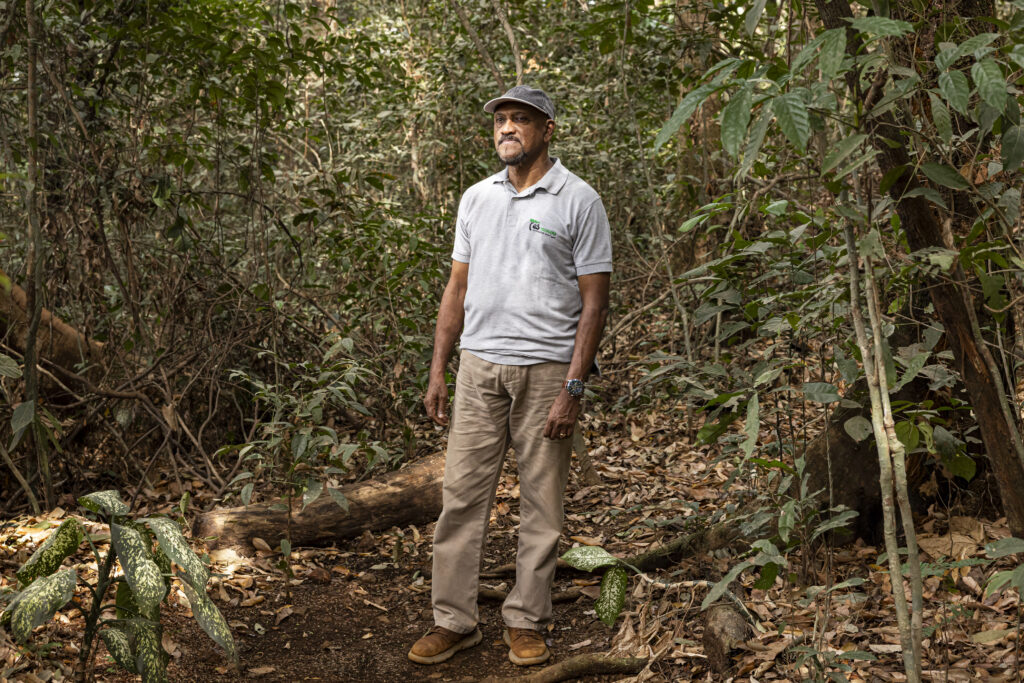
Bala Amarasekaran has never felt like running his world-renowned sanctuary for orphaned chimpanzees in Sierra Leone was truly work, having come to his calling only after several unexpected twists of fate.Standing in his Tacugama Chimpanzee Sanctuary not far from the capital Freetown, he tenderly patted a young ape’s nose and stroked its cheek, whispering a …

One man’s 30 years of toil to save Sierra Leone’s orphaned chimpsWed, 30 Jul 2025 05:05:19 GMT Read More »

Huge quake off Russia sparks Pacific tsunami warnings

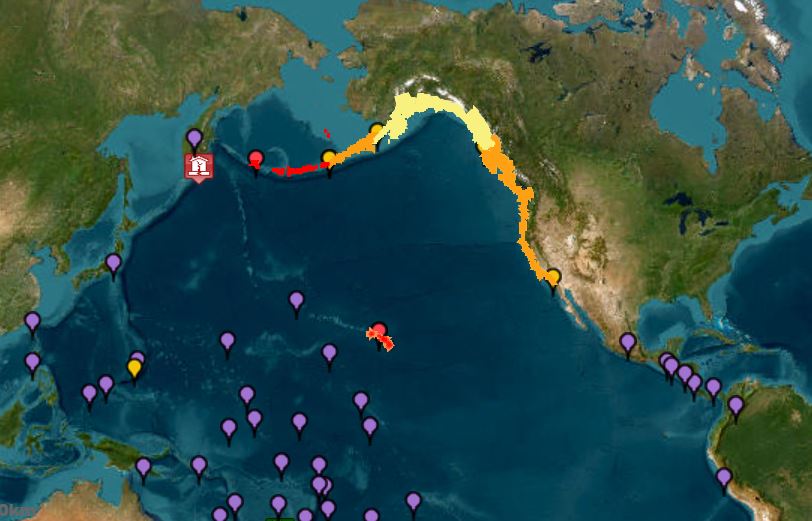
One of the strongest earthquakes ever recorded struck Russia’s sparsely populated Far East early Wednesday, causing tsunamis of up to four metres (12 feet) across the Pacific and sparking evacuations from Hawaii to Japan.The magnitude 8.8 quake struck at 8:24 am (2304 GMT Tuesday) off Petropavlovsk on Russia’s remote Kamchatka peninsula and was one of the 10 biggest recorded, according to the USGS.Russian authorities said a tsunami hit and flooded the port town of Severo-Kurilsk, while local media said one of between three and four metres high was recorded in the Elizovsky district of Kamchatka.A video posted on Russian social media appeared to show buildings in the town submerged in seawater. Authorities said the population of around 2,000 people was evacuated.Several people were injured in Russia by the quake, state media reported, but none of them seriously. “The walls were shaking,” an Elizovsky resident told state media Zvezda. “It’s good that we packed a suitcase, there was one with water and clothes near the door. We quickly grabbed it and ran out… It was very scary,” she said.Officials from countries with a Pacific coastline in North and South America — including the United States, Mexico and Ecuador — issued warnings to avoid affected beaches.In Japan, people evacuated by car or on foot to higher ground — including in Hokkaido, where a first wave measuring 30 centimetres was observed.There were no injuries or damage reported in Japan as of midday (0300 GMT).In Hawaii, Honolulu Mayor Rick Blangiardi said residents and the thousands of visitors should get to safety on upper floors of buildings or on higher ground.”People should not, and I will say it one more time, should not, as we have seen in the past, stay around the shoreline or risk their lives just to see what a tsunami looks like,” governor Josh Green said.”It is not a regular wave. It will actually kill you if you get hit by a tsunami,” Green said.- Pacific warnings -Wednesday’s quake was the strongest since 1952 in the Kamchatka region, the regional seismic monitoring service said, warnings of aftershocks of up to 7.5 magnitude.The epicenter of the earthquake is roughly the same as the massive 9.0 temblor that year which resulted in a destructive, Pacific-wide tsunami, according to the USGS. At least six aftershocks have further rattled the region, including one of 6.9 magnitude and another listed at 6.3.The US Tsunami Warning Centers said waves exceeding three metres above the tide level were possible along some coasts of Ecuador, northwestern Hawaiian islands and Russia.Between one- and three-metre waves were possible along some coasts of Chile, Costa Rica, French Polynesia, Guam, Hawaii, Japan and other islands and island groups in the Pacific, it said.Waves of up to one metre were possible elsewhere, including Australia, Colombia, Mexico, New Zealand, Tonga and Taiwan.It described the potential conditions as “hazardous.”At Inage Beach in Chiba prefecture in Japan, a security perimeter was set up, and a rescue worker told AFP that the seaside area was off limits until further notice.”I didn’t expect there to be a tsunami; I actually made a joke about it when we heard (the alert),” Canadian tourist Leana Lussier, 17, told AFP.”We came here hoping to swim, but once we heard a tsunami warning had been issued, we didn’t go in at all, not even close to the water,” local Tomoyo Fujita, 35, told AFP as she left the area with her young daughter.Television footage showed several whales washed up on a beach.Workers at the stricken Fukushima nuclear plant in northeast Japan — destroyed by a huge quake and tsunami in 2011 — were evacuated, its operator said.- Aftershocks -Tsunami alerts were pushed to mobile phones in California, according to local AFP reporters.”STAY STRONG AND STAY SAFE!” US President Donald Trump said on social media.Tsunami sirens blared near Hawaii’s popular Waikiki surf beach where an AFP photographer observed gridlocked traffic as Hawaiians escaped to higher ground.The US Tsunami Warning Centers issued a Tsunami Warning — its highest level alert — for the entire US state of Hawaii, with the first waves expected at 7:17 pm local time (0517 GMT).”People are also advised to stay away from the beach and not to go to the coast,” the seismology centre said in a warning.Vessels were ordered to head to open water ahead of the expected arrival of waves up to 2 metres, while government employees in Honolulu were sent home early.

Thousands of carpets sunbathe at Turkish resort

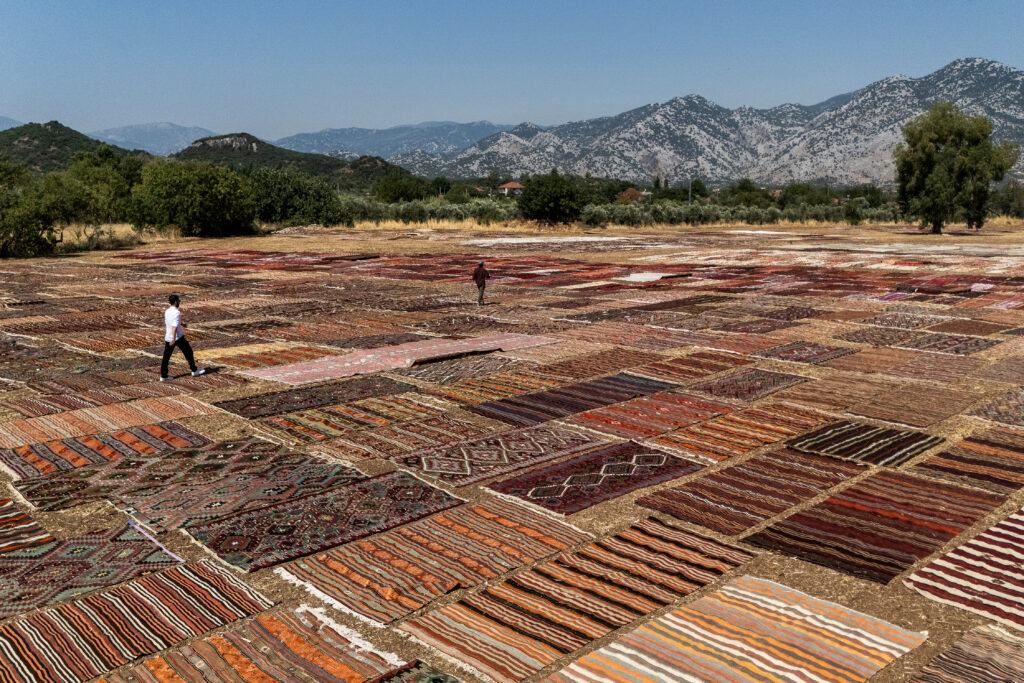
Thousands of carpets and kilim rugs spread out in the sun form a festive and kaleidoscopic patchwork on the outskirts of Antalya, a coastal tourist city in southern Turkey. From June to September, in harvested fields cleared of stubble, merchants bring their cargo to age in the sun, tempering the bright hues of their natural colours and ridding them of undesirable elements.Hasan Topkara washed wool knotted carpets and rugs that come from across Turkey. He dries them, trims their fringes and stray strands if necessary, then spreads them out in the sunlight for three months, on the bare ground. The wool, coloured with natural vegetable dyes, takes on pastel tones and softens between the morning dew and the heat of the day.According to Topkara, in the past, up to 60,000 carpets were processed in each three month drying season in the Dosemealti district. But today he is one of the last ones to do so, with around 15,000 carpets stored side by side on a 40-hectare (100 acre) area.Around 50 workers watch them day and night, turning them regularly and monitoring the weather. About 100 people rush in from the surrounding villages to help fold the carpets if there is rain. In 45 minutes, everything must be put away in a sheltered place, then brought out again once the rain has stopped. Once they have reached the desired shade, most of the carpets are sent to Istanbul and its historic Grand Bazaar, from where they are frequently shipped abroad. Over the years, Topkara’s field of colours has become a tourist attraction, especially after Turkish pop singer Mabel Matiz recorded a video clip for his song “Sarmasik” there in 2018.

‘Marathon at F1 speed’: China bids to lap US in AI leadership

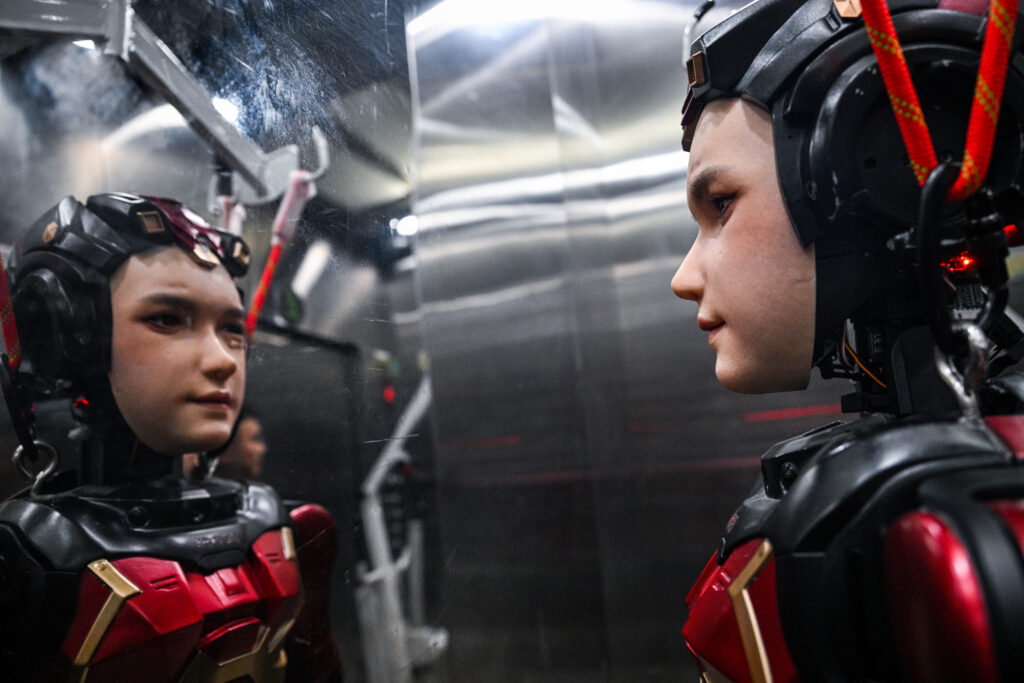
Beyond dancing robots and eager-to-help digital avatars, Shanghai’s World AI Conference saw China stake its claim to global artificial intelligence leadership and frame itself as a clear alternative to the United States.Assumptions that the US was far ahead in the fast-moving field were upended this year when Chinese start-up DeepSeek unveiled a chatbot that matched top American systems for an apparent fraction of the cost.With AI now at the forefront of the superpowers’ tech race, the World AI Conference (WAIC) that ended Tuesday saw China set out its case to take charge on shaping its global governance too.China, the United States and other major economies are “engaged in a marathon at Formula  One speed”, said Steven Hai, assistant professor of tech innovation at Xi’an Jiaotong-Liverpool University.”Which country will attain the upper hand can only be assessed dynamically over the course of development.”China and the United States dominate the AI sector — only 10 to 15 percent of models developed in recent years were built without either’s participation, according to Epoch AI, a non-profit research institute.While US companies like Google and OpenAI are still industry-leading, the institute labelled 78 percent of Chinese models “state-of-the-art” compared to 70 percent of models built with American participation.Beijing’s stated aim is to become the world’s leading AI “innovation centre” by 2030.”Now China is neck-and-neck with the United States in terms of core tech, that play (for global leadership) is more relevant than ever,” said Tom Nunlist, associate director for tech and data policy at Trivium China.”With a solid AI offering and the US turning inward, the question is will Beijing’s vision gain greater global traction?”In May, Microsoft’s Brad Smith told the US Senate that “the number-one factor” in the tech race “is whose technology is most broadly adopted in the rest of the world”.- ‘Sovereign AI’ -China’s offer is technical and economical. “One of the biggest differences (with the US sector) is that most of the leading models in China… are open-weight and open-source,” former Google CEO Eric Schmidt told an audience at WAIC. That means they can be adapted by other countries to fit their own needs, said George Chen, partner at Washington-based policy consultancy The Asia Group.”We already see some countries like Mongolia, Kazakhstan, even Pakistan are trying to adopt the DeepSeek model to build their own,” he said.”China has a chance to win in the aspect of sovereign AI to export its model to those countries.”The comparative low cost of Chinese technology — software but also hardware, for example through firms like Huawei — will be a big factor, especially for developing countries, Chen added.On Monday another Chinese start-up, Zhipu, announced its new AI model — also open-source — would cost less than DeepSeek to use.In June, OpenAI accused Zhipu of having close ties with Chinese authorities and noted it was working with governments and state-owned firms across Southeast Asia, the Middle East and Africa.”The goal is to lock Chinese systems and standards into emerging markets before US or European rivals can,” it said.Washington has moved to protect its lead in AI, expanding efforts to curb exports of state-of-the-art chips to China in recent years.”While limiting China’s share of the global AI hardware market, (these measures) have accelerated indigenous innovation and led Chinese firms to exploit regulatory loopholes,” said assistant professor Hai, referring to “rife” smuggling and circumvention. – Issues of trust? -Other challenges to homegrown firms include the closed nature of the Chinese internet, and “general issues of trust when it comes to using Chinese tech”, Trivium’s Nunlist said. At WAIC, China sought to present itself as a responsible power.  Premier Li Qiang emphasised the risks of AI and pledged to share technology with other nations, especially developing ones.  His remarks contrasted sharply with US President Donald Trump’s aggressive low-regulation “AI Action Plan” launched just days before and explicitly aimed at cementing US dominance in the field. China released its own action plan at WAIC, following a meeting attended by delegates from dozens of countries.Li also announced the establishment of a China-led organisation for international AI cooperation.However, China’s foreign ministry did not respond to a request from AFP for details on the set-up of the organisation — including any international participants — and several foreign delegates said they had not been briefed on the announcement beforehand. Analyst Grace Shao wrote it was clear AI was still in its “infancy stage”.”You can sense that vibrant energy but also the immaturity of the space,” she wrote on Substack.”There just shouldn’t be a definitive conclusion on who is ‘winning’ yet.”