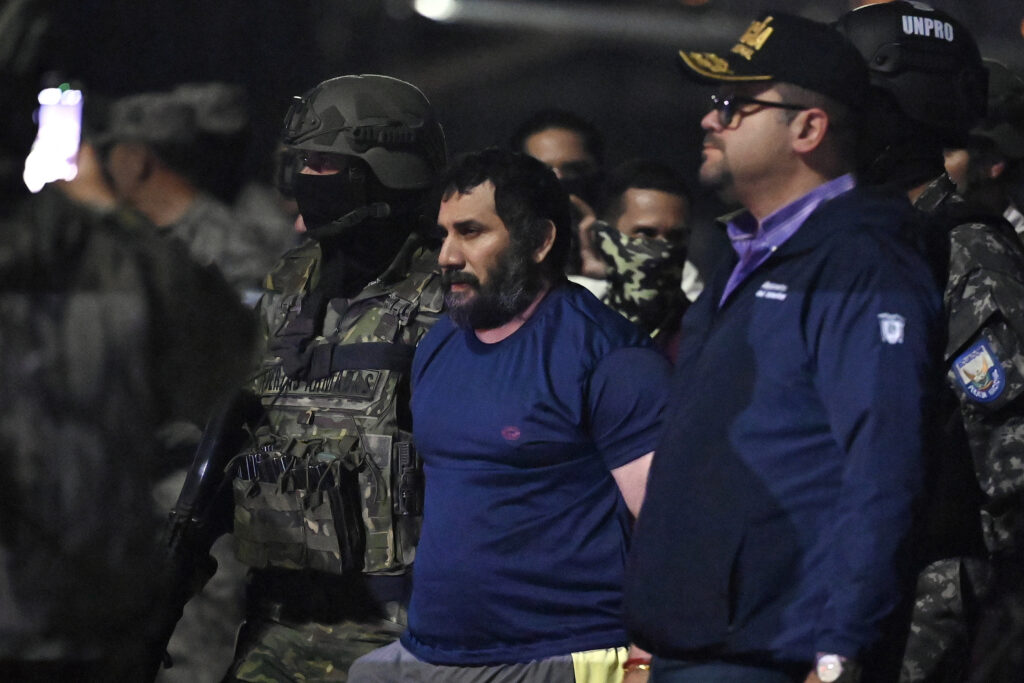
“Fito”, le plus grand narcotrafiquant d’Equateur, extradé vers les Etats-Unis

Le gouvernement équatorien a extradé dimanche vers les Etats-Unis Adolfo Macías, alias “Fito”, le plus grand trafiquant de drogue d’Equateur, arrêté fin juin après un an et demi de cavale, a annoncé l’autorité pénitentiaire.Le parquet américain a accusé en avril “Fito” de trafic de cocaïne et d’armes. John Durham, procureur d’un tribunal de Brooklyn, l’avait alors décrit comme “un leader impitoyable et un narcotrafiquant prolifique pour le compte d’une violente organisation criminelle transnationale”.Le baron de la drogue “a quitté le Centre de privation de liberté La Roca”, gardé par des policiers et des militaires, “dans le cadre d’un processus d’extradition”, a déclaré l’autorité pénitentiaire (SNAI), dans un message envoyé aux journalistes. Il a atterri à New York dans la nuit de dimanche à lundi, a montré le site de suivi du trafic aérien Flightradar.D’après un document publié dimanche par le ministère américain de la justice, “Fito” doit comparaître lundi devant un tribunal fédéral “sur la base d’un acte d’accusation complémentaire”.Depuis sa cellule dans une prison de haute sécurité, il avait accepté la semaine dernière d’être extradé vers les Etats-Unis lors d’une audience en visio-conférence.Il devient ainsi le premier Equatorien à être extradé par son propre pays depuis le rétablissement en Equateur de cette procédure par référendum en 2024, une mesure défendue par le président équatorien Daniel Noboa dans sa lutte contre le crime organisé.- “A jamais, Fito” -“A jamais, Fito”, a réagi M. Noboa sur X dimanche soir. “Fito est déjà aux Etats-Unis. C’est grâce à vous, Equatoriens, qui avez dit oui à la consultation populaire” organisée en avril 2024 et dont les thèmes principaux étaient la lutte contre le trafic de drogue et la criminalité.”Fito” s’était évadé en janvier 2024 du centre pénitentiaire de Guayaquil (sud-ouest de l’Equateur) où il purgeait depuis 2011 une peine de 34 ans de réclusion pour crime organisé, trafic de drogue et meurtre.Chef d’un des principaux gangs du pays, les Choneros, qui règne notamment sur le trafic de cocaïne, “Fito” a été associé à l’assassinat en août 2023 de l’un des principaux candidats à l’élection présidentielle équatorienne, Fernando Villavicencio.Ancien chauffeur de taxi, il était devenu l’ennemi public numéro un en Equateur, les autorités le désignant comme un “criminel aux caractéristiques extrêmement dangereuses”.Son évasion avait déclenché une vague de violences sans précédent dans le pays, faisant des dizaines de morts et générant des mutineries dans plusieurs prisons, des combats de rue déclenchés par les gangs et une prise d’otages sur un plateau de télévision.Daniel Noboa avait alors déclaré le pays en “conflit armé interne” et déployé l’armée pour tenter de neutraliser la vingtaine de groupes criminels impliqués.Du fait de sa situation entre la Colombie et le Pérou – les plus grands pays producteurs mondiaux de cocaïne – et de ses ports stratégiques sur le Pacifique, l’Equateur est devenu ces dernières années le théâtre de violents affrontements pour le contrôle des territoires destinés à l’acheminement de la cocaïne vers les Etats-Unis et l’Europe.Le gang des Choneros a des liens avec le cartel de Sinaloa au Mexique, le Clan del Golfo en Colombie, plus grand exportateur de cocaïne au monde, et les mafias des Balkans, selon l’Observatoire équatorien du crime organisé.Plus de 70% de toute la cocaïne produite dans le monde transite désormais par les ports de l’Equateur. En 2024, le pays a saisi un record de 294 tonnes de drogues, principalement de la cocaïne.

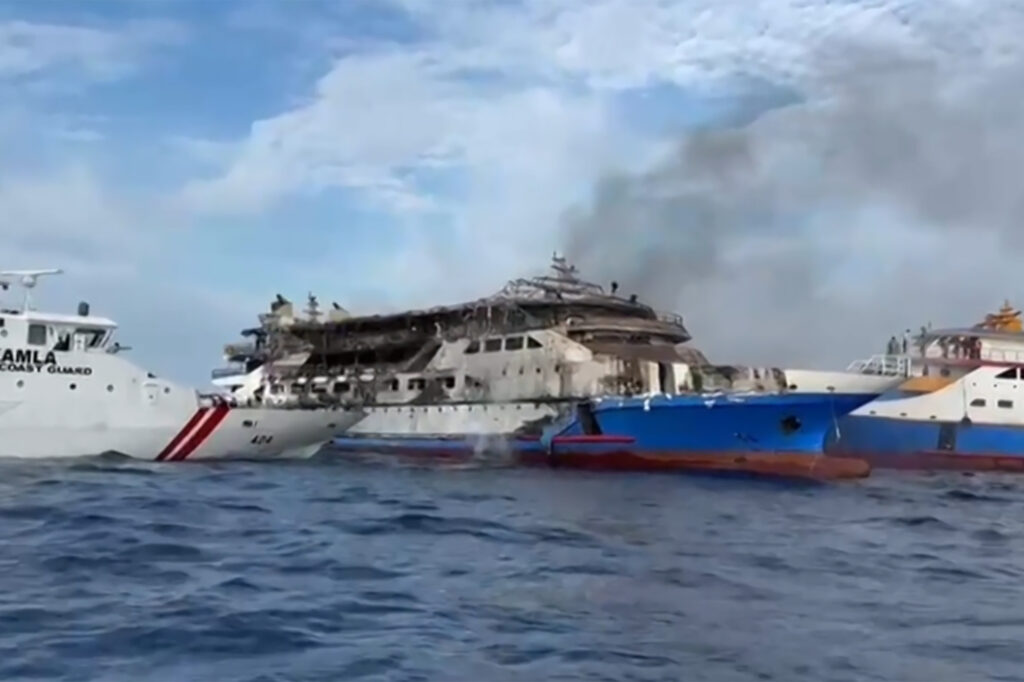
Indonesia ferry fire kills three, more than 500 rescued

Three people died and more than 500 others were rescued after a ferry caught fire off the Indonesian island of Sulawesi, emergency officials said Monday.Passengers jumped overboard with lifejackets after the fire broke out on Sunday at the stern of the KM Barcelona 5, as it sailed to Manado, according to the Indonesian coast guard.A video released by the Manado rescue agency showed a coast guard vessel spraying water on the ferry, which was emitting black smoke. Indonesian authorities previously reported five people died in the accident, but later revised the death toll to three.”Until now, the joint rescue team is still conducting the search and rescue operation because the data is still developing,” Manado rescue agency head George Leo Mercy Randang told AFP on Monday.”Our post is still open 24 hours a day, in case families want to report about their missing relative.”At least 568 people were rescued from the ferry and water while three others were found dead, the national search and rescue agency said in a statement Monday.The ferry’s log had only registered 280 passengers and 15 crew on board.Local media reported that the ship had a capacity for 600 people.Marine accidents are a regular occurrence in the Southeast Asian archipelago of around 17,000 islands, in part due to lax safety standards or bad weather.Sunday’s fire came just weeks after another ferry sank off the popular resort island of Bali due to bad weather, killing at least 19 people.In March, a boat carrying 16 people capsized in rough waters off Bali, killing an Australian woman and injuring at least one other person.And in 2018, more than 150 people drowned when a ferry sank in one of the world’s deepest lakes on Sumatra Island.

Libya commander Haftar seeks to force international engagementMon, 21 Jul 2025 03:52:55 GMT

Libya’s eastern authorities recently expelled a senior European delegation in a move analysts say was meant to send a message: the unrecognised administration backed by military leader Khalifa Haftar cannot be ignored.On July 8, an EU commissioner and ministers from Greece, Italy and Malta were in Libya to discuss irregular migration from the North African …

Libya commander Haftar seeks to force international engagementMon, 21 Jul 2025 03:52:55 GMT Read More »

Libya commander Haftar seeks to force international engagement

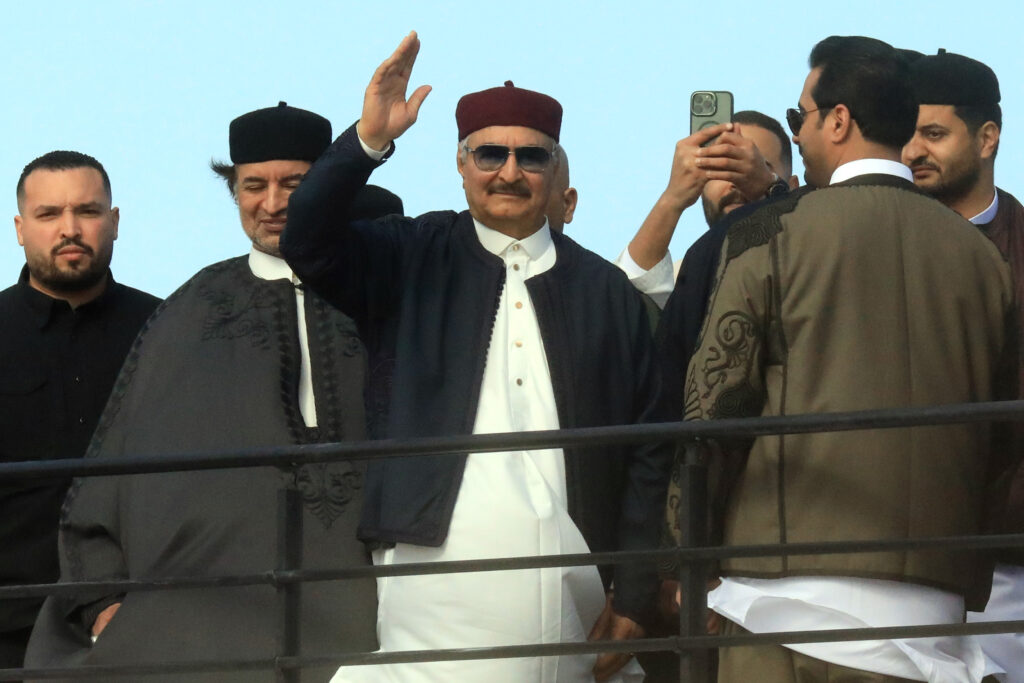
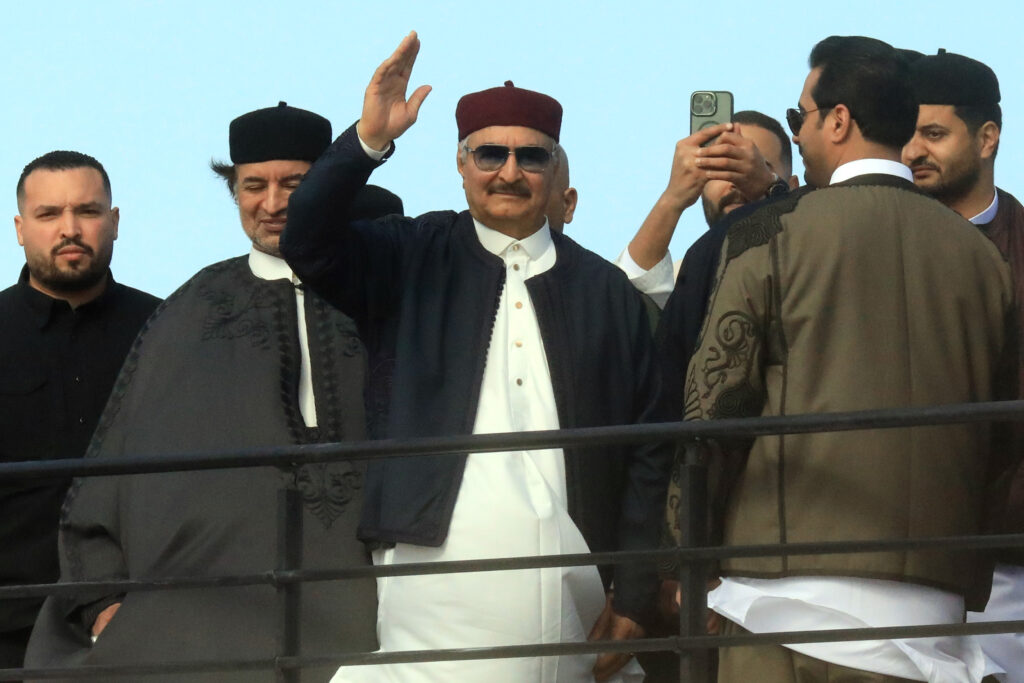
Libya’s eastern authorities recently expelled a senior European delegation in a move analysts say was meant to send a message: the unrecognised administration backed by military leader Khalifa Haftar cannot be ignored.On July 8, an EU commissioner and ministers from Greece, Italy and Malta were in Libya to discuss irregular migration from the North African country.Their visit was divided in two, as is Libya, which is still grappling with the aftermath of the armed conflict and political chaos that followed the 2011 NATO-backed uprising that toppled longtime dictator Moamer Kadhafi.The delegation first visited the capital Tripoli, seat of the internationally recognised Libyan government of Prime Minister Abdelhamid Dbeibah.They then travelled to Benghazi, in the east, where a rival administration backed by Haftar and his clan is based, and with whom the EU has generally avoided direct contact.Almost immediately, a reported disagreement prompted the eastern authorities to accuse the European delegation of a “flagrant breach of diplomatic norms”, ordering the visiting dignitaries to leave.In Brussels, the European Commission admitted a “protocol issue”.Tarek Megerisi, a senior policy fellow at the European Council on Foreign Relations think tank, said the scene at the airport “was a calculated move”.Haftar was playing to EU fears of irregular migration in order “to generate de facto European recognition”, and thus “broaden relations with Europe away from just engagement with him as a local military leader”. Turning the delegation away showed that declining to engage with the eastern civilian administration was no longer an option.- ‘Punish Athens’ -The complex situation in Libya has required unusual diplomacy.European governments recognise and work with the Tripoli-based government and not the eastern administration, but still hold contact with Haftar’s military forces.In their visit earlier this month, the European commissioner and ministers were meant to meet with eastern military officials.But once at the Benghazi airport, they saw “there were people there that we had not agreed to meet”, a European official in Brussels told journalists on condition of anonymity.”We had to fly back,” the official said, adding that “of course” it was linked to recognition of the eastern government.Claudia Gazzini, a Libya expert at the International Crisis Group, said she did not believe “it was a premeditated incident”.But “the question does present itself as to why” ministers from the eastern government were at the airport in the first place, and why Haftar would let it play out the way it did, she said.”We can’t completely rule out that there was some particular issue or bilateral disagreement with one of the countries represented in the delegation,” Gazzini added.Libya expert Jalel Harchaoui suggested Greece may have been the target.On July 6, two days before the axed visit, “the Greek foreign minister had come to demand concessions on migration and maritime (issues) without offering any tangible incentives”, Harchaoui said.Despite Haftar’s personal involvement, the July 6 visit “had yielded nothing”, added the expert.Then, on July 8, “a Greek representative — this time as part of an EU delegation — wanted to negotiate on the same day with the rival Tripoli government, placing the two governments on an equal footing”, he said.This was “an affront in Benghazi’s view”, Harchaoui said, and the administration wanted to “punish Athens”.- Legitimacy -To Harchaoui, the diplomatic flap was a sign not to “underestimate” the Haftars’ foreign policy.”The Haftar family is an absolutely essential actor” in tackling the influx of migrants or, for example, advancing energy projects, due to its key role in securing Libya’s eastern coast, said Harchaoui.The message delivered at the Benghazi airport “is clear: take the eastern faction seriously”, he added.Harchaoui said that the Haftars, already “rich in cash and strong” in terms of strategic assets, have recently increased efforts to “consolidate their legitimacy”.Haftar himself was hosted in February by French President Emmanuel Macron, and in May by Russia’s Vladimir Putin.And Haftar’s son, Saddam, recently visited the United States, Turkey, Italy and Niger.Even Ankara, which has provided support for the Tripoli-based government in repelling attacks from the east, “is now seeking to further profit off the Haftars through things like construction projects”, said Megerisi.He added that Turkey also has wider geopolitical ambitions, hoping to see the Haftars endorse a maritime border agreement in the eastern Mediterranean, which Tripoli had already signed but Athens regards as illegal.

Iran confirms fresh nuclear talks with European powers: state media

Iran confirmed fresh talks with European powers to be held on Friday in Istanbul, the country’s state media reported, the first since the United States attacked Iranian nuclear facilities a month ago.Iranian diplomats will meet counterparts from Britain, France and Germany, known as the E3, after the trio warned that sanctions could be reimposed on Tehran if it does return to the negotiating table over its nuclear programme. Western nations and Israel have long accused Iran of seeking to develop nuclear weapons, a charge Tehran has consistently denied.”In response to the request of European countries, Iran has agreed to hold a new round of talks,” said foreign ministry spokesperson Esmail Baghai, as quoted by state TV on Monday.The subject of the talks will be Iran’s nuclear programme, it added.A German diplomatic source had told AFP on Sunday the E3 were in contact with Tehran and said “Iran must never be allowed to acquire a nuclear weapon”. “That is why Germany, France and the United Kingdom are continuing to work intensively in the E3 format to find a sustainable and verifiable diplomatic solution to the Iranian nuclear programme,” the source said.Israel launched on June 13 a wave of surprise strikes on its regional nemesis, targeting key military and nuclear facilities.The United States launched its own set of strikes against Iran’s nuclear programme on June 22, hitting the uranium enrichment facility at Fordo, in Qom province south of Tehran, as well as nuclear sites in Isfahan and Natanz.- Kremlin meeting -Iran and the United States had held several rounds of nuclear negotiations through Omani mediators before Israel launched its 12-day war against Iran.However, US President Donald Trump’s decision to join Israel in striking Iranian nuclear facilities effectively ended the talks.The E3 countries last met with Iranian representatives in Geneva on June 21 — just one day before the US strikes.Also Sunday, Russian President Vladimir Putin held a surprise meeting in the Kremlin with Ali Larijani, top adviser to Iran’s supreme leader on nuclear issues.Larijani “conveyed assessments of the escalating situation in the Middle East and around the Iranian nuclear programme”, Kremlin spokesman Dmitry Peskov said of the unannounced meeting.Putin had expressed Russia’s “well-known positions on how to stabilise the situation in the region and on the political settlement of the Iranian nuclear programme”, he added.Moscow has a cordial relationship with Iran’s clerical leadership and provides crucial backing for Tehran but did not swing forcefully behind its partner even after the United States joined Israel’s bombing campaign.- Snapback mechanism -Iran and world powers struck a deal in 2015 called the Joint Comprehensive Plan of Action (JCPOA), which placed significant restrictions on Tehran’s nuclear programme in exchange for sanctions relief.But the hard-won deal began to unravel in 2018, during Trump’s first presidency, when the United States walked away from it and reimposed sanctions on Iran.European countries have in recent days threatened to trigger the deal’s “snapback” mechanism, which allows the reimposition of sanctions in the event of non-compliance by Iran.After a call with his European counterparts on Friday, Iranian Foreign Minister Abbas Araghchi said the Western allies had “absolutely no moral (or) legal grounds” for reactivating the snapback sanctions.He elaborated in a post to social media Sunday. “Through their actions and statements, including providing political and material support to the recent unprovoked and illegal military aggression of the Israeli regime and the US… the E3 have relinquished their role as ‘Participants’ in the JCPOA,” said Araghchi.That made any attempt to reinstate the terminated UN Security Council resolutions “null and void”, he added. “Iran has shown that it is capable of defeating any delusional ‘dirty work’ but has always been prepared to reciprocate meaningful diplomacy in good faith,” Araghchi wrote.However, the German source said Sunday that “if no solution is reached over the summer, snapback remains an option for the E3”.Ali Velayati, an adviser to supreme leader Ayatollah Ali Khamenei, said last week there would be no new nuclear talks with the United States if they were conditioned on Tehran abandoning its uranium enrichment activities.burs-sbk/jj/tc/mtp

Hong Kong leads stocks higher, yen gains as Ishiba vows to stay

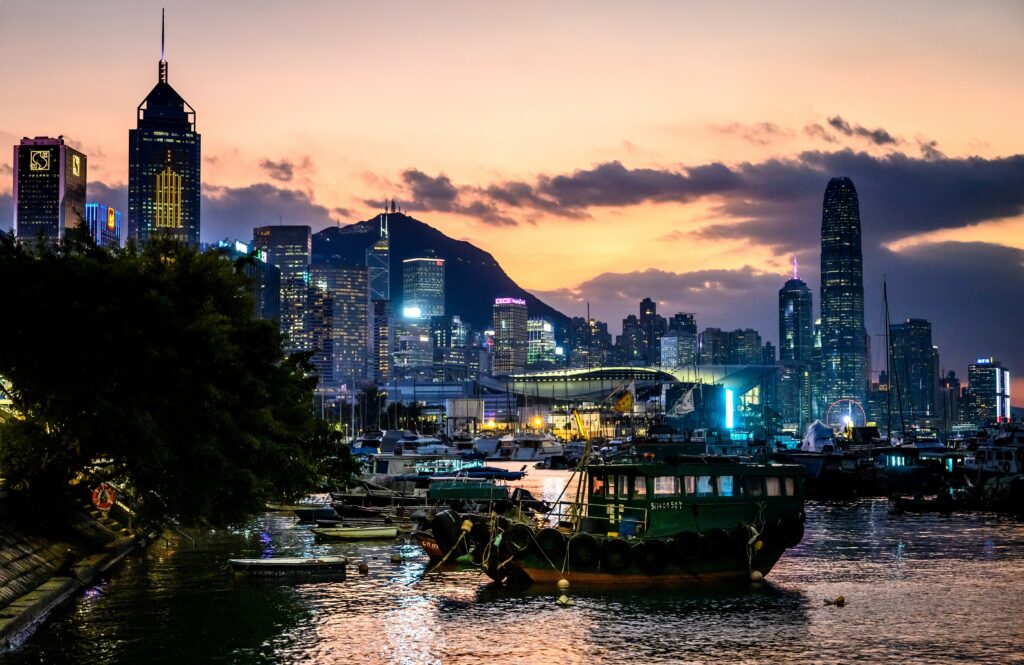
Equities mostly rose Monday on optimism countries will reach US trade deals before an August 1 deadline, while the yen gained after Japanese Prime Minister Shigeru Ishiba said he would stay in office despite another election defeat.Hong Kong topped 25,000 points for the first time in three years as tech giants advanced following strong earnings from Taiwanese chip giant TSMC and news US titan Nvidia would be allowed to export key semiconductors to China.While only three countries have signed agreements to avoid the worst of Donald Trump’s tariffs, analysts said investors were hopeful that others — including Japan and South Korea — will follow suit.The upbeat mood has been helped by a series of largely positive US economic data releases that suggested the world’s top economy remained in rude health, helping to push Wall Street to multiple record highs.In early trade, Hong Kong climbed to as high as 25,010.90 — its highest level since February 2022 — thanks to a strong performance in ecommerce leaders Alibaba and JD.com and food delivery provider Meituan.Tech has been boosted after Nvidia said last week that it will resume sales of its H20 artificial intelligence chips to China after Washington pledged to remove licensing restrictions that had halted exports.A surge in Chinese money supply sparked by Beijing’s stimulus measures has added to the jump in Hong Kong’s market, which has spiked around 25 percent since the turn of the year.There were also gains in Shanghai, Singapore, Seoul, Wellington, Manila and Jakarta. Sydney and Taipei slipped, while Tokyo was closed for a holiday.The yen strengthened against the dollar after Ishiba vowed to stay on even after his ruling coalition lost its overall majority in Sunday’s lower house elections, months after it suffered a similar fate in an upper house vote.The losses came amid growing anger at the surging cost of living, including a doubling in the cost of rice.Analysts said that while the result was bad for the Liberal Democratic Party (LDP) and its partner Komeito, the fact that the prime minister would remain in office provided some stability for now.The yen hit 147.79 per dollar in early trade but pared the gains to sit at 148.45 — still stronger than Friday’s finish.The currency had been weighed in recent weeks by expectations a bad defeat would lead to more spending and tax cuts.Despite Ishiba’s decision to stay, pressure will grow on the coalition to cut or abolish consumption tax, something Ishiba has opposed in view of Japan’s colossal national debts of more than 200 percent of gross domestic product.It also comes as he struggles to reach a trade deal with Trump, who has threatened tariffs of 25 percent on goods from Japan.He said “the deadline of (US) tariffs is coming on August 1. Until then we have to do our best with our body and soul”.US Treasury Secretary Scott Bessent said Friday a “mutually beneficial trade agreement… remains within the realm of possibility”.Jiji Press reported that Ishiba would inform a meeting of senior LDP figures on Monday that he will stay in office.If he did go, it is unclear who might step up to replace him now that the government needs opposition support in both chambers to pass legislation.The election result “now raises a host of questions, including whether… Ishiba remains in power or decides to resign, how potentially expansionary could fiscal policy become, and will domestic politics be a hurdle in reaching a potential trade agreement with the US?”, wrote Paul Mackel, global head of forex research at HSBC.Others suggested the yen could still come under pressure, and possibly top 150 for the first time since March, owing to lingering uncertainty about the leadership.- Key figures at around 0230 GMT -Hong Kong – Hang Seng Index: UP 0.5 percent at 24,944.31Shanghai – Composite: UP 0.5 percent at 3,550.33Tokyo – Nikkei 225: Closed for a holidayDollar/yen: DOWN at 148.43 yen from 148.73 yen on FridayEuro/dollar: DOWN at $1.1624 from $1.1627Pound/dollar: UP at $1.3415 from $1.3414Euro/pound: DOWN at 86.65 pence from 86.67 penceWest Texas Intermediate: UP 0.3 percent at $67.52 per barrelBrent North Sea Crude: UP 0.3 percent at $69.46 per barrelNew York – Dow: DOWN 0.3 percent at 44,342.19 (close)London – FTSE 100: UP 0.2 percent at 8,992.12 (close)