



W. Virginia villagers take on AI-driven power plant boom
Al Tomson, mayor of a tiny town tucked away in an idyllic corner of the eastern United States, points to a spot on a map of his region.”The power plant would be there,” says the former military man, who is fighting against construction of the mysterious project on the outskirts of Davis, designed to power a vast data center.Tomson, whose town is about a three-hour drive from Washington and is home to 600 people, says the plant is being “crammed down our throats” by the state government. This fight in the woods of rural West Virginia is the latest example of the war between the US tech sector — and its rapidly rising need for energy to power the AI boom — and the communities it affects.In a scramble to quickly bring more data centers online, US cloud computing giants are now getting directly involved in energy production. And while they are using some renewable energy options and trying to revive nuclear power, they are also turning to fossil fuels like gas, which in the United States is relatively cheap.In neighboring Pennsylvania, a former coal plant will now run on gas to power a data center.In Georgia, xAI, the Elon Musk-owned company behind the Grok chatbot, directly connected 35 methane turbines to its servers, all without permits, according to the Southern Environmental Law Center NGO.Data centers’ share of US electricity demand is expected to rise from current levels of around five percent to between 6.7 percent and 12 percent by 2028, according to government estimates.- Powerlessness -The US electrical grid is facing demand growth “that we haven’t seen for more than a generation,” says Todd Snitchler, head of the Electric Power Supply Association, which represents many producers.To respond, they are acting on all fronts. Across the country, the retirement of old power plants is being postponed and additional turbines are being added while waiting for new plants to be built.But AI’s thirst for energy is such that more and more tech giants are building their own power plants off the grid — even if it means doing so against residents’ wishes.In Davis, the mayor and hundreds of his constituents have been fighting since April against Fundamental Data’s power plant project. For Mayor Tomson, the firm is just a “shell company” laying the early groundwork on behalf of an unidentified major tech company. Fundamental Data did not respond to multiple requests for comment from AFP.In the mayor’s office hangs a printed map showing that the gas turbines, with their toxic emissions, would be located about a mile from residents of this nature-blessed tourist town.But Tomson feels powerless. West Virginia recently adopted a law that, in order to attract billions of dollars in data center investment, prohibits local officials from taking measures opposing them.- Global competition -The frustration of Davis residents boiled over during a particularly tense public meeting at the end of June. For five hours, about 300 people attended the meeting with regulators responsible for approving an initial air quality permit, which is likely to be granted.Afterward, volunteers distributed “No data center complex” signs to install in people’s front yards. Some were already posted in shop windows.Davis’s residents say they just want to keep their corner of the Appalachians free from pollution — but there are powerful political and economic forces against them.”A failure to power the data centers needed to win the AI arms race… could result in adversary nations shaping digital norms and controlling digital infrastructure, thereby jeopardizing US economic and national security,” warned a recent US Department of Energy report.Some in Davis and West Virginia favor these projects, seeing them as an opportunity to re-industrialize an economically devastated region. The proposed plant would be built on the site of a former coal mine, for example.Since mining jobs left, “we need something here to keep our younger people,” said Charles Davis, who lives in nearby Thomas.Jojo Pregley, however, wants nothing to do with it. “A lot of people are battling cancer here,” she says, sitting on a bench in front of her house with her husband Pat, who spent 40 years working in the mines. “We don’t want more pollution from data centers or whatever else.”

Tech giants scramble to meet AI’s looming energy crisis
The artificial intelligence industry is scrambling to reduce its massive energy consumption through better cooling systems, more efficient computer chips, and smarter programming — all while AI usage explodes worldwide.AI depends entirely on data centers, which could consume three percent of the world’s electricity by 2030, according to the International Energy Agency. That’s double what they use today.Experts at McKinsey, a US consulting firm, describe a race to build enough data centers to keep up with AI’s rapid growth, while warning that the world is heading toward an electricity shortage.”There are several ways of solving the problem,” explained Mosharaf Chowdhury, a University of Michigan professor of computer science.Companies can either build more energy supply — which takes time and the AI giants are already scouring the globe to do — or figure out how to consume less energy for the same computing power.Chowdhury believes the challenge can be met with “clever” solutions at every level, from the physical hardware to the AI software itself.For example, his lab has developed algorithms that calculate exactly how much electricity each AI chip needs, reducing energy use by 20-30 percent.- ‘Clever’ solutions -Twenty years ago, operating a data center — encompassing cooling systems and other infrastructure — required as much energy as running the servers themselves. Today, operations use just 10 percent of what the servers consume, says Gareth Williams from consulting firm Arup. This is largely through this focus on energy efficiency.Many data centers now use AI-powered sensors to control temperature in specific zones rather than cooling entire buildings uniformly.This allows them to optimize water and electricity use in real-time, according to McKinsey’s Pankaj Sachdeva.For many, the game-changer will be liquid cooling, which replaces the roar of energy-hungry air conditioners with a coolant that circulates directly through the servers.”All the big players are looking at it,” Williams said.This matters because modern AI chips from companies like Nvidia consume 100 times more power than servers did two decades ago.Amazon’s world-leading cloud computing business, AWS, last week said it had developed its own liquid method to cool down Nvidia GPUs in its servers – – avoiding have to rebuild existing data centers.”There simply wouldn’t be enough liquid-cooling capacity to support our scale,” Dave Brown, vice president of compute and machine learning services at AWS, said in a YouTube video.- US vs China -For McKinsey’s Sachdeva, a reassuring factor is that each new generation of computer chips is more energy-efficient than the last.Research by Purdue University’s Yi Ding has shown that AI chips can last longer without losing performance.”But it’s hard to convince semiconductor companies to make less money” by encouraging customers to keep using the same equipment longer, Ding added.Yet even if more efficiency in chips and energy consumption is likely to make AI cheaper, it won’t reduce total energy consumption.”Energy consumption will keep rising,” Ding predicted, despite all efforts to limit it. “But maybe not as quickly.”In the United States, energy is now seen as key to keeping the country’s competitive edge over China in AI.In January, Chinese startup DeepSeek unveiled an AI model that performed as well as top US systems despite using less powerful chips — and by extension, less energy.DeepSeek’s engineers achieved this by programming their GPUs more precisely and skipping an energy-intensive training step that was previously considered essential.China is also feared to be leagues ahead of the US in available energy sources, including from renewables and nuclear.
Trump sours on Putin, but bromance may not be over
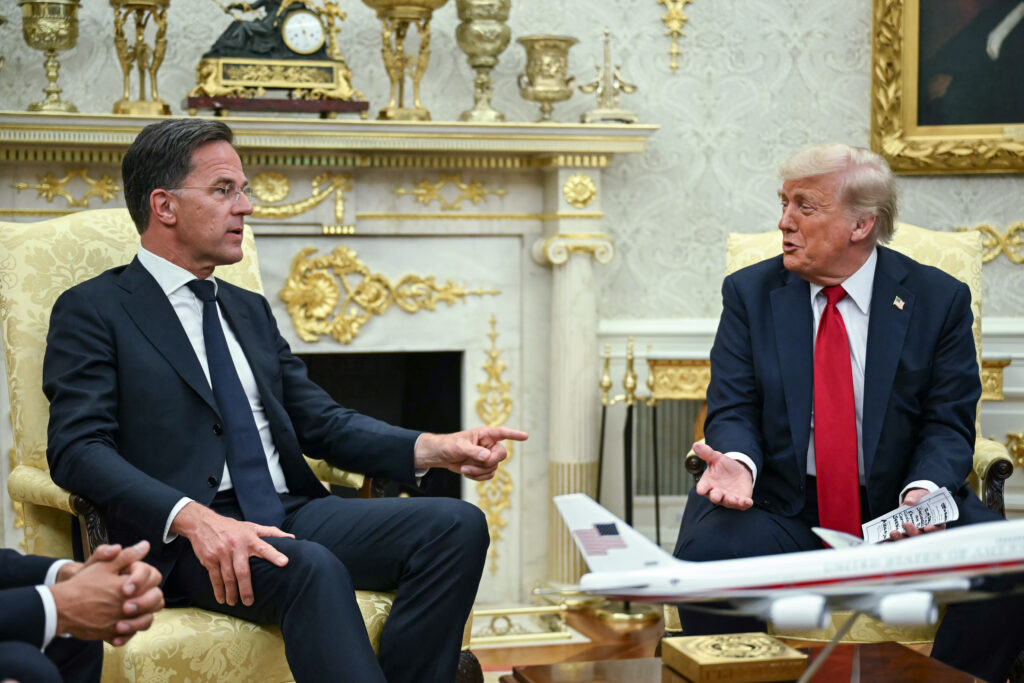
Ever since his political rise a decade ago, Donald Trump has sung the praises of Vladimir Putin — the Russian president was a “strong leader” who, perhaps more important, would often say “very good things” about him.With his announcement Monday of new arms for Ukraine via Europe and tariff threats on Russia, Trump’s bromance with Putin has hit a new low — but it may not have run its course.Trump, who had vowed to end the Ukraine war within a day of returning to the White House, said he was “disappointed” in Putin, who has kept attacking Ukraine as if the leaders’ telephone conversations “didn’t mean anything.””I go home, I tell the first lady, ‘You know, I spoke to Vladimir today, we had a wonderful conversation. She said, ‘Oh really? Another city was just hit.'””I don’t want to say he’s an assassin, but he’s a tough guy. It’s been proven over the years. He’s fooled a lot of people,” Trump said.Trump quickly rejected that he was among those fooled and again insisted that the 2022 invasion of Ukraine was the fault of his predecessor Joe Biden, who championed a hard line on Russia.Brandishing his favorite weapon, Trump gave Russia 50 days to comply before facing 100 percent tariffs on countries that purchase from Russia, but stopped short of backing a bill before Congress for up to 500 percent tariffs.Russia’s own trade with the United States has slowed down a trickle.Trump had “promised that he could get Putin to the negotiating table, and he has failed to do that,” said Heather Conley, a former State Department policymaker on Russia now at the conservative American Enterprise Institute.His tariff threat “shows frustration that he has failed to do it, but I don’t see it as a big policy change,” she said.- The great deal-maker? -Trump stunned European allies on February 28 when he publicly berated Ukrainian President Volodymyr Zelensky at the White House, telling him he was ungrateful for billions of dollars in weapons under Biden. Trump then briefly held up new military and intelligence.For the US president, a transactional-minded businessman, Putin committed a key offense — undermining Trump’s self-image as a deal-maker.”For six months, President Trump tried to entice Putin to the table. The attacks have gone up, not down,” Senator Lindsey Graham, a Trump ally who has led the push for tough new sanctions on Russia, told CBS News show “Face The Nation.””One of the biggest miscalculations Putin has made is to play Trump,” Graham said.Yet Trump has repeatedly shown a willingness to trust Putin, despite firm warnings from within the US government.Most famously, he sided with Putin over US intelligence at a 2018 news conference after they met in Helsinki after the Russian president denied meddling to support Trump in his first election.For observers of Putin, the longest-serving leader in Moscow since Stalin, there was never much chance he would accept compromise on Ukraine or work with the West.Putin has rued the demise of Russia’s influence with the fall of the Soviet Union as a historic calamity and rejected the idea that Ukraine has its own historical identity.With Russia making small but steady gains on the battlefield and bringing in North Korean troops, Putin has put his entire country on war footing, Conley said.”The Kremlin has thrown everything into this,” she said.”President Putin believes that this is just going to be a slow erosion of Ukraine’s position and the West’s position, and he will win this conflict on its own merits,” she said.Mark Montgomery, a retired US rear admiral and Senate policy aide, said Putin believed in what has been referred to as TACO — Trump Always Chickens Out.Putin “thought he could take it to the limit each time, and he found out he was wrong,” said Montgomery, a senior fellow at the Foundation for Defense of Democracies, a hawkish research group.”I don’t think this stops until Putin feels either weapons system pain or economic pain that he cannot sustain.”

Supreme Court allows Trump to resume Education Department dismantling
A divided US Supreme Court gave President Donald Trump the green light on Monday to resume dismantling the Education Department.The conservative-dominated court, in an unsigned order, lifted a stay that had been placed by a federal district judge on mass layoffs at the department.The three liberal justices on the nine-member panel dissented.Trump pledged during his White House campaign to eliminate the Education Department, which was created by an act of Congress in 1979, and he moved in March to slash its workforce by nearly half.Trump instructed Education Secretary Linda McMahon to “put herself out of a job.”Around 20 states joined teachers’ unions in challenging the move in court, arguing that the Republican president was violating the principle of separation of powers by encroaching on Congress’s prerogatives.In May, District Judge Myong Joun ordered the reinstatement of hundreds of fired Education Department employees.The Supreme Court lifted the judge’s order without explanation, just days after another ruling that cleared the way for Trump to carry out mass firings of federal workers in other government departments.Justice Sonia Sotomayor, in a dissent joined by justices Elena Kagan and Ketanji Brown Jackson, said in the Education ruling that “only Congress has the power to abolish the Department.””The majority is either willfully blind to the implications of its ruling or naive, but either way the threat to our Constitution’s separation of powers is grave,” Sotomayor said.Traditionally, the federal government has had a limited role in education in the United States, with only about 13 percent of funding for primary and secondary schools coming from federal coffers, the rest being funded by states and local communities.But federal funding is invaluable for low-income schools and students with special needs. And the federal government has been essential in enforcing key civil rights protections for students.After returning to the White House in January, Trump directed federal agencies to prepare sweeping workforce reduction plans as part of wider efforts by the Department of Government Efficiency (DOGE) — previously headed by Elon Musk — to downsize the government.Trump has moved to fire tens of thousands of government employees and slash programs — targeting diversity initiatives and abolishing the Education Department, the US humanitarian aid agency USAID and others.

Syrian forces advance on Sweida as Druze leader says truce talks underway
Syrian government forces were advancing towards the southern city of Sweida on Monday to quell deadly clashes between Druze fighters and Bedouin tribes, with one Druze armed group saying talks with authorities aimed at brokering a truce were underway.The Syrian Observatory for Human Rights war monitor reported 99 people killed since the fighting erupted on Sunday — 60 Druze, including four civilians, 18 Bedouin fighters, 14 security personnel and seven unidentified people in military uniforms.As the violence escalated, Israel — which has previously warned it would intervene in Syria to protect the Druze — said it struck “several tanks” in the area as a “warning” to DamascusAn AFP correspondent saw Syrian forces on Monday take control of the Druze village of Al-Mazraa, where Bedouin fighters were also located.A commander, Ezzeddine al-Shamayer, told AFP the forces “are heading toward Sweida” city.In a statement, the interior ministry declared that “army and internal security forces have moved closer to the centre” of Sweida province.Bassem Fakhr, spokesperson for the Men of Dignity movement, one of the largest Druze factions in Sweida, told AFP talks were “underway between the notables of the city of Sweida and representatives of the general security (forces) and the defence ministry to reach a solution”.Druze religious authorities had called on Monday evening for a ceasefire in the area, saying they were not opposed to the Syrian central government.But Sheikh Hikmat al-Hijri, one of the three Druze spiritual leaders in Sweida, expressed his “rejection of the entry” of general security forces into the province, demanding “international protection”.Israel — which also has a Druze population, and has previously attacked Syria in purported defence of the group — reported hitting several tanks heading towards Sweida on Monday.The strikes were “a clear warning to the Syrian regime — we will not allow harm to be done to the Druze in Syria”, Defence Minister Israel Katz posted on X.- Fear of massacres -The fighting in the south underscores the challenges facing interim leader Ahmad al-Sharaa, whose Islamist forces ousted president Bashar al-Assad in December after nearly 14 years of civil war.Syria’s pre-war Druze population was estimated at around 700,000, many of them concentrated in Sweida province.The Druze, followers of an esoteric religion that split from Shiite Islam, are mainly found in Syria, Lebanon and Israel.Following deadly clashes with government forces in April and May, local and religious leaders reached an agreement with Damascus under which Druze fighters have been providing security in the province.The streets of Sweida were deserted Monday, with an AFP photographer reporting distant gunfire during funerals.”We lived in a state of extreme terror — the shells were falling randomly,” said Abu Taym, a 51-year-old father, adding “most shops are closed”.”We fear a repeat of the coastal scenario,” said Amal, 46, referring to massacres in March of more than 1,700 mostly Alawite civilians in northwest Syria, where groups affiliated with the government were blamed for most of the killings.”We are not against the state, but we are against surrendering our weapons without a state that treats everyone the same,” she added.In a post on X, Syrian Defence Minister Murhaf Abu Qasra urged his troops to “protect your fellow citizens” from “outlaw gangs”, and to “restore stability to Sweida”.- ‘Lack of state institutions’ -The violence began on Sunday when Bedouin gunmen abducted a Druze vegetable vendor on the highway to Damascus, prompting retaliatory kidnappings.Though hostages were later released, the fighting carried on Monday outside Sweida city, with mortar fire hitting villages and dozens wounded, according to the Suwayda 24 news outlet.In a Sunday post on X, Interior Minister Anas Khattab said “the lack of state, military and security institutions is a major reason” for the ongoing tensions in Sweida.The Observatory said members of Bedouin tribes, who are Sunni Muslims, had sided with security forces during earlier confrontations with the Druze.Bedouin and Druze factions have a longstanding feud in Sweida, and violence occasionally erupts between the two sides.The wave of coastal massacres in March targeting the Alawite community and the subsequent attacks on Druze areas, as well as a deadly attack on a Damascus church in June, have undermined confidence in the new Syrian authorities’ ability to protect minorities.str-lk-at-mam/nad/smw
US pro athletes reject antitrust exemptions for college sports
Professional players unions for the five major US sports leagues — baseball, soccer, basketball, football and hockey — appealed on Monday for American lawmakers to reject antitrust exemptions or legal liability shields in new regulations for college athletes.While compensation for professional players seemingly knows no limit, college athletes in the US have only been allowed to begin profiting from their performance and reputation in recent years. Now, professional players are weighing in as Congress works to develop a national framework for student athlete profit-sharing, with pros saying they felt a duty to protect future union members while they played in college.”Granting an antitrust exemption to the NCAA and its members gives the green light for the organization and schools to collude and work against student athletes,” the unions’ statement said.”Historically, antitrust exemptions have been used to set prices, limit wages, and restrict access to opportunities provided by open markets, all while shielding abuse from legal recourse.”The joint statement was sent by the Major League Baseball Players Association (MLBPA), Major League Soccer Players Association (MLSPA), National Basketball Players Association (NBPA), National Football League Players Association (NFLPA) and National Hockey League Players Association (NHLPA).The US House of Representatives Committee on Energy and Commerce is considering the Student Compensation and Opportunity through Rights and Endorsements (SCORE) Act after a House settlement last month ensured National Collegiate Athletic Association (NCAA) athletes will receive revenue sharing from their schools for Name, Image, and Likeness (NIL) profits.In a statement last week Congressman Gus Bilirakis, a Florida Republican, said a national framework governing such profit-sharing was long overdue, and praised the SCORE Act saying it “delivers the stability, clarity and transparency” student athletes and colleges need. A 2021 Supreme Court decision held that the NCAA is subject to antitrust laws.In their joint statement, the players’ unions called for transparency and fair-dealing.”It is not hard to imagine a situation where NCAA and its members collude to restrict revenue sharing and deny student athletes fair compensation with the confidence of immunity against legal action. Indeed, they have been doing exactly that for decades.”The NCAA should not have a blank check to impose their will on the financial future of over 500,000 college athletes.”

US House set to vote on landmark crypto bills this week
US lawmakers are on the verge of passing landmark legislation that will give the much-maligned crypto world much-wanted legitimacy, riding on President Donald Trump’s recent embrace of the industry.The US House of Representatives is set to vote on three pieces of legislation this week, including one on the use of stablecoins — cryptocurrencies pegged to safe assets like the dollar — that if passed would immediately go to Trump for his signature.The raft of legislation comes after years of suspicion against the crypto industry amid the belief in the Biden administration that the sector, born out of the success of bitcoin, should be kept on a tight leash and away from mainstream investors.But after crypto investors poured millions of dollars into his presidential campaign last year, Trump reversed his own doubts about the industry, even launching a Trump meme coin and other ventures as he prepared for his return to the White House.According to federal financial disclosure forms released last month, Trump pocketed more than $57 million from the crypto venture, World Liberty Financial, that he launched with his sons last year.Trump has, among other moves, appointed crypto advocate Paul Atkins to head the Securities and Exchange Commission (SEC).He has also established a federal “Strategic Bitcoin Reserve” aimed at auditing the government’s bitcoin holdings, which were mainly accumulated by law enforcement from judicial seizures.And thanks to his backing, Trump could soon be signing the stablecoin bill — dubbed the GENIUS Act — that the US Senate passed last month and that sets rules such as requiring issuers to have reserves of assets equal in value to that of their outstanding cryptocurrency.- ‘Long time coming’ -Stablecoins are considered the safest and least volatile of digital currencies because their value is tied to traditional currency or secure assets such as gold.Another provision of the bill empowers banking regulators to oversee stablecoin issuers in the United States.The legislation could extend the US dollar’s influence in the world of cryptocurrency, with dollar-backed stablecoins seen as financial havens from local currencies prone to big fluctuations.The US House is also considering the CLARITY Act that would establish a clearer regulatory framework for digital assets — including cryptocurrencies and other blockchain-based assets. If passed the bill would require passage in the Senate.The act would clarify and divide regulatory authority between the Securities and Exchange Commission (SEC) and the Commodity Futures Trading Commission (CFTC).Gerald Gallagher, General Counsel at Sei Labs, a digital asset firm, said the bills could be a game changer for the industry.”GENIUS and CLARITY provide security and certainty for investors that previously were not available, either intentionally or unintentionally,” he told AFP.”This has been a long time coming.”The Republican-led House is also considering a bill it calls the Anti-CBDC Surveillance State Act that aims to block the issuance of a central bank digital currency (CBDC) – a digital dollar issued by the US Federal Reserve.Republicans argue that a CBDC could enable the federal government to monitor, track, and potentially control the financial transactions of private citizens, undermining privacy and civil liberties.It also would require passage in the Senate before going to Trump for his signature.
Désenchanté par Poutine, Trump fait volte-face sur l’Ukraine
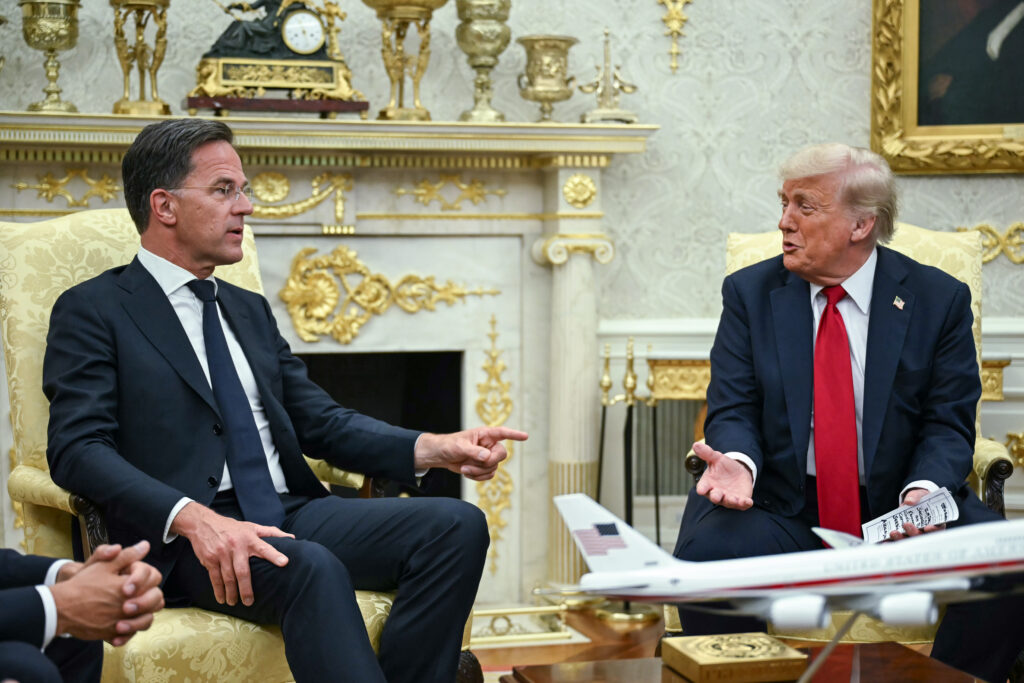
En menaçant la Russie lundi de sanctions douanières “très sévères” et en réarmant l’Ukraine, Donald Trump semble avoir opéré une énième volte-face, se disant désenchanté par Vladimir Poutine.Reste à savoir s’il s’agit d’un véritable changement de stratégie, alors que le président américain souffle le chaud et le froid sur la guerre en Ukraine.Le fait est que, malgré son impatience affichée, le président américain accorde un nouveau délai — de 50 jours — au président russe, qui, trois ans après l’avoir lancée, refuse toujours de mettre fin à l’invasion de l’Ukraine.Depuis son retour à la Maison Blanche en janvier, Donald Trump s’est rapproché de Vladimir Poutine, alors qu’il cherche à honorer sa promesse électorale de mettre fin à la guerre en Ukraine — un objectif qu’il s’était dit, pendant la campagne, capable d’atteindre en seulement 24 heures.Cela a fait craindre à Kiev d’être lâchée en rase campagne, en particulier après la virulente altercation avec le président ukrainien Volodymyr Zelensky dans le Bureau ovale en février.A l’époque, M. Trump qualifiait ce dernier de “dictateur sans élections”, soulignant que l’Ukraine n’avait “aucune carte en main” face à la Russie.Mais le ton a changé ces dernières semaines, après une série de pourparlers infructueux, Donald Trump affichant clairement son mécontentement avec le président russe.Vladimir Poutine “parle bien” en journée et se met “à bombarder tout le monde le soir”, a-t-il relevé lundi.Les frappes aériennes russes en Ukraine se sont intensifiées récemment. Moscou bat chaque semaine des records en nombre d’engins tirés, fournis par une industrie de défense qui tourne à plein régime.- “Dur à cuire” -Donald Trump, qui ne cache pas son admiration pour le dirigeant russe avec qui il dit entretenir depuis “toujours de très bonnes relations”, l’avait qualifié récemment de “complètement fou”.Et dans une rare introspection, il a suggéré que la Première dame, Melania Trump, avait pu peser sur sa façon de penser.”Je rentre chez moi et je dis à la Première dame: +J’ai parlé à Vladimir aujourd’hui, nous avons eu une merveilleuse conversation+. Et elle me répond: +Oh vraiment? Une autre ville vient d’être frappée+.””Je ne veux pas dire que c’est un assassin, mais c’est un dur à cuire”, a-t-il encore dit à propos du président russe, refusant par ailleurs toute notion selon laquelle il serait mené en bateau par son homologue.Les deux dirigeants se sont parlé à six reprises depuis janvier mais, contrairement à ce qu’avait laissé entrevoir Donald Trump, aucune rencontre n’a encore été programmée entre les deux hommes.Le président américain avait “promis qu’il pourrait amener M. Poutine à la table des négociations, et il n’y est pas parvenu”, souligne Heather Conley, de l’American Enterprise Institute, un cercle de réflexion conservateur à Washington.Sa menace d’infliger des droits de douane “secondaires” de 100% aux alliés de Moscou, si aucun accord n’est trouvé d’ici 50 jours, “montre qu’il est frustré de ne pas y être parvenu, mais je ne la considère pas comme un grand changement de politique”, ajoute-t-elle.L’opposition démocrate a vite fait de saluer le revirement de M. Trump, se disant à l’instar de la sénatrice démocrate Jeanne Shaheen, “heureuse qu’il semble enfin se rendre à l’évidence quant à la responsabilité de Poutine dans ce massacre insensé et barbare d’innocents”.Mais “il est maintenant temps de joindre le geste à la parole et de mettre fin à cette guerre”, a-t-elle ajouté dans un communiqué.M. Trump n’a pas ouvertement apporté son soutien lundi à une proposition de loi qui fait l’objet d’un large accord au Congrès et qui préconise des droits de douane de 500% imposés aux pays, comme la Chine, l’Inde et le Brésil, qui appuient la machine de guerre russe en achetant du pétrole et du gaz russes bon marché.Mais pour Heather Conley, “le Kremlin a jeté toutes ses forces dans cette bataille” et “mise sur une lente érosion de la position de l’Ukraine et de l’Occident, voulant gagner ce conflit selon ses propres termes”.