Texas flood toll passes 100 as more bodies recovered

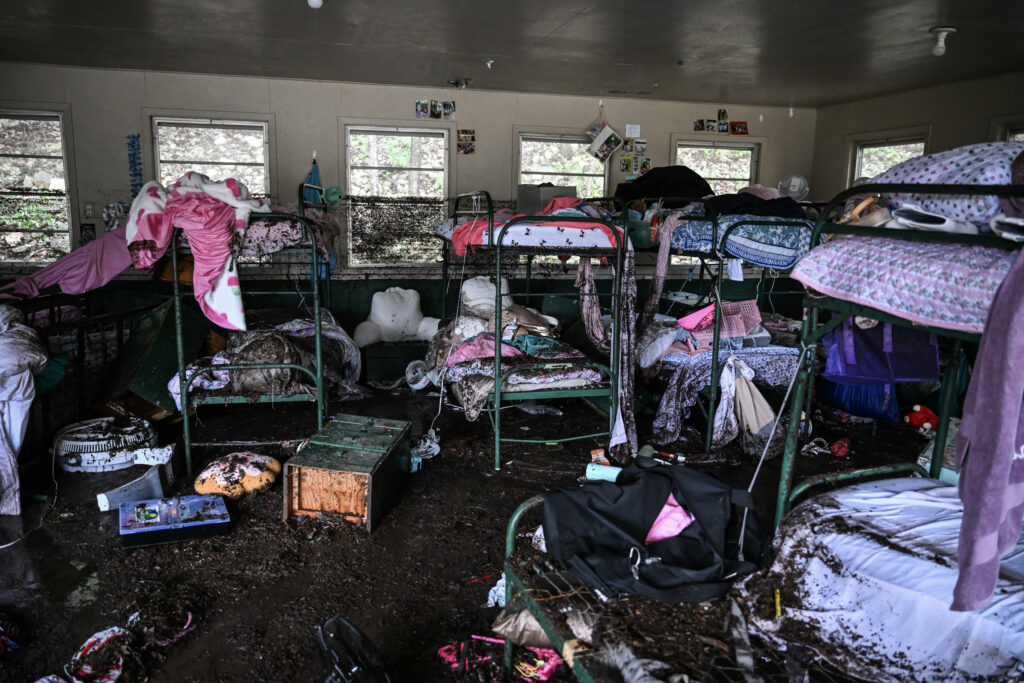
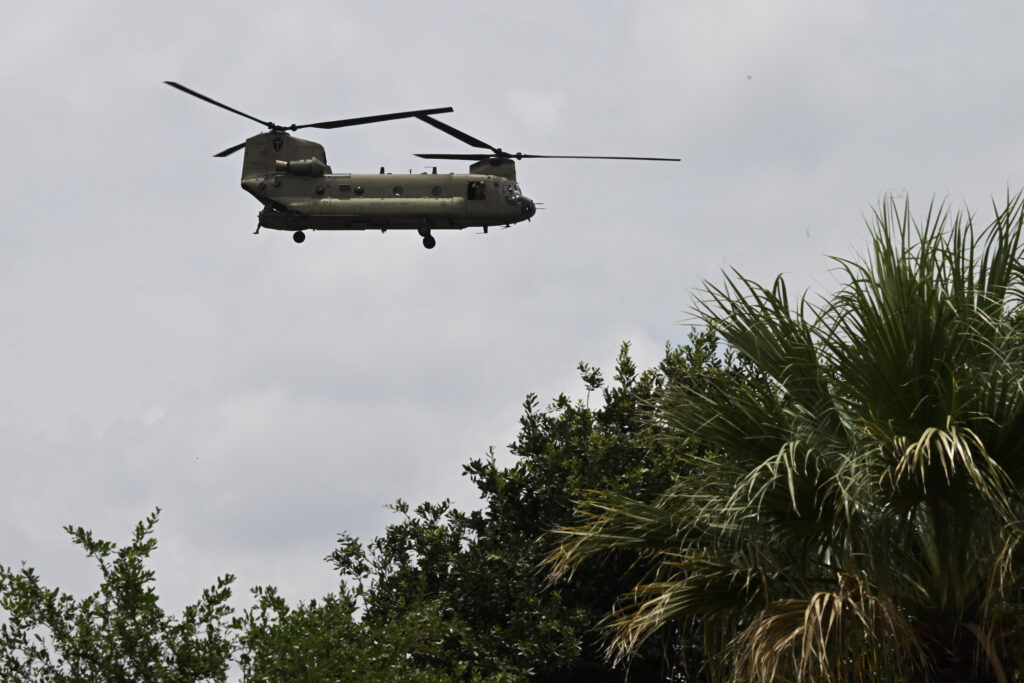
The death toll from catastrophic flooding in Texas rose to more than 100 on Monday, as rescuers continued their grim search for people swept away by torrents of water. Among the dead were at least 27 girls and counselors who were staying at a youth summer camp on a river when disaster struck over the Fourth of July holiday weekend. Forecasters have warned of more flooding as rain falls on saturated ground, complicating recovery efforts involving helicopters, boats, dogs and some 1,750 personnel.”There is still a threat of heavy rain with the potential to cause flooding,” Texas Governor Greg Abbott said in a statement Monday, with the number of victims expected to rise still. President Donald Trump confirmed he planned to visit Texas on Friday, as the White House slammed critics claiming his cuts to weather agencies had weakened warning systems.”Blaming President Trump for these floods is a depraved lie, and it serves no purpose during this time of national mourning,” Press Secretary Karoline Leavitt told reporters Monday.She said the National Weather Service, which The New York Times reported had several key roles in Texas unfilled before the floods, issued “timely and precise forecasts and warnings.”Trump has described the floods that struck in the early hours of Friday as a “100-year catastrophe” that “nobody expected.”The president, who previously said disaster relief should be handled at the state level, has signed a major disaster declaration, activating fresh federal funds and freeing up resources.- ‘Tragedy’ -At least 104 flood-related deaths were reported across central Texas.Kerr County, through which the Guadalupe River runs, was the hardest hit, with at least 84 people killed including 28 children, according to the local sheriff’s office. The toll includes 27 who had been staying at Camp Mystic, an all-girls Christian camp that was housing about 750 people when the floodwaters struck.Camps are a beloved tradition in the long US summer holidays, with children often staying in woods, parks and other rural areas.Texas Senator Ted Cruz described them as a chance to make “lifetime friends — and then suddenly it turns to tragedy.”But some residents were questioning the absence of more robust flood-warning systems in this region of south and central Texas — where such deluges are so frequent that it is known colloquially as “Flash Flood Alley.”Experts stress the NWS sent out timely forecasts, and climate scientist Daniel Swain pinned the problem on a failure of “warning dissemination.”San Antonio mother Nicole Wilson — who almost sent her daughters to Camp Mystic — launched a petition on Change.org urging Governor Greg Abbott to approve a modern warning network. “Five minutes of that siren going off could have saved every single one of those children,” she told AFP.At a candlelight vigil in San Antonio on Monday night, Texans gathered to pray for the victims of the floods and voice lingering fears.”I was pretty shocked on the gravity of the situation and how big it was, and I wouldn’t necessarily expect that our rivers would rise so quickly,” said Rebeca Gutierrez, 29. “Hopefully there’s preventative efforts happening in similar areas to make sure nothing to this degree happens.”- Two-story building -In a terrifying display of nature’s power, the rain-swollen waters of the Guadalupe River reached treetops and the roofs of cabins as girls at the camp slept.Blankets, teddy bears and other belongings were caked in mud. Windows in the cabins were shattered, apparently by the force of the water.Volunteers were helping search through debris from the river, with some motivated by personal connections to the victims. “We’re helping the parents of two of the missing children,” Louis Deppe, 62, told AFP. “The last message they got was ‘We’re being washed away,’ and the phone went dead.”Months’ worth of rain fell in a matter of hours on Thursday night into Friday, and rain has continued in bouts since then.The Guadalupe surged around 26 feet (eight meters) — more than a two-story building — in just 45 minutes.Flash floods occur when the ground is unable to absorb torrential rainfall.Human-driven climate change has made extreme weather events such as floods, droughts and heat waves more frequent and more intense in recent years.

Most markets rise as Trump sends tariff letters, delays deadline

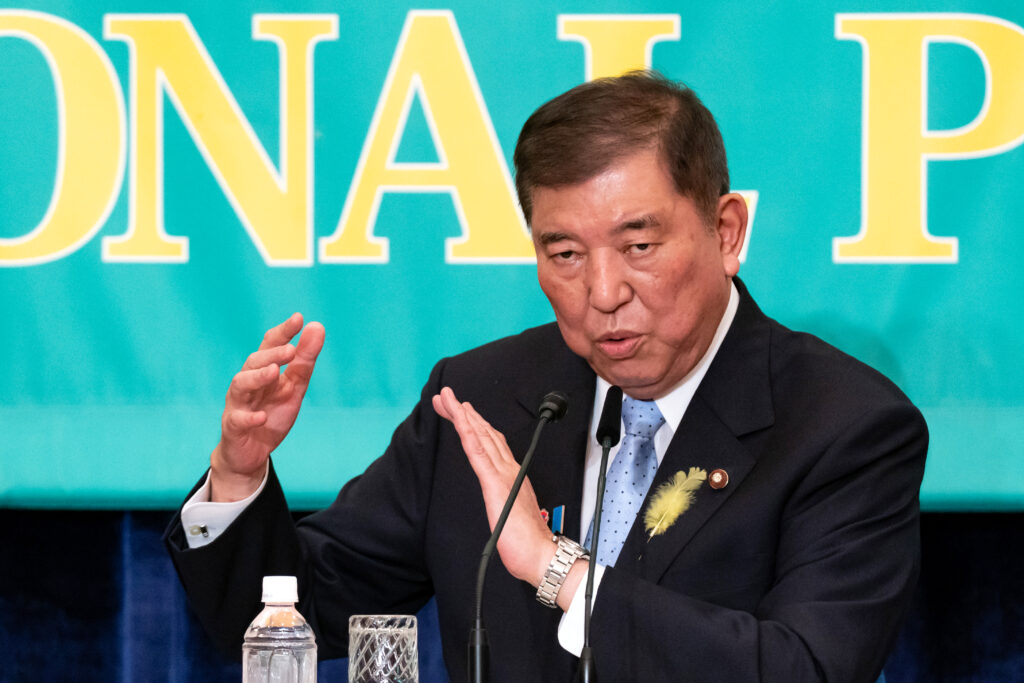
Most stocks rose Tuesday as traders cautiously welcomed Donald Trump’s extension of his tariff deadline and indication he could push it back further, though uncertainty over US trade policy capped gains.Days before the three-month pause on his “Liberation Day” tariffs was set to expire, the US president said he would give governments an extra three weeks to hammer out deals to avoid paying sky-high levies for exports to the world’s biggest economy.That came as he sent out letters to over a dozen countries — including top trading partners Japan and South Korea — setting out what he had decided to charge if they did not reach agreements by the new August 1 target date.Investors tentatively welcomed the delay amid hopes officials will be able to reach deals with Washington, with some observers seeing the latest move by the president as a negotiation tactic.The letters said Tokyo and Seoul would be hit with 25 percent tariffs, while Indonesia, Bangladesh, Thailand, South Africa and Malaysia faced duties ranging from 25 percent to 40 percent.When asked if the new deadline was set in stone, the president said: “I would say firm, but not 100 percent firm.”And asked whether the letters were his final offer, he replied: “I would say final — but if they call with a different offer, and I like it, then we’ll do it.”While Wall Street’s three main indexes ended down — with the S&P 500 and Nasdaq back from record highs — Asian markets mostly rose.Tokyo and Seoul advanced, while there were also gains in Hong Kong, Shanghai and Singapore. Sydney, Wellington and Taipei fell. Manila and Jakarta were flat.The White House has for weeks said that numerous deals were in the pipeline, with Treasury Secretary Scott Bessent claiming Monday that “we are going to have several announcements in the next 48 hours”.But so far only two have been finalised, with Vietnam and Britain, while China reached a framework to slash eye-watering tit-for-tat levies.Asia Society Policy Institute Vice President Wendy Cutler said the levies on Japan and South Korea “will send a chilling message to others”.”Both have been close partners on economic security matters,” she said, adding that companies from both countries had made “significant manufacturing investments in the US in recent years”.For his part, Japan’s Prime Minister Shigeru Ishiba said Sunday that he “won’t easily compromise”.National Australia Bank’s Tapas Strickland said there remained a lot of uncertainty among investors.”If the agreement with Vietnam is anything to go by, then countries… the US has a trade deficit with look destined to have a 20 percent tariff, and those… the US has a trade surplus with a 10 percent tariff,” he wrote in a commentary. “That could mean eventual tariff rates settle higher than what the current consensus is, which is broadly for a 10 percent across the board tariff with a higher tariff on China.”Without further clarity, though, markets will have trouble pricing these different scenarios, especially given Trump’s quick reversal following the market reaction in response to the initial Liberation Day tariffs.”- Key figures at around 0230 GMT -Tokyo – Nikkei 225: UP 0.3 percent at 39,711.29 (break)Hong Kong – Hang Seng Index: UP 0.5 percent at 23,996.70Shanghai – Composite: UP 0.2 percent at 3,479.65Euro/dollar: UP at $1.1745 from $1.1710 on MondayPound/dollar: UP at $1.3634 from $1.3602Dollar/yen: DOWN at 146.10 yen from 146.13 yenEuro/pound: UP at 86.15 pence from 86.09 penceWest Texas Intermediate: DOWN 0.7 percent at $67.45 per barrelBrent North Sea Crude: DOWN 0.6 percent at $69.16 per barrelNew York – Dow: DOWN 0.9 percent at 44,406.36 (close)London – FTSE 100: DOWN 0.2 percent at 8,806.53 (close)

Texas floods: How geography, climate and policy failures collided

“There’s no such thing as a natural disaster,” geographers like to say — a reminder that human choices turn hazards into tragedies. The Texas flash floods this weekend that left more than a hundred dead, including many children, offer a stark illustration.Here is a look at the intertwined forces that amplified this storm’s impact.- ‘Flash Flood Alley’ -Texas’s Hill Country sits in an area known as “Flash Flood Alley,” explains Hatim Sharif, a hydrologist at the University of Texas at San Antonio. Warm Gulf air rushes up the Balcones Escarpment — a line of steep hills and cliffs that arcs southwest down from near Dallas — cools, and dumps torrents onto thin soils that quickly give way to bedrock. Runoff then funnels through a dense web of creeks.”Water will rise very, very quickly, within minutes or a few hours,” Sharif told AFP.The early hours of July 4 proved that. Around 3:00 am, a gauge near Camp Mystic in Hunt showed the Guadalupe River rising nearly a foot (30 centimeters) every five minutes; by 4:30 am the river had surged more than 20 feet, National Weather Service data show.That’s enough water to sweep away people, vehicles and buildings.An urgent NWS warning went out shortly after 1 am, but most campers were asleep; phones are banned, coverage is patchy, and darkness makes escape routes hard to judge. Sharif urges the use of hydrologic forecasts that convert rainfall into likely river levels. “Rainfall needs to be translated into runoff,” he said. “If you have 10 inches, what will happen?”Summer camps have long been drawn to the region for its natural beauty. But with increasing risks, Sharif warns that treating these sites as safe or permanent is unwise.- ‘We need to adapt’ -A warmer atmosphere holds more moisture, loading the dice for heavier downpours. A new analysis by ClimaMeter finds that the meteorological conditions preceding the floods, which delivered more than twice the monthly average rainfall in a single day, could not be explained by natural variability alone.”Climate change is already affecting us, so we need to adapt,” said Mireia Ginesta, a climate scientist at the University of Oxford who co-authored the research, which is funded by the European Union and the French National Centre for Scientific Research (CNRS).”We also need to cut our emissions, and make sure that proper funding is provided to the forecast services and research in general on climate change.”The call comes as the National Weather Service, like other agencies, has experienced deep staffing cuts under President Donald Trump’s administration.Experts stress, however, that NWS forecasters performed admirably under the circumstances.The real failure, wrote climate scientist Daniel Swain on Bluesky, “was not a bad weather prediction, it was one of ‘last mile’ forecast/warning dissemination.”- No warning system -For years, commissioners in Kerr County, where the camps lie, considered flood sirens and digital alerts to replace the informal practice of summer camp staff getting on the radio and warning fellow camps.Minutes from a 2016 meeting show officials labeling even a feasibility study “a little extravagant,” suggesting sirens would mainly help tourists, and vouching for the word-of-mouth system.”The thought of our beautiful Kerr County having these damn sirens going off in the middle of night, I’m going to have to start drinking again to put up with y’all,” Commissioner H.A. Buster Baldwin said in a transcript.The debate rolled on. Residents during meetings in 2021 expressed strident opposition toward relying on federal funds tied to the Biden administration.After the disaster, San Antonio mother Nicole Wilson — who almost sent her daughters to Camp Mystic — launched a petition on Change.org urging Governor Greg Abbott to approve a modern warning network. “Five minutes of that siren going off could have saved every single one of those children,” she told AFP.

AI video becomes more convincing, rattling creative industry

Gone are the days of six-fingered hands or distorted faces — AI-generated video is becoming increasingly convincing, attracting Hollywood, artists, and advertisers, while shaking the foundations of the creative industry.To measure the progress of AI video, you need only look at Will Smith eating spaghetti. Since 2023, this unlikely sequence — entirely fabricated — has become a technological benchmark for the industry.Two years ago, the actor appeared blurry, his eyes too far apart, his forehead exaggeratedly protruding, his movements jerky, and the spaghetti didn’t even reach his mouth.The version published a few weeks ago by a user of Google’s Veo 3 platform showed no apparent flaws whatsoever.”Every week, sometimes every day, a different one comes out that’s even more stunning than the next,” said Elizabeth Strickler, a professor at Georgia State University.Between Luma Labs’ Dream Machine launched in June 2024, OpenAI’s Sora in December, Runway AI’s Gen-4 in March 2025, and Veo 3 in May, the sector has crossed several milestones in just a few months.Runway has signed deals with Lionsgate studio and AMC Networks television group.Lionsgate vice president Michael Burns told New York Magazine about the possibility of using artificial intelligence to generate animated, family-friendly versions from films like the “John Wick” or “Hunger Games” franchises, rather than creating entirely new projects.”Some use it for storyboarding or previsualization” — steps that come before filming — “others for visual effects or inserts,” said Jamie Umpherson, Runway’s creative director.Burns gave the example of a script for which Lionsgate has to decide whether to shoot a scene or not. To help make that decision, they can now create a 10-second clip “with 10,000 soldiers in a snowstorm.”That kind of pre-visualization would have cost millions before.In October, the first AI feature film was released — “Where the Robots Grow” — an animated film without anything resembling live action footage.For Alejandro Matamala Ortiz, Runway’s co-founder, an AI-generated feature film is not the end goal, but a way of demonstrating to a production team that “this is possible.”- ‘Resistance everywhere’ -Still, some see an opportunity.In March, startup Staircase Studio made waves by announcing plans to produce seven to eight films per year using AI for less than $500,000 each, while ensuring it would rely on unionized professionals wherever possible.”The market is there,” said Andrew White, co-founder of small production house Indie Studios.People “don’t want to talk about how it’s made,” White pointed out. “That’s inside baseball. People want to enjoy the movie because of the movie.”But White himself refuses to adopt the technology, considering that using AI would compromise his creative process.Jamie Umpherson argues that AI allows creators to stick closer to their artistic vision than ever before, since it enables unlimited revisions, unlike the traditional system constrained by costs.”I see resistance everywhere” to this movement, observed Georgia State’s Strickler. This is particularly true among her students, who are concerned about AI’s massive energy and water consumption as well as the use of original works to train models, not to mention the social impact.But refusing to accept the shift is “kind of like having a business without having the internet,” she said. “You can try for a little while.”In 2023, the American actors’ union SAG-AFTRA secured concessions on the use of their image through AI.Strickler sees AI diminishing Hollywood’s role as the arbiter of creation and taste, instead allowing more artists and creators to reach a significant audience.Runway’s founders, who are as much trained artists as they are computer scientists, have gained an edge over their AI video rivals in film, television, and advertising.But they’re already looking further ahead, considering expansion into augmented reality and virtual reality — for example creating a metaverse where films could be shot.”The most exciting applications aren’t necessarily the ones that we have in mind,” said Umpherson. “The ultimate goal is to see what artists do with technology.”

As heatwaves intensify, Morocco ups effort to warn residentsTue, 08 Jul 2025 02:39:26 GMT

Lhoussaine Youabd knows nearly all the languages spoken in Morocco, a useful skill in his role warning the population of growing climate-related risks in the country braving increasingly common heatwaves.”Every time a weather alert is issued, I go on the media to warn Moroccans,” Youabd, 52, a meteorological engineer at the national weather service, told …

As heatwaves intensify, Morocco ups effort to warn residentsTue, 08 Jul 2025 02:39:26 GMT Read More »

Trump dit qu’il va envoyer plus d’armes “défensives” à l’Ukraine

Les Etats-Unis vont envoyer des armes supplémentaires à l’Ukraine, a promis Donald Trump lundi, quelques jours après l’annonce d’une suspension de certaines livraisons américaines et au moment où la diplomatie se heurte à une impasse.”Nous allons devoir envoyer plus d’armes, principalement des armes défensives”, a déclaré le président américain, qui s’est dit “mécontent” à l’égard du dirigeant russe Vladimir Poutine. “Ils sont frappés de manière très, très dure”, a ajouté M. Trump.Donald Trump s’est rapproché depuis janvier de son homologue russe Vladimir Poutine, mettant la pression pour obtenir un arrêt des combats, sans toutefois parvenir à des progrès concrets.De façon inattendue, son gouvernement a annoncé avoir cessé de fournir certaines armes à Kiev, officiellement en raison d’une inquiétude quant à la baisse des stocks de munitions des Etats-Unis – le premier soutien militaire de l’Ukraine depuis le début de l’invasion russe en février 2022.Des responsables américains se sont efforcés ensuite de minimiser l’impact de cette mesure sans donner plus de détails.Pendant le mandat de l’ancien président Joe Biden, Washington s’était engagé à fournir plus de 65 milliards de dollars d’aide militaire à l’Ukraine.Donald Trump n’a, lui, pas annoncé de nouvelles aides à Kiev depuis janvier.- Impasse -La diplomatie est au point mort entre les belligérants. Deux cycles de pourparlers entre Russes et Ukrainiens en Turquie le 16 mai et le 2 juin n’ont pas abouti à une percée majeure, et un troisième cycle n’a toujours pas été annoncé.Vendredi, Donald Trump s’est dit “très mécontent” d’un appel téléphonique organisé la veille avec Vladimir Poutine.”Il veut aller jusqu’au bout, juste continuer de tuer des gens, ce n’est pas bien”, a affirmé M. Trump à la presse à bord d’Air Force One.Le président américain a laissé entendre qu’il pourrait être prêt à durcir les sanctions contre Moscou, après avoir évité pendant ces six derniers mois d’y recourir alors qu’il tentait de persuader son homologue russe de mettre fin à la guerre.Vladimir Poutine maintient toujours ses demandes maximalistes, en particulier que Kiev cède à la Russie les régions ukrainiennes annexées et que l’Ukraine renonce à rejoindre l’Otan. Les dirigeants ukrainiens et leurs alliés occidentaux jugent ces conditions inacceptables.L’Ukraine, pour sa part, exige que l’armée russe se retire entièrement de son territoire, occupé à hauteur d’environ 20%.- “Zone tampon” -Sur le terrain, la Russie a revendiqué lundi la prise d’une localité dans la région de Dnipropetrovsk, dans le centre-est de l’Ukraine, une première depuis février 2022.Ce village, Datchnoïe, est situé à quelque 70 km de la grande ville de Donetsk sous contrôle russe.Kiev n’a pas réagi dans l’immédiat à cette annonce. Plus tôt lundi, l’état-major de ses forces armées avait assuré que des assauts russes avaient été repoussés la veille dans les environs du village.Pour Oleksiï Kopytko, un expert militaire ukrainien, la Russie peut tenter d’établir “une zone tampon” pour limiter les frappes ukrainiennes sur le front et en profondeur.Cet ancien conseiller du ministère ukrainien de la Défense a néanmoins affirmé à l’AFP que Moscou n’avait “pas et (n’aurait) pas les ressources nécessaires pour avancer rapidement”.Les forces russes continuent par ailleurs de bombarder quasi quotidiennement des villes ukrainiennes, tandis qu’en riposte, l’Ukraine mène également, presque chaque jour, des attaques aériennes en Russie.Dans la nuit de lundi à mardi, l’armée de l’air ukrainienne a rapporté la présence de drones dans les régions septentrionales de Soumy et Kharkiv.Dans le sud du pays, le maire de Mykolaïv Oleksandre Senkevytch a fait état sur Telegram d’une explosion et averti d’une menace de drone. Un homme de 51 ans a été blessé en périphérie de la ville et hospitalisé, a indiqué le gouverneur régional Vitaly Kim.La nuit précédente, Moscou avait envoyé 101 drones et tiré quatre missiles en direction de l’Ukraine, faisant au moins quatre morts et plusieurs dizaines de blessés au total dans différentes régions, selon les autorités ukrainiennes. Deux centres de recrutement militaire, à Kharkiv et Zaporijjia (sud) ont notamment été touchés, faisant quatre blessés, selon Kiev.L’Ukraine a, elle, lancé 91 drones d’attaque dans la nuit de dimanche à lundi, selon Moscou. Le renseignement militaire ukrainien (GUR) a affirmé qu’une raffinerie de pétrole de la région russe de Krasnodar (sud-ouest), “directement impliquée dans la guerre d’agression”, avait été frappée.

Trump dit qu’il va envoyer plus d’armes “défensives” à l’Ukraine

Les Etats-Unis vont envoyer des armes supplémentaires à l’Ukraine, a promis Donald Trump lundi, quelques jours après l’annonce d’une suspension de certaines livraisons américaines et au moment où la diplomatie se heurte à une impasse.”Nous allons devoir envoyer plus d’armes, principalement des armes défensives”, a déclaré le président américain, qui s’est dit “mécontent” à l’égard du dirigeant russe Vladimir Poutine. “Ils sont frappés de manière très, très dure”, a ajouté M. Trump.Donald Trump s’est rapproché depuis janvier de son homologue russe Vladimir Poutine, mettant la pression pour obtenir un arrêt des combats, sans toutefois parvenir à des progrès concrets.De façon inattendue, son gouvernement a annoncé avoir cessé de fournir certaines armes à Kiev, officiellement en raison d’une inquiétude quant à la baisse des stocks de munitions des Etats-Unis – le premier soutien militaire de l’Ukraine depuis le début de l’invasion russe en février 2022.Des responsables américains se sont efforcés ensuite de minimiser l’impact de cette mesure sans donner plus de détails.Pendant le mandat de l’ancien président Joe Biden, Washington s’était engagé à fournir plus de 65 milliards de dollars d’aide militaire à l’Ukraine.Donald Trump n’a, lui, pas annoncé de nouvelles aides à Kiev depuis janvier.- Impasse -La diplomatie est au point mort entre les belligérants. Deux cycles de pourparlers entre Russes et Ukrainiens en Turquie le 16 mai et le 2 juin n’ont pas abouti à une percée majeure, et un troisième cycle n’a toujours pas été annoncé.Vendredi, Donald Trump s’est dit “très mécontent” d’un appel téléphonique organisé la veille avec Vladimir Poutine.”Il veut aller jusqu’au bout, juste continuer de tuer des gens, ce n’est pas bien”, a affirmé M. Trump à la presse à bord d’Air Force One.Le président américain a laissé entendre qu’il pourrait être prêt à durcir les sanctions contre Moscou, après avoir évité pendant ces six derniers mois d’y recourir alors qu’il tentait de persuader son homologue russe de mettre fin à la guerre.Vladimir Poutine maintient toujours ses demandes maximalistes, en particulier que Kiev cède à la Russie les régions ukrainiennes annexées et que l’Ukraine renonce à rejoindre l’Otan. Les dirigeants ukrainiens et leurs alliés occidentaux jugent ces conditions inacceptables.L’Ukraine, pour sa part, exige que l’armée russe se retire entièrement de son territoire, occupé à hauteur d’environ 20%.- “Zone tampon” -Sur le terrain, la Russie a revendiqué lundi la prise d’une localité dans la région de Dnipropetrovsk, dans le centre-est de l’Ukraine, une première depuis février 2022.Ce village, Datchnoïe, est situé à quelque 70 km de la grande ville de Donetsk sous contrôle russe.Kiev n’a pas réagi dans l’immédiat à cette annonce. Plus tôt lundi, l’état-major de ses forces armées avait assuré que des assauts russes avaient été repoussés la veille dans les environs du village.Pour Oleksiï Kopytko, un expert militaire ukrainien, la Russie peut tenter d’établir “une zone tampon” pour limiter les frappes ukrainiennes sur le front et en profondeur.Cet ancien conseiller du ministère ukrainien de la Défense a néanmoins affirmé à l’AFP que Moscou n’avait “pas et (n’aurait) pas les ressources nécessaires pour avancer rapidement”.Les forces russes continuent par ailleurs de bombarder quasi quotidiennement des villes ukrainiennes, tandis qu’en riposte, l’Ukraine mène également, presque chaque jour, des attaques aériennes en Russie.Dans la nuit de lundi à mardi, l’armée de l’air ukrainienne a rapporté la présence de drones dans les régions septentrionales de Soumy et Kharkiv.Dans le sud du pays, le maire de Mykolaïv Oleksandre Senkevytch a fait état sur Telegram d’une explosion et averti d’une menace de drone. Un homme de 51 ans a été blessé en périphérie de la ville et hospitalisé, a indiqué le gouverneur régional Vitaly Kim.La nuit précédente, Moscou avait envoyé 101 drones et tiré quatre missiles en direction de l’Ukraine, faisant au moins quatre morts et plusieurs dizaines de blessés au total dans différentes régions, selon les autorités ukrainiennes. Deux centres de recrutement militaire, à Kharkiv et Zaporijjia (sud) ont notamment été touchés, faisant quatre blessés, selon Kiev.L’Ukraine a, elle, lancé 91 drones d’attaque dans la nuit de dimanche à lundi, selon Moscou. Le renseignement militaire ukrainien (GUR) a affirmé qu’une raffinerie de pétrole de la région russe de Krasnodar (sud-ouest), “directement impliquée dans la guerre d’agression”, avait été frappée.

Bayrou à Chartres pour renforcer le rôle des préfets

François Bayrou se rend à Chartres mardi pour présenter la réforme de l’administration territoriale de l’Etat qui vise notamment à renforcer le rôle des préfets et simplifier l’action des pouvoirs publics, dans l’espoir de faire en même temps des économies.Après une cérémonie en hommage au préfet et résistant Jean Moulin, le Premier ministre s’exprimera devant les préfets de régions et de départements, et les secrétaires généraux des ministères.”C’est le retour de l’Etat, un Etat fort au niveau local”, résume une source gouvermentale.Le président Emmanuel Macron avait enjoint en 2024 aux hauts fonctionnaires de “simplifier plus vite” l’action publique. “Le préfet de département doit être un patron de l’Etat”, avait-il insisté.Le pouvoir des préfets est notamment régi par un décret, datant d’avril 2004.François Bayrou s’était dit en avril, devant le Sénat, résolu à rendre aux préfets leur “pouvoir de dérogation” pour lutter contre la surproduction de normes parfois contradictoires et simplifier l’action des collectivités, tout en refusant le recours à la “tronçonneuse”.Le préfet du département, sous l’autorité du préfet de région, deviendrait le “régulateur de la totalité de l’ensemble de l’action de l’Etat sur le territoire”, à qui serait rendu “le pouvoir d’interprétation, de mise en place de décisions de bon sens”.Le travail de dérogation préfectorale est rendu possible depuis 2020 par décret, mais il est actuellement circonscrit à un nombre limité de matières. En cinq ans, seuls quelque 900 arrêtés de dérogation préfectoraux ont été pris.Le Sénat a adopté le 11 juin une proposition de loi qui vient préciser, renforcer ou créer toute une panoplie de “dérogations” accordées aux préfets, qui pourraient autoriser plus facilement certains projets, adapter certaines “normes”, “favoriser” l’accès à certaines aides publiques ou “alléger” certaines démarches administratives, sous conditions.Mais la rédaction du texte, très large, a suscité des réserves du côté du gouvernement et de la gauche. Avec une crainte: voir ce pouvoir de “dérogation” devenir dans certains cas un “pouvoir de substitution”.Dans un rapport publié jeudi dernier, une commission d’enquête du Sénat pointe des carences dans “la capacité de pilotage” de certains opérateurs ou agences publics et recommande d’en confier la tutelle aux préfets.La ministre des Comptes publics Amélie de Montchalin a promis dimanche de fusionner ou supprimer “un tiers” des opérateurs, escomptant en tirer 2 à 3 milliards d’économies d’ici 2027, ce que conteste le rapport sénatorial qui ne les chiffre qu’à 540 millions d’euros.Le chef du gouvernement sera accompagné par sept ministres, dont Elisabeth Borne (Education), Bruno Retailleau (Intérieur), Catherine Vautrin (Santé et Travail).