Afghan mothers seek hospital help for malnourished children

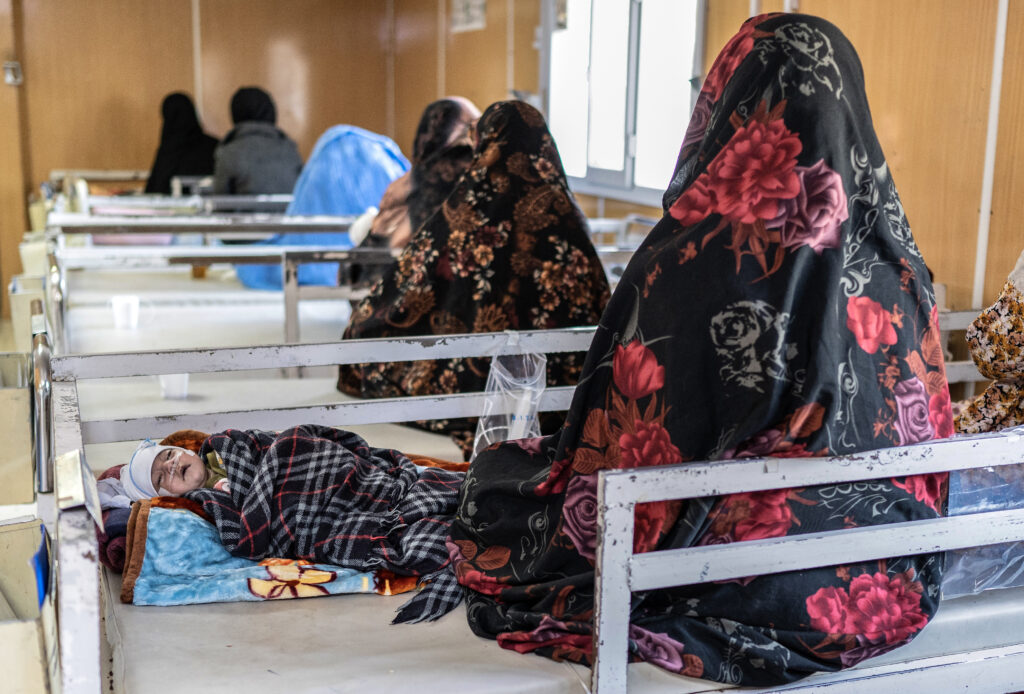
Najiba, 24, keeps a constant watch over her baby, Artiya, one of around four million children at risk of dying from malnutrition this year in Afghanistan.After suffering a bout of pneumonia at three months old, Artiya’s condition deteriorated and his parents went from hospital to hospital trying to find help.”I did not get proper rest or good food,” affecting her ability to produce breast milk, Najiba said at Herat Regional Hospital in western Afghanistan.”These days, I do not have enough milk for my baby.”The distressed mother, who chose not to give her surname for privacy reasons, said the family earns a living from an electric supplies store run by her husband.Najiba and her husband spent their meagre savings trying to get care for Artiya, before learning that he has a congenital heart defect.To her, “no one can understand what I’m going through. No one knows how I feel every day, here with my child in this condition.””The only thing I have left is to pray that my child gets better,” she said.John Aylieff, Afghanistan director at the World Food Programme (WFP), said women are “sacrificing their own health and their own nutrition to feed their children”.Artiya has gained weight after several weeks at the therapeutic nutrition centre in the Herat hospital, where colourful drawings of balloons and flowers adorn the walls.Mothers such as Najiba, who are grappling with the reality of not being able to feed their children, receive psychological support.Meanwhile, Artiya’s father is “knocking on every door just to borrow money” which could fund an expensive heart operation on another ward, Najiba said.- ‘Staggering’ scale -On average, 315 to 320 malnourished children are admitted each month to the centre, which is supported by medical charity Doctors Without Borders (MSF).The number of cases has steadily increased over the past five years, according to Hamayoun Hemat, MSF’s deputy coordinator in Herat.Since the Taliban regained power in 2021, low-income families have been hit hard by cuts to international aid, as well as drought and the economic fallout of five million Afghans forced across the border from Iran and Pakistan.”In 2025, we’d already seen the highest surge in child malnutrition recorded in Afghanistan since the beginning of the 21st century,” Aylieff said in Kabul.The crisis is only set to worsen this year, he told AFP: “A staggering four million children in this country will be malnourished and will require treatment.””These children will die if they’re not treated.”WFP is seeking $390 million to feed six million Afghans over the next six months, but Aylieff said the chance of getting such funds is “so bleak”.Pledges of solidarity from around the globe, made after the Taliban government imposed its strict interpretation of Islamic law, have done little to help Afghan women, the WFP director said.They are now “watching their children succumb to hunger in their arms”, he said.- ‘No hope’ -In the country of more than 40 million people, there are relatively few medical centres that can help treat malnutrition.Some families travel hundreds of kilometres (miles) to reach Herat hospital as they lack healthcare facilities in their home provinces.Wranga Niamaty, a nurse team supervisor, said they often receive patients in the “last stage” where there is “no hope” for their survival.Still, she feels “proud” for those she can rescue from starvation.In addition to treating the children, the nursing team advises women on breastfeeding, which is a key factor in combating malnutrition.Single mothers who have to work as cleaners or in agriculture are sometimes unable to produce enough milk, often due to dehydration, nurse Fawzia Azizi said.The clinic has been a lifesaver for Jamila, a 25-year-old mother who requested her surname not be used out of privacy concerns.Jamila’s eight-month-old daughter has Down’s syndrome and is also suffering from malnutrition, despite her husband sending money back from Iran where he works.Wrapped in a floral veil, Jamila said she fears for the future: “If my husband is expelled from Iran, we will die of hunger.”

Le Premier ministre canadien salue à Pékin un “nouveau partenariat” avec la Chine

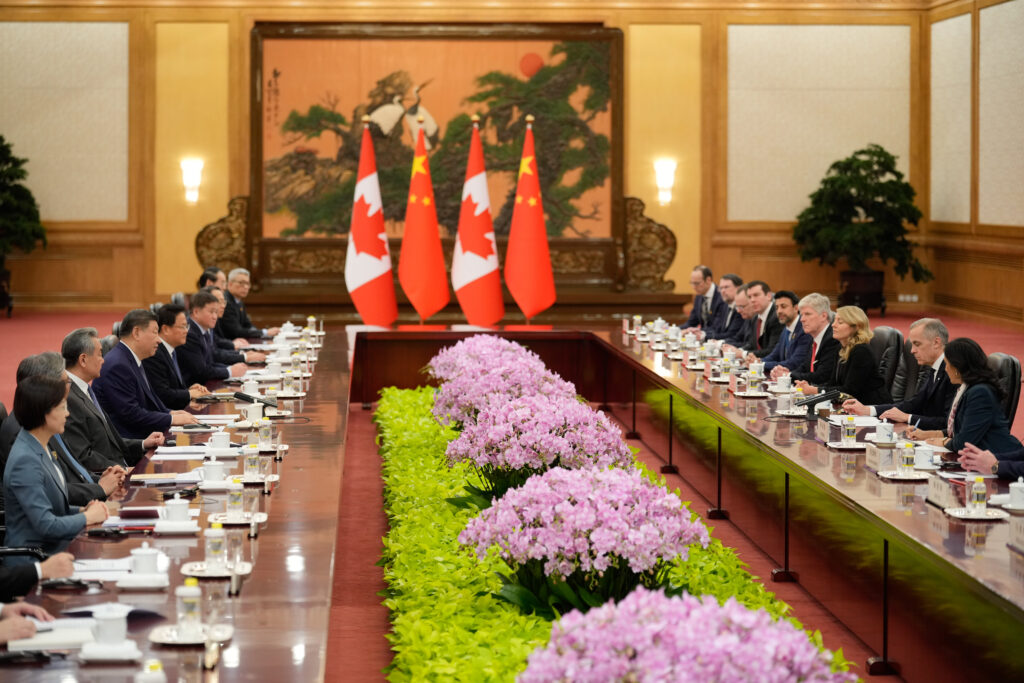
Le président chinois Xi Jinping et le Premier ministre canadien Mark Carney ont salué vendredi à Pékin l’avènement d’un nouveau partenariat, après des années de brouille entre leurs pays soumis aujourd’hui aux pressions américaines.”Je suis extrêmement heureux que nous allions de l’avant avec notre nouveau partenariat stratégique”, a dit M. Carney au début d’entretiens avec M. Xi, point d’orgue de la première visite d’un chef de gouvernement canadien en Chine depuis huit ans.Son hôte au Palais du peuple a parlé de “nouveau chapitre” ouvert en octobre lors de leur rencontre en marge d’un sommet Asie-Pacifique en Corée du Sud.Ces discussions, saluées à l’époque comme un “tournant” par M. Carney, ont ouvert la voie au réchauffement concrétisé cette semaine en Chine. M. Xi avait alors invité M. Carney en Chine.Depuis, les échanges entre les deux gouvernements pour “restaurer et relancer la coopération dans différents domaines (…) ont produit des résultats positifs”, a déclaré vendredi M. Xi. “J’en suis heureux”, a-t-il dit.Arrivé mercredi soir, M. Carney effectue en Chine jusqu’à samedi la première visite d’un chef de gouvernement canadien depuis celle de son prédécesseur Justin Trudeau en décembre 2017. Elle a pour objectif de tourner la page de plusieurs années de fâcherie et de stimuler les échanges commerciaux.- Canola et espionnage -Les rapports sino-canadiens se sont fortement dégradés en 2018 avec l’arrestation par les autorités canadiennes d’une responsable du géant chinois Huawei à la demande des Etats-Unis, suivie de l’emprisonnement de deux ressortissants canadiens en Chine, accusés d’espionnage par Pékin.Depuis l’été 2024, Ottawa et Pékin s’affrontent sur le front commercial: surtaxes canadiennes sur les véhicules électriques et l’acier chinois, et ripostes chinoises sur des produits agricoles canadiens, dont le canola, un oléagineux utilisé pour l’alimentation et les biocarburants, dont le Canada est l’un des principaux producteurs mondiaux.M. Carney s’est rendu en Chine pour chercher des progrès sur ces sujets, sans forcément viser le règlement des différends.Mais il espère aussi faire progresser son vœu de voir le Canada doubler ses exportations vers des pays autres que les Etats-Unis d’ici à 2035, afin de réduire sa dépendance vis-à-vis de son voisin.Chine et Canada ont en commun de subir les effets des politiques agressives du président Donald Trump depuis son retour à la Maison Blanche en janvier 2025.- “Progrès historiques” -Un nouveau partenariat entre les deux pays contribuera à “améliorer le système multilatéral, un système qui a été mis à rude épreuve ces dernières années”, a dit M. Carney vendredi au début de ses discussions avec M. Xi.”Nous nous concentrons sur des domaines où nous pouvons réaliser des progrès historiques: l’agriculture, l’énergie et la finance. C’est là que nous pouvons obtenir les résultats les plus rapides”, a-t-il dit.”Développer de manière saine et stable les relations sino-canadiennes sert les intérêts communs de nos deux pays et contribue à la paix, à la stabilité et à la prospérité mondiale”, a souligné M. Xi.La Chine est le deuxième partenaire commercial du Canada, derrière les Etats-Unis.Le volume des échanges de biens entre le Canada et la Chine s’est élevé à 89,62 milliards de dollars américains en 2025, avec un excédent de plus de 6 milliards en faveur de la Chine, selon des chiffres publiés mercredi par l’Etat chinois. Si les exportations de la Chine vers le Canada ont augmenté de 3,2% sur un an, ses importations de marchandises canadiennes ont diminué de 10,4%.

Japan and US agree to expand cooperation on missiles, military drills

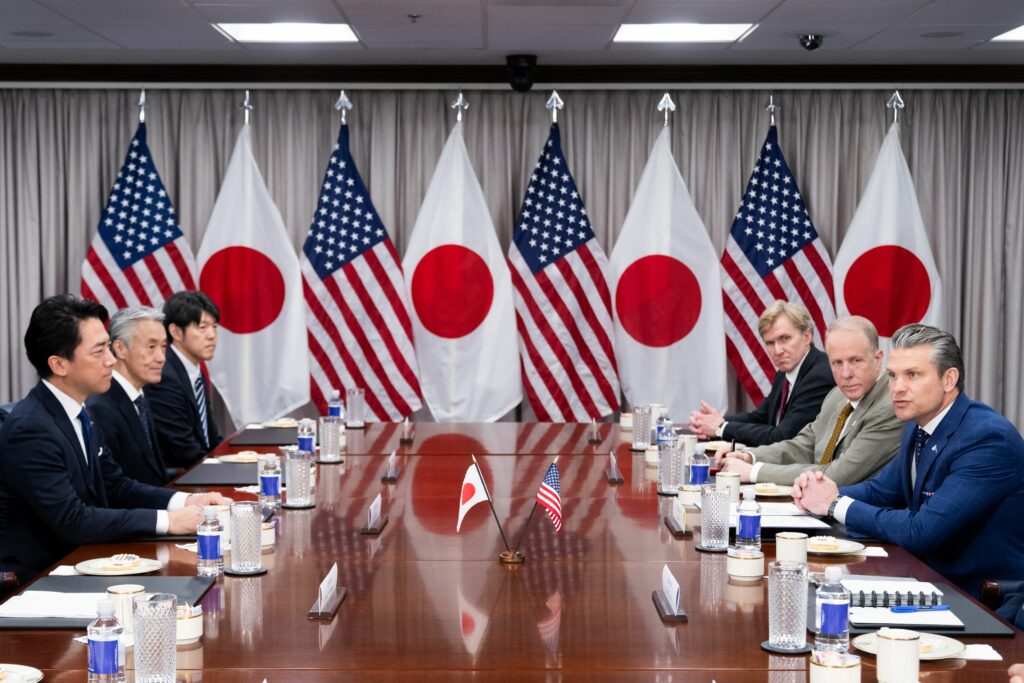
Tokyo and Washington agreed Friday to boost joint production of defence equipment including missiles, and expand their military presence in waters southwest of mainland Japan, as China ramps up pressure on its Asian neighbour.The agreement came after Japanese defence minister Shinjiro Koizumi met Pentagon chief Pete Hegseth in Washington, where they also pledged to further cooperation on supply chains including critical minerals.Japan is embroiled in a heated diplomatic spat with China, triggered by Prime Minister Sanae Takaichi’s suggestion in November that Japan could intervene militarily if China attacks Taiwan.China, which regards Taiwan as its own territory, reacted angrily, blocking exports to Japan of “dual-use” items with potential military applications, fuelling worries in Tokyo that Beijing could choke supplies of much-needed rare earths.As the “security environment is rapidly growing severe” in Asia, “the two ministers confirmed the Japan-US alliance remains absolutely unwavering”, the statement released by Tokyo’s defence ministry said. They agreed to further advance joint production of air-to-air missiles and surface-to-air interceptors.The allies also agreed to work on the expansion of “more sophisticated and practical joint drills in various locations including the Southwest region”, the statement said. Beefing up defence around the so-called “Southwest” region, which includes areas such as the subtropical island of Okinawa, is one of Japan’s top priorities.Okinawa, home to the vast majority of American military bases in Japan, serves as a key US outpost to monitor China, the Taiwan Strait and the Korean peninsula, with both Tokyo and Washington stressing its strategic importance.Tokyo has also been steadily increasing its military budget, including in December when the right-leaning government of Takaichi approved a record nine trillion yen in defence spending for the upcoming fiscal year.At the top of his meeting with Koizumi, Hegseth praised Japan for this effort, calling it “hard-nosed realism; practical, common-sense approach that puts both of our vital national interests together”, according to the US Department of War, recently re-branded from the Department of Defense.Their meeting was preceded by a joint morning workout session at a military gym. “The American military-style training was very tough,” Koizumi wrote on X.”But I did my best to labour my way through it, telling myself: ‘this is all for the sake of strengthening the Japan-US alliance.'”  

China’s 2025 economic growth likely slowest in decades: analysts

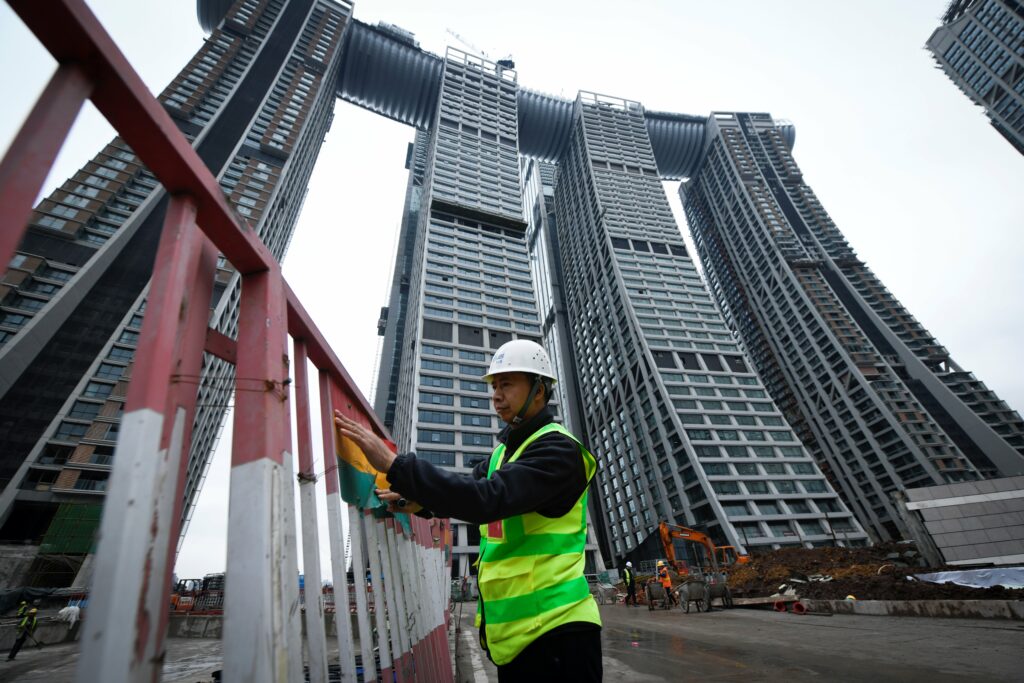
China’s economy likely grew last year at its weakest rate in three decades, outside of the pandemic, according to an AFP survey of analysts ahead of official data on Monday.The world’s second-largest economy struggled to shore up its property market while boosting domestic consumption as Chinese exports to the key US market were crimped by Donald Trump’s tariffs.President Xi Jinping said last month that growth probably met an annual target of “around five percent” in 2025.Economists estimated a median figure of 4.9 percent, in what would be the weakest growth since 1990 when China was under Western sanctions after the deadly Tiananmen Square crackdown.The announcement will be “close enough for officials to declare victory” in meeting the roughly five-percent number, a “political comfort blanket” for Beijing, said Sarah Tan of Moody’s Analytics.But the composition of Chinese growth was “deeply uneven” and official figures “mask the weak sentiment on the ground”, she said.Analysts agreed the main problem was China’s property sector, which has failed to overcome a persistent debt crisis despite rate cuts and loosened restrictions on homebuying.House prices have risen slightly in some large cities but the broader market remains sluggish.”We see no sign of a near-term property sector bottoming out,” analysts from Goldman Sachs said.Without bolder measures like converting housing stock into affordable homes, the industry will remain unstable, analysts warned.- Waning investments -Investments in property and infrastructure likely took a hit last year.Official figures already show that fixed-asset investment slowed 2.6 percent between January and November, its sharpest rate since 2020.Larry Hu and Yuxiao Zhang of Macquarie Group attributed the decline to unannounced “data revisions” by Beijing, adding they did not expect policymakers to respond.Property investment could fall by 12 percent in 2026, they predicted.Tianchen Xu of the Economist Intelligence Unit (EIU) also forecast a real-estate “correction” in 2026, adding: “This will remain a drag on growth.”Meanwhile, constraints on local government finances pushed a wider slowdown in manufacturing and infrastructure investment last year, Goldman Sachs analysts said.China’s outbound foreign direct investment continued to outpace inbound flows in recent quarters, they noted.- Too anxious to spend -Domestic spending is also cause for concern. Retail sales, a key indicator of consumption, grew at their slowest pace in nearly three years in November.Economists have long urged Beijing to move towards a growth model powered by consumption rather than exports and manufacturing.Excess supply remains an issue in manufacturing despite a government campaign last year to combat overcapacity and price cutting.China aims to become a global powerhouse in advanced manufacturing, but that promises little for domestic spending, according to Goldman Sachs analysts.”High-end manufacturing and frontier technology will not generate many jobs or lead to significantly higher incomes for average households, making only a limited contribution to private consumption,” they said.Chinese consumers remain jittery about the wider economy and high unemployment, even though officials have relaxed fiscal policy and subsidised the replacement of household items in a sputtering bid to boost spending.”That anxiety is shaping how households spend,” Tan said, noting that while domestic tourism rebounded to pre-pandemic levels last year, the average outlay per traveller was lower.- Minimal US impact -Robust exports have been a bright spot in the cloudy economic picture despite a bruising trade war with the United States that saw Trump slap steep tariffs on Chinese products.Official data showed Chinese exports to the United States plunged by 20 percent in 2025, but that had little impact on demand for Chinese products elsewhere.China’s trade surplus hit a record $1.2 trillion last year, with officials lauding a “new historical high” filled by other trade partners.”The trade war 2.0 didn’t impact China much, leading Beijing to refrain from implementing major stimulus measures,” said Hu and Zhang of Macquarie.Tan agreed that “exports are propping up the economy while consumers and property developers hang back”.But whether they continue to drive the economy in 2026 remains to be seen.Economists expect Beijing to reveal new stimulus measures — potentially at its annual parliamentary session in March — to address core challenges.”We think there will be a turnaround this year driven by policy support from fiscal and new financing policy tools,” said Erin Xin at HSBC.Xu, of the EIU, predicated that fiscal policy would be “expansionary by historical standards” for China to reach its growth target.Macquarie analysts, however, were more conservative, saying “the size of the stimulus package will largely depend on the magnitude of the export slowdown”.

Libyan filmmaker fights for cinema revival

Mouayed Zabtia shoots most scenes for his latest movie in a studio he built at his Tripoli home. For the filmmaker, it is one way to overcome the obstacles he faces in a country where cinema once nearly vanished.Before a 1969 coup that brought Moamer Kadhafi to power, Libya’s capital Tripoli was home to more than 20 movie theatres.”Today we have none,” Zabtia told AFP.Kadhafi was overthrown and killed in 2011, and though the censorship of his era has declined, its effects are still deeply felt through underinvestment and public disinterest.”You have to go abroad to see films in a movie theatre,” said Mohammed Rizk, an actor in Zabtia’s current project, which is set in 1980s Libya when a younger generation yearned for freedom under Kadhafi.Under the longtime ruler, cinema was viewed as a tool of foreign cultural invasion, and only movies aligned with the state were funded and promoted.Movie theatres were seen as spaces for gatherings that were difficult to control.- ‘Disinterest’ -Many like 47-year-old Zabtia believed that after Kadhafi’s fall, cinema would be resurrected, but the instability that ensued has delayed any revival.”The problem is disinterest from all governments since 2011,” Zabtia said. “We were expecting that they would help.”The filmmaker said he had funded all his productions from his own pocket, mainly with revenue from a production company he founded in 2001 to create television series and wedding videos.It was only after the 2011 revolution that he decided to take on cinema, a goal since childhood.In his dim-lit studio, Zabtia oversees everything — from lighting and sound to costumes — as a small crew bustles about making his latest picture, “1986”.Zabtia said the film is inspired by true events, including the estrangement from Libya of pioneering singer Ahmed Fakroun after Kadhafi cracked down on Western-influenced music.Today, Zabtia said, it is no longer censorship that stifles filmmaking in Libya, but an array of other challenges compounded by a lack of public support.Authorities have in recent years attempted to revive the artform through festivals and the creation of the Libyan Film Institute in 2021.- No story without women -Zabtia said most of his work is filmed in the studio as “filming outside in Libya is very tiring”.”We lack logistic support. You need big crews, food, drinks, help with the police for outdoor sets.””We don’t have that experience, and people are not used to seeing these kinds of cameras in the street.”Added to that, some Libyans feel cinema clashes with their moral values, he added.Portraying women on screen is particularly difficult, Zabtia said, although he insisted it was “impossible to make a film without women when it comes to telling a story.””We have many hidden female talents who are afraid to come forward.”Yet the director believes one solution to these social obstacles is cinema itself: “The role of cinema — our role — is to pinpoint issues and try to address them.”Despite the obstacles, a handful of Libyan films have crossed borders.”Freedom Fields”, a documentary by Libyan-British director Naziha Arebi about three women footballers, was screened at the Toronto International Film Festival in 2018.In 2023, “Donga”, a film by Muhannad Lamin about the 2011 uprising, was shown at the International Documentary Film Festival Amsterdam.While “cinema doesn’t really have a market in Libya”, Zabtia hopes the lack of interest will translate into an opportunity to stand out and establish a niche — particularly with platforms like Netflix and Amazon Prime. “We want to develop and highlight Libyan work, talent and skills,” he said. “And we want to reach audiences overseas. It’s important that they hear about Libyan stories and culture, and get to know us as a people.”