US says reached deal with Taiwan to lower tariffs, boost investments

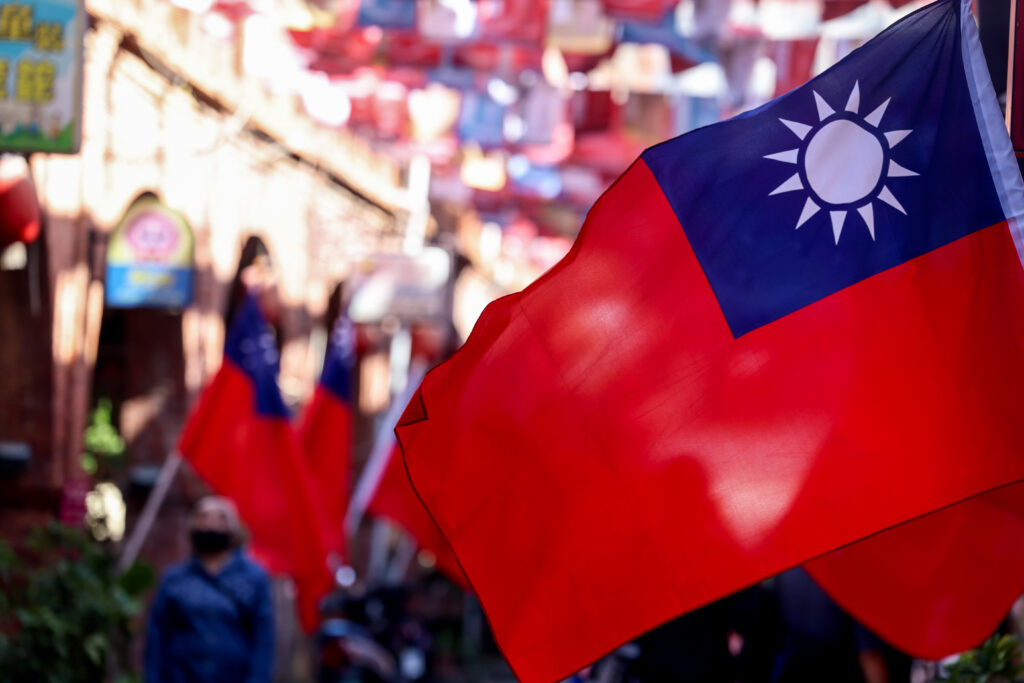
The United States said Thursday that it has signed a deal with Taiwan to reduce tariffs on goods from the democratic island, while increasing Taiwanese semiconductor and tech companies’ investments in America.The agreement, the US Commerce Department said, “will drive a massive reshoring of America’s semiconductor sector.”Under the deal, Washington will lower tariffs on Taiwanese goods to 15 percent, down from a 20 percent “reciprocal” rate meant to address US trade deficits and practices it deems unfair.Taiwanese Premier Cho Jung-tai praised negotiators on Friday for “delivering a well-executed home run”.”These results underscore that the progress achieved so far has been hard-won,” Cho said.Sector-specific tariffs on Taiwanese auto parts, timber, lumber and wood products will also be capped at 15 percent, while generic pharmaceuticals and certain natural resources will face no “reciprocal” duties, the US Commerce Department added.Meanwhile, Taiwanese chip and tech businesses are set to make “new, direct investments totalling at least $250 billion” in the United States to build and expand capacity in areas like advanced semiconductors and artificial intelligence, the department said.Taiwan will also provide “credit guarantees of at least $250 billion to facilitate additional investment by Taiwanese enterprises,” the department said adding that this would support the growth of the US semiconductor supply chain.Taiwan’s government said the new tariff will not stack on top of existing duties, which had been a major concern for local industries.”Of course it’s good that the reciprocal tariff has been lowered to 15 percent — at least it puts us on par with our main competitors South Korea and Japan,” said Chris Wu, sales director for Taiwanese machine tool maker Litz Hitech Corp. But, given the company’s single-digit profit margins, “there is no way we can absorb the tariff” for US customers, he said. The department’s announcement did not mention names, but the deal has key implications for Taiwanese chipmaking titan TSMC, the world’s biggest contract maker of microchips used in everything from Apple phones to Nvidia’s cutting-edge AI hardware.In an interview with CNBC, Commerce Secretary Howard Lutnick said TSMC has bought land and could expand in Arizona as part of the deal.”They just bought hundreds of acres adjacent to their property. Now I’m going to let them go through it with their board and give them time,” he said.TSMC did not immediately respond to a request for comment.Taiwanese producers who invest in the United States will also be treated more favorably when it comes to future semiconductor duties, the Commerce Department said.Firms building new US chip capacity may import up to 2.5 times their planned capacity without paying sector-specific duties during construction. The quota lowers to 1.5 times once projects are completed.A day prior, US officials held off imposing wider chip tariffs, instead announcing a 25 percent duty on certain semiconductors meant to be shipped abroad — a key step in allowing Nvidia to sell advanced AI chips to China.Ryan Majerus, a former US trade official, told AFP that although chip tariffs are currently narrowly targeted, Washington “signaled there is certainly potential for it to grow.”Majerus, now a partner at law firm King & Spalding, added that the deal had parallels to those with other US partners. The European Union and Japan, for example, both also secured a 15-percent tariff rate.- ‘Self-sufficient’ -“The objective is to bring 40 percent of Taiwan’s entire supply chain and production, to domestically bring it into America,” Lutnick told CNBC.”We’re going to bring it all over, so we become self-sufficient in the capacity of building semiconductors,” he added.The agreement comes after months of negotiations.Taiwanese President Lai Ching-te had pledged to boost investments in the United States and increase defense spending as his government tried to lower US duties, and avoid a toll on its semiconductor chip exports.Taiwan is a powerhouse in the manufacturing of semiconductor chips, which are the lifeblood of the global economy, as well as other electronics.But US President Donald Trump previously accused Taiwan of stealing the US chip industry, and his administration had made clear it wants more of the critical technology made on American soil.Taiwan’s trade surplus in goods with the United States was around $74 billion in 2024. More than half of its exports to the United States are information and communications technology products — including semiconductors.
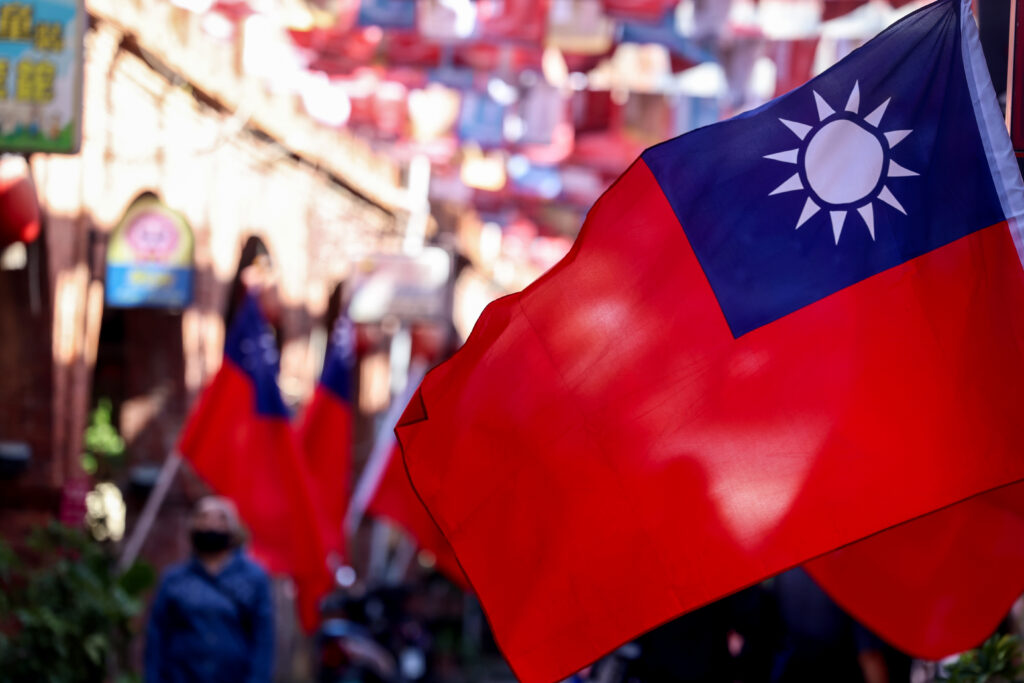
US says reached deal with Taiwan to lower tariffs, boost investments

The United States said Thursday that it has signed a deal with Taiwan to reduce tariffs on goods from the democratic island, while increasing Taiwanese semiconductor and tech companies’ investments in America.The agreement, the US Commerce Department said, “will drive a massive reshoring of America’s semiconductor sector.”Under the deal, Washington will lower tariffs on Taiwanese goods to 15 percent, down from a 20 percent “reciprocal” rate meant to address US trade deficits and practices it deems unfair.Taiwanese Premier Cho Jung-tai praised negotiators on Friday for “delivering a well-executed home run”.”These results underscore that the progress achieved so far has been hard-won,” Cho said.Sector-specific tariffs on Taiwanese auto parts, timber, lumber and wood products will also be capped at 15 percent, while generic pharmaceuticals and certain natural resources will face no “reciprocal” duties, the US Commerce Department added.Meanwhile, Taiwanese chip and tech businesses are set to make “new, direct investments totalling at least $250 billion” in the United States to build and expand capacity in areas like advanced semiconductors and artificial intelligence, the department said.Taiwan will also provide “credit guarantees of at least $250 billion to facilitate additional investment by Taiwanese enterprises,” the department said adding that this would support the growth of the US semiconductor supply chain.Taiwan’s government said the new tariff will not stack on top of existing duties, which had been a major concern for local industries.”Of course it’s good that the reciprocal tariff has been lowered to 15 percent — at least it puts us on par with our main competitors South Korea and Japan,” said Chris Wu, sales director for Taiwanese machine tool maker Litz Hitech Corp. But, given the company’s single-digit profit margins, “there is no way we can absorb the tariff” for US customers, he said. The department’s announcement did not mention names, but the deal has key implications for Taiwanese chipmaking titan TSMC, the world’s biggest contract maker of microchips used in everything from Apple phones to Nvidia’s cutting-edge AI hardware.In an interview with CNBC, Commerce Secretary Howard Lutnick said TSMC has bought land and could expand in Arizona as part of the deal.”They just bought hundreds of acres adjacent to their property. Now I’m going to let them go through it with their board and give them time,” he said.TSMC did not immediately respond to a request for comment.Taiwanese producers who invest in the United States will also be treated more favorably when it comes to future semiconductor duties, the Commerce Department said.Firms building new US chip capacity may import up to 2.5 times their planned capacity without paying sector-specific duties during construction. The quota lowers to 1.5 times once projects are completed.A day prior, US officials held off imposing wider chip tariffs, instead announcing a 25 percent duty on certain semiconductors meant to be shipped abroad — a key step in allowing Nvidia to sell advanced AI chips to China.Ryan Majerus, a former US trade official, told AFP that although chip tariffs are currently narrowly targeted, Washington “signaled there is certainly potential for it to grow.”Majerus, now a partner at law firm King & Spalding, added that the deal had parallels to those with other US partners. The European Union and Japan, for example, both also secured a 15-percent tariff rate.- ‘Self-sufficient’ -“The objective is to bring 40 percent of Taiwan’s entire supply chain and production, to domestically bring it into America,” Lutnick told CNBC.”We’re going to bring it all over, so we become self-sufficient in the capacity of building semiconductors,” he added.The agreement comes after months of negotiations.Taiwanese President Lai Ching-te had pledged to boost investments in the United States and increase defense spending as his government tried to lower US duties, and avoid a toll on its semiconductor chip exports.Taiwan is a powerhouse in the manufacturing of semiconductor chips, which are the lifeblood of the global economy, as well as other electronics.But US President Donald Trump previously accused Taiwan of stealing the US chip industry, and his administration had made clear it wants more of the critical technology made on American soil.Taiwan’s trade surplus in goods with the United States was around $74 billion in 2024. More than half of its exports to the United States are information and communications technology products — including semiconductors.
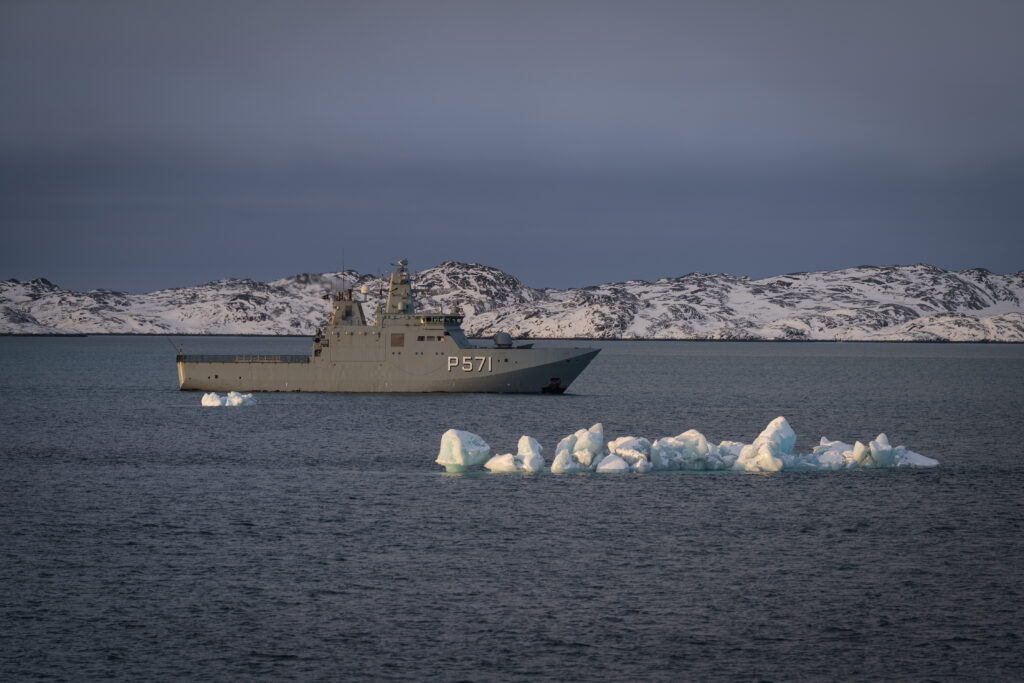
Groenland: le Danemark en désaccord avec Trump, envoi d’une mission militaire européenne

En “désaccord fondamental” avec les Etats-Unis, le Danemark a obtenu jeudi l’envoi d’une mission militaire européenne au Groenland, territoire autonome danois convoité par Donald Trump, qui a fait savoir que ce déploiement n’avait “aucun impact” sur son “objectif”.Traditionnel allié des Américains au sein de l’Otan, le Danemark a annoncé renforcer sa présence militaire au Groenland, …

Groenland: le Danemark en désaccord avec Trump, envoi d’une mission militaire européenne Read More »

Trump salue le “geste magnifique” de Machado, qui lui a offert sa médaille du Nobel de la paix

Donald Trump s’est réjoui jeudi du “geste magnifique” de l’opposante vénézuélienne Maria Corina Machado, qui lui a remis la médaille de son prix Nobel de la paix lors de leur rencontre à la Maison Blanche. “Maria m’a remis son prix Nobel de la paix pour le travail que j’ai accompli. Quel magnifique geste de respect mutuel. Merci Maria!”, a écrit sur sa plateforme Truth Social le président américain, qui convoite ouvertement cette distinction.Plus tôt dans la journée, l’opposante vénézuélienne avait annoncé avoir “offert” la médaille de son prix Nobel à Donald Trump, qui la tient à l’écart de sa stratégie pour le Venezuela.”Il le mérite. C’était un moment très émouvant”, a-t-elle déclaré lors d’un entretien à la chaîne américaine Fox News.Le Centre Nobel de la Paix, musée situé à Oslo, a opportunément souligné sur X jeudi que les lauréats pouvaient disposer comme ils ou elles l’entendaient de la médaille dorée associée à la distinction.Mais il a ajouté: “Une médaille peut changer de mains, mais pas le titre d’un lauréat”.Le déjeuner entre Donald Trump et Maria Corina Machado, présenté côté américain avant tout comme une rencontre de courtoisie, s’est déroulé sans accès de la presse.Peu après la capture de Nicolas Maduro, depuis détenu aux Etats-Unis, le président américain avait estimé que Mme Machado, qui avait quitté clandestinement le Venezuela en décembre pour recevoir le Nobel, n’était pas qualifiée pour diriger le pays.- “Il faut la démocratie” -Elle est arrivée peu après 12H00 (17H00 GMT) à la Maison Blanche et est partie aux alentours de 14H30.”Je lui ai assuré que les Vénézuéliens voulaient vivre libres, dignement, dans la justice”, a encore dit l’opposante. “Pour cela, il faut la démocratie”, a-t-elle ajouté.Donald Trump écarte pour l’instant l’organisation d’élections et préfère “dicter” jusqu’à nouvel ordre les décisions de l’équipe dirigeante restée en place à Caracas après la capture du président déchu par les forces spéciales américaines.Maria Corina Machado “est vraiment une voix remarquable et courageuse pour beaucoup de Vénézuéliens”, a commenté la porte-parole de la Maison Blanche, Karoline Leavitt, pendant que la réunion était en cours.Le président américain avait eu mercredi une “longue conversation” avec la présidente par intérim du pays d’Amérique latine, Delcy Rodriguez.Il n’a eu que des éloges pour l’ancienne vice-présidente du dirigeant déchu, une “personne formidable”, selon lui.Delcy Rodriguez a évoqué jeudi une “réforme partielle” de la loi sur le pétrole, principale ressource du pays dont Washington entend contrôler l’extraction et la commercialisation.- Vente de pétrole -Les forces américaines ont par ailleurs saisi jeudi matin un nouveau pétrolier sous sanctions dans les Caraïbes, le sixième en quelques semaines.Les Etats-Unis ont aussi finalisé une vente de pétrole vénézuélien, la première depuis leur reprise en main du secteur, pour un montant de 500 millions de dollars.Pour arriver à ses fins, Donald Trump devra aussi convaincre les multinationales pétrolières, dont certaines sont prudentes voire franchement réticentes, d’investir massivement dans les infrastructures en mauvais état du Venezuela.Le pays dispose des plus grandes réserves du monde avec 303.221 millions de barils, selon l’Organisation des pays exportateurs de pétrole (Opep), devant l’Arabie saoudite (267.200 millions) et l’Iran.Toutefois, des années de mauvaise gestion et de corruption ont fait chuter la production d’un pic de plus de 3 millions de barils/jour (bj) à un plus bas historique d’un peu plus de 350.000 bj en 2020. Le pouvoir a fait des efforts pour redresser la barre et atteindre 930.000 bj en 2025, selon l’Opep. La production avoisinerait actuellement 1,2 million bj, selon les autorités.

Venezuela’s Machado says she ‘presented’ Trump with Nobel medal

Venezuelan opposition leader Maria Corina Machado said Thursday she “presented” her Nobel Peace Prize medal to Donald Trump, in a bid to win over the US president who had sidelined her since overthrowing Nicolas Maduro.Her “wonderful gesture of mutual respect,” as Trump called it Thursday, comes after the Republican said the award should have gone to him instead — and after he refused to back Machado following the January 3 US military operation to capture Maduro.”He deserves it, and it was a very emotional moment,” Machado later told broadcaster Fox News in an interview.Despite the gesture, Trump has backed Maduro’s vice president Delcy Rodriguez over Machado — so long as she toes Washington’s line, particularly on access to Venezuela’s vast oil reserves.”I presented the president of the United States the medal of the Nobel Peace Prize,” Machado told reporters outside the US capitol, where she met with lawmakers after having lunch with Trump at the White House.Machado, 58, said it was “recognition for his unique commitment with our freedom.”It was not immediately clear if Trump actually kept the award following the closed-door meeting.The Norwegian Nobel committee says its prizes cannot be transferred.- ‘Not afraid’ – Trump had campaigned hard to win last year’s Nobel Peace Prize for what he says are his efforts to stop eight wars.Instead it went to Machado, who appeared in Oslo last month to collect her prize — following a daring escape from Venezuela by boat — and then dedicated it to Trump.Venezuela’s opposition has argued and presented evidence that Maduro stole the 2024 election from the candidate of Machado’s party, Edmundo Gonzalez Urrutia — claims supported by Washington.But Trump has said that Machado does not have enough support among Venezuelans, and opted to stick with former Maduro loyalist Rodriguez.Trump and Rodriguez had their first telephone call on Wednesday and the White House said Thursday he “likes what he’s seeing” with Venezuela’s interim leaders.Rodriguez said however that Thursday her government was “not afraid” of a diplomatic clash with Washington.”We know they are very powerful. We know they are a lethal nuclear power…we are not afraid to confront them diplomatically, through political dialogue,” said Rodriguez.Rodriguez was delivering Maduro’s state of the nation address to parliament while the toppled Venezuelan leader is in a New York jail facing drug trafficking charges.By contrast Machado, who campaigned for years to end leftist Maduro’s rule, was greeted by jubilant supporters as she left the White House.White House Press Secretary Karoline Leavitt said as the lunch started that Machado was a “remarkable and brave voice for many of the people of Venezuela.”But while Leavitt said Trump was “committed to hopefully seeing elections in Venezuela one day,” she would not give a timeline.- Sixth tanker seizure -Since Maduro’s capture, Trump has said the United States will “run” Venezuela — exerting pressure through a naval blockade and threats of further attacks — but has appeared content to let Rodriguez remain in power so long as oil keeps flowing.US forces on Thursday seized a sixth oil tanker in its campaign to control the South American country’s critical fossil fuel sector.Separately, the first US-brokered sale of Venezuelan oil, worth around $500 million, has been finalized, a US official told AFP on Thursday without identifying the buyer.Rodriguez in her speech also announced plans for legal reforms to Venezuela’s oil sector — which currently limit the involvement of foreign entities — but did not give specific details.Washington has also hailed the release of dozens of political prisoners in the past week, though hundreds remain behind bars.Meanwhile the shockwaves from the lightning US raid that toppled Maduro continue to reverberate.Cuba paid tribute on Thursday to 32 soldiers killed in the operation, some of whom had been assigned to Maduro’s protection team, in a ceremony attended by revolutionary leader Raul Castro.burs-dk/sla/jgc

As Trump turns screws, how long can Europe play nice?

One headspinning year down, three more to go. Buffeted by a US superpower turned hostile under Donald Trump, Europe is struggling to set red lines as its once-close ally attacks its laws, eggs on the far-right — and threatens its sovereignty in Greenland.Any lingering doubts over the shifting winds in Washington were laid to rest with the release of last month’s US security strategy taking most virulent aim not at China or Russia, but at the European Union.Europe had barely absorbed that shock when it was blindsided by the US president’s vow to wrest mineral-rich Greenland from EU and NATO member Denmark — by force if need be.European nations scrambled a military mission to Greenland to try to defuse Trump’s threat — but pushing back at the US president is easier said than done.”Telling Trump ‘You can’t do that,’ is not language that he understands,” summed up one EU diplomat, granted anonymity to discuss the sensitive matter.”We must appease Trump, not poke the beast.”The bottom line is that Europe’s hands are tied: the continent is surging defence spending to break its security reliance on the United States — but for now, it still needs US help to end the Ukraine war, and deter the looming Russian threat to its east.In that spirit leaders have stopped well short of calling out Trump’s threats — levied right as the Europeans held crunch talks with US envoys on locking in post-war security guarantees for Ukraine.  Instead they have reached for their now-familiar Trump playbook: avoid escalation at all costs, and work to mollify the US president — until the next time.The half-dozen Europeans with a direct line to Trump, from France’s Emmanuel Macron and Italy’s Giorgia Meloni to NATO chief Mark Rutte, can claim some successes with this strategy, namely in clawing back a seat at the table of talks to end the Ukraine war.But as Denmark’s leader Mette Frederiksen warned this week, with three quarters of Trump’s presidency left to run, there is reason to expect “the most challenging part” is yet to come.And Europe may not be able to play nice forever.- Election tests loom -Trump’s threats to Greenland are just one part of the picture.Last year’s trade standoff with Washington saw Europe strong-armed into what was widely seen as a lopsided deal.Since then Team Trump has pressed an all-out assault branding Europe’s civilisation moribund, imposing sanctions over digital rules it calls censorship, and vowing to boost political forces aligned with the president’s MAGA ideology.Strongman Viktor Orban can expect the weight of US foreign policy behind him in Hungary’s April elections, with Elon Musk’s X acting as a force multiplier for hard-right narratives.And France’s 2027 election looms as a key test.Trump’s camp has “formulated quite clearly” it would welcome a far-right win in the nuclear-armed EU heavyweight, said Tara Varma, European policy expert at the German Marshall Fund of the United States.”We have to take them at their word,” she warned, saying Europe needs to rethink tools designed to counter political meddling from regimes like Russia — to meet the new US threat.- A ‘bazooka’ for Greenland? -The spectre of MAGA-fuelled interference feeds into the critical issue of whether the EU has the mettle to keep US tech giants in check.So far the EU has stared down threats of US retaliation to keep enforcing its laws against online abuses and disinformation, with fines on X and others.But even penalties in the hundreds of millions are seen as small fry for the likes of Musk — who pours expletive-laden scorn on the EU and its rules.So what more can Europe do to try to turn the tables?Simple, say advocates of tougher action: play the economic card, as America’s biggest bilateral trade partner.When it comes to Greenland, European law professor Alberto Alemanno says the bloc’s “most tangible threat” to deter Trump is freezing the US trade deal — an idea gaining ground in the EU parliament.The tough question is where to draw the line.”Do we need the territorial integrity of the European Union to be breached? Do we need to see boots on the ground, to see the Americans entering into Greenland, in order to justify this?” asked Alemanno.Beyond that, the bloc has a powerful weapon called the anti-coercion instrument — never used before — that allows for curbing imports of goods and services and has been invoked as a way to push back over tech and trade, and now Greenland.Deploying the trade “bazooka,” as it is dubbed, is one idea being brainstormed in Brussels but still seen as a long shot.”Europe has a number of cards up its sleeve — and it’s chosen consciously or unconsciously not to use them,” said the German Marshall Fund’s Varma.But at some point, she warned, “it might have to.”