Nippon Steel finalise son rachat de US Steel, sous étroit contrôle du gouvernement américain

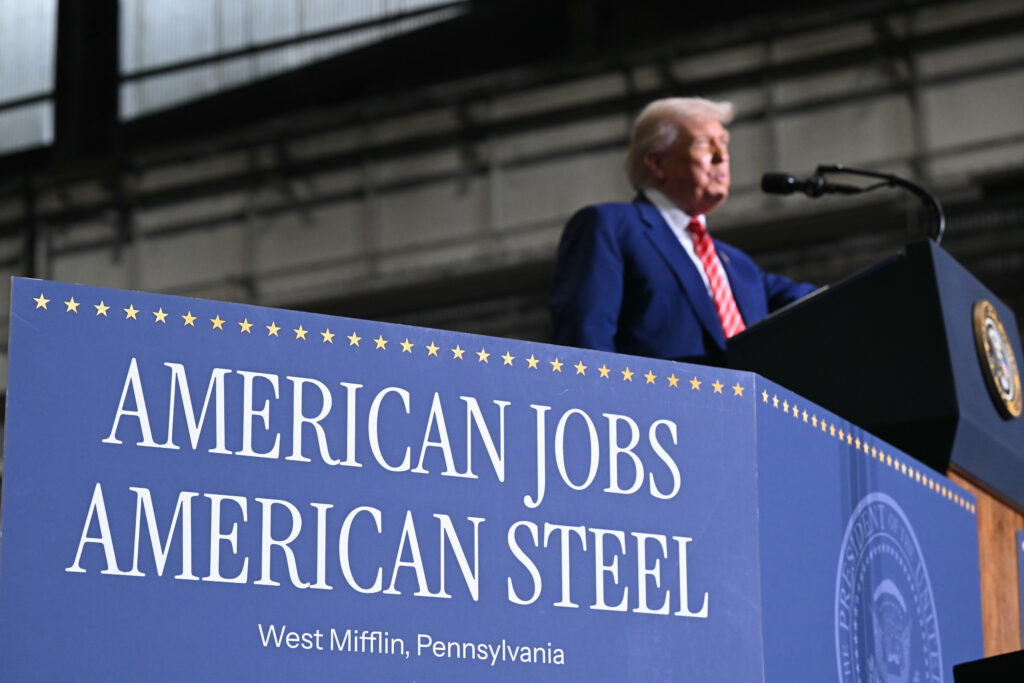
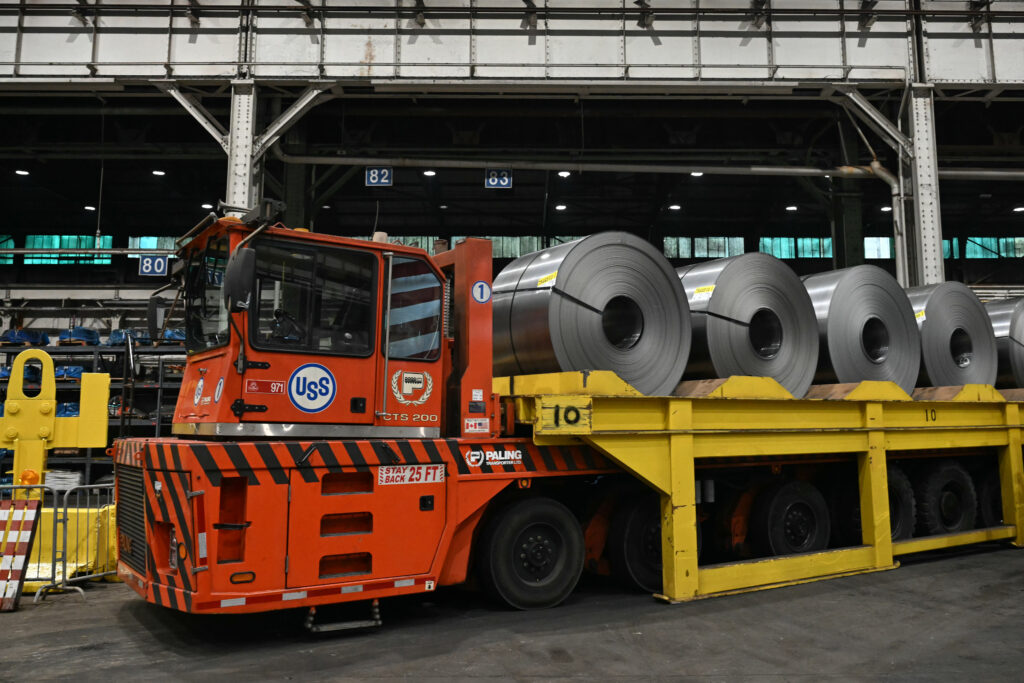
L’aciériste japonais Nippon Steel a finalisé le rachat de son rival US Steel, acceptant après des mois de blocage de Washington de strictes conditions, dont d’importants investissements aux Etats-Unis et un contrôle du gouvernement américain sur ses décisions stratégiques.Ce rachat d’US Steel pour 14,9 milliards de dollars (dont 800 millions de dette) qui crée le quatrième producteur mondial en volume, avait été annoncé dès fin 2023.Le dossier a connu moult rebondissements face à de farouches oppositions syndicale et politique qui avaient conduit le président Joe Biden à bloquer l’acquisition début janvier avant son départ de la Maison Blanche, invoquant des raisons de “sécurité nationale”.Son successeur Donald Trump s’était lui-aussi opposé au projet pendant la campagne électorale, le siège de US Steel se trouvant dans l’Etat politiquement stratégique de Pennsylvanie. Il s’est finalement résolu a lancer début avril un réexamen, avant de donner son assentiment en mai, saluant “un partenariat”. La totalité du capital du sidérurgiste américain, retiré de la Bourse, est pourtant désormais entièrement détenue par le japonais: 100% des actions ordinaires d’US Steel seront logées dans une société ad hoc, filiale à 100% de Nippon Steel North America.”Nippon Steel a racheté toutes les actions ordinaires d’US Steel”, a confirmé à l’AFP une source proche du dossier. Les résultats d’US Steel seront consolidés dans les comptes du japonais dès le troisième trimestre. -Droit de veto-Pour obtenir l’ultime feu vert de Donald Trump, Nippon Steel a dû s’engager à investir 11 milliards de dollars d’ici fin 2028, dont 2,7 milliards sont déjà en cours.L’accord de fusion prévoit également qu’une majorité des sièges du conseil d’administration d’US Steel  soient occupés par des citoyens américains, tout comme les postes-clés de sa gouvernance, PDG compris.Surtout, une “golden share”, action privilégiée perpétuelle mais n’ouvrant aucun droit aux dividendes, sera octroyée au gouvernement fédéral.Grâce à elle, certains changements seront impossibles sans le consentement du président américain: déplacement du siège d’US Steel hors des Etats-Unis, changement de nom, transfert de production ou d’emplois à l’étranger, fermeture d’usines, suspension d’activité…Alors qu’experts et actionnaires s’inquiètent de voir restreinte la marge de manoeuvre du groupe, le PDG de Nippon Steel assure que cette “golden share” n'”entravera pas les opérations envisagées” et juge “parfaitement naturelles” les préoccupations de Washington concernant un groupe aussi emblématique.”L’accord nous satisfait pleinement, il garantit la liberté de gestion et la relance de la productivité (…) Nous avons l’intention de mettre en oeuvre des mesures de revitalisation et développement dès que possible”, a indiqué le PDG de Nippon Steel Eiji Hashimoto jeudi.Bien que ce mécanisme confère au gouvernement une influence “extraordinaire”, il pourrait être difficile à appliquer en période de récession si Nippon Steel ne peut s’y conformer, abonde Sarah Bauerle Danzman, chercheuse principale à l’Atlantic Council. -Surveillance syndicale-Fondé en 1901 et comptant 22.000 employés, US Steel était en grandes difficultés financières.”Il parlait de fermer d’importantes capacités en Pennsylvanie, ce qui aurait dévasté une grande partie de l’économie locale. C’est incontestablement une victoire pour les travailleurs et l’économie américaine”, indique à l’AFP Gordon Johnson, PDG du cabinet GLJ Research. Le sénateur républicain de Pennsylvanie, Dave McCormick, a d’ailleurs remercié M. Trump, saluant une “victoire massive pour les familles ouvrières, notre économie, notre sécurité nationale et l’avenir industriel américain”.Le syndicat de la métallurgie (USW), qui avait vigoureusement combattu l’accord, promet lui de “continuer à surveiller la situation et à exiger de Nippon Steel qu’il respecte ses engagements”. L’USW a également dénoncé le “saisissant degré de pouvoir personnel (obtenu par Donald Trump) sur l’entreprise”.En volume de production, l’entité fusionnée se situera au quatrième rang mondial. Grâce au rachat, Nippon Steel atteint une capacité de production mondiale de 86 millions de tonnes, contre 63 millions actuellement. Et ce sans avoir à construire de nouvelles usines, ce “qui serait absurde” dans un marché mondial déjà miné par les excédents et la surproduction chinoise, s’est félicité jeudi Eiji Hashimoto.L’acquisition permet aussi au japonais d’échapper aux barrières douanières imposées par Washington pour satisfaire le colossal appétit des Etats-Unis, premier pays importateur d’acier.Actionnaires et agences de notation s’inquiètent néanmoins du fardeau financier résultant de l’opération pour Nippon Steel, déjà lourdement endetté. Dans l’immédiat, le marché semblait soulagé par la finalisation tant attendue: l’action Nippon Steel a gagné jusqu’à 4,6% en séance jeudi à Tokyo.

Les Bourses européennes ouvrent en baisse

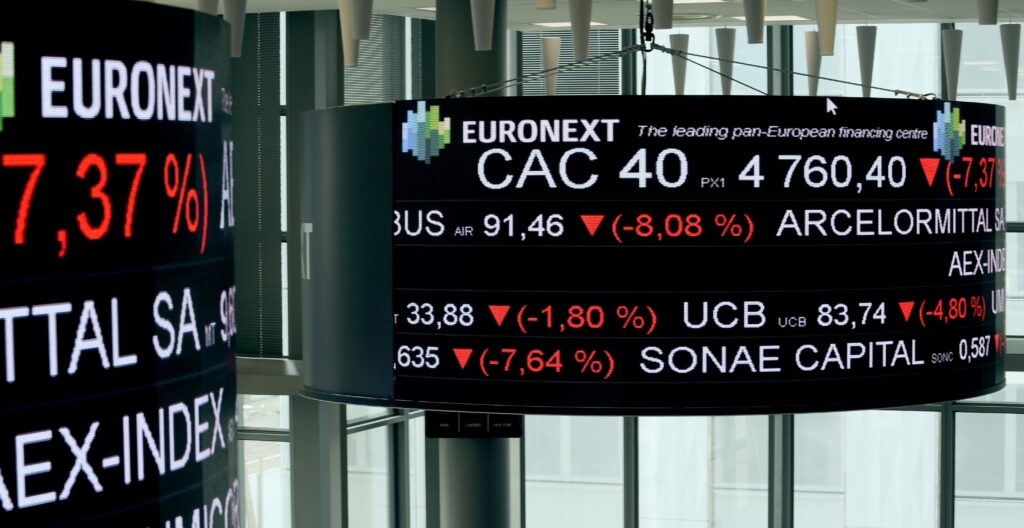
Les Bourses européennes ont ouvert en baisse jeudi, après que la Réserve fédérale a abaissé ses prévisions pour l’économie américaine, dans un marché préoccupé par la possibilité que les Etats-Unis décident de s’impliquer directement dans la guerre entre Israël et l’Iran.Dans les premiers échanges, la Bourse de Paris reculait de 0,55%, Francfort cédait 0,52% et Londres 0,35%.

Nippon Steel closes US Steel acquisition under strict conditions

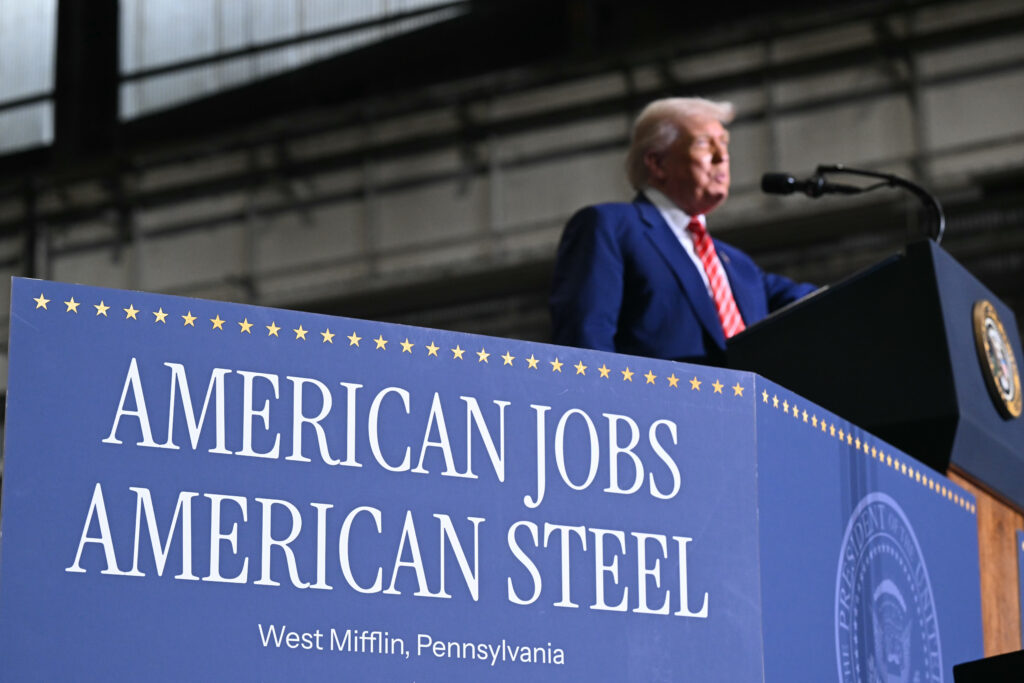
Nippon Steel completed its multi-billion-dollar acquisition of US Steel on Wednesday, granting rare veto-like power over strategic decisions to Washington with a “golden share”.The announcement concludes a saga that began in December 2023, when Nippon Steel agreed to acquire the linchpin of American steelmaking for $14.9 billion.An outright buyout sparked bipartisan political opposition, including from President Donald Trump, who railed against the proposed deal throughout the 2024 presidential campaign.But last month he announced a pivot, branding the revamped venture — blocked by former president Joe Biden on security grounds — as a “partnership” rather than a takeover.A national security agreement between the companies and the US government provides that approximately $11 billion in new investments will be made by 2028.And Washington’s non-economic golden share allows it to appoint one independent director as well as granting consent rights for proposed capital budget cuts among other powers.Nippon Steel CEO Eiji Hashimoto said Thursday in Tokyo that this “won’t hinder activities that we hope to conduct.””The agreement is fully satisfactory to us, as it ensures the management freedom… essential for business investment,” Hashimoto told reporters.”We intend to start implementing measures for revitalisation and development as soon as possible,” he said, promising not to “transfer jobs and production sites elsewhere.”It is “only natural” that the US government would be concerned about the takeover of a symbolic company, which dates back to 1901, Hashimoto added.- ‘Massive victory’ -A source close to the matter said Nippon Steel had bought all common shares of US Steel, completing the merger.The deal creates the world’s fourth biggest steelmaker — but Nippon Steel faces several big challenges, from trade tariffs to weak demand for steel products worldwide.Nippon Steel shares were up 2.4 percent Thursday afternoon, even as Tokyo’s benchmark Nikkei index slumped 0.9 percent.Pennsylvania Senator Dave McCormick, a Republican, thanked Trump on X and called the outcome “a massive victory for working families in the Mon Valley, our economy, our national security, and America’s manufacturing future!”But the United Steelworkers (USW) union, which vigorously fought the deal, vowed to “continue watching, holding Nippon to its commitments,” according to a statement.”We will use the most powerful tool workers have against global corporations: collective bargaining.”Biden had blocked the transaction in early January, shortly before leaving office.He said that placing “one of America’s largest steel producers under foreign control” could “create risk for our national security and our critical supply chains.”- Government influence -Besides agreeing to keep US Steel’s Pittsburgh headquarters and to maintain US production, the national security agreement calls for a majority of US Steel’s board to be US citizens, as are key leaders including the CEO.The “golden share” does not entitle the US government to dividends, nor does it require Washington to make investments in the company.While the structure gives the government “extraordinary” influence, the mechanism could be difficult to enforce in a downturn if Nippon fails to comply, said Atlantic Council senior fellow Sarah Bauerle Danzman.Nippon Steel’s promise of investment means more steel will be produced in the United States, leading to a likely drop in steel prices, said Gordon Johnson, CEO of GLJ Research.”US Steel was talking about closing significant capacity in Pennsylvania, which would have devastated a big swathe of that economy. So this is definitely a win for the US worker, it’s definitely a win for the US economy,” he told AFP.jmb-hih-nf-ap/kaf/fox

Nippon Steel closes US Steel acquisition under strict conditions

Nippon Steel completed its multi-billion-dollar acquisition of US Steel on Wednesday, granting rare veto-like power over strategic decisions to Washington with a “golden share”.The announcement concludes a saga that began in December 2023, when Nippon Steel agreed to acquire the linchpin of American steelmaking for $14.9 billion.An outright buyout sparked bipartisan political opposition, including from President Donald Trump, who railed against the proposed deal throughout the 2024 presidential campaign.But last month he announced a pivot, branding the revamped venture — blocked by former president Joe Biden on security grounds — as a “partnership” rather than a takeover.A national security agreement between the companies and the US government provides that approximately $11 billion in new investments will be made by 2028.And Washington’s non-economic golden share allows it to appoint one independent director as well as granting consent rights for proposed capital budget cuts among other powers.Nippon Steel CEO Eiji Hashimoto said Thursday in Tokyo that this “won’t hinder activities that we hope to conduct.””The agreement is fully satisfactory to us, as it ensures the management freedom… essential for business investment,” Hashimoto told reporters.”We intend to start implementing measures for revitalisation and development as soon as possible,” he said, promising not to “transfer jobs and production sites elsewhere.”It is “only natural” that the US government would be concerned about the takeover of a symbolic company, which dates back to 1901, Hashimoto added.- ‘Massive victory’ -A source close to the matter said Nippon Steel had bought all common shares of US Steel, completing the merger.The deal creates the world’s fourth biggest steelmaker — but Nippon Steel faces several big challenges, from trade tariffs to weak demand for steel products worldwide.Nippon Steel shares were up 2.4 percent Thursday afternoon, even as Tokyo’s benchmark Nikkei index slumped 0.9 percent.Pennsylvania Senator Dave McCormick, a Republican, thanked Trump on X and called the outcome “a massive victory for working families in the Mon Valley, our economy, our national security, and America’s manufacturing future!”But the United Steelworkers (USW) union, which vigorously fought the deal, vowed to “continue watching, holding Nippon to its commitments,” according to a statement.”We will use the most powerful tool workers have against global corporations: collective bargaining.”Biden had blocked the transaction in early January, shortly before leaving office.He said that placing “one of America’s largest steel producers under foreign control” could “create risk for our national security and our critical supply chains.”- Government influence -Besides agreeing to keep US Steel’s Pittsburgh headquarters and to maintain US production, the national security agreement calls for a majority of US Steel’s board to be US citizens, as are key leaders including the CEO.The “golden share” does not entitle the US government to dividends, nor does it require Washington to make investments in the company.While the structure gives the government “extraordinary” influence, the mechanism could be difficult to enforce in a downturn if Nippon fails to comply, said Atlantic Council senior fellow Sarah Bauerle Danzman.Nippon Steel’s promise of investment means more steel will be produced in the United States, leading to a likely drop in steel prices, said Gordon Johnson, CEO of GLJ Research.”US Steel was talking about closing significant capacity in Pennsylvania, which would have devastated a big swathe of that economy. So this is definitely a win for the US worker, it’s definitely a win for the US economy,” he told AFP.jmb-hih-nf-ap/kaf/fox

Thai PM apologises as crisis threatens to topple government

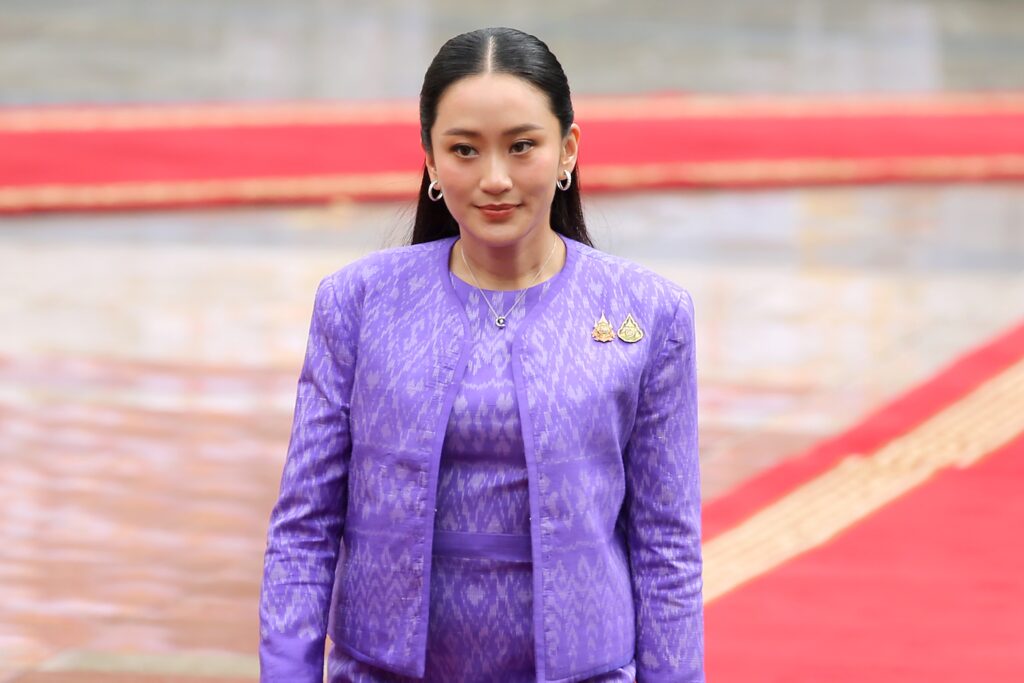
Thai Prime Minister Paetongtarn Shinawatra apologised Thursday for a leaked phone call with former Cambodian leader Hun Sen that has provoked widespread anger and put her government on the brink of collapse.Her main coalition partner has quit and calls are mounting for her to resign or announce an election, throwing the kingdom into a fresh round of political instability as it seeks to boost its spluttering economy and avoid US President Donald Trump’s swingeing trade tariffs.The conservative Bhumjaithai party pulled out on Wednesday saying Paetongtarn’s conduct in the leaked call had wounded the country and the army’s dignity.As pressure grew on Thursday Paetongtarn, the daughter of Thaksin Shinawatra — Thailand’s most influential but controversial modern politician — apologised at a press conference alongside military chiefs and senior figures from her Pheu Thai party.”I would like to apologise for the leaked audio of my conversation with a Cambodian leader which has caused public resentment,” Paetongtarn told reporters.In the call, Paetongtarn is heard discussing an ongoing border dispute with Hun Sen — who stepped down as Cambodian prime minister in 2023 after four decades but still wields considerable influence.She addresses the veteran leader as “uncle” and refers to the Thai army commander in the country’s northeast as her opponent, a remark that sparked fierce criticism on social media.The loss of Bhumjaithai’s 69 MPs left Paetongtarn with barely enough votes to scrape a majority in parliament, and a snap election looks a clear possibility — barely two years after the last one in May 2023.Two other coalition parties, the United Thai Nation and Democrat Party, will hold meetings to discuss the situation later Thursday.Paetongtarn will be hoping her apology and show of unity with the military are enough to persuade them to stay on board.Losing either would likely mean the end of Paetongtarn’s government, and either an election or a bid by other parties to stitch together a new coalition.- Resignation calls -Thailand’s military said in a statement that army chief General Pana Claewplodtook “affirms commitment to democratic principles and national sovereignty protection”.”The Chief of Army emphasised that the paramount imperative is for ‘Thai people to stand united’ in collectively defending national sovereignty,” it added.Thailand’s armed forces have long played a powerful role in the kingdom’s politics, and politicians are usually careful not to antagonise them.The kingdom has had a dozen coups since the end of absolute monarchy in 1932, and the current crisis has inevitably triggered rumours that another may be in the offing.If Paetongtarn is ousted in a coup she would be the third member of her family, after her aunt Yingluck and father Thaksin Shinawatra, to be kicked out of office by the military.The main opposition People’s Party, which won most seats in 2023 but was blocked by conservative senators from forming a government, urged Paetongtarn to call an election.”What happened yesterday was a leadership crisis that destroyed people’s trust,” People’s Party leader Natthaphong Ruengpanyawut said in a statement.The Palang Pracharath party, which led the government up to 2023 and is headed by General Prawit Wongsuwan — who supported a 2014 coup against Paetongtarn’s aunt Yingluck — said the leaked recording showed she was weak and inexperienced, incapable of managing the country’s security.Hundreds of anti-government protesters, some of them veterans of the royalist, anti-Thaksin “Yellow Shirt” movement of the late 2000s, demonstrated outside Government House Thursday demanding Paetongtarn quit.- Awkward coalition -Paetongtarn, 38, came to power in August 2024 at the head of an uneasy coalition between Pheu Thai and a group of conservative, pro-military parties whose members have spent much of the last 20 years battling against her father.Growing tensions within the coalition erupted into open warfare in the past week as Pheu Thai tried to take the interior minister job away from Bhumjaithai leader Anutin Charnvirakul.The loss of Bhumjaithai leaves Pheu Thai’s coalition with just a handful more votes than the 248 needed for a majority.The battle between the conservative pro-royal establishment and Thaksin’s political movement has dominated Thai politics for more than 20 years.Former Manchester City owner Thaksin, 75, still enjoys huge support from the rural base whose lives he transformed with populist policies in the early 2000s.But he is despised by Thailand’s powerful elites, who saw his rule as corrupt, authoritarian and socially destabilising.The current Pheu Thai-led government has already lost one prime minister, former businessman Srettha Thavisin, who was kicked out by a court order last year that brought Paetongtarn to office.

Iran strikes Israel as Trump weighs US involvement

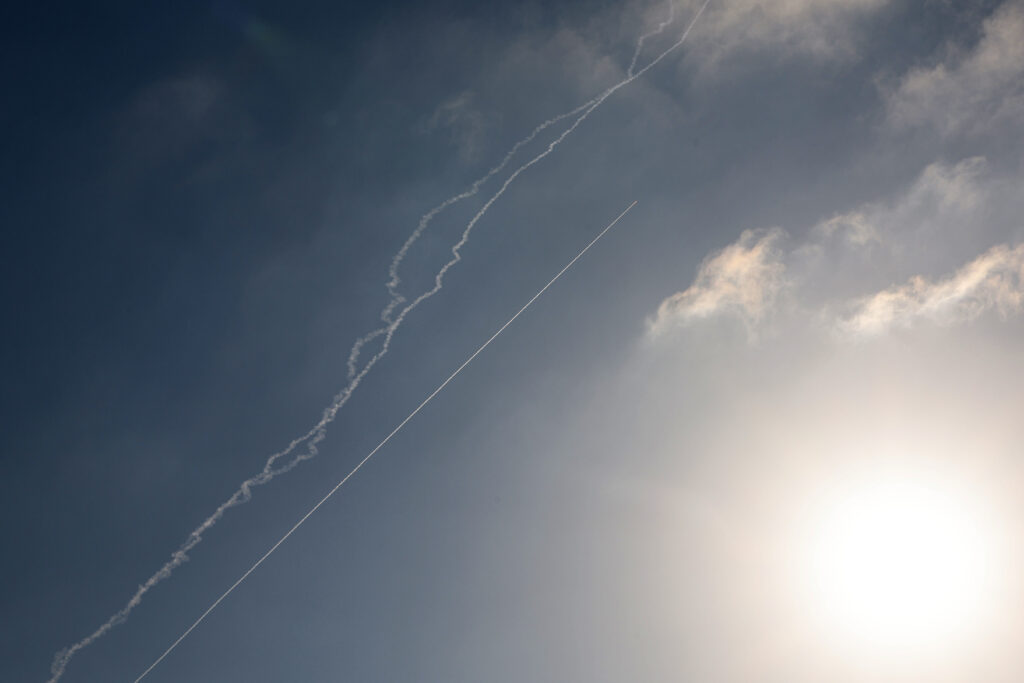
Iran launched a fresh salvo of missiles at Israel on Thursday, with a hospital reported hit, as President Donald Trump warned he was weighing US military action in the conflict.AFP journalists heard violent, sustained explosions in Jerusalem and Tel Aviv, and sirens sounded in several parts of the country to warn of incoming Iranian missiles.Shortly afterwards, the army said citizens could leave their shelters, while the foreign minister said the Soroka hospital in southern Israel’s Beersheba had suffered “extensive damage” in a strike.Israeli rescuers said at least 32 people were injured in Iran’s latest missile attack.The explosions in Jerusalem were the loudest heard by AFP journalists since the conflict began last week. The barrage came after fresh Israeli strikes on Tehran and elsewhere, and with growing speculation about whether Washington would enter the fray.Iran’s supreme leader Ayatollah Ali Khamenei meanwhile rejected Trump’s demand for an “unconditional surrender”, despite claims from the US leader that “Iran’s got a lot of trouble and they want to negotiate”.Trump has left his intentions on joining the conflict deliberately ambiguous, saying Wednesday: “I may do it, I may not do it. I mean, nobody knows what I’m going to do.””The next week is going to be very big,” he added, without further details.- ‘Never surrender’ -The White House said Trump would receive an intelligence briefing on Thursday, a US holiday. Top US diplomat Marco Rubio is set meet his British counterpart for talks expected to focus on the conflict.”I have ideas as to what to do, but I haven’t made a final (decision),” Trump said. “I like to make the final decision one second before it’s due, because things change. Especially with war.”The Wall Street Journal reported that Trump had told aides on Tuesday he had approved attack plans but was holding off to see if Iran would give up its nuclear programme.Trump told reporters that Iranian officials “want to come to the White House”, a claim denied by Tehran.The US president had favoured a diplomatic route to end Iran’s nuclear programme, seeking a deal to replace the 2015 agreement he tore up in his first term.But since Israel unleashed the campaign against Iran one week ago, Trump has stood behind the key US ally.The United States is the only country with the “bunker buster” bombs needed to destroy Iran’s Fordow nuclear plant, but US military action is deeply unpopular with parts of Trump’s base.Khamenei on Wednesday insisted Iran “will never surrender”, and called Trump’s ultimatum “unacceptable”.”America should know that any military intervention will undoubtedly result in irreparable damage,” Khamenei added.- Dozens killed -On Thursday morning, Israel said it was carrying out fresh strikes on Tehran and other parts of Iran, and warned civilians in two villages, Arak and Khondab, to leave ahead of new attacks.An Israeli military official, who asked not to be named, said Wednesday that Iran had fired around 400 ballistic missiles and 1,000 drones since the conflict began on Friday. About 20 missiles had struck civilian areas in Israel, the official added.Iranian strikes have killed at least 24 people and injured hundreds since they began, Israeli Prime Minister Benjamin Netanyahu’s office said on Monday.Iran said Sunday that Israeli strikes had killed at least 224 people, including military commanders, nuclear scientists and civilians.Both countries have not issued an updated official toll since then.Israel says its surprise air campaign is aimed at preventing Iran from acquiring nuclear weapons.Iran had been enriching uranium to 60 percent — far above the 3.67-percent limit set by the 2015 nuclear death but still short of the 90-percent threshold needed for a nuclear warhead.Israel has maintained ambiguity on its own atomic activities, but the Stockholm International Peace Research Institute says it has 90 nuclear warheads.- ‘Immediate de-escalation’ -Israel’s strikes have prompted mass evacuations and food and fuel shortages in Iran.”There are shortages of rice, bread, sugar and tea,” a 40-year-old Iranian driver told AFP at the Iraqi border crossing of Bashmakh, seeking anonymity for fear of reprisals.There was also a “near-total national internet blackout” in Iran on Wednesday, a London-based watchdog said, with Iran’s Fars news agency confirming heavier internet restrictions after initial curbs imposed last week.The military campaign has sparked calls for a return to diplomacy.Russian President Vladimir Putin said Thursday that a deal to guarantee both Israel’s security and Iran’s desire for a civilian nuclear programme was possible.”I believe it would be good for all of us together to look for ways to stop the fighting and seek ways for the participants in the conflict to find an agreement,” he told foreign journalists at a televised event.He said Iran had not asked Russia for military help.Iran’s Foreign Minister Abbas Araghchi said his country remains committed to diplomacy, noting Iran “has so far only retaliated against the Israeli regime and not those who are aiding and abetting it”.But there were lingering questions about how the conflict could evolve, with Trump telling reporters that a change in Iran’s government “could happen”, a day after he had boasted that Washington could assassinate Khamenei, but would not, “at least not for now”.burs-sah/lb/jsa

Birmanie: Aung San Suu Kyi fête ses 80 ans coupée du monde

Captive de la junte depuis le coup d’Etat de 2021, l’icône déchue de la démocratie birmane, Aung San Suu Kyi, fête ses 80 ans jeudi, dans un pays en guerre qu’elle pourrait ne plus jamais revoir libre.La prix Nobel de la paix 1991 purge une peine de 27 ans de prison, pour des accusations montées de toutes pièces par l’armée, sa bête noire de longue date, selon les groupes de défense des droits humains.L’opposition ne prévoit aucune célébration publique en Birmanie, où les activistes, ciblés par une répression féroce, ont pris le maquis pour combattre les généraux par les armes, à rebours du discours de non-violence prôné par la “Dame de Rangoun”.”Ca sera difficile de célébrer sur le coup”, a déclaré à l’AFP Kim Aris, 47 ans, l’un des deux fils d’Aung San Suu Kyi, qui réside au Royaume-Uni.”Nous avons appris à endurer ce qui se passe depuis si longtemps”, a-t-il poursuivi.Kim Aris termine jeudi, dans un parc de Londres, une opération qui l’a vu courir 80 kilomètres en 8 jours, pour récolter 80.000 messages vidéo de soutien – que sa mère, détenue dans la capitale birmane Naypyidaw, ne verra sûrement jamais.Un groupe de partisans a organisé le même jour une manifestation spontanée à l’approche de son anniversaire dans la ville de Mandalay, sous contrôle militaire, selon les médias locaux, mais aucune célébration officielle n’est prévues dans les régions contrôlées par la junte.Quelques manifestants masqués ont inondé une rue de tracts portant les messages “liberté de vivre sans peur” et “joyeux anniversaire”, tandis qu’un membre brandissait un portrait d’Aung San Suu Kyi, selon des images tremblantes partagées sur les réseaux sociaux. “Vous souvenez-vous encore de cette grande personne?” a demandé l’un des manifestants dans la vidéo, que l’AFP n’a pas pu vérifier de manière indépendante.- Conditions sommaires -Depuis le putsch, Kim Aris n’a reçu qu’une seule lettre d’Aung San Suu Kyi, il y a deux ans.”Nous n’avons aucune idée de l’état dans lequel elle se trouve”, a-t-il concédé.La junte livre au compte-goutte les informations sur sa santé.”Elle est en bonne santé”, a assuré le porte-parole Zaw Min Tun en mars, affirmant qu’elle bénéficiait d’examens médicaux réguliers.L’économiste australien Sean Turnell, proche conseiller d’Aung San Suu Kyi, est l’une des rares personnes à avoir interagi avec elle en détention. Cet expert, arrêté au moment du coup d’Etat, puis gracié en novembre 2022, a décrit les conditions sommaires du centre de détention, sans système de climatisation, où les insectes et les rongeurs troublent l’isolement des prisonniers.Kim Aris s’inquiète que sa mère souffre de problèmes cardiaques, aux os et aux dents, qui ne sont pas traités.Fille du héros de l’indépendance Aung San, assassiné en 1947 alors qu’elle n’avait que deux ans, elle surprend tout le monde en 1988 en décidant de s’impliquer dans le destin de son pays, alors en révolte contre la junte du général Ne Win.Autorisée à former la Ligue nationale pour la démocratie (LND), elle est rapidement placée en résidence surveillée.- Drame des Rohingyas -Elle est libérée en 2010, et entre au Parlement en 2012 après l’autodissolution de la junte un an plus tôt, qui a ouvert une décennie d’expérimentation démocratique inédite. En 2015, sa formation triomphe aux élections, mais les règles établies par les militaires l’empêchent d’occuper formellement le siège de présidente.Cependant, l’image de l’icône a commencé à se fendiller à l’international, après le drame des musulmans rohingyas, qualifié de “génocide” par les Etats-Unis.Des centaines de milliers de membres de cette minorité ont fui la Birmanie depuis l’été 2017 face aux exactions de l’armée birmane et de milices bouddhistes.La passivité et le manque de compassion d’Aung San Suu Kyi sont alors pointés du doigt et l’ancienne dissidente est largement désavouée par la communauté internationale. Aung San Suu Kyi est allée jusqu’à se défendre des accusations de génocide devant la Cour internationale de justice, en 2019, chose rare pour une dirigeante. Elle y avait fustigé des allégations “trompeuses et incomplètes”. Le 1er février 2021, l’armée a délogé Aung San Suu Kyi du pouvoir, en prétextant des fraudes électorales massives, sans preuves, lors des législatives de novembre 2020 largement remportées par la LND. Les militaires ont assuré qu’ils voulaient un nouveau scrutin, mais plus de quatre ans plus tard, leur promesse tarde à se concrétiser.