C.Africa’s Touadera: peace-builder or iron-fisted ruler?Tue, 23 Dec 2025 06:06:31 GMT

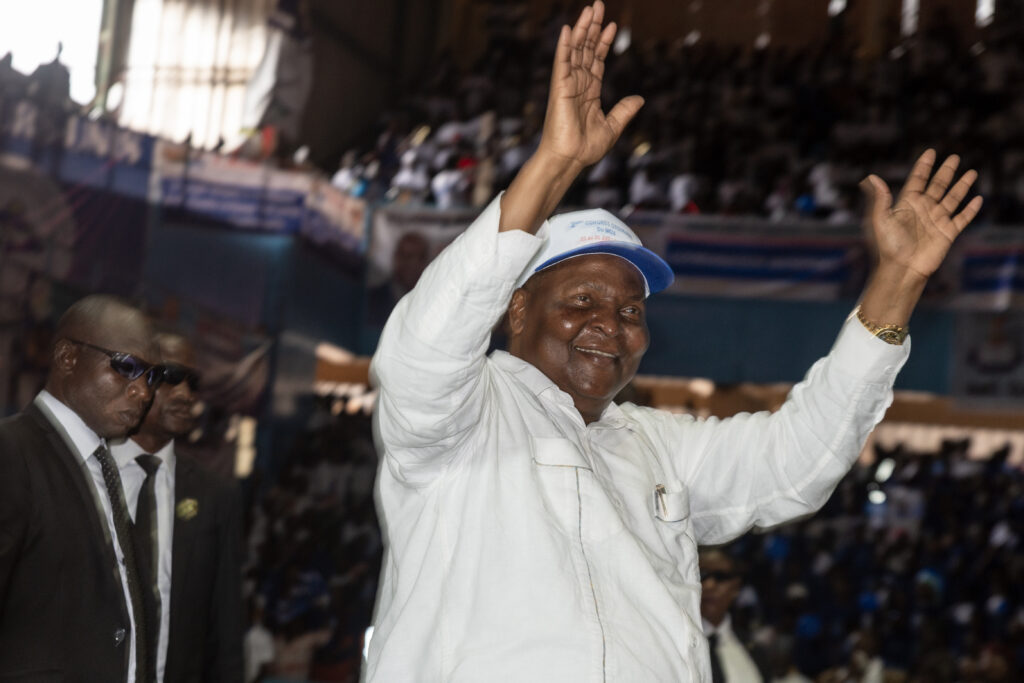
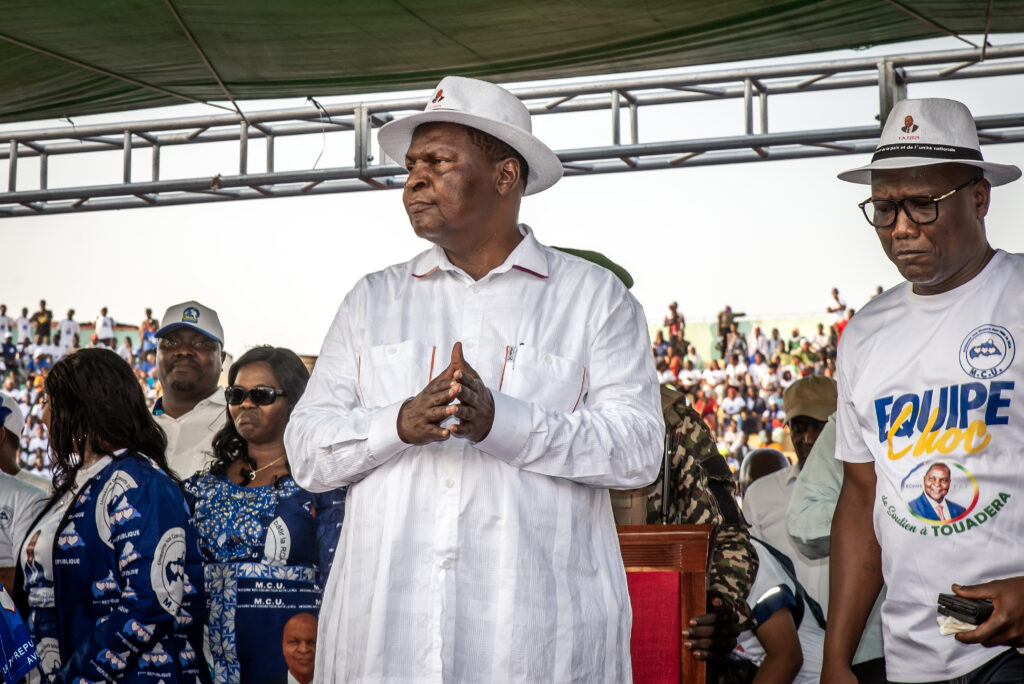
Faustin-Archange Touadera, the discrete technocrat leader of the Central African Republic (CAR) who came into power in 2016 during a civil war, is the favourite to win a third mandate in Sunday’s presidential polls.  Touadera, 68, a former prime minister with an academic background, is branded by his critics as “President Wagner” — referring to …

C.Africa’s Touadera: peace-builder or iron-fisted ruler?Tue, 23 Dec 2025 06:06:31 GMT Read More »

Touadera poised to retain presidency in Central African Republic voteTue, 23 Dec 2025 06:05:38 GMT

The Central African Republic goes to the polls on Sunday, with Faustin-Archange Touadera, who boasts to have steadied a nation long plagued by conflict, hotly tipped to remain president.Since Touadera was first elected in 2016 in the middle of a bloody civil war, the CAR has seen unrest ease despite ongoing feuds between armed groups …

Touadera poised to retain presidency in Central African Republic voteTue, 23 Dec 2025 06:05:38 GMT Read More »

Delayed US data expected to show solid growth in 3rd quarter

The US economy is expected to post another solid economic growth reading Tuesday, but the much-delayed figures likely will not settle debate on the labor market, AI and other variables.Forecasters expect Tuesday’s third-quarter gross domestic product (GDP) report to show 3.2 percent growth, according to consensus estimates from MarketWatch and Trading Economics.That represents a bit of a moderation from the 3.8 percent second-quarter gain following a first-quarter with negative growth. Tuesday’s release comes nearly two months after it was originally scheduled due to the US government shutdown.The report reflects a much improved US macroeconomic outlook compared with earlier in 2025, when worries about President Donald Trump’s aggressive trade policy changes weighed on sentiment. But by the latter stages of 2025, Trump’s administration had negotiated agreements with China and other major economies that prevented enactment of the most onerous tariffs. Meanwhile, an AI investment boom by Chat GPT-maker OpenAI, Google and other tech giants continued to pick up momentum, keeping the US stock market near record levels.Pantheon Macroeconomics estimates that US growth in the third quarter came in at a “brisk-looking” 3.5 percent that nonetheless “will overstate the economy’s true condition,” the research firm said in a note.A slowing job market and muted retail sales trends are among the factors consistent with “steady but unspectacular GDP growth” looking ahead to 2026, said Pantheon, which predicted the Federal Reserve would cut interest rates further in the new year.”The risks remain skewed towards a faster cadence or larger decline in rates,” said Pantheon, pointing to the Fed’s impending leadership change with the 2026 departure of Chair Jerome Powell.- Consumer caution? -The US central bank on December 10 announced an interest rate cut for the third straight meeting. While inflation remains well above the Fed’s two percent target, Powell and other policymakers have described the weakening employment market as the greater concern at the moment.The Fed’s median 2026 GDP forecast is 2.3 percent, up from 1.7 percent projected in 2025, according to a summary of the central bank’s outlook.White House officials have said Trump could nominate Powell’s successor in January.Polling shows declining support for Trump as consumer prices have stayed at an elevated level.But Kevin Hassett, a White House economic advisor considered the favorite for the Fed post, told Fox News over the weekend that consumers would soon see better times. “I think that the American people are going to see it in their wallets… they’re going to see that President Trump’s policies are making them better,” said Hassett, who mentioned an expected boost from higher tax refunds in 2026.But Pantheon argued the economic benefit from tax refunds may be contained, noting that “the relatively low level of consumer confidence suggests many households will save a high share of the windfall.”A December 18 outlook piece from S&P Global Ratings said AI investment would likely buoy the economy but could be offset by political uncertainty under Trump.”US trade policy uncertainty has settled down, but not US policy drama overall,” S&P said. “Statutory US tariff rates may not move much in 2026, but uncertainty around laws, norms, investment rules, military actions and geopolitics more generally will remain elevated,” S&P said. “This uncertainty will likely dampen investment and discretionary consumption.”

‘Call of Duty’ co-creator Vince Zampella killed in car crash

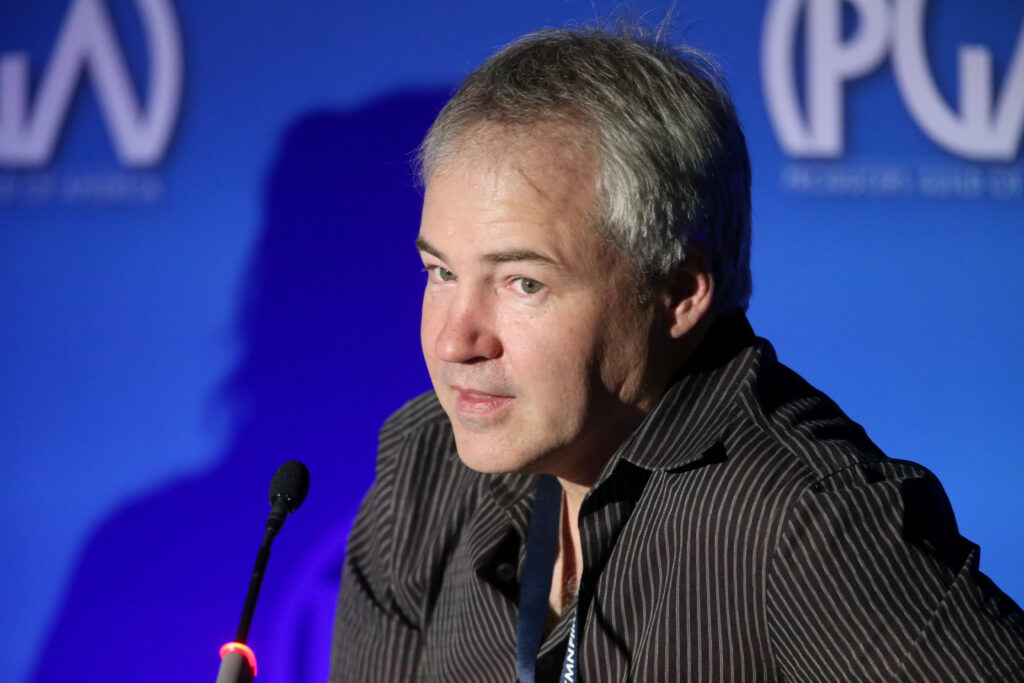
Vince Zampella, the acclaimed co-creator of video gaming juggernaut “Call of Duty,” has died in a car crash, gaming giant Electronic Arts confirmed on Monday. He was 55.The developer and executive died on Sunday while driving his Ferrari on a scenic road north of Los Angeles, according to local broadcaster NBC4. “For unknown reasons, the vehicle veered off the roadway, struck a concrete barrier, and became fully engulfed,” the California Highway Patrol said in a statement, without identifying the two victims in the crash.The CHP added that both the driver and a passenger who was ejected from the vehicle succumbed to their injuries. Witnesses posted video of the mangled cherry-red Ferarri, engulfed in flames, on the mountain road. The cause of the crash remains under investigation.His studios created some of the world’s best-selling video games, and Zampella was considered an innovator in first-person military shooter style games. This year, when his “Battlefield 6” video game set a new sales record for the franchise, Zampella expressed gratitude, saying “we never take moments like this for granted” — despite a long career of success in gaming. The mass-combat game has won over 100 million players in the past two decades, in its various iterations. And yet, that number isn’t a first. To this day, “Call of Duty” boasts more than 100 milion active players, monthly.”You have that dream of the game being popular, but I don’t think you’re ever ready for that level of success,” Zampella told gaming site IGN in a 2016 interview.- Profound, far-reaching -Zampella was best known for co-creating the “Call of Duty” franchise and founding Respawn Entertainment, the studio behind “Titanfall,” “Apex Legends,” and the “Star Wars Jedi” games.After starting out in the 1990s as a designer on shooter games, he co-founded Infinity Ward in 2002 and helped launch “Call of Duty” in 2003. Activision later acquired his studio.He left Activision under contentious circumstances and established Respawn in 2010, which Electronic Arts acquired in 2017.At EA, he eventually took charge of revitalizing the “Battlefield” franchise, cementing his reputation as one of the most influential figures in modern first-person shooter games.”This is an unimaginable loss, and our hearts are with Vince’s family, his loved ones, and all those touched by his work,” Electronic Arts said in a statement.”Vince’s influence on the video game industry was profound and far-reaching,” the company said, adding that “his work helped shape modern interactive entertainment.”A statement by Respawn, posted on the “Battlefield” X account, praised Zampella “for how he showed up every day, trusting his teams, encouraging bold ideas, and believing in Battlefield and the people building it.”Zampella “championed what he believed was right for the people behind those studios and our players because it mattered.””It was a bold, transgressive method of storytelling, of a moment in time that was political, that was violent and that was impactful,” Washington Post video game reporter Gene Park told NBC4.”He really knew how to create stories and create experiences, that really hit at the heart of human experience — whether it was terror, dread, heroism. I think he was really able to kindof encapsulate that through the designs of the video games that he made,” Park said.

La “loi spéciale” au Parlement, rendez-vous en janvier pour reparler budget

Le Parlement pose une rustine sur ses désaccords budgétaires. L’Assemblée nationale et le Sénat devraient voter tour à tour mardi la “loi spéciale” présentée par le gouvernement pour continuer de financer provisoirement l’État et les administrations.Les votes des deux assemblées ponctuent deux mois et demi de débats budgétaires qui se soldent par un échec partiel pour le Premier ministre Sébastien Lecornu.Le dialogue privilégié engagé par le Premier ministre avec le Parti socialiste a permis l’adoption du budget de la Sécurité sociale pour 2026, au prix de concessions sur les retraites et le financement de la Sécurité sociale.Mais les profondes divergences entre l’Assemblée nationale et le Sénat, tenu par des partis de droite et du centre hostiles à tout prélèvement supplémentaire, ont empêché l’approbation du second texte budgétaire, celui sur le financement de l’État.Les parlementaires se retrouveront donc en début d’année pour de nouvelles joutes sur ce texte, alors que la France est confrontée à un endettement croissant et que les discussions budgétaires n’ont pas permis de dessiner une trajectoire de réduction des déficits. “Nous devrons au plus vite, en janvier, donner un budget à la nation” qui “devra tenir l’objectif de 5% de déficit et financer nos priorités”, a déclaré Emmanuel Macron lundi soir lors du Conseil des ministres, selon la porte-parole du gouvernement Maud Bregeon.”L’Élysée commence à s’impatienter”, glissait lundi un cadre du camp gouvernemental.Rentré d’Abou Dhabi où il était allé célébrer Noël avec les troupes françaises, Emmanuel Macron a présidé lundi soir un Conseil des ministres de crise pour la présentation de la loi spéciale.- Pas de dépense nouvelle -Le texte reconduit temporairement le budget de 2025, il permet de lever l’impôt et de payer les fonctionnaires. Mais il ne comprend pas de dépenses nouvelles, y compris sur la défense, érigée en priorité face à la menace russe.Ce projet de loi spéciale devrait être voté mardi en toute fin d’après-midi par l’Assemblée nationale, puis dans la soirée par le Sénat. A l’unanimité ou presque. Avant d’être promulgué dans les jours suivants par le chef de l’État.Déjà l’an dernier, l’exécutif avait dû y avoir recours après la chute du gouvernement de Michel Barnier, renversé par une motion de censure sur le budget de la Sécurité sociale. Les deux textes budgétaires 2025 avaient finalement été approuvés au mois de février, quelques semaines après l’arrivée de François Bayrou à Matignon.Anticipant la reprise des débats en janvier, Sébastien Lecornu a reçu dimanche et lundi les forces politiques, à l’exception de la France insoumise et du Rassemblement national. Un ballet devenu habituel de responsables politiques exprimant leurs exigences et lignes rouges rue de Varenne, à l’issue de ces entretiens.Le premier secrétaire du PS Olivier Faure a appelé à un budget qui ne fasse pas “peser les efforts sur les plus modestes” et préserve les investissements en matière d’écologie.Quant à la cheffe des députés écologistes Cyrielle Châtelain, elle s’est inquiétée d’une copie budgétaire trop calquée sur les positions du Sénat. En cas de 49.3, les Ecologistes choisiront “la censure”, a-t-elle prévenu.Car on reparle de plus en plus de cet outil constitutionnel permettant de faire adopter un texte sans vote, sauf motion de censure.Écarté par le Premier ministre à la demande des socialistes, qui le jugent brutal, il est évoqué avec insistance par des responsables de droite et du bloc central qui lui demandent de revenir sur son engagement.Il faudrait alors pour le gouvernement trouver avec les socialistes des conditions de non-censure. Pour espérer enfin tourner la page du débat budgétaire.Mais pour l’heure, Sébastien Lecornu s’y refuse, jugeant le projet de budget “encore votable sans intervention du gouvernement”, selon Mme Bregeon.

La “loi spéciale” au Parlement, rendez-vous en janvier pour reparler budget

Le Parlement pose une rustine sur ses désaccords budgétaires. L’Assemblée nationale et le Sénat devraient voter tour à tour mardi la “loi spéciale” présentée par le gouvernement pour continuer de financer provisoirement l’État et les administrations.Les votes des deux assemblées ponctuent deux mois et demi de débats budgétaires qui se soldent par un échec partiel pour le Premier ministre Sébastien Lecornu.Le dialogue privilégié engagé par le Premier ministre avec le Parti socialiste a permis l’adoption du budget de la Sécurité sociale pour 2026, au prix de concessions sur les retraites et le financement de la Sécurité sociale.Mais les profondes divergences entre l’Assemblée nationale et le Sénat, tenu par des partis de droite et du centre hostiles à tout prélèvement supplémentaire, ont empêché l’approbation du second texte budgétaire, celui sur le financement de l’État.Les parlementaires se retrouveront donc en début d’année pour de nouvelles joutes sur ce texte, alors que la France est confrontée à un endettement croissant et que les discussions budgétaires n’ont pas permis de dessiner une trajectoire de réduction des déficits. “Nous devrons au plus vite, en janvier, donner un budget à la nation” qui “devra tenir l’objectif de 5% de déficit et financer nos priorités”, a déclaré Emmanuel Macron lundi soir lors du Conseil des ministres, selon la porte-parole du gouvernement Maud Bregeon.”L’Élysée commence à s’impatienter”, glissait lundi un cadre du camp gouvernemental.Rentré d’Abou Dhabi où il était allé célébrer Noël avec les troupes françaises, Emmanuel Macron a présidé lundi soir un Conseil des ministres de crise pour la présentation de la loi spéciale.- Pas de dépense nouvelle -Le texte reconduit temporairement le budget de 2025, il permet de lever l’impôt et de payer les fonctionnaires. Mais il ne comprend pas de dépenses nouvelles, y compris sur la défense, érigée en priorité face à la menace russe.Ce projet de loi spéciale devrait être voté mardi en toute fin d’après-midi par l’Assemblée nationale, puis dans la soirée par le Sénat. A l’unanimité ou presque. Avant d’être promulgué dans les jours suivants par le chef de l’État.Déjà l’an dernier, l’exécutif avait dû y avoir recours après la chute du gouvernement de Michel Barnier, renversé par une motion de censure sur le budget de la Sécurité sociale. Les deux textes budgétaires 2025 avaient finalement été approuvés au mois de février, quelques semaines après l’arrivée de François Bayrou à Matignon.Anticipant la reprise des débats en janvier, Sébastien Lecornu a reçu dimanche et lundi les forces politiques, à l’exception de la France insoumise et du Rassemblement national. Un ballet devenu habituel de responsables politiques exprimant leurs exigences et lignes rouges rue de Varenne, à l’issue de ces entretiens.Le premier secrétaire du PS Olivier Faure a appelé à un budget qui ne fasse pas “peser les efforts sur les plus modestes” et préserve les investissements en matière d’écologie.Quant à la cheffe des députés écologistes Cyrielle Châtelain, elle s’est inquiétée d’une copie budgétaire trop calquée sur les positions du Sénat. En cas de 49.3, les Ecologistes choisiront “la censure”, a-t-elle prévenu.Car on reparle de plus en plus de cet outil constitutionnel permettant de faire adopter un texte sans vote, sauf motion de censure.Écarté par le Premier ministre à la demande des socialistes, qui le jugent brutal, il est évoqué avec insistance par des responsables de droite et du bloc central qui lui demandent de revenir sur son engagement.Il faudrait alors pour le gouvernement trouver avec les socialistes des conditions de non-censure. Pour espérer enfin tourner la page du débat budgétaire.Mais pour l’heure, Sébastien Lecornu s’y refuse, jugeant le projet de budget “encore votable sans intervention du gouvernement”, selon Mme Bregeon.

Trump says would be ‘smart’ for Venezuela’s Maduro to step down

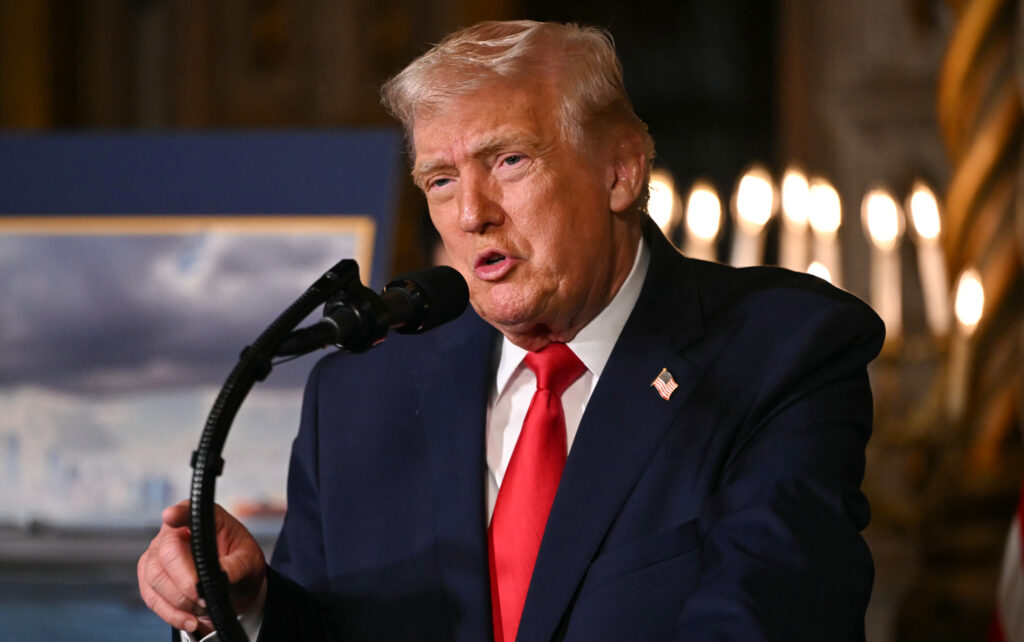
US President Donald Trump said Monday it would be “smart” for Venezuelan President Nicolas Maduro to step down, as US naval forces pressed a blockade on the South American country’s oil wealth.Venezuela’s key ally Moscow, however, expressed its “full support” for Maduro’s government, as Washington has dialed up military operations and threats against Caracas.Asked by reporters at his Florida home if Washington’s threats were designed to force Maduro to leave office after 12 years, Trump said: “That’s up to him, what he wants to do. I think it would be smart for him to do that.”But he added: “If he wants to do something — if he plays tough, it’ll be the last time he’s ever able to play tough.”Firing back just hours later, Maduro said that Trump would be “better off” if he focused on domestic problems rather than threatening Caracas.”He would be better off in his own country on economic and social issues, and he would be better off in the world if he took care of his country’s affairs,” Maduro said in a speech broadcast on public television.The pledge from Moscow, which is embroiled in the war in Ukraine, came on the eve of a UN Security Council meeting Tuesday to discuss the mounting crisis.In a phone call, the foreign ministers of the allied nations blasted the US actions, which have included strikes on alleged drug-trafficking boats and the seizure of two oil tankers.A third ship was being pursued, a US official told AFP on Sunday.”The ministers expressed their deep concern over the escalation of Washington’s actions in the Caribbean Sea, which could have serious consequences for the region and threaten international shipping,” the Russian foreign ministry said of the call between Sergei Lavrov and Venezuelan counterpart Yvan Gil.”The Russian side reaffirmed its full support for and solidarity with the Venezuelan leadership and people in the current context,” it added in a statement. US forces have since September launched strikes on boats that Washington claims, without providing evidence, were trafficking drugs in the Caribbean and eastern Pacific Ocean.More than 100 people have been killed — some of them fishermen, according to their families and governments.The latest strike hit a “low-profile vessel” in the eastern Pacific Ocean, killing one occupant, the US military said on Monday.Last week, Trump also announced a blockade of “sanctioned oil vessels” sailing to and from Venezuela.Trump claims Caracas is using oil money to finance “drug terrorism, human trafficking, murder and kidnapping.”Caracas, in turn, fears Washington is seeking regime change, and has accused Washington of “international piracy.”Moscow’s statement said Lavrov and Gil agreed in their call to “coordinate their actions on the international stage, particularly at the UN.”Russia and China, another Venezuela ally, backed Caracas’s request for a UNSC meeting to discuss what it called “the ongoing US aggression.”- Russia’s ‘hands full’ -On Telegram, Venezuela’s Gil said he and Lavrov had discussed “the aggressions and flagrant violations of international law being perpetrated in the Caribbean: attacks on vessels, extrajudicial executions, and illicit acts of piracy carried out by the United States government.”Gil said Lavrov had affirmed Moscow’s “full support in the face of hostilities against our country.”Last week, US Secretary of State Marco Rubio brushed aside Moscow’s stated support for Caracas.Washington, he said, was “not concerned about an escalation with Russia with regards to Venezuela” as “they have their hands full in Ukraine.”US-Russia relations have soured in recent weeks as Trump has voiced frustration with Moscow over the lack of a resolution to the Ukraine war.Gil on Monday also read a letter on state TV, signed by Maduro and addressed to UN member nations, warning the US blockade “will affect the supply of oil and energy” globally.