Japanese company aborts Moon mission after assumed crash-landing

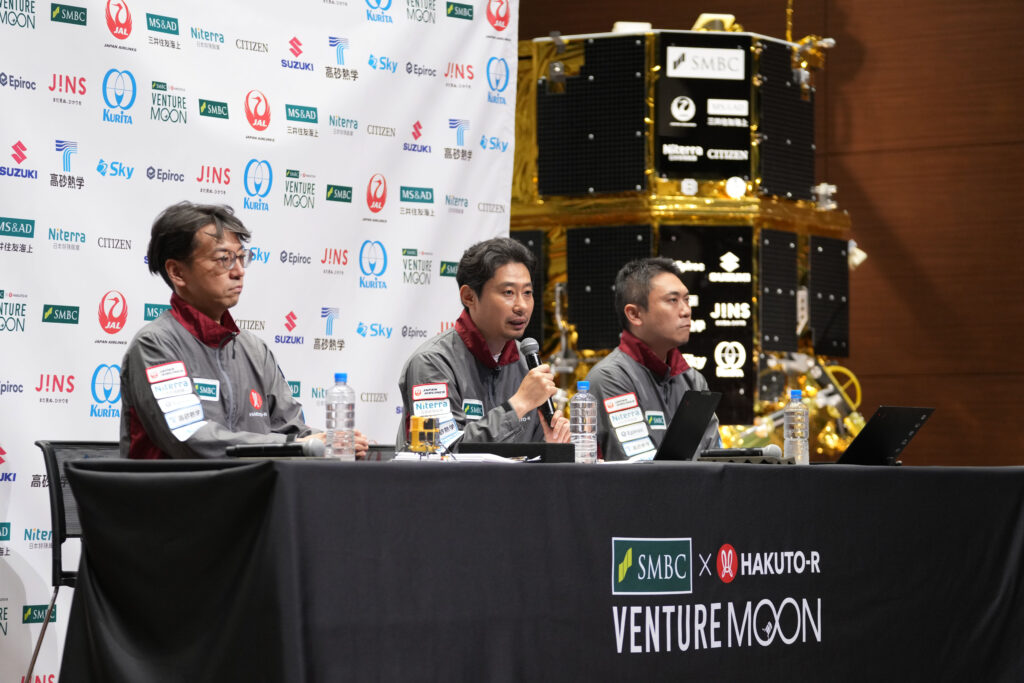
Japan’s hopes of achieving its first soft touchdown on the Moon by a private company were dashed Friday when the mission was aborted after an assumed crash-landing, the startup said.Tokyo-based ispace had hoped to make history as only the third private firm — and the first outside the United States — to achieve a controlled arrival on the lunar surface.But “based on the currently available data… it is currently assumed that the lander likely performed a hard landing”, the startup said.”It is unlikely that communication with the lander will be restored” so “it has been decided to conclude the mission”, ispace said in a statement.The failure comes two years after a prior mission ended in a crash.The company’s unmanned Resilience spacecraft began its daunting final descent and “successfully fired its main engine as planned to begin deceleration”, ispace said Friday.Mission control confirmed that the lander’s positioning was “nearly vertical” — but contact was then lost, with the mood on a livestream from mission control turning sombre.Technical problems meant “the lander was unable to decelerate sufficiently to reach the required speed for the planned lunar landing”, ispace said.- High-profile payloads -To date, only five nations have achieved soft lunar landings: the Soviet Union, the United States, China, India, and most recently Japan.Now, private companies are joining the race, promising cheaper and more frequent access to space.On board the Resilience lander were several high-profile payloads.They included Tenacious, a Luxembourg-built micro rover; a water electrolyser to split molecules into hydrogen and oxygen; a food production experiment; and a deep-space radiation probe.The rover also carried “Moonhouse” — a small model home designed by Swedish artist Mikael Genberg.”I take the fact that the second attempt failed to land seriously,” CEO Takeshi Hakamada told reporters.”But the most important thing is to use this result” for future missions, he said, describing a “strong will to move on, although we have to carefully analyse what happened”.Last year, Houston-based Intuitive Machines became the first private enterprise to reach the Moon.Though its uncrewed lander touched down at an awkward angle, it still managed to complete tests and transmit photos.Then in March this year, Firefly Aerospace’s Blue Ghost — launched on the same SpaceX rocket as ispace’s Resilience — aced its lunar landing attempt.- Never quit -The mood ahead of Friday’s attempt had been celebratory, with a watch party also held by iSpace’s US branch in Washington.After contact was lost, announcers on an ispace livestream signed off with the message: “Never quit the lunar quest.”The mission had also aimed to collect two lunar soil samples and sell them to NASA for $5,000.Though the samples would remain on the Moon, the symbolic transaction is meant to strengthen the US stance that commercial activity — though not sovereign claims — should be allowed on celestial bodies.Landing on the Moon is highly challenging as spacecraft must rely on precisely controlled thruster burning to slow their descent over treacherous terrain.Intuitive Machines’ second attempt at a Moon landing ended in disappointment in late March.Its spacecraft Athena, designed to touch down on a spot called the Mons Mouton plateau — closer to the lunar south pole than any previous mission — tipped over and was unable to recharge its solar-powered batteries.

Court blocks Trump’s new ban on foreign students at Harvard

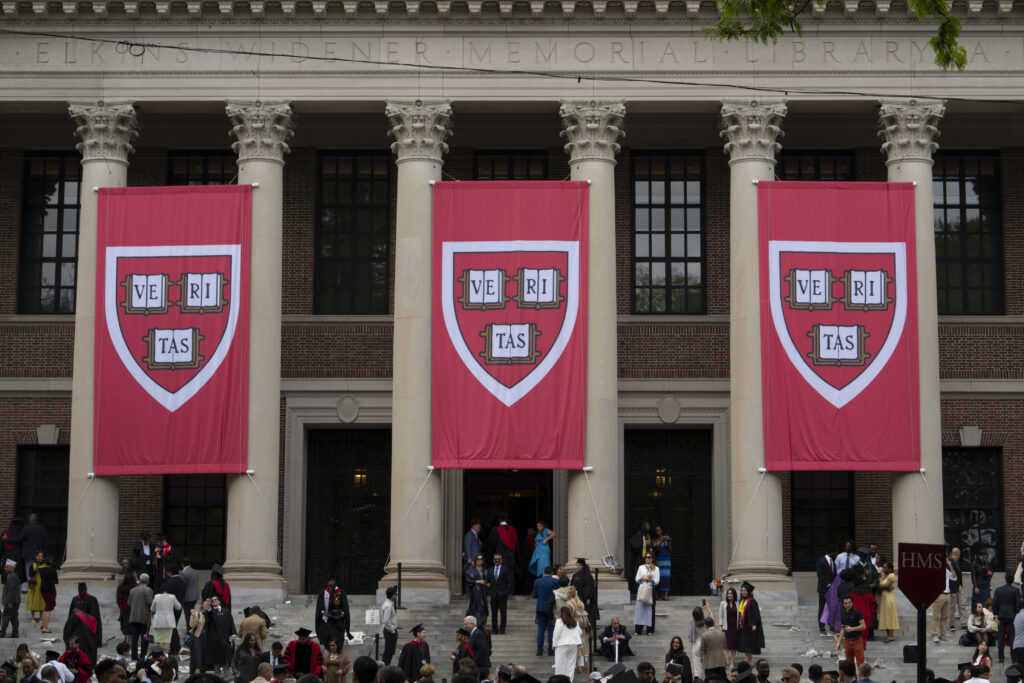
A court on Thursday put a temporary stay on Donald Trump’s latest effort to stop foreign students from enrolling at Harvard, as the US president’s battle with one of the world’s most prestigious universities intensified.A proclamation issued by the White House late Wednesday sought to bar most new international students at Harvard from entering the country, and said existing foreign enrollees risked having their visas terminated.”Harvard’s conduct has rendered it an unsuitable destination for foreign students and researchers,” the order said.Harvard quickly amended an existing complaint filed in federal court, saying: “This is not the Administration’s first attempt to sever Harvard from its international students.””(It) is part of a concerted and escalating campaign of retaliation by the government in clear retribution for Harvard’s exercising its First Amendment rights to reject the government’s demands to control Harvard’s governance, curriculum, and the ‘ideology’ of its faculty and students.”US District Judge Allison Burroughs on Thursday ruled the government cannot enforce Trump’s proclamation.Harvard had showed, she said, that without a temporary restraining order, it risked sustaining “immediate and irreparable injury before there is an opportunity to hear from all parties.”The same judge had already blocked Trump’s earlier effort to bar international students from enrolling at the storied university.- ‘Government vendetta’ -The government already cut around $3.2 billion of federal grants and contracts benefiting Harvard and pledged to exclude the Cambridge, Massachusetts, institution from any future federal funding.Harvard has been at the forefront of Trump’s campaign against top universities after it defied his calls to submit to oversight of its curriculum, staffing, student recruitment and “viewpoint diversity.” Trump has also singled out international students at Harvard, who accounted for 27 percent of total enrollment in the 2024-2025 academic year and are a major source of income.In its filing, Harvard acknowledged that Trump had the authority to bar an entire class of aliens if it was deemed to be in the public interest, but stressed that was not the case in this action.”The President’s actions thus are not undertaken to protect the ‘interests of the United States’ but instead to pursue a government vendetta against Harvard,” it said.Since returning to office Trump has targeted elite US universities which he and his allies accuse of being hotbeds of anti-Semitism, liberal bias and “woke” ideology.Trump’s education secretary also threatened on Wednesday to strip Columbia University of its accreditation.The Republican has targeted the New York Ivy League institution for allegedly ignoring harassment of Jewish students, throwing all of its federal funding into doubt.Unlike Harvard, several top institutions — including Columbia — have already bowed to far-reaching demands from the Trump administration.

Muslim pilgrims ‘stone the devil’ as hajj concludes in Saudi

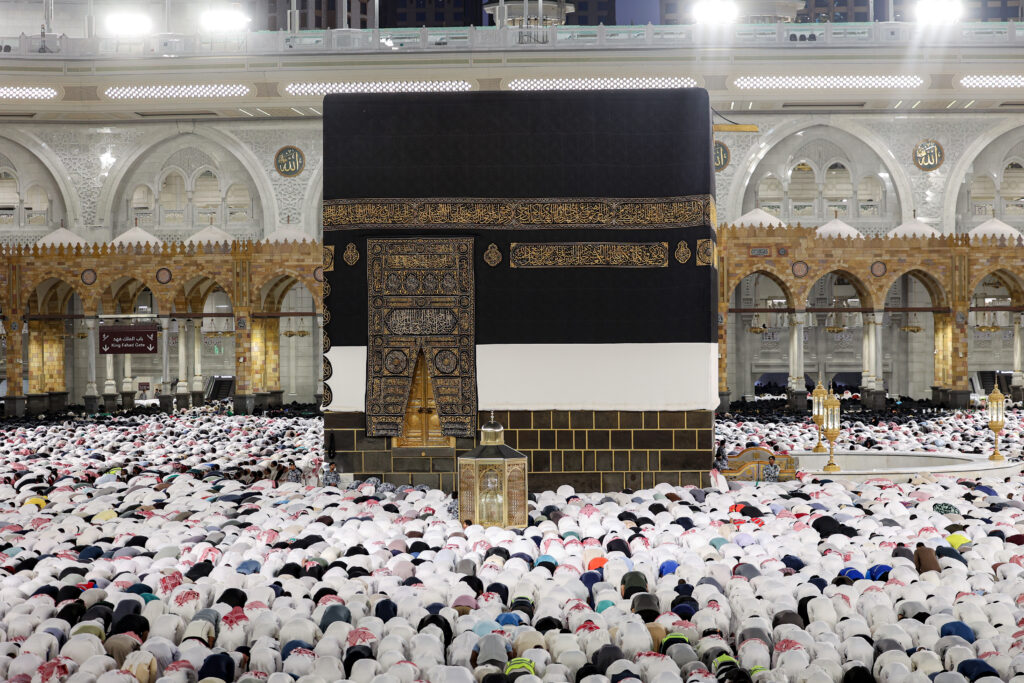
Pilgrims were set to perform the last major ritual of the hajj — the “stoning of the devil” — on Friday, as Muslims around the globe celebrated the beginning of the Eid al-Adha holiday.Starting at dawn, the more than 1.6 million Muslims taking part in the pilgrimage will throw seven stones at each of three concrete walls symbolising the devil in the Mina valley, on the outskirts of the holy city of Mecca.The ritual commemorates Abraham’s stoning of the devil at the three spots where it is said Satan tried to dissuade him from obeying God’s order to sacrifice his son.This year’s hajj saw authorities implementing a range of heat mitigation efforts alongside a wide-ranging crackdown on illicit pilgrims — resulting in noticeably thinner crowds and a heavy security presence at holy sites in Mecca and surrounding areas.The measures were aimed at preventing a fatal repeat of last year’s hajj that saw 1,301 people die in temperatures that hit 51.8 degrees Celsius (125 degrees Fahrenheit).Saudi authorities said a majority of those deaths were among pilgrims who illegally snuck into Mecca and lacked access to accommodation and other services aimed to keep pilgrims safe and protected from the searing desert heat.Hajj permits are allocated to countries on a quota basis and distributed to individuals by a lottery system.But even for those who can secure them, the high costs spur many to attempt the hajj without a permit, even though they risk arrest and deportation if caught.The stoning ritual in the Mina valley was the scene of a fatal stampede in 2015, when 2,300 people were killed in one of the deadliest hajj disasters.Saudi Arabia earns billions of dollars a year from the hajj, and the lesser pilgrimage known as umrah, undertaken at other times of the year.The pilgrimages are also a source of prestige for the Saudi monarch, who is known as the Custodian of the Two Holy Mosques of Mecca and Medina.The end of the hajj coincides with the beginning of Eid al-Adha — an annual feasting holiday marked by the slaughter of an animal — typically a goat, sheep, cow, bull or camel.

Asian markets wobble as Trump-Xi talks offset by Musk row

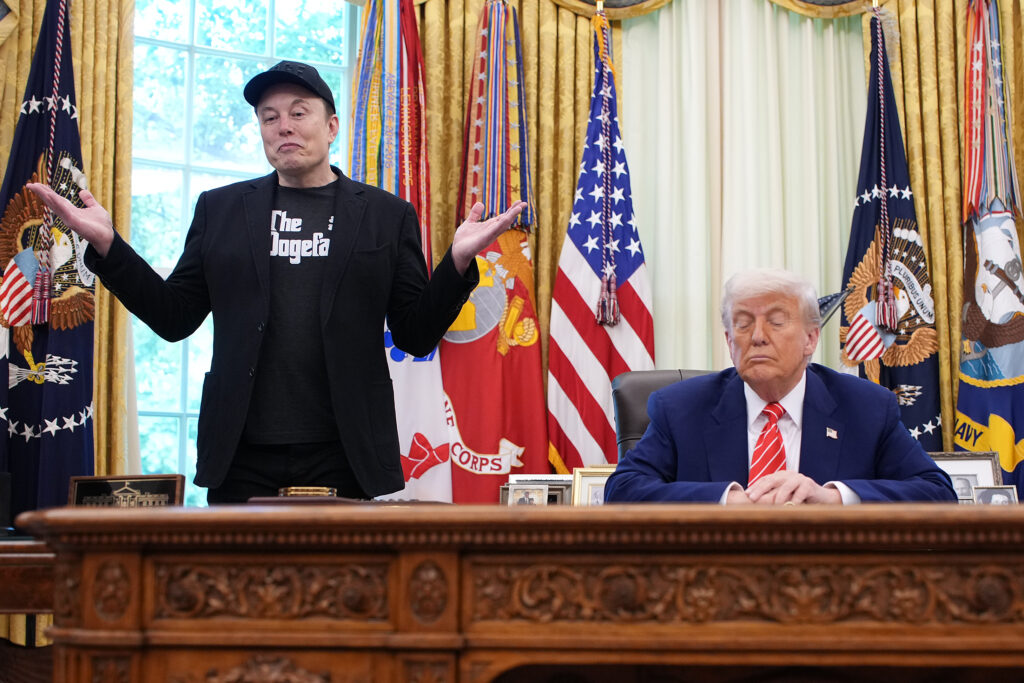
Asian markets stuttered Friday as optimism from “very positive” talks between presidents Donald Trump and Xi Jinping was wiped out by the stunning public row between the US leader and Elon Musk.The much-anticipated discussions between the heads of the world’s biggest economies fuelled hopes for an easing of tensions following the US leader’s “Liberation Day” global tariff blitz that targeted Beijing particularly hard.However, investors remained wary after an extraordinary social media row between Trump and billionaire former aide Musk that saw the two trade insults and threats, and sent Wall Street into the red.Wall Street’s three main indexes ended down as Musk’s electric vehicle company Tesla tanked more than 14 percent and the president threatened his multibillion-dollar government contracts.Asian equities fluctuated in early business, with some observers suggesting traders were positioning for what could be a volatile start to next week in light of the row and upcoming US jobs data.Hong Kong dropped after three days of strong gains, while Shanghai and Taiwan also retreated.Tokyo, Sydney, Singapore and Wellington rose.Chris Weston at Pepperstone said that while the call with Xi was “seen as a step in the right direction, (it) proved to offer nothing tangible for traders to work with and attention has quickly pushed back to the Trump-Musk war of words”.”It’s all about US nonfarm payrolls from here and is an obvious risk that Asia-based traders need to consider pre-positioning for,” he added.He said there was a risk of Trump sparking market-moving headlines over the weekend given that he is “now fired up and the risk of him saying something through the weekend that moves markets on the Monday open is elevated”. The US jobs figures, which are due later Friday, will be closely followed after a below-par reading on private hiring this week raised worries about the labour market and outlook for the world’s top economy.They come amid bets that the Federal Reserve is preparing to resume cutting interest rates from September, even as economists warn that Trump’s tariffs could reignite inflation.Stephen Innes at SPI Asset Management warned that while poor jobs figures could signal further weakness in the economy, a strong reading could deal a blow to the market.”In this upside-down market regime, strength can be weakness. A hotter-than-expected (figure) could force traders to price out Fed cuts. That’s the paradox in play—where good news on Main Street turns into bad news on Wall Street.”- Key figures at around 0230 GMT -Tokyo – Nikkei 225: UP 0.5 percent at 37,730.67 (break)Hong Kong – Hang Seng Index: DOWN 0.3 percent at 23,844.13Shanghai – Composite: DOWN 0.1 percent at 3,382.06Euro/dollar: DOWN at $1.1435 from $1.1444 on ThursdayPound/dollar: DOWN at $1.3567 from $1.3571Dollar/yen: UP at 143.84 yen from 143.58 yenEuro/pound: DOWN at 84.27 pence from 84.31 penceWest Texas Intermediate: DOWN 0.3 percent at $63.16 per barrelBrent North Sea Crude: DOWN 0.3 percent at $65.17 per barrelNew York – Dow: DOWN 0.3 percent at 42,319.74 (close)London – FTSE 100: UP 0.1 percent at 8,811.04 (close)

Syria’s Sharaa: from jihadist to statesman

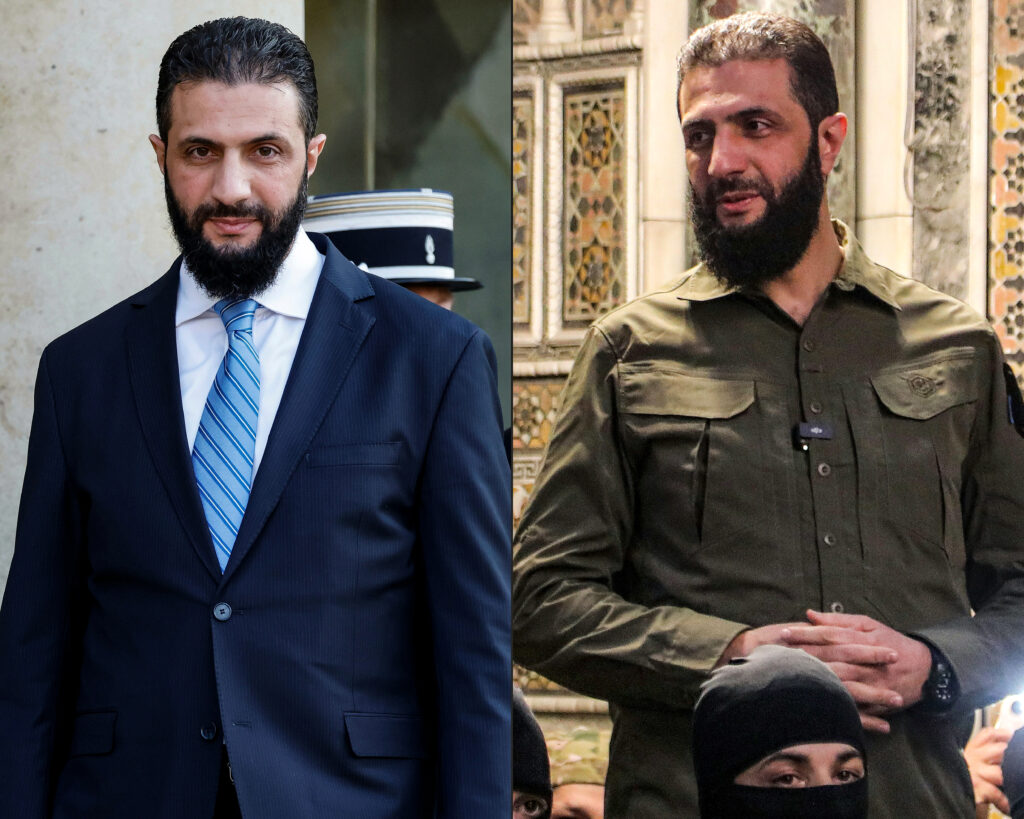
From wanted jihadist to statesman embraced by world leaders, Syria’s interim President Ahmed al-Sharaa has undergone a stunning transformation in just six months since ousting longtime strongman Bashar al-Assad.Born in 1982, Sharaa abandoned his nom de guerre Abu Mohammed al-Jolani, trimmed his thick beard and swapped fatigues for a suit and tie since his Islamist coalition of forces seized Damascus on December 8.He was proclaimed interim president the following month, and later tasked with leading his country through a five-year transitional period under a temporary constitution that experts and rights groups said concentrates power in his hands.Appearing calm and soft-spoken, Sharaa has sought to shed many of the attributes that once defined him.Gone is the shadowy persona associated with a single mugshot released at the height of the US-led war in Iraq following his capture there by American forces.Videos posted online in recent weeks have shown him, a tall man, playing basketball in a shirt and tie alongside his foreign minister.Others show him driving his car in Damascus, or eating in a working-class restaurant to cheers from passers-by.”I think he has succeeded in his transformation,” said Jerome Drevon, a specialist in Islamist militancy at the International Crisis Group.In a matter of months, Sharaa has visited Europe and been “accepted on the whole in the (Middle East) region — even by countries like the United Arab Emirates and Saudi Arabia that are not at all supporters of Islamists, much less jihadists”, he added.The reception Sharaa has received demonstrates “a real recognition of the new authorities”, he told AFP.- ‘No alternative’ -On Sharaa’s first trip to the West last month, he met French President Emmanuel Macron in Paris.Just a week later during a trip to Riyadh, he shook hands with US President Donald Trump who announced Washington would lift sanctions on Syria, a triumph for the new authorities.Trump described Sharaa as a “young, attractive guy. Tough guy. Strong past. Very strong past. Fighter.”Sharaa remains under United Nations sanctions and a travel ban, and must request an exemption for all foreign trips.Drevon said that Arab and Western countries had made a pragmatic choice by supporting the young leader.”There are still security problems, there are tensions inside the country, but I think that most foreign countries recognise that right now, there is no alternative,” he said.Sharaa has set up in what was once Assad’s presidential palace overlooking Damascus, receiving a steady stream of senior foreign officials.During a Muslim holiday around two months ago, he and his wife Latifa al-Droubi, who now appears with him in public on occasion, welcomed Syrian orphans there.While seeking to distance himself from his guerrilla past, he has sought to extract political capital from his rebel roots.Last week, he presided over a cabinet meeting, saying: “We came to power through revolution — we aren’t used to luxurious palaces.””Until two years ago, I didn’t even have an office. We used to meet in the car, on the street, under an olive tree,” he added, referring to his time in the former rebel bastion of Idlib in northwestern Syria.- ‘Pragmatic radical’ -In January, authorities announced the dissolution of all armed groups, including Sharaa’s Hayat Tahrir al-Sham, which led the lightning offensive that toppled Assad.HTS was known as the Al-Nusra Front before it broke ties with the Al-Qaeda jihadist network in 2016.Sharaa is “a pragmatic radical”, said Thomas Pierret, a specialist in political Islam.Born in Saudi Arabia, Sharaa is from a well-to-do Syrian family and was raised in Damascus’s upscale Mazzeh district. He started studying medicine but then became associated with underground Islamist circles.Following the US-led invasion of neighbouring Iraq in 2003, he and other Syrians crossed the border to join what they saw as a resistance to foreign occupation.He joined Al-Qaeda there, and was subsequently detained for five years.In March 2011, when the revolt against Assad’s rule erupted in Syria, Sharaa returned home and founded the Al-Nusra Front.A realist in his partisans’ eyes, an opportunist to his adversaries, Sharaa said in May 2015 that he had no intention of launching attacks against the West — unlike his adversaries in the Islamic State jihadist group.In 2017, Sharaa imposed a merger with HTS on rival Islamist groups in northwestern Syria, claiming control of swathes of Idlib province.HTS went on to develop a civil administration in the area, amid accusations of brutal abuses against those who dared dissent.