


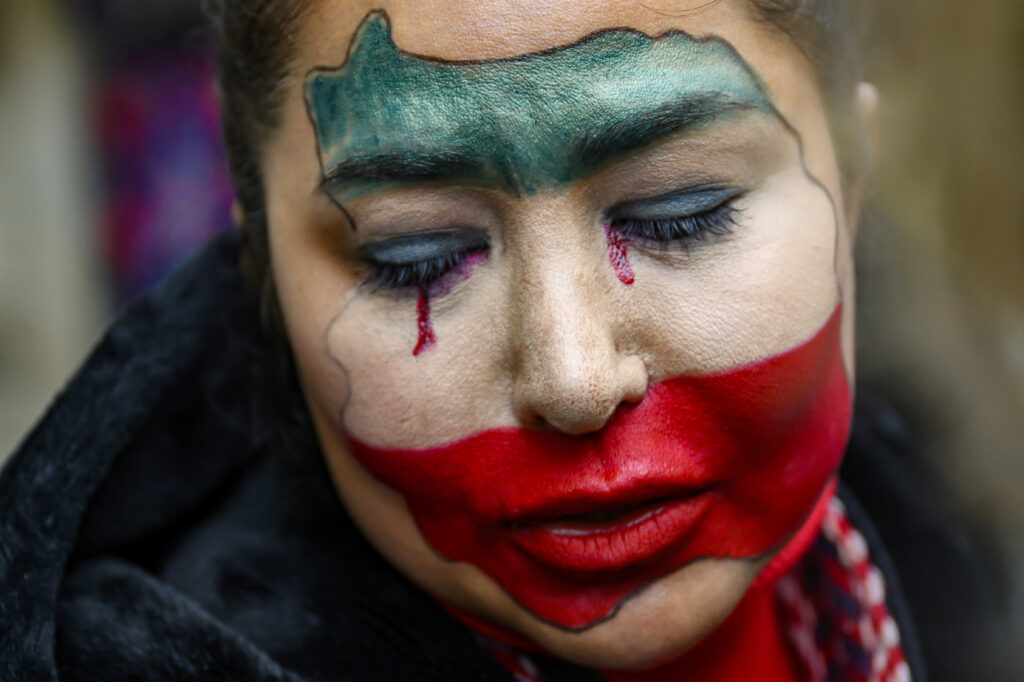
Fashion student, bodybuilder, footballer: the victims of Iran’s crackdown
Rubina was a budding fashion designer inspired by Iran’s multi-ethnic population. Rebin was an up-and-coming teen footballer. Mehdi was a champion bodybuilder who also won weightlifting titles. Erfan had just turned 18.All four, from various regions and backgrounds, were according to rights groups victims of the Iranian government’s crackdown on protests, gunned down by security forces in their prime.With the scale of the clampdown only now starting to emerge, rights groups say they have verified the killing of hundreds of protesters but fear the final toll could extend into the thousands.Iran Human Rights (IHR) director Mamood Amiry Moghaddam told AFP that protesters killed were “mostly young men”, although six women had also been identified.Nine of the 648 people it has identified and confirmed to have been killed by security forces were minors, he added.”The killings are intense all over the country where there have been protests,” he added.Dozens of members of the security forces have also been killed, according to Iranian officials, who have blamed “rioters” and Iran’s enemies abroad for turning protests initially motivated by economic grievances into days of unrest.- A budding fashion designer -Rubina Aminian, 23, was a student in textile and fashion design at the Shariati College in Tehran, a prestigious institution reserved for women.Her Instagram feed shows her proudly displaying clothes inspired by her Kurdish origins in the west of the country, but also the region of Sistan-Baluchistan in its southeast.On the evening of January 8, the first night of mass protests in which thousands of Iranians flooded into the streets, she left her college and joined the demonstrations, according to the Norway-based IHR, which analysed and verified her case.She was shot at close range from behind, with a bullet striking her head, it quoted a family source as saying, adding that relatives travelled from Kermanshah in western Iran to identify her body and were “confronted with the bodies of hundreds of young people killed in the protests”.They were able to retrieve her body after overcoming objections from officials but, on returning to Kermanshah, were not allowed to hold any mourning ceremony and were forced to bury her by the side of the road.- A teenager -The Hengaw rights group, also based in Norway, has verified both the deaths and also the backgrounds of several protesters it said were killed by security forces.Erfan Faraji, a resident of Rey, outside Tehran, was shot dead by Iranian government forces during the protests on January 7, it said. He had turned 18 just a week earlier.A source close to Faraji’s family told Hengaw his body was identified among those transferred on Saturday to the Kahrizak morgue, from where images of dozens of body bags sparked international alarm.His family collected his body on Saturday and he was buried without any public announcement.- A promising footballer -Rebin Moradi, a 17-year-old Kurdish student, originally from Salas-e Babajani in Kermanshah province but a resident of Tehran, was a member of the capital’s youth premier football league and a youth player with Saipa Club at the time of his death.He was seen as “as one of the promising young talents in Tehran’s youth football scene,” Hengaw said.Moradi was killed by Iranian government forces who shot him on Thursday, Hengaw said.A source familiar with the case told Hengaw that Moradi’s family received confirmation of his death but that they had not yet been allowed to take possession of his body.- A champion bodybuilder -Mehdi Zatparvar, 39, from Rasht in the Caspian Sea province of Gilan was a former bodybuilding champion who became a coach and held a master’s degree in sports physiology, Hengaw said.”Zatparvar began weightlifting at the age of 13 and earned national and international titles in powerlifting and weightlifting between 2011 and 2014,” it added.He was shot and killed on Friday, Hengaw said.
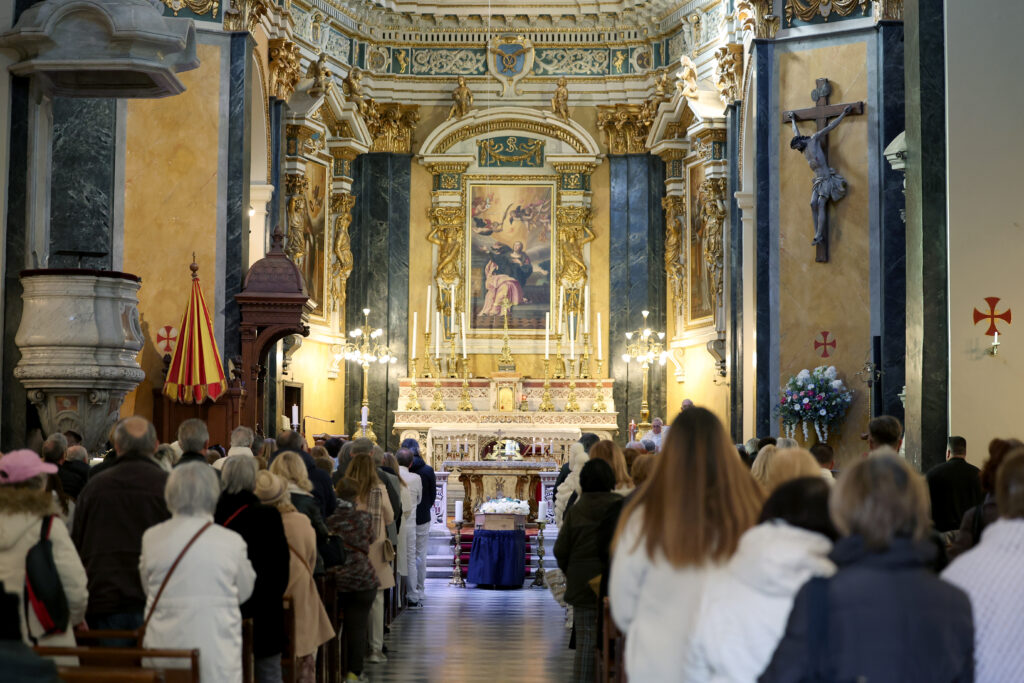
Sobriété et recueillement aux funérailles d’Evelyne Leclercq
Près de 200 admirateurs ont accompagné les proches d’Evelyne Leclercq mardi pour rendre hommage à l’ancienne animatrice de télévision lors de funérailles célébrées dans la simplicité à la cathédrale Sainte-Réparate à Nice.Restée très proche, Fabienne Egal, son ancienne complice sur le plateau de “Tournez manège”, jeu matrimonial emblématique des années 1980-1990 sur TF1, a longuement embrassé, en larmes, la fille et les petits-enfants de l’animatrice à l’issue de la cérémonie.Jean-Pierre Foucault, pilier de TF1, a fait le déplacement, à titre professionnel et personnel puisque son épouse était amie d’enfance d’Evelyne Leclercq.”Elle va nous manquer parce que c’est vrai qu’elle faisait partie de notre vie. Elle était dans tous les foyers”, a rappelé l’animateur à l’AFPTV. “A midi, il y avait son couvert. Elle pouvait entrer via la télévision, s’asseoir à table et tout le monde la regardait et l’écoutait”.Conformément aux voeux de l’animatrice, décédée le 31 décembre à Grasse (Alpes-Maritimes) à l’âge de 74 ans, beaucoup de proches et d’admirateurs sont venus vêtus de blanc, et seul un brin de mimosa ornait son cercueil. Elle avait demandé des dons à la recherche contre le cancer plutôt que des fleurs.Elle avait démarré comme speakerine pour l’ORTF Nice en 1969, avant même ses 18 ans, en direct et sans prompteur. Un choix par défaut, son père ayant refusé qu’elle devienne hôtesse de l’air.Elle a rejoint TF1 à la création de la chaîne en 1975, d’abord comme speakerine puis comme animatrice, rendue populaire par l’émission “Tournez manège”, diffusée le midi de 1985 à 1993, où des hommes et des femmes assis dans un manège et séparés par une cloison se questionnaient sans se voir et pouvaient se découvrir à la fin.En 1990, la parodie “Tournez ménages” des Inconnus avait donné un nouvel écho à l’émission.Evelyne Leclercq a aussi co-animé “Intervilles” sur TF1 et participait régulièrement aux “Grosses Têtes” sur RTL. Elle avait sorti plusieurs disques, joué dans des comédies et des vaudevilles, renoué avec la télévision dans les années 2000 sur Cash TV puis IDF1, et lancé un site de rencontres sur internet.
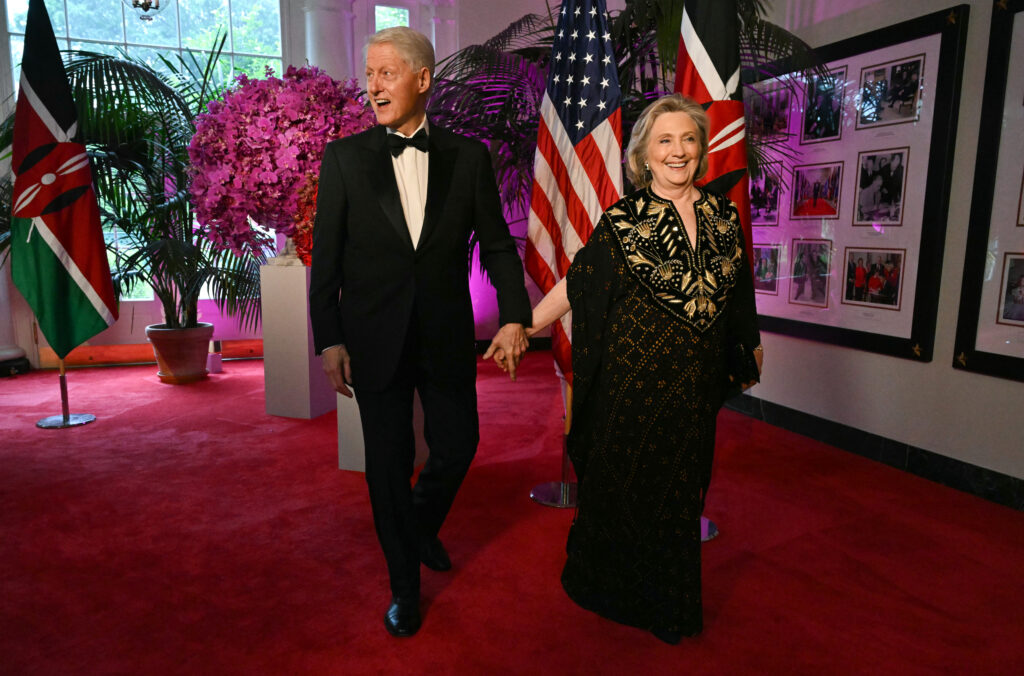
US Republicans seek Clinton contempt charge in Epstein probe
Republicans moved Tuesday to hold former US president Bill Clinton in criminal contempt after he skipped a subpoenaed deposition in the congressional investigation into sex offender Jeffrey Epstein — marking a sharp escalation in a politically charged inquiry.The Republican-led House Oversight Committee said it would begin contempt proceedings next week after the 79-year-old Democrat did not show up for closed-door testimony scheduled for Tuesday morning. The panel is also threatening similar action against former secretary of state Hillary Clinton, who is due to testify Wednesday but is also expected to be a no-show.The pressure comes as President Donald Trump faces mounting calls for transparency, with the Justice Department angering his supporters — many of whom believe Epstein was murdered in a cover-up — by releasing only a sliver of case files nearly a month past the legal deadline.”As a result of Bill Clinton not showing up for his lawful subpoena — which was voted unanimously by the committee in a bipartisan manner — we will move next week… to hold former President Clinton in contempt of Congress,” committee chairman James Comer told reporters.In an eight-page letter to Comer, the Clintons said they did not plan to appear for the depositions, describing the moment as one requiring resistance “no matter the consequences.”Invoking contempt against a former president is rare and would represent a significant step by House Republicans. Any contempt resolution would require approval by the full House before being referred to the Justice Department, which ultimately decides whether to prosecute. Criminal contempt of Congress is a misdemeanor punishable by up to one year in prison and fines of up to $100,000, though referrals are unevenly enforced.The Oversight Committee is investigating Epstein’s ties to powerful figures and how information about his crimes was handled by US authorities. – Conspiracy theories -Epstein, once a friend and associate of Trump and other high-profile figures, was convicted of sex crimes and later jailed pending trial for allegedly trafficking underage girls.The financier died in a New York jail cell in 2019 while awaiting trial, a death officially ruled a suicide but long the subject of conspiracy theories amplified by Trump’s supporters.The Clintons were subpoenaed in August alongside other current and former officials, including former FBI director James Comey. Their depositions were initially scheduled for October, then delayed twice — once after Clinton said he needed to attend a funeral. Clinton’s spokesman Angel Urena has accused Comer of singling out the former president, saying his legal team offered the same terms accepted for other witnesses. Hillary Clinton’s office has questioned why she was subpoenaed at all, saying the committee had failed to explain the relevance of her testimony.The dispute comes amid controversy over the Trump administration’s handling of Epstein-related records. Weeks after a legal deadline to release the Epstein files, the Justice Department has offered up only one percent of the total archive, angering Trump supporters who had expected sweeping disclosures.Those documents included multiple photographs of Bill Clinton from the early 2000s. The former president has acknowledged traveling on Epstein’s private plane during Clinton Foundation trips before the financier was charged with any sex crimes, but denies wrongdoing and says he cut ties years before Epstein’s 2006 arrest.No evidence has emerged implicating either Bill or Hillary Clinton in criminal conduct related to Epstein.Contempt of Congress has taken on greater weight in recent years. Two Trump allies were jailed for defying subpoenas during the investigation into the January 6, 2021 attack on the US Capitol — underscoring that defiance can carry real legal consequences.
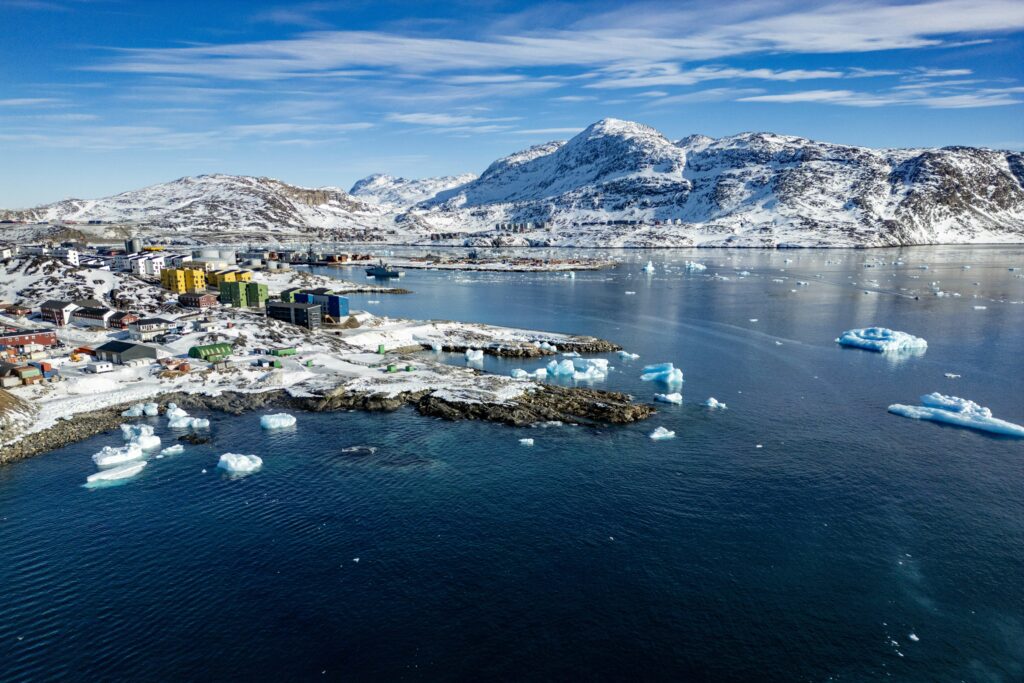
‘We choose Denmark,’ says Greenland ahead of W. House talks
Greenland would choose to remain Danish over a US takeover, its leader said Tuesday, ahead of crunch White House talks on the future of the Arctic island which President Donald Trump has repeatedly threatened.Trump has been talking up the idea of buying or annexing the autonomous territory for years, and further stoked tensions this week by saying the United States would take it “one way or the other”.”We are now facing a geopolitical crisis, and if we have to choose between the United States and Denmark here and now, we choose Denmark,” Greenland’s Prime Minister Jens-Frederik Nielsen said at a press conference.”One thing must be clear to everyone: Greenland does not want to be owned by the United States. Greenland does not want to be governed by the United States. Greenland does not want to be part of the United States.”He was speaking alongside Danish leader Mette Frederiksen, who said it had not been easy to stand up to what she slammed as “completely unacceptable pressure from our closest ally”.”However, there are many indications that the most challenging part is ahead of us,” Frederiksen said.Danish Foreign Minister Lars Lokke Rasmussen and his Greenlandic counterpart Vivian Motzfeldt are to meet US Vice President JD Vance and Secretary of State Marco Rubio on Wednesday to discuss Greenland’s future.Lokke said they had requested a meeting with Rubio, and Vance had asked to take part and host it at the White House.Vance made an uninvited visit to the island in March where he criticised Denmark for what he said was a lack of commitment to Greenland and security in the Arctic, and called it a “bad ally”.The comments enraged Copenhagen, which has been an ardent trans-Atlantic supporter and which has sent troops to fight US wars in Iraq and Afghanistan.- ‘Misunderstandings’ -For Nuuk and Copenhagen, Wednesday’s meeting at the White House is aimed at ironing out “misunderstandings”. These relate to Greenland’s defence, Chinese and Russian military presence in the Arctic, and the relationship between Greenland and Copenhagen, which together with the Faroe Islands make up the Kingdom of Denmark. “To the uninformed American listener, the ongoing (independence) talks between Denmark and Greenland might have been construed as if Greenland’s secession from Denmark was imminent,” said Greenland specialist Mikaela Engell.For these listeners, “I can understand that, in this situation, it would be better for the Americans to take hold of that strategic place”, the former Danish representative on the island told AFP.But this “discussion has been going on for years and years and it has never meant that Greenland was on its way out the door”, she stressed.Denmark’s foreign minister said the reason Copenhagen and Nuuk had requested Wednesday’s meeting was “to move the entire discussion… into a meeting room, where you can look each other in the eye and talk through these issues”. Greenland’s location is highly strategic, lying on the shortest route for missiles between Russia and the United States. It is therefore a crucial part of the US anti-missile shield.Washington has accused Copenhagen of doing little to protect Greenland from what it perceives as a growing Arctic threat from Russia and China, though analysts suggest Beijing is a small player in the region.Denmark’s government has rejected US claims, recalling that it has invested almost 90 billion kroner ($14 billion) to beef up its military presence in the Arctic.The Danish prime minister on Tuesday called for stronger cooperation with the US and NATO to improve the region’s security.She also called for NATO to defend Greenland, and said that security guarantees would be “the best defence against Chinese or Russian threats in the Arctic”.Diplomats at NATO say some Alliance members have floated the idea of launching a new mission in the region, although no concrete proposals are yet on the table.Rutte said on Monday that NATO was working on “the next steps” to bolster Arctic security.Greenland’s foreign minister and Danish Defence Minister Troels Lund Poulsen are to meet NATO’s Secretary General Mark Rutte on January 19 to discuss the issue. “We are now moving forward with the whole issue of a more permanent, larger presence in Greenland from the Danish defence forces but also with the participation of other countries,” Lund Poulsen told reporters.
Trump tells Iranians to ‘keep protesting’, says ‘help on its way’
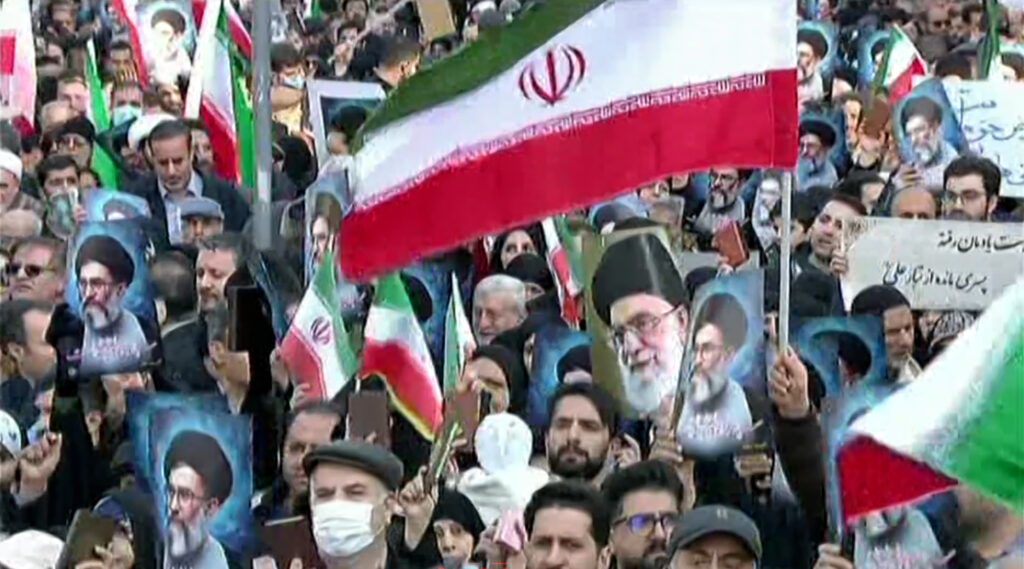
US President Donald Trump urged Iranians on Tuesday to keep protesting against the country’s theocratic leadership, telling them “help is on its way” as international outrage grows over a crackdown rights groups say has left at least hundreds dead.Iranian authorities insisted they had regained control after successive nights of mass protests nationwide since Thursday that have posed one of the biggest challenges to the clerical leadership since the 1979 Islamic revolution that ousted the shah.Rights groups accuse the government of gunning down protesters and masking the scale of the crackdown with an internet blackout that has now lasted almost five days.New videos on social media, whose location AFP verified, showed bodies lined up in the Kahrizak morgue just south of the Iranian capital, with the corpses wrapped in black bags and distraught relatives searching for loved ones.International phone links were restored on Tuesday, but only for outgoing calls, according to an AFP journalist, and the quality remains spotty, with frequent interruptions.Trump, who has repeatedly threatened Iran with military intervention, said Iranians should continue their nationwide protests, take over institutions and record the names of “killers and abusers”.”Iranian Patriots, KEEP PROTESTING,” Trump wrote on his Truth Social platform. “I have cancelled all meetings with Iranian Officials until the senseless killing of protesters STOPS. HELP IS ON ITS WAY.”It was not immediately clear what meetings he was referring to or what the nature of the help would be.European nations also signalled their anger, with France, Germany and the United Kingdom among the countries that summoned their Iranian ambassadors to protest what French Foreign Minister Jean-Noel Barrot called “state violence unquestioningly unleashed on peaceful protesters”.”The rising number of casualties in Iran is horrifying,” said EU chief Ursula von der Leyen, vowing further sanctions against those responsible.- ‘Killing must stop’ -The Norway-based NGO Iran Human Rights (IHR) said it had confirmed 648 people killed during the protests, including nine minors, but warned the death toll was likely much higher — “according to some estimates, more than 6,000”.The internet shutdown has made it “extremely difficult to independently verify these reports”, IHR said, adding that an estimated 10,000 people had been arrested. “The killing of peaceful demonstrators must stop, and the labelling of protesters as ‘terrorists’ to justify violence against them is unacceptable,” UN High Commissioner for Human Rights Volker Turk said.Iranian state media has said dozens of members of the security forces have been killed, with their funerals turning into large pro-government rallies. Authorities have declared three days of national mourning for those killed.Amir, an Iraqi computer scientist, returned to Baghdad on Monday and described dramatic scenes in Tehran.”On Thursday night, my friends and I saw protesters in Tehran’s Sarsabz neighbourhood amid a heavy military presence. The police were firing rubber bullets,” he told AFP in Iraq.- ‘Last days’ -The government on Monday sought to regain control of the streets with mass nationwide rallies that supreme leader Ayatollah Ali Khamenei hailed as proof that the protest movement was defeated, calling them a “warning” to the United States. In power since 1989 and now 86, Khamenei has faced significant challenges, most recently the 12-day war in June against Israel, which resulted in the killing of top security officials and forced him to go into hiding.”When a regime can only hold on to power through violence, then it is effectively finished,” said German Chancellor Friedrich Merz during a trip to India. “I believe that we are now witnessing the last days and weeks of this regime.”Analysts, however, have cautioned that it is premature to predict the immediate demise of the theocratic system, pointing to the repressive levers the leadership has, including the Revolutionary Guards Corps (IRGC), which are charged with safeguarding the Islamic revolution.”These protests arguably represent the most serious challenge to the Islamic republic in years, both in scale and in their increasingly explicit political demands,” Nicole Grajewski, professor at the Sciences Po Centre for International Studies in Paris, told AFP.She said it was unclear if the protests would unseat the leadership, pointing to “the sheer depth and resilience of Iran’s repressive apparatus”.Iranian authorities will press capital charges of “moharebeh”, or “waging war against God”, against some suspects arrested over recent demonstrations, prosecutors said, as alarm grows that the Islamic republic could use the death penalty to crack down on the protests.IHR highlighted the case of Erfan Soltani, 26, who was arrested last week in the Tehran satellite city of Karaj and who, according to a family source, has already been sentenced to death and is due to be executed as early as Wednesday.
Trump tells Iranians to ‘keep protesting’, says ‘help on its way’
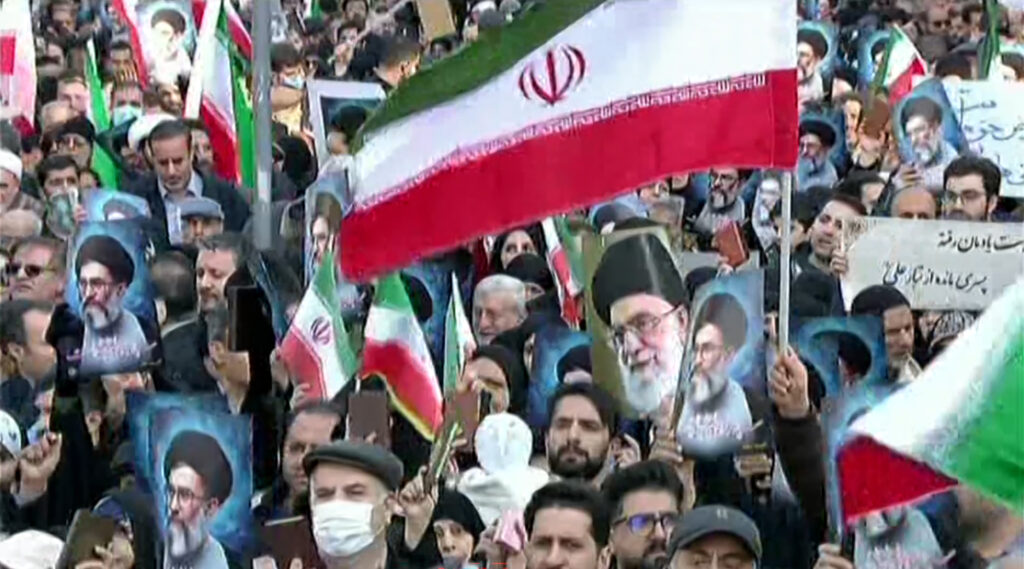
US President Donald Trump urged Iranians on Tuesday to keep protesting against the country’s theocratic leadership, telling them “help is on its way” as international outrage grows over a crackdown rights groups say has left at least hundreds dead.Iranian authorities insisted they had regained control after successive nights of mass protests nationwide since Thursday that have posed one of the biggest challenges to the clerical leadership since the 1979 Islamic revolution that ousted the shah.Rights groups accuse the government of gunning down protesters and masking the scale of the crackdown with an internet blackout that has now lasted almost five days.New videos on social media, whose location AFP verified, showed bodies lined up in the Kahrizak morgue just south of the Iranian capital, with the corpses wrapped in black bags and distraught relatives searching for loved ones.International phone links were restored on Tuesday, but only for outgoing calls, according to an AFP journalist, and the quality remains spotty, with frequent interruptions.Trump, who has repeatedly threatened Iran with military intervention, said Iranians should continue their nationwide protests, take over institutions and record the names of “killers and abusers”.”Iranian Patriots, KEEP PROTESTING,” Trump wrote on his Truth Social platform. “I have cancelled all meetings with Iranian Officials until the senseless killing of protesters STOPS. HELP IS ON ITS WAY.”It was not immediately clear what meetings he was referring to or what the nature of the help would be.European nations also signalled their anger, with France, Germany and the United Kingdom among the countries that summoned their Iranian ambassadors to protest what French Foreign Minister Jean-Noel Barrot called “state violence unquestioningly unleashed on peaceful protesters”.”The rising number of casualties in Iran is horrifying,” said EU chief Ursula von der Leyen, vowing further sanctions against those responsible.- ‘Killing must stop’ -The Norway-based NGO Iran Human Rights (IHR) said it had confirmed 648 people killed during the protests, including nine minors, but warned the death toll was likely much higher — “according to some estimates, more than 6,000”.The internet shutdown has made it “extremely difficult to independently verify these reports”, IHR said, adding that an estimated 10,000 people had been arrested. “The killing of peaceful demonstrators must stop, and the labelling of protesters as ‘terrorists’ to justify violence against them is unacceptable,” UN High Commissioner for Human Rights Volker Turk said.Iranian state media has said dozens of members of the security forces have been killed, with their funerals turning into large pro-government rallies. Authorities have declared three days of national mourning for those killed.Amir, an Iraqi computer scientist, returned to Baghdad on Monday and described dramatic scenes in Tehran.”On Thursday night, my friends and I saw protesters in Tehran’s Sarsabz neighbourhood amid a heavy military presence. The police were firing rubber bullets,” he told AFP in Iraq.- ‘Last days’ -The government on Monday sought to regain control of the streets with mass nationwide rallies that supreme leader Ayatollah Ali Khamenei hailed as proof that the protest movement was defeated, calling them a “warning” to the United States. In power since 1989 and now 86, Khamenei has faced significant challenges, most recently the 12-day war in June against Israel, which resulted in the killing of top security officials and forced him to go into hiding.”When a regime can only hold on to power through violence, then it is effectively finished,” said German Chancellor Friedrich Merz during a trip to India. “I believe that we are now witnessing the last days and weeks of this regime.”Analysts, however, have cautioned that it is premature to predict the immediate demise of the theocratic system, pointing to the repressive levers the leadership has, including the Revolutionary Guards Corps (IRGC), which are charged with safeguarding the Islamic revolution.”These protests arguably represent the most serious challenge to the Islamic republic in years, both in scale and in their increasingly explicit political demands,” Nicole Grajewski, professor at the Sciences Po Centre for International Studies in Paris, told AFP.She said it was unclear if the protests would unseat the leadership, pointing to “the sheer depth and resilience of Iran’s repressive apparatus”.Iranian authorities will press capital charges of “moharebeh”, or “waging war against God”, against some suspects arrested over recent demonstrations, prosecutors said, as alarm grows that the Islamic republic could use the death penalty to crack down on the protests.IHR highlighted the case of Erfan Soltani, 26, who was arrested last week in the Tehran satellite city of Karaj and who, according to a family source, has already been sentenced to death and is due to be executed as early as Wednesday.
Possible monnaie d’échange contre Kohler et Paris, l’Iranienne Esfandiari veut dissiper les “mensonges” à son procès
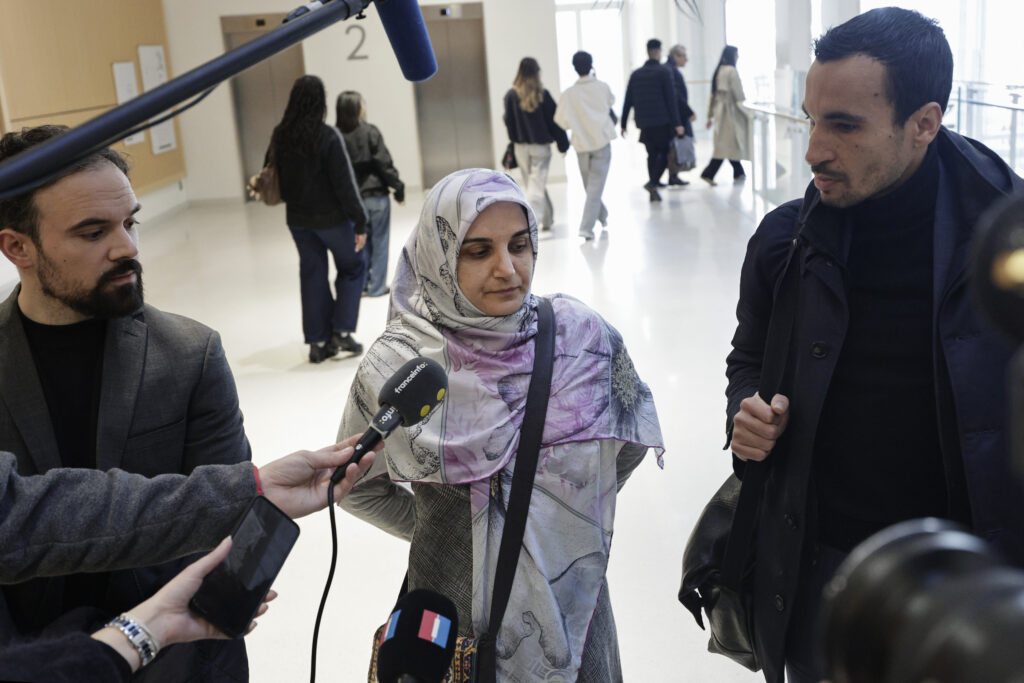
L’Iranienne Mahdieh Esfandiari, jugé à Paris pour apologie du terrorisme et possible monnaie d’échange avec Téhéran contre les Français Cécile Kohler et Jacques Paris, entend dissiper les “mensonges” lors de son procès, ouvert mardi devant le tribunal correctionnel.”Je suis ici aujourd’hui car je vais enfin pouvoir m’exprimer sur les faits, car il y a eu beaucoup d’histoires erronées me concernant dans les médias, et beaucoup de mensonges”, a déclaré à la presse juste avant l’audience la prévenue, vêtue d’une longue robe sur un jean et d’un foulard aux couleurs pastel.A ses côtés, Me Nabil Boudi, un de ses avocats, a indiqué qu’elle attendait “d’être blanchie intégralement”. Interrogé sur le lien avec l’affaire Kohler et Paris, il a dit attendre “vraiment l’issue du procès”, qui doit durer quatre jours.Le procès intervient en plein mouvement de protestation qui secoue l’Iran depuis fin décembre, et dont la répression a fait plus de 600 morts.Les autorités iraniennes souhaitent échanger Mahdieh Esfandiari, arrêtée en France en février 2025, contre Cécile Kohler, 41 ans, et Jacques Paris, 72 ans, incarcérés en Iran en mai 2022 avant d’être condamnés respectivement à 20 et 17 ans de prison, notamment pour espionnage pour Israël, puis libérés début novembre 2025, avec interdiction de quitter le pays. Ils restent pour l’heure bloqués à l’ambassade de France à Téhéran.Mahdieh Esfandiari a obtenu fin octobre, après huit mois de détention provisoire, sa libération sous contrôle judiciaire, avec interdiction de quitter le territoire français.”Cet échange entre nous et la France a été négocié. Il y a eu un accord et en effet, nous attendons que toute la procédure juridique et judiciaire se fasse dans les deux pays”, avait déclaré fin novembre le chef de la diplomatie iranienne, Abbas Araghchi.La diplomatie française a pour sa part refusé de commenter une procédure judiciaire “en cours” et n’a rien voulu dire sur l’impact potentiel sur leur libération du mouvement actuel.Devant l’Assemblée nationale, le Premier ministre Sébastien Lecornu a néanmoins justifié mardi la prudence de la France sur la contestation en Iran, critiquée par le fils de l’ancien chah et d’une partie de la classe politique française, par la situation “plus que fragile et préoccupante” des deux Français.- “Impatients de rentrer” -La soeur de Cécile Kohler, Noémie Kohler, a toutefois indiqué qu’ils allaient “bien”. “Leur sécurité est assurée”, a souligné de son côté Anne-Laure Paris, la fille de Jacques Paris. “Ils se remettent peu à peu de leur détention, mais ils sont impatients de rentrer”.L’Iranienne de 39 ans est jugée avec quatre autres personnes, dont l’essayiste d’extrême droite multicondamné Alain Soral, absent et visé par un mandat d’amener. Deux autres hommes ne se sont pas non plus présentés à l’audience.Mme Esfandiari comparaît pour apologie d’un acte de terrorisme commis en ligne, provocation directe en ligne à un acte de terrorisme (des délits passibles de sept ans d’emprisonnement et 100.000 euros d’amende), injure publique en ligne en raison de l’origine, ethnie, nation, race ou religion et association de malfaiteurs. Elle conteste les accusations.Les faits qui lui sont reprochés ont été commis à Paris et Lyon de courant 2023 jusqu’au 3 décembre 2024, notamment sur les plateformes Telegram, X, Twitch et YouTube et le site Egalité et réconciliation d’Alain Soral.Le 30 octobre 2023, le parquet de Paris avait reçu un signalement du ministre de l’Intérieur sur un compte Telegram @Axe_de_la_Résistance, faisant l’apologie de l’attaque sanglante menée par le mouvement islamiste palestinien Hamas le 7 octobre 2023 en Israël, incitant à des actes de terrorisme et injuriant la communauté juive.Selon les juges d’instruction qui ont renvoyé en procès l’Iranienne, Mahdieh Esfandiari a occupé une “place centrale dans l’organisation Axe de la Résistance” et “a secondé” Maurizio Buisson, un ancien étudiant de l’université Al-Mustafa de Qom en Iran qui en était le principal organisateur. Ce dernier est aussi assis sur le banc des prévenus.Arrivée en France en 2018, elle y a créé une entreprise de traduction et interprétariat et avait pour projet en 2025 de rentrer dans son pays.Parmi les nombreux propos qui lui sont reprochés: avoir publié la phrase “Une attaque qui fait le bonheur de milliards de gens dans le monde…” en référence aux massacres du 7-Octobre; avoir remercié “ceux qui ont soutenu la Résistance (…) Et à leur tête la République islamique d’#Iran” ou un an plus tard, avoir célébré notamment avec des émoticônes l’anniversaire de l’attaque perpétrée par le Hamas.