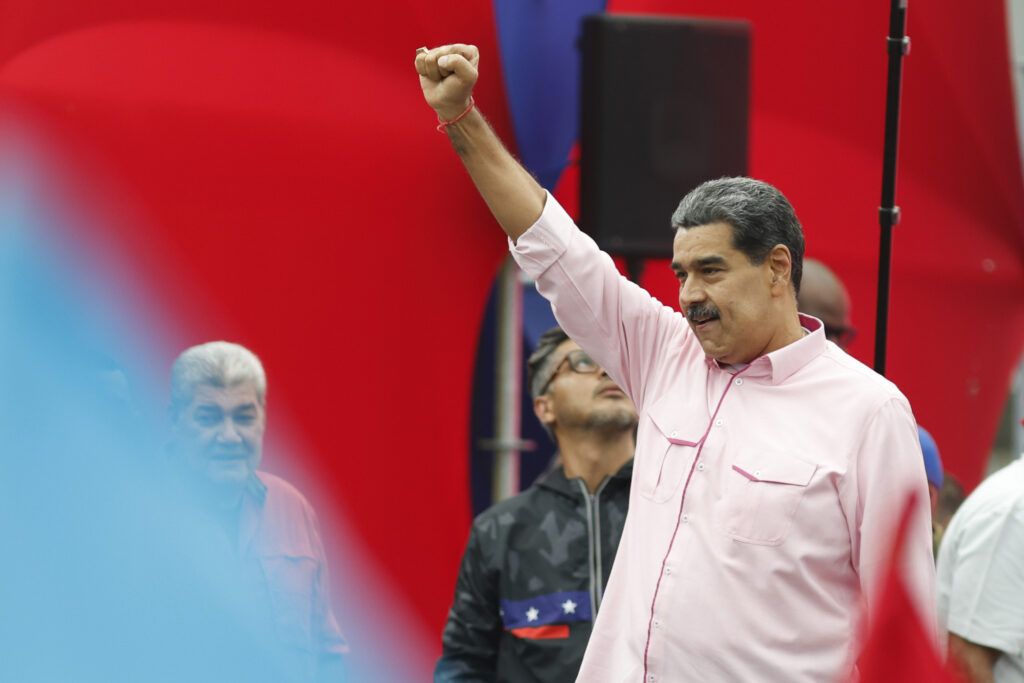
Dix mois après la réélection contestée du président Nicolas Maduro en juillet 2024, le pouvoir vénézuélien organise dimanche des élections législatives et régionales boycottées par une grande partie de l’opposition. Sans grande mobilisation.Plus de 400.000 membres des forces de l’ordre seront déployées pour le scrutin organisé de 06H00 à 18H00 locales (10h-22h GMT) avec des résultats attendus en soirée.Le pouvoir, qui dénonce régulièrement des complots réels ou imaginaires, a suspendu lundi les vols avec la Colombie, invoquant l’infiltration de “mercenaires” cherchant à “saboter” les élections. Les 21 millions d’inscrits doivent élire 285 députés de l’Assemblée et 24 gouverneurs.Particularité du scrutin: le pouvoir a réorganisé le découpage électoral pour faire élire un gouverneur et 8 députés pour l’Essequibo, région riche en pétrole que Caracas réclame au Guyana voisin, dans le cadre d’un différend centenaire.Mercredi, le président du Guyana Irfaan Ali a affirmé à l’AFP qu’il s’agisssait “d’une menace” bien que le vote n’ait lieu que dans la zone frontalière côté Venezuela. Il n’y a pas de bureaux de vote sur le territoire de 160.000 km² administré par Georgetown.”Nous devons prendre toutes les actions du Venezuela au sérieux. Bien que cela (l’élection) puisse très bien être une autre partie de leur processus public (de communication), nous prenons cela très au sérieux. Pour nous, c’est une menace, et c’est ainsi que nous la traitons”, a-t-il dit.- “Victoire écrasante” vs “farce” -Les sondages donnent une majorité absolue pour le parti de Maduro à l’Assemblée. Et selon plusieurs analystes, l’opposition n’est en mesure de remporter que deux des 24 Etats: Zulia, l’Etat pétrolier, et Nueva Sparta, l’île de Margarita. La campagne a été discrète, tant du côté de l’opposition que du pouvoir.”Le Venezuela en plein respect des droits constitutionnels de notre peuple” organise des élections avec “54 partis, plus de 6.500 candidats… Il y en a pour tous les goûts”, se targue M. Maduro, qui promet une “victoire écrasante” de son camp.La cheffe de l’opposition Maria Corina Machado appelle pour sa part à boycotter le scrutin, “une énorme farce que le régime veut monter pour enterrer sa défaite (à la présidentielle) du 28 juillet. Nous allons (…) ratifier cette défaite avec l’absence totale, (…) en laissant tous les bureaux de vote vides”, a-t-elle dit récemment à l’AFP.Au Venezuela, “la partie majoritaire de l’opposition ne va pas voter, ce qui favorise une victoire du pouvoir. Le 25 mai, nous allons avoir une carte très rouge”, prévoit Jesus Castillo, le directeur du cabinet Polianalitica, en référence à la couleur du chavisme, le mouvement de l’ancien président Hugo Chavez dont Nicolas Maduro est l’héritier.Pour lui, c’est une “erreur tactique: l’abstention favorise le gouvernement”.L’opposition, fracturée sur la question de participer au scrutin, revendique toujours la victoire à la présidentielle de 2024, entachée de fraude selon elle. Les troubles post-électoraux s’étaient soldés par 28 morts et 2.400 arestations (1.900 libérations depuis). Le pouvoir “vide complètement de son sens le vote en tant qu’expression de la souveraineté populaire”, regrette Mme Machado, qui rejette le choix de certains opposants de participer au scrutin, leur reprochant d’être “soumis au régime”. – Scorpion -Henrique Capriles, deux fois candidat de l’opposition à la présidentielle, a entraîné derrière lui une frange de l’opposition convaincue qu’il faut participer.”Le vote est un outil de changement, de lutte, de résistance”, affirme ainsi Juan Requesens, candidat au gouvernorat de Miranda, où se trouve une partie de Caracas. “Je comprends la frustration des gens mais les luttes sont ainsi, elles sont difficiles (…) Il faut se battre. La démocratie est à ce prix et nous allons la récupérer”, dit le candidat de 36 ans, dont 5 passés en prison, accusé d’avoir comploté contre le président Maduro. Battant le pavé dans la capitale, il tente de convaincre les gens de voter. En passant, certains le traitent d'”alacran” (scorpion), surnom donné par l’opposition majoritaire aux candidats jugés manipulés par le pouvoir. “Voter pour quoi? Je ne marche pas avec les scorpions! Ni avec le gouvernement! Ils ont volé la présidentielle. Je reçois 130 bolivars de pension de retraite”, soit moins de 2 dollars mensuels, fustige Santo Reinoza, un retraité de 76 ans habitant à Carapita, une zone populaire de l’ouest de Caracas. Le 25, “je reste à la maison”, assure-t-il. “Depuis que je suis née, je n’ai vu que ce gouvernement”, raconte Arantxa Martinez, 25 ans, sympathisante du candidat Requesens. “La seule façon de défendre le 28 (élection présidentielle 2024, ndlr) est de participer à cette élection. Rester à la maison en attendant que les choses changent, ce n’est pas une option”, affirme cette étudiante.Yaczon Rivas, syndicaliste dans le BTP de 46 ans, va voter pour le pouvoir: “Les politiques de Trump nous font du mal. Nous affrontons un ennemi satanique mais nous avons un président, qui, malgré tous les problèmes que nous avons, a mené de bonnes politiques”.