


Bangladesh bans ousted PM’s party
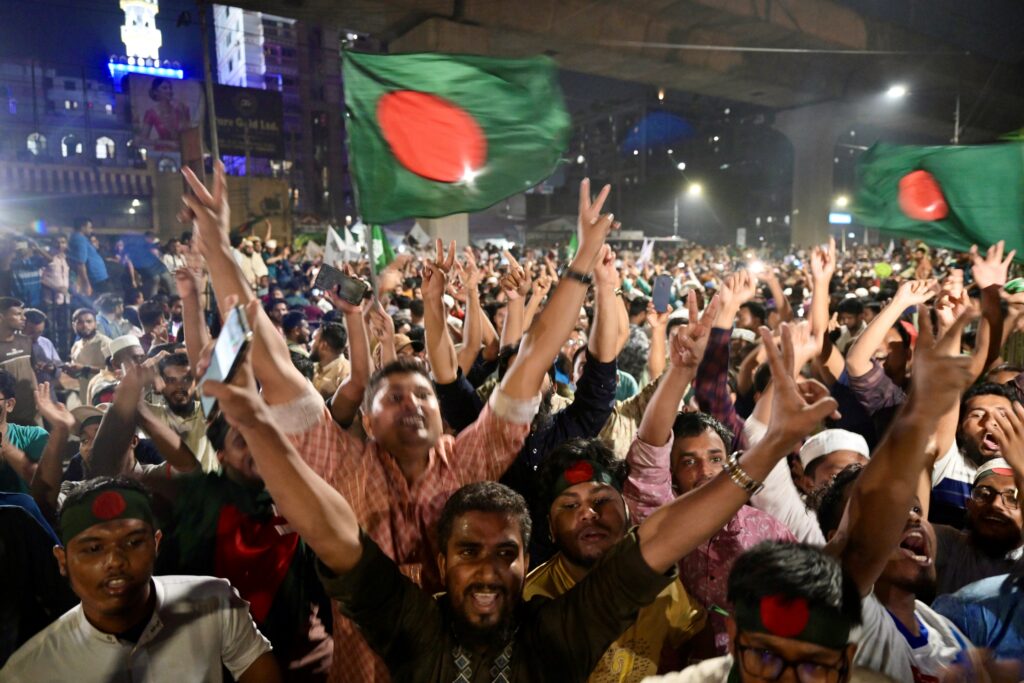
Bangladesh’s interim government on Saturday banned the Awami League, the political party of former prime minister Sheikh Hasina, pending the outcome of a trial over its crackdown on mass protests that prompted her ouster last year.According to the United Nations, up to 1,400 protesters died in July 2024 when Hasina’s government launched a brutal campaign to silence the opposition.Hasina remains in self-imposed exile in India and has defied an arrest warrant from Dhaka over charges of crimes against humanity.”It has been decided to ban the activities — including in cyberspace — of the Awami League under the Anti-Terrorism Act until the trial of the Awami League and its leaders ends,” Asif Nazrul, a government advisor on law and justice, told reporters.Bangladesh’s interim leader, Nobel Peace Prize winner Muhammad Yunus, has led an interim government since Hasina was overthrown. Nazrul said the decision was taken to ensure the country’s “sovereignty and security” and “the security of the protesters” along with safeguarding “the plaintiffs and the witnesses of the tribunal.”Yunus’s administration also simultaneously approved an amendment to the country’s International Crimes Tribunal Act, allowing authorities to prosecute political parties and their affiliated bodies. The Awami League rejected the administration’s move, calling it “illegitimate.”The ban comes a day after thousands of people rallied outside Yunus’s residence, demanding a ban on Hasina’s party. On Thursday, former Awami League leader Abdul Hamid — also under investigation — successfully left the country. At least three police officers responsible for overseeing airport arrivals and departures have been dismissed for negligence in the wake of Hamid’s departure, officials said.

US, China conclude first day of trade talks in Geneva
Senior US and Chinese officials on Saturday concluded the first of two days of talks aimed at resolving the trade war sparked by President Donald Trump’s sweeping tariffs, with Chinese state media calling the negotiations an “important step.”US Treasury Secretary Scott Bessent and Trade Representative Jamieson Greer met with Chinese Vice Premier He Lifeng for the first such negotiations between the world’s two largest economies since Trump slapped steep new levies on China last month, sparking robust retaliation from Beijing. The discussions are expected to restart on Sunday in the Swiss city, according to an individual familiar with the talks, who was not authorized to speak publicly. “The contact in Switzerland is an important step in promoting the resolution of the issue,” a commentary published by China’s state news agency Xinhua said.It provided no further details on the progress of closed-door discussions, which began mid-morning Saturday.The negotiations took place at the residence of the Swiss ambassador to the United Nations in Geneva, a discrete villa with sky blue shutters near a large park on the left bank of Lake Geneva.Tariffs imposed by Trump on the Asian manufacturing giant since the start of the year currently total 145 percent, with cumulative US duties on some Chinese goods reaching a staggering 245 percent.In retaliation, China slapped 125 percent levies on US goods, cementing what appears to be a near trade embargo between the two countries.Trump signalled Friday that he might lower the sky-high tariffs on Chinese imports, taking to social media to suggest that an “80% Tariff on China seems right!”.”The president would like to work it out with China,” US Commerce Secretary Howard Lutnick told Fox News on Friday. “He would like to de-escalate the situation.”Trump’s press secretary Karoline Leavitt clarified that the United States would not lower tariffs unilaterally, and that China would need to make concessions.In any case, a move to that level would be a symbolic gesture, since the tariffs would remain prohibitively steep.- ‘Not good’ relationship -“The relationship is not good” between Washington and Beijing, said Bill Reinsch, a senior advisor at the Center for Strategic and International Studies. “We have trade-prohibitive tariffs going in both directions. Relations are deteriorating,” said Reinsch, a longtime former member of the US-China Economic and Security Review Commission, a bipartisan committee that advises Congress. “But the meeting is a good sign.””I think this is basically to show that both sides are talking — and that itself is very important,” said Xu Bin, professor of economics and finance at the China Europe International Business School. “Because China is the only country that has tit-for-tat tariffs against Trump’s tariffs,” he told AFP. Bessent has said the meetings in Switzerland would focus on “de-escalation” and not a “big trade deal”.Beijing has insisted the United States must lift tariffs first and vowed to defend its interests.”Trade wars and tariff battles yield no winners,” said a commentary piece run by Xinhua early Sunday.- 10-percent ‘baseline’ – China’s vice premier went into the discussions buoyed by news on Friday that China’s exports rose last month despite the trade war.The unexpected development was attributed by experts to a re-routing of trade to Southeast Asia to mitigate US tariffs.Bessent and He were meeting two days after Trump unveiled a trade agreement with Britain, the first deal with any country since he unleashed his blitz of sweeping global tariffs.The five-page, non-binding deal with London confirmed to nervous investors that the United States is willing to negotiate sector-specific relief from recent duties — in this case, on British cars, steel and aluminium. In return, Britain agreed to open up its markets to US beef and other farm products.But a 10 percent baseline levy on most British goods remained intact and Trump remains “committed” to keeping it in place for other countries, Leavitt told reporters on Friday.A few hours later, Trump appeared to contradict her, suggesting there could be some flexibility to the baseline — but only if the right deals could be reached. “There could be an exception at some point. We’ll see,” he said. “If somebody did something exceptional for us, that’s always possible.”burs-nl-da/sst

US, China conclude first day of trade talks in Geneva
Senior US and Chinese officials on Saturday concluded the first of two days of talks aimed at resolving the trade war sparked by President Donald Trump’s sweeping tariffs, with Chinese state media calling the negotiations an “important step.”US Treasury Secretary Scott Bessent and Trade Representative Jamieson Greer met with Chinese Vice Premier He Lifeng for the first such negotiations between the world’s two largest economies since Trump slapped steep new levies on China last month, sparking robust retaliation from Beijing. The discussions are expected to restart on Sunday in the Swiss city, according to an individual familiar with the talks, who was not authorized to speak publicly. “The contact in Switzerland is an important step in promoting the resolution of the issue,” a commentary published by China’s state news agency Xinhua said.It provided no further details on the progress of closed-door discussions, which began mid-morning Saturday.The negotiations took place at the residence of the Swiss ambassador to the United Nations in Geneva, a discrete villa with sky blue shutters near a large park on the left bank of Lake Geneva.Tariffs imposed by Trump on the Asian manufacturing giant since the start of the year currently total 145 percent, with cumulative US duties on some Chinese goods reaching a staggering 245 percent.In retaliation, China slapped 125 percent levies on US goods, cementing what appears to be a near trade embargo between the two countries.Trump signalled Friday that he might lower the sky-high tariffs on Chinese imports, taking to social media to suggest that an “80% Tariff on China seems right!”.”The president would like to work it out with China,” US Commerce Secretary Howard Lutnick told Fox News on Friday. “He would like to de-escalate the situation.”Trump’s press secretary Karoline Leavitt clarified that the United States would not lower tariffs unilaterally, and that China would need to make concessions.In any case, a move to that level would be a symbolic gesture, since the tariffs would remain prohibitively steep.- ‘Not good’ relationship -“The relationship is not good” between Washington and Beijing, said Bill Reinsch, a senior advisor at the Center for Strategic and International Studies. “We have trade-prohibitive tariffs going in both directions. Relations are deteriorating,” said Reinsch, a longtime former member of the US-China Economic and Security Review Commission, a bipartisan committee that advises Congress. “But the meeting is a good sign.””I think this is basically to show that both sides are talking — and that itself is very important,” said Xu Bin, professor of economics and finance at the China Europe International Business School. “Because China is the only country that has tit-for-tat tariffs against Trump’s tariffs,” he told AFP. Bessent has said the meetings in Switzerland would focus on “de-escalation” and not a “big trade deal”.Beijing has insisted the United States must lift tariffs first and vowed to defend its interests.”Trade wars and tariff battles yield no winners,” said a commentary piece run by Xinhua early Sunday.- 10-percent ‘baseline’ – China’s vice premier went into the discussions buoyed by news on Friday that China’s exports rose last month despite the trade war.The unexpected development was attributed by experts to a re-routing of trade to Southeast Asia to mitigate US tariffs.Bessent and He were meeting two days after Trump unveiled a trade agreement with Britain, the first deal with any country since he unleashed his blitz of sweeping global tariffs.The five-page, non-binding deal with London confirmed to nervous investors that the United States is willing to negotiate sector-specific relief from recent duties — in this case, on British cars, steel and aluminium. In return, Britain agreed to open up its markets to US beef and other farm products.But a 10 percent baseline levy on most British goods remained intact and Trump remains “committed” to keeping it in place for other countries, Leavitt told reporters on Friday.A few hours later, Trump appeared to contradict her, suggesting there could be some flexibility to the baseline — but only if the right deals could be reached. “There could be an exception at some point. We’ll see,” he said. “If somebody did something exceptional for us, that’s always possible.”burs-nl-da/sst

Hamas releases video of two Israeli hostages alive in Gaza
Hamas’s armed wing released a video on Saturday showing two Israeli hostages alive in the Gaza Strip, with one of the two men calling to end the 19-month-long war.The pair were identified by the Hostages and Missing Families Forum campaign group as Elkana Bohbot and Yosef Haim Ohana, who were kidnapped during Hamas’s October 7, 2023 attack on Israel that triggered the war.The undated three-minute video footage released by Hamas’s Ezzedine al-Qassam Brigades shows one of the hostages, 36-year-old Bohbot, visibly weak and lying on the floor wrapped in a blanket.The second hostage, Ohana, 24, speaks in Hebrew urging the Israeli government to end the war in Gaza and secure the release of all remaining captives — a similar message to statements made by other hostages, likely under duress, in previous videos released by Hamas.In a statement, Bohbot’s family said that “Elkana and Yosef are crying out to be saved. While all the people of Israel hear their calls, a handful of decision-makers refuse to listen,” echoing criticism of the Israeli government for failing to bring back the hostages.”How much more can we bear? How much more can they endure? The fact that they are still there is a disgrace,” the family said.Late Saturday, Israeli demonstrators calling for the release of the hostages and an end of the war gathered outside the defence ministry headquarters in the coastal city of Tel Aviv.AFP images showed some protesters holding pictures of the hostages and placards that read “we can save the rest” and “all of them now”.- Uncertainty -Bohbot, a Colombian-Israeli, was seen bound and injured in the face in footage from the day of the Hamas attack, and his family have expressed concern about his health.Bohbot and Ohana, both abducted by Palestinian militants from the site of a music festival, are among 58 hostages held in Gaza since the 2023 attack, including 34 the Israeli military says are dead.Hamas also holds the remains of an Israeli soldier killed in a 2014 war.Israeli Prime Minister Benjamin Netanyahu said on Wednesday that the fate of three hostages presumed alive was unclear, without naming them.”We know with certainty that 21 hostages are alive… and there are three others whose status, sadly, we do not know,” Netanyahu said in a video shared on his Telegram channel.Israel resumed its military offensive across the Gaza Strip on March 18, after a two-month truce that saw the release of dozens of hostages.Since the ceasefire collapsed, Hamas has released several videos of hostages, including of the two appearing in Saturday’s video.Israel says the renewed offensive aims to force Hamas to free the remaining captives, although critics charge that it puts them in mortal danger.Hamas’s October 2023 attack resulted in the deaths of 1,218 people on the Israeli side, mostly civilians, according to an AFP tally based on official figures.The health ministry in Hamas-run Gaza said on Saturday that at least 2,701 people have been killed since Israel resumed its campaign in Gaza, bringing the overall death toll since the war broke out to 52,810.
Les pourparlers Chine-USA, “étape importante” pour la “désescalade” commerciale, reprendront dimanche
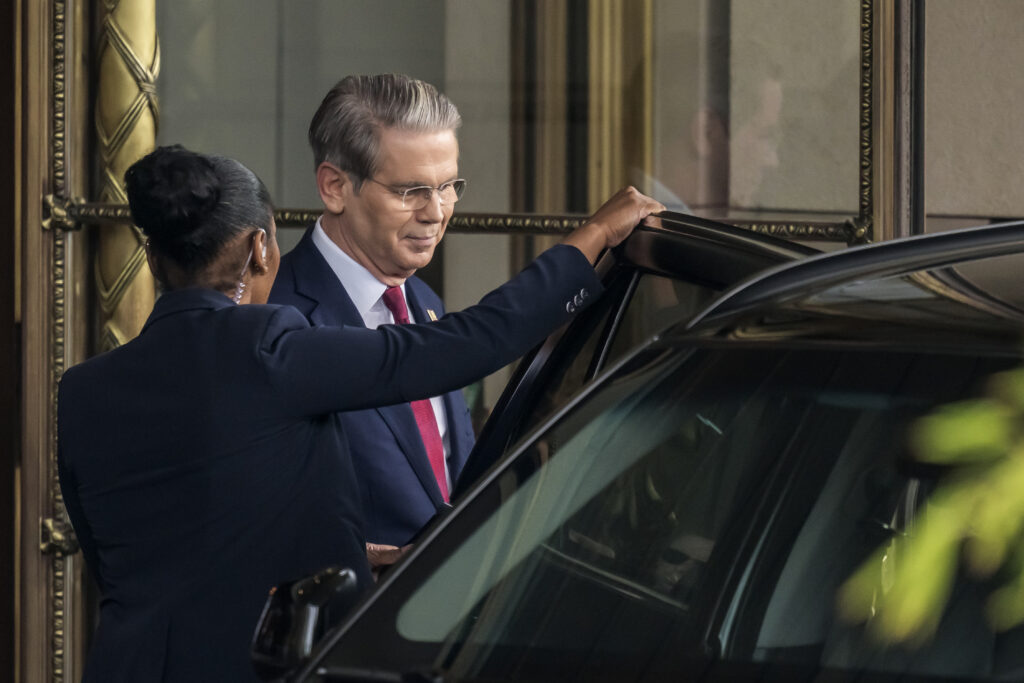
Les pourparlers entre la Chine et les États-Unis à Genève pour tenter de résoudre la guerre commerciale que se livrent les deux pays ont été suspendus samedi et reprendront dimanche matin.La Chine avait jugé plus tôt dans la journée que ces premières discussions commerciales avec les États-Unis depuis le déclenchement de la guerre commerciale par Donald Trump, entamées samedi en Suisse, étaient “une étape importante”.Signe de l’importance des enjeux, les deux capitales ont envoyé des représentants de haut rang à Genève ce weekend pour ces tractations: le Secrétaire américain au Trésor Scott Bessent, le Représentant au Commerce Jamieson Greer et le vice-Premier ministre chinois He Lifeng.”Le contact établi en Suisse est une étape importante dans la promotion de la résolution du contentieux”, selon un commentaire publié par l’agence de presse officielle Xinhua, sans fournir plus de détails sur l’avancement des négociations.Interpellé par l’AFP samedi à son départ pour la réunion, Scott Bessent n’a fait aucun commentaire. La délégation américaine ne s’est pas non plus exprimée.Les discussions avaient commencé en milieu de matinée samedi dans la villa cossue du Représentant permanent de la Suisse auprès des Nations unies à Genève. Une source proche du dossier a indiqué que les négociations étaient interrompues pour la journée peu après 20H00 (18H00 GMT). Elles reprendront dimanche.- “Un pas positif” -Vendredi, Donald Trump avait fait un geste en suggérant d’abaisser à 80% les droits de douane punitifs qu’il a lui-même imposés sur les produits chinois.”Le président aimerait régler le problème avec la Chine. Comme il l’a dit, il aimerait apaiser la situation”, a assuré vendredi soir le secrétaire au Commerce Howard Lutnick sur Fox News.Le geste reste symbolique, car à ce niveau les droits de douane ne seraient toujours pas supportables pour la plupart des exportations chinoises vers les États-Unis.Depuis son retour à la Maison-Blanche en janvier, Donald Trump a fait des droits de douane une arme politique. Il a imposé une surtaxe de 145% sur les marchandises venant de Chine, en plus des droits de douane préexistants.Pékin, qui a promis de combattre “jusqu’au bout” les surtaxes de Donald Trump, a riposté avec 125% de droits de douane sur les produits américains.Résultat: les échanges bilatéraux sont pratiquement à l’arrêt et les marchés ont connu de violents soubresauts.Les discussions organisées à Genève sont donc “un pas positif et constructif vers la désescalade”, a estimé la directrice générale de l’Organisation mondiale du commerce (OMC) Ngozi Okonjo-Iweala à la veille des pourparlers.Mi-avril, elle s’était montrée “très préoccupée”. Elle avait estimé que même si les échanges Chine-USA “ne représentaient qu’environ 3% du commerce mondial de marchandises, un découplage” de ces deux grandes économies “pourrait avoir des conséquences considérables”. L’économie mondiale serait alors organisée “selon des lignes géopolitiques en deux blocs isolés”.La présidente du pays hôte Karin Keller-Sutter en a appelé aux forces surnaturelles. “Hier (jeudi), le Saint-Esprit était à Rome. Il faut espérer qu’il descende maintenant à Genève pour le weekend”, a-t-elle espéré vendredi, en référence à l’élection du pape Léon XIV. – “Geste symbolique et provisoire” -Le vice-Premier ministre chinois a semblé arriver à Genève avec un atout: Pékin a annoncé vendredi un bond de 8,1% de ses exportations en avril, un chiffre quatre fois supérieur aux prévisions des analystes, mais les exportations vers les États-Unis ont chuté de près de 18%.Donald Trump “ne va pas unilatéralement abaisser les droits de douane sur la Chine. On doit aussi voir des concessions de leur part”, a averti sa porte-parole, Karoline Leavitt.”Un résultat possible des discussions en Suisse serait un accord pour suspendre la plupart, voire la totalité, des droits de douane imposés cette année et cela pendant la durée des négociations” bilatérales, a déclaré à l’AFP Bonnie Glaser, qui dirige le programme Indo-Pacifique du German Marshall Fund, un cercle de réflexion à Washington.Spécialiste de l’économie chinoise à l’Asia Society Policy Institute, organisation basée aux États-Unis, Lizzi Lee s’attend à un éventuel “geste symbolique et provisoire”, qui pourrait “apaiser les tensions, mais pas régler les désaccords fondamentaux”.Xu Bin, professeur à l’école de commerce international Chine Europe (CEIBS) de Shanghaï ne s’attend pas à ce que les droits de douane reviennent à un “niveau raisonnable”: “Même si cela descend, ce sera probablement de moitié, et, là encore, ce sera trop haut pour avoir des échanges commerciaux normaux.”