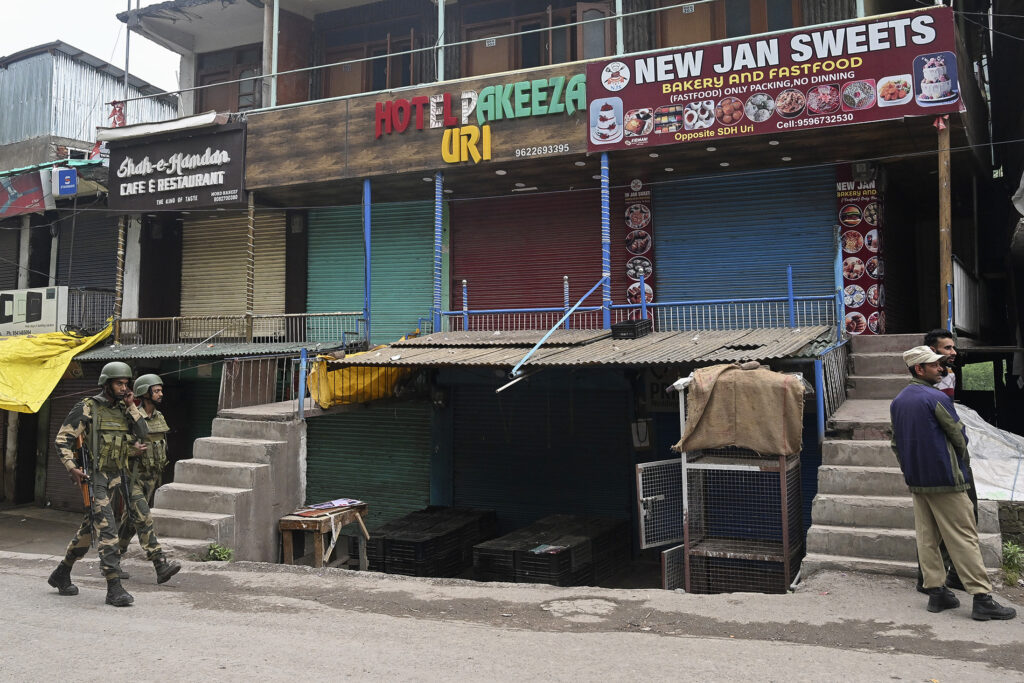
Le Pakistan accuse l’Inde d’avoir tiré des missiles aux portes d’Islamabad

Le Pakistan a accusé samedi l’Inde d’avoir tiré des missiles sur des bases aériennes, dont une près d’Islamabad, au moment où la plus grave confrontation entre les deux puissances nucléaires depuis des décennies a déjà fait une cinquantaine de morts civils des deux côtés.Relayant les inquiétudes internationales, les pays membres du G7 ont appelé à “une désescalade immédiate”.Peu avant l’aube samedi, alors que deux explosions venaient de retentir à Islamabad et à Rawalpindi toute proche, ville de garnison des militaires et services du renseignement, le porte-parole de l’armée pakistanaise est apparu à la télévision d’Etat.”L’Inde a attaqué avec des missiles (…) les bases de Nour Khan, Mourid et Chorkot ont été visées”, a-t-il dit. “Maintenant, attendez notre réponse”, a-t-il lancé en anglais.Si Islamabad assure ne pas avoir encore mené la “riposte” qu’il promet depuis des frappes indiennes mercredi, New Delhi a affirmé avoir été la cible d’une vague d’attaques de drones pakistanais au Cachemire et au Penjab, dans le nord-ouest de son territoire.Le chef de l’exécutif du Cachemire, Omar Abdullah, a rapporté des “détonations intermittentes” à Jammu. “Plus d’électricité maintenant. On entend des sirènes dans la ville”, a-t-il écrit sur X.Mercredi, l’Inde avait mené des frappes sur le sol pakistanais, en représailles à un attentat commis le 22 avril dans le Cachemire indien. L’attaque qui a tué 26 civils n’a pas été revendiquée mais New Delhi accuse Islamabad malgré ses dénégations.Depuis, les frappes de missiles, les tirs d’artillerie et les attaques de drones se succèdent alors que les deux rivaux depuis leur douloureuse partition en 1947, ignorent les appels à la désescalade venus de l’étranger.- “Issue pacifique” -Pourtant, “la poursuite de l’escalade militaire constitue une menace sérieuse pour la stabilité régionale”, ont martelé dans un communiqué depuis Montréal les pays du G7 présidé par le Canada. Le groupe a exhorté les deux adversaires “à entreprendre un dialogue direct en vue d’une issue pacifique”.Après la visite de la diplomatie iranienne à Islamabad et New Delhi, le chef de la diplomatie saoudienne, Adel Al-Jubeir a également tenté une médiation en se rendant ces derniers jours dans les deux pays pour encourager la “désescalade” et “oeuvrer à résoudre tous les sujets de dispute par le dialogue et les voies diplomatiques”, selon la diplomatie saoudienne citée par l’agence de presse officielle (SPA).Jeudi soir déjà, l’Inde avait rapporté “de multiples attaques” sur son territoire et des tirs d’artillerie qui ont continué toute la nuit le long de la “ligne de contrôle”, la frontière de facto qui partage le Cachemire.Une porte-parole de l’armée, Vyomika Singh, a décrit des “incursions (…) avec environ 300 à 400 drones”, selon elle toutes repoussées. L’armée pakistanaise a pour sa part affirmé avoir abattu 77 drones indiens depuis le début des hostilités.Ce qu’affirment les deux camps est impossible à vérifier de source indépendante, notamment parce que de nombreuses zones sont inaccessibles.- “Rhétorique belliqueuse” -L’Inde a fermé 24 aéroports et les médias locaux affirment que le trafic aérien sera suspendu jusqu’à la semaine prochaine.Les deux capitales ne montrent aucun signe d’apaisement et se renvoient la responsabilité des combats et des pertes civiles.Le centre de réflexion International Crisis Group (ICG) s’est inquiété de “la rhétorique belliqueuse, l’agitation domestique et la logique jusqu’au-boutiste de la surenchère”.Si des deux côtés de la frontière, dirigeants et haut-gradés multiplient les menaces, les habitants, eux, enterrent leurs morts et tentent de reprendre le cours de leur vie sous la menace des bombardements.- Désinformation -“Ce matin je suis venu au marché pour trouver un peu de travail mais tout est fermé”, déplore auprès de l’AFP Mohammed Lateef Bhat, un habitant d’Uri, au Cachemire indien. “Je vais rentrer les mains vides”.”Nos vies ne valent rien, à tout moment, des familles entières peuvent disparaître”, s’inquiète Nassir Ahmed Khan, 50 ans, depuis son village proche de la Ligne de contrôle. “Nos enfants ne peuvent pas dormir et on ne peut pas partager un repas tranquillement”.Des dizaines de millions d’enfants sont privés d’école des deux côtés de la frontière. La confrontation se fait aussi sur l’information.L’Inde a ordonné au réseau social X de bloquer plus de 8.000 comptes, dont ceux de médias internationaux. Le réseau d’Elon Musk a dit s’y être conformé à contrecœur, dénonçant une “censure”.New Delhi avait déjà exigé l’interdiction de plusieurs comptes de figures politiques, de célébrités ou de médias pakistanais.burs-pa-sbh/nr/gmo
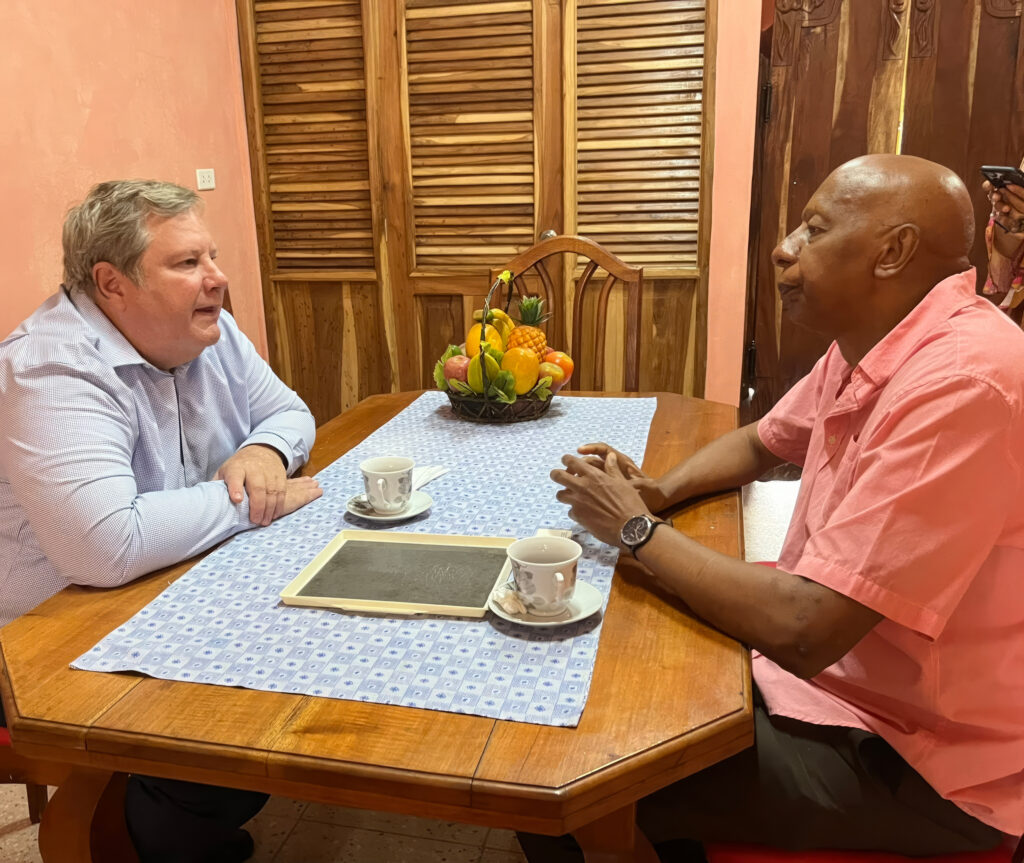
An inconvenient diplomat: Washington’s man in Havana

Over the past decade since the United States and Cuba restored ties US diplomats on the Caribbean island have walked a diplomatic tightrope.Their every move is scrutinized by Havana for signs of support for critics of communist rule.Cubans who meet with the representative of the island’s arch-foe, which has toughened its six-decade trade blockade since President Donald Trump returned to power, also risk the ire of the authorities.Yet the new US chief of mission in Cuba, Mike Hammer, seems unfazed as he crisscrosses the country of 9.7 million, meeting with dissidents and splashing pictures of the encounters on social media since taking the post in November.It’s a sharp contrast to his more discreet predecessors.Cuba, which restored ties with the United States in 2015 after half a century of hostility, has accused Hammer of an “activist” approach to his mission.”I travel around Cuba because, as a diplomat with over 35 years’ experience, I know… that it is very important to understand a country and its people,” Hammer said recently in a Spanish-language video posted on the embassy’s X account.In the message he also invited Cubans to contact him to request a meeting and to suggest places he should visit.- Church activism -A former ambassador to Chile and the Democratic Republic of Congo, Hammer arrived in Cuba in the dying days of Joe Biden’s presidency.In the past six months, he has met dozens of dissidents, human rights activists, independent journalists, church leaders and families of jailed anti-government demonstrators, most of whom are under close surveillance.At every turn, the affable diplomat presses for the release of political prisoners, quoting Cuban nationalist hero Jose Marti on the need for a republic “that opens its arms to all.”In February, he travelled to the eastern city of Santiago de Cuba to meet opposition leader Jose Daniel Ferrer, who had just been released from prison under an eleventh-hour deal with Biden.Cuba agreed to free over 500 prisoners in return for Washington removing the island from a list of state sponsors of terrorism. On his first day back in office Trump tore up the deal by putting Cuba back on the terrorism list.Havana released the prisoners nonetheless but last month sent Ferrer and fellow longtime opposition leader Felix Navarro, whom Hammer also met, back to prison, for allegedly violating their parole conditions.Hammer has also shown solidarity with Berta Soler, leader of the Ladies in White rights group, who has been repeatedly arrested for trying to attend mass dressed in white, which the government considers a dissident act.On April 13, Hammer accompanied her to a Palm Sunday church service in Havana.Soler, 61, was briefly detained afterwards, triggering condemnation from Washington of Cuba’s “brutish treatment” of its people and its attempt to “intimidate US diplomats.”- Avoiding more sanctions -Michael Shifter, senior fellow at the Inter-American Dialogue think tank in Washington, said Hammer’s style signaled a change in tack under Trump’s Secretary of State Marco Rubio, the son of Cuban immigrants who is fiercely critical of the island’s leadership.”Ambassador Hammer has instructions to make visits with greater frequency and visibility,” Shifter said.Cuba’s deputy foreign minister Carlos Fernandez de Cossio last month lashed out at Hammer, accusing him of “being an activist that encourages Cubans to act against their country.”Another senior foreign ministry official accused Hammer of flouting the historic rapprochement deal struck by his former boss, ex-president Barack Obama with his Cuban counterpart Raul Castro.For Cuban political scientist Arturo Lopez-Levy, professor of international relations at the University of Denver, the problem facing Cuba is how to “keep the embassy open without it becoming a platform for subversive activities.”Shifter said he expected Cuba to show restraint.The island is struggling with its worst economic crisis in 30 years, marked by shortages of food and fuel, recurring blackouts and a critical shortage of hard currency.As a result, Havana has “an interest in avoiding even tougher sanctions,” Shifter said.

Pékin et Washington à l’aube de discussions, Trump adoucit le ton

Pékin et Washington, qui se livrent une bataille commerciale sans pitié depuis le retour de Donald Trump à la Maison Blanche, discuteront samedi en Suisse pour apaiser les tensions.Le président américain a déjà fait un pas pour calmer les esprits vendredi, suggérant de baisser à 80% les droits de douane punitifs qu’il a lui-même imposés sur les produits chinois.Après des semaines de tensions allant crescendo entre les deux pays, le secrétaire au Trésor américain Scott Bessent et le représentant au Commerce Jamieson Greer doivent rencontrer le vice-Premier ministre chinois He Lifeng ce week-end à Genève.”Le président aimerait régler le problème avec la Chine. Comme il l’a dit, il aimerait apaiser la situation”, a lancé vendredi soir le secrétaire au Commerce Howard Lutnick, sur Fox News.”80% de droits de douane sur la Chine semble le bon niveau!”, avait écrit plus tôt dans la journée le président américain sur son réseau Truth Social.Depuis son retour à la Maison Blanche en janvier, Donald Trump a fait des droits de douane un outil politique à part entière. Il a imposé une surtaxe de 145% sur les marchandises venant de Chine, en plus des droits de douane préexistants. Pékin a riposté avec 125% de droits de douane sur les produits américains.Résultat: les échanges bilatéraux sont pratiquement à l’arrêt.Les discussions prévues à Genève sont donc “un pas positif et constructif vers la désescalade”, a estimé la directrice générale de l’OMC Ngozi Okonjo-Iweala.- “Concessions” -Pour le ministre suisse de l’Economie Guy Parmelin, c’est déjà “un succès” que “les deux parties se parlent”.La situation est telle qu'”aucune partie ne peut se permettre que cela se prolonge”, a déclaré à Shanghai Xu Bin, professeur d’économie à l’école de commerce international Chine Europe (CEIBS).”Les deux pays ont toutefois montré que, sans concession de l’autre bord, ils n’étaient pas prêts à faire le premier pas”, a ajouté l’économiste.Donald Trump “ne va pas unilatéralement laisser les droits de douane sur la Chine. On doit aussi voir des concessions de leur part”, a averti sa porte-parole Karoline Leavitt.Sur le plan “pratique”, cela coince aussi, selon Bill Reinsch, expert du Center for Strategic and International Studies.Donald Trump veut rencontrer son homologue Xi Jinping, “trouver un accord avec lui, et qu’ensuite leurs subordonnés règlent les détails”, décrit-il à l’AFP, alors que les Chinois “veulent que tous les sujets soient réglés avant une réunion” des deux présidents.Le professeur Xu Bin ne s’attend pas à ce que les droits de douane reviennent à un “niveau raisonnable”: “Même si cela descend, ce sera probablement de moitié, et, là encore, ce sera trop haut pour avoir des échanges commerciaux normaux.”- La quête des “deals” -La Suisse a profité de son rôle d’hôte pour s’entretenir vendredi avec les responsables américains, alors que Washington a menacé d’imposer une surtaxe de 31% sur ses produits.La présidente suisse a rapporté à l’issue que les deux parties étaient “d’accord” pour accélérer les discussions.Depuis son investiture en janvier, le président républicain a lancé une offensive protectionniste tous azimuts: nouveaux droits de douane sectoriels (+25% sur l’acier, l’aluminium, l’automobile), droits de douane universels (+10% sur la plupart des produits entrant aux Etats-Unis, quelle que soit leur provenance), d’autres en gestation. Des taxes encore plus lourdes étaient prévues pour punir les partenaires qui exportent plus vers les Etats-Unis que l’inverse.Donald Trump les a suspendues – sauf pour la Chine, donc – jusque début juillet pour donner selon lui une chance aux négociations.Jeudi, le président a annoncé un premier accord avec Londres, qui n’était pas visée par les surtaxes punitives.Le document, présenté comme “historique” des deux côtés, fait cinq pages. Il y est spécifié qu’il n’est “pas légalement contraignant”.Il doit permettre au Royaume-Uni d’échapper au gros des surtaxes américaines sur ses voitures et d’ouvrir davantage le marché britannique aux produits agricoles américains.

Pékin et Washington à l’aube de discussions, Trump adoucit le ton

Pékin et Washington, qui se livrent une bataille commerciale sans pitié depuis le retour de Donald Trump à la Maison Blanche, discuteront samedi en Suisse pour apaiser les tensions.Le président américain a déjà fait un pas pour calmer les esprits vendredi, suggérant de baisser à 80% les droits de douane punitifs qu’il a lui-même imposés sur les produits chinois.Après des semaines de tensions allant crescendo entre les deux pays, le secrétaire au Trésor américain Scott Bessent et le représentant au Commerce Jamieson Greer doivent rencontrer le vice-Premier ministre chinois He Lifeng ce week-end à Genève.”Le président aimerait régler le problème avec la Chine. Comme il l’a dit, il aimerait apaiser la situation”, a lancé vendredi soir le secrétaire au Commerce Howard Lutnick, sur Fox News.”80% de droits de douane sur la Chine semble le bon niveau!”, avait écrit plus tôt dans la journée le président américain sur son réseau Truth Social.Depuis son retour à la Maison Blanche en janvier, Donald Trump a fait des droits de douane un outil politique à part entière. Il a imposé une surtaxe de 145% sur les marchandises venant de Chine, en plus des droits de douane préexistants. Pékin a riposté avec 125% de droits de douane sur les produits américains.Résultat: les échanges bilatéraux sont pratiquement à l’arrêt.Les discussions prévues à Genève sont donc “un pas positif et constructif vers la désescalade”, a estimé la directrice générale de l’OMC Ngozi Okonjo-Iweala.- “Concessions” -Pour le ministre suisse de l’Economie Guy Parmelin, c’est déjà “un succès” que “les deux parties se parlent”.La situation est telle qu'”aucune partie ne peut se permettre que cela se prolonge”, a déclaré à Shanghai Xu Bin, professeur d’économie à l’école de commerce international Chine Europe (CEIBS).”Les deux pays ont toutefois montré que, sans concession de l’autre bord, ils n’étaient pas prêts à faire le premier pas”, a ajouté l’économiste.Donald Trump “ne va pas unilatéralement laisser les droits de douane sur la Chine. On doit aussi voir des concessions de leur part”, a averti sa porte-parole Karoline Leavitt.Sur le plan “pratique”, cela coince aussi, selon Bill Reinsch, expert du Center for Strategic and International Studies.Donald Trump veut rencontrer son homologue Xi Jinping, “trouver un accord avec lui, et qu’ensuite leurs subordonnés règlent les détails”, décrit-il à l’AFP, alors que les Chinois “veulent que tous les sujets soient réglés avant une réunion” des deux présidents.Le professeur Xu Bin ne s’attend pas à ce que les droits de douane reviennent à un “niveau raisonnable”: “Même si cela descend, ce sera probablement de moitié, et, là encore, ce sera trop haut pour avoir des échanges commerciaux normaux.”- La quête des “deals” -La Suisse a profité de son rôle d’hôte pour s’entretenir vendredi avec les responsables américains, alors que Washington a menacé d’imposer une surtaxe de 31% sur ses produits.La présidente suisse a rapporté à l’issue que les deux parties étaient “d’accord” pour accélérer les discussions.Depuis son investiture en janvier, le président républicain a lancé une offensive protectionniste tous azimuts: nouveaux droits de douane sectoriels (+25% sur l’acier, l’aluminium, l’automobile), droits de douane universels (+10% sur la plupart des produits entrant aux Etats-Unis, quelle que soit leur provenance), d’autres en gestation. Des taxes encore plus lourdes étaient prévues pour punir les partenaires qui exportent plus vers les Etats-Unis que l’inverse.Donald Trump les a suspendues – sauf pour la Chine, donc – jusque début juillet pour donner selon lui une chance aux négociations.Jeudi, le président a annoncé un premier accord avec Londres, qui n’était pas visée par les surtaxes punitives.Le document, présenté comme “historique” des deux côtés, fait cinq pages. Il y est spécifié qu’il n’est “pas légalement contraignant”.Il doit permettre au Royaume-Uni d’échapper au gros des surtaxes américaines sur ses voitures et d’ouvrir davantage le marché britannique aux produits agricoles américains.

Pakistan says Indian missiles strike air bases as conflict spirals

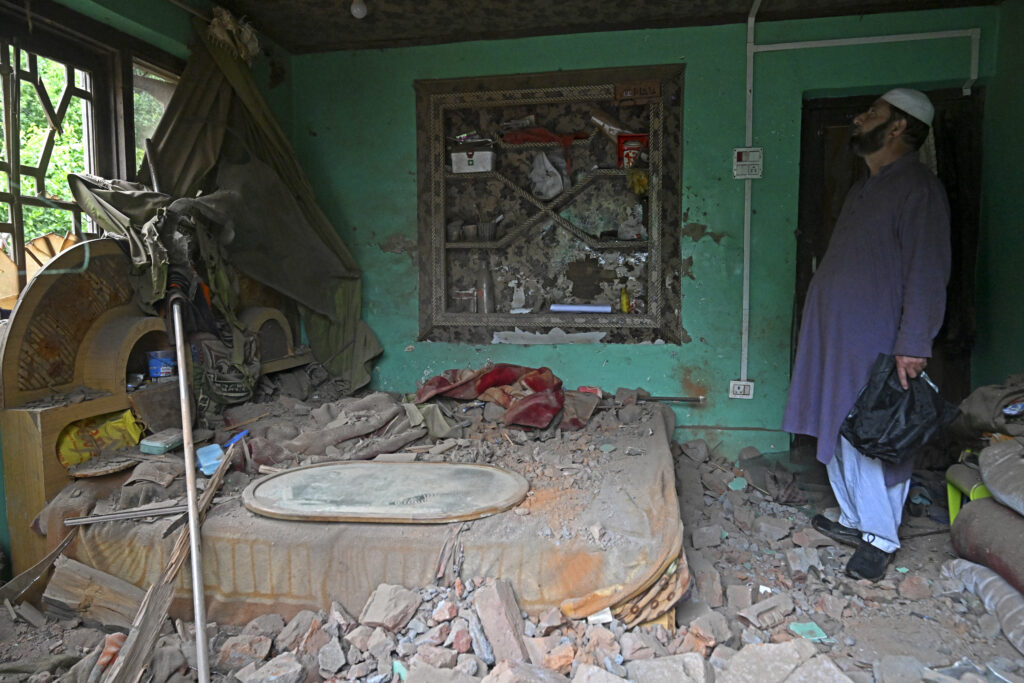
Pakistan’s military on Saturday said India launched another wave of missiles targeting three air bases — including one on the outskirts of the capital — as the conflict between the nuclear-armed neighbours spiralled toward full-blown war. The South Asian countries have exchanged fire since Wednesday, when India launched air strikes on what it called “terrorist” sites in Pakistani territory after a deadly attack on tourists on the Indian side of the divided Kashmir region. The clashes — which have involved missiles, drones, and exchanges of fire along the de-facto border in disputed Kashmir — are the worst in decades and have killed more than 50 civilians.Military spokesman Ahmed Sharif Chaudhry in a live broadcast aired by state television in the middle of the night said India had “attacked with missiles” targeting three air bases. He said a “majority of the missiles” had been intercepted and “no flying assets” had been damaged. One of the bases targeted, Nur Khan air base in Rawalpindi, the garrison city where the army is headquartered, is around 10 kilometres (6 miles) from the capital Islamabad.Several blasts were heard from the capital overnight. The air base is used to receive foreign dignitaries and Saudi minister of state for foreign affairs Adel Al-Jubeir had departed just hours earlier. “Now you just wait for our response,” Chaudhry warned India. – Disputed Kashmir -The fighting comes two weeks after New Delhi blamed Islamabad for backing an attack on the Indian-run side of disputed Kashmir that killed 26 tourists, mostly Hindu men. India blamed the Pakistan-based Lashkar-e-Taiba — a UN-designated terrorist organisation — for the attack but Pakistan has denied any involvement and called for an independent probe. The countries have fought several wars over the Muslim-majority Kashmir, which both claim in full but administer separate portions of since gaining independence from British rule in 1947.Previous clashes have been mostly limited to the Kashmir region, separated by a heavily militarised border known as the Line of Control, but this time India has struck multiple cities deep in Pakistan.Pakistan’s foreign ministry alleged New Delhi’s “reckless conduct has brought the two nuclear-armed states closer to a major conflict”.Indian Prime Minister Narendra Modi met top security officials on Friday, including his national security advisor, defence minister and the chiefs of the armed forces, his office said.Most of the more than 50 deaths were in Pakistan during Wednesday’s first air strikes by India, and included children. – Drone warfare -On Friday, the Indian army said it had “repulsed” waves of Pakistani attacks using drones and other munitions overnight, and gave a “befitting reply”.Pakistan’s military spokesman denied that Islamabad was carrying out such attacks, and vowed revenge for the initial Indian strikes.Pakistani military sources said its forces had shot down 77 in the last two days, with debris of many incursions seen by AFP in cities across the country.An Indian army spokeswoman on Friday spoke of “300 to 400” Pakistani drones, but it was impossible to verify that claim independently.Pakistan has accused India of fabricating the drone strikes, and early Saturday its military claimed Delhi’s forces had bombed their own territory in Amritsar, without providing evidence.Civilians have come under fire on both sides, with Islamabad and New Delhi accusing each other of carrying out unprovoked artillery shelling, and missile and drone strikes.On Friday, shelling along the LoC killed five civilians including a two-year-old girl on the Pakistan said, officials said. Across the border, a police official said one woman was killed and two men wounded by heavy shelling.- Disruptions -Armed groups have stepped up operations in Kashmir since 2019, when Modi’s Hindu nationalist government revoked its limited autonomy and took the state under direct rule by New Delhi.The conflict has caused major disruptions to international aviation, with airlines having to cancel flights or use longer routes that do not overfly the India-Pakistan frontier. India has closed 24 airports, with local media reporting the suspension would remain in place until next week. Schools have also closed on areas close to the border on both sides, affecting millions of children. The mega Indian Premier League (IPL) cricket tournament was on Friday suspended for a week, while Pakistan suspended its own T20 franchise competition indefinitely, barely a day after relocating it to the United Arab Emirates over the violence.World powers have called for both sides to exercise “restraint”, with several offering to mediate the dispute.Iranian Foreign Minister Abbas Araghchi met his Indian counterpart in Delhi on Thursday, days after visiting Pakistan.The International Crisis Group, however, said “foreign powers appear to have been somewhat indifferent” to the prospect of war, despite warnings of possible escalation.burs-ecl/tym

US and China prepare for trade talks as Trump floats tariff cut

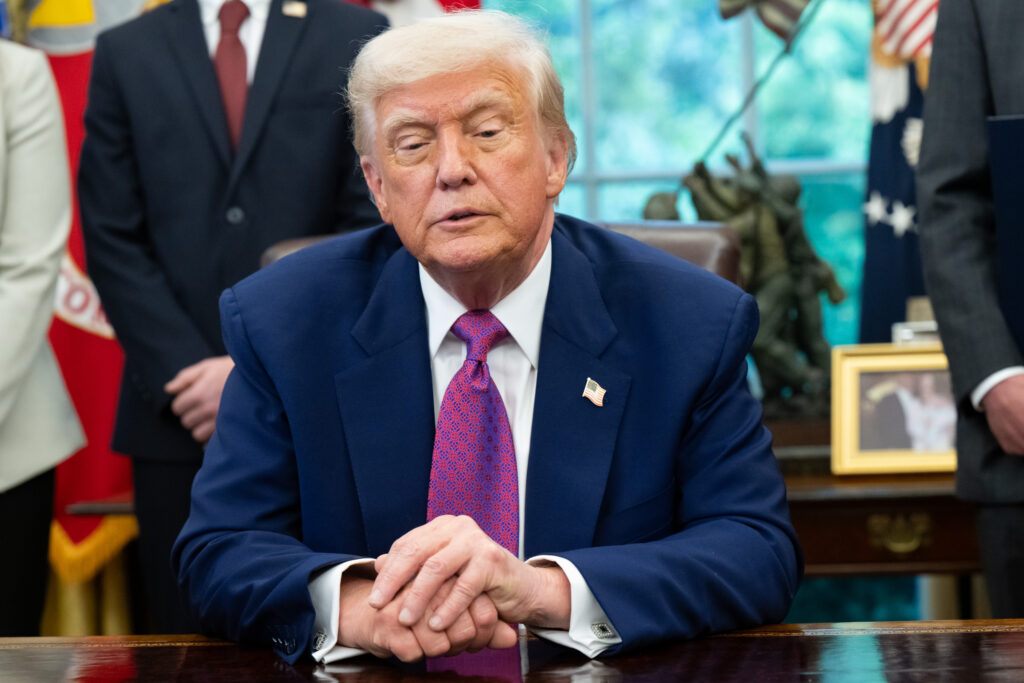
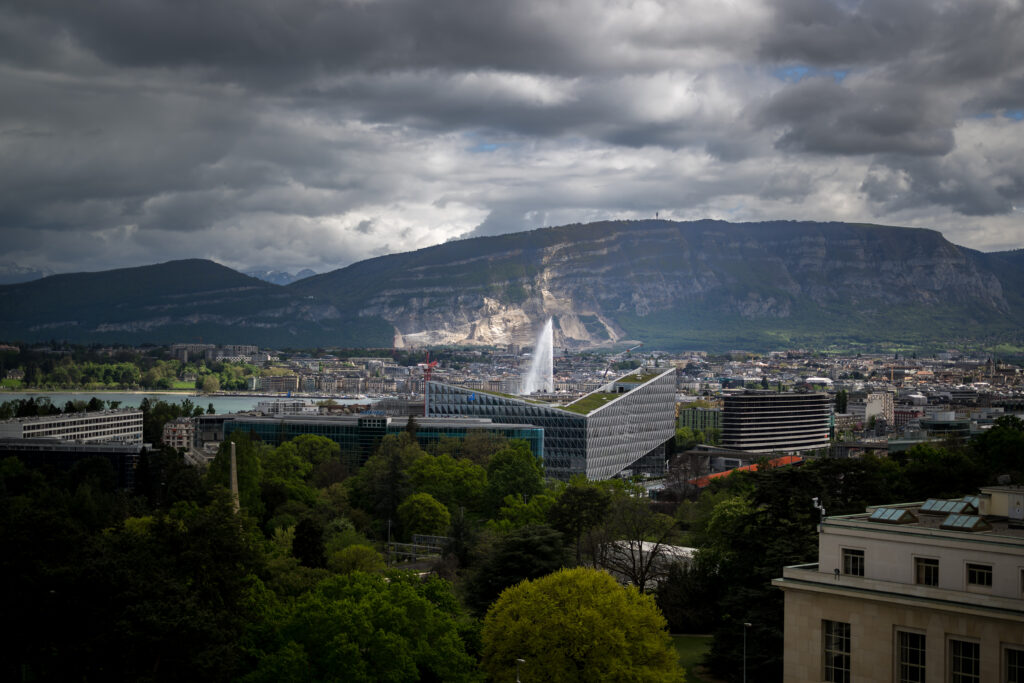
Senior US and Chinese officials are in Switzerland this weekend for talks aimed at de-escalating a burgeoning trade war sparked by President Donald Trump’s sweeping tariff rollout, and fueled by strong retaliatory measures from Beijing. US Treasury Secretary Scott Bessent and US Trade Representative Jamieson Greer are set to confer with China’s Vice Premier He Lifeng in the Swiss city of Geneva on Saturday and Sunday — the first such talks between the two sides since Trump slapped steep new levies on China last month.  Tariffs imposed on the Asian manufacturing giant since the start of the year currently total 145 percent, with cumulative duties on some goods reaching a staggering 245 percent.In retaliation, China slapped 125 percent levies on US goods, cementing what is effectively a trade embargo between the world’s two largest economies.Trump signaled on Friday that he could lower the sky-high tariffs on Chinese imports, taking to social media to suggest that an “80% Tariff on China seems right!” His press secretary Karoline Leavitt later clarified he would not do so unilaterally, adding that China would need to make concessions as well.- ‘A good sign’ -“The relationship is not good,” said Bill Reinsch, a senior advisor at the Center for Strategic and International Studies (CSIS), referring to current ties between Washington and Beijing. “We have trade-prohibitive tariffs going in both directions. Relations are deteriorating,” said Reinsch, a longtime former member of the American government’s US-China Economic and Security Review Commission. “But the meeting is a good sign.””I think this is basically to show that both sides are talking, and that itself is very important,” Xu Bin, professor of economics and finance at the China Europe International Business School, told AFP. “Because China is the only country that has tit-for-tat tariffs against Trump’s tariffs.” Beijing has insisted the United States must lift tariffs first and vowed to defend its interests.Bessent has said the meetings in Switzerland would focus on “de-escalation” and not a “big trade deal.”The head of the Geneva-based World Trade Organization (WTO) on Friday welcomed the talks, calling them a “positive and constructive step toward de-escalation.””Sustained dialogue between the world’s two largest economies is critical to easing trade tensions, preventing fragmentation along geopolitical lines and safeguarding global growth,” WTO Director-General Ngozi Okonjo-Iweala said, according to a spokesperson.Swiss President Karin Keller-Sutter also sounded an upbeat note.”Yesterday the Holy Spirit was in Rome,” she said Friday, referring to the election of Pope Leo XIV. “We must hope that he will now go down to Geneva for the weekend.” – 10 percent ‘baseline’ – Bessent and He will meet two days after Trump unveiled a trade agreement with Britain, the first deal with any country since he unleashed a blitz of sweeping global tariffs last month.The five-page, non-legally binding document confirmed to nervous investors that the United States is willing to negotiate sector-specific relief from recent duties — in this case on British cars, steel and aluminum. In return, Britain agreed to open up its markets to US beef and other farm products.But a 10 percent baseline levy on most British goods remained intact, and Trump remains “committed” to keeping it in place for other countries in talks with the United States, Leavitt told reporters Friday. A few hours later, Trump appeared to contradict her, suggesting there could be some flexibility to the baseline — but only if the right deals could be reached. “There could be an exception at some point, we’ll see,” he said during an Oval Office event. “If somebody did something exceptional for us, that’s always possible.”Reinsch from CSIS said one of big issues for both the United States and China going into the talks in Geneva was their starkly different negotiating strategies.”Trump’s approach is generally top-down,” he said. “He wants to meet with (Chinese President) Xi Jinping, and thinks that if the two of them can get together, they can make a big deal and then have the subordinates go work out the details.””The Chinese are the reverse,” he said. “They want to have all the issues settled and everything agreed to at lower levels before there’s any leaders meeting.”burs-da/acb

US and China prepare for trade talks as Trump floats tariff cut

Senior US and Chinese officials are in Switzerland this weekend for talks aimed at de-escalating a burgeoning trade war sparked by President Donald Trump’s sweeping tariff rollout, and fueled by strong retaliatory measures from Beijing. US Treasury Secretary Scott Bessent and US Trade Representative Jamieson Greer are set to confer with China’s Vice Premier He Lifeng in the Swiss city of Geneva on Saturday and Sunday — the first such talks between the two sides since Trump slapped steep new levies on China last month.  Tariffs imposed on the Asian manufacturing giant since the start of the year currently total 145 percent, with cumulative duties on some goods reaching a staggering 245 percent.In retaliation, China slapped 125 percent levies on US goods, cementing what is effectively a trade embargo between the world’s two largest economies.Trump signaled on Friday that he could lower the sky-high tariffs on Chinese imports, taking to social media to suggest that an “80% Tariff on China seems right!” His press secretary Karoline Leavitt later clarified he would not do so unilaterally, adding that China would need to make concessions as well.- ‘A good sign’ -“The relationship is not good,” said Bill Reinsch, a senior advisor at the Center for Strategic and International Studies (CSIS), referring to current ties between Washington and Beijing. “We have trade-prohibitive tariffs going in both directions. Relations are deteriorating,” said Reinsch, a longtime former member of the American government’s US-China Economic and Security Review Commission. “But the meeting is a good sign.””I think this is basically to show that both sides are talking, and that itself is very important,” Xu Bin, professor of economics and finance at the China Europe International Business School, told AFP. “Because China is the only country that has tit-for-tat tariffs against Trump’s tariffs.” Beijing has insisted the United States must lift tariffs first and vowed to defend its interests.Bessent has said the meetings in Switzerland would focus on “de-escalation” and not a “big trade deal.”The head of the Geneva-based World Trade Organization (WTO) on Friday welcomed the talks, calling them a “positive and constructive step toward de-escalation.””Sustained dialogue between the world’s two largest economies is critical to easing trade tensions, preventing fragmentation along geopolitical lines and safeguarding global growth,” WTO Director-General Ngozi Okonjo-Iweala said, according to a spokesperson.Swiss President Karin Keller-Sutter also sounded an upbeat note.”Yesterday the Holy Spirit was in Rome,” she said Friday, referring to the election of Pope Leo XIV. “We must hope that he will now go down to Geneva for the weekend.” – 10 percent ‘baseline’ – Bessent and He will meet two days after Trump unveiled a trade agreement with Britain, the first deal with any country since he unleashed a blitz of sweeping global tariffs last month.The five-page, non-legally binding document confirmed to nervous investors that the United States is willing to negotiate sector-specific relief from recent duties — in this case on British cars, steel and aluminum. In return, Britain agreed to open up its markets to US beef and other farm products.But a 10 percent baseline levy on most British goods remained intact, and Trump remains “committed” to keeping it in place for other countries in talks with the United States, Leavitt told reporters Friday. A few hours later, Trump appeared to contradict her, suggesting there could be some flexibility to the baseline — but only if the right deals could be reached. “There could be an exception at some point, we’ll see,” he said during an Oval Office event. “If somebody did something exceptional for us, that’s always possible.”Reinsch from CSIS said one of big issues for both the United States and China going into the talks in Geneva was their starkly different negotiating strategies.”Trump’s approach is generally top-down,” he said. “He wants to meet with (Chinese President) Xi Jinping, and thinks that if the two of them can get together, they can make a big deal and then have the subordinates go work out the details.””The Chinese are the reverse,” he said. “They want to have all the issues settled and everything agreed to at lower levels before there’s any leaders meeting.”burs-da/acb