Bill Gates speeds up giving away fortune, blasts Musk

Microsoft co-founder Bill Gates announced Thursday an accelerated timeframe for giving away his fortune as he touted artificial intelligence as a game-changer to boost public health and save lives globally.Under a new timetable, the Gates Foundation will spend more than $200 billion over the next 20 years, shutting down in 2045. The organization had originally planned to close 20 years after Gates’ death.The announcement came as Gates took aim at another billionaire tech titan, Elon Musk.The Tesla CEO pushed through draconian cuts to the US Agency for International Development because Musk “didn’t go to a party that weekend,” Gates told the New York Times in an apparent dig at Musk’s lifestyle.Gates is listed as the 13th on the Forbes “real-time” billionaire list, with a net worth of $112.6 billion. Musk is first with $383.2 billion.Gates, 69, published a chart showing his net worth plummeting 99 percent over the next 20 years in a blog post announcing the shift, describing a doubling of the pace of giving.”People will say a lot of things about me when I die, but I am determined that ‘he died rich’ will not be one of them,” Gates wrote.The Bill and Melinda Gates Foundation launched in 2000, the same year Bill Gates stepped down as CEO of Microsoft. In 2024, Melinda French Gates exited the foundation three years after the couple’s divorce.The organization, which had more than $71 billion in assets at the end of 2023, has been credited with helping to reshape the world of global public health.It lists five offices throughout Africa, in addition to locations in the United States, Europe, China, India and the Middle East.Gates cited progress in health efforts including campaigns to eradicate polio and the creation of a new vaccine for rotavirus that has helped reduce the number of children who die from diarrhea each year by 75 percent.Separate from the Gates Foundation, the Microsoft founder said he plans to continue to provide funding for initiatives to expand access to affordable energy and for breakthrough research into Alzheimer’s disease.- Not a ‘forever’ foundation -In the blog post, Gates credited the writings of 19th-century US steel magnate Andrew Carnegie, whose foundation is still around.But Gates told the New York Times he had no designs on creating a “forever” foundation out of “some weird legacy thing,” preferring to pump out billions more to take advantage of emerging technologies.”The tools are so phenomenal,” he said of the potential for AI in global health.”All the intelligence will be in the AI, and so you will have a personal doctor that’s as good as somebody who has a full-time dedicated doctor — that’s actually better than even what rich countries have,” Gates told the New York Times.While private foundations can do a lot, Gates described the government role as essential, ruing deep budget cuts by the United States, Britain, France and other countries.”It’s unclear whether the world’s richest countries will continue to stand up for its poorest people. But the one thing we can guarantee is that, in all of our work, the Gates Foundation will support efforts to help people and countries pull themselves out of poverty,” he wrote. The moves have included the assault on USAID by Musk’s “Department of Government Efficiency” in Donald Trump’s presidential administration. Gates called the cuts “stunning,” far more severe than expected.Musk is “the one who cut the USAID budget,” Gates told the New York Times. “He put it in the wood chipper.”In an interview with the Financial Times, Gates ridiculed Musk’s apparent confusion of Gaza Province in Mozambique with Gaza in the Middle East as the Trump administration targeted programs.”The picture of the world’s richest man killing the world’s poorest children is not a pretty one,” Gates said of Musk in an interview with the Financial Times.


Le Parlement ukrainien ratifie l’accord “historique” avec Washington sur les minerais

Le Parlement ukrainien a ratifié jeudi l’accord “historique” avec les États-Unis sur l’exploitation des ressources naturelles du pays, signé après des semaines de négociations houleuses et qui pourrait, selon Kiev, ouvrir la voie à une nouvelle aide militaire américaine. Le président ukrainien Volodymyr Zelensky a estimé que ce texte ouvrait d’ores et déjà un “nouveau chapitre” dans les relations entre Kiev et Washington.”A l’heure actuelle, (l’accord) constitue une base solide pour la coopération en matière de sécurité et, à long terme, il offre à l’Ukraine et aux États-Unis l’occasion d’élargir une collaboration économique mutuellement bénéfique”, a ajouté jeudi M. Zelensky, dans un message publié sur les réseaux sociaux.Plus tôt, sur X, la ministre de l’Économie, Ioulia Svyrydenko, avait annoncé la ratification par le Parlement ukrainien d’un “accord de partenariat économique historique”.Ce document concerne l’extraction de minerais, de pétrole et de gaz – 57 types de ressources au total en Ukraine, qui fait face depuis plus de trois ans à l’invasion russe. Selon des députés, 338 parlementaires ont voté en faveur de ce texte, le minimum requis étant de 226.Il ne comporte toutefois pas de garanties de sécurité pour Kiev, qui pourtant insistait sur cette condition. “Cet accord offre la possibilité de bénéficier d’une nouvelle aide militaire (…) de la part de l’administration américaine”, a assuré Mme Svyrydenko. L’administration de Donald Trump a annoncé son intention de mettre un terme rapidement à la guerre entre l’Ukraine et la Russie et ses relations se sont réchauffées spectaculairement avec Moscou, faisant craindre l’abandon de la poursuite du crucial soutien américain à Kiev.L’accord bilatéral avait été signé fin avril après des semaines de tensions entre Kiev et Washington, qui avaient culminé dans une joute verbale entre les présidents Trump et Zelensky dans le Bureau ovale, fin février. Contrairement à ce que voulait initialement M. Trump, le document ne prévoit pas de comptabiliser comme dette de l’Ukraine envers les États-Unis l’aide américaine accordée par son prédécesseur Joe Biden depuis le début de l’invasion en 2022.”L’accord ne mentionne aucune dette, mais uniquement les nouveaux investissements. Et il est très important que ces investissements soient réalisés en Ukraine”, s’est félicité Mme Svyrydenko sur X.Il ne comporte pas de garanties de sécurité mais offre “une occasion de faire pression sur la Russie, car cela montre que les États-Unis sont prêts à protéger leur partenariat et leurs intérêts. Ce ne sont pas seulement mes sentiments, ce sont les mots de la Maison Blanche”, a-t-elle souligné. Le texte prévoit en revanche que la nouvelle aide militaire américaine peut être comptabilisée comme contribution à un fonds d’investissement ukraino-américain, a rappelé la ministre.Ce fonds pour la “reconstruction” de l’Ukraine, ravagée par plus de trois ans de guerre, sera financé et géré à parts égales par les deux parties.La contribution ukrainienne sera, elle, constituée de 50% des redevances tirées de nouvelles licences délivrées pour l’exploitation de ressources naturelles, selon Kiev. 

Pakistan and India accuse each other of waves of drone attacks

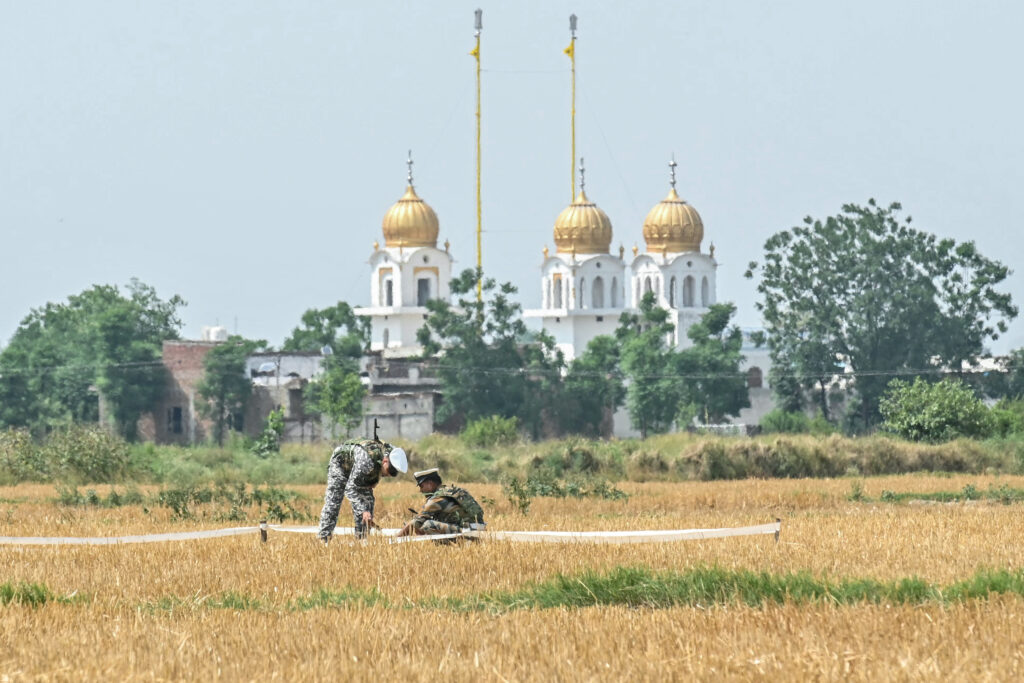
India and Pakistan accused each other Thursday of carrying out waves of drone attacks, as deadly confrontations between the nuclear-armed foes drew global calls for calm.The fighting comes two weeks after New Delhi blamed Islamabad for backing an attack on the Indian-run side of disputed Kashmir, which Pakistan denied.India on Wednesday launched missiles it said targeted “terrorist camps”, and Pakistan retaliated with a barrage of artillery strikes, with at least 48 deaths reported on both sides since the escalation, 32 of them in Pakistan, including children.The South Asian neighbours have fought multiple wars over Kashmir since the end of British rule in 1947.Pakistan’s army said it shot down 28 Indian drones, while New Delhi accused Islamabad of launching overnight raids with “drones and missiles”, and claimed it destroyed an air defence system in Lahore.”Pakistan attempted to engage a number of military targets… using drones and missiles,” India’s defence ministry said in a statement Thursday, adding that “these were neutralised”.The defence ministry said earlier its military had “targeted air defence radars and systems at a number of locations in Pakistan”, adding it had been “reliably learnt that an air defence system at Lahore has been neutralised”.On Thursday evening, explosions were reported at the airport of Jammu, a key city in the Indian-held part of disputed Kashmir, a security source who was unauthorised to speak to the media told AFP, without giving further details.Shesh Paul Vaid, a former director general of police for Jammu and Kashmir, also wrote on social media that there were “loud explosions”. – Blasts heard in Lahore -Pakistan’s military said on Thursday it had neutralised 28 out of 29 Israeli-made Harop drones that crossed into the country in “another act of aggression by India”.Pakistan’s Foreign Minister Ishaq Dar said the drones “made attempts to attack military installations” and “targeted civilians”, killing one and injuring four, while four army personnel were also wounded.Among the cities targeted was Rawalpindi, where the military is headquartered and the cricket stadium is hosting the Pakistan Super League. Residents in Lahore reported hearing the sound of blasts, and aviation authorities briefly shut down operations at the main airport there and in the capital, Islamabad.Karachi airport remained closed on Thursday evening.Trading was halted on Pakistan’s benchmark KSE-100 index after it slumped 6.3 percent on news of the drone attacks.- ‘Shrapnel pierced her chest’ -India’s Defence Minister Rajnath Singh on Wednesday said New Delhi had a “right to respond” following the attack on tourists in Pahalgam in Kashmir last month, when gunmen killed 26 people, mainly Hindu men.New Delhi blamed the Pakistan-based Lashkar-e-Taiba — a UN-designated terrorist organisation for the Pahalgam shooting, and the nations traded days of threats and diplomatic measures.Pakistan has denied any involvement and called for an independent investigation into the April 22 attack.Pakistan’s military said on Wednesday that five Indian jets had been downed across the border, but New Delhi has not responded to the claims.An Indian senior security source, who asked not to be named, said three of its fighter jets had crashed on home territory.There was trauma on both sides of the disputed border after the exchange of heavy artillery in darkness on Wednesday.”A missile struck the mosque nearby, and a piece of shrapnel from the blast pierced my daughter’s chest,” 50-year-old Safeer Ahmad Awan told AFP in Muzaffarabad, the capital of Pakistan Kashmir that was targeted by Indian air strikes.”It was only when her clothes were soaked in blood that we discovered the injury,” he added of the 15-year-old girl, who still has the metal lodged in her body.On the other side of the border in Poonch, a town in Indian-administered Jammu and Kashmir that was bombarded on Wednesday, and bore the brunt of shelling by Pakistan, Madasar Choudhary said his sister saw two children killed by shells.”She saw two children running out of her neighbour’s house and screamed for them to get back inside,” said Choudhary, 29.”But shrapnel hit the children — and they eventually died.”- Global pressure -Diplomats and world leaders have pressured both countries to step back from the brink.”I want to see them stop,” US President Donald Trump said Wednesday.Top US diplomat Marco Rubio spoke with leaders of both countries Thursday and urged “immediate de-escalation,” his spokeswoman said.Meanwhile Iranian Foreign Minister Abbas Araghchi met his Indian counterpart Subrahmanyam Jaishankar in New Delhi, days after visiting Pakistan, as Tehran seeks to mediate.Based on past conflicts, analyst Happymon Jacob — director of the New Delhi-based Council for Strategic and Defence Research, said the latest would “likely end in a few iterations of exchange of long-range gunfire or missiles into each other’s territory”.In a late Wednesday TV address to the nation, Pakistan Prime Minister Shehbaz Sharif warned they would “avenge” those killed by Indian air strikes.”We make this pledge, that we will avenge each drop of the blood of these martyrs,” he said.burs-ecl/des

Trump unveils ‘breakthrough’ US-UK trade deal

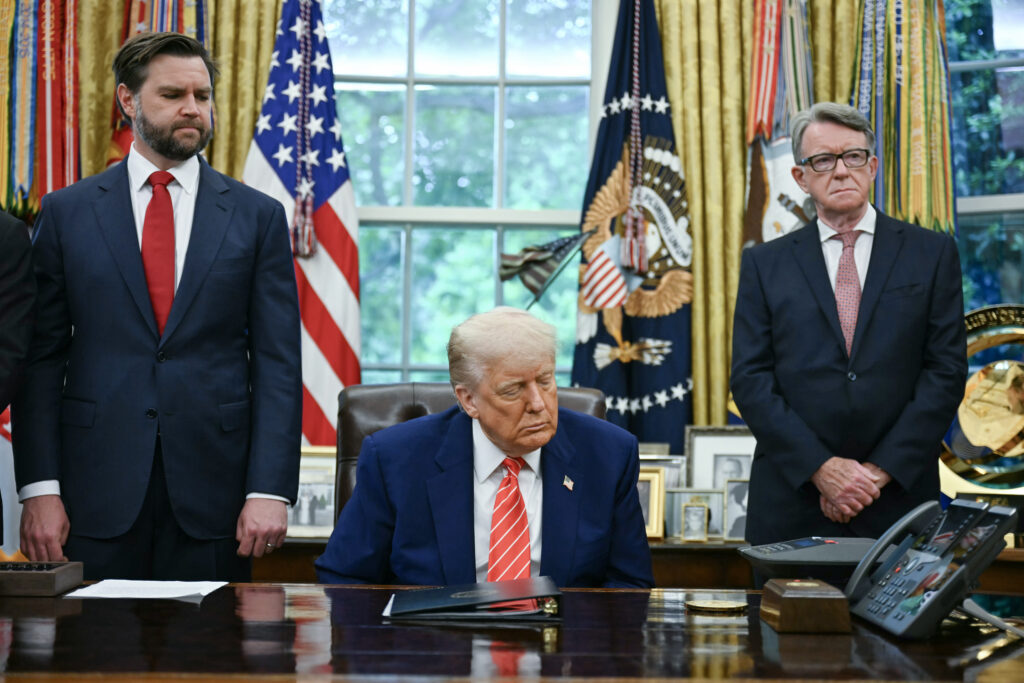
US President Donald Trump unveiled a “breakthrough” trade agreement with Britain on Thursday, celebrating the first deal in a tariff war that has rattled the world.Speaking by telephone from the Oval Office to British Prime Minister Keir Starmer, Trump said the deal would be the first of many with other countries.The deal will reduce tariffs on British cars and steel, but a 10 percent baseline levy on British goods will remain. Britain will in return open up markets to US beef and farm products despite consumer concerns over their quality.”I’m thrilled to announce that we have reached a breakthrough trade deal with the United Kingdom,” Trump said at the White House.”The deal includes billions of dollars of increased market access for American exports, especially in agriculture.” Starmer said it was a “really fantastic, historic day”, noting that it coincided with the 80th anniversary of “Victory Day” for allied forces — including Britain and the United States — over Nazi Germany in World War II.The trade deal slashes export tariffs for British cars from 27.5 percent to 10 percent, Britain said.”That is a huge and important reduction,” PM Starmer said during a visit to a Jaguar Land Rover factory in the central Midlands area of England.Both sides said there would be further negotiations on a fuller deal, but Trump denied overselling the agreement.”This is a maxed-out deal — not like you said it really incorrectly,” he added, answering a reporter’s question on whether he was overstating the breadth of the deal.The deal follows a charm offensive by Starmer, who came to the White House in February armed with an invitation from King Charles III for a historic second state visit for Trump.- ‘Further negotiations’A UK government official likened the deal to a “general terms document” which will set out agreements but also lay out a framework where further discussions are needed.The deal was focused on specific sectors rather than being a fully-fledged free trade agreement sought by the UK following its 2020 departure from the European Union, the official said on condition of anonymity.As well as dealing with steel and car tariffs, it would lay out positions for discussions over possible future tariffs in the key pharmaceuticals sector.”There will be further negotiations to come,” the source added.A US deal is a fresh win for Starmer after Britain this week struck a free-trade agreement with India, its biggest such deal since leaving the European Union.Trump described the British leader, who like the US president won power last year, as a tough negotiator following the latter’s visit to Washington in February.The president slapped 10 percent tariffs on imports from around the world in April, including Britain, but he temporarily froze higher duties on dozens of nations to allow for negotiations.The film industry — a main UK export for the services sector — is also in Trump’s sights.London, however, has not yet retaliated against Trump’s tariffs.London had been keen to achieve some type of accord with Washington ahead of an EU-UK summit on May 19 due to reset ties with the 27-nation bloc.The EU is struggling to reach its own trade deal with the United States.Brussels on Thursday proposed hitting US planes and cars with tariffs if talks fail.burs-dk/aha

Drones drag Sudan war into dangerous new territoryThu, 08 May 2025 16:00:29 GMT

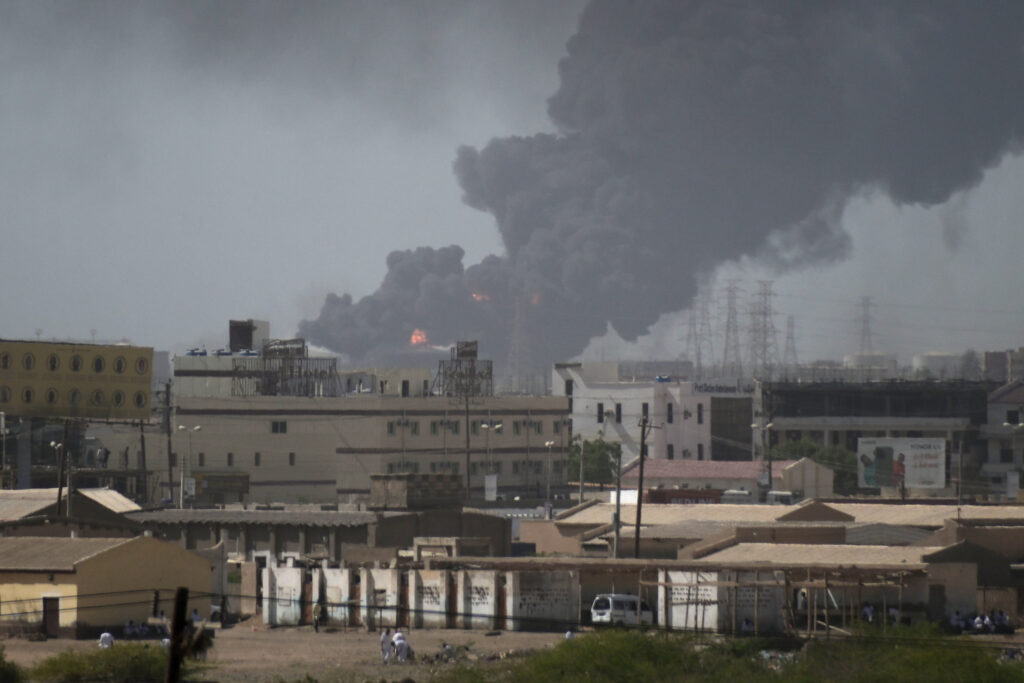
Paramilitary drone strikes targeting Sudan’s wartime capital have sought to shatter the regular army’s sense of security and open a dangerous new chapter in the war, experts say.Since April 2023, the Rapid Support Forces (RSF) group has been at war with the army, which has lately recaptured some territory and dislodged the paramilitaries from the …

Drones drag Sudan war into dangerous new territoryThu, 08 May 2025 16:00:29 GMT Read More »

Drones drag Sudan war into dangerous new territory

Paramilitary drone strikes targeting Sudan’s wartime capital have sought to shatter the regular army’s sense of security and open a dangerous new chapter in the war, experts say.Since April 2023, the Rapid Support Forces (RSF) group has been at war with the army, which has lately recaptured some territory and dislodged the paramilitaries from the capital Khartoum.The latter appeared to have the upper hand before Sunday, when drone strikes began blasting key infrastructure in Port Sudan, seat of the army-backed government on the Red Sea coast.With daily strikes on the city since then, the RSF has sought to demonstrate its strength, discredit the army, disrupt its supply lines and project an air of legitimacy, experts believe.According to Sudanese analyst Kholood Khair, “this is intended to undermine the army’s ability to provide safety and security in areas they control”, allowing the RSF to expand the war “without physically being there”.For two years, the paramilitaries relied mainly on lightning ground offensives, overwhelming army defences in brutal campaigns of conquest.But after losing nearly all of Khartoum in March, the RSF has increasingly turned to long-range air power.Using weapons the army says were supplied by the United Arab Emirates, it has hit strategic sites hundreds of kilometres (miles) away from their holdout positions on the capital’s outskirts.Michael Jones, research fellow at the Royal United Services Institute in London, says the RSF’s pivot is a matter of both “strategic adaptation” and “if not desperation, then necessity”.- Strategic setback -“The loss of Khartoum was both a strategic and symbolic setback,” he told AFP.In response, the RSF needed to broadcast a “message that the war isn’t over”, according to Sudanese analyst Hamid Khalafallah.The conflict between Sudan’s de facto leader, army chief Abdel Fattah al-Burhan and his former deputy, RSF commander Mohamed Hamdan Daglo, has split Africa’s third-largest country in two.The army holds the centre, north and east, while the RSF controls nearly all of the vast western region of Darfur and, with its allies, parts of the south.”It’s unlikely that the RSF can retake Khartoum or reach Port Sudan by land, but drones enable them to create a sense of fear and destabilise cities” formerly considered safe, Khalafallah told AFP.With drones and light munitions, it can “reach areas it hasn’t previously infiltrated successfully”, Jones said.According to a retired Sudanese general, the RSF has been known to use two types of drone — makeshift lightweight models with 120mm mortar rounds that explode on impact, and long-range drones capable of delivering guided missiles, including the Chinese-manufactured CH95.On Thursday, rights group Amnesty International published a report that said “Chinese GB50A guided bombs and 155mm AH-4 howitzers” used by the RSF in Khartoum and Darfur were provided by the UAE.- Sparing fighters -The Sudanese government severed diplomatic ties with the Gulf state on Tuesday, accusing it of supplying the advanced weapons systems the RSF has used to attack Port Sudan.Abu Dhabi has repeatedly denied arming the RSF, despite reports from UN experts, US politicians and international organisations.According to Mohaned Elnour, nonresident fellow at the Tahrir Institute for Middle East Policy, the RSF’s “main objective is to divert the army’s attention” and position itself as a potential government, which it has said it will form.”It’s much easier for them to attack quickly and withdraw, rather than defend territory,” Elnour said.Crossing Sudan’s vast landmass — some 1,500 kilometres (930 miles) from RSF bases in Darfur to Port Sudan — requires long-range drones such as the Chinese-made Wing Loong II, deployed by the UAE, or the Turkish-made Bayraktar TB2 used by the army, according to Amnesty.Both sides in Sudan are in a race to “destroy each other’s drone capacity”, Khair said.Two years into the devastating war, the RSF has another incentive to rely on drones, she said.”It allows them to spare their troops” after reports that RSF recruitment has dipped since the war began.”Initial recruitment was high based on the opportunity to loot, and there’s very little left to loot now,” she said.Both sides have been accused of war crimes including targeting civilians, but the RSF is specifically accused of rampant looting, ethnic cleansing and systematic sexual violence.