“L’identité gommée” d’une fille de soldat français née dans l’Allemagne d’après-Guerre

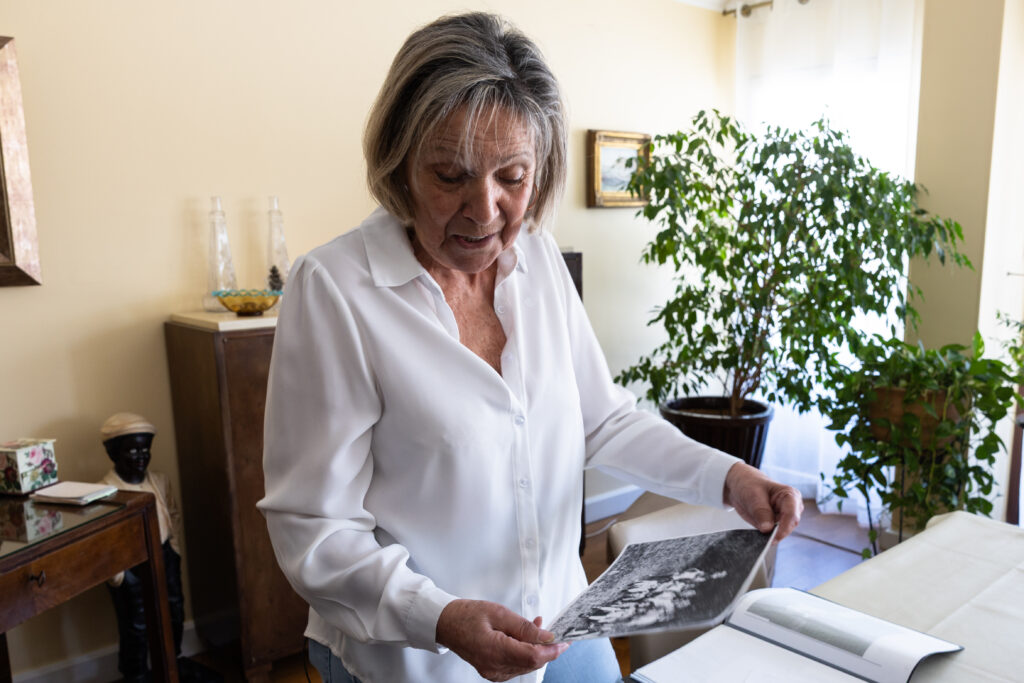
Sur une photo en noir et blanc, Claudine Spire montre un groupe d’enfants. “Je pensais déjà m’être reconnue”, dit-elle en pointant une fillette aux cheveux bouclés, vêtue d’un manteau court. Las, après quelques recherches, le constat tombe: ce n’est pas elle.Cette femme de bientôt 79 ans a retrouvé début avril, au Centre des archives diplomatiques du ministère des Affaires étrangères à La Courneuve (région parisienne), ce cliché de la fin des années 1940 dans un foyer de Nordrach, dans le sud-ouest de l’Allemagne.Depuis près de 30 ans, elle tente de retracer ses racines, qui plongent dans un épisode sombre et méconnu de l’après-Guerre.Claudine Spire est née à Fribourg en mai 1946, d’une mère allemande et d’un soldat français, en poste dans la zone occupée par la France après la défaite du IIIe Reich.Comme environ 1.500 enfants nés de ce type d’union entre 1946 et 1951, elle n’a pas grandi en Allemagne mais a été placée dans une famille adoptive de l’autre côté du Rhin.Alors que la France faisait face à un déficit de naissances, “il y avait une politique proactive des autorités françaises pour chercher des enfants et demander aux mères de les abandonner. C’est documenté et prouvé”, explique Yves Denéchère, historien spécialiste de l’adoption internationale à l’université d’Angers (France).Les femmes allemandes enceintes d’un soldat français étaient obligées de déclarer leur enfant aux autorités locales. Certaines recevaient à la maternité la visite d'”officiers de recherche” qui les incitaient à abandonner leur bébé pour lui offrir un meilleur avenir en France.”Pour des raisons personnelles, je désire abandonner mon enfant entre les mains des Autorités Françaises”, énonçait un formulaire proposé aux mères qui, en signant, renonçaient à tous leurs droits sur l’enfant.- “Trop teintée” -Enceinte à 19 ans, la mère de Claudine Spire a été poussée à se séparer de sa fille par ses parents, qui la considéraient comme un enfant de l’ennemi.Claudine arrive à 18 mois à Nordrach, en Forêt-Noire. Le foyer a été créé par les autorités françaises dans un ancien centre du “Lebensborn”, programme nazi destiné à promouvoir la race aryenne.Les autorités françaises y “sélectionnaient surtout des enfants blancs, blonds et en bonne santé pour l’adoption”, souligne Yves Denéchère.Comme environ la moitié des soldats français en Allemagne venaient des colonies d’Afrique du Nord ou d’Afrique subsaharienne, de nombreux enfants ne correspondaient pas à ces critères. Certains ont été rendus à leurs mères – en évoquant un doute sur leur paternité française – ou envoyés dans des orphelinats allemands.”J’étais dans la liste des enfants qui ne pouvaient pas être proposés à l’adoption, parce que (…) j’étais trop teintée, comme ils le disaient”, assure-t-elle.Elle a malgré tout été placée en avril 1948 dans une famille de région parisienne, où elle a connu une enfance sans histoire.- Histoire d’amour -Elle ne se lance dans la quête de ses origines qu’à la cinquantaine. Elle retrouve sa mère biologique allemande, qu’elle rencontre pour la première fois dans le hall d’un hôpital d’Offenburg (sud-ouest).”C’était très… bizarre”, raconte-t-elle, en cherchant le mot juste: “On était obligées de se rencontrer dans un lieu public parce qu’elle n’a jamais rien dit à son mari, ni à ses enfants”.Elle ne la verra que deux fois, avant qu’elle ne décède. Le temps pour elle d’apprendre que son père était un Maghrébin et qu’elle était le fruit d’une histoire d’amour, pas d’un viol. Un soulagement.Elle découvre également que sa mère l’avait appelée Margarete. Son nom a été changé lors de l’adoption. “Il fallait vraiment que l’identité soit gommée”, dit Claudine Spire.”Je trouve cette démarche absolument monstrueuse, de dire +on a besoin d’enfants, il faut repeupler la France+”, s’emporte-t-elle: “Monstrueux de la part de l’État français, et monstrueux de la part des autorités allemandes de l’époque qui ont accepté de jouer ce jeu-là”.Aucune action en justice n’a jusqu’à présent été engagée sur ces adoptions organisées en plein vide juridique – l’Allemagne post-IIIe Reich n’avait pas de gouvernement. Et les faits sont aujourd’hui prescrits, rappelle Yves Denéchère.Claudine Spire n’a, de fait, jamais pensé à se lancer dans une procédure. Le passeport allemand qu’elle a obtenu est une reconnaissance suffisante.Mais elle continuera de fouiller les archives, rapatriées à partir des années 1950. Elle ne désespère pas d’y retrouver une photo d’elle.

A close-up of a stack of newspapers resting on a desk, symbolizing information and media.

Kenya: des trafiquants de fourmis condamnés à payer une amende

Un tribunal kényan a condamné mercredi quatre personnes, dont deux adolescents belges, à verser une amende de plus de 7.00 dollars pour avoir tenté de faire sortir clandestinement des milliers de fourmis vivantes du pays.L’affaire a défrayé la chronique dans ce pays d’Afrique de l’est, le Kenyan Wildlife Service (KWS), l’agence nationale de conservation, accusant les quatre individus de se livrer à la “biopiraterie”.Les Belges David Lornoy et Seppe Lodewijckx, âgés de 18 ans, le Vietnamien Duh Hung Nguyen et le Kényan Dennis Nganga ont tous plaidé coupables de possession de fourmis, mais ont nié avoir cherché à faire le trafic de ces insectes.Selon l’acte d’accusation consulté par l’AFP, les suspects belges ont été interpellés le 5 avril dans une pension bordant le lac Naivasha, dans le centre du Kenya, en possession de 5.000 fourmis reines – dont l’espèce Messor cephalotes, originaire de la région – insérées dans 2.244 tubes d’essai. Un document judiciaire indique que les fourmis, d’une valeur marchande estimée à environ 7.700 dollars, peuvent survivre au moins deux mois dans les contenants.MM. Nganga et Nguyen, selon leur acte d’accusation, ont été arrêtés le 5 avril dans les comtés de Nairobi et de Machakos avec plusieurs centaines de fourmis dans quelque 140 tubes. Ils ont également plaidé coupable.Les deux affaires étaient distinctes, mais les quatre ont été jugés ensemble.La possession de tout spécimen ou trophée d’animal sauvage sans permis est une infraction pénale au Kenya, passible d’une amende minimale d’environ 10.000 dollars et/ou d’une peine de prison potentielle d’au moins cinq ans.Le tribunal a déclaré mercredi que les suspects pouvaient soit passer un an en prison ou bien payer une amende d’un million de shillings (7.740 dollars), soit la valeur estimée par la police des fourmis saisies. La juridiction a ajouté que les deux Belges “ne ressemblaient pas à des braconniers typiques” et qu’ils ignoraient la loi, ajoutant toutefois que l’affaire reflète un scénario “qui s’est déjà produit au cours des siècles passés (…) quand l’Afrique possédait des ressources pillées par l’Ouest et maintenant par l’Est”.KWS a porté plainte contre les quatre hommes, affirmant qu’il s’agissait non seulement d’un “crime contre la faune sauvage, mais aussi d’un acte de biopiraterie”.Les suspects “avaient l’intention de faire passer les fourmis en contrebande vers des marchés d’animaux exotiques de grande valeur en Europe et en Asie, où la demande d’espèces d’insectes rares est en hausse”, a-t-elle ajouté dans un communiqué.

Israel’s Gaza plan ‘dangerous moment’ for civilians: UN official

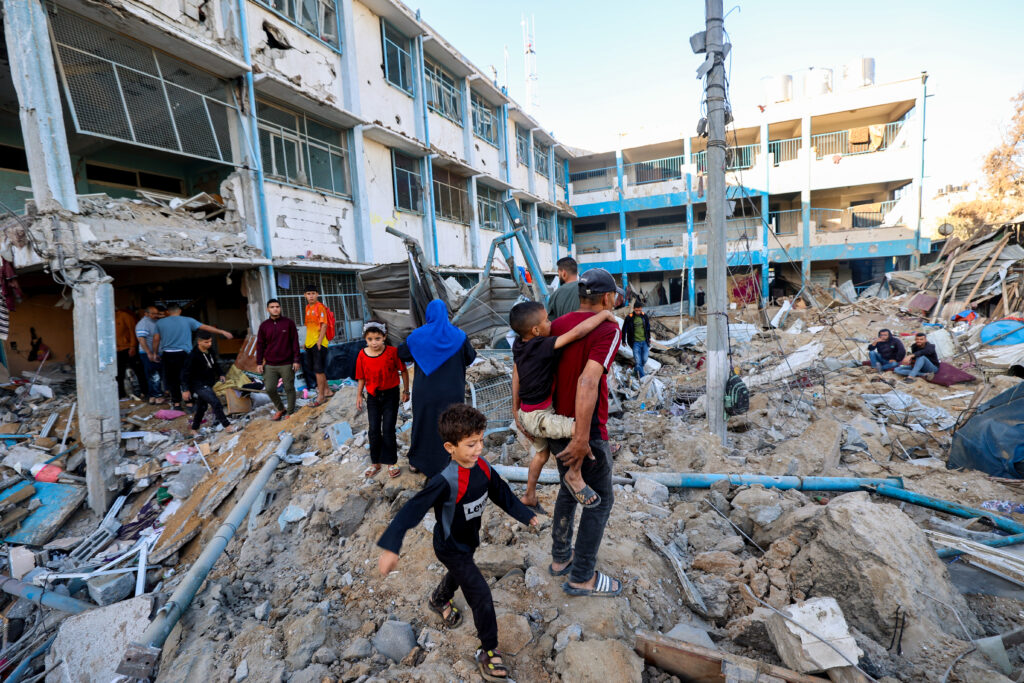
The UN’s human rights chief told AFP Wednesday that Israel’s plan for an expanded offensive in the Gaza Strip represented “a very dangerous moment” for civilians there.”What we see is only more destruction, more hatred, more dehumanisation,” said Volker Turk, the United Nations High Commissioner for Human Rights, during a visit to Copenhagen for a UN meeting.”It’s a very dangerous moment for civilians,” he added, criticising the Israeli plan for an expanded offensive in the Gaza Strip.On Monday, Israel announced an expanded military campaign, which an Israeli official said would entail the “conquest” of the Palestinian territory.On Tuesday, Israel’s Finance Minister Bezalel Smotrich said this meant that the Gaza Strip would be “entirely destroyed”.Several countries and world leaders have already condemned the plan, and Turk said the parties needed to “come to a place of reason and peace, and not just of continuous fighting and war”.The war needed to end, he said, there needed to be a ceasefire, a political solution with all the hostages “released unconditionally and immediately”.The Palestinian Islamist organisation Hamas has said that ceasefire talks are pointless at this stage.The blockade imposed by Israel on the Gaza Strip “needs to be lifted immediately”, said Turk.”Humanitarian assistance needs to come in. That’s an obligation, that’s an obligation under international law,” he added.Turk argued that the current situation worldwide underlined the need to reaffirm the principles of international cooperation. The UN Security Council “is not functioning well” to address “the big crisis of our time”, he added.”With what is happening at the moment, in this current geopolitical moment, it is all the more important to come back to the principles, the values, to the norms, to the institutions, because they have served humanity well for 80 years,” said Turk.”And if we lose them, we lose a lot of what has been actually possible by way of progress, human progress, development, and also when it comes to humanitarian action and human rights,” he added.He hoped “that the world comes together again, shows the political leadership… including the most powerful countries around the world, that they act in favour of peace and not in favour of war”.

Syrian leader to meet Macron in first European visit

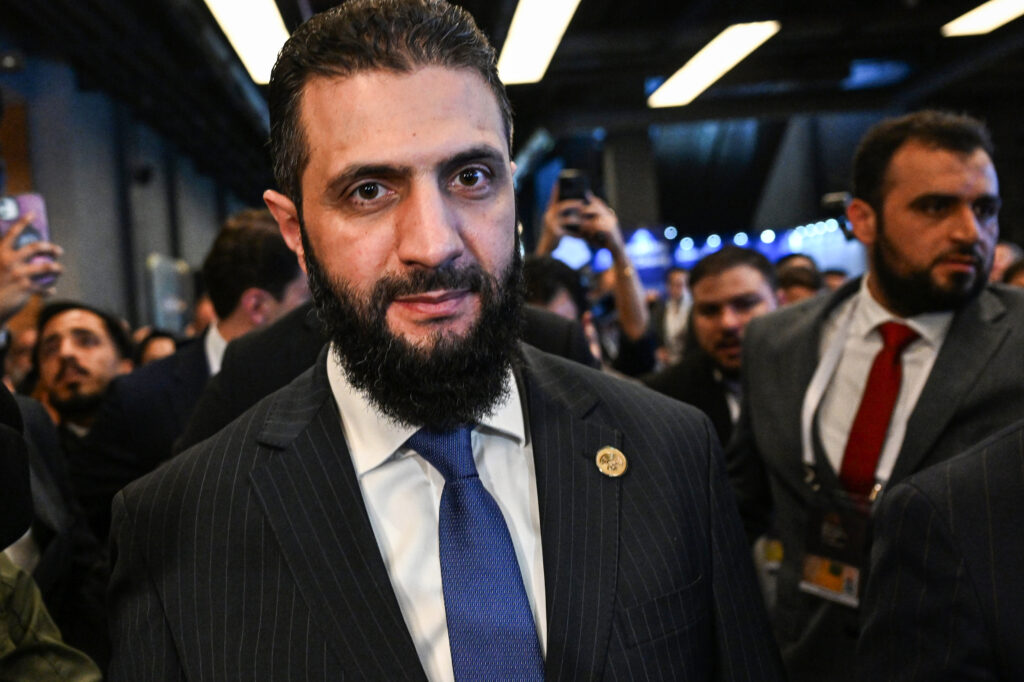
Syrian President Ahmed al-Sharaa was on Wednesday set to meet French leader Emmanuel Macron on his first visit to Europe since overthrowing longtime ruler Bashar al-Assad, despite alarm over deadly clashes that have shadowed the new authorities’ first months in power.The visit comes with Sharaa and his fellow top officials, who have roots in the Al-Qaeda jihadist network, under pressure from Europe to show they are serious about protecting human rights as Damascus seeks the full lifting of Assad-era sanctions.Sectarian clashes in March, in which more than 1,700 people were killed, mostly among Assad’s Alawite minority, sparked international condemnation and doubts over Syria’s new path.By welcoming Sharaa, Macron hopes to help the authorities on the way to “a free, stable, sovereign Syria that respects all components of Syrian society,” a French presidential official, asking not to be named, told AFP.The official said France was aware of “the past” of certain Syrian leaders and was demanding that there be “no complacency” with “terrorist movements” operating in Syria.”If we are inviting him (Sharaa) here, it is precisely to ask him to go further in the fight against impunity,” Foreign Minister Jean-Noel Barrot told broadcaster TF1.Sharaa headed the Islamist group Hayat Tahrir al-Sham (HTS) which spearheaded Assad’s downfall after 14 years of civil war. The group formerly had links to Al-Qaeda.- Travel ban -He is still subject to a UN travel ban and France most likely had to request an exemption from the United Nations, as was the case for his recent trips to Turkey and Saudi Arabia, according to a source familiar with the matter.EU spokesperson Anouar El Anouni said that exemptions can be granted in certain cases if UN officials determine “that the entry or transit is justified”.Macron is due to welcome Sharaa to the Elysee Palace at 1515 GMT followed by a joint news conference.France, a former colonial-era ruler of Syria, is eyeing an opportunity to increase its influence in the country after years of Russian presence, with French companies also seeking contracts.Last week, French logistics giant CMA CGM signed a 30-year contract to develop and operate the port of Latakia.Mehad, a French NGO which has operated in Syria since 2011, warned of a worsening humanitarian crisis in the country and called for “a strong response” from France.”Emmanuel Macron’s strong commitment must now be translated into action, not only by maintaining the budget allocated to humanitarian aid in Syria, but also by disbursing it quickly,” said Mehad director Mego Terzian.”Otherwise we are heading for a humanitarian and health disaster in the country.”- ‘Serious error’ – Syria’s new Islamist authorities have vowed inclusive rule in the multi-confessional, multi-ethnic country.But as well as the sectarian clashes in March, more recent clashes involving fighters from the Druze community and reports of abuses from NGOs have also raised doubts about the interim government’s ability to control extremists in its ranks.Adding to pressure on the new Syrian government, Israel has launched hundreds of strikes on the country since Assad’s overthrow, including one near the presidential palace in Damascus on Friday.The invitation for Sharaa has caused controversy in France, with far-right leader Marine Le Pen accusing Macron of hosting talks with “a jihadist” in a “provocative and irresponsible” meeting.On the traditional right, the head of the right-wing Republicans in parliament, Laurent Wauquiez, denounced the meeting as “a serious error.””We don’t welcome leaders who are former terrorists and members of organisations that want to attack France,” he said.But Xavier Bertrand, from the same party and head of the northern Hauts-de-France region, countered that “those who criticise Emmanuel Macron have understood nothing about the role of head of state.”Barrot, who met with the Syrian leader in Damascus in January, defended the talks and said that Paris was engaging in a “demanding” dialogue with Damascus.”If Syria were to collapse today, if it were to break up, this would roll out the red carpet for Daesh,” Barrot told TF1, using the Arabic acronym for Islamic State jihadists.fec-fff-as-sjw/as/yad

Espagne: Sánchez réclame à nouveau du temps pour établir les causes de la méga-panne

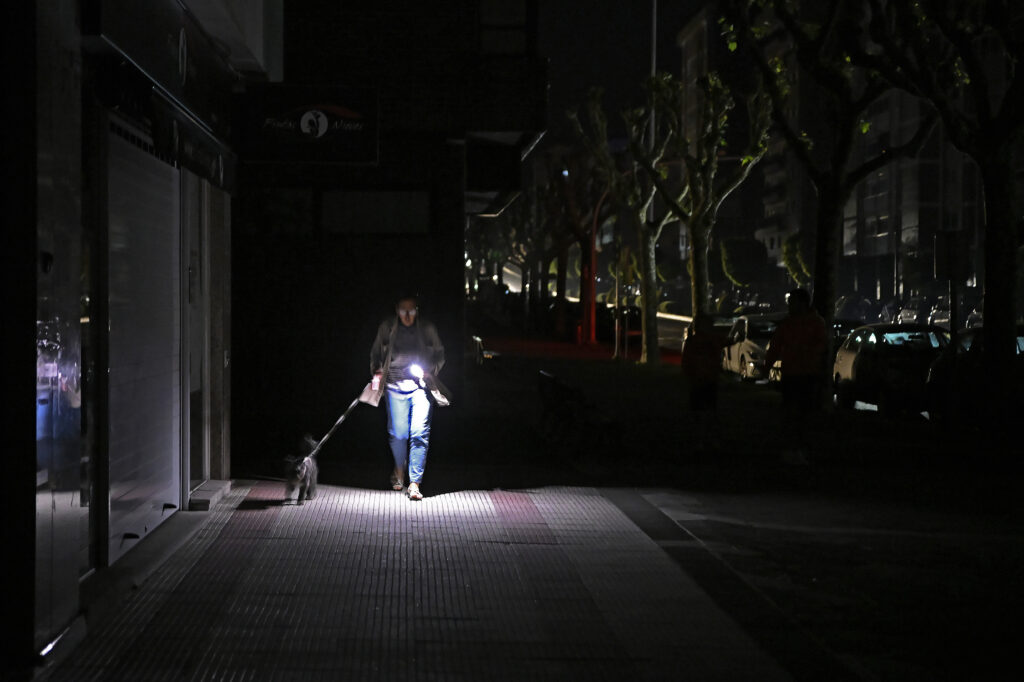
Le Premier ministre espagnol Pedro Sánchez a de nouveau réclamé mercredi “du temps” pour déterminer les causes de la panne électrique ayant touché la péninsule ibérique le 28 avril, assurant à nouveau qu’il n’y avait “aucune preuve” à ce stade permettant d’incriminer les énergies renouvelables.”Le processus va prendre du temps, car pour le faire, il faudra examiner (…) de manière minutieuse environ 756 millions de données”, a expliqué le dirigeant socialiste lors d’une audition au Congrès des députés consacrée notamment à cet incident.”Les citoyens veulent savoir ce qui s’est passé. Je veux leur assurer que le gouvernement aussi”, a-t-il ajouté, en promettant “d’aller au fond de l’affaire”: “Ce que nous n’allons pas faire, c’est fermer le débat prématurément. Nous n’allons pas faire de conclusions hâtives”.Face aux députés, le chef du gouvernement a expliqué que la panne avait débuté par trois incidents distincts dans un très court laps de temps, et non deux comme indiqué dans un premier temps par les autorités. Le troisième, qui n’a pas pu être surmonté, a laissé le pays sans lumière.”L’information technique préliminaire nous dit qu’une perturbation a été enregistrée d’abord dans le sud de l’Espagne, ce qui pourrait avoir généré cette perte de production, et quelques secondes après, deux autres ont eu lieu, cette fois dans le sud-ouest du pays”, a-t-il détaillé.Selon le Premier ministre, “le système a réussi à surmonter les deux premières perturbations”. Mais “il n’a pas pu contenir la troisième”, qui “s’est étendue à l’ensemble du système électrique péninsulaire”, a-t-il poursuivi.La ministre de la Transition écologique, Sara Aagesen, avait déjà indiqué lundi que trois incidents, survenus en moins de 30 secondes, avaient été identifiés.D’après les autorités, 15 gigawatts d’électricité, soit l’équivalent de 60% de la consommation électrique espagnole, ont été perdus subitement du système le 28 avril à 12H33 locales (10H33 GMT), un phénomène qualifié d'”inédit” par le gouvernement. Après cet incident, plusieurs experts ont pointé le boom des énergies renouvelables et son possible impact sur la stabilité du réseau, ce qui a conduit la droite espagnole à réclamer l’extension du fonctionnement des cinq centrales nucléaires en opération.À ce jour, “il n’y a aucune preuve empirique pour dire que l’incident a été provoqué par un excès de renouvelables ou par le manque de centrales nucléaires en Espagne”, a insisté mercredi Sánchez, comme il l’a déjà fait plusieurs fois depuis le 28 avril.Un discours dénoncé par le leader de l’opposition, le conservateur Alberto Núñez Feijóo: “Quelle honte, M. Sánchez! Quelle honte!”, a-t-il lancé, en assurant que l’opposition ne permettrait pas que cet incident “se solde sans démissions”.

Palestinians in razed West Bank hamlet vow to stay

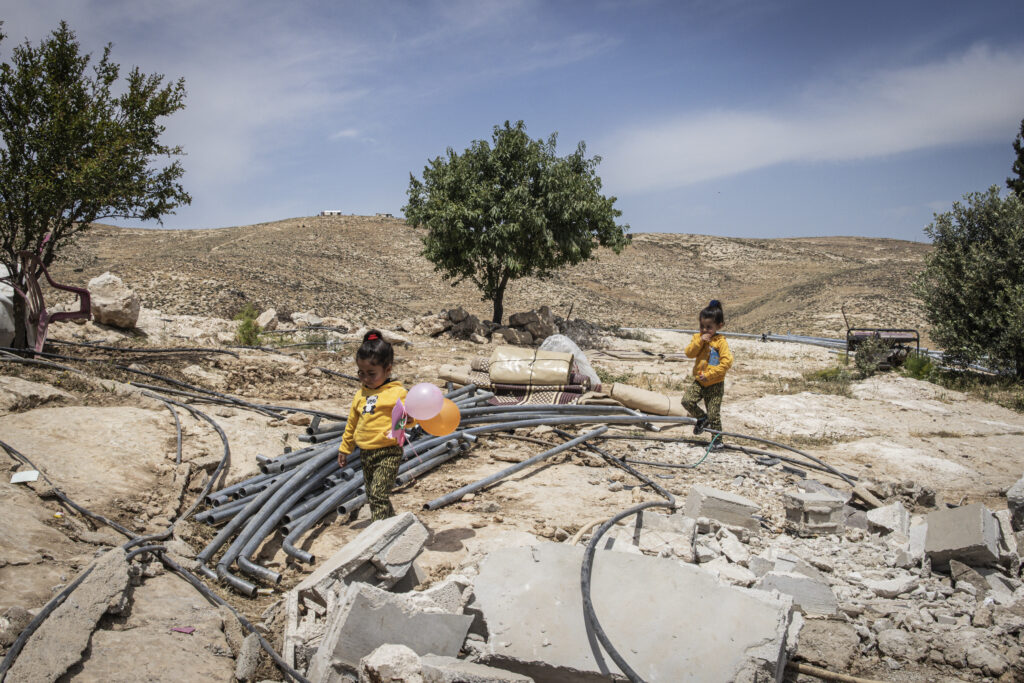
Standing in the rubble of what used to be his home, Palestinian farmer Haitham Dababseh cleared stones to make space for a tent after Israeli army bulldozers destroyed his village in the occupied West Bank.Residents of Khallet al-Dabaa and other hamlets in the West Bank’s Masafer Yatta region have for years contended with violence from Israeli settlers and repeated demolitions.But the bulldozers that descended on Khallet al-Dabaa on Monday carried out “the biggest demolition we’ve ever had”, said Dababseh, razing to the ground the hamlet that is home to about 100 Palestinians.Israeli forces “came here in the past, they demolished three times, four times”, the 34-year-old farmer told AFP, but never entirely destroyed a hamlet this size in Masafer Yatta.”I just have my clothes. Everything I have is under the rubble.”Behind him, his 86-year-old father struggled to move the house’s former door out of the way so that they can set up their shelter.Khallet al-Dabaa is one of several villages featured at length in the Oscar-winning documentary “No Other Land”, recounting the struggles of the Palestinian residents of the area in the West Bank’s south, a frequent target of settler violence and army activities.Several of the communities shown in the documentary have experienced settler attacks or army demolitions since it won an Academy Award in March.- No protection -Several years after occupying the West Bank in 1967, the Israeli army had declared Masafer Yatta a restricted firing zone.Israeli forces regularly demolish structures that the military authorities say were built illegally in the area, where about 1,100 Palestinians live across several hamlets.”Enforcement authorities of the Civil Administration dismantled a number of illegal structures that were built in a closed military zone in the South Hebron Hills,” the Israeli military told AFP in a statement on the Khallet al-Dabaa demolition.”The enforcement actions were carried out after the completion of all required administrative procedures and in accordance with the enforcement priority framework previously presented to the Supreme Court,” it added.Some residents, and many of their ancestors, once lived in caves in the rocky terrain to escape the area’s stifling summer heat, and built houses with stone and other materials after the Israeli firing zone designation in the 1970s.Dababseh said he was the first member of his family to be born in a hospital and not a cave.He lamented that the army had blocked the entry to the cave near the family home where his father and grandfather were born.In the middle of Khallet al-Dabaa, what served as a health and community centre is now a pile of broken concrete with no walls.A torn logbook that an aid organisation used to record residents’ medical check-ups lay under dust.On the outside wall of the only structure left standing, a painted mural read “Let me live”.Mohammed Rabaa, head of the nearby Tuwani village council which has jurisdiction over Khallet al-Dabaa, told AFP that the foreign aid his community received was useless if the world “can’t protect it”.- ‘I’m not leaving’ -According to Rabaa, “nine settler outposts were established in the Masafer Yatta area” since October 2023, when war began in the separate Palestinian territory of the Gaza Strip.The West Bank is home to about three million Palestinians, but also some 500,000 Israelis living in settlements that are illegal under international law. Settlement outposts, built without the authorities’ prior approval, are considered illegal under Israeli law too although enforcement is relatively rare.The settlers who live in the nearby outposts “attack homes, burn property, destroy and vandalise” with full impunity and often under army protection, said Rabaa.To him, they aim to force Palestinians to leave and “do not want any Palestinian presence”.The day after Khallet al-Dabaa was razed, Israel’s Finance Minister Bezalel Smotrich, a far-right politician who lives in a settlement, expressed his hope that the government would formally annex the territory soon.Umm Ibrahim Dababseh, a 76-year-old woman who has lived in Khallet al-Dabaa for six decades, said she would not leave under any circumstances.”I told them, ‘make my grave right here’,” she said of the Israeli soldiers, adding that they had to drag her out of her now ruined house.”I didn’t even get to wear my clothes properly,” she said, sitting with her granddaughters on a rock under the shade of an olive tree.Haitham Dababseh, a distant relative of Umm Ibrahim, said that hardships would not make him leave either.”Last night, I slept there,” he said, pointing to a bed exposed to the elements on the hilltop.”I have a bed, okay, I will cover myself with the sky, but I’m not leaving.”

Drone strike targets Port Sudan navy base: army sourceWed, 07 May 2025 09:40:22 GMT

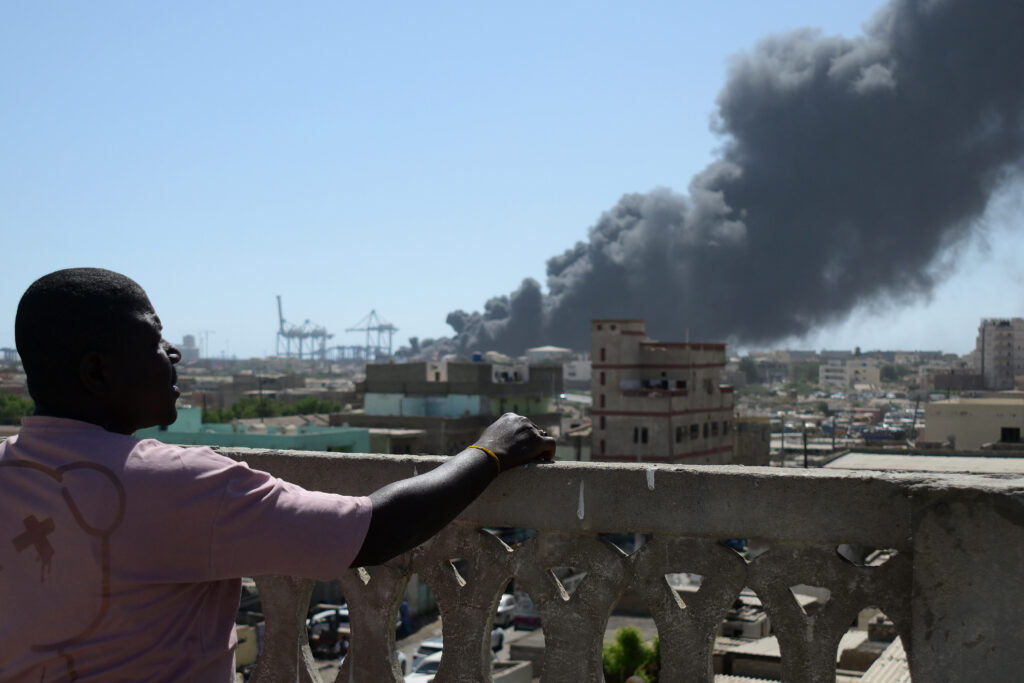
A drone strike targeted Sudan’s biggest naval base Wednesday, an army source told AFP, marking the fourth straight day the seat of the army-backed government has come under attack.”They (the drones) were met with anti-aircraft missiles,” the source said on condition of anonymity because they were not authorised to speak to the media. An AFP correspondent …

Drone strike targets Port Sudan navy base: army sourceWed, 07 May 2025 09:40:22 GMT Read More »