US growth figure expected to make for tough reading for Trump
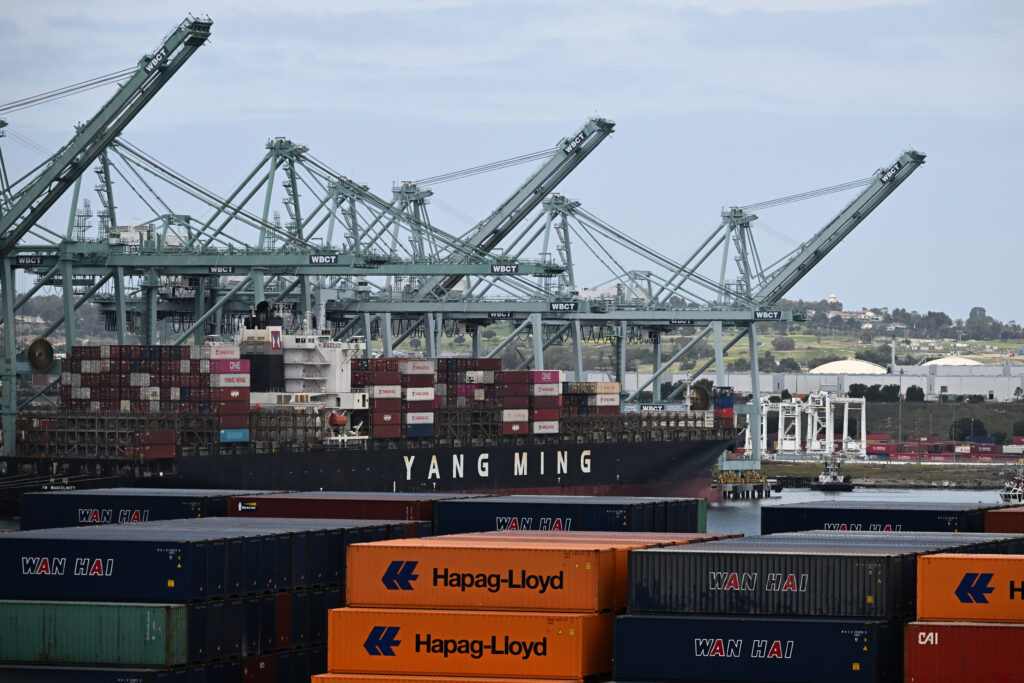
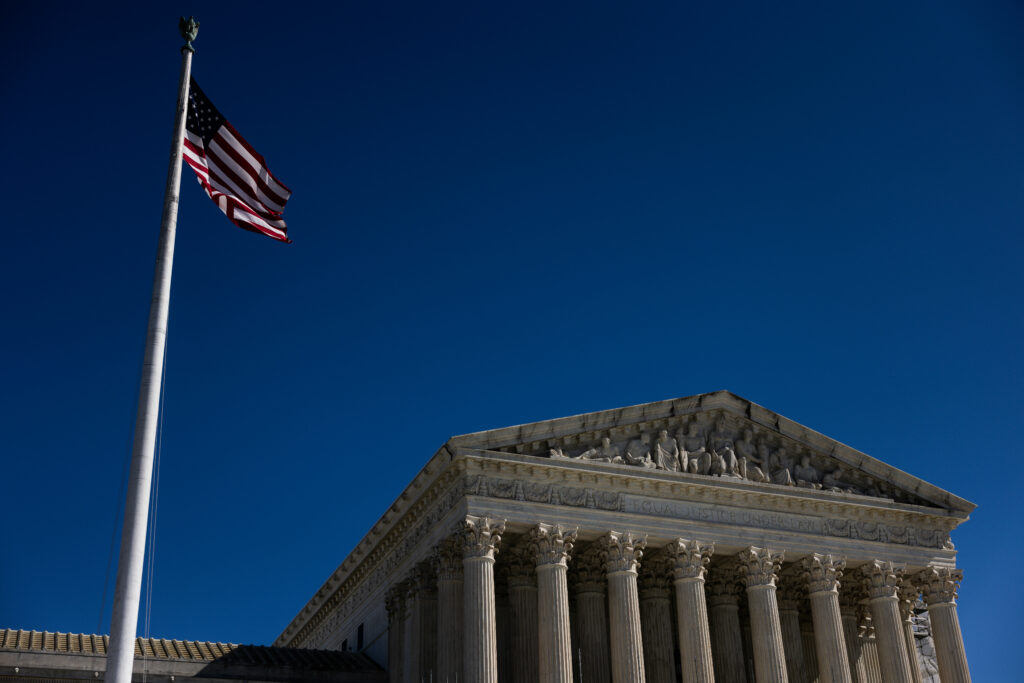
US GDP figures for the first quarter are expected to show a sharp drop-off in growth — and possibly even a recession — reflecting a surge in imports before President Donald Trump’s sweeping tariffs came into effect.”It’s going to be a pretty dramatic slowdown from the fourth quarter,” Moody’s Analytics economist Matt Colyar told AFP. The gross domestic product data for the quarter will be published on Wednesday, the 101st day since Trump’s return to office on January 20. In that time, he has announced several rounds of tariffs, laying out plans in March to impose sweeping levies on top trading partners from early April in a bid to reset US trade relations. The introduction of those tariffs sparked a selloff in financial markets, sending volatility surging to levels not seen since the Covid-19 pandemic and spooking investors.”Usually, government policy doesn’t change that much, particularly not in the first 100 days of a presidency,” George Washington University economics professor Tara Sinclair told AFP. “But this one’s different.””I think it’s pretty clear that there were dramatic policy changes that are directly weakening the economy,” she said. Following April’s dramatic market movement, the Trump administration announced a 90-day pause to the higher tariffs for dozens of countries to allow for trade talks, while maintaining a baseline 10 percent rate for most countries, sector-specific measures, and new sweeping tariffs totalling 145 percent on China. – Rising recession risk -The US economy grew 2.8 percent last year, according to the Commerce Department. Heading into the new year, analysts had widely expected growth to cool, but to remain at around two percent in 2025. Since Trump’s return to office, and the introduction of new tariffs, many analysts have sharply cut their growth outlook. Some economists — including those at Wall Street titans Goldman Sachs, JPMorgan and Morgan Stanley — now predict an economic contraction in the first quarter. But even if the economy does not contract for the first quarter — which ended before Trump’s sweeping tariffs came into effect — the scale of the slowdown analysts expect would nevertheless be significant.”Our expectation is kind of shockingly on the higher side, and we’re at 0.5 percent,” said Colyar from Moody’s Analytics.The market consensus estimate is for annualized GDP growth of 0.4 percent for the first quarter, according to Briefing.com — a marked change from the 2.4 percent annualized rate seen in the final quarter of 2024. If the economy cools as expected, it will be largely down to a surge in imports, as consumers and businesses scrambled to buy what they needed before the tariffs kicked in, analysts told AFP.”This spike in imports, that’s coming directly from people trying to get ahead of tariffs,” said Sinclair from George Washington University. “And that is in direct response to the policies of this president.”Beyond the effects of tariffs, the GDP data is likely to paint a “very complicated story,” Belinda Roman, associate professor of economics at St Mary’s University in San Antonio, Texas, said in an interview. Roman pointed to better-than-expected employment figures, which suggest that “clearly there’s something else changing that we’re not seeing just yet” in the data. “I think there might be a small contraction,” she said. “That may be offset by the fact that we’ve seen what I think is a very interesting increase in employment,” she said. “I think we’ll start to see in second quarter and third quarter more negative impacts, because it’s it takes it a while,” she said. “It doesn’t happen immediately.”
100 days of Trump: Migrants fret over deportation
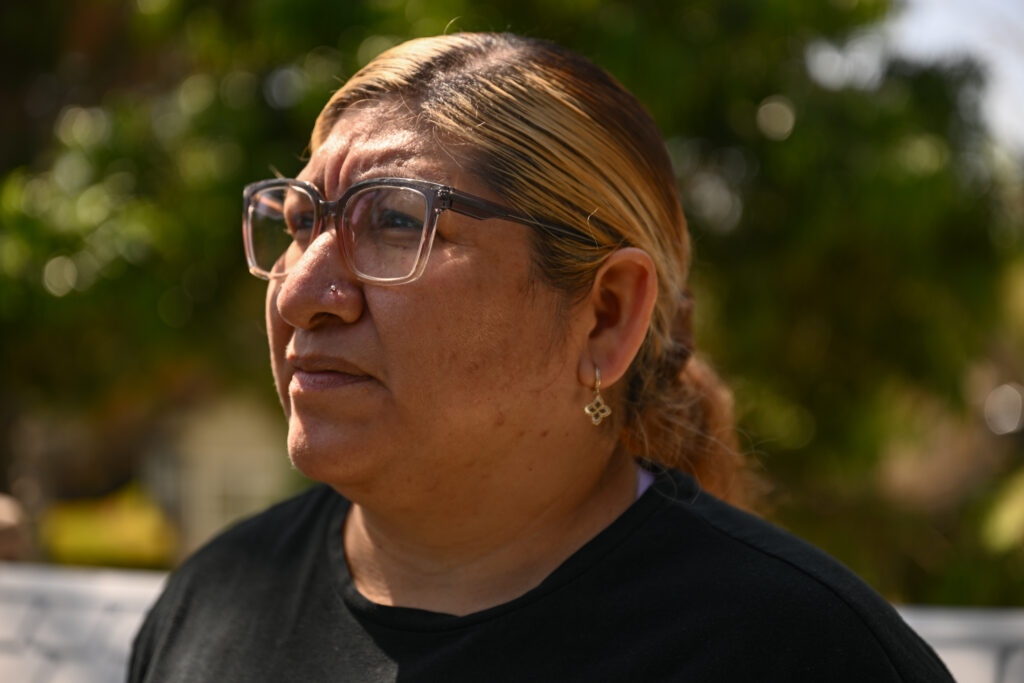
Rosalba Hernandez used to keep her children’s birth certificates close at hand in case an earthquake struck her part of California. But since Donald Trump returned to the White House, it’s more because she’s worried about immigration raids.News about high-profile arrests and deportations have characterised Trump’s first 100 days back in office, with his administration saying he is making good on campaign promises to clamp down on illegal immigration.That has left undocumented people like Hernandez on edge.”You don’t live your normal life anymore,” Hernandez, 46, told AFP in southern California, which she has called home for half her life.Hernandez, now a mother of five, left Mexico with her eldest daughter in her arms more than two decades ago and arrived in the United States.She was briefly detained under the first Trump administration in 2019, when immigration agents raided the supermarket where she worked.The experience frightened her, but Hernandez, who now works in a restaurant, says she’s never been as terrified as she has been in the past three months. “You go to work but you don’t know what’s going to happen… you don’t know if you’re going to be able to go home or not,” she said.”With all the focus on deporting people, they don’t care. Even if you don’t have a criminal record, you have the bad luck of passing by when they’re making an arrest or waiting for someone,” she added. To reduce the risk of encountering agents, Hernandez now limits her outings only to what is strictly necessary — and even then she is extra cautious.When she goes to work or takes her children to school — four of them are US citizens by birth — she first checks for suspicious cars outside, or consults text chains involving friends, neighbors and non-governmental organizations. “When we see something irregular, we start notifying these organizations, and everything gets put on Facebook, in messages, on Instagram,” she said.- Citizen Patrol -One of these sources of information is Union del Barrio, a group that patrols the streets of San Diego and Los Angeles before dawn to be on the lookout for potential raids.”The goal is to see nothing, but if we see something, we inform the community,” said Ron Gochez, a member of the organization.”We do this every single day in some different area of Los Angeles. And we’re on call 24 hours a day,” he told AFP during a tour of south-central Los Angeles, a working-class area with a strong immigrant presence. Activists gather at 5:30am to co-ordinate their patrol, looking for the kind of vehicle they believe Immigration and Customs Enforcement (ICE) agents use.”We’re looking for primarily American SUVs, Ford, Chevy, etc. Sometimes they also use pickup trucks or Dodge Challengers. “We’re looking for cars with tinted windows…. that could be sometimes double parked.”These patrols began more than two decades ago in San Diego, but increased in frequency this year with the return of Trump. “The community is very scared,” said Gochez, whose day job is teaching history in a public school.”About 10 percent of my students have disappeared. They just don’t go to school anymore.”Gochez, 43, said he knew of at least one student whose family fled to El Salvador for fear of being caught up in raids.Community life has also diminished, he says, with church attendance down, and quinceaneras — coming-of-age parties for girls turning 15 — becoming rarer.At the end of each patrol, Union del Barrio posts images on social media so neighbors know if their area is free of raids. This information is vital for people like Hernandez, who says she fears daily being separated from her children. “If I have the opportunity to stay here, it’s to help them get ahead and have a better future,” she said.”I don’t want them to have to work sometimes up to 16 hours a day.” Despite the risk, Hernandez said she wasn’t afraid of giving an interview and was not ashamed.”I’m not saying anything that isn’t true,” she said.”Like many people, I am working. We’re not doing anything bad for this country.”We all come to work, and our work contributes to the economy of this country.”
Will Trump strike drug cartels he says ‘run’ Mexico?
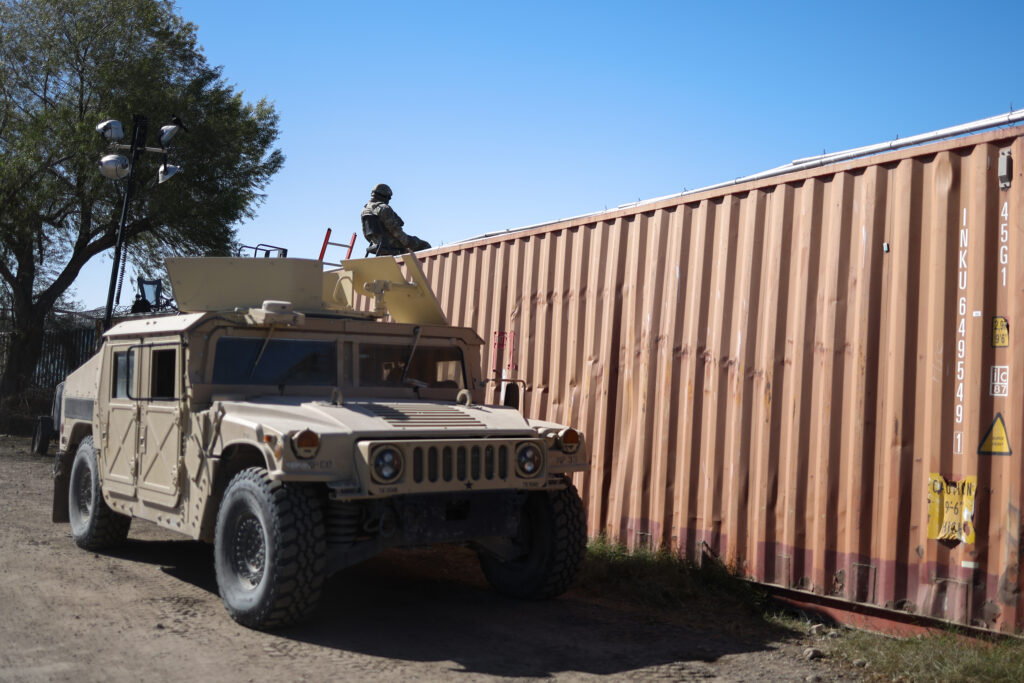
President Donald Trump has boosted the US military presence along the border with Mexico and left open the possibility of drone strikes against drug trafficking groups that he designated terrorist organizations.In March, he vowed in Congress to “wage war” on Mexican drug cartels that he said posed a grave threat to national security.How far is Trump willing to go to curb drug flows from a country he says is run by the cartels?- What steps is Trump taking? – After returning to office in January, Trump declared an emergency along the 3,100-kilometer (1,900-mile) border and ordered the deployment of thousands of troops to beef up security.In March, he ordered the deployment of two warships to support the border mission.Trump also announced the creation of a “national defense area” stretching more than 170 miles (270 kilometers) along the frontier to enable the army to support border patrols.”I think they need help,” Trump said last week in an interview with The Blaze, a conservative media outlet, referring to Mexico.Asked whether he would take military action even if Mexico did not want it, Trump said: “You could say at some point, maybe something’s going to have to happen.”Vanda Felbab-Brown, a security expert at the Washington-based Brookings Institute, thinks that “the threat of air strikes or drone strikes is very realistic. It was very popular among Republican politicians,” she said.”That said, it also serves as a coercive technique” to encourage Mexican action against drug trafficking, she told AFP.Raul Benitez, an expert at the National Autonomous University of Mexico, sees Trump’s warnings as a “show of force.””They are not immediate or direct threats” against Mexico, he said.- How is Mexico responding? – Mexican President Claudia Sheinbaum has said she would oppose US military attacks on cartels, while ordering thousands more troops to the border to fight drug trafficking.She also confirmed that the United States had been operating drones spying on Mexican cartels as part of a collaboration that has existed for years.The flights were “gathering a large amount of information that will help develop a target inventory,” said Inigo Guevara, an expert at defense intelligence company Janes. In February, Mexico extradited some of its most notorious imprisoned drug lords to the United States in a bid to avert Trump’s tariffs.Eager to highlight its efforts to reduce trafficking, Sheinbaum’s government has announced the seizure of 144 tons of drugs, including two million fentanyl pills, since October. It has also underscored a sharp fall in migrant arrivals at its northern border.At the same time, Sheinbaum pushed a reform through Congress that means foreign agents engaging in covert actions in Mexico are at risk of imprisonment.- Would US strikes work? -US drone strikes are unlikely to be very effective and would be politically explosive because they would undermine cooperation between Mexico and the United States, Felbab-Brown warned.”They can destroy labs, but they are very easy to resurrect. They could take out high value targets, but that’s no different than Mexican forces taking them down,” she said.Guevara said US strikes “would be a leap back of more than a hundred years,” referring to a 1916 invasion by US troops to capture revolutionary Pancho Villa after he carried out a cross-border raid.Despite the resentment generated by Trump’s remarks in Mexico, experts point to the close ties between the two countries’ militaries, including the training of Mexican officers in the United States.”Trump’s rhetoric usually begins exaggeratedly high to create alarm and force his counterpart into swift action,” Guevara said.But at the operational level, cooperation with the United States was expected to give Mexico an “unparalleled capability” to fight organized crime, he added.
Cuba: le dissident José Daniel Ferrer à nouveau arrêté
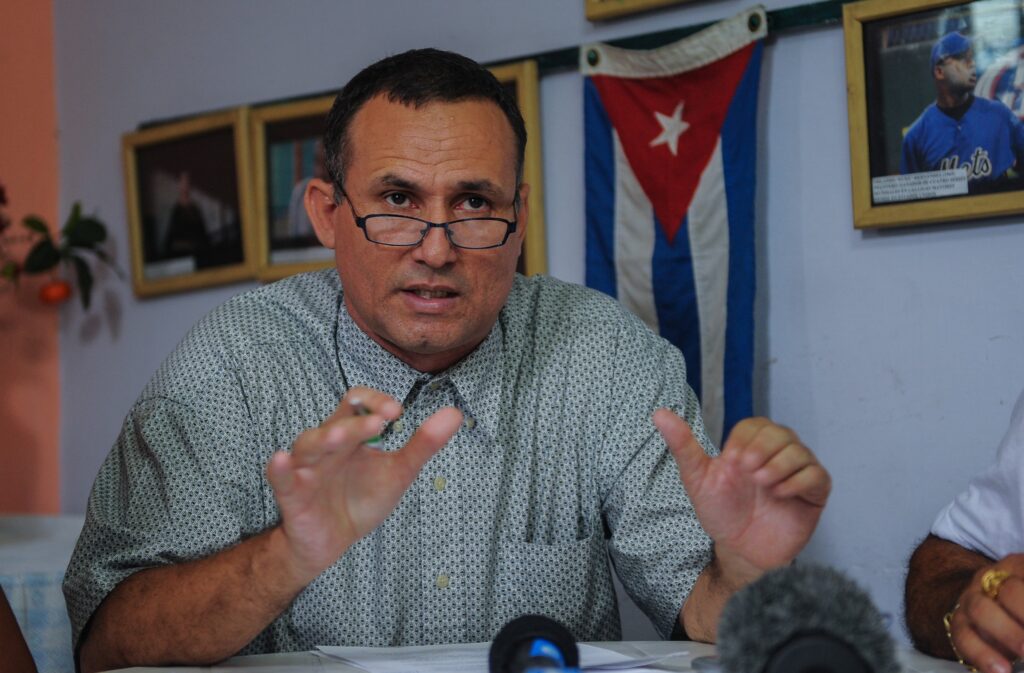
L’opposant historique cubain José Daniel Ferrer et un autre dissident ont été arrêtés mardi à Cuba après la révocation de la mesure de libération conditionnelle qui leur avait été accordée en janvier. José Daniel Ferrer, 54 ans, et Felix Navarro, 72 ans, avaient été remis en liberté dans le cadre d’un accord négocié avec le Vatican après le retrait de l’île de la liste noire américaine des pays soutenant le terrorisme par l’ex-président américain Joe Biden, qui prévoyait la libération de 553 prisonniers cubains. Donald Trump a par la suite réinscrit Cuba sur cette liste.La justice a révoqué “la liberté conditionnelle de deux condamnés, appartenant au groupe des 553, qui n’ont pas respecté ce qui est établi par la loi pendant la période probatoire à laquelle ils étaient soumis”, a annoncé la Cour suprême dans un communiqué, en citant le cas des deux dissidents, mais sans préciser leur lieu de détention.José Daniel Ferrer, fondateur du mouvement Union patriotique de Cuba (Unpacu) et défenseur de la lutte pacifique en faveur d’un changement démocratique sur l’île, avait été remis en liberté le 16 janvier à Santiago de Cuba (est).Sa sœur, Ana Belkis Ferrer, installée aux Etats-Unis, a indiqué sur X que les forces de sécurité avaient “attaqué (mardi matin) le siège principal de l’Unpacu” installé au domicile du dissident, et avaient “emmené” José Daniel Ferrer, son épouse et leur fils, ainsi que des militants de son organisation “vers des lieux inconnus”. L’épouse et le fils du dissident ont ensuite été relâchés après “plusieurs heures” de détention, selon elle.M. Ferrer a été emprisonné le 11 juillet 2021, tandis qu’il tentait de rejoindre les manifestations antigouvernementales historiques qui secouaient le pays. Un tribunal avait mis fin à sa liberté conditionnelle et l’avait renvoyé en prison pour terminer de purger une peine de quatre ans et demi à laquelle il avait été condamné en 2020.- Convocations – Mardi, la Cour suprême a justifié la décision de révoquer à nouveau la mesure de liberté conditionnelle en indiquant qu’il ne s’était pas rendu à deux convocations judiciaires.”Non seulement il ne s’est pas présenté, mais il a également annoncé (…) sur les réseaux sociaux, en défi flagrant et violation de la loi, qu’il ne comparaîtrait pas devant l’autorité judiciaire”, a ajouté la Cour.Depuis sa remise en liberté, le dissident a défié les autorités en critiquant le pouvoir communiste sur les réseaux sociaux. Il a également mis en place une cantine à son domicile pour accueillir des indigents, financée par des Cubains de l’étranger. Il avait indiqué à l’AFP que les autorités n’appréciaient pas son activisme social car cela mettait en évidence la pauvreté de certains habitants.Felix Navarro, remis en liberté le 18 janvier dans le cadre de l’accord passé avec le Vatican et habitant à une centaine de kilomètres de La Havane, a également vu sa mesure de liberté conditionnelle révoquée pour avoir “quitté à sept reprises sa commune sans demander l’autorisation du juge d’application des peines”. Il “a été arrêté chez lui à 6H30 du matin (…)”, a déclaré sur X l’opposant Manuel Cuesta Morrua. – “Printemps noir” -Les deux hommes ont fait partie des 75 opposants arrêtés en 2003 lors du “Printemps noir”, une vague de répression contre la dissidence. Ils avaient été libérés en 2011.Le département d’Etat américain, par la voix de sa porte-parole Tammy Bruce, a dénoncé “le traitement brutal et la détention injuste” de “patriotes cubains”.La Cour suprême a également affirmé que les deux dissidents “maintiennent des liens publics avec le chargé d’affaires de l’ambassade des États-Unis à Cuba”, Mike Hammer, en poste depuis novembre 2024. Depuis le début de l’année, le diplomate a rendu visite à plusieurs dissidents dans différentes provinces de l’île. Lundi, il a rencontré à Santa Clara (centre) l’opposant Coco Fariñas, récompensé en 2010 par le prix Sakharov, distinction de l’Union européenne pour les droits humains, a indiqué mardi l’ambassade des Etats-Unis à La Havane. “Cuba a-t-elle le droit de (…) s’opposer à ce que le diplomate en chef des États-Unis à La Havane soit un activiste qui encourage les Cubains à agir contre leur pays ? (…) Telle est la question”, a déclaré sur X en anglais, le vice-ministre cubain des Affaires étrangères, Carlos Fernandez de Cossio.Cuba nie l’existence de prisonniers politiques et accuse les opposants d’être des “mercenaires” à la solde des Etats-Unis.
Trump fires Kamala Harris’s husband from Holocaust board
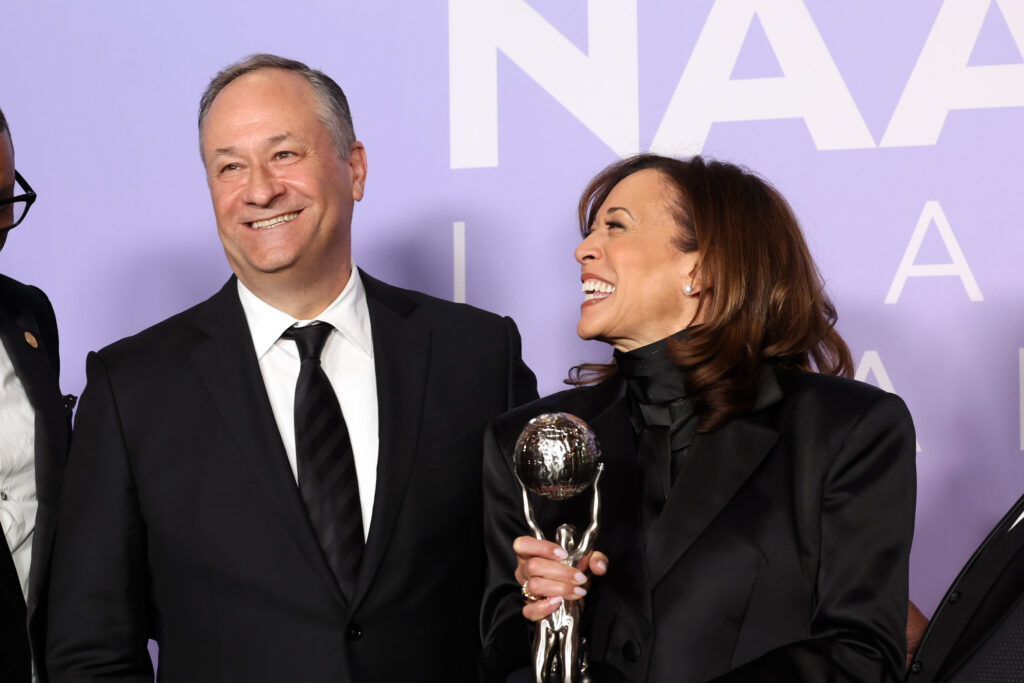
US President Donald Trump has removed Doug Emhoff, husband of his former rival Kamala Harris, from the Holocaust Memorial Council board, drawing an angry reaction.Emhoff, who is married to the 2024 Democratic presidential nominee and former vice president, campaigned against anti-Semitism as part of the administration of Joe Biden, who appointed him to the board.”Let me be clear: Holocaust remembrance and education should never be politicized,” Emhoff, who is Jewish, posted on Tuesday, confirming his dismissal.”To turn one of the worst atrocities in history into a wedge issue is dangerous — and it dishonors the memory of six million Jews murdered by Nazis that this museum was created to preserve.”Since taking office, Trump has looked beyond politics to impose his brand of right-wing populism on cultural and educational institutions such as Washington’s prestigious Kennedy Center and Harvard University.He has also sought to settle scores with perceived adversaries — targeting law firms associated with his political foes, such as Emhoff’s employer, Willkie Farr & Gallagher.Several other former officials removed from the Holocaust board include Biden’s White House chief of staff Ron Klain, domestic policy advisor Susan Rice and an aide to former first lady Jill Biden, The New York Times reported.The White House Presidential Personnel Office sent an email to council members early Tuesday, according to the Times, which read: “(On) behalf of President Donald J. Trump, I am writing to inform you that your position as a member of the United States Holocaust Memorial Council is terminated, effective immediately.”The council was established by Congress in 1980 to lead the country in commemorating the Holocaust, launching the Holocaust Memorial Museum in 1993.Emhoff said his commitment to Holocaust remembrance and education, as well as to combating hate and anti-Semitism, remained undiminished. “I will continue to speak out, to educate, and to fight hate in all its forms because silence is never an option,” he said.
C1: Dembélé, leader au rendez-vous
Absent lors de la défaite en octobre, Ousmane Dembélé a cette fois rempli son rôle de leader d’attaque du PSG mardi en demi-finale aller de Ligue des champions face à Arsenal, en étant décisif dès le début du match (1-0), un but qui rapproche Paris de son rêve de finale.Étrangement seul, il lui a suffit d’un ballon pour faire la différence et faire danser les Gunners: à l’origine de l’action, l’ancien Barcelonais est monté balle au pied, a fixé la défense, a décalé à gauche pour Kvaratskhelia, qui lui a remis en retrait dans la surface. Du gauche, sans contrôle et aidé par le poteau, il a trompé le gardien David Raya sur son premier tir (1-0, 4e).Comme un symbole, les deux attaquants parisiens n’étaient pas présents cet automne: “Kvara” jouait encore à Naples et “Dembouz” avait été écarté par Luis Enrique à cause d’un problème de comportement.Les deux attaquants ont conclu une action collective de haut niveau avec 26 passes et neuf joueurs de champs sur dix sollicités, selon le statisticien Opta.Célébrant le doigt sur la bouche et l’air rageur, les yeux froncés, Dembélé a voulu faire taire les critiques qui ont commencé à naître ces derniers matches, alors qu’il était moins clinique dans la surface.Pour le premier match de sa carrière à l’Emirates stadium, l’international français, qui n’avait plus marqué depuis le 1er avril en Coupe de France a donc relancé son compteur au moment idoine car il était attendu pour cette première manche si importante dans l’histoire du PSG. Il a inscrit son 28e but depuis son replacement en numéro 9 par Luis Enrique: aucun attaquant n’a fait mieux en Europe sur la même période, sachant qu’il a été décisif 45 fois (buts et passes décisives) en 45 matches cette saison avec le PSG. Comme face à City et Liverpool, il a été à la hauteur de l’évènement, réussissant à faire tomber Arsenal chez lui, avant de sortir épuisé à la 70e minute, suscitant quelques inquiétudes.”Je ne peux rien vous dire, il y aura des examens médicaux demain (mercredi). Ce n’est rien de grave mais il y a un doute pour le match retour”, a répondu Luis Enrique après le match.- J’ai senti quelque chose mais ça va” -Après le match, Dembélé est revenu sur le terrain en claquettes et sans boiter. Puis, il a glissé à plusieurs médias dont l’AFP “J’ai senti quelque chose mais ça va”, avant de monter dans le bus du PSG.Précieux dans le pressing sur le gardien et l’arrière-garde londonienne, il a continué de décrocher beaucoup au cours du match. Ces efforts l’ont rendu plus discret en attaque, même s’il a été tout proche de délivrer une passe décisive à Désiré Doué (31e), puis à Achraf Hakimi, bien pris et qui n’a pas pu reprendre le ballon (60e). Il a donc été le leader que le PSG attendait et qu’il est depuis la sanction d’octobre de Luis Enrique, qui l’a replacé entre-temps en N.9. Impeccable sur le terrain, donnant l’exemple dans le pressing et haranguant régulièrement ses coéquipiers, il est aussi important dans le vestiaire. “Le leader du PSG, je ne sais pas, mais l’un des cadres, je pense”, a-t-il expliqué avant le déplacement à Aston Villa (2-3, le 15 avril en quarts de finale retour), “je le vis très bien. Je suis resté moi-même, comme d’habitude. J’essaie d’encourager les joueurs les plus jeunes, même les plus anciens aussi”.Pour le milieu Vitinha, Dembélé “est un leader par l’exemple”.”La façon dont il est à 100 % dans les matches nous donne envie de l’aider et de donner plus sur le terrain”, a-t-il confié lundi.Avant la seconde manche mercredi prochain au Parc des Princes et une éventuelle finale le 31 mai à Munich, l’attaquant parisien a réussi le pari de faire totalement oublier son copain, Kylian Mbappé, parti au Real Madrid l’été dernier.Les statistiques parlent pour lui: il est impliqué dans 11 buts (8 buts et 3 passes) cette saison en Ligue des champions, égalant l’ex-star parisienne lors de la saison 2020-2021.