Families unable to reunite as India-Pakistan border slams shut

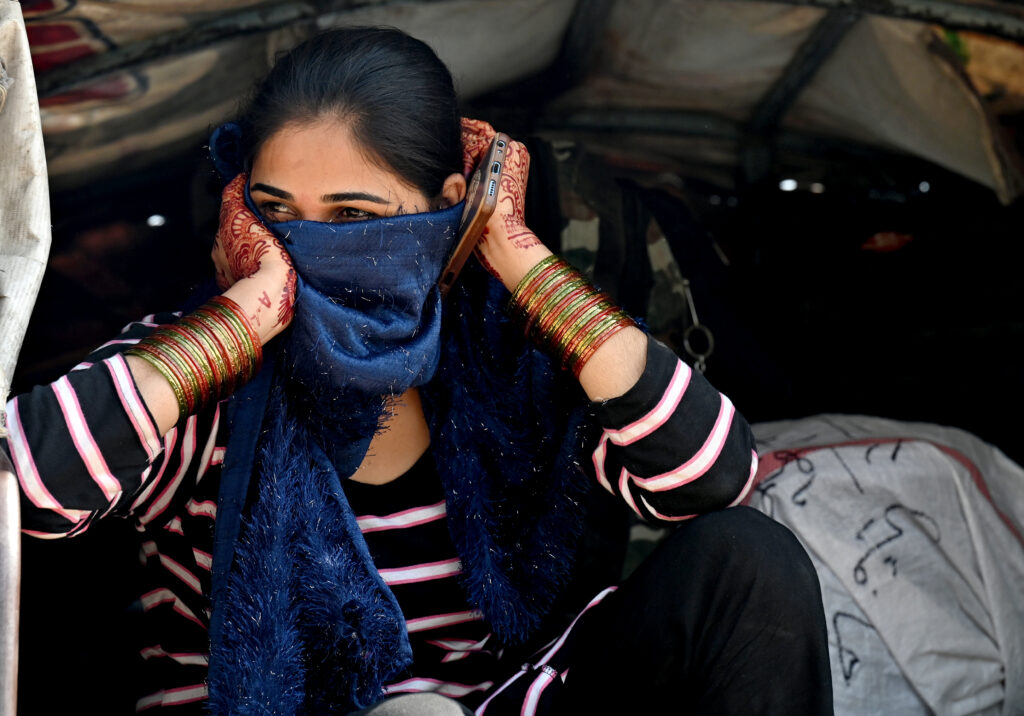
Indian business owner Rishi Kumar Jisrani has spent two days watching a messy scramble of people haul suitcases and drop loved ones at the border with Pakistan before it shuts, with dwindling hopes his family will be allowed across.As relations between Islamabad and New Delhi quickly deteriorate, the neighbouring nations have scrapped visas and expelled each other’s citizens, giving people just days to get to the frontier before it closes.Jisrani, 39, fears it is already too late, with his Pakistani wife and their two children now stuck on the other side.  “They have told her that they can allow my children to come back, since they are Indian passport holders, but not her,” he said, adding that he has received no advice from the Indian side.”How can we separate a mother from her children?”Since India accused Pakistan of backing a deadly April 22 attack on tourists in Pahalgam — claims Islamabad denies — the two countries have exchanged gunfire and diplomatic barbs. And at the busy Attari-Wagah border crossing, the fraying ties are painfully tearing apart the many families that straddle the divide.There were no immediate figures on how many citizens of either nationality are in each other’s country and are expected to cross.On Saturday, a steady trickle of cars and rickshaws brought those leaving to the border, with relatives waving farewell at a police barricade.- Emotional farewells -Indian citizen Anees Mohammad, 41, managed to get his 76-year-old aunt, Shehar Bano, to the border just ahead of India’s April 29 deadline to leave.”She is old and sick and had come here to meet everyone in the family,” said Mohammad, from Indore in India’s Madhya Pradesh state.Exhausted and emotional, he mopped his brow in the blazing midday heat as he bid his aunt goodbye.”No one knows when and if we will meet again.”At the frontier, the cleavage of families has painful historical precedent. The end of British rule in 1947 violently partitioned the sub-continent into Hindu-majority India and Muslim-majority Pakistan.This week’s expulsion orders add to longstanding distress for families of mixed nationalities, who often struggle to obtain visas.Jisrani said his wife, Savita Kumari, 35, is a Hindu like him and has a long-term Indian visa.She has previously used that to travel from her home in India to visit her wider family in Pakistan. But that did not make a difference amid the latest tumult.On Saturday, the hostilities did not appear to be de-escalating. The Indian army said its troops traded gunfire with Pakistan for a second day running, while Islamabad vowed to defend its sovereignty.- ‘Caught in the middle’ -Indian doctor Vikram Udasi, 37, said he and his Pakistani wife both rushed to reach the border crossing when the closure was announced, but arrived just too late.”My wife and our four-year-old boy, Aahan, went there to meet her mother and the rest of the family,” said Udasi.He has been at the crossing since Friday, while his wife and their child are barred by officers barely a kilometre away.”They are now stuck on the other side. They are not being allowed back. They are asking my wife to send the child,” he said.”Please allow them to return. Go ahead, cancel tourist and other short-term visas, but let those with families and long-term visas to return, please.”He condemned the attack in Kashmir, but despaired of the fallout on ordinary citizens like himself.”Whatever the issues between the two governments, it is us who are bearing the brunt of it,” he said.”We are caught in the middle of it, suffering.”
Applaudissements et acclamations pour les adieux au “pape proche des plus petits”

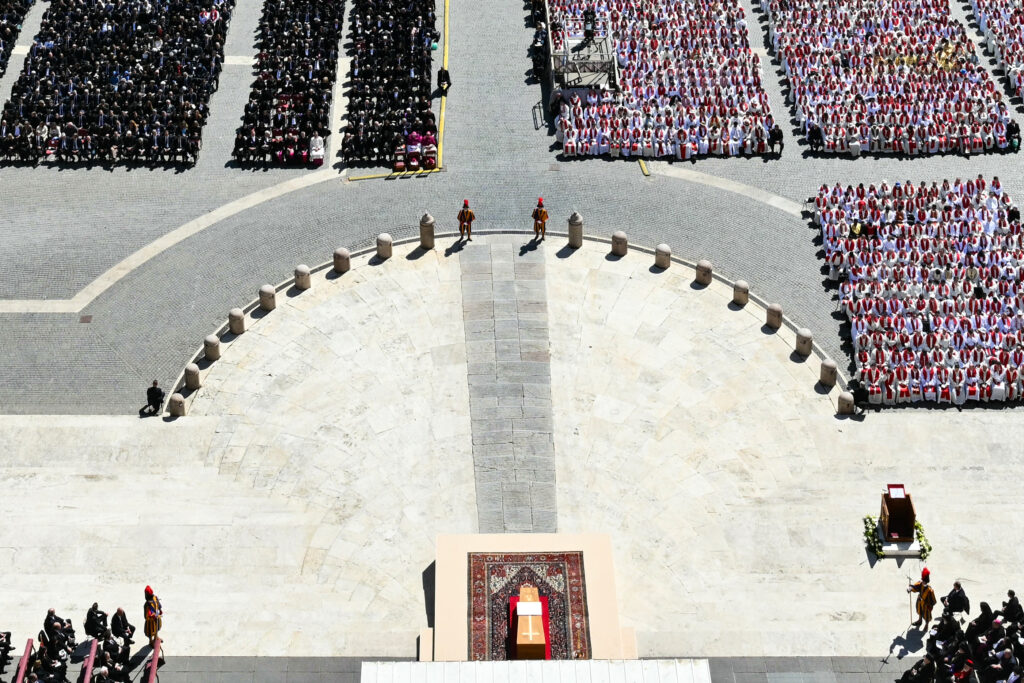
A l’arrivée du cercueil du pape François sur la place Saint-Pierre, puis une fois la messe terminée, des applaudissements et acclamations ont retenti dans la foule des 250.000 personnes venues rendre hommage une dernière fois au pontife “proche des plus petits”.C’est le moment qu’ils attendaient depuis le petit matin: l’arrivée peu après 10H00 du cercueil de bois et de zinc sur l’imposant parvis de la basilique Saint-Pierre, à Rome.Le cérémonial grandiose, minutieusement préparé, pour les funérailles du 266e pape, mort lundi d’un AVC à 88 ans, n’avait sans doute pas anticipé cet élan enthousiaste, ces applaudissements et acclamations.”Il représentait la paix et l’acceptation de tous, c’était le pape de tous, quelqu’un d’authentique”, souligne Cyril Clark, l’un de ces fidèles qui se sont massés autour de la place Saint-Pierre.Jérémie Metais est lui venu spécialement de Grenoble, dans les Alpes françaises, “sur un coup de tête”: “pour moi, il représente beaucoup. C’était un pape proche des plus petits”.”Je suis touché par le monde. C’est beau de voir toutes ces nationalités réunies. C’est un peu le centre du monde aujourd’hui ici”, apprécie-t-il.Sur le parvis, sous un soleil radieux, ont pris place des dizaines de chefs d’Etat et de têtes couronnées en costume sombre, comme le président américain Donald Trump, accompagné de son épouse Melania, l’Ukrainien Volodymyr Zelensky, le Français Emmanuel Macron, le Brésilien Lula et l’Argentin Javier Milei.A gauche de l’autel, dans un ordonnancement tout aussi géométrique, 255 cardinaux et 750 évêques et prêtres, revêtus de rouge ou de violet, ont suivi dans le plus grand recueillement la messe présidée par l’Italien Giovanni Battista Re, doyen du Collège des cardinaux.- Foule colorée et jeune -Bien plus loin, une foule plus colorée et plus jeune, presque joyeuse, a rapidement rempli la Via della Conciliazione, la majestueuse artère reliant le Vatican aux rives du Tibre, où ont été installés des écrans géants pour permettre aux arrivants de suivre la cérémonie.Dans cette foule, a constaté l’AFP, le fondateur de WikiLeaks, Julian Assange.Pour assister aux funérailles du premier pape sud-américain de l’histoire, il fallait s’être levé tôt.Gabriela Lazo et ses enfants ont passé la nuit dans leur voiture: “être aux funérailles avec ma famille est la plus belle chose possible. Nous aurions aimé le voir en personne, mais grâce à Dieu et à lui, nous sommes ici pour ce moment”, insiste cette Péruvienne de 41 ans.Andrea Ugalde est elle venue spécialement de Los Angeles pour assister aux funérailles: “dès que j’ai atterri jeudi, je suis venue place Saint-Pierre. Je veux simplement être là et participer à cet événement”.Malgré la perte de leur chef, malgré la solennité de l’événement, beaucoup de ces fidèles ont l’impression d’être des privilégiés qui ont vécu un moment historique.- “L’Eglise plus normale” -“On ne pouvait pas rater ça”, sourit Katie Hibner Roncalli, une enseignante américaine de 33 ans arrivée dès 03H00 du matin aux abords de la place Saint-Pierre avec trois élèves.  “C’était hyper important pour moi de venir car c’est un pape qui a marqué notre génération”, renchérit Marine De Parcevaux, 21 ans.”Toutes les avancées qu’il a faites sur l’écologie, sur l’avenir des jeunes, l’homosexualité… Il nous a redonné espoir en l’avenir, ça faisait du bien d’avoir une nouvelle voix plus moderne dans l’Eglise”, poursuit cette étudiante française, qui a peint une aquarelle de la façade de Saint-Pierre derrière une barrière en attendant le début de la cérémonie.Au terme des deux heures de messe, des applaudissements ont longuement accompagné le cercueil pour son retour dans Saint-Pierre, avant qu’il ne soit escorté de l’autre côté du Tibre, jusqu’à la basilique Sainte Marie Majeure où François, pour prendre une dernière fois ses distances avec la tradition, a choisi d’être inhumé.Le cortège, passant notamment par la spectaculaire Via dei Fori Imperiali qui mène au Colisée, a été salué par 150.000 personnes.Parmi les fidèles qui l’y attendaient, une Argentine vivant en Italie, Romina Cacciatore.  “Il était le pape du monde, du peuple, il a fini par rendre l’Eglise plus normale, plus humaine”, résume cette traductrice de 48 ans qui ne cache pas “(son) angoisse” pour l’après-François.

Applaudissements et acclamations pour les adieux au “pape proche des plus petits”

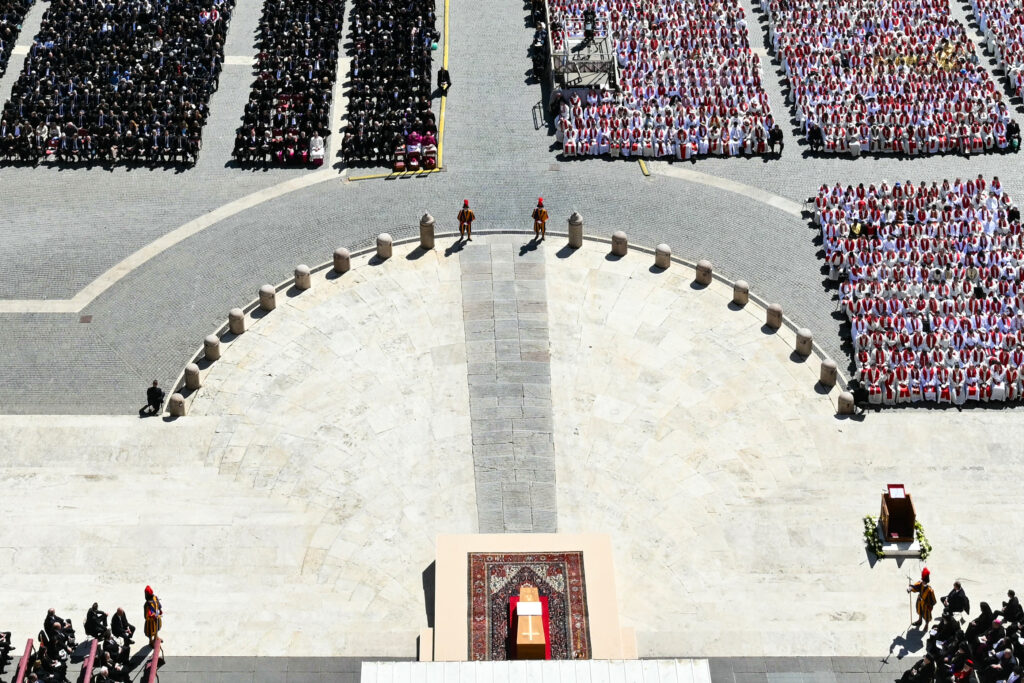
A l’arrivée du cercueil du pape François sur la place Saint-Pierre, puis une fois la messe terminée, des applaudissements et acclamations ont retenti dans la foule des 250.000 personnes venues rendre hommage une dernière fois au pontife “proche des plus petits”.C’est le moment qu’ils attendaient depuis le petit matin: l’arrivée peu après 10H00 du cercueil de bois et de zinc sur l’imposant parvis de la basilique Saint-Pierre, à Rome.Le cérémonial grandiose, minutieusement préparé, pour les funérailles du 266e pape, mort lundi d’un AVC à 88 ans, n’avait sans doute pas anticipé cet élan enthousiaste, ces applaudissements et acclamations.”Il représentait la paix et l’acceptation de tous, c’était le pape de tous, quelqu’un d’authentique”, souligne Cyril Clark, l’un de ces fidèles qui se sont massés autour de la place Saint-Pierre.Jérémie Metais est lui venu spécialement de Grenoble, dans les Alpes françaises, “sur un coup de tête”: “pour moi, il représente beaucoup. C’était un pape proche des plus petits”.”Je suis touché par le monde. C’est beau de voir toutes ces nationalités réunies. C’est un peu le centre du monde aujourd’hui ici”, apprécie-t-il.Sur le parvis, sous un soleil radieux, ont pris place des dizaines de chefs d’Etat et de têtes couronnées en costume sombre, comme le président américain Donald Trump, accompagné de son épouse Melania, l’Ukrainien Volodymyr Zelensky, le Français Emmanuel Macron, le Brésilien Lula et l’Argentin Javier Milei.A gauche de l’autel, dans un ordonnancement tout aussi géométrique, 255 cardinaux et 750 évêques et prêtres, revêtus de rouge ou de violet, ont suivi dans le plus grand recueillement la messe présidée par l’Italien Giovanni Battista Re, doyen du Collège des cardinaux.- Foule colorée et jeune -Bien plus loin, une foule plus colorée et plus jeune, presque joyeuse, a rapidement rempli la Via della Conciliazione, la majestueuse artère reliant le Vatican aux rives du Tibre, où ont été installés des écrans géants pour permettre aux arrivants de suivre la cérémonie.Dans cette foule, a constaté l’AFP, le fondateur de WikiLeaks, Julian Assange.Pour assister aux funérailles du premier pape sud-américain de l’histoire, il fallait s’être levé tôt.Gabriela Lazo et ses enfants ont passé la nuit dans leur voiture: “être aux funérailles avec ma famille est la plus belle chose possible. Nous aurions aimé le voir en personne, mais grâce à Dieu et à lui, nous sommes ici pour ce moment”, insiste cette Péruvienne de 41 ans.Andrea Ugalde est elle venue spécialement de Los Angeles pour assister aux funérailles: “dès que j’ai atterri jeudi, je suis venue place Saint-Pierre. Je veux simplement être là et participer à cet événement”.Malgré la perte de leur chef, malgré la solennité de l’événement, beaucoup de ces fidèles ont l’impression d’être des privilégiés qui ont vécu un moment historique.- “L’Eglise plus normale” -“On ne pouvait pas rater ça”, sourit Katie Hibner Roncalli, une enseignante américaine de 33 ans arrivée dès 03H00 du matin aux abords de la place Saint-Pierre avec trois élèves.  “C’était hyper important pour moi de venir car c’est un pape qui a marqué notre génération”, renchérit Marine De Parcevaux, 21 ans.”Toutes les avancées qu’il a faites sur l’écologie, sur l’avenir des jeunes, l’homosexualité… Il nous a redonné espoir en l’avenir, ça faisait du bien d’avoir une nouvelle voix plus moderne dans l’Eglise”, poursuit cette étudiante française, qui a peint une aquarelle de la façade de Saint-Pierre derrière une barrière en attendant le début de la cérémonie.Au terme des deux heures de messe, des applaudissements ont longuement accompagné le cercueil pour son retour dans Saint-Pierre, avant qu’il ne soit escorté de l’autre côté du Tibre, jusqu’à la basilique Sainte Marie Majeure où François, pour prendre une dernière fois ses distances avec la tradition, a choisi d’être inhumé.Le cortège, passant notamment par la spectaculaire Via dei Fori Imperiali qui mène au Colisée, a été salué par 150.000 personnes.Parmi les fidèles qui l’y attendaient, une Argentine vivant en Italie, Romina Cacciatore.  “Il était le pape du monde, du peuple, il a fini par rendre l’Eglise plus normale, plus humaine”, résume cette traductrice de 48 ans qui ne cache pas “(son) angoisse” pour l’après-François.

Foreign carmakers strive for ‘China Speed’ to stay in race

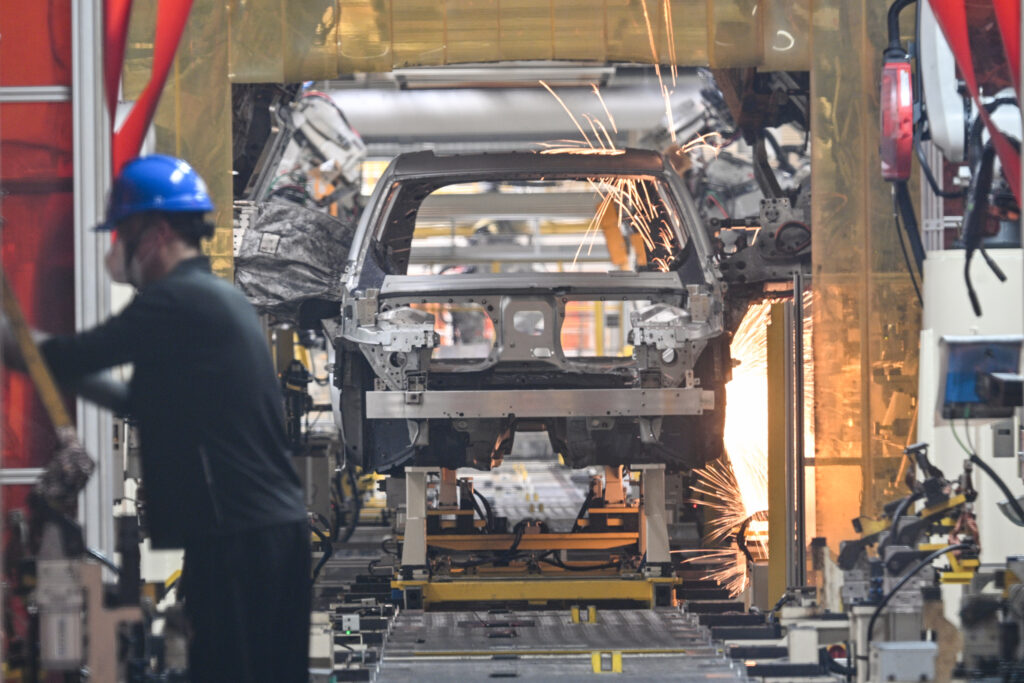
In fluid synchronisation, dozens of robotic arms picked up metal parts and welded them onto vehicle beds, as car skeletons gradually took shape and progressed along an automated factory floor near the eastern Chinese city of Ningbo.Across the country, car models rolling off assembly lines like this have gone from concept to release in record time — known in the industry as “China Speed”, the envy of foreign competitors.At EV firm Zeekr’s vast Ningbo plant, advanced robotics and artificial intelligence have been leveraged at every stage of the manufacturing process to save huge amounts of time and money.In the casting shop, a robotic arm that towered over the human foremen supervising it picked up a freshly made piece of aluminium and dunked it into a vat of water, sending steam hissing out, before passing the metal to another machine to cut and press it.The factory still employs around 2,500 workers to do some delicate tasks and for quality control. But the heavy lifting is done by hundreds of tireless robots, with some processes going on 24 hours a day. And it’s not just manufacturing that has been accelerated. Zeekr has a research and development base in Sweden, which allows workloads to be shared across timezones. Its parent company, Geely, also owns Swedish automaker Volvo.In the factory’s car park, hundreds of gleaming, plate-less Zeekr 7X SUVs stood ready to be transported to dealerships. “The future is our history,” read a slogan above the entrance hall.- ‘Make-or-break moment’ -Factories and companies like this have set a new pace in the industry. “We are at a make-or-break moment for established global automakers,” a recent report by consulting firm Bain & Company said. En route to the factory, AFP saw lorries carrying brand new Zeekr cars headed to Ningbo’s huge port, bound for export to places like Australia.The most innovative Chinese manufacturers spend less than a third of that spent by traditional competitors to develop new vehicles, the Bain report said.While legacy automakers often take 48 to 54 months to bring out new models, the timeline for younger brands is more like 24 to 30, it added. Some of Zeekr’s models only took 15 months to develop, a spokesman told AFP.  The results are clear in the sheer choice available to consumers: There are currently 2,755 models on offer from 163 brands in the Chinese market, authorities say.At industry show Auto Shanghai, which opened Wednesday, more than 100 new models were launched. Jostling in the pack were not just Chinese firms like Zeekr, BYD and Chery, but also foreign rivals hitting the gas to catch up. Volkswagen and Nissan launched tens of new models developed “in China for China” at the show, with executives insisting they had adapted to “China Speed”.The acceleration has been helped by the shift towards EVs, disposing of the complex internal combustion engine.   “You start by designing the car virtually, making as few prototypes as possible, so you can move very quickly,” BCG consultant Mikael Le Mouellic told AFP. Design and engineering will then work hand-in-hand, and often “reuse recipes that work”, he added. Zeekr’s “Sustainable Experience Architecture”, for example, can be the bed for A-class to E-class cars, saving time and money. – Three years to nine months -Foreign suppliers have also had to adapt. Traditionally, companies could take up to three years to design, for example, a new headlamp, said Michael Fischer, boss at French automotive parts maker Forvia. “In China that doesn’t work,” he said. Now, “we have a process that is going to be very organised, that’s going to secure for quality, but can bring up a new headlamp in as little as nine months”.At competitor Valeo’s factory in Changshu, north of Shanghai, four large robots assembled LED headlamps for Zeekr and other brands. “We don’t work 24/7!” joked Valeo’s innovation manager in China, Gu Jianmin. “But we use existing solutions, and we work upstream with the automakers.”Development and durability tests that “would have taken months” are helped along by AI and other technology. “Chinese manufacturers are a little more demanding. But foreigners are trying to catch up,” said Gu. “To emerge in China, you have to be at the same level as the locals.”

L’auteur de l’homicide dans une mosquée du Gard a filmé son agression

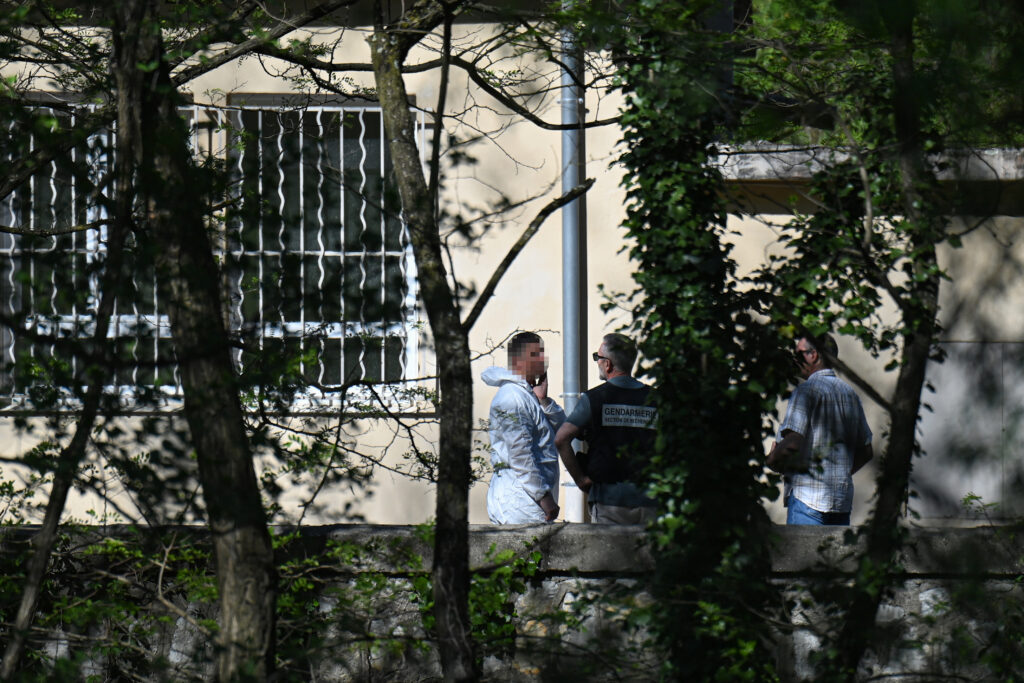
L’auteur du meurtre d’un fidèle dans la mosquée de la petite commune gardoise de La Grand-Combe vendredi matin a partiellement filmé son acte, avec son téléphone portable, a appris l’AFP samedi, auprès du parquet, alors que le mobile de cette agression reste inconnu.L’auteur de l’homicide, qui a eu lieu vendredi matin vers 08H30 dans la mosquée Khadidja, la mosquée de cette petite ville gardoise de quelque 5.000 habitants au nord d’Alès, était toujours en fuite samedi matin a confirmé à l’AFP Abdelkrim Grini, le procureur de la République d’Alès.”L’individu est activement recherché. C’est une affaire prise très au sérieux, les faits sont très graves”, a insisté le magistrat, sans donner aucun élément sur le suspect et en précisant: “Toutes les pistes sont envisagées mais aucune privilégiée”.Coup de folie soudain, vengeance personnelle, acte islamophobe ? Le fait que l’auteur de ce meurtre ait partiellement filmé l’agression semble en tous cas accréditer la thèse de la préméditation. Selon les premières explications du procureur d’Alès vendredi en milieu de journée, la victime et son agresseur étaient “seuls à l’intérieur de la mosquée” au moment des faits. Les “deux hommes étaient occupés à prier, lorsqu’un des deux a porté plusieurs dizaines de coups de couteau à l’autre, avant de le laisser pour mort et de prendre la fuite”, a expliqué le magistrat. La victime semble avoir reçu “40 ou 50 coups de couteau” et son corps a été découvert “vers 11H00, 11H30” seulement, “lorsque les autres fidèles sont arrivés pour la prière du vendredi à la mosquée”, avait précisé M. Grini.Si les enquêteurs du groupement de gendarmerie du Gard, de la section de recherche (SR) de Nîmes et de la police judiciaire disposent donc des images tournées par l’agresseur lui même, ils ont également entre les mains la vidéo des faits enregistrée par les caméras de surveillance dont est équipée la mosquée Khadidja, à la fois à l’intérieur et à l’extérieur du bâtiment, a confirmé M. Grini à l’AFP.Toujours selon le magistrat, la victime, âgée de 23-24 ans, “fréquentait régulièrement” cette mosquée de La Grand-Combe, dans le hameau du Trescol. En revanche, “l’auteur présumé ne la fréquentait absolument pas et n’y était a priori jamais venu auparavant”.Selon plusieurs personnes interrogées sur place vendredi par l’AFP, la victime serait un jeune homme arrivé du Mali il y a quelques années, “très connu” dans le village, où il était très apprécié.Ancienne cité minière distante d’une dizaine de kilomètres d’Alès, La Grand-Combe est une commune frappée par un des plus forts taux de chômage en France depuis la fin de l’exploitation du charbon.La petite ville avait connu un autre drame en février 2023, avec la mort d’une jeune fille de 18 ans, Sihem, tuée par l’ex-compagnon de sa cousine, un homme de 39 ans avec qui, selon lui, elle entretenait une relation amoureuse.

Pakistan says open to neutral probe into Kashmir attack after India threats

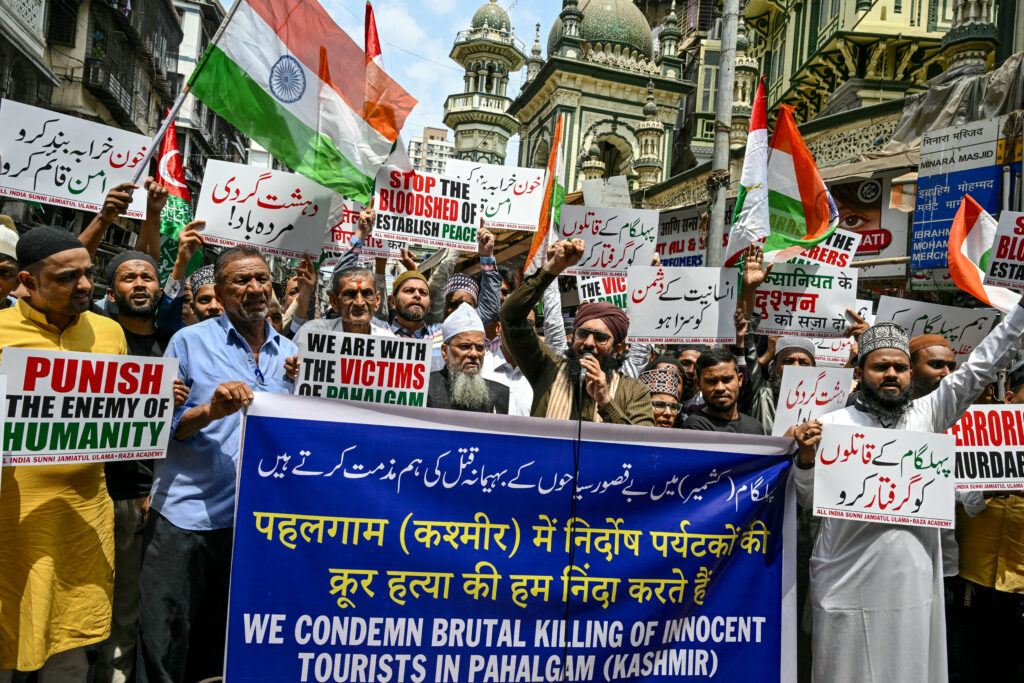
Pakistan’s leader said his nation was open to a neutral investigation on Saturday into a deadly attack in Indian-run Kashmir that New Delhi blames on Islamabad, and that has sent fraught relations into a tailspin with soldiers exchanging gunfire across their contested frontier.Islamabad denies involvement in the April 22 attack on tourists in Pahalgam, where a gang of gunmen killed 26 men in the worst attack on civilians in Kashmir for a quarter of a century.But India is adamant in it is accusation that Pakistan is supporting “cross-border terrorism”.Indian police have issued wanted posters for three men — two Pakistanis and an Indian — who they say are members of the Pakistan-based Lashkar-e-Taiba group, a UN-designated terrorist organisation.Rejecting Indian claims, Pakistan’s Prime Minister Shehbaz Sharif on Saturday said the country was “open to participating in any neutral, transparent and credible investigation” into the attack.Indian security forces have launched a giant manhunt for those responsible for the attack in Pahalgam, blowing up homes in Kashmir of Indian citizens suspected to be linked to the attack.Both sides have imposed a slew of diplomatic measures, and exchanged gunfire in Kashmir two times in as many days.India’s army said “unprovoked” small arms firing was carried out by “multiple” Pakistan army posts overnight.”Indian troops responded appropriately with small arms,” it said in a statement, adding that no casualties were reported.There was no confirmation from Pakistan, but both sides had confirmed gunfire between their respective forces the previous night.”Our valiant armed forces remain fully capable and prepared to defend the country’s sovereignty,” Sharif said at a military ceremony in Abbottabad. Inda’s information ministry on Saturday warned broadcasters to “refrain from showing live coverage of defence operations” in the “interest of national security”, and referencing the 1999 Kargil conflict with Pakistan.The United Nations has urged the neighbours, which have fought multiple wars, to show “maximum restraint”.Iran’s foreign ministry said Saturday that Tehran has offered to play mediator, a day after a senior Saudi official said Riyadh was trying to “prevent an escalation”.US President Donald Trump has downplayed the tensions, saying that the dispute will get “figured out, one way or another”.- Divided for decades -Kashmir has been divided between India and Pakistan since their independence in 1947. Both claim the territory in full but govern separate portions of it.Rebel groups have waged an insurgency in Indian-controlled Kashmir since 1989, demanding independence or a merger with Pakistan.A day after the attack, New Delhi suspended a water-sharing treaty, announced the closure of the main land border crossing with Pakistan, downgraded diplomatic ties and withdrew visas for Pakistanis.Islamabad in response ordered the expulsion of Indian diplomats and military advisers, cancelled visas for Indian nationals — with the exception of Sikh pilgrims — and closed the main border crossing from its side.Pakistan also warned that any attempt by India to stop water supplies from the Indus River would be an “act of war”.At the frontier, created at the end of British rule when the sub-continent was partitioned into Hindu-majority India and Muslim-majority Pakistan, distraught citizens crossed.The measures have abruptly ended rare visits to see relatives separated for generations by the border.Vikram Udasi, an Indian doctor, said his family was “caught in the middle” with his Pakistani wife and their child stuck on the other side of the Attari-Wagah border crossing.”Please allow them to return. Go ahead, cancel tourist and other short-term visas, but let those with families and long-term visas return, please,” begged the 37-year-old.Pahalgam marks a dramatic shift in recent Kashmiri rebel attacks, which typically target Indian security forces.Experts say that an Indian military response may still be in the pipeline.In 2019, a suicide attack killed 41 Indian troops in Kashmir and triggered Indian air strikes inside Pakistan, bringing the countries to the brink of all-out war.