Le budget de l’Etat de retour à l’Assemblée, au bout du tunnel le 49.3?

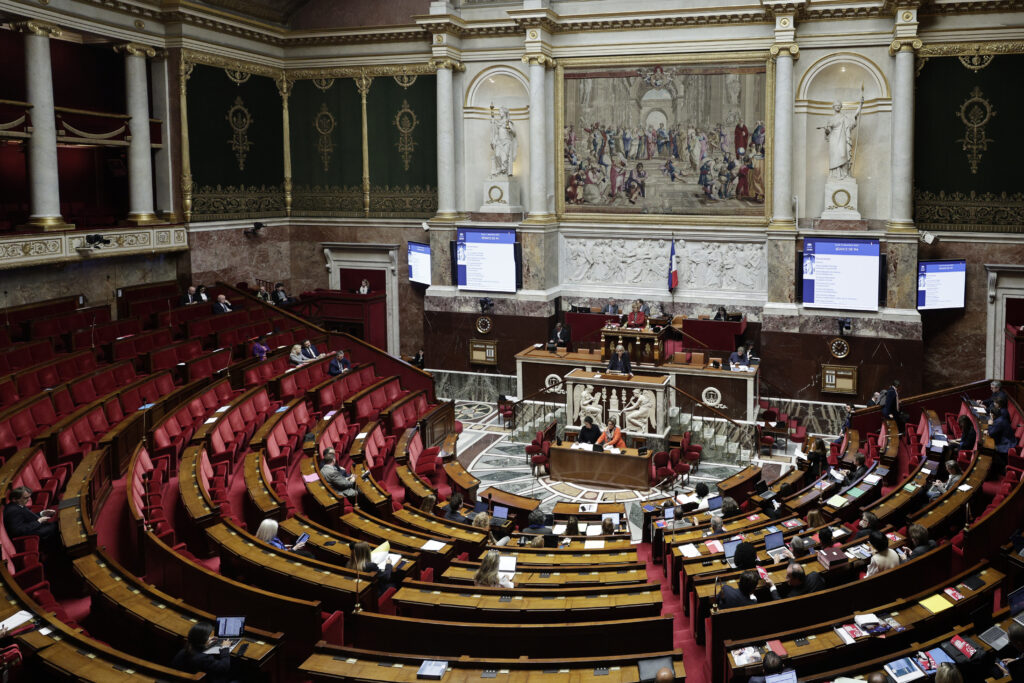
Après une première lecture infructueuse, l’Assemblée a repris jeudi en commission l’examen du budget de l’Etat pour 2026, avec l’espoir partagé par le gouvernement et les parlementaires de trouver une issue rapide, quitte à en passer par l’article 49 alinéa 3 de la Constitution.Le 19 décembre, une commission mixte partiaire – composée de sept députés et sept sénateurs – avait rapidement acté l’impossibilité pour les représentants des deux chambres de s’accorder sur une version du texte, rendant impossible l’adoption du budget avant le 31 décembre.Le gouvernement a donc dû recourir en fin d’année à une loi spéciale permettant d’assurer la continuité de l’Etat, en reconduisant en 2026 les impôts de 2025. Mettant en suspens notamment l’augmentation des crédits de défense, ou encore quelques mesures agricoles à l’heure où la profession manifeste sa colère.Le projet de loi de finances est désormais de retour en nouvelle lecture à la chambre basse, jusqu’à samedi en commission, puis à partir de mardi dans l’hémicycle, et théoriquement jusqu’au 23 janvier. En cas d’adoption du texte, il faudra encore, pour qu’elle soit définitive, que le Sénat l’approuve dans les mêmes termes, ou que l’Assemblée statue une troisième fois. Les députés repartiront de la version du Sénat.Le gouvernement souhaite quoi qu’il en soit aller vite, afin de doter la France d’un véritable budget d’ici la fin du mois, et de revenir en 2026 sous la barre des 5% de déficit, contre 5,4% en 2025. Le chef des députés PS, Boris Vallaud, a lui aussi estimé dans Libération mercredi qu’il était “temps (…) de sortir de cette séquence budgétaire”.- Montchalin “n’exclut rien” -Sur le plan de la méthode, l’utilisation du 49.3, qui permet au gouvernement de faire adopter un texte sans vote en engageant sa responsabilité, semble de plus en plus inéluctable, faute de majorité à l’Assemblée nationale.La ministre de l’Action et des Comptes publics, Amélie de Montchalin, a affirmé jeudi sur RTL qu’elle “n’excluait rien qui puisse donner à la fin un budget aux Français”, confirmant qu’il “y a des méthodes autres que le vote si le vote n’est pas possible”. Mais en l’absence d’accord politique, notamment avec les socialistes qui détiennent une partie des clés de la censure, “il n’y aura pas de budget”, a-t-elle rappelé.La voie des ordonnances, inédite, semble elle compromise, le PS y voyant la “pire des solutions”.La question du 49.3 a été agitée lors d’une réunion à Bercy mardi, qui a réuni pendant plus de quatre heures des représentants de la coalition gouvernementale, des indépendants de Liot et du PS autour des ministres Amélie de Montchalin (Comptes publics) et Roland Lescure (Economie).Alors que Sébastien Lecornu s’est engagé auprès du PS en octobre à ne pas utiliser le 49.3, la balle est désormais dans son camp. Mais il “devra donner des motifs de ne pas être censuré”, a prévenu M. Vallaud dans Libération.- Plus de 2.000 amendements -Quels pourraient être les termes d’un pacte de non-censure? Ils sont pour l’heure difficiles à cerner. Le rapporteur général du budget LR Philippe Juvin propose dans un document révélé par Les Echos et consulté par l’AFP une hausse des recettes de 2,93 milliards par rapport à la version du Sénat et une baisse des dépenses de 6,2 milliards.Bien éloigné du PS, qui souhaite, lui, augmenter les dépenses de neuf milliards d’euros, par rapport à la version initiale du gouvernement.L’examen en commission devrait en tout donner lieu de nouveau à des débats enflammés, avec plus de 2.000 amendements déposés.Que ce soit sur le barème de l’impôt sur le revenu – dont les députés LR exigent le dégel total, contrairement aux sénateurs LR; la surtaxe sur les bénéfices des entreprises – le PS en espère 8 milliards d’euros, LR au maximum 4; ou côté dépenses, sur la réduction des effectifs d’enseignants souhaitée par le gouvernement et que rejettent les socialistes.Avec de fortes chances selon plusieurs parlementaires d’aboutir au même résultat qu’en première lecture: la commission avait rejeté la partie recettes comme la partie dépenses du budget.
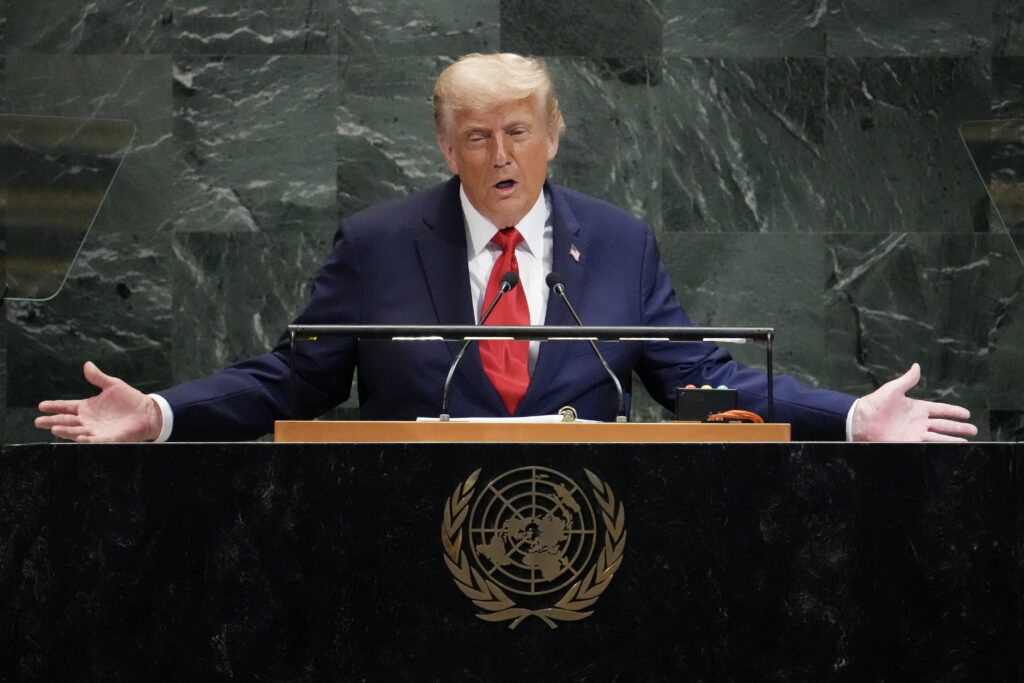

Trump withdraws US from key climate treaty, deepening global pullback

President Donald Trump’s decision to withdraw the United States from a bedrock climate treaty was slammed Thursday by the EU, which vowed to keep tackling the crisis with other nations.The White House on Wednesday flagged the US exit from 66 global organizations and treaties — roughly half affiliated with the United Nations — it identified as “contrary to the interests of the United States.”Most notable among them is the United Nations Framework Convention on Climate Change (UNFCCC), the parent treaty underpinning all major international climate agreements.The treaty adopted in 1992 is a global pact by nations to cooperate to drive down planet-warming greenhouse gas emissions and adapt to the impacts of climate change.European Union climate chief Wopke Hoekstra said the UNFCCC “underpins global climate action” and brings nations together in the collective fight against the crisis.”The decision by the world’s largest economy and second-largest emitter to retreat from it is regrettable and unfortunate,” Hoekstra said in a post on LinkedIn.”We will unequivocally continue to support international climate research, as the foundation of our understanding and work. We will also continue to work on international climate cooperation.”Trump, who has thrown the full weight of his domestic policy behind fossil fuels, has openly scorned the scientific consensus that human activity is warming the planet, deriding climate science as a “hoax.”His administration sent no representative to the most recent UN climate summit in Brazil in November, which is held every year under the auspices of the UNFCCC.Teresa Ribera, the EU’s vice-president for the clean transition, said the Trump administration “doesn’t care” about the environment, health or the suffering of people.- Fight looms -The UNFCCC was adopted at the Rio Earth Summit in June 1992 and approved later that year by the US Senate during George H.W. Bush’s presidency.”The US withdrawal from the UN climate framework is a heavy blow to global climate action, fracturing hard-won consensus,” Li Shuo, a climate expert at the Asia Society Policy Institute, told AFP.The US Constitution allows presidents to enter treaties “provided two thirds of Senators present concur,” but it is silent on the process for withdrawing from them — a legal ambiguity that could invite court challenges.Trump has already withdrawn from the landmark Paris climate accord since returning to office, just as he did during his first term from 2017–2021 in a move later reversed by his successor, Democratic president Joe Biden.Exiting the underlying treaty could introduce additional legal uncertainty around any future US effort to rejoin.Jean Su, a senior attorney for the nonprofit Center for Biological Diversity, told AFP: “Pulling out of the UNFCCC is a whole order of magnitude different from pulling out of the Paris Agreement.””It’s our contention that it’s illegal for the President to unilaterally pull out of a treaty that required two thirds of the Senate vote,” she continued. “We are looking at legal options to pursue that line of argument.”- ‘Progressive ideology’ -California Governor Gavin Newsom, an outspoken critic of Trump who is widely seen as a presidential contender, said in a statement “our brainless president is surrendering America’s leadership on the world stage and weakening our ability to compete in the economy of the future — creating a leadership vacuum that China is already exploiting.”The memo also directs the United States to withdraw from the Intergovernmental Panel on Climate Change, the UN body responsible for assessing climate science, alongside other climate-related organizations including the International Renewable Energy Agency, UN Oceans and UN Water.As in his first term, Trump has also withdrawn the United States from UNESCO — the UN Educational, Scientific and Cultural Organization — which Washington had rejoined under Biden.Trump has likewise pulled the US out of the World Health Organization and sharply reduced foreign aid.Other prominent bodies named in the memo include the UN Population Fund (UNFPA), UN Women, and the UN Conference on Trade and Development (UNCTAD).Secretary of State Marco Rubio said in a statement the organizations were driven by “progressive ideology” and were actively seeking to “constrain American sovereignty.””From DEI (Diversity, Equity, and Inclusion) mandates to ‘gender equity’ campaigns to climate orthodoxy, many international organizations now serve a globalist project,” he said.

Startups go public in litmus test for Chinese AI

Leading Chinese artificial intelligence startup Zhipu AI soared as it went public in Hong Kong on Thursday, a day before rival MiniMax also makes its market debut in a litmus test for the country’s rapidly developing sector.Shares in Zhipu AI, which runs the Z.ai tool, rose more than 12 percent on Thursday after its oversubscribed initial public offering raised HK$4.35 billion (US$558 million).This week’s flotations come before any IPO announcements from top US startups OpenAI, the maker of ChatGPT, and Anthropic, known for its Claude chatbot.But analysts said profits were unlikely any time soon from either company — the first two IPOs among China’s so-called “six tigers”, generative AI providers competing with tech giants such as Alibaba and ByteDance.”Zhipu is honoured to stand at this historic juncture as a representative of China’s large model sector,” company chairman Liu Debing said at Thursday’s listing ceremony.Zhipu AI was founded in 2019 and is a major provider of large language model (LLM) services to businesses and government clients in the world’s second-largest economy.Proceeds from the IPO will go towards developing general-purpose large AI models, including key algorithms and system infrastructure, the firm said.MiniMax, established in 2022, targets the consumer market, particularly outside China, with its generative AI tools for speech, music and video, as well as text.”Once the market matures through full competition, more people will understand the capabilities, performance and pricing of these models reaching a state of equilibrium,” Liu told Bloomberg Television Thursday.He added that Zhipu AI has seen a trend of computing costs for AI development “gradually decreasing”.China tech analyst Poe Zhao, founder of the Hello China Tech newsletter, told AFP that the two IPOs “demonstrate both the revenue potential and the fundamental challenges facing this new generation of LLM companies”.”The high demand definitely reflects broader optimism about Chinese AI,” he said.An AI boom has helped push tech stocks to record highs in recent months, but they are also volatile as global investors watch intently for any signs of a bubble.”Do I think there’s a bubble? Yes. But I want to distinguish between ‘bubble’ and ‘bubble risk’. These companies need capital intensity,” Zhao said.- Disney lawsuit -The LLM market in China is estimated to grow to 101.1 billion yuan (US$14.5 billion) by 2030, according to consultancy Frost and Sullivan.In January 2025, Chinese startup DeepSeek shook the tech world with a low-cost, high-performance reasoning model that upended assumptions of US dominance in the sensitive sector.A year ago, Washington put Zhipu, backed by conglomerate Tencent, on its export control blacklist over national security concerns.And Disney along with other US entertainment outfits including Universal is suing MiniMax for copyright infringement.Zhao said he did not expect Zhipu or MiniMax to be profitable “any time soon”.”That depends on two industry-wide shifts: significantly lower computing costs and much larger AI demand to spread those costs across,” he explained.Beijing has reportedly been encouraging tech firms to use homegrown microchips owing to Washington’s on-and-off restrictions on top-end Nvidia chips, used to train and run AI systems.Investor faith in the potential of China’s chip industry to challenge US powerhouse Nvidia last month sent shares in semiconductor companies Moore Threads and MetaX skyrocketing on their market debuts.Earlier this month, Baidu, the operator of China’s top search engine, said its AI chip unit Kunlunxin has filed a listing application in Hong Kong.For chatbot providers, the picture is nuanced, said Shengyun Lu, founder of LSY Consulting.”To run a foundational model company, it costs a lot and takes a lot of time,” he cautioned.”IPOs allow the companies to raise money for financing their future research activities, but on the other hand, the initial investors are seeking an exit.”

Japan’s Fast Retailing raises profit forecast after China growth

Japanese retail giant Fast Retailing lifted its 2025-26 annual net profit forecast on Thursday, buoyed by a strong performance in mainland China.The parent company of Uniqlo “reported significant increases in both revenue and profit in the first quarter” of its fiscal year which runs from September, according to its financial statement.In particular, Uniqlo International saw “a rise in revenue and double-digit year-on-year profit growth” in mainland China due in part to cold October weather.As a result, Fast Retailing now expects a full-year net profit of 450 billion yen ($2.9 billion) for the fiscal year ending in August, compared with the previous estimate of 435 billion yen.

USA: Google et Character.AI mettent fin à des poursuites liées à des suicides

Google et la startup Character.AI ont conclu des accords hors tribunaux pour mettre fin à des poursuites lancées par des familles accusant des robots conversationnels de nuire aux mineurs, y compris d’avoir contribué au suicide d’un adolescent, selon des documents juridiques rendus publics mercredi.Parmi ces plaintes figure celle de Megan Garcia dont le fils de …

USA: Google et Character.AI mettent fin à des poursuites liées à des suicides Read More »

Lidl, un des principaux annonceurs, va arrêter la publicité à la télévision traditionnelle en France

Lidl, l’un des premiers annonceurs, va arrêter la publicité à la télévision traditionnelle en France, a annoncé le discounter allemand jeudi, invoquant une réglementation trop contraignante, six mois après une lourde condamnation pour “pratiques commerciales trompeuses”.”Nous n’investirons plus dans la TV linéaire (télévision classique par rapport notamment aux plateformes en ligne, NDLR) tant que les …

Lidl, un des principaux annonceurs, va arrêter la publicité à la télévision traditionnelle en France Read More »

New clashes in Iran as opposition urges more protests

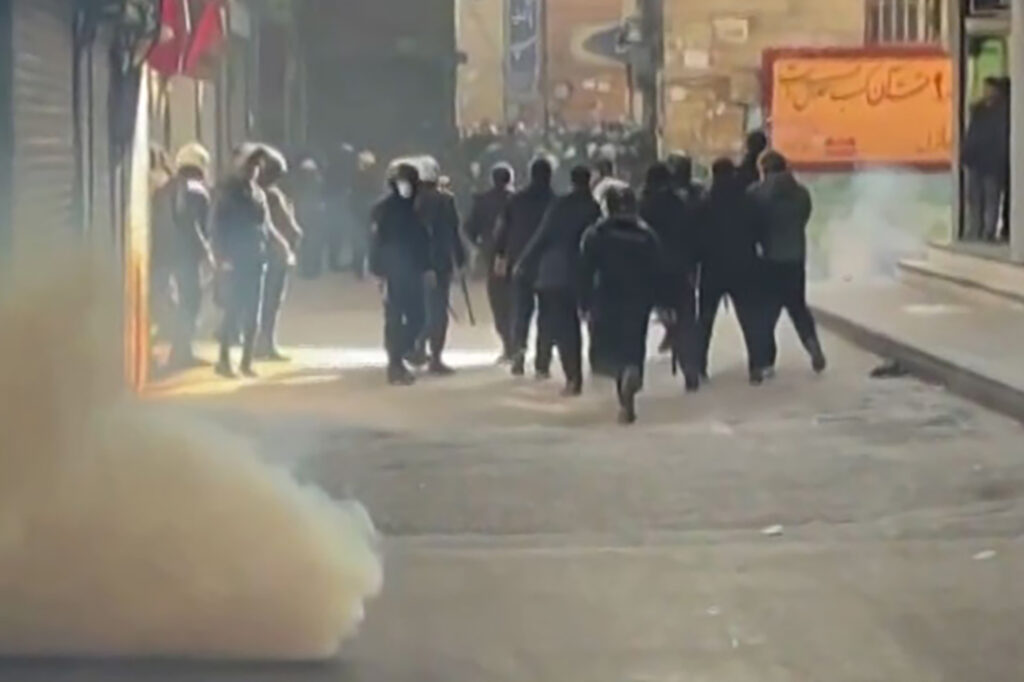
Security forces used tear gas to disperse protesters in Iran as people angered by the economic situation in the Islamic republic kept up their challenge to the authorities and the exiled opposition Thursday urged them to step up their actions.The 12 days of protests have shaken the clerical authorities under Ayatollah Ali Khamenei already battling economic crisis after years of sanctions and recovering after the June war against Israel.The movement, which originated with a shutdown on the Tehran bazaar on December 28 after the rial plunged to record lows, has spread nationwide and is now being marked by larger scale demonstrations.Authorities have blamed unrest on “rioters” and the judiciary chief has vowed there would be “no leniency” in bringing them to justice. On Wednesday, an Iranian police officer was stabbed to death near Tehran “during efforts to control unrest”, the Iranian Fars news agency said.Reza Pahlavi, the son of the shah ousted by the 1979 Islamic revolution and a key exiled opposition figure, said that the turnout during Wednesday’s protests had been “unprecedented” and called for major new protests Thursday evening.He said in a message on social media he had received reports the “regime is deeply frightened and is attempting, once again, to cut off the internet” to thwart the protests.The HRANA monitor published a video of protesters in Kuhchenar in the southern Fars province cheering overnight as they pulled down a statue of the former foreign operations commander of the Revolutionary Guards Qassem Soleimani who was killed in a US strike in January 2020 and is hailed as a national hero by the Islamic republic.HRANA said according to its count protests had taken place in 348 locations over the last 11 days in all of Iran’s 31 provinces.It also published a video of people massing late at night in the Tehran satellite city of Karaj and lighting fires in the streets and also images of security forces using tear gas to disperse a protest in the Caspian Sea town of Tonekabon.The Norway-based Iran Human Rights group said security forces on Wednesday “opened fire on protesters, used tear gas and violently assaulted civilians” during a protest in the key southeastern hub of Kerman.The protests are being characterised by larger-scale demonstrations, with hundreds marching through a main avenue in the northeastern city of Bojnord on Wednesday in a video verified by AFP.Demonstrators are repeating slogans against the clerical leadership including “this is the final battle, Pahlavi will return” and “Seyyed Ali will be toppled”, in reference to Khamenei.IHR said on Tuesday at least 27 protesters including five teenagers under the age of 18, have been confirmed to have been killed in a crackdown on the protests, warning the death toll will climb as more killings are verified.

Diosdado Cabello: Venezuela’s feared enforcer at heart of new government

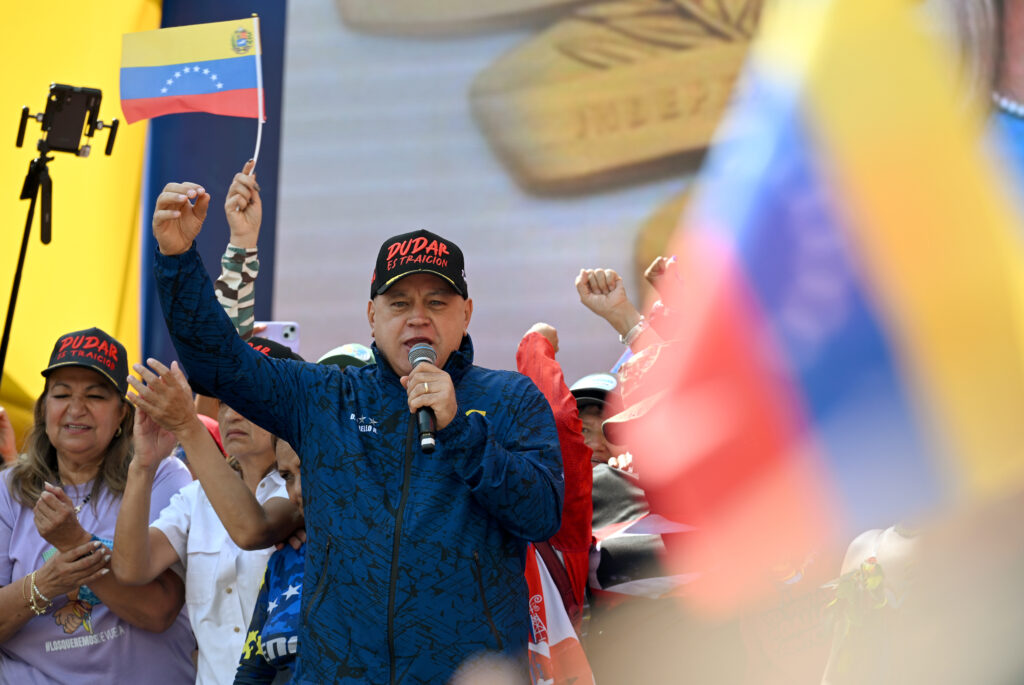
Few names in Venezuela conjure as much fear and reverence as Diosdado Cabello — the man that Washington is offering $25 million to capture.Loathed by opponents and cheered by pro-government “Chavistas,” fast-talking with a wicked sense of humor, the former army captain has loomed over public life in the Caribbean nation for more than 20 years.Now that US forces have removed his old boss Nicolas Maduro as president and put him on trial, Venezuelans are watching Cabello, the man widely considered Venezuela’s second-most powerful figure.After Maduro was deposed, he voiced defiance on behalf of the leftist government in the face of US pressure.”The unity of the revolutionary force is more than guaranteed,” he said.- Street militia boss -Several times a minister and secretary-general of the ruling United Socialist Party, Cabello is perhaps best known for setting up the feared “colectivos,” a rifle-wielding, motorbike-riding militia that intimidates opponents.”The government has not much control over them,” said Brian Naranjo, a former US diplomat who met Cabello in the late 1990s.He branded the colectivos “ideologically committed thugs and goons that can be deployed on the street to maintain order” — though their supporters say they prevent crime.Cabello’s face is well known from his television show, “Hitting With A Mallet.”Cabello fills the show with edgy jokes about opposition figures, such as its one-time figurehead Juan Guaido — “that rat” — and current opposition leader Maria Corina Machado, whom he compared with a mythical Venezuelan bogeywoman, La Sayona.”When the bogeywoman sees her, the bogeywoman starts crying,” he cracked.- Coup comrade -Cabello was born on April 15, 1963, in El Furrial, then a mostly rural community in eastern Monagas state. He is married with three children.After graduating from Venezuela’s military academy, he joined the army, where he met Hugo Chavez, the future leader of the socialist “Bolivarian revolution.”He joined Chavez in a 1992 coup attempt to overthrow President Carlos Andres Perez.He was imprisoned for that until being pardoned in 1994, along with Chavez and other officers involved in the uprising.Once free, Cabello helped Chavez in the campaign that led to his presidential victory in 1998 and entered his administration the following year.His critics accuse him of having amassed a vast fortune through corruption and front companies.- Chavez appointee -Cabello served briefly as acting president following a 2002 coup that briefly deposed Chavez, Maduro’s predecessor.”Commander Chavez appointed me interior and justice minister amidst all the mayhem,” Cabello said in 2024.”At that time, with the people beside us, we prevailed.”Cabello was reappointed interior minister in August 2024, giving him control of the security apparatus and intelligence services.”He was brought back in by Maduro, after internal exile from the inner circle,” said Naranjo.Under Cabello, more than 2,000 people were detained during protests at Maduro’s declaration of victory in that year’s election, which was branded a fix by the United States and several of its allies.- Tensions in new government -With Maduro, “Cabello has been in and out of favour” over the years, said Naranjo.In a murky political world, Cabello is rumored to be at odds with Maduro’s successor Delcy Rodriguez and her powerful brother Jorge, leader of parliament.Observers warn that tensions between the Rodriguez pair, Cabello and Defense Minister Vladimir Padrino Lopez threaten the stability of the current interim leadership.”Diosdado Cabello has a lot of informal control, Vladimir Padrino has the formal control,” said David Smilde, a US academic specializing in Venezuela at Tulane University.”At any time they could turn on her… on the other hand, she is in a position that she could remove one of them.”- Internal exile -Chavez passed over Cabello in naming Maduro as his successor for president.”Before Chavez died, there was a battle between Nicolas Maduro and Diosdado Cabello,” but the two eventually forged a unified front for stability, said Smilde.Cabello clung onto his position of influence through the recent years of economic sanctions and international pressure, not least from US President Donald Trump.The United States has posted a $25-million reward for his capture — accusing him of drug trafficking and terrorism alongside Maduro.