


‘I can’t walk anymore’: Afghans freeze to death on route to Iran
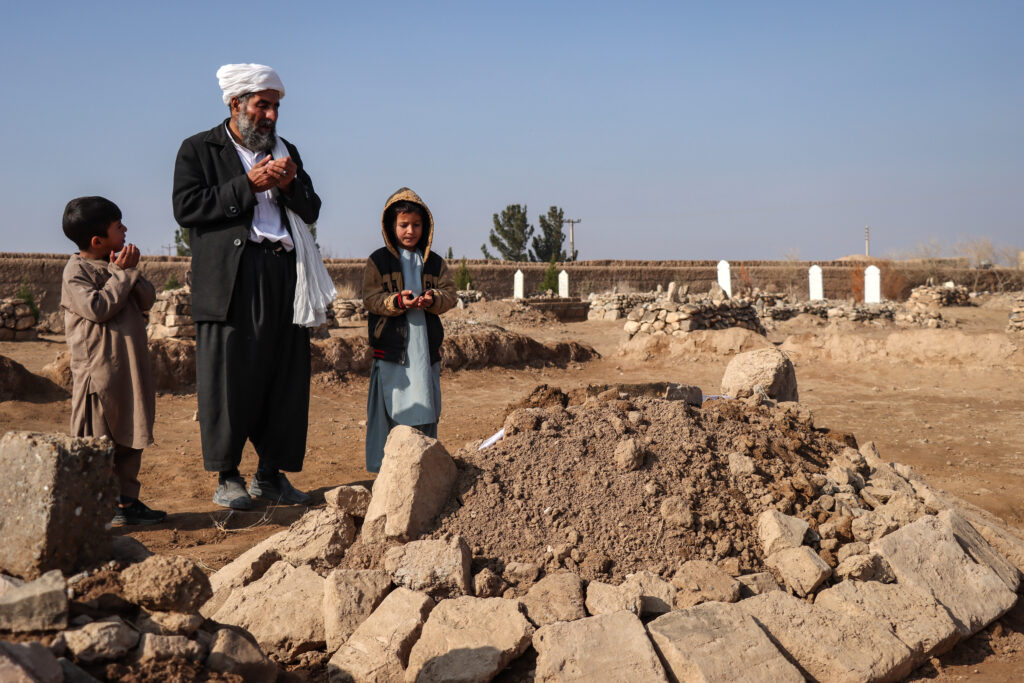
Habibullah set off from his home in western Afghanistan determined to find work in Iran, only for the 15-year-old to freeze to death while walking across the mountainous frontier.”He was forced to go, to bring food for the family,” his mother, Mah Jan, told AFP at her mud home in Ghunjan village.”We have no food to eat, we have no clothes to wear. The house in which I live has no electricity, no water. I have no proper window, nothing to burn for heating,” she added, clutching a photo of her son.Habibullah was one of at least 18 migrants who died last month while trying to cross illegally into Iran from Afghanistan’s Herat province, according to officials, when temperatures were around -3C.With earthquakes and drought compounding a daily struggle to survive in Afghanistan, around half the population will need humanitarian assistance this year, according to the United Nations.”There was no other way left for me. I thought, let him go to make our life better,” said Mah Jan, 50, who requested the family’s surname not be published for privacy reasons.Habibullah’s stepbrother, Gul Ahmad, said the teenager had tried shoe polishing but only earned up to 15 afghanis (23 cents) per day.”He was ready to be a shepherd for 2,000 afghanis ($30 a month), to work in a shop, but he found nothing. So he was forced to leave. He told his mother, ‘Let’s trust in God, I’m going to Iran’,” said Gul Ahmad, 56.- ‘Very dangerous’ – Habibullah was among 15 bodies returned from Iran, an Afghan border source told AFP on condition of anonymity.A further three migrants who died were recovered on the Afghan side of the frontier, an army official said.Over just a matter of days last month, around 1,600 Afghan migrants “who were at risk of perishing due to the weather” were rescued in the mountains, according to Iranian border guard commander Majid Shoja, quoted by the ILNA news agency.They are drawn to Iran due to greater job opportunities and a common language, but legal routes are limited.Afghanistan’s deputy minister for labour and social affairs, Abdul Manan Omari, said Sunday it was “necessary to do more” to facilitate work permits for migrants.Iran and Pakistan have combined sent back five million Afghans since September 2023, increasing the country’s population by 10 percent, according to the International Organization for Migration.The agency’s deputy head in Afghanistan, Mutya Izora Maskun, said that many in the country report “the economy, job insecurity, food insecurity, constrained access to services” force them to leave.They do so even if that means going through “illegal crossing points that are very dangerous due to the cold and the risks of human trafficking”, she told AFP.The Taliban government has taken “serious steps to fight the smugglers”, interior ministry spokesman Abdul Mateen Qani told AFP.But attempts to reach Iran have not stopped.- ‘Destitute’ -In the last week of December, “347 people who were trying to illegally cross the border into Iran were identified and arrested”, a military unit in western Afghanistan said in a statement on Saturday.Abdul Majeed Haidari, whose one-year-old son suffers from a heart problem, tried his luck in mid-December.Working at a brick oven, the 25-year-old could no longer afford to pay for his son’s medication and family expenses.”We left because we were so destitute,” his stepbrother Yunus, who accompanied him, told AFP.”We set out in the rain. In such weather, the radars and cameras of the border guards do not work properly. But the smuggler got lost,” he said.They failed to light a fire for warmth and, as snow fell, Yunus recounted his stepbrother’s words: “I can’t walk anymore.””Some told us to leave him so as not to endanger the other 19 people in the group,” said Yunus, who requested his full name not be used.After carrying him for two more hours, “his eyes stopped closing, his body grew heavier,” Yunus recalled, before an Iranian family drove past and took them to hospital.”They gave him electric shocks, but they said he was already dead,” said Yunus, who has since returned to his village.
South Korea’s Lee to meet Xi with trade, Pyongyang on the agenda
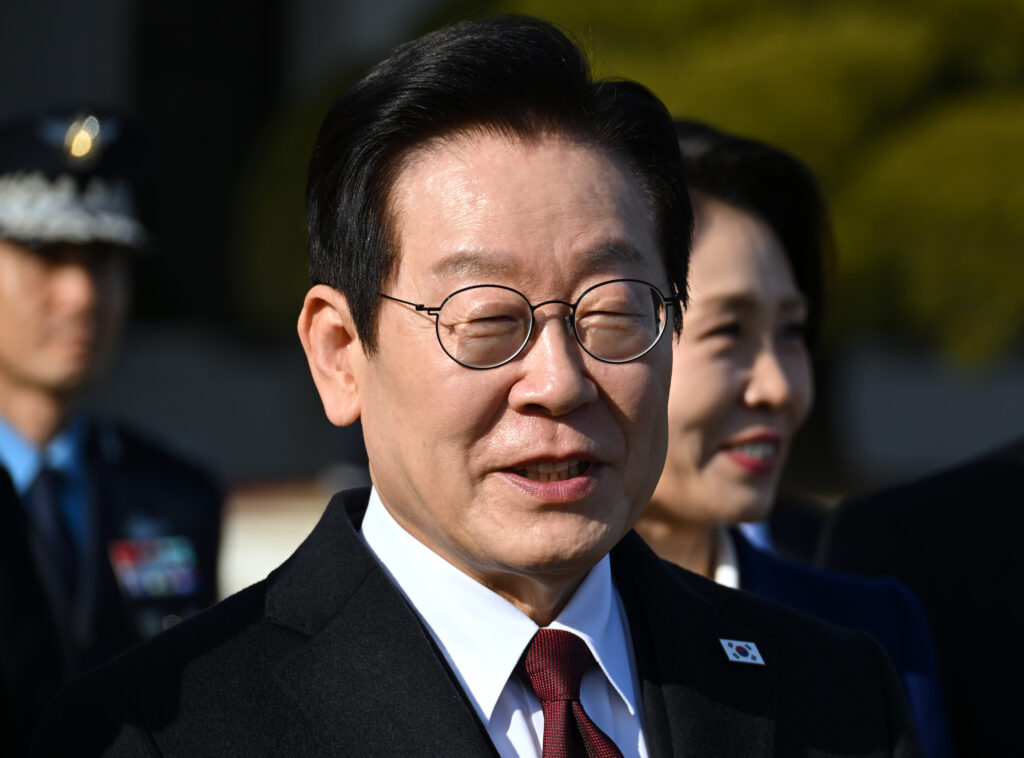
South Korean President Lee Jae Myung will meet Monday with Chinese counterpart Xi Jinping in Beijing, with closer economic ties as well as the recalcitrant North on the agenda.Lee is the first South Korean leader to visit Beijing in six years and his meeting with Xi comes a day after the nuclear-armed North fired two ballistic missiles into the Sea of Japan.The pair will meet for an opening ceremony and a summit before the signing of an agreement and a state banquet, Seoul has said.The South Korean leader, accompanied by a delegation of business and tech leaders, hopes to secure pledges to expand economic cooperation with his country’s largest trading partner.He has called for South Korea and China to work towards “more horizontal and mutually beneficial” trade.On Monday Lee met with top executives from both South Korean and Chinese firms at Beijing’s opulent Diaoyutai State Guesthouse, Seoul’s Yonhap news agency reported.South Korea and China “have helped each other grow through interconnected industrial supply chains and led the global economy”, he told them.Among the Chinese firms represented were battery giant CATL as well as phone maker ZTE and tech giant Tencent, Yonhap said.On the South Korean side, Lee is accompanied by Samsung Electronics chairman Lee Jae-yong and Hyundai Motor Group’s executive chair Chung Eui-sun, among others.Lee also hopes to possibly harness China’s clout over North Korea to support his bid to improve ties with Pyongyang.”China is a very important cooperative partner in moving toward peace and unification on the Korean Peninsula,” Lee said during a meeting with Korean residents in Beijing on Sunday, according to Yonhap.- Pyongyang tensions -Hours before Xi and Lee were due to meet, Pyongyang declared that it had launched two hypersonic missiles and that its nuclear forces were ready for “actual war”.Xi and Lee last met in November on the sidelines of the APEC summit in the South Korean city of Gyeongju — a meeting Seoul framed as a reset of ties after years of tension.Seoul has for decades trodden a fine line between China, its top trading partner, and the United States, its chief defence guarantor.And Lee’s trip comes less than a week after China carried out massive military drills around Taiwan, the self-ruled island it claims as part of its territory.The exercise, featuring missiles, fighter jets, navy ships and coastguard vessels, drew a chorus of international condemnation that Seoul has notably declined to join.Lee also deftly stayed on the sidelines since a nasty spat erupted between Beijing and Tokyo late last year, triggered by Prime Minister Sanae Takaichi’s suggestion that Japan could intervene militarily if China attacks Taiwan.In an interview with Chinese state broadcaster CCTV on Friday, Lee said he “clearly affirms” that “respecting the ‘one-China’ principle and maintaining peace and stability in Northeast Asia, including in the Taiwan Strait, are very important”.

Budget: le gouvernement recevra les groupes parlementaires en vue de trouver un compromis
La ministre des Comptes publics, Amélie de Montchalin, recevra les groupes parlementaires dans les prochains jours, avec le ministre de l’Economie Roland Lescure, pour trouver un compromis et adopter un budget, hors toutefois Rassemblement national et France insoumise, qu’elle accuse de blocage.”À la demande du Premier ministre, je recevrai avec Roland Lescure l’ensemble des groupes parlementaires avant la reprise des travaux en commission, en dehors du Rassemblement national et de la France Insoumise, qui se sont employés à bloquer le budget par tous les moyens possibles au détriment des Français”, a déclaré la ministre dimanche dans un message posté sur le réseau X.”L’objectif est clair: que les parlementaires puissent trouver, au plus tôt, les conditions d’un compromis. L’impasse n’est pas une fatalité. Donner un budget à la France en janvier est une responsabilité majeure”, fait-elle valoir.Le projet de loi de finances pour 2026, dont l’examen au Parlement n’a pu être achevé avant le 31 décembre, doit revenir à l’Assemblée nationale à partir du 8 janvier en commission des Finances.Une loi spéciale permet de financer provisoirement l’État. Elle reconduit les impôts et enveloppes allouées dans les conditions de 2025.”La loi spéciale est un outil de continuité minimale (…) dont nous avons besoin en premier lieu pour que les services publics fonctionnent sans interruption dès les premiers jours de janvier”, a également déclaré Amélie de Montchalin dimanche dans une interview au JDD, mais elle “permet de tenir, pas d’agir”.”Elle ne nous permet pas d’investir et de porter des nouvelles politiques”, a-t-elle souligné, indiquant que “le temps passé sous loi spéciale, (…) ce sont les jours les plus chers”, citant “des investissements qui ne se font pas, des chefs d’entreprise qui retardent leurs décisions, des ménages qui consomment moins… “.Selon la ministre, par rapport à décembre, cependant, “le cadre de discussion s’est resserré. Beaucoup de sujets qui cristallisaient les débats ne peuvent plus être discutés car le 1er janvier est passé”, comme “les réductions de niches fiscales à l’impôt sur le revenu” ou “la réforme de l’abattement de 10% pour les retraités”.
Trump réaffirme son souhait d’un Groenland américain, après l’objection du Danemark
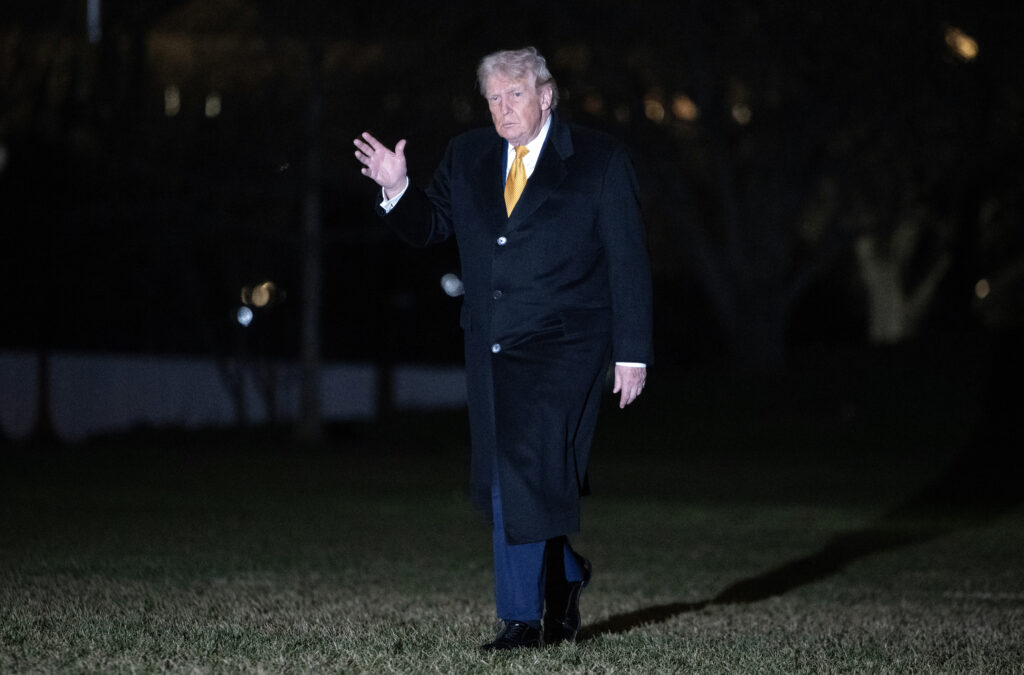
Donald Trump a réaffirmé dimanche soir son souhait de voir le Groenland passer sous la coupe américaine, après que la Première ministre danoise a exhorté les Etats-Unis à “cesser leurs menaces” d’annexer le territoire ce week-end. L’intervention militaire américaine au Venezuela, qui a mis en exergue l’intérêt de Donald Trump pour les vastes ressources pétrolières du pays, a ravivé les craintes pour le Groenland, convoité par le président américain pour ses importantes ressources minières et son emplacement stratégique.”Nous avons besoin du Groenland du point de vue de la sécurité nationale, et le Danemark ne sera pas en mesure de s’en occuper”, a réaffirmé le président américain aux journalistes à bord d’Air Force One dimanche soir. “Nous nous occuperons du Groenland dans environ deux mois… parlons du Groenland dans 20 jours”, a-t-il ajouté. Plus tôt déjà, Donald Trump a poussé la cheffe du gouvernement danois Mette Frederiksen à sortir de sa réserve.Interrogé lors d’un entretien téléphonique par The Atlantic sur les implications de l’opération militaire au Venezuela pour le Groenland, Trump a déclaré que c’était à ses partenaires de les évaluer, selon le magazine.”Ils vont devoir se faire leur propre opinion. Je ne sais vraiment pas”, a déclaré M. Trump, ajoutant : “Mais nous avons absolument besoin du Groenland. Nous en avons besoin pour notre défense.”La Première ministre danoise s’est élevée contre la convoitise du président américain: “Je demande instamment aux Etats-Unis de mettre fin à leurs menaces contre un allié historique et contre un territoire et un peuple qui ont clairement fait savoir qu’ils n’étaient pas à vendre”, a écrit Mme Frederiksen dans un communiqué dimanche soir.”Je dois le dire très clairement aux Etats-Unis: il est tout à fait absurde de dire que les États-Unis devraient prendre le contrôle du Groenland”, a-t-elle ajouté.Samedi, une publication sur X de l’épouse du directeur de cabinet adjoint de la Maison Blanche, Stephen Miller, avait ravivé les craintes danoises. Katie Miller a publié sur son compte X une carte du Groenland colorée aux couleurs du drapeau américain, assortie d’une courte légende en capitales: “SOON” (“bientôt”).Katie Miller a été un temps conseillère et porte-parole de la Commission pour l’efficacité gouvernementale (Doge), alors dirigée par Elon Musk, avant d’être employée par le milliardaire dans le secteur privé.- “Garantie de sécurité” -La Première ministre danoise a rappelé que le Royaume du Danemark, qui inclut les îles Féroé et le Groenland, “fait partie de l’OTAN et bénéficie ainsi de la garantie de sécurité de l’alliance”.Le Danemark est un allié historique et traditionnel des Etats-Unis, se fournissant largement auprès de Washington pour son armement.Le Premier ministre du territoire autonome danois avait jugé auparavant “irrespectueux” la publication de Mme Miller.”Les relations entre les pays et les peuples sont fondées sur le respect et le droit international, et non sur des symboles qui ignorent notre statut et nos droits”, a dit Jens-Frederik Nielsen sur Facebook.Pour autant, “il n’y a aucune raison de paniquer ou de s’inquiéter”, selon lui.L’ambassadeur du Danemark aux Etats-Unis, Jesper Møller Sørensen, avait lui répondu au message de Mme Miller en disant “attendre le respect total de l’intégrité territoriale du Royaume du Danemark”.L’annonce fin décembre par Donald Trump de la nomination d’un envoyé spécial pour ce vaste territoire autonome danois avait déjà provoqué un accès de fièvre entre les deux pays.Le Groenland, immense île arctique peuplée de 57.000 habitants, répète ne pas être à vendre et vouloir décider seul de son avenir.En janvier 2025, 85% des Groenlandais s’étaient dits opposés à une future appartenance aux Etats-Unis, selon un sondage publié dans le quotidien groenlandais Sermitsiaq. Seuls 6% y étaient favorables.Fin mars 2025, le vice-président américain, JD Vance, avait provoqué un tollé en prévoyant de se rendre sur le territoire sans y avoir été invité. Il y avait finalement renoncé pour se contenter de visiter la seule base militaire américaine du territoire.Fin août, la télévision danoise avait révélé qu’au moins trois Américains liés à Donald Trump avaient réalisé des opérations d’influence dans ce territoire polaire.
Trump renews push to annex Greenland
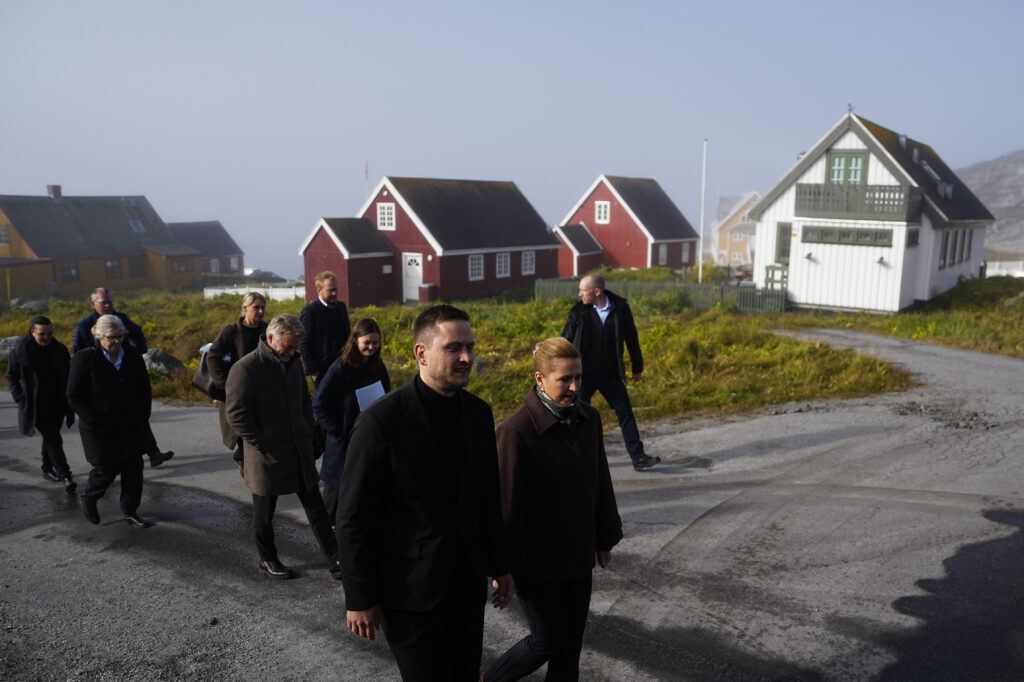
President Donald Trump doubled down Sunday on his claim that Greenland should become part of the United States, despite calls by Denmark’s prime minister to stop “threatening” the territory.Washington’s military intervention in Venezuela has reignited fears for Greenland, which Trump has repeatedly said he wants to annex, given its strategic location in the Arctic.While aboard Air Force One en route to Washington, Trump reiterated the goal. “We need Greenland from the standpoint of national security, and Denmark is not going to be able to do it,” he said in response to a reporter’s question.”We’ll worry about Greenland in about two months… let’s talk about Greenland in 20 days.”Over the weekend, the Danish prime minister called on Washington to stop “threatening its historical ally”.”I have to say this very clearly to the United States: it is absolutely absurd to say that the United States should take control of Greenland,” Prime Minister Mette Frederiksen said in a statement. She also noted that Denmark, “and thus Greenland”, was a NATO member protected by the agreement’s security guarantees.-‘Disrespectful’ -Trump rattled European leaders by attacking Caracas and grabbing Venezuelan president Nicolas Maduro, who is now being detained in New York.Trump has said the United States will now “run” Venezuela indefinitely and tap its huge oil reserves.Asked in a telephone interview with The Atlantic about the implications of the Venezuela military operation for mineral-rich Greenland, Trump said it was up to others to decide.”They are going to have to view it themselves. I really don’t know,” Trump was quoted as saying.He added: “But we do need Greenland, absolutely. We need it for defence.”Hours later, former aide Katie Miller, the wife of Trump’s most influential adviser, drew ire by posting an image of Greenland in the colours of the US flag, captioning it “SOON”.Greenland’s Prime Minister Jens-Frederik Nielsen called Miller’s post “disrespectful”.”Relations between nations and peoples are built on mutual respect and international law — not on symbolic gestures that disregard our status and our rights,” he wrote on X.But he also said “there is neither reason for panic nor for concern. Our country is not for sale, and our future is not decided by social media posts”.- Allies? -Stephen Miller is widely seen as the architect of much of Trump’s policies, guiding the president on his hardline immigration policies and domestic agenda.Denmark’s ambassador to the United States, Jesper Moeller Soerensen, offered a pointed “friendly reminder” in response to Katie Miller’s post that his country has “significantly boosted its Arctic security efforts” and worked together with Washington on that.”We are close allies and should continue to work together as such,” Soerensen wrote.Katie Miller was deputy press secretary under Trump at the Department of Homeland Security during his first term.She later worked as communications director for then-vice president Mike Pence and also acted as his press secretary.