Au Venezuela, traumatisme et incrédulité dans un quartier bombardé

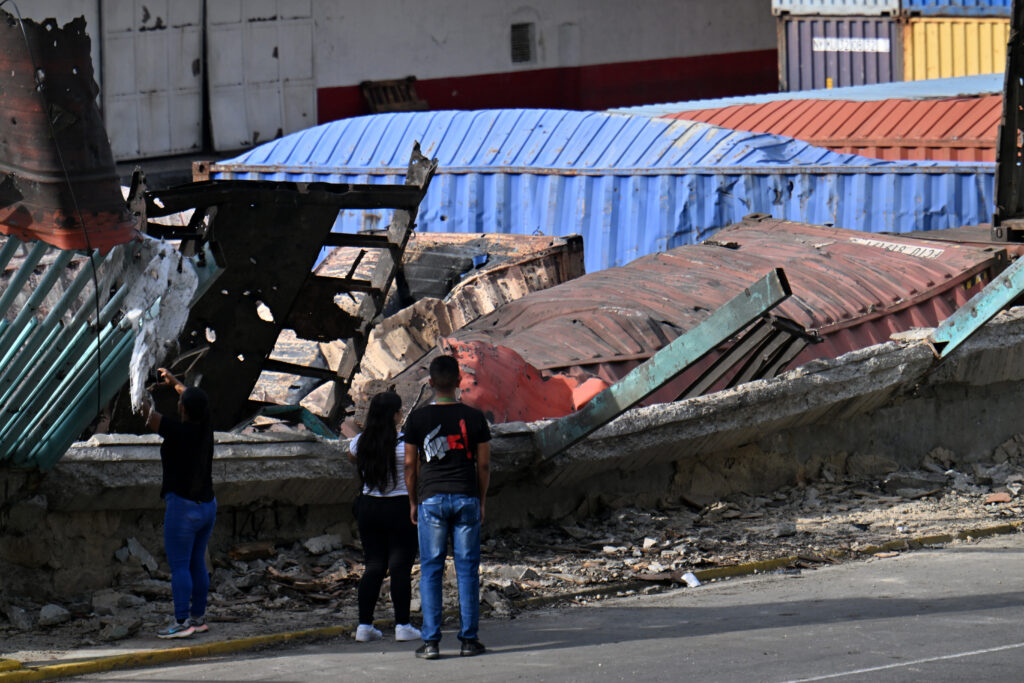
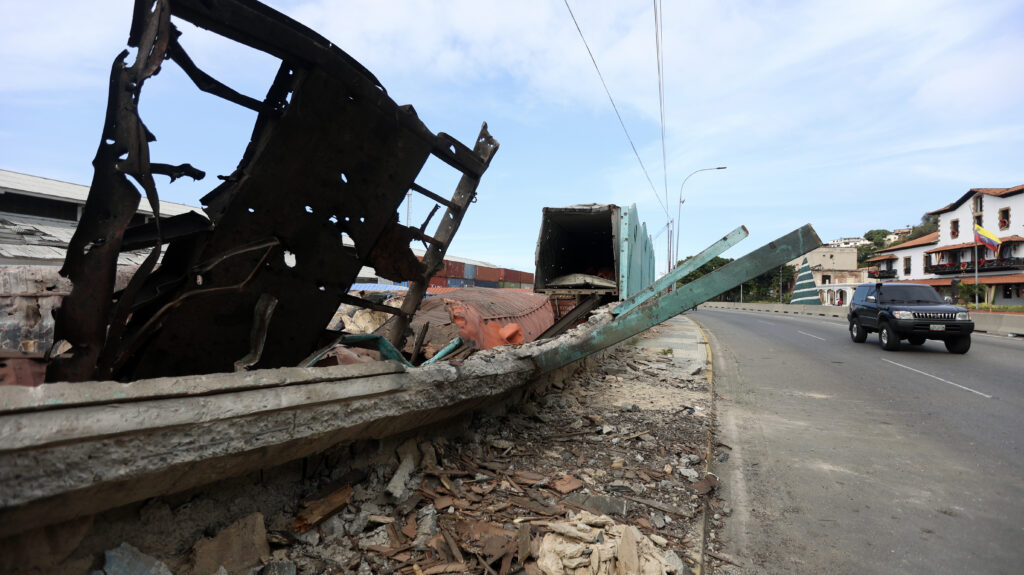
“Pffsh, on voyait les +feux de bengale+ arriver et l’explosion”, raconte Alpidio Lovera 47 ans, du quartier Bolivar de La Guaira, le port et l’aéroport de Caracas visé dans la nuit de vendredi à samedi par des frappes américaines qui ont finalement conduit à la capture du président vénézuélien Nicolas Maduro.Au moins deux projectiles sont …

Au Venezuela, traumatisme et incrédulité dans un quartier bombardé Read More »

La Corée du Nord tire plusieurs missiles balistiques présumés

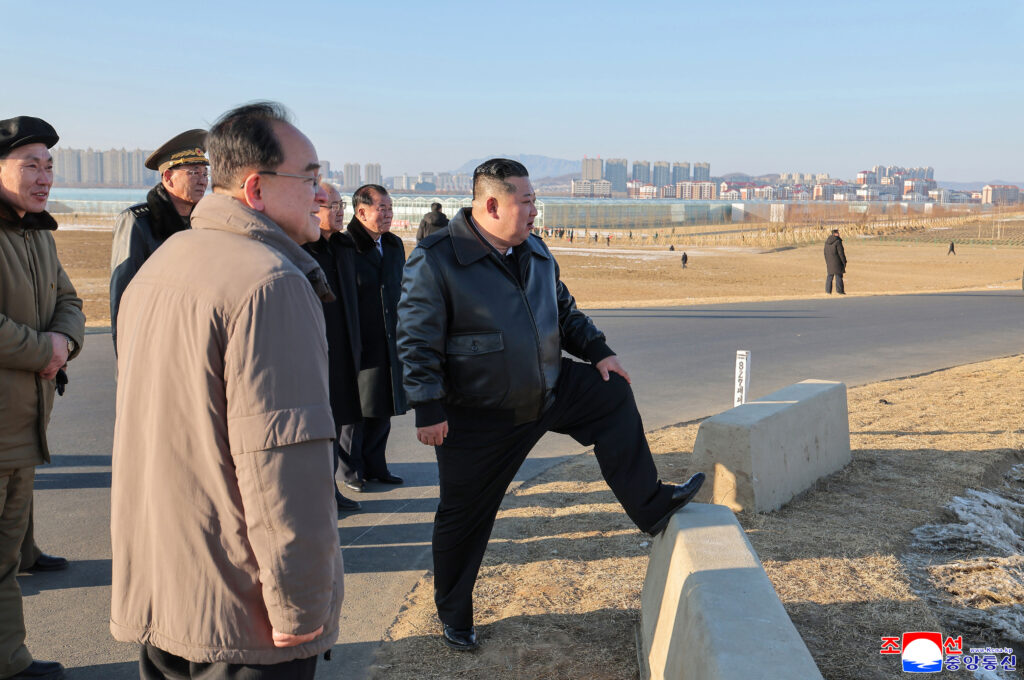
La Corée du Nord a tiré dimanche plusieurs missiles balistiques présumés selon Séoul, son premier lancement de l’année au lendemain de la capture du président vénézuélien par les Etats-Unis.”Notre armée a détecté plusieurs projectiles, qui sont présumés être des missiles balistiques, lancés vers la mer de l’Est depuis les environs de Pyongyang aux alentours de …

La Corée du Nord tire plusieurs missiles balistiques présumés Read More »

Shock, disbelief in bombed Venezuelan port

Twelve hours after the United States bombed Venezuela during an operation to oust President Nicolas Maduro, the smoke continued to seep from hangars in the port of La Guaira north of Caracas.La Guaira was one of several areas in or near Caracas struck by jets during a stealth mission to snatch Maduro and whisk him out of the country.Deformed shipping containers, their contents spilling onto the docks, bore testimony to the force of the strikes that US officials said were designed to clear the way for helicopters to swoop in on Maduro’s hiding place.There were no reports of casualties in the area.Firefighters used an excavator to remove broken glass and gnarled metal strewn across the site as policemen with pump-action rifles patrolled on motorbike to prevent looting.Curious onlookers filmed the scene on their smartphones, many still incredulous at the speed and magnitude of the day’s events. In a little over an hour, US forces removed an authoritarian leader who had stubbornly clung to power through years of US sanctions and coup plots.The blasts blew out the windows of public buildings on La Guaira’s seafront and ripped the roofs off several houses.”Psssh, first we saw the flash and then the explosion,” said Alpidio Lovera, a 47-year-old resident, who ran to a hill with his pregnant wife and other residents to escape the strikes.His sister Linda Unamuno, 39, burst into sobs as she recalled a nightmarish night.”The blast smashed the entire roof of my house,” she said.Unamuno’s first thoughts were that La Guaira was experiencing another natural disaster, 26 years ago after a landslide of biblical proportions swept away 10,000 people, many of them washed out to sea.”I went out, that’s when I saw what was happening. I saw the fire from the airstrikes. It was traumatizing,” she sobbed, adding she “wished it on no-one.”Alirio Elista, a pensioner whose water tank was damaged in the strikes, said those who cheered the US intervention for bringing down the unpopular Maduro “don’t know what they’re talking about.”He said he believed news of Maduro’s capture was “fake” — despite US President Donald Trump having posted a picture of him blindfolded and handcuffed on a US warship.Like many in Venezuela, the 68-year-old expressed nostalgia for the heyday of the Caribbean country between the 1950s and 1970s, when it was flush with oil riches.In the past decade Maduro ran the economy into the ground, causing rampant inflation and widespread shortages of fuel, medicine and some basic foodstuffs.Elista’s pension of under half a dollar a week “doesn’t pay for anything,” he complained.”We’re hungry,” he said.But unlike Trump, he had few illusions of a quick fix for the country’s ills.The Republican leader outlined his vision Saturday of US oil companies pouring into Venezuela to repair crumbling infrastructure — and reap the rewards with surging oil revenues.Venezuela has the world’s largest proven oil reserves but its output has tanked in recent years due to a US oil embargo and chronic underinvestment.”We’ll need at least 15 years to get back to where we were,” Elista predicted.

A year on, LA wildfire survivors struggle to rebuild

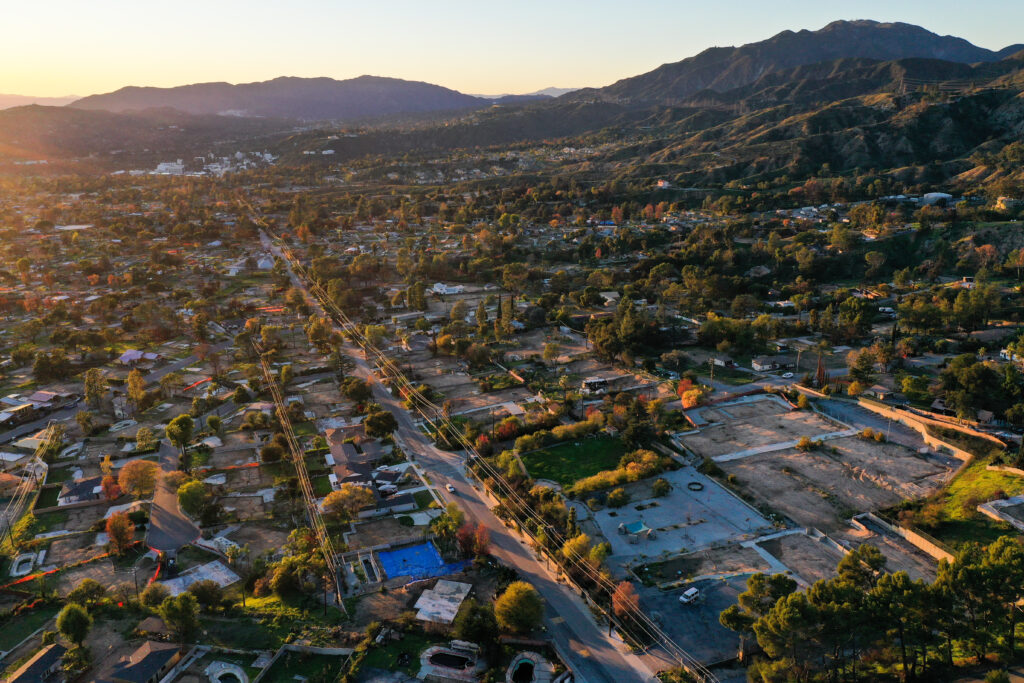
Less than a year after watching flames raze his home in the Altadena foothills, Ted Koerner has moved into a brand new house, one of the first to rebuild in this Los Angeles suburb.It has been an uphill battle, and Koerner is visibly moved as he brings his dog, Daisy, back home. “We’ve been through a lot this year,” he told AFP.Altadena was hardest hit by the fires that ravaged parts of the sprawling US metropolis in January 2025. Thousands of homes were destroyed and 19 people died in the town — compared to 12 killed in the upscale Pacific Palisades neighborhood.To rebuild his home, Koerner, a 67-year-old head of a security company, had to front up several hundred thousand dollars as his mortgage lender refused to release insurance payouts for months.Koerner also had to contend with the uncertainties created by the policies of US President Donald Trump.Tariffs on steel, wood, and cement, all of which are often imported, have increased construction costs, and Latino construction workers fear arrest by Immigration and Customs Enforcement (ICE).”If ICE grabs construction crews and Trump does that to us on top of tariffs, we’ll never get this town rebuilt,” Koerner said.Slowly, however, Altadena is coming back to life. Amid the thousands of empty lots, a few frames are beginning to rise from the ground. – ‘Chaos and delays’ -The hurricane-strength 160 kilometer (100 mile) per hour gusts of wind that spread the fire at breakneck speed last January are still fresh in everyone’s minds. But despite the destruction and the pervasive threat of climate change in California, dogged survivors refuse to move away. “Where are you gonna go?” sighs another Altadena resident, Catherine Ridder, a 67-year-old psychotherapist. “There’s no place around here that’s not vulnerable to catastrophic weather.”Her construction project has begun and she hopes to move in by August — before the $4,000 monthly rent she pays for a furnished apartment exhausts the housing allowance from her insurance.To speed things up, the Californian bureaucracy has streamlined its processes. Los Angeles County is issuing building permits within a few months. Before, it often took more than a year.But Ridder has been frustrated by delays in inspections to verify compliance with new building codes, such as requiring a fire sprinkler system in the roof. “There’s a lot of chaos and delays. I mean, maybe it’s faster than pre-fire stuff, but this doesn’t feel easy at all,” she told AFP. “I know that I’m way better off than a lot of people who were underinsured.”- Losing the ‘melting pot’ -In this high-risk area, many residents were covered by the state’s insurer of last resort, and their compensation is too meager to rebuild homes that often cost more than a million dollars. So many are counting on the financial outcome of lawsuits filed against Southern California Edison, the company that owns the faulty power line suspected of having triggered the fire that destroyed Altadena. Carol Momsen couldn’t wait.She was compensated only $300,000 for the destruction of her home, so the 76-year-old retiree sold her land. That paid for a new apartment elsewhere. “Even if I had the money, I don’t think I’d want to rebuild in Altadena, because it’s just a sad place right now,” the former saleswoman said.There is palpable anxiety that this diverse town, home to a sizable African American population, will lose its soul because people cannot afford to rebuild.Several empty lots display signs: “Altadena, not for sale!” and “Black homes matter.”Ellaird Bailey, 77, a retired technician at a telecommunications company, settled here with his wife in 1984 so his children could grow up in this “melting pot.””So many of those people that we’ve known for 20 or 30 years are moving away” to more affordable communities, he said.”It’s hard to visualize what it’s going to be like moving forward.”

Trump says US to ‘run’ Venezuela after toppling Maduro in military raid

President Donald Trump said Saturday that the United States will “run” Venezuela and tap its huge oil reserves after seizing leftist leader Nicolas Maduro during a bombing raid on Caracas.Trump’s announcement came hours after a lightning pre-dawn attack in which special forces grabbed Maduro and his wife — while air strikes pounded sites in and around the capital city — then whisked him out of the country.Maduro landed at a US military base shortly after nightfall, then was transported by helicopter to New York City, where the couple will face drug trafficking and weapons charges.Despite the success of the risky operation, what happens next is highly uncertain.Trump said he was “designating people” from his cabinet to be in charge in Venezuela but gave no further details.In another surprise, Trump indicated US troops could be deployed, saying Washington is “not afraid of boots on the ground.”But he appeared to reject the possibility of the country’s opposition taking power and said he could work instead with Maduro’s vice president, Delcy Rodriguez.One aspect that became clearer was the White House’s motivation, with Trump indicating regime change and Venezuela’s oil riches were the major goals.”We’re going to have our very large United States oil companies… spend billions of dollars, fix the badly broken infrastructure,” he said. “We’ll be selling large amounts of oil.”- Trump dismisses opposition leader -US-backed opposition leader Maria Corina Machado, who won the Nobel Peace Prize last year, posted on social media that “the hour of freedom has arrived.”She called for the opposition’s 2024 election candidate, Edmundo Gonzalez Urrutia, to “immediately” assume the presidency.But Trump was surprisingly cold about expectations that Machado could become Venezuela’s new leader, saying she doesn’t have “support or respect” there.Instead, he touted Rodriguez, saying “she’s essentially willing to do what we think is necessary to make Venezuela great again.”Rodriguez poured cold water on that, demanding Maduro’s release and vowing to “defend” the country.Reflecting the confusion, Trump indicated US involvement is likely for the long haul.”We’re going to stay until such time as the proper transition can take place,” he said.China, a backer of Maduro’s leftist regime, said it “strongly condemns” the US operation, while France warned a solution cannot “be imposed from outside.”United Nations Secretary-General Antonio Guterres said he was “deeply concerned that the rules of international law have not been respected.”At Venezuela’s request, the UN Security Council will meet Monday to discuss the US operation to seize Maduro, the Somali presidency of the Council told AFP.- Blackout and bombing -Venezuelans had been bracing for attacks as US forces spent months massing off the coast.Caracas residents woke to explosions and the whir of military helicopters around 2 am (0600 GMT). Air strikes hit a major military base and an airbase, among other sites, for nearly an hour.The top US military officer, General Dan Caine, said 150 aircraft took part in the operation, supporting troops who choppered in to seize Maduro with the help of months of intelligence into his daily habits — down to “what he ate” and what pets he kept.Maduro, 63, and his wife “gave up” without a struggle and there was “no loss of US life,” he said.Venezuelan authorities have yet to release casualty figures. But Trump told the New York Post that “many” Cubans who were part of Maduro’s security detail were killed.Within hours of the operation, Caracas had fallen eerily quiet, with police stationed outside public buildings and the smell of smoke drifting through the streets.- Shifting justifications -The US and numerous European governments did not recognize Maduro’s legitimacy, saying he stole elections in 2018 and 2024.Maduro — in power since 2013 after taking over from leftist mentor Hugo Chavez — long accused Trump of seeking regime change in order to control Venezuela’s oil reserves.Trump has offered several justifications for the aggressive policy toward Venezuela, at times stressing illegal migration, narcotics trafficking and the country’s oil industry.But he had previously avoided openly calling for regime change.Several members of Congress quickly questioned the legality of the operation. However, Trump’s key ally Mike Johnson, top Republican in the House of Representatives, said it was “justified.”burs-sms/ksb/acb

‘At last’: Venezuelans abroad celebrate Maduro ouster

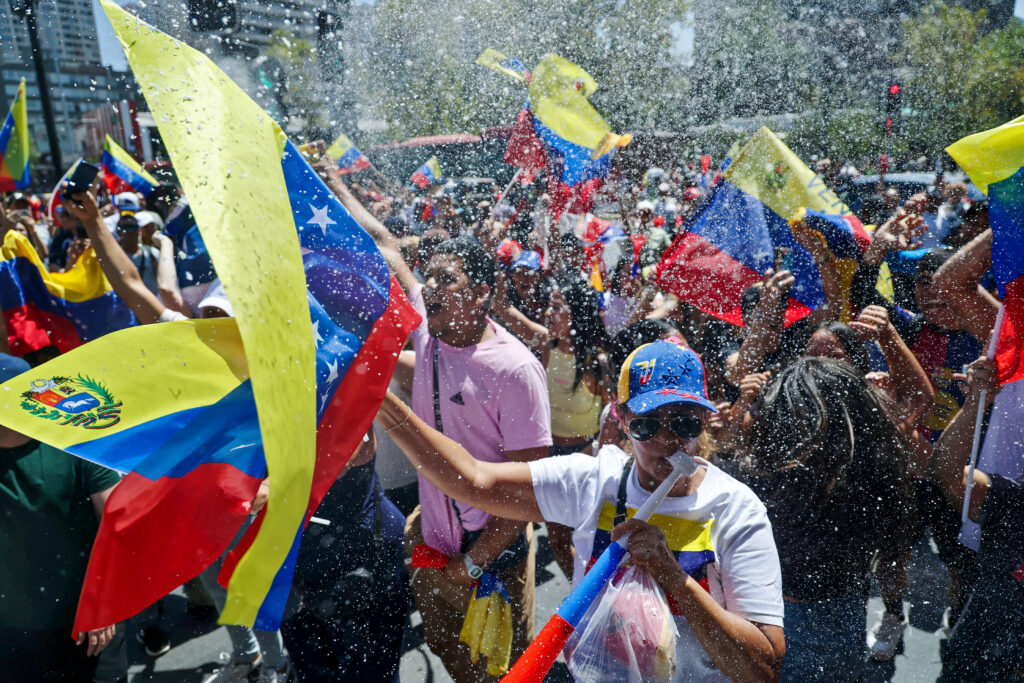
Some of the nearly eight million Venezuelans who fled economic collapse and repression under Nicolas Maduro gathered in their thousands in cities worldwide Saturday to celebrate the strongman’s ouster by US forces.Thousands massed in the capitals of Chile, Mexico, Argentina and in Miami, dancing and hugging and waving Venezuelan flags.”At last we’ll be able to go back home,” street vendor Yurimar Rojas told AFP, straining to make himself heard over an ebullient crowd gathered in Santiago, many decked out in the Venezuelan national colors of yellow, blue and red.Maduro, whose claims to reelection in 2018 and 2024 were widely dismissed as fraudulent, was snatched by US forces in an early-morning military strike and flown to New York to stand trial on drug trafficking charges.”This is tremendous for us,” celebrated Yasmery Gallardo, 61, who said she planned to return home soon from Chile, where she has lived for eight years.”I’m already planning my trip… I can’t wait to be back in my country!” Venezuelans in Chile have been spooked by the campaign promises of far-right president-elect Jose Antonio Kast to deport nearly 340,000 undocumented migrants he blames for a perceived rise in crime.- ‘Thank you’ Donald Trump -In Miami thousands more gathered, singing and kissing the Venezuelan flag.”Thank you, Trump!” one shouted about the US president.”Today, January 3rd, the dreams of Venezuelans abroad came true,” Ana Gonzalez, one of the revelers, told AFP.Another, Anabela Ramos, said she had been waiting “27 years for this moment and now it’s finally happened, it’s finally happened!”  In Spain, home to about 400,000 Venezuelans, thousands came together in Madrid to celebrate.”He is gone, he is gone!” they shouted, many with Venezuelan flags draped over their shoulders.”I came to celebrate: at last we’re emerging from this dictatorship,” said Pedro Marcano, 47, who has his heart set on going home after 11 years abroad.But first, “we’ll need things to be a bit clearer,” he said.The country’s future is uncertain, with Trump saying Saturday the United States will “run” Venezuela until a power transfer can happen.Venezuelan Vice President Delcy Rodriguez has said she is ready to work with Washington, according to Trump, who said opposition leader Maria Corina Machado “doesn’t have the support within or the respect within the country” to be president.Rodriguez later insisted in a public address that Maduro was Venezuela’s “only president” and the government was “ready to defend” the country.At the Madrid rally, a message from Machado was played over a loudspeaker, and the crowd fell silent.”Venezuela will be free!” she said, and Marcano wiped a tear.In Buenos Aires, thousands similarly gathered in a joyous atmosphere.”No one wishes for an invasion and a bombing… but it was needed,” said 39-year-old Carlos Sierra, who left Venezuela in 2017.”It gives you back the hope of returning to your country.”- ‘Divine justice’ -In the capital of Colombia, which hosts nearly three million Venezuelans — more than any other country — hairdresser Kevin Zambrano grinned as he told AFP he was “Happy, happy, happy” to see the back of Maduro. “The first step is done, and everything else is a gain. (Thanks) to Donald Trump for helping Venezuela,” he said in Bogota, having left his home country 10 years ago.Yeiner Benitez, a security guard in the Colombian capital, teared up as he recalled the hardship and fear that drove him to leave Venezuela in 2022.During his absence, his uncle died from what Benitez said was a common illness due to a lack of medication — a regular occurrence in the economically ravaged country.”Venezuela has gone through a very difficult process; these have been very hard years — years of hunger, misery, torture, friends lost, friends who disappeared,” Benitez told AFP.”So, forgive the emotion, but what’s happening today is extraordinary; it’s divine justice.”Not everyone was happy with what they see as Washington’s foreign intervention. In Mexico City and Buenos Aires, groups gathered at the US embassies there to make their protest known.”Venezuelan brothers, resist… don’t hand over your land, your oil, your gold” to the United States, protest leader Mario Benitez told the crowd in Mexico, waving banners with slogans such as “No to war.”In Argentina’s capital, people chanted “Out, yankees, out!”burs-mlr/mlm

What we know about the US attacks on Venezuela

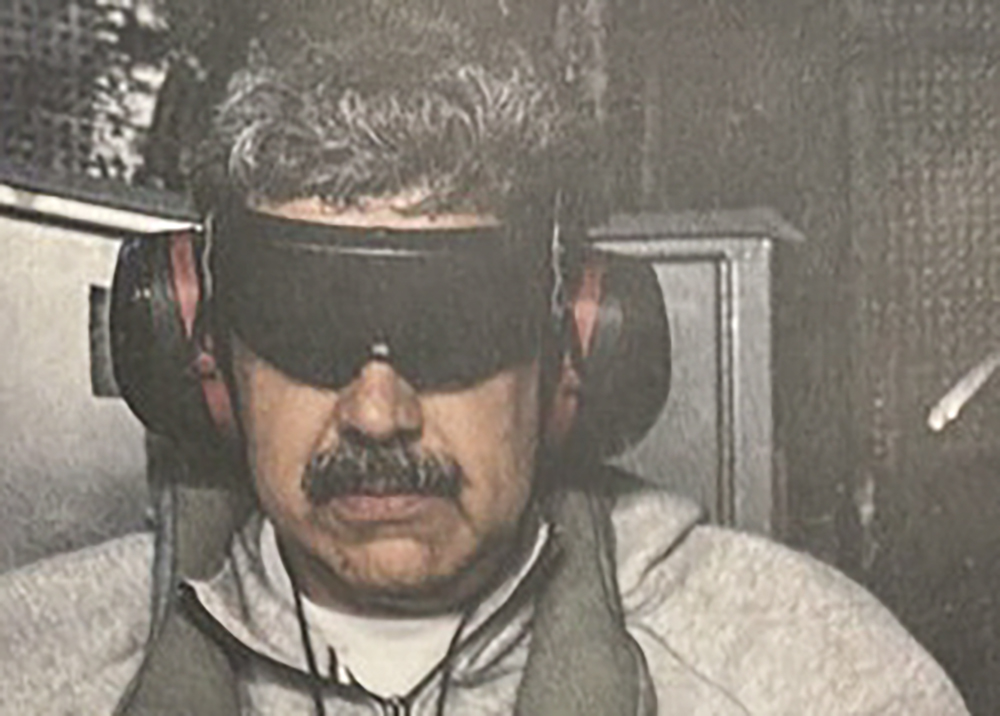
After months of threats and pressure tactics, the United States on Saturday bombed Venezuela and toppled authoritarian left-wing leader Nicolas Maduro, who was seized to face trial in New York.- How did it start? -The first explosions were heard in the capital Caracas and surrounding areas shortly before 2:00 am (0600 GMT), continuing until around 3:15 am.Images on social media showed helicopters silhouetted against the night sky and missiles slamming into targets, creating fireballs and huge plumes of smoke.Trump said at 0921 GMT on his Truth Social platform that the United States had “successfully carried out a large scale strike against Venezuela” and that Maduro and his wife had been “captured and flown out of the Country.”Top US General Dan Caine said the goal of “Operation Absolute Resolve” was purely to seize Maduro, with airstrikes clearing the way for helicopters used in the capture raid.Caine said the operation, involving more than 150 aircraft, followed months of preparation.- What was hit? -Fort Tiuna, Venezuela’s largest military complex, was among the targets.The vast base in southern Caracas is home to the defense ministry, a military academy and housing units for thousands of troops and their families.AFP reporters saw flames and huge plumes of smoke rising from the complex. At one of the entrances, which was still guarded, an armored vehicle and a truck were pocked with bullet marks.La Carlota airbase east of Caracas was also targeted. AFP reporters saw an armored vehicle at the base in flames and a burned bus.Explosions were also reported in La Guaira, north of Caracas, home to a port and an international airport; the north-central city of Maracay; and Higuerote on the Caribbean coast — all within 100 kilometers (60 miles) of Caracas.- Are there casualties? – Defense Minister Vladimir Padrino Lopez accused US forces of firing missiles and rockets at residential areas.As of Saturday night, Venezuelan authorities had yet to release casualty figures.Trump, speaking on Fox News program “Fox and Friends,” boasted that no US soldiers had been killed. He later told the New York Post that “many Cubans” who were protecting Maduro had died, the first indication of casualties from the US strikes.- What has become of Maduro? – The operation brought the curtain down on 12 years of increasingly authoritarian rule by Maduro, who had a $50 million US bounty on his head.Trump posted a picture on Truth Social of the Venezuelan leader handcuffed and blindfolded aboard a US naval ship in the Caribbean.From there he and his wife Cilia Flores were flown to New York to face drugs and weapons charges.Trump said he followed the operation to capture Maduro live at his Mar-a-Lago estate “like I was watching a television show.””He was in a very highly guarded… like a fortress actually,” he said.He said Maduro tried in vain to escape to a safe space.Caine said intelligence agents had spent months studying how Maduro “moved, where he lived, where he traveled, what he ate, what he wore, what were his pets.”He said the 63-year-old Socialist and his wife surrendered without resistance.- What next for Venezuela? -Trump stunned US allies and foes alike by saying the United States would “run” Venezuela during an undetermined transitional period.He indicated that could involve deploying US troops on the ground.Venezuela’s opposition leader, Nobel peace laureate Maria Corina Machado, took to social media to proclaim her country’s “hour of freedom has arrived.”Machado, seen as a hero by many Venezuelans for her dogged resistance to Maduro, called for the opposition’s candidate in the 2024 election to “immediately” assume the presidency.Trump brushed aside any expectations Machado herself would emerge as leader, claiming she did not have “support or respect” in Venezuela.

Attaque américaine contre le Venezuela et capture de Nicolas Maduro : ce que l’on sait

Les États-Unis ont mené dans la nuit de vendredi à samedi une série d’attaques aériennes sur le Venezuela, et le président américain Donald Trump a annoncé que ses forces avaient capturé et exfiltré son homologue vénézuélien, Nicolas Maduro et la Première dame, Cilia Flores.- Quand ont été lancées les frappes ? -De premières puissantes explosions …

Attaque américaine contre le Venezuela et capture de Nicolas Maduro : ce que l’on sait Read More »