Five things to know about New Glenn, Blue Origin’s new rocket

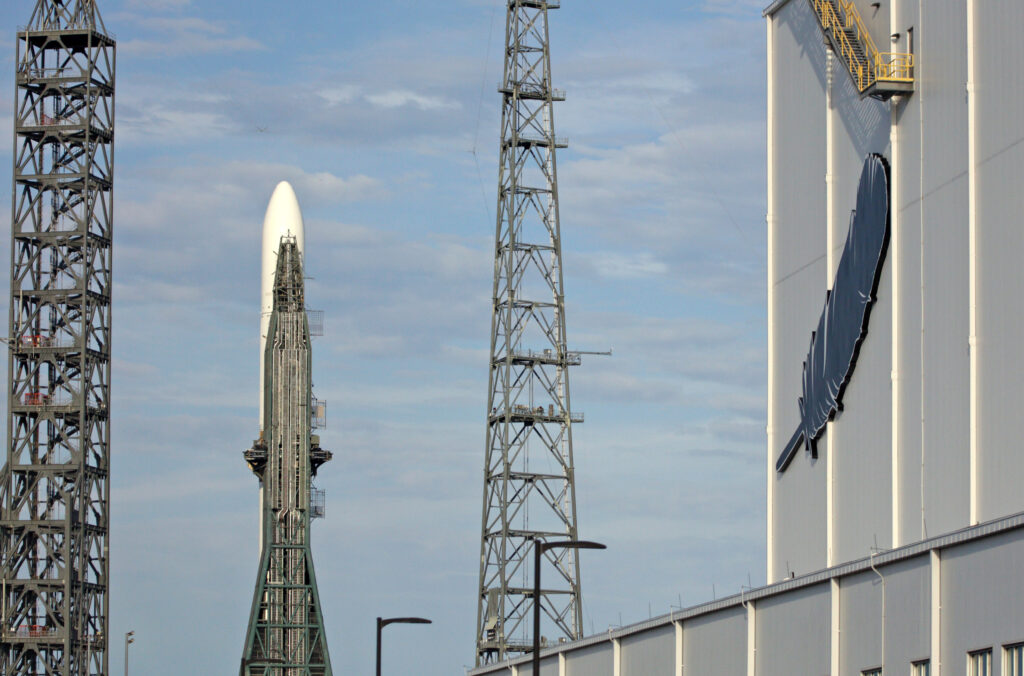
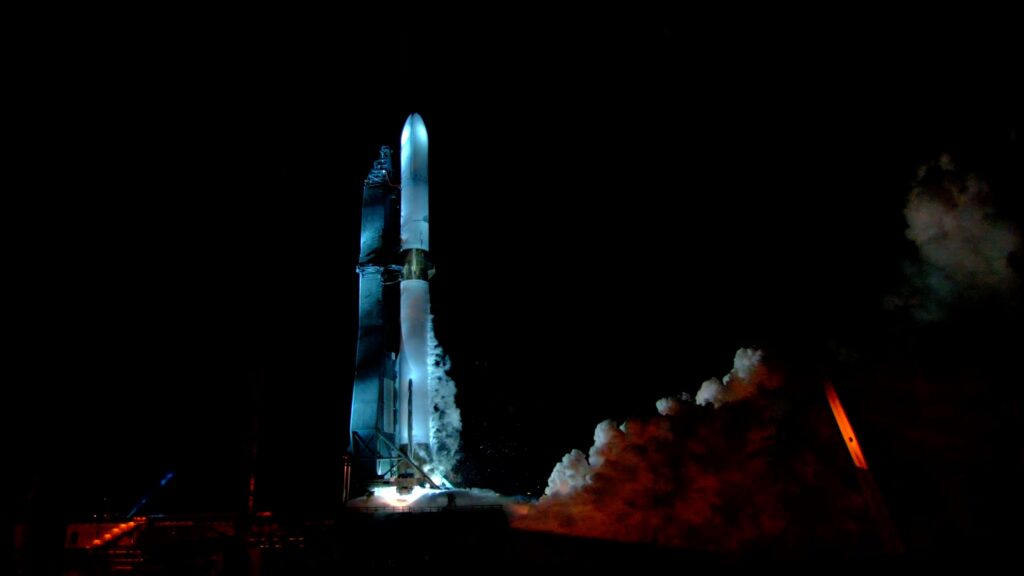
Blue Origin, the US space company founded by billionaire Jeff Bezos in 2000, has postponed the maiden voyage into orbital space of its brand-new rocket, New Glenn,  due to unspecified technical “anomalies.”Here are five key things to know about the heavy-lift vehicle aiming to challenge SpaceX’s dominance in the commercial space market.- Homage -New Glenn honors a legendary astronaut: John Glenn, the first American to orbit Earth in 1962.It follows in the steps of New Shepard, Blue Origin’s first rocket which was named for Alan Shepard, the first American in space.Standing 320 feet (98 meters) tall — roughly equivalent to a 32-story building — New Glenn is both larger and more powerful than its smaller sibling, which is used for suborbital space tourism.- Heavy-lift -New Glenn is classified as a “heavy-lift launcher,” capable of placing substantial payloads into low-Earth orbit. It is expected to carry up to 45 tons into orbit.That is more than double that of SpaceX’s Falcon 9, which can lift around 22 tons, though it falls short of the Falcon Heavy’s 63.8-ton capacity.However, New Glenn has a unique edge: its wider payload fairing, which can accommodate larger objects.It “has the largest capacity to put objects in space, large objects” as a result of its wider payload fairing, Elliott Bryner, a professor at Embry-Riddle Aeronautical University, told AFP.- Swiss knife -Its versatility means New Glenn could become a “Swiss Army knife” of rockets, capable of deploying a diverse array of payloads to both low and higher orbits.These are set to include commercial and military satellites — as well as Project Kuiper, Bezos’s planned space internet constellation, to compete with SpaceX’s Starlink.New Glenn also has the potential to carry crewed spacecraft, noted George Nield, president of Commercial Space Technologies. “One other potential use is for commercial space stations,” he added.With the International Space Station slated for decommissioning in 2030, the race is on to develop replacements. Blue Origin is among the contenders vying to build the first privately run platform.- Partially reusable -Like SpaceX’s Falcon 9, New Glenn features a reusable first-stage booster — designed for up to 25 flights — and an expendable second stage.But to reuse the rocket, Blue Origin first has to land it. The company has mastered the technique with its much smaller New Shepard rocket, which touches down on solid ground. However, reusing New Glenn will require a successful landing on a drone ship stationed in the Atlantic Ocean.This is no small feat: It took SpaceX six years to perfect the maneuver with Falcon 9 after its debut launch in 2010.”Landing a rocket like this, the way they’re doing it, is definitely not simple,” Bryner said. “The level of technology required to do this is unbelievable.”Yet achieving reusability is crucial to reducing costs and broadening access to space, added Nield.- Higher tech -Under the hood, New Glenn’s propulsion system represents a step up. The first stage is powered by liquid methane, a cleaner and more efficient fuel than the kerosene used in both stages of Falcon 9.Its second stage uses liquid hydrogen, an even cleaner and more powerful fuel, though more challenging to handle due to its cryogenic properties.”It’s the difference between driving a, you know, a Ferrari or a Volkswagen,” William Anderson, a professor of aeronautics and astronautics at Purdue University, told AFP, comparing the technology behind New Glenn and Falcon 9.

Blue Origin pushes back first launch of giant New Glenn rocket

Jeff Bezos’s Blue Origin will have to wait a little longer for the long-anticipated maiden orbital flight of its brand-new rocket after a launch attempt dragged on for hours before being canceled due to unspecified technical issues.The towering 320-foot (98-meter) rocket, dubbed New Glenn in honor of legendary astronaut John Glenn, was scheduled to lift off from Cape Canaveral Space Force Station during a three-hour window starting at 1:00 am (0600 GMT) Monday.But the countdown repeatedly stalled as teams scrambled to resolve “anomalies,” before the mission was officially “scrubbed” around 3:10 am — a common occurrence in the space industry, but disappointing nonetheless for the hundreds of thousands of people who stayed up to watch the live feed.”We are standing down today’s launch attempt to troubleshoot a vehicle subsystem issue that will take us beyond our launch window,” Ariane Cornell, a Blue Origin executive, said on the webcast.She added: “We are reviewing opportunities for our next launch attempt.”With the mission, dubbed NG-1, billionaire Amazon founder Bezos is taking aim at the only man in the world wealthier than him: Elon Musk, whose company SpaceX dominates the orbital launch market through its prolific Falcon 9 rockets, vital for the commercial sector, the Pentagon and NASA.Bezos, who founded Blue Origin a quarter-of-a-century ago and celebrated his 61st birthday on Sunday, watched events unfold from the nearby launch control room. Musk, for his part, wished Blue Origin “Good luck!” on X.”SpaceX has for the past several years been pretty much the only game in town, and so having a competitor… this is great,” G. Scott Hubbard, a retired senior NASA official, told AFP, expecting the competition to drive down costs. SpaceX, meanwhile, is planning the next orbital test of Starship — its gargantuan new-generation rocket — this week, upping the high-stakes rivalry.- Landing attempt -When New Glenn does fly, Blue Origin will attempt to land the first-stage booster on a drone ship named Jacklyn, in honor of Bezos’s mother, stationed about 620 miles (1,000 kilometers) downrange in the Atlantic Ocean. Though SpaceX has long made such landings a near-routine spectacle, this will be Blue Origin’s first shot at a touchdown on the high seas.Meanwhile, the rocket’s upper stage will fire its engines toward Earth orbit, reaching a maximum altitude of roughly 12,000 miles above the surface.A Defense Department-funded prototype of an advanced spaceship called Blue Ring, which could one day fare the solar system, will remain aboard for the roughly six-hour test flight. Blue Origin has experience landing its New Shepard rockets — used for suborbital tourism — but they are five times smaller and land on terra firma rather than a ship at sea.Physically, the gleaming white New Glenn dwarfs the 230-foot Falcon 9 and is designed for heavier payloads. It slots between Falcon 9 and its big sibling, Falcon Heavy, in terms of mass capacity but holds an edge with its wider payload fairing, capable of carrying the equivalent of 20 moving trucks.- Slow v fast development -Blue Origin has already secured a NASA contract to launch two Mars probes aboard New Glenn. The rocket will also support the deployment of Project Kuiper, a satellite internet constellation designed to compete with Starlink.For now, however, SpaceX maintains a commanding lead, while other rivals — United Launch Alliance, Arianespace, and Rocket Lab — trail far behind.Like Musk, Bezos has a lifelong passion for space. But where Musk dreams of colonizing Mars, Bezos envisions shifting heavy industry off-planet onto floating space platforms in order to preserve Earth, “humanity’s blue origin.”He founded Blue Origin in 2000 — two years before Musk created SpaceX — but has adopted a more cautious pace, in contrast to his rival’s “fail fast, learn fast” philosophy.If New Glenn succeeds, it will provide the US government “dissimilar redundancy” — valuable backup if one system fails, said Scott Pace, a space policy analyst at George Washington University.

Mozambique to swear in new parliament after disputed voteMon, 13 Jan 2025 08:33:13 GMT

Mozambique is set to swear in its new parliament on Monday, following months of deadly protests over an election in October that the opposition said was rigged.Opposition leader Venancio Mondlane has called on his supporters to hold peaceful protests from Monday to Wednesday, when Daniel Chapo is due to be installed as president.Mondlane claims he …

Mozambique to swear in new parliament after disputed voteMon, 13 Jan 2025 08:33:13 GMT Read More »

Markets track Wall St losses after blockbuster US jobs report

Asian and European markets sank Monday after an outsized US jobs report dealt another blow to hopes for more interest rate cuts, while oil extended a rally sparked by new sanctions on Russia’s energy sector.The equity sell-off tracked hefty losses on Wall Street, where all three main indexes finished more than one percent lower as the new trading year continued to falter.Keenly awaited data on Friday showed the US economy created 256,000 jobs last month, a jump from November’s revised 212,000 and smashing forecasts of 150,000-160,000.The figures followed news that the crucial US services sector picked up in December, with the prices component soaring more than expected to the highest level since last January, while another report showed job openings hit a six-month high in November.Hopes that the Federal Reserve will continue cutting rates through 2025 — having made three trims last year — were dashed when in December it indicated just two reductions over the next 12 months, down from four tipped previously.The hawkish pivot came as inflation continues to hover above the bank’s two percent target, while there are also concerns that president-elect Donald Trump’s plans to slash taxes, regulations and immigration will reignite prices.”Given a resilient labour market, we now think the Fed cutting cycle is over,” said Bank of America’s Aditya Bhave and other economists.”Inflation is stuck above target: in the December (summary of economic projections), the Fed not only marked up its base case for 2025 significantly, but also indicated that inflation risks were skewed to the upside. Economic activity is robust. “We see little reason for additional easing.”Markets in Sydney, Singapore, Seoul, Mumbai, Taipei, Manila, Bangkok and Jakarta all sank. Tokyo was closed for a holiday.Hong Kong and Shanghai also fell but pared initial losses as data showed Chinese exports and imports topped forecasts in December.London, Paris and Frankfurt fell at the open.On currency markets the pound was wallowing around lows not seen since the end of 2023 owing to fading hopes for US rate cuts as well as worries about the British economy. The euro struggled at its weakest since November 2022.Surging oil prices added to unease, with both main contracts jumping more than percent — extending Friday’s gains of more than three percent — after the United States and Britain announced new sanctions against Russia’s energy sector, including oil giant Gazprom Neft.However, commentators do not expect prices to spike too much, even amid speculation that Trump will hit Iran with fresh sanctions.”A significant and perhaps underpriced risk to crude oil prices is the potential for supply to outstrip demand, especially given OPEC+’s intention to reintroduce barrels to the market,” said Stephen Innes at SPI Asset Management.”Even if US sanctions curtail Iranian oil production by 1.5 million barrels a day — a scenario similar to that during Trump’s previous presidency — this amount could easily be compensated by OPEC+, which is currently holding back 5.8 million barrels a day, or 5.3 percent of the total global production capacity.”However, he added that some issues could lead crude to rocket, including an escalation of the Middle East crisis, a significant reduction in Russian output or exports and a strategic about-face by OPEC+ to slash production.- Key figures around 0815 GMT -Hong Kong – Hang Seng Index: DOWN 1.0 percent at 18,874.14Shanghai – Composite: DOWN 0.3 percent at 3,160.76 (close)London – FTSE 100: DOWN 0.3 percent at 8,224.50Tokyo – Nikkei 225: Closed for a holidayEuro/dollar: DOWN at $1.0216 from $1.0244 on FridayPound/dollar: DOWN at $1.2140 from $1.2210Dollar/yen: DOWN at 157.39 yen from 157.74 yenEuro/pound: UP at 84.17 pence from 83.90 penceWest Texas Intermediate: UP 1.5 percent at $77.75 per barrelBrent North Sea Crude: UP 1.4 percent at $80.86 per barrelNew York – Dow: DOWN 1.6 percent at 41,938.45 (close)