L’ex-compagne de Salah Abdeslam mise en examen pour une clé USB illégale et un projet d’attentat

A trois jours des commémorations des attentats du 13 novembre 2015, l’ex-compagne de Salah Abdeslam, Maëva B., a été doublement mise en examen lundi dans des enquêtes puis incarcérée, pour une clé USB remise à son ex-compagnon et surtout pour un projet d’attentat jihadiste déjoué.Le parquet national antiterroriste (Pnat) a ouvert deux informations judiciaires distinctes, d’une part sur cette clé USB qui aurait été illégalement connectée à l’ordinateur de Salah Abdeslam, condamné à la perpétuité incompressible pour les attentats du 13 novembre 2015 et incarcéré à la prison de Vendin-le-Vieil (Pas-de-Calais), et d’autre part sur un projet d’attentat de son ex-campagne.Dans ce dernier dossier, trois protagonistes dont Maëva B. ont été mis en examen lundi en début de soirée pour association de malfaiteurs terroriste criminelle et incarcérés, a indiqué une source judiciaire à l’AFP.Maëva B., teint pâle, yeux clairs, tenue noire ample et longs cheveux bruns, est apparue brièvement en présence de quelques journalistes avant le prononcé d’un huis clos lors d’une audience devant une juge des libertés et de la détention (JLD) qui a prononcé son placement en détention provisoire.Son avocate n’a pas souhaité commenter.Plus tôt lundi, le Pnat a indiqué dans un communiqué avoir découvert “plusieurs discussions ou recherches relatives à l’élaboration d’un projet distinct d’action violente, sans lien avec Salah Abdeslam”, sur “les supports numériques saisis au cours de la perquisition réalisée au domicile de Maëva B.” dans le cadre d’une enquête ouverte dès janvier sur cette clé USB illicite qui aurait été remise au seul membre vivant des commandos meurtriers.Le Pnat a précisé que cette femme, placée en garde à vue pendant six jours, une durée exceptionnelle possible seulement en cas de péril d’attentat imminent ou pour les nécessités de la coopération internationale, présenterait une “radicalisation certaine et une fascination pour le jihad”. Elle “était séparée” d’Abdeslam et “n’entretenait plus de relations depuis avril” avec lui.Elle a “reconnu avoir acquis une clé USB, l’avoir chargée de propagande djihadiste et fait remettre à Salah Abdeslam au cours d’un parloir”, a souligné le parquet.- “Propagande” -A la suite de ces découvertes, “une mineure de 17 ans” et “un homme de 20 ans, nouvel époux religieux (de Maëva B.)”, interpellés dans l’Hérault et en Isère, ont été placés à leur tour en garde à vue vendredi.L’homme de 20 ans, cheveux ras, barbe mi-longue et veste de survêtement bleue, est apparu le regard fermé lundi devant une JLD, qui a également prononcé son incarcération.”Notre client conteste intégralement les faits reprochés”, ont indiqué ses avocates Me Noémie Gorin et Helin Köse, d’après qui la divulgation de détails de l’affaire dans la presse “porte une atteinte grave à la présomption d’innocence et menace la sérénité des investigations”.S’agissant du volet clé USB, Maëva B. a également été mise en examen pour recel d’objet illicite remis à détenu et placée sous contrôle judiciaire, selon la source judiciaire.L’administration pénitentiaire avait signalé le 17 janvier au Pnat la découverte, deux jours plus tôt, “de traces de connexions de quatre clés USB entre décembre 2024 et janvier 2025 sur l’ordinateur légalement détenu par Salah Abdeslam” en détention.Les analyses ont révélé des documents numériques qui pour “la plupart ont trait à la propagande officielle d’organisations terroristes, État islamique ou Al-Qaïda”, a souligné le Pnat.Les investigations ont conduit “à plusieurs auditions réalisées en Belgique (…) et à l’identification” de Maëva B., “bénéficiant à l’époque des faits d’un permis de visite” de Salah Abdeslam, a encore informé ce parquet spécialisé.- “Radicalisé” -Salah Abdeslam a lui été placé deux fois en garde à vue puis relâché et réintégré en détention, mardi et vendredi. Le Pnat a requis sa “mise en examen ultérieure”.Lundi, la directrice générale de la sécurité intérieure Céline Berthon a affirmé que Salah Abdeslam, toujours “radicalisé”, “n’était pas mis en cause dans un projet d’attentat”.Il “n’est en aucune manière soupçonné par la justice d’être impliqué de près ou de loin dans un quelconque projet criminel”, ont aussi abondé ses avocats.La France va commémorer jeudi, au cours d’une journée d’hommage aux victimes, les attentats du 13 novembre 2015 à Paris et Saint-Denis, qui ont fait 132 morts – dont deux suicides de rescapés du Bataclan emportés par de profondes blessures psychiques.

Retraites: les dilemmes de Renaissance

Comment enjamber le débat sur la suspension de la réforme des retraites ? Contraint d’avaliser une remise en cause de son bilan, le parti Renaissance entend soumettre “sa” propre réforme, illustration d’une position inconfortable entre la nécessaire “stabilité” de l’exécutif et la volonté de se projeter dans l’après-Macron.L’heure est à l’introspection chez les macronistes. Voire aux règlements de compte. Dimanche, sur France 5, l’ancien ministre de l’Économie Bruno Le Maire a réaffirmé avoir alerté Emmanuel Macron sur le dérapage des comptes publics, plaidant en vain pour un budget rectificatif au printemps 2024, avant la dissolution de l’Assemblée nationale.Après cinq ans de règne sans partage, deux ans de majorité relative et deux Premiers ministres éconduits depuis la dissolution, les soutiens du président n’ont guère le choix: si, avec la nomination et la reconduction de Sébastien Lecornu à Matignon, ils ont conservé la plupart des leviers gouvernementaux et évité la censure immédiate, le prix à payer, fixé par le Parti socialiste, est élevé. Et comprend la fameuse suspension jusqu’à la présidentielle de la réforme Borne, examinée par l’Assemblée mercredi.Un crève-coeur ? Peut-être. Mais “pour les gens, la suspension de la réforme est actée” et “nous, on ne peut pas faire dérailler le truc”, estimait récemment un dirigeant de Renaissance.Gabriel Attal a plaidé pour l’abstention, lundi soir en réunion de groupe. “Certains souhaitent voter contre la suspension tout en soutenant le PLFSS (projet de loi de financement de la sécurité sociale, ndlr). D’autres pensent qu’il faut s’abstenir pour marquer le compromis. Le Premier ministre a semblé favorable à une abstention, qui permettrait de défendre notre projet sans bloquer le compromis”, avait-il expliqué dans la journée lors d’un échange avec la presse.”Il y aura de l’abstention en grande majorité, quelques pour et quelques contre”, anticipe une source gouvernementale, qui table sur une position similaire au MoDem, tandis que les députés Horizons, le parti d’Édouard Philippe, devraient voter contre.La suspension “obère l’avenir”, a jugé sur LCI le député Renaissance Marc Ferracci, qui votera contre.- Débat du “passé” -Mais pas question, pour Gabriel Attal, de se laisser happer par un débat qui “appartient au passé”.L’ancien Premier ministre, qui a entamé un large travail d’inventaire du macronisme au pouvoir, y voit “un épisode supplémentaire du débat sans fin infligé aux Français depuis des décennies”. Avec “à chaque fois le même discours (sur) la réforme de la dernière chance pour sauver le système”, rhétorique à laquelle l’ancien porte-parole du gouvernement a lui-même largement contribué.Sans nourrir d’illusion sur la possibilité d’une adoption d’ici l’élection présidentielle, Renaissance va déposer une proposition de loi reprenant la réforme conçue par le parti et présentée en juillet, pour “un système universel, clair et compréhensible”. S’inspirant en partie de la réforme abandonnée en 2020.”On fera progressivement converger les différents régimes, de telle sorte qu’un euro cotisé ouvre les mêmes droits, que l’on soit salarié, fonctionnaire ou indépendant”, a expliqué M. Attal.Ce “nouveau système” ferait disparaître l’âge légal de départ “devenu un non-sens”. “Chacun sera libre de choisir le moment où il part. On ne fixe qu’une condition: il faudra un montant minimal de pension de retraite à atteindre pour pouvoir liquider sa retraite”, a-t-il développé.”L’État doit fixer un cadre, des objectifs, et les paramètres (durée et montant de cotisation, NDLR), eux, doivent être déterminés par les partenaires sociaux en suivant une règle d’or budgétaire. Cette règle d’or sera très fermement inscrite, incontournable, c’est l’équilibre financier du système”, a précisé M. Attal.Ce système devra “inciter” à une part de capitalisation mais sans la rendre obligatoire, a par ailleurs indiqué l’ancien locataire de Matignon. Avec la création d’un “fonds de capitalisation à la naissance” dans le cadre duquel chaque enfant recevrait 1.000 euros versés par l’État, placés sur un “compte de capitalisation”.Une proposition que les macronistes entendent également verser au débat via un amendement au projet de loi de finances.”L’objectif premier est d’ouvrir le débat dans la société”, explique M. Attal, résolument tourné vers l’Élysée. “Il n’y a aucune vraie dynamique politique qui puisse s’installer d’ici aux municipales. (…) Il faut survivre, jusqu’au moment où les gens rentreront dans le débat de la présidentielle”, théorisait-on récemment au sommet du parti.

Trump hails Syria’s ‘tough’ ex-jihadist president after historic talks

US President Donald Trump hailed his Syrian counterpart Ahmed al-Sharaa after unprecedented talks at the White House Monday, saying Sharaa’s “rough” past as a jihadist would help him rebuild the war-torn country.Sharaa, whose rebel forces ousted longtime ruler Bashar al-Assad late last year, was the first Syrian leader to visit the White House since the Middle Eastern country’s independence in 1946.But the 43-year-old’s landmark visit to the Oval Office came just days after Washington removed him from its terrorism list. Sharaa’s group, Hayat Tahrir al-Sham (HTS), was formerly affiliated with Al-Qaeda.Trump said he wanted Syria to become “very successful” after more than a decade of civil war and added that he believed Sharaa “can do it, I really do.””He’s a very strong leader. He comes from a very tough place, and he’s a tough guy,” Trump told reporters after the meeting, which was closed to press.”People said he’s had a rough past, we’ve all had rough pasts…And I think, frankly, if you didn’t have a rough past, you wouldn’t have a chance.”Trump said Syria was a “big part” of his plan for a wider Middle East peace plan, which the US president is hoping will prop up the fragile ceasefire between Israel and Hamas in Gaza.But he would not confirm reports that Sharaa would bring Syria into the international US-led alliance against the Islamic State (IS) group, or that it would sign any non-aggression pact with long-term foe Israel.The Syrian president’s visit capped a remarkable turnaround for a former jihadist who once had a $10 million US bounty on his head.In dramatic scenes as he left his meeting with Trump, he climbed out of his motorcade to greet crowds of supporters outside the White House, surrounded on all sides by bodyguards.- ‘Astonishing transformation’ -Syria’s presidency said on X that Sharaa and Trump discussed the bilateral relationship, “the ways to strengthen and develop it, as well as a number of regional and international issues of common interest.”It published photos of Trump standing and shaking hands with a smiling Sharaa beside the Resolute Desk in the Oval Office.Other pictures showed the Syrian leader sitting opposite Trump with top US officials including Vice President JD Vance, Pentagon chief Pete Hegseth and top US military officer Dan Caine.Since taking power, Syria’s new leaders have sought to break from their violent past and present a more moderate image to ordinary Syrians and foreign powers.Sharaa’s White House visit is “a hugely symbolic moment for the country’s new leader, who thus marks another step in his astonishing transformation from militant leader to global statesman,” said Michael Hanna, US program director at the International Crisis Group.The Syrian met Trump for the first time in Saudi Arabia during the US leader’s regional tour in May. At the time the 79-year-old Trump dubbed Sharaa, 43, as “a young, attractive guy.”Sharaa was expected to seek US funds for Syria, which faces significant challenges in rebuilding after 13 years of devastating civil war.After his arrival in Washington, Sharaa over the weekend met with IMF chief Kristalina Georgieva over possible aid.Sharaa’s jihadist past has caused controversy in some quarters but the State Department’s decision Friday to remove Sharaa from the blacklist was widely expected.The Syrian president has also been making diplomatic outreach towards Washington’s rivals. He met Russian President Vladimir Putin in October in their first meeting since the removal of Assad, a key Kremlin ally.

Trump hails Syria’s ‘tough’ ex-jihadist president after historic talks

US President Donald Trump hailed his Syrian counterpart Ahmed al-Sharaa after unprecedented talks at the White House Monday, saying Sharaa’s “rough” past as a jihadist would help him rebuild the war-torn country.Sharaa, whose rebel forces ousted longtime ruler Bashar al-Assad late last year, was the first Syrian leader to visit the White House since the Middle Eastern country’s independence in 1946.But the 43-year-old’s landmark visit to the Oval Office came just days after Washington removed him from its terrorism list. Sharaa’s group, Hayat Tahrir al-Sham (HTS), was formerly affiliated with Al-Qaeda.Trump said he wanted Syria to become “very successful” after more than a decade of civil war and added that he believed Sharaa “can do it, I really do.””He’s a very strong leader. He comes from a very tough place, and he’s a tough guy,” Trump told reporters after the meeting, which was closed to press.”People said he’s had a rough past, we’ve all had rough pasts…And I think, frankly, if you didn’t have a rough past, you wouldn’t have a chance.”Trump said Syria was a “big part” of his plan for a wider Middle East peace plan, which the US president is hoping will prop up the fragile ceasefire between Israel and Hamas in Gaza.But he would not confirm reports that Sharaa would bring Syria into the international US-led alliance against the Islamic State (IS) group, or that it would sign any non-aggression pact with long-term foe Israel.The Syrian president’s visit capped a remarkable turnaround for a former jihadist who once had a $10 million US bounty on his head.In dramatic scenes as he left his meeting with Trump, he climbed out of his motorcade to greet crowds of supporters outside the White House, surrounded on all sides by bodyguards.- ‘Astonishing transformation’ -Syria’s presidency said on X that Sharaa and Trump discussed the bilateral relationship, “the ways to strengthen and develop it, as well as a number of regional and international issues of common interest.”It published photos of Trump standing and shaking hands with a smiling Sharaa beside the Resolute Desk in the Oval Office.Other pictures showed the Syrian leader sitting opposite Trump with top US officials including Vice President JD Vance, Pentagon chief Pete Hegseth and top US military officer Dan Caine.Since taking power, Syria’s new leaders have sought to break from their violent past and present a more moderate image to ordinary Syrians and foreign powers.Sharaa’s White House visit is “a hugely symbolic moment for the country’s new leader, who thus marks another step in his astonishing transformation from militant leader to global statesman,” said Michael Hanna, US program director at the International Crisis Group.The Syrian met Trump for the first time in Saudi Arabia during the US leader’s regional tour in May. At the time the 79-year-old Trump dubbed Sharaa, 43, as “a young, attractive guy.”Sharaa was expected to seek US funds for Syria, which faces significant challenges in rebuilding after 13 years of devastating civil war.After his arrival in Washington, Sharaa over the weekend met with IMF chief Kristalina Georgieva over possible aid.Sharaa’s jihadist past has caused controversy in some quarters but the State Department’s decision Friday to remove Sharaa from the blacklist was widely expected.The Syrian president has also been making diplomatic outreach towards Washington’s rivals. He met Russian President Vladimir Putin in October in their first meeting since the removal of Assad, a key Kremlin ally.

Stocks rally on hopes of US government shutdown ending

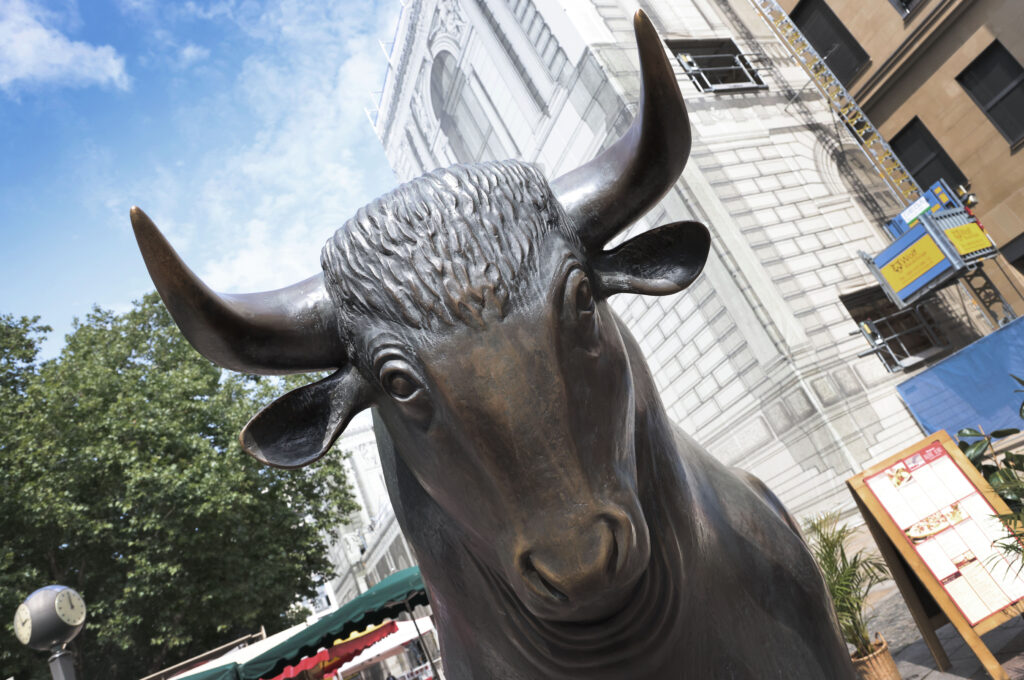
Stock markets charged higher Monday as investors cheered prospects that the US government shutdown could be nearing an end, after lawmakers reached a deal likely to break the record 40-day impasse.The prospect of operations resuming in the world’s biggest economy helped temper lingering worries about extended tech valuations amid talk of an AI bubble.”Everyone’s now anticipating we’ll see the government reopen in the next couple of days,” said Jack Ablin from Cresset Capital. That’s “good for the consumer, good for investors, really good for anyone who travels,” Ablin said.A group of Democrats in the Senate sided with Republicans in a procedural vote on the deal Sunday evening, clearing the way for a formal debate after reaching a bipartisan agreement to fund government operations through January.A government re-opening could also provide clarity on US inflation and on the soft labor market, which will determine whether the Federal Reserve cuts interest rates again, as is widely expected next month.”If all goes well, some federal agencies could reopen as soon as Friday,” said David Morrison, senior analyst at Trade Nation. He noted that both investors and the Fed had been “flying blind since the beginning of October, with a near-complete absence of data”.”Fed Chair Jerome Powell has played down the prospect of another rate cut in December, as it is far from obvious that inflation has peaked,” Morrison added. But as the shutdown entered its 41st day on Monday, investors focused on the US government reopening. They had grown increasingly concerned about the impact of severe disruptions of food benefits to low-income households, and of air travel heading into the Thanksgiving holiday.”Shutdowns haven’t typically had a big bearing on the economy or on financial markets. But, this one…looked as though it might start to cause some trouble,” said analysts at Capital Economics.- Rebound after tech worries -Wall Street opened higher across the board following turbulent losses last week on fears that AI optimism might have pushed tech stocks such as chip heavyweight Nvidia to unsustainable highs.European indices also rose sharply, following similar gains across Asia, with investors also taking heart from a further easing of China-US tensions.Beijing on Monday said it would suspend for one year “special port fees” on US vessels, “simultaneously” with Washington’s pause on levies targeting Chinese ships.The dollar, which steadied versus the euro and the pound, rose against the yen, while oil prices gained slightly after losses last week over concerns of hefty supply amid uncertainty over global demand.”Risk is back on, and last week’s sell-off seems like a distant memory,” said Kathleen Brooks, research director at trading platform XTB.”There are some risks ahead, but unless we see a meaningful decline in Fed rate cut expectations, or a weak earnings report from (major computer chip-maker) Nvidia next week, then stocks could be poised to rally into year end,” she said.- Key figures at 2110 GMT -New York – Nasdaq: up 2.3 percent at 23,527.17 (close)New York – S&P 500: up 1.5 percent at 6,832.43 (close)New York – Dow:  UP 0.8 percent at 47,368.63 (close)London – FTSE 100: UP 1.1 percent at 9,787.15 (close)Paris – CAC 40: UP 1.3 percent at 8,055.51 (close)Frankfurt – DAX: UP 1.7 percent at 23,959.99 (close)Tokyo – Nikkei 225: UP 1.3 percent at 50,911.76 (close)Hong Kong – Hang Seng Index: UP 1.6 percent at 26,649.06 (close)Shanghai – Composite: UP 0.5 percent at 4,018.60 (close)Euro/dollar: DOWN at $1.1563 from $1.1566 on FridayPound/dollar: UP at $1.3182 from $1.3162Dollar/yen: UP at 154.03 yen from 153.42 yenEuro/pound: UP at 88.00 pence from 87.88 penceBrent North Sea Crude: UP 0.4 percent at $64.06 per barrelWest Texas Intermediate: UP 0.7 percent at $60.13 per barrel

Stocks rally on hopes of US government shutdown ending

Stock markets charged higher Monday as investors cheered prospects that the US government shutdown could be nearing an end, after lawmakers reached a deal likely to break the record 40-day impasse.The prospect of operations resuming in the world’s biggest economy helped temper lingering worries about extended tech valuations amid talk of an AI bubble.”Everyone’s now anticipating we’ll see the government reopen in the next couple of days,” said Jack Ablin from Cresset Capital. That’s “good for the consumer, good for investors, really good for anyone who travels,” Ablin said.A group of Democrats in the Senate sided with Republicans in a procedural vote on the deal Sunday evening, clearing the way for a formal debate after reaching a bipartisan agreement to fund government operations through January.A government re-opening could also provide clarity on US inflation and on the soft labor market, which will determine whether the Federal Reserve cuts interest rates again, as is widely expected next month.”If all goes well, some federal agencies could reopen as soon as Friday,” said David Morrison, senior analyst at Trade Nation. He noted that both investors and the Fed had been “flying blind since the beginning of October, with a near-complete absence of data”.”Fed Chair Jerome Powell has played down the prospect of another rate cut in December, as it is far from obvious that inflation has peaked,” Morrison added. But as the shutdown entered its 41st day on Monday, investors focused on the US government reopening. They had grown increasingly concerned about the impact of severe disruptions of food benefits to low-income households, and of air travel heading into the Thanksgiving holiday.”Shutdowns haven’t typically had a big bearing on the economy or on financial markets. But, this one…looked as though it might start to cause some trouble,” said analysts at Capital Economics.- Rebound after tech worries -Wall Street opened higher across the board following turbulent losses last week on fears that AI optimism might have pushed tech stocks such as chip heavyweight Nvidia to unsustainable highs.European indices also rose sharply, following similar gains across Asia, with investors also taking heart from a further easing of China-US tensions.Beijing on Monday said it would suspend for one year “special port fees” on US vessels, “simultaneously” with Washington’s pause on levies targeting Chinese ships.The dollar, which steadied versus the euro and the pound, rose against the yen, while oil prices gained slightly after losses last week over concerns of hefty supply amid uncertainty over global demand.”Risk is back on, and last week’s sell-off seems like a distant memory,” said Kathleen Brooks, research director at trading platform XTB.”There are some risks ahead, but unless we see a meaningful decline in Fed rate cut expectations, or a weak earnings report from (major computer chip-maker) Nvidia next week, then stocks could be poised to rally into year end,” she said.- Key figures at 2110 GMT -New York – Nasdaq: up 2.3 percent at 23,527.17 (close)New York – S&P 500: up 1.5 percent at 6,832.43 (close)New York – Dow:  UP 0.8 percent at 47,368.63 (close)London – FTSE 100: UP 1.1 percent at 9,787.15 (close)Paris – CAC 40: UP 1.3 percent at 8,055.51 (close)Frankfurt – DAX: UP 1.7 percent at 23,959.99 (close)Tokyo – Nikkei 225: UP 1.3 percent at 50,911.76 (close)Hong Kong – Hang Seng Index: UP 1.6 percent at 26,649.06 (close)Shanghai – Composite: UP 0.5 percent at 4,018.60 (close)Euro/dollar: DOWN at $1.1563 from $1.1566 on FridayPound/dollar: UP at $1.3182 from $1.3162Dollar/yen: UP at 154.03 yen from 153.42 yenEuro/pound: UP at 88.00 pence from 87.88 penceBrent North Sea Crude: UP 0.4 percent at $64.06 per barrelWest Texas Intermediate: UP 0.7 percent at $60.13 per barrel