Suisse: l’heure du recueillement après l’incendie tragique de Crans-Montana

Toute la Suisse est appelée vendredi à rendre hommage aux jeunes victimes de l’incendie d’un bar qui a endeuillé la station de ski de Crans-Montana la nuit du nouvel an, faisant 40 morts et 116 blessés.Les autorités de la Confédération et les Eglises de Suisse ont invité la population à observer une minute de silence à 14H00 (13H00 GMT). Les cloches des églises retentiront ensuite dans l’ensemble du pays alpin.Dans le même temps, une cérémonie commémorative doit se tenir à Martigny, ville située dans la vallée du Rhône, non loin de Crans-Montana. Les capacités d’accueil et les conditions météo devraient y être plus favorables que dans la station du Valais (sud-ouest), balayée par la neige depuis jeudi soir, mais des écrans géants permettront aussi à la population de Crans-Montana de suivre les cérémonies.Devant le bar Le Constellation, un mémorial orné de fleurs, de bougies, de peluches et de photos des victimes, était recouvert d’une toile blanche en forme d’igloo pour le protéger de la neige. À l’intérieur, dans une atmosphère chargée d’odeurs parfumées, une femme, submergée par l’émotion, tente d’allumer une bougie, tandis qu’une autre la réconforte en lui tenant le bras. – Deuil national -Sur une autre table, un épais livre de condoléances est déjà presque rempli. “Un deuil, un grand deuil national à jamais gravé dans nos esprits. Paix à leur âme. Toutes mes pensées aux parents, familles et amis”, dit l’un des messages.La France et l’Italie, particulièrement affectées par le drame avec respectivement neuf et six morts et de nombreux blessés, seront représentées à Martigny par les présidents Emmanuel Macron et Sergio Mattarella. Au total, 19 nationalités ont été frappées par le drame qui a fait 40 morts – dont une moitié de mineurs – et 116 blessés. Selon un dernier décompte, un total de 83 blessés demeurent à ce jour hospitalisés en Suisse, mais aussi dans des services pour grands brûlés en France, en Italie, en Allemagne et en Belgique.Après le drame, le président de la Confédération helvétique Guy Parmelin avait affirmé qu’il s’agissait de “l’une des pires tragédies” que la Suisse ait connues. – Les Moretti entendus -L’enquête devra faire la lumière sur les responsabilités des propriétaires Jacques et Jessica Moretti, un couple de Français qui se retrouve au centre de l’attention. Ils sont arrivés vendredi matin au siège du ministère public de Sion, la capitale régionale, au milieu d’une nuée de journalistes, pour y être entendus pour la première fois depuis l’ouverture le 3 janvier d’une instruction pénale pour “homicide par négligence, lésions corporelles par négligence et incendie par négligence”.”On attend que nos clients, que les familles puissent avoir des réponses, qu’ils puissent se sentir considérés et puis que toutes les responsabilités de A à Z soient établies”, a commenté sur place un des avocats des victimes, maître Romain Jordan, qui doit assister à l’audience.Selon lui, les familles veulent savoir “pourquoi ce drame, qui n’aurait jamais dû avoir lieu, a pu se produire ici, en Suisse, malgré tout un arsenal juridique, un arsenal législatif, un arsenal de surveillance ?”D’après les premiers éléments de l’enquête, le drame aurait été provoqué par des bougies étincelantes entrées en contact avec le plafond du sous-sol du bar Le Constellation, sis en bas d’un immeuble de la station cossue du Valais.L'”embrasement généralisé” et soudain du local aurait ensuite piégé les clients, principalement des adolescents et de jeunes adultes.En cette soirée de la Saint-Sylvestre, l’établissement était bondé et des vidéos diffusées sur les réseaux sociaux ont montré des bousculades de personnes tentant désespérément de sortir au niveau du rez-de chaussée.Mardi, la commune de Crans-Montana a provoqué une première secousse dans l’enquête en reconnaissant une faute grave: aucune inspection sécurité et incendie du bar n’a été effectuée depuis 2019. Ce qui a suscité la consternation des familles de victimes.Le local et ses voies de sortie étaient-ils aux normes? Pourquoi autant de mineurs étaient-ils présents au moment du drame? Pourquoi le feu s’est-il propagé aussi rapidement? Y avait-il un extincteur accessible au sous-sol? Les interrogations sont nombreuses.La nature de la mousse antibruit posée au plafond du sous-sol est notamment au coeur des débats qui agitent médias et réseaux sociaux en Suisse, comme en France et en Italie. Jacques Moretti – connu de la justice française et condamné pour une affaire de proxénétisme en 2008 – et son épouse n’ont été ni placés en détention provisoire, ni assignés à résidence, ce qui a suscité l’étonnement. Dans un communiqué, le couple a assuré mardi de son “entière collaboration” à l’enquête, indiquant qu’il “ne se dérober(ait) pas”.

Syria announces ceasefire with Kurdish fighters in Aleppo

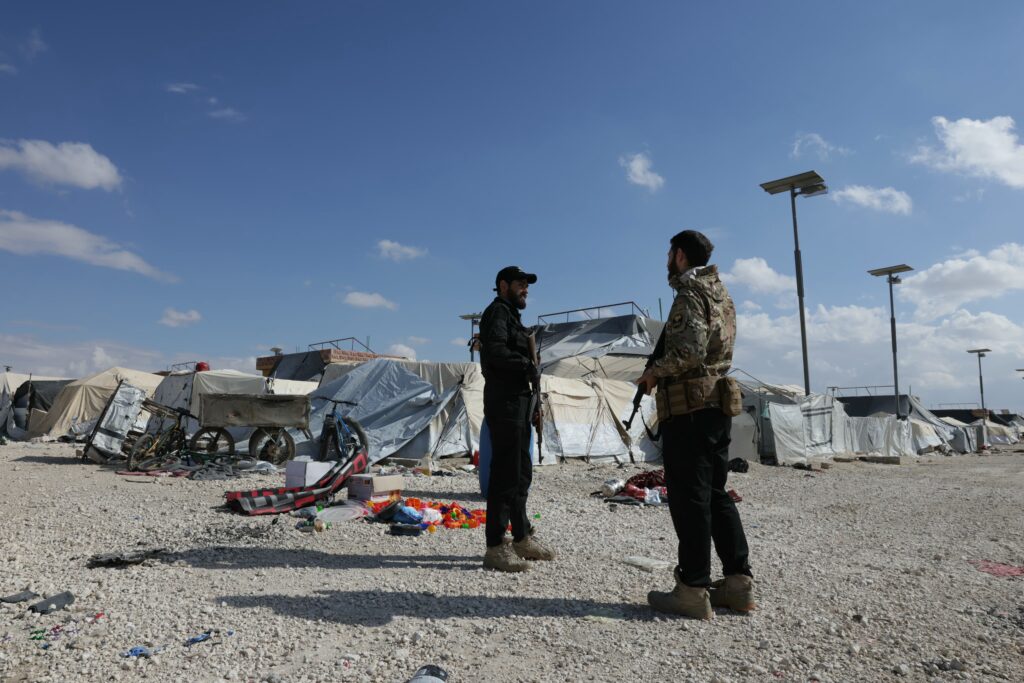
Syria’s defence ministry announced a ceasefire in Aleppo on Friday after days of deadly clashes between the army and Kurdish fighters forced thousands of civilians to flee.The violence killed 21 people and was the latest challenge for a country still struggling to forge a new path after Islamist authorities ousted longtime ruler Bashar al-Assad just over a year ago.Since Tuesday, government forces have been fighting the US-backed Kurdish-led Syrian Democratic Forces (SDF) in Aleppo, the country’s second city.Both sides have traded blame over who started the fighting, which comes as they struggle to implement a deal to merge the Kurds’ administration and military into the country’s new government.The SDF controls swathes of Syria’s oil-rich north and northeast, and was key to the territorial defeat of the Islamic State group in Syria in 2019.”To prevent any slide towards a new military escalation within residential neighbourhoods, the Ministry of Defence announces … a ceasefire in the vicinity of the Sheikh Maqsud, Ashrafiyeh and Bani Zeid neighbourhoods of Aleppo, effective from 3:00 am,” the ministry wrote in a statement. Kurdish fighters were given until 9:00 am Friday (0600 GMT) to leave those areas, while the Aleppo governorate said Kurdish fighters would be sent, along with their light weapons, to Kurdish areas further east.The goal of the ceasefire is for civilians who were displaced by the fighting to be able “to return and resume their normal lives in an atmosphere of security and stability”, the defence ministry said.The governor of Aleppo, Azzam al-Gharib, told the official SANA news agency that he had inspected the security arrangements in the Ashrafiyeh neighbourhood.There was no immediate comment from Kurdish forces in response to the government statements. The United States welcomed the ceasefire in a post on X by its envoy Tom Barrack.He said Washington hoped for “a more enduring calm and deeper dialogue” and was “working intensively to extend this ceasefire and spirit of understanding”.- ‘No to war’ -An AFP correspondent reported fierce fighting across the Kurdish-majority Ashrafiyeh and Sheikh Maqsud districts into Thursday night.Syria’s military had instructed civilians in those neighbourhoods to leave through humanitarian corridors ahead of launching the operation.State television reported that around 16,000 people had fled.”We’ve gone through very difficult times… my children were terrified,” said Rana Issa, 43, whose family left Ashrafiyeh earlier Thursday.”Many people want to leave”, but are afraid of the snipers, she told AFP.Mazloum Abdi, who leads the SDF, said attacks on Kurdish areas “undermine the chances of reaching understandings”, days after he visited Damascus for talks on the March integration deal.The agreement was meant to be implemented last year, but differences, including Kurdish demands for decentralised rule, have stymied progress.Sheikh Maqsud and Ashrafiyeh have remained under the control of Kurdish units linked to the SDF, despite Kurdish fighters agreeing to withdraw from the areas in April.Turkey, which shares a 900-kilometre (550-mile) border with Syria, has launched successive offensives to push Kurdish forces from the frontier.Aron Lund, a fellow at the Century International research centre, told AFP that “Aleppo is the SDF’s most vulnerable area”.”Both sides are still trying to put pressure on each other and rally international support,” he said.He warned that if the hostilities spiral, “a full Damascus-SDF conflict across northern Syria, potentially with Turkish and Israeli involvement, could be devastating for Syria’s stability”.Israel and Turkey have been vying for influence in Syria since Assad was toppled in December 2024.In Qamishli in the Kurdish-held northeast, hundreds of people have protested the Aleppo violence. “We call on the international community to intervene,” said protester Salaheddin Sheikhmous, 61, while others held banners reading “no to war” and “no to ethnic cleansing”.In Turkey, several hundred people joined protests in Kurdish-majority Diyarbakir.

Rattled by coup plot, Benin votes in legislative pollsFri, 09 Jan 2026 07:08:44 GMT

One month after an attempted coup shook Benin, the west African country will hold parliamentary and local elections Sunday, set to define the political landscape ahead of presidential polls in April.President Patrice Talon’s ruling coalition is expected to strengthen its already powerful hand in the ballots, with the main opposition Democrats party barred from the …

Rattled by coup plot, Benin votes in legislative pollsFri, 09 Jan 2026 07:08:44 GMT Read More »

Japan to test deep sea rare earth mining to cut China reliance

Japan embarks Sunday on what it says is the world’s first bid to tap deep sea rare earths at a depth of 6,000 metres — greater than the height of Mount Fuji — to curb dependence on China.A Japanese deep-sea scientific drilling boat called the Chikyu will set sail for the remote island of Minami Torishima in the Pacific, where surrounding waters are believed to contain a rich trove of valuable minerals.The test cruise comes as China — by far the world’s biggest supplier of rare earths — ramps up pressure on its neighbour after Prime Minister Sanae Takaichi suggested in November that Tokyo may react militarily to an attack on Taiwan, which Beijing has vowed to seize control of by force if necessary.Rare earths — 17 metals difficult to extract from the Earth’s crust — are used in everything from electric vehicles to hard drives, wind turbines and missiles.The mission by the Chikyu is “a first step toward our country’s industrialisation of domestic rare earths”, the Japan Agency for Marine-Earth Science and Technology (JAMSTEC) said in a statement last month.The agency touted the test as the world’s first at such depths.The area around Minami Torishima, which is in Japan’s economic waters, is estimated to contain more than 16 million tons of rare earths, which the Nikkei business daily says is the third-largest reserve globally.These rich deposits contain an estimated 730 years’ worth of dysprosium, used in high-strength magnets in phones and electric cars, and 780 years’ worth of yttrium, used in lasers, Nikkei said.”If Japan could successfully extract rare earths around Minami Torishima constantly, it will secure domestic supply chain for key industries,” Takahiro Kamisuna, research associate at The International Institute for Strategic Studies (IISS), told AFP.”Likewise, it will be a key strategic asset for Takaichi’s government to significantly reduce the supply chain dependence on China.”- Threat to sea life -Beijing has long used its dominance in rare earths for geopolitical leverage, including in its trade war with US President Donald Trump’s administration.China accounts for almost two-thirds of rare earth mining production and 92 percent of global refined output, according to the International Energy Agency.Media reports this week said Beijing was delaying Japanese imports as well as rare-earth exports to Tokyo, as their two-month-old spat escalates. China on Tuesday blocked exports to Japan of “dual-use” items with potential military uses, fuelling worries in Japan that Beijing could choke supplies of rare earths, some of which are included in China’s list of dual-use goods.An earlier spat in 2010 saw Japan move to lessen its dependence on Beijing for rare earths but more than 70 percent still come from China, according to Tokyo — a stat it is looking to change.During the test mission, the Chikyu will send a pipe beneath the water to ensure a “mining machine” attached to its tip can reach the seabed and retrieve the rare earth-rich muds, JAMSTEC said. The cruise is scheduled to last until February 14. Deep-sea mining has become a geopolitical flashpoint, with anxiety growing over a push by US President Donald Trump to fast-track the practice in international waters.Environmental campaigners warn it threatens marine ecosystems and will disrupt the sea floor.The International Seabed Authority (ISA), which has jurisdiction over the ocean floor outside national waters, is pushing for the adoption of a global code to regulate mining in the ocean depths.