Afp Business Asia

Stocks mixed with eyes on Mideast, dollar hit by Trump Fed comment

Stocks were mixed Thursday and oil rose as traders kept a nervous eye on the Iran-Israel ceasefire, while the dollar dropped after Donald Trump said he had a handful of candidates to succeed Federal Reserve boss Jerome Powell, fuelling rate cut bets.Uncertainty over the US president’s trade war was also keeping sentiment subdued, with most countries still not reaching deals with Washington to avert the reimposition of steep tariffs ahead of a July 9 deadline.With a shaky ceasefire between Iran and Israel holding for now, Trump said he would hold nuclear talks with Tehran next week, even after insisting that US strikes had set its atomic programme back “decades”.”We may sign an agreement. I don’t know,” he told reporters.Iranian President Masoud Pezeshkian had said Tuesday his country was willing to return to negotiations but that it would continue to “assert its legitimate rights” to the peaceful use of nuclear energy.Crude prices, which tanked Monday and Tuesday after the ceasefire was announced, climbed for a second day, though gains were capped by the possibility that OPEC and other key producers will lift output.”While the Israel-Iran conflict is now de-escalating, we still believe that geopolitical risks remain where the ceasefire could easily fall apart,” wrote Kai Wang, Asia equity market strategist at Morningstar.”While this possibility remains elevated, we do not believe that there would be a restriction on oil supply even under a re-escalating scenario. Given that oil has retreated to preconflict price levels, we believe that any future increase in oil price is likely to be short-lived.”Equity markets were mixed, with Hong Kong, Shanghai, Sydney, Seoul and Manila in the red, while Tokyo, Singapore, Taipei, Mumbai, Bangkok, Jakarta and Wellington were in positive territory.London, Paris and Frankfurt all advanced in the morning.That came after a tepid lead from Wall Street, where the Nasdaq was the standout after chip titan Nvidia shot up more than four percent to a record high, giving it a market valuation of around $3.76 trillion. That makes it more valuable than Microsoft, Apple and other tech giants.The dollar extended losses after Trump’s latest salvo against Powell and suggestion that he was already lining up his replacement.Since returning to the White House the president has constantly hit out at the Fed boss for not cutting rates, questioning his intelligence and stoking worries about the bank’s independence.”I know within three or four people who I’m going to pick,” he told reporters after a NATO summit.”I mean he goes out pretty soon fortunately because I think he’s terrible,” Trump said of Powell, whose term ends in May next year.Trump added that Powell was “average mentally” and had “low IQ for what he does”.The Wall Street Journal reported that the Republican was considering making an announcement in September or October, with Treasury Secretary Scott Bessent, economic adviser Kevin Hassett and former Fed governor Kevin Warsh among the contenders.Trump’s remarks came days after Powell told lawmakers the bank needed to see the impact of the president’s tariffs on the economy before making a move.”Trump will seek yes man who will cut — he’s already been calling for rates to be 2-3 points lower,” said Neil Wilson at Saxo Markets.”The Fed is staying cautious on rates right now, but if we get a shadow Fed chair in the autumn saying he will slash rates as soon as possible (ie May 2026), you will see inflation fears rise and markets will sell long-dated bonds and push the dollar lower.”- Key figures at around 0810 GMT -Tokyo – Nikkei 225: UP 1.7 percent at 39,584.58 (close)Hong Kong – Hang Seng Index: DOWN 0.6 percent at 24,325.40 (close)Shanghai – Composite: DOWN 0.2 percent at 3,448.45 (close)London – FTSE 100: UP 0.1 percent at 8,722.71Euro/dollar: UP at $1.1703 from $1.1656 on WednesdayPound/dollar: UP at $1.3733 from $1.3664Dollar/yen: DOWN at 144.05 yen from 145.32 yenEuro/pound: DOWN at 85.23 pence from 85.26 penceWest Texas Intermediate: UP 0.2 percent at $65.03 per barrelBrent North Sea Crude: UP 0.2 percent at $67.82 per barrelNew York – Dow: DOWN 0.3 percent at 42,982.43 (close)

Environment fears over $6 bn Indonesia EV battery project: NGOs

Environmental groups raised concerns Thursday over a $6 billion Indonesian EV battery megaproject backed by Chinese giant CATL which is set to open on a once-pristine island, as Jakarta exploits its huge supply of nickel.Indonesia is both the world’s largest nickel producer and home to the biggest-known reserves, and a 2020 export ban has spurred a domestic industrial boom.Indonesian President Prabowo Subianto will inaugurate the project — also backed by China’s Zhejiang Huayou Cobalt and Indonesia’s state-owned Antam — in the east of Halmahera in Indonesia’s Maluku islands on Sunday. The complex will encompass a process from nickel mining to production of cathodes, state news agency Antara reported.But NGOs say Indonesia and the Chinese firms involved have not given assurances about environmental protections at the site, located just kilometres from a huge industrial park where spikes in pollution and deforestation have been reported.”CATL, Huayou Cobalt, PT Antam… must commit to respecting the rights of local communities and the environment before breaking ground,” said Brad Adams, executive director at Climate Rights International, in a statement.”Communities are repressed, forests are cleared, and pollution goes unaddressed with impunity. This is a chance for the Prabowo government to show that it has learned from those failures.”The presidential office did not immediately respond to an AFP request for comment.Halmahera hosts the world’s largest nickel mine by production Weda Bay, where operations have grown and sparked reports of widespread environmental damage.Greenpeace Indonesia said the new project carried “great responsibilities” and the environment and locals “must not take a back seat” to powering electric vehicles.”If the environment and the rights of our most vulnerable people are not prioritised now… we will all pay a high price through worsening biodiversity and climate crises,” Arie Rompas, forest campaign team leader at Greenpeace, told AFP.A CRI report this month warned the Indonesian government was allowing environmental damage to go unchecked around Weda Bay.An AFP report last month detailed how the home of the nomadic Hongana Manyawa tribe was being eaten away by the mine.

Global matcha ‘obsession’ drinks Japan tea farms dry

At a minimalist Los Angeles matcha bar, powdered Japanese tea is prepared with precision, despite a global shortage driven by the bright green drink’s social media stardom.Of the 25 types of matcha on the menu at Kettl Tea, which opened on Hollywood Boulevard this year, all but four were out of stock, the shop’s founder Zach Mangan told AFP.”One of the things we struggle with is telling customers that, unfortunately, we don’t have” what they want, he said.With its deep grassy aroma, intense color and pick-me-up effects, the popularity of matcha “has grown just exponentially over the last decade, but much more so in the last two to three years,” the 40-year-old explained.It is now “a cultural touchpoint in the Western world” — found everywhere from ice-cream flavor boards to Starbucks. This has caused matcha’s market to nearly double over a year, Mangan said.”No matter what we try, there’s just not more to buy.”Thousands of miles (kilometers) away in Sayama, northwest of Tokyo, Masahiro Okutomi — the 15th generation to run his family’s tea business — is overwhelmed by demand.”I had to put on our website that we are not accepting any more matcha orders,” he said.Producing the powder is an intensive process: the leaves, called “tencha,” are shaded for several weeks before harvest, to concentrate the taste and nutrients.They are then carefully deveined by hand, dried and finely ground in a machine.- ‘Long-term endeavor’ -“It takes years of training” to make matcha properly, Okutomi said. “It’s a long-term endeavor requiring equipment, labor and investment.””I’m glad the world is taking an interest in our matcha… but in the short term, it’s almost a threat — we just can’t keep up,” he said.The matcha boom has been fuelled by online influencers like Andie Ella, who has more than 600,000 subscribers on YouTube and started her own brand of matcha products.At the pastel-pink pop-up shop she opened in Tokyo’s hip Harajuku district, dozens of fans were excitedly waiting to take a photo with the 23-year-old Frenchwoman or buy her cans of strawberry or white chocolate flavored matcha.”Matcha is visually very appealing,” Ella told AFP.To date, her matcha brand, produced in Japan’s rural Mie region, has sold 133,000 cans. Launched in November 2023, it now has eight employees.”Demand has not stopped growing,” she said.In 2024, matcha accounted for over half of the 8,798 tonnes of green tea exported from Japan, according to agriculture ministry data — twice as much as a decade ago.Tokyo tea shop Jugetsudo, in the touristy former fish market area of Tsukiji, is trying to control its stock levels given the escalating demand.”We don’t strictly impose purchase limits, but we sometimes refuse to sell large quantities to customers suspected of reselling,” said store manager Shigehito Nishikida.”In the past two or three years, the craze has intensified: customers now want to make matcha themselves, like they see on social media,” he added.- Tariff threat -Anita Jordan, a 49-year-old Australian tourist in Japan, said her “kids are obsessed with matcha.””They sent me on a mission to find the best one,” she laughed.The global matcha market is estimated to be worth billions of dollars, but it could be hit by US President Donald Trump’s tariffs on Japanese products — currently 10 percent, with a hike to 24 percent in the cards.Shortages and tariffs mean “we do have to raise prices. We don’t take it lightly,” said Mangan at Kettl Tea, though it hasn’t dampened demand so far.”Customers are saying: ‘I want matcha, before it runs out’.”At Kettl Tea, matcha can be mixed with milk in a latte or enjoyed straight, hand-whisked with hot water in a ceramic bowl to better appreciate its subtle taste.It’s not a cheap treat: the latter option costs at least $10 per glass, while 20 grams (0.7 ounces) of powder to make the drink at home is priced between $25 and $150.Japan’s government is encouraging tea producers to farm on a larger scale to reduce costs.But that risks sacrificing quality, and “in small rural areas, it’s almost impossible,” grower Okutomi said.The number of tea plantations in Japan has fallen to a quarter of what it was 20 years ago, as farmers age and find it difficult to secure successors, he added.”Training a new generation takes time… It can’t be improvised,” Okutomi said.

Thailand makes new proposal to restrict cannabis sales

Thailand’s government has announced a plan to tighten the rules on selling cannabis, the kingdom’s latest attempt to restrict the drug, three years after it was decriminalised.The kingdom was the first country in Southeast Asia to decriminalise the drug when it removed cannabis from the list of banned narcotics in June 2022.The intention was to allow sales for medical rather than recreational use, but the move led to hundreds of cannabis “dispensaries” springing up around the country, particularly in Bangkok.While the relaxation has proved popular with some tourists, there are concerns that the trade is under-regulated.Health Minister Somsak Thepsuthin signed an order late on Tuesday banning sales for recreational purposes.The rule would only come into force once it is published in the official Royal Gazette. It is not clear when this would happen.The government has made several previous announcements of plans to restrict cannabis, including legislation moved in February last year, but none have come to fruition.The cannabis move comes as the government led by Prime Minister Paetongtarn Shinawatra’s Pheu Thai party is hanging by a thread after losing its main coalition partner, Bhumjaithai.Though conservative, the Bhumjaithai party has long supported more liberal laws on cannabis.The party quit the coalition this month in a row over a leaked phone call between Paetongtarn and former Cambodian leader Hun Sen. 

Nvidia hits fresh record while global stocks are mixed

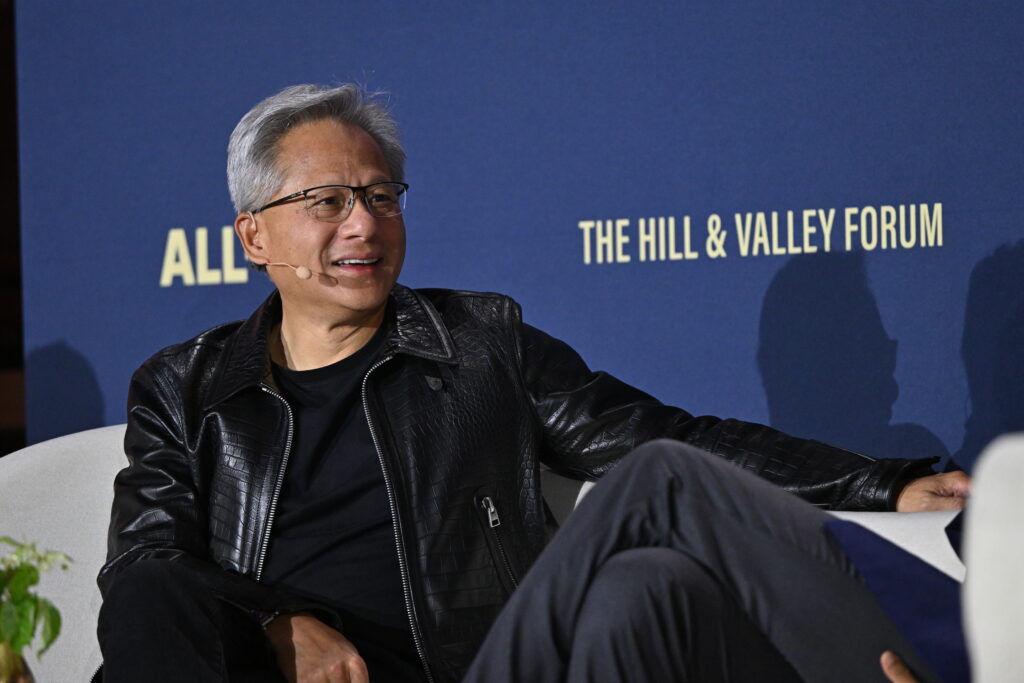
Global stocks were mixed Wednesday as markets weighed lingering worries about the Iran-Israel conflict while Nvidia surged to a fresh all-time high on bullishness over artificial intelligence.Analysts cited not only concerns that the ceasefire between Iran and Israel could break down, but leaked US intelligence that said strikes had set back Tehran’s nuclear program by just a few months.”Maybe the US bombardment didn’t destroy the Iran nuclear program,” said Jack Ablin of Cresset Capital Management, adding that that revelations about the Iran nuclear program suggested the Iran story is not a “new chapter.”The S&P 500 finished a choppy day flat, while the Dow edged lower and the Nasdaq advanced.”Investors are sort of catching their breath, since we had a very strong move on Monday and Tuesday,” said Sam Stovall, chief investment officer at CFRA Research. “Nvidia’s on everyone lips today.”The chip company shot up 4.3 percent to $154.31, giving it a market valuation of around $3.76 trillion — more valuable than Microsoft, Apple and other tech giants.The rise came as CEO Jensen Huang presented the company’s latest technologies at Nvidia’s annual meeting.Asian stock markets had closed higher earlier on Wednesday following rallies on Wall Street and in Europe the day before. But European stocks fell in Wednesday’s session.Oil prices, meanwhile advanced after two days of heavy losses following a US crude inventory report that showed a bigger than expected drawdown in inventory.The dollar continued to slide against the euro, with fewer benefits from the flight to safety due to unrest in the Middle East.While the Israel-Iran conflict has dominated global attention in recent days, markets are also shifting attention back to trade. Shares of FedEx fell 3.3 percent after the shipping company did not provide a full-year forecast, citing uncertainty about the global trade outlook and tariffs.Dozens of countries are locked in negotiations with Washington to clinch some sort of trade deal to mitigate the impact of US tariffs. Only Britain has been reached a deal, although Beijing and Washington have agreed to lower tariffs from the highest rates they imposed upon one another.- Key figures at around 2040 GMT -Brent North Sea Crude: UP 0.8 percent at $67.68 per barrelWest Texas Intermediate: UP 0.9 percent at $64.92 per barrelNew York – Dow: DOWN 0.3 percent at 42,982.43 (close)New York – S&P 500: FLAT at 6,092.16 (close)New York – Nasdaq Composite: UP 0.3 percent at 19,973.55 (close)London – FTSE 100: DOWN 0.5 percent at 8,718.75 (close)Paris – CAC 40: DOWN 0.8 percent at 7,558.16 (close) Frankfurt – DAX: DOWN 0.6 percent at 23,498.33 (close)Tokyo – Nikkei 225: UP 0.4 percent at 38,942.07 (close)Hong Kong – Hang Seng Index: UP 1.2 percent at 24,474.67 (close)Shanghai – Composite: UP 1.0 percent at 3,455.97 (close)Euro/dollar: UP at $1.1656 from $1.1609 on TuesdayPound/dollar: UP at $1.3664 from $1.3615Dollar/yen: UP at 145.32 yen from 144.94 yenEuro/pound: DOWN at 85.26 from 85.27 penceburs-jmb/des

Oil rebounds as markets track Iran-Israel ceasefire

Oil prices recovered as stock markets diverged Wednesday while traders assessed whether the Israel-Iran ceasefire would endure.The focus was also on a NATO summit that signed off on a sharp increase to military spending by the United States and its allies.”Optimism about the fragile ceasefire holding between Iran and Israel has bubbled through markets… but more doubts are now creeping in about the truce holding,” said Susannah Streeter, head of money and markets at Hargreaves Lansdown.Trade Nation analyst David Morrison said that “Investors are mindful that the current ceasefire may break down, although that seems like a small risk for now.” Asian stock markets closed higher following rallies on Wall Street and in Europe on Tuesday on news of the ceasefire declared by Trump.But European stocks closed lower on Wednesday, and Wall Street’s main indices were mixed in late morning trading.The world’s main oil contract, Brent North Sea crude, rose 1.2 percent Wednesday after tumbling almost seven percent Tuesday.Brent and the main US crude contract, WTI, had soared Monday in the first reaction to the US bombing of Iran.Trump said Wednesday that the US strikes had resulted in the “total obliteration” of Iran’s nuclear capabilities, setting the country’s atomic programme back by “decades”.”They’re not going to be building bombs for a long time,” he said, adding that the ceasefire between Israel and Iran was going “very well”.But leaked US intelligence cast doubt on the damage caused by the American strikes, saying they had set back Tehran’s nuclear programme by just a few months.Trade Nation’s Morrison said if those assessments are correct it would pose serious concerns for investors as “it opens up a myriad of possibilities” about how the situation could develop.Trump’s comments were made in The Hague, where he mostly struck a conciliatory tone toward NATO allies, framing the deal on increased defence spending as a “great victory for everyone”.Trump appeared keen to share the plaudits for the deal, which sees the 32 NATO countries commit to spending five percent of output on defence by 2035.But Trump lashed out at Spain for its reluctance to boost defence spending and threaten to punish it with trade measures.”They want a little bit of a free ride, but they’ll have to pay it back to us on trade, because I’m not going to let that happen. It’s unfair,” Trump told journalists at the end of NATO’s Hague summit. While the Israel-Iran conflict has dominated global attention the outburst called attention to fact that Trump’s sweeping tariffs on friends and foes alike are set to come into force on July 9, after having been postponed once.Dozens of countries are locked in negotiations with Washington to clinch some sort of trade deal to mitigate the impact of US tariffs. Only Britain has been reached a deal, although Beijing and Washington have agreed to lower tariffs from the highest rates they imposed upon one another.- Key figures at around 1530 GMT -Brent North Sea Crude: UP 1.2 percent at $66.99 per barrelWest Texas Intermediate: UP 1.6 percent at $65.39 per barrelNew York – Dow: DOWN 0.3 percent at 42,981.78 pointsNew York – S&P 500: FLAT at 6,090.37New York – Nasdaq Composite: UP 0.2 percent at 19,958.07London – FTSE 100: DOWN 0.5 percent at 8,718.75 (close)Paris – CAC 40: DOWN 0.8 percent at 7,558.16 (close) Frankfurt – DAX: DOWN 0.6 percent at 23,498.33 (close)Tokyo – Nikkei 225: UP 0.4 percent at 38,942.07 (close)Hong Kong – Hang Seng Index: UP 1.2 percent at 24,474.67 (close)Shanghai – Composite: UP 1.0 percent at 3,455.97 (close)Euro/dollar: UP at $1.1628 from $1.1625 on TuesdayPound/dollar: UP at $1.3631 from $1.3616Dollar/yen: UP at 145.59 yen from 144.89 yenEuro/pound: UP at 85.38 from 85.24 penceburs-rl/jj

Stocks rally as Iran-Israel ceasefire holds, oil claws back some losses

Most equities extended a global rally Wednesday after Iran and Israel agreed to a ceasefire that ended more than a week of hostilities, while the dollar held losses following a sharp drop stoked by bets on a US interest rate cut.However, wariness over the agreement involving the Middle East foes helped oil prices climb, though they are still well down from their highs on Monday.Investors around the world breathed a sigh of relief after Donald Trump announced the ceasefire days after US forces bombed Iran’s nuclear sites, which he said were “completely destroyed”.The Israeli government said it had agreed to the US deal after achieving all of its objectives in the war with Iran, with Prime Minister Benjamin Netanyahu hailing a “historic victory” after 12 days of bombing.Stocks surged on the news, and the optimism rolled into Wednesday, with Hong Kong, Shanghai, Tokyo, Sydney and Singapore leading the gains across Asia. There were small losses in Wellington, Bangkok and Jakarta.London, Paris and Frankfurt were also on the front foot.Oil prices, which tanked on news of the ceasefire, rose with both main contracts up nearly two percent.However, they are still down around 15 percent from the highs hit Monday in the first reaction to the US bombing of Iran and before the ceasefire announcement.The mood was also helped by Fed boss Jerome Powell choosing not to pour cold water on the prospects of a rate cut.In closely watched testimony to Congress, he said that “if it turns out that inflation pressures do remain contained, then we will get to a place where we cut rates sooner rather than later”.While he said “I don’t think we need to be in any rush because the economy is still strong”, the comments indicated a flexible tone. They also came after Fed governors Christopher Waller and Michelle Bowman suggested officials could reduce borrowing costs next month.The dollar tumbled against its peers and remained under pressure against the yen, pound and euro in Asian trade.”The market staged a full-throttle risk-on revival, launching global equities into the stratosphere as oil prices cratered and rate-cut bets gained momentum,” said SPI Asset Management’s Stephen Innes.”With the Middle East truce — however duct-taped and temperamental — holding long enough to calm headlines, traders pulled the ripcord on the fear trade and dove headfirst into equities.”Trump’s… scolding of Israel and Iran added ice water to the fire — or at least enough jawbone to muzzle the Middle East combatants for now.”- Key figures at around 0810 GMT -Tokyo – Nikkei 225: UP 0.4 percent at 38,942.07 (close)Hong Kong – Hang Seng Index: UP 1.2 percent at 24,474.67 (close)Shanghai – Composite: UP 1.0 percent at 3,455.97 (close)London – FTSE 100: UP 0.3 percent at 8,786.74West Texas Intermediate: UP 1.9 percent at $65.58 per barrelBrent North Sea Crude: UP 1.9 percent at $68.43 per barrelEuro/dollar: DOWN at $1.1600 from $1.1625 on TuesdayPound/dollar: DOWN at $1.3610 from $1.3616Dollar/yen: UP at 145.30 yen from 144.89 yenEuro/pound: DOWN at 85.21 pence from 85.24 penceNew York – Dow: UP 1.2 percent at 43,089.02 (close) 

China’s premier warns global trade tensions ‘intensifying’

Chinese Premier Li Qiang warned on Wednesday that global trade tensions were “intensifying” as he addressed the opening ceremony of the World Economic Forum.Officials including Singaporean Prime Minister Lawrence Wong are among those attending this week’s gathering in the northern port city of Tianjin, known colloquially as the “Summer Davos”.Li said the global economy was “undergoing profound changes” — a thinly veiled reference to swingeing tariffs imposed by US President Donald Trump.”Protectionist measures are significantly increasing and global economic and trade frictions are intensifying,” Li added. “The global economy is deeply integrated and no country can grow or prosper alone,” Li said.”In times when the global economy faces difficulties, what we need is not the law of the jungle where the weak fall prey to the strong, but cooperation and mutual success for a win-win outcome,” Li said.Beijing’s number two official also painted a bullish picture of the Chinese economy, the world’s second-largest, which has been beset by slowing growth and a lull in consumer spending. “China’s economy continues to grow steadily, providing strong support for the accelerated recovery of the global economy,” he said.Beijing, he added, was “stepping up our efforts to implement the strategy of expanding domestic demand”.This was “promoting China’s growth into a major consumption powerhouse based on the solid foundation of a major manufacturing powerhouse”.Beijing is eyeing growth this year of around five percent — a target viewed as ambitious by many economists.Officials have since late last year rolled out a series of steps intended to boost spending, including key interest rate cuts and steps to encourage homebuying.But results have been varied, just as added pressure on trade from US tariffs threatens to hit the country’s vast manufacturing sector.”We expect the (Chinese) economy to continue to slow over the coming months,” wrote Leah Fahy, China Economist at Capital Economics, in a note on Tuesday.Li’s speech at the WEF gathering sought to portray China as a staunch defender of a rules-based international trading system that is now under attack by the Trump administration.His comments echoed remarks Tuesday by President Xi Jinping to Singapore’s Wong during a meeting in Beijing in which he called for the countries to resist a “return to hegemony” and protectionism.WEF President and CEO Borge Brende told AFP Tuesday it was “too early to say” what impact Trump’s tariff blitz will have on the world economy.”The traditional globalisation we saw is now changed into a different system,” he said, warning of a possible “decade of lower growth”.

Oil slides, stocks rise as Iran-Israel ceasefire holds

Oil prices sank for a second straight day and stock markets mostly rose Tuesday as a ceasefire between Iran and Israel appeared to be holding firm.Crude futures slumped in volatile trading after US President Donald Trump announced a ceasefire, extending Monday’s steep losses in oil after Iran’s response to the US attack did not hit energy infrastructure. “This morning’s ceasefire further reduced the perceived threat to Middle Eastern oil supply routes,” said David Morrison, analyst at Trade Nation.The main international and US oil contracts briefly bounced off their lows as Israel and Iran accused each other of breaking the ceasefire, but then resumed their fall after Trump berated the two countries in an expletive-laced outburst.Prices were also brought down by Trump saying that China could continue to buy oil from Iran, in what appeared to be relief from sanctions Washington had previously imposed.Brent futures finished the day at $67.14 down nearly seven percent after dropping by a similar percent on Monday.Wall Street stocks spent the entire session in positive territory following the improved dynamics in the Middle East.With the “de-escalation, the market seems to be doing better,” Art Hogan, chief market strategist of B. Riley Wealth, said of the Iran-Israel dynamics.Energy was the only one of 11 S&P 500 sectors to fall sharply, with nine sectors firmly higher.Paris and Frankfurt ended the day with solid gains, but London closed flat as shares in oil majors Shell and BP fell along with crude prices.Asian markets closed higher.The dollar accelerated losses after remarks by US Federal Reserve chair Jerome Powell failed to dampen market expectations for interest rate cuts during his first of two days of congressional testimony.”Powell was a little more neutral to slightly more dovish than markets had anticipated, no doubt helped by the collapse in oil prices,” said Fawad Razaqzada, analyst at City Index and Forex.com.”The US dollar could be heading further lower unless a fresh flare-up in the Middle East conflict sends oil prices spiking again,” he added.Trump has been outspoken in ridiculing Powell’s decisions thus far, referring to the Fed chair in a social media post Tuesday as a “dumb, hardheaded person.”Powell’s appearance came after two Fed officials — Christopher Waller and Michelle Bowman — recently suggested policymakers could cut rates as early as July.Powell declined to comment when asked about Waller’s views on a pathway to rate reductions.But he said officials could be inclined to lower rates sooner if inflation were weaker than expected or if the labor market deteriorated.- Key figures at around 2115 GMT -Brent North Sea Crude: DOWN 6.8 percent at $67.14 per barrelWest Texas Intermediate: DOWN 6.0 percent at $64.37 per barrelNew York – Dow: UP 1.2 percent at 43,089.02 (close) New York – S&P 500: UP 1.1 percent at 6,092.18 (close)New York – Nasdaq Composite: UP 1.4 percent at 19,912.53 (close)London – FTSE 100: FLAT at 8,758.99 (close)Paris – CAC 40: UP 1.0 percent at 7,615.99 (close)Frankfurt – DAX: UP 1.6 percent at 23,641.58 (close)Tokyo – Nikkei 225: UP 1.1 percent at 38,790.56 (close)Hong Kong – Hang Seng Index: UP 2.1 percent at 24,177.07 (close)Shanghai – Composite: UP 1.2 percent at 3,420.57 (close)Euro/dollar: UP at $1.1625 from $1.1578 on MondayPound/dollar: UP at $1.3616 from $1.3524Dollar/yen: DOWN at 144.89 yen from 146.15 yenEuro/pound: DOWN at 85.24 pence from 85.60 penceburs-jmb/aha

Oil slides, stocks rise as Trump says Iran-Israel ceasefire holds

Oil prices sank and stock markets rose Tuesday as US President Donald Trump said a ceasefire between Iran and Israel was taking hold after he berated both countries for violating the truce.In volatile trading, crude futures slumped more than five percent after Trump announced a ceasefire.”This morning’s ceasefire further reduced the perceived threat to Middle Eastern oil supply routes,” said David Morrison, analyst at Trade Nation.The main international and US contracts reduced their losses later as Israel and Iran accused each other of breaking the ceasefire.But prices fell again around five percent after Trump declared the ceasefire was in effect after berating the two countries in an expletive-laced outburst.Iran’s President Masoud Pezeshkian said later his country will respect a ceasefire if Israel also upholds its terms, while Israel said it refrained from further strikes after a phone call between Trump and Prime Minister Benjamin Netanyahu.Prices were also brought down by Trump saying that China could continue to buy oil from Iran, in what appeared to be relief for Tehran from sanctions Washington has previously imposed.Prices had already fallen by more than seven percent on Monday after Iran’s response to US strikes on its nuclear facilities was limited to missile launches on a US military base in Qatar.There was also relief that Iran has refrained from closing the strategic Strait of Hormuz, a chokepoint for about one-fifth of the world’s oil supply.Wall Street extended gains at the open on Tuesday.Paris and Frankfurt were sharply higher in afternoon deals but London’s gains were limited as shares in oil majors Shell and BP fell on the lower crude prices.Asian markets closed higher.The dollar retreated against other major currencies.Escalating tensions in the Middle East has removed some focus from Trump’s tariffs war, which threatens to dampen global economic growth.”With the immediate geopolitical tensions dialled down, investors are free to focus on President Trump’s trade war and the first tariff deadline coming up in a couple of weeks,” Morrison said.”As far as investors are concerned, they’ve just stared down the prospect of World War Three, so they’re not going to be fussed by a few percentage points on US imports,” he added.Several countries face steep tariffs if they fail to reach deals with the United States by July 9, with duties of 50 percent looming large over the European Union.Fawad Razaqzada, analyst at City Index and Forex.com, said investors were “now shifting their attention” to Federal Reserve Chairman Jerome Powell’s testimony in Congress later Tuesday.Powell was due to tell Congress that the central bank can afford to wait for the impact of Trump’s global tariffs before deciding on further interest rate cuts, according to his prepared remarks.”For the time being, we are well positioned to wait to learn more about the likely course of the economy before considering any adjustments to our policy stance,” he said.- Key figures at around 1335 GMT -Brent North Sea Crude: DOWN 5.2 percent at $66.85 per barrelWest Texas Intermediate: DOWN 5.2 percent at $64.93 per barrelNew York – Dow: UP 0.8 percent at 42,904.31 pointsNew York – S&P 500: UP 0.8 percent at 6,070.59New York – Nasdaq Composite: UP 1.1 percent at 19,839.12London – FTSE 100: UP 0.2 percent at 8,773.12Paris – CAC 40: UP 1.2 percent at 7,631.36 Frankfurt – DAX: UP 1.6 percent at 23,637.76Tokyo – Nikkei 225: UP 1.1 percent at 38,790.56 (close)Hong Kong – Hang Seng Index: UP 2.1 percent at 24,177.07 (close)Shanghai – Composite: UP 1.2 percent at 3,420.57 (close)Euro/dollar: UP at $1.1589 from $1.1581 on MondayPound/dollar: UP at $1.3597 from $1.3526Dollar/yen: DOWN at 145.04 yen from 146.12 yenEuro/pound: DOWN at 85.24 pence from 85.60 penceburs-lth/giv