Afp Business Asia

Oil slides, stocks jump amid Iran-Israel ceasefire uncertainty

Oil prices sank and stock markets jumped Tuesday, even as uncertainty reined over a Israel-Iran ceasefire.In volatile trading, crude futures slumped more than five percent after US President Donald Trump’s declaration of a ceasefire.The oil market went on to reduce its losses, however, as Israel and Iran accused each other of breaking the ceasefire — news confirmed by Trump.The president berated the two sides, adding that he was “really unhappy” with Israel in particular.Despite tensions igniting once more, oil prices were still down more than three percent by early afternoon trading in Europe.”Investors are reacting with relief to apparent news of a US-brokered ceasefire between Iran and Israel,” noted AJ Bell investment director Russ Mould.”Gold slipped back as its safe haven attributes were less in demand,” Mould said, adding that the news weighed on share prices of oil producers and miners.The dollar retreated against main rivals after Trump once more demanded that the US Federal Reserve cut interest rates in a bid to boost the world’s biggest economy.Escalating tensions in the Middle East has removed some focus from Trump’s tariffs war, which threatens to dampen global economic growth.In Germany, where the DAX stocks index rallied 1.9 percent, Chancellor Friedrich Merz urged Iran and Israel to follow the ceasefire announced by Trump.”We call on both Iran and Israel to heed this call from the American president,” Merz told parliament. “If this ceasefire succeeds… then it will be a very positive development that can make the Middle East and the world safer.”French President Emmanuel Macron said Tuesday that the situation surrounding Iran remained “volatile and unstable”.There are fears that Iran could shut the Strait of Hormuz, a chokepoint for about one-fifth of the world’s oil supply.Rystad Energy analyst Jorge Leon told AFP that he believed the risk of the waterway shutting had diminished despite Iran launching missiles at a US base in Qatar in retaliation for American strikes on Tehran’s nuclear facilities.Trump dismissed the attack as “very weak”, and said Iran gave “early notice”, adding no one was hurt or killed.”I think the risk of closing Hormuz now has diminished rapidly because US and Iranian tension is already over,” Leon argued.”I think it’s more about what happens just between Israel and Iran.”- Key figures at around 1115 GMT -West Texas Intermediate: DOWN 3.1 percent at $66.38 per barrelBrent North Sea Crude: DOWN 3.2 percent at $68.30 per barrelLondon – FTSE 100: UP 0.3 percent at 8,786.54 pointsParis – CAC 40: UP 1.2 percent at 7,625.70 Frankfurt – DAX: UP 1.8 percent at 23,686.87Tokyo – Nikkei 225: UP 1.1 percent at 38,790.56 (close)Hong Kong – Hang Seng Index: UP 2.1 percent at 24,177.07 (close)Shanghai – Composite: UP 1.2 percent at 3,420.57 (close)New York – Dow: UP 0.9 percent at 42,581.78 (close)Euro/dollar: UP at $1.1596 from $1.1581 on MondayPound/dollar: UP at $1.3606 from $1.3526Dollar/yen: DOWN at 145.06 yen from 146.12 yenEuro/pound: DOWN at 85.22 pence from 85.60 penceburs-bcp/ajb/rl

Oil prices drop as Israel agrees to ceasefire proposal

Oil prices sank 3.5 percent Tuesday after Israel said it had agreed to US President Donald Trump’s proposal for a bilateral ceasefire with Iran.Shares in Asia were buoyant, as fears of an energy market shock eased following 12 days of war between Israel and its arch-foe. In Europe, London, Paris and Frankfurt also rose at the open.At around 0830 GMT on Tuesday, Brent was down 3.5 percent at $69.00 per barrel, while the main US crude contract WTI was 3.5 percent lower at $66.10 per barrel.”A potential end to the conflict has been welcomed by market participants,” wrote Lee Hardman at MUFG, who noted that Brent “has now almost fully reversed all of the gains since the conflict started”.”In the FX market a similar reversal is underway with the US dollar giving back recent gains. If Middle East risks now fade into the background as a market driver, it is more likely that the US dollar weakening trend will resume.”Crude prices had briefly spiked Monday morning on the prospect that Iran could retaliate to a weekend US attack on its nuclear facilities by throttling oil transport through the strategic Strait of Hormuz.But they then tumbled as much as seven percent when Iran said it had launched missiles at a major US base in Qatar, with oilfield assets unaffected.- ‘War premium’ -“Tehran played it cool. Their ‘retaliation’ hit a US base in Qatar — loud enough for headlines, quiet enough not to shake the oil market’s foundations,” said Stephen Innes at SPI Asset Management.”And once that became clear, the war premium came crashing out of crude.”The Israeli government said in a statement Tuesday that the country had “achieved all the objectives” in its war with Iran, adding that it had removed “an immediate dual existential threat: nuclear and ballistic”.”Israel will respond forcefully to any violation of the ceasefire,” the statement said.Tokyo ended the day 1.1 percent higher and Shanghai closed up 1.2 percent. Hong Kong closed up 2.06 percent on Tuesday afternoon.The airline Virgin Australia climbed sharply as it re-entered the local share market, a dramatic comeback from near bankruptcy more than four years ago.London gained 0.7 percent in early trade — with gains limited as shares in oil majors Shell and BP fell owing to the oil price drop — while Paris was up 1.5 percent and Frankfurt jumped 1.8 percentIn forex markets, the dollar gave up gains after Federal Reserve Governor Michelle Bowman said she would support cutting interest rates at July’s meeting if inflation holds steady.The market currently expects the Fed to resume cutting interest rates in September.Bowman indicated that “ongoing progress in tariff negotiations providing a less risky economic environment to adjust policy”,” prompting the dollar to weaken, Wan said.- Key figures at around 0830 GMT -Tokyo – Nikkei 225: UP 1.1 percent at 38,790.56 (close)Hong Kong – Hang Seng Index: UP 2.06 percent at 24,177.07 (close)Shanghai – Composite: UP 1.15 percent at 3,420.57 (close)Euro/dollar: UP at $1.1591 from $1.1581 on MondayPound/dollar: UP at $1.3598 from $1.3526Dollar/yen: DOWN at 145.04 yen from 146.12 yenEuro/pound: DOWN at 85.26 pence from 85.60 penceWest Texas Intermediate: DOWN 3.5 percent at $66.10 per barrelBrent North Sea Crude: DOWN 3.5 percent at $69.00 per barrelNew York – Dow: UP 0.9 percent at 42,581.78 (close)London – FTSE 100: UP 0.3 percent at 8,787.24

Vietnam puts 41 on trial in $45 mn corruption case

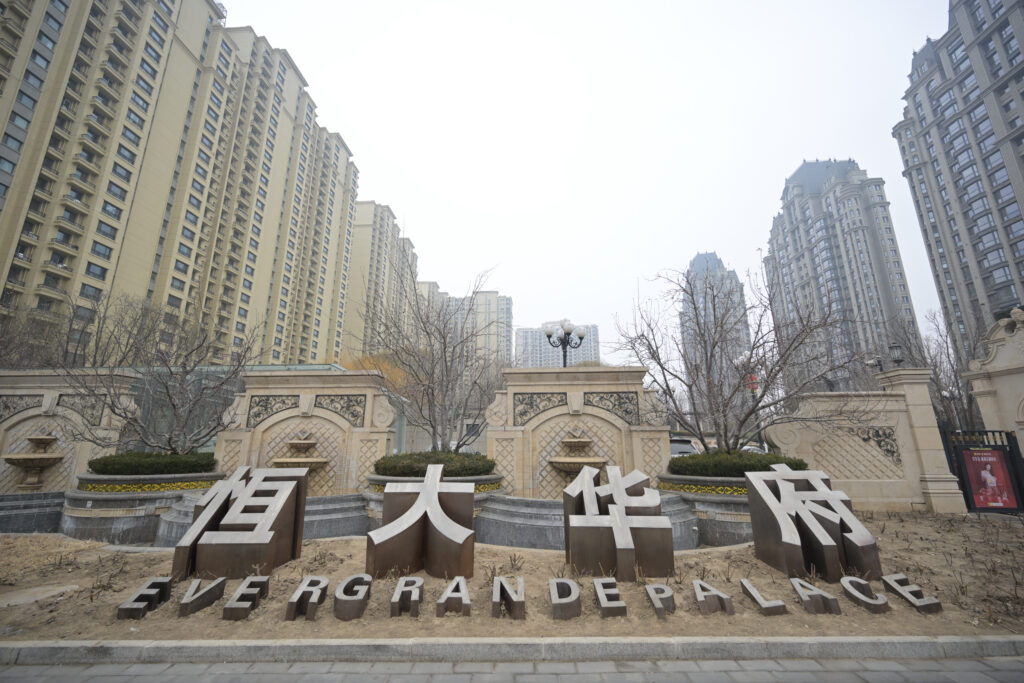
A $45 million corruption trial against 41 people including state officials began in Vietnam on Tuesday, part of the communist state’s wide-ranging anti-graft drive.The so-called “burning furnace” campaign against corruption has swept up dozens of senior government figures, including two presidents and three deputy prime ministers, as well as top business leaders.In the latest case, a court in Hanoi began proceedings against 30 former officials of northern Vinh Phuc, Phu Tho and central Quang Ngai provinces. Eleven others — businesspeople and company employees — are also accused of involvement in corruption that prosecutors say caused damage to the state worth more than 1.16 trillion dong ($44.6 million).They are accused of offences including bribery, abuse of power, and violating laws on bidding and accounting.Prosecutors say that between 2010 and 2024, chairman of the Phuc Son Group, Nguyen Van Hau, spent over $5 million bribing officials to win contracts in 14 multi-billion dollar infrastructure projects in the three provinces.Hau brought suitcases of cash to the offices or private residences of the officials for the bribes, prosecutors say.Former party chief of Vinh Phuc province Hoang Thi Thuy Lan received the biggest bribes from Hau, totalling almost $2 million dollars — in suitcases weighing up to 60 kilograms.In April, Vietnam jailed a former deputy minister of industry and trade for six years after finding him guilty of “power abuse” in a solar energy development plan.Hoang Quoc Vuong, 62, had admitted to taking a $57,600 bribe to favour solar power plants in southern Ninh Thuan province, but his family had paid the amount back before the sentencing.

Virgin Australia surges in market comeback

Virgin Australia climbed sharply as it re-entered the local share market Tuesday, a dramatic comeback from near bankruptcy more than four years ago.A 30-percent chunk of Virgin Australia, one of the few domestic rivals to Qantas, was sold in an initial public offering this month at Aus$2.90 a share to raise Aus$685 million (US$444 million).The price values the entire airline at Aus$2.3 billion.The stock, which listed on the Australian Securities Exchange at noon, climbed 8.6 percent from the offer price in the first five minutes of trade.US private equity giant Bain Capital came to the airline’s rescue in late 2020 after the Australian government refused to bail it out as the Covid-19 pandemic brought international travel to a standstill. “Today marks the start of an exciting new chapter for Virgin Australia as a publicly listed company,” said airline chairman Peter Warne.”Our listing reflects the remarkable work undertaken over the past five years to transform the airline and position it for long-term success,” he said in a statement.After selling a 30-percent stake in Virgin Australia in the initial public offering, Bain now holds about 40 percent of the airline.Qatar Airways bought a 25 percent share in the carrier this year.Qatar’s entry injected a dose of foreign competition against Australia’s dominant carrier Qantas and its budget offshoot Jetstar, which together carry more than 60 percent of domestic passengers.”We are proud of how far we have come and energised by the opportunities ahead as we continue to realise our ambition of being Australia’s most loved airline,” Virgin Australia chief executive Dave Emerson said.

Asian stocks up as Trump announces Iran-Israel ceasefire

Asian shares gained and oil prices were down Tuesday, as fears of an energy market shock eased following US President Donald Trump’s announcement of a ceasefire between Iran and Israel.Investors were relieved that Iran did not retaliate to a US attack on its nuclear facilities by throttling oil transport through the strategic Strait of Hormuz.On Monday, Iran said it had launched missiles at a major US base in Qatar, which described the situation as stable, while analysts said oilfield assets were unaffected.”Tehran played it cool. Their ‘retaliation’ hit a US base in Qatar — loud enough for headlines, quiet enough not to shake the oil market’s foundations,” said Stephen Innes at SPI Asset Management.”And once that became clear, the war premium came crashing out of crude,” with Brent and the main US crude contract WTI sliding more than seven percent overnight.Both oil contracts were down over two percent on Tuesday.In Asia, the mood was largely upbeat, with Tokyo and Hong Kong up 1.4 percent, Shanghai gaining 0.8 percent and Seoul jumping 2.7 percent.Singapore gained 0.7 percent, Sydney was up 1.1 percent and Taipei put on 1.8 percent, but Jakarta was down 1.7 percent.Trump said Iran and Israel had agreed to a staggered ceasefire that would bring about an “official end” to their conflict, as strikes continued to hammer Tehran.Iran’s foreign minister said Tuesday that Tehran did not intend to continue its strikes if Israel stopped its attacks.”Details of the ceasefire agreement are still sparse at the time of writing and as such the detente and de-escalation is not a done deal,” wrote Michael Wan at MUFG.”Nonetheless, latest news reports suggest Iran has agreed to the ceasefire and if this is right, the left tail risk of more extreme scenarios resulting in significant oil supply disruptions have meaningfully diminished.”In forex markets, the dollar gave up gains after Federal Reserve Governor Michelle Bowman said she would support cutting interest rates at July’s meeting if inflation holds steady.The market currently expects the Fed to resume cutting interest rates in September.Bowman indicated that “ongoing progress in tariff negotiations providing a less risky economic environment to adjust policy”,” prompting the dollar to weaken, Wan said.- Key figures at around 0200 GMT -Tokyo – Nikkei 225: UP 1.4 percent at 38,873.07Hong Kong – Hang Seng Index: UP 1.4 percent at 24,025.13Shanghai – Composite: UP 0.8 percent at 3,886.66Euro/dollar: UP at $1.1590 from $1.1581 on MondayPound/dollar: UP at $1.3539 from $1.3526Dollar/yen: DOWN at 145.66 yen from 146.12 yenEuro/pound: FLAT at 85.60 penceWest Texas Intermediate: DOWN 2.3 percent at $66.19 per barrelBrent North Sea Crude: DOWN 2.2 percent at $69.24 per barrelNew York – Dow: UP 0.9 percent at 42,581.78 (close)London – FTSE 100: DOWN 0.2 percent at 8,758.04 (close)

Oil prices tumble as markets shrug off Iranian rebuttal to US

Crude oil prices slid more than seven percent Monday while Wall Street stocks advanced after markets shrugged off Iran’s rebuttal to the US weekend attack on Iranian nuclear facilities.Iran announced it had launched missiles at a major US base in Qatar, with explosions ringing out in Doha and projectiles seen streaking overhead.But Qatar described the situation as stable, while energy analysts said oilfield assets were not affected.”This is a face-saving measure by the Iranians and hopefully the diplomatic off-ramp will be taken,” said John Kilduff of Again Capital, who described the Iranian action as “somewhat measured” and apart from population centers.The Iran-Israel clash has focused worry on the Strait of Hormuz, a strategic waterway for seaborne oil that has long been used by Iran as a geopolitical bargaining chip.But Kilduff said, “it’s pretty clear that this is not going to turn into — right away at least — any kind of impact on oil flows in the region, particularly the Strait of Hormuz.”US benchmark West Texas Intermediate slid 7.2 percent to $68.51 a barrel, below its level ahead of the current Iran-Israel clash.Iran’s response “signified that Iran isn’t going to have the fire power to escalate this in an adverse way,” said Briefing.com analyst Patrick O’Hare.”The response is relatively weak,” he said.While US stocks tripped into negative territory around the time of the Qatar attack, major indices quickly recovered.The S&P 500 finished up by one percent.Earlier, sentiment on the Paris and Frankfurt stock markets was hit by a closely watched survey that showed eurozone business activity was almost stagnant again in June.London’s stock exchange was lower with shares in airlines, including EasyJet and British Airways-owner IAG, suffering losses on fears of rising energy costs and disruptions in travel to the Middle East.In Asia, Tokyo was lower while Hong Kong and Shanghai gained.The dollar gave up gains against the euro and pound after Federal Reserve Governor Michelle Bowman official said she would support cutting interest rates at next month’s meeting if inflation holds steady.The market currently expects the Fed to resume cutting interest rates in September.Bowman’s comments come on the heels of similar remarks from Fed governor Christopher Waller. They are likely to spur questions this week when Fed Chair Jerome Powell sits for two days of congressional testimony.- Key figures at around 2040 GMT -Brent North Sea Crude: DOWN 7.2 percent at $72.07 per barrelWest Texas Intermediate: DOWN 7.2 percent at $68.51 per barrelNew York – Dow: UP 0.9 percent at 42,581.78 (close)New York – S&P 500: UP 1.0 percent at 6,025.17 (close)New York – Nasdaq Composite: UP 0.9 percent at 19,630.97 (close)London – FTSE 100: DOWN 0.2 percent at 8,758.04 (close)Paris – CAC 40: DOWN 0.7 percent at 7,537.57 (close)Frankfurt – DAX: DOWN 0.4 percent at 23,269.01 (close)Tokyo – Nikkei 225: DOWN 0.1 percent at 38,354.09 (close)Hong Kong – Hang Seng Index: UP 0.7 percent at 23,689.13 (close)Shanghai – Composite: UP 0.7 percent at 3,381.58 (close)Euro/dollar: UP at $1.1581 from $1.1523 on FridayPound/dollar: UP at $1.3526 from $1.3451Dollar/yen: UP at 146.12 yen from 146.09 yenEuro/pound: DOWN at 85.60 pence from 85.65 penceburs-jmb/jgc

Oil prices seesaw as investors await Iran response to US strikes

Oil prices wobbled and stock markets wavered Monday as traders awaited Tehran’s response to US strikes on Iranian nuclear facilities over the weekend.US stocks edged higher while European markets retreated and Asian equities were mixed, with markets keeping a close eye on whether Iran will block the crucial Strait of Hormuz, which carries one-fifth of global oil output.When trading opened on Monday, international benchmark crude contract Brent and US equivalent WTI both jumped more than four percent to hit their highest price since January.They later dipped briefly into the red and then wobbled, standing down around one percent as European markets closed.”Will Iran choose to choke off the Strait of Hormuz or not? That is the big question,” said Bjarne Schieldrop, chief commodities analyst at SEB bank.But, “looking at the oil price this morning it is clear that the oil market doesn’t assign a very high probability of it happening,” he added.Iran is the world’s ninth-biggest oil-producing country, exporting just under half of the 3.3 million barrels it produces per day.”The prevailing view appears to be that the US involvement will prove limited militarily, yet effective, by seriously undermining Iran’s nuclear ambitions,” said David Morrison, senior market analyst at Trade Nation.”Investors are also speculating that Iran’s ability to retaliate has been severely restricted,” he added.Tensions remained elevated, however, as Iran and Israel intensified attacks on each other on the war’s 11th day.”The markets are not yet reacting with any degree of panic to the US airstrike on Iran’s nuclear facilities as they await to see how Tehran responds,” said AJ Bell investment director Russ Mould.Wall Street stocks opened slightly lower, but then managed to push into the green.In Europe, sentiment on the Paris and Frankfurt stock markets was hit by a closely watched survey that showed eurozone business activity was almost stagnant again in June.London’s stock exchange was lower with shares in airlines, including EasyJet and British Airways-owner IAG, suffering losses on fears of rising energy costs and disruptions in travel to the Middle East.In Asia, Tokyo was lower while Hong Kong and Shanghai gained.”So far, satellite images reportedly suggest that oil continues to flow through the Strait, which may explain the muted market reaction to the news,” said Ipek Ozkardeskaya, senior analyst at Swissquote Bank.She added that there is optimism that Iran will avoid full-blown retaliation “to prevent its own oil facilities from becoming targets and to avoid a widening conflict that could hurt China — its biggest oil customer.”But “if things get uglier” the price of US crude could even spike beyond $100 per barrel, she said. Brent was trading at above $77 per barrel on Monday while WTI was around $74.The dollar gave up gains against the euro and pound after a US Federal Reserve official said she would support cutting interest rates at next month’s meeting if inflation holds steady.The market currently expects the Fed to resume cutting interest rates in September.- Key figures at around 1530 GMT -Brent North Sea Crude: DOWN 0.9 percent at $76.31 per barrelWest Texas Intermediate: DOWN 1.0 percent at $73.10 per barrelNew York – Dow: UP 0.1 percent at 42,260.08New York – S&P 500: UP 0.3 percent at 5,986.90 New York – Nasdaq Composite: UP 0.4 percent at 19,523.98London – FTSE 100: DOWN 0.2 percent at 8,758.04 (close)Paris – CAC 40: DOWN 0.7 percent at 7,537.57 (close)Frankfurt – DAX: DOWN 0.4 percent at 23,269.01 (close)Tokyo – Nikkei 225: DOWN 0.1 percent at 38,354.09 (close)Hong Kong – Hang Seng Index: UP 0.7 percent at 23,689.13 (close)Shanghai – Composite: UP 0.7 percent at 3,381.58 (close)Euro/dollar: UP at $1.1549 from $1.1516 on FridayPound/dollar: UP at $1.3501 from $1.3444Dollar/yen: UP at 146.37 yen from 146.13 yenEuro/pound: DOWN at 85.54 pence from 85.66 penceburs-rlcw

Asian countries most vulnerable to Strait of Hormuz blockade

Around 84 percent of oil passing through the Strait of Hormuz is destined for Asia, leaving the economies of China, India, South Korea and others vulnerable should Iran blockade the crucial trading route over US strikes on its nuclear sites.Around 14.2 million barrels of crude oil and 5.9 million barrels of other petroleum products pass through the strait per day — representing around 20 percent of global production in the first quarter, according to the US Energy Information Administration (EIA).And crude oil from Saudi Arabia, the UAE, Iraq, Kuwait, Qatar and Iran almost exclusively passes through the corridor.Here are the main Asian countries where oil exported via the strait is destined:- China -More than half of the oil imported by East Asia passes through the Strait of Hormuz, experts estimate.China is one of the largest buyers, importing 5.4 million barrels of crude oil a day through Hormuz in the first quarter this year, according to the EIA.Saudi Arabia is China’s second-largest supplier of crude oil, accounting for 15 percent of its total oil imports — 1.6 million barrels a day.China also buys more than 90 percent of Iran’s oil exports, according to the analysis firm Kpler.It imported 1.3 million barrels of Iranian crude oil a day in April, down from a five-month high in March.- India -India is highly dependent on the Strait of Hormuz, importing 2.1 million barrels of crude a day through the corridor in the first quarter, EIA data shows.Around 53 percent of India’s imported oil in early 2025 came from Middle Eastern suppliers, particularly Iraq and Saudi Arabia, local media reported.Wary of an escalating conflict in the Middle East, New Delhi has increased its imports of Russian oil over the past three years.”We have been closely monitoring the evolving geopolitical situation in the Middle East since the past two weeks,” India’s Minister of Petroleum and Natural Gas Hardeep Singh Puri said on Sunday.”We have diversified our supplies in the past few years and a large volume of our supplies do not come through the Strait of Hormuz now,” he wrote on X, adding “We will take all necessary steps to ensure stability of supplies of fuel to our citizens.”- South Korea -Around 68 percent of South Korea’s crude oil imports pass through the Strait of Hormuz — 1.7 million barrels a day this year, according to the EIA.South Korea is particularly dependent on its main supplier Saudi Arabia, which last year accounted for a third of its oil imports.Seoul’s trade and energy ministry said there have been “no disruptions so far in South Korea’s crude oil and LNG imports” but “given the possibility of a supply crisis”, officials were “planning for potential disruptions in the Strait of Hormuz”.”The government and industry stakeholders have prepared for emergencies by maintaining a strategic petroleum reserve equivalent to about 200 days of supply,” the ministry said in a statement. – Japan -Japan imports 1.6 million barrels of crude oil a day through the Strait of Hormuz, the EIA says.Japanese customs data showed 95 percent of crude oil imports last year came from the Middle East.The country’s energy freight companies are readying for a potential blockade of the strait.”We’re currently taking measures to shorten as much as possible the time spent by our vessels in the Gulf,” shipping giant Mitsui OSK told AFP.- Others -Around 2 million barrels of crude oil passing through the Strait of Hormuz each day in the first quarter were destined for other parts of Asia — particularly Thailand and the Philippines — as well as Europe (0.5 million barrels) and the United States (0.4 million barrels).- Limited alternatives -Asian countries could diversify their oil suppliers, but it is difficult to replace the large volumes coming from the Middle East.In the short term, “elevated global oil inventories, OPEC+’s available spare capacity, and US shale production all could provide some buffer”, experts at MUFG Bank said.”However, a full closure of the Hormuz Strait would still impact on the accessibility of a major part of this spare production capacity concentrated in the Persian Gulf,” they said.Saudi Arabia and the UAE have infrastructure to bypass the strait, potentially mitigating disruptions, but their transit capacity remains very limited — around 2.6 million barrels a day.And the Goreh-Jask pipeline built by Iran to export via the Gulf of Oman, which has been inactive since last year, has a maximum capacity of only 300,000 barrels per day, according to the EIA.burs-jug/dhw/mtp

Oil dips, dollar firms after US strikes in Iran

Oil prices gave up most of their early gains on Monday and the dollar strengthened after the United States struck Iran’s nuclear facilities at the weekend.Asian markets mostly retreated while European bourses were marginally higher as traders wait to see how Tehran could respond.”Everything hinges on Iran’s response — and whether it’s a symbolic jab or a haymaker that knocks the Strait of Hormuz offline,” said Stephen Innes at SPI Asset Management.One option on the table would be to potentially create economic havoc by seeking to close the strategic Strait of Hormuz — which carries one-fifth of global oil output.Iran is the world’s ninth-biggest oil-producing country, with output of about 3.3 million barrels per day. It exports just under half of that amount and consumes the rest.When trading opened on Monday, Brent and the main US crude contract WTI both jumped more than four percent to hit their highest price since January.They pared these gains however and briefly dipped into the red before recovering to trade slightly higher.”So far, satellite images reportedly suggest that oil continues to flow through the Strait, which may explain the muted market reaction to the news,” said Ipek Ozkardeskaya, senior analyst at Swissquote Bank.”Many remain optimistic that Iran will avoid a full-blown retaliation and regional chaos, to prevent its own oil facilities from becoming targets and to avoid a widening conflict that could hurt China — its biggest oil customer.”But “if things get uglier” the price of US crude could even spike beyond $100 per barrel, she said. WTI was trading around $74 per barrel on Monday.- ‘Extreme route’ -“An oil price shock would create a real negative impact on most Asian economies” as many are big net energy importers, economists at MUFG warned.Tokyo, Seoul, Sydney, Singapore, Taipei, Manila, Bangkok and Jakarta were all lower.Hong Kong, Shanghai and Kuala Lumpur were the only gainers in Asia. In European markets London and Frankfurt ticked marginally higher while Paris was flat.The dollar rose against other currencies but analysts questioned to what extent this would hold out.”If the increase proves to be just a knee-jerk reaction to what is perceived as short-lived US involvement in the Middle-East conflict, the dollar’s downward path is likely to resume,” said Sebastian Boyd, markets live blog strategist at Bloomberg.Chris Weston at Pepperstone said Iran would be able to inflict economic damage on the world without taking the “extreme route” of trying to close the Strait of Hormuz.”By planting enough belief that they could disrupt this key logistical channel, maritime costs could rise to the point that it would have a significant impact on the supply of crude and gas,” he wrote.At the same time, “while Trump’s primary focus will be on the Middle East, headlines on trade negotiations could soon start to roll in and market anxieties could feasibly build”.- Key figures at around 0900 GMT -Brent North Sea Crude: UP 0.2 percent at $77.14 per barrelWest Texas Intermediate: UP 0.1 percent at $73.94 per barrelTokyo – Nikkei 225: DOWN 0.1 percent at 38,354.09 (close)Hong Kong – Hang Seng Index: UP 0.7 percent at 23,689.13 (close)Shanghai – Composite: UP 0.7 percent at 3,381.58 (close)London – FTSE 100: UP 0.1 percent at 8,800.5Euro/dollar: DOWN at $1.1458 from $1.1516 on FridayPound/dollar: UP at $1.3445 from $1.3444Dollar/yen: UP at 147.94 yen from 146.13 yenEuro/pound: DOWN at 85.65 pence from 85.66 penceNew York – Dow: UP 0.1 percent at 42,206.82 (close)

Oil prices spike after US strikes on Iran

Oil prices surged and Asian markets traded lower on Monday on concerns of disruption to energy markets after US air strikes on Iran’s nuclear facilities.The dollar strengthened as traders assessed the weekend’s events, with Iran threatening US bases in the Middle East as fears grow of an escalating conflict in the volatile region.Iran is the world’s ninth-biggest oil-producing country, with output of about 3.3 million barrels per day.It exports just under half of that amount and keeps the rest for domestic consumption.If Tehran decides to retaliate, observers say one of its options would be to seek to close the strategic Strait of Hormuz — which carries one-fifth of global oil output.When trading opened on Monday, Brent and the main US crude contract WTI both jumped more than four percent to hit their highest price since January.They pared these gains however and later in the morning Brent was up 2.1 percent at $75.43 per barrel and WTI was 2.1 percent higher at $78.64.Economists at MUFG warned of “high uncertainty of the outcomes and duration of this war”, publishing a “scenario analysis” of an oil price increase of $10 per barrel.”An oil price shock would create a real negative impact on most Asian economies” as many are big net energy importers, they wrote, reflecting the market’s downbeat mood.Tokyo’s key Nikkei index was down 0.6 percent at the break, with Hong Kong losing 0.4 percent and Shanghai flat. Seoul fell 0.7 percent and Sydney was 0.8 percent lower.- ‘Extreme route’ -The dollar’s value rose against other currencies but analysts questioned to what extent this would hold out.”If the increase proves to be just a knee-jerk reaction to what is perceived as short-lived US involvement in the Middle-East conflict, the dollar’s downward path is likely to resume,” said Sebastian Boyd, markets live blog strategist at Bloomberg.US Defense Secretary Pete Hegseth said Sunday that the strikes had “devastated the Iranian nuclear programme”, though some officials cautioned that the extent of the damage was unclear.It comes after Israel launched a bombing campaign against Iran earlier this month.Chris Weston at Pepperstone said Iran would be able to inflict economic damage on the world without taking the “extreme route” of trying to close the Strait of Hormuz.”By planting enough belief that they could disrupt this key logistical channel, maritime costs could rise to the point that it would have a significant impact on the supply of crude and gas,” he wrote.At the same time, “while Trump’s primary focus will be on the Middle East, headlines on trade negotiations could soon start to roll in and market anxieties could feasibly build”.- Key figures at around 0230 GMT -Brent North Sea Crude: UP 2.1 percent at $75.43 per barrelWest Texas Intermediate: UP 2.1 percent at $78.64 per barrelTokyo – Nikkei 225: DOWN 0.6 percent at 38,175.63 (break)Hong Kong – Hang Seng Index: DOWN 0.4 percent at 23,426.02Shanghai – Composite: FLAT at 3,360.97Euro/dollar: DOWN at $1.1505 from $1.1516 on FridayPound/dollar: DOWN at $1.3434 from $1.3444Dollar/yen: UP at 146.46 yen from 146.13 yenEuro/pound: DOWN at 85.63 pence from 85.66 penceNew York – Dow: UP 0.1 percent at 42,206.82 (close)London – FTSE 100: DOWN 0.2 percent at 8,774.65 (close)