Afp Business Asia

Oil prices spike after US strikes on Iran

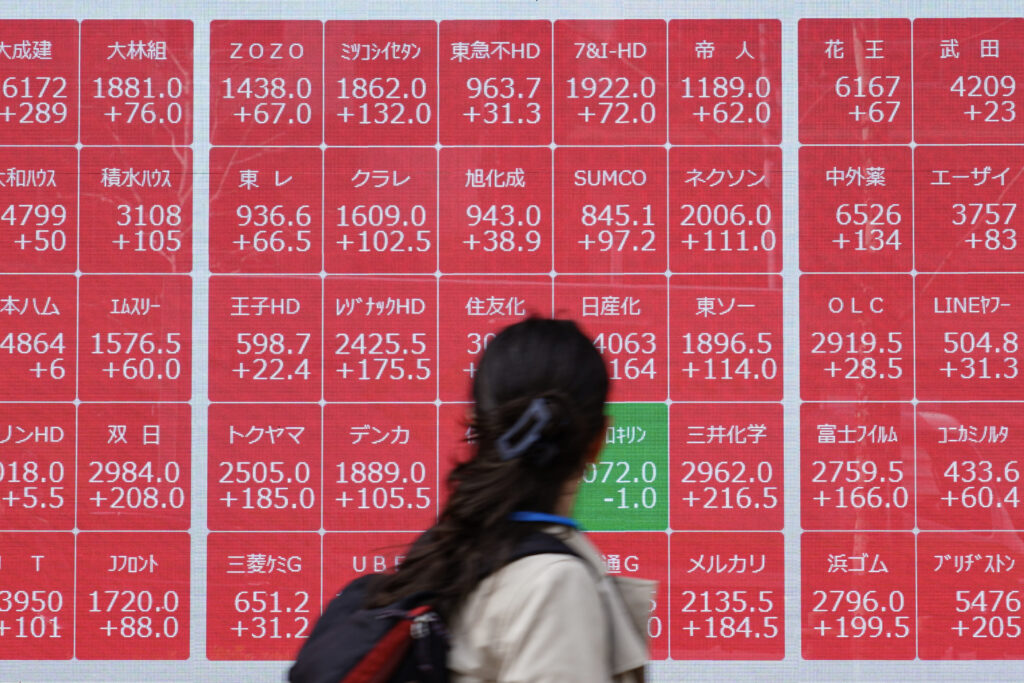
Oil prices surged and Asian markets traded lower on Monday on concerns of disruption to energy markets after US air strikes on Iran’s nuclear facilities.The dollar strengthened as traders assessed the weekend’s events, with Iran threatening US bases in the Middle East as fears grow of an escalating conflict in the volatile region.Iran is the world’s ninth-biggest oil-producing country, with output of about 3.3 million barrels per day.It exports just under half of that amount and keeps the rest for domestic consumption.If Tehran decides to retaliate, observers say one of its options would be to seek to close the strategic Strait of Hormuz — which carries one-fifth of global oil output.When trading opened on Monday, Brent and the main US crude contract WTI both jumped more than four percent to hit their highest price since January.They pared these gains however and later in the morning Brent was up 2.1 percent at $75.43 per barrel and WTI was 2.1 percent higher at $78.64.Economists at MUFG warned of “high uncertainty of the outcomes and duration of this war”, publishing a “scenario analysis” of an oil price increase of $10 per barrel.”An oil price shock would create a real negative impact on most Asian economies” as many are big net energy importers, they wrote, reflecting the market’s downbeat mood.Tokyo’s key Nikkei index was down 0.6 percent at the break, with Hong Kong losing 0.4 percent and Shanghai flat. Seoul fell 0.7 percent and Sydney was 0.8 percent lower.- ‘Extreme route’ -The dollar’s value rose against other currencies but analysts questioned to what extent this would hold out.”If the increase proves to be just a knee-jerk reaction to what is perceived as short-lived US involvement in the Middle-East conflict, the dollar’s downward path is likely to resume,” said Sebastian Boyd, markets live blog strategist at Bloomberg.US Defense Secretary Pete Hegseth said Sunday that the strikes had “devastated the Iranian nuclear programme”, though some officials cautioned that the extent of the damage was unclear.It comes after Israel launched a bombing campaign against Iran earlier this month.Chris Weston at Pepperstone said Iran would be able to inflict economic damage on the world without taking the “extreme route” of trying to close the Strait of Hormuz.”By planting enough belief that they could disrupt this key logistical channel, maritime costs could rise to the point that it would have a significant impact on the supply of crude and gas,” he wrote.At the same time, “while Trump’s primary focus will be on the Middle East, headlines on trade negotiations could soon start to roll in and market anxieties could feasibly build”.- Key figures at around 0230 GMT -Brent North Sea Crude: UP 2.1 percent at $75.43 per barrelWest Texas Intermediate: UP 2.1 percent at $78.64 per barrelTokyo – Nikkei 225: DOWN 0.6 percent at 38,175.63 (break)Hong Kong – Hang Seng Index: DOWN 0.4 percent at 23,426.02Shanghai – Composite: FLAT at 3,360.97Euro/dollar: DOWN at $1.1505 from $1.1516 on FridayPound/dollar: DOWN at $1.3434 from $1.3444Dollar/yen: UP at 146.46 yen from 146.13 yenEuro/pound: DOWN at 85.63 pence from 85.66 penceNew York – Dow: UP 0.1 percent at 42,206.82 (close)London – FTSE 100: DOWN 0.2 percent at 8,774.65 (close)

Japan’s high-tech sunscreens tap into skincare craze

When YouTuber Hannah Price set out to compare Japanese and Australian sunscreen, she wasn’t expecting her deep dive into the subject to rack up over two million views.The huge number of people poring over Price’s video shows the growing interest in skincare products from Japan, much like the K-beauty phenomenon from South Korea.It includes sun protection, increasingly recognised as a daily essential by influencers who want to shield their skin from ageing and enthuse about the lightweight texture of Japanese brands.Companies that have perfected their secret formulas want to capitalise on booming demand, including by building factories overseas and selling to Japan’s record influx of foreign tourists.Price, 32, fell into a “year-long rabbit hole” while making her video, learning about everything from SPF science to cultural attitudes to sun exposure.”I always loved Japanese sunscreen, since I first moved to Japan in 2012,” she told AFP at her studio in Tokyo.”I remember trying it for the first time and thinking, ‘this is so much better than anything I tried in Australia’,” her home country where sun cream felt “thick, sticky, greasy”.”I thought that the video would be popular… but I wasn’t expecting it to reach as far” as it did, Price said.The habit of regular sunscreen use is spreading, especially among younger generations, said Takuya Wada, who works in marketing for Japanese chemical and cosmetics firm Kao.”There are no borders when it comes to obtaining information on social media, especially Instagram and TikTok,” he said, adding that influencer posts have a “very large” impact on global sunscreen sales. – ‘Beautifully white’ -The global skincare market was worth more than $115 billion in 2024 and is expected to grow to $194 billion by 2032, according to Fortune Business Insights.A boom in celebrity skincare brands has contributed to the industry’s growth — with A-listers like Kylie Jenner using social media to share their beauty routines, including sun protection, with hundreds of millions of followers.When it comes to sunscreen, country-specific regulations mean no single company dominates the field, as the entry barriers to new markets are higher.Kao’s main sunscreen brand Biore UV is ranked 10th worldwide for sales, and second in Asia — competing with the likes of L’Oreal and Beiersdorf, and Japanese rivals such as Shiseido.The company wants sales from sun protection to reach 35 billion yen ($240 million) in 2027, up 1.6 times from 2023.It plans to boost overseas production by opening three new sunscreen factories, in Indonesia, Brazil and Germany.It is technically difficult to develop formulas that block the rays effectively with a smooth texture, as demanded by Japanese consumers, said Takashi Fukui, research and development director for Kao skincare products.But using scientific know-how to strike this tricky balance is what makes Kao “different from other European or American makers”.In Japan, a cultural obsession with light skin dates back to the sixth century and using white powder imported from China later became a status symbol among nobility.Fair skin indicated a life away from outdoor labour and sun exposure, and an old Japanese proverb says “white skin covers the seven flaws”.In the 1990s, people began using sunscreen or other cosmetics to avoid tanning — a trend dubbed “bihaku”, or beautifully white.These days, Japanese women use sunscreen as everyday protection against sunspots and ageing, caused when UV rays penetrate into the skin, said Fukui.- Winter sun -Tans have long been fashionable in Western countries, but awareness of skin cancer risks is rising, making sunscreen an important healthcare product there, Fukui said.One fan of Japanese brands is Thai skincare influencer Suari Tasanakulpan, who calls them “lightweight” compared to “heavy and uncomfortable” Western offerings.”There are always new technologies and innovative textures that are often ahead of other countries,” the 40-year-old, who reviews sunscreens on YouTube, told AFP.At an outlet of drugstore chain MatsukiyoCocokara in Tokyo’s Shibuya district, around 90 sunscreen products are lined up on the shelves.”Sales of sunscreen is improving year on year,” said Takeshi Otsuki, deputy manager of the chain’s cosmetic division.”More people are using sunscreen on a daily basis these days, so their needs are becoming more diverse,” he said.The number of male customers is also increasing, and Japanese sunscreens are very popular with overseas tourists who buy them in multipacks, Otsuki said.While summer is high season, sunscreen is popular year-round, because Japan has a “relatively high number of sunny days in the winter, and the sunlight hours are long”.YouTuber Price now uses both Japanese and Australian sunscreen, depending on the occasion.She sees the rise in education about sunscreens worldwide as a win-win situation.It “means you’re going to be better protected in general, which is great for everyone”, she said.

South Korea counts on shipbuilding to ease US tariff woes

Asia’s fourth largest economy South Korea is facing gruelling tariffs by US President Donald Trump, but its shipbuilding industry could prove a useful bargaining chip.Already hit by sector levies on steel and car exports, Seoul is laser-focused on negotiations over a 25 percent country-specific tariff that has been suspended until July 8.AFP takes a look at what’s going on: – Why shipbuilding? -In the 1970s, South Korea’s military leader president Park Chung-hee accelerated the country’s heavy industry, designating sectors such as steel and shipbuilding “strategically important” and rolling out state subsidies.At the same time, POSCO was founded — now one of the world’s largest steel producers — and conglomerate Hyundai built its shipyard in southeastern Ulsan, which started to grow rapidly.European rivals struggled to keep pace. Sweden’s Kockums Shipyard filed for bankruptcy in 1987 — and in a symbolic shift of global shipbuilding power, Hyundai acquired its 140-metre (460-foot) Goliath crane for one dollar. It now towers over southern Ulsan.In the 1990s and 2000s, South Korean shipbuilders such as Hyundai Heavy Industries and Samsung Heavy Industries ramped up investment in research and development, backed by generous government subsidies.The country secured a competitive edge in high-value-added vessels, including LNG carriers, very large crude carriers, and offshore platforms.Now, South Korea ranks as the world’s second-largest shipbuilding nation, trailing only behind China.- Is it important? -South Korea’s exports hit a record high in 2024, with analysts pointing to shipbuilding as one of the key drivers.The sector accounted for nearly four percent of total exports and grew by almost 20 percent from the previous year — reaching $25.6 billion.Shipbuilding directly employs around 120,000 workers — roughly one percent of the country’s total workforce — with indirect employment significantly higher in industrial hubs like Ulsan.Industry data shows so far this year, new orders have exceeded 13 trillion won ($9.4 billion).In March, Hanwha Ocean secured a landmark $1.6 billion contract to build LNG carriers for Taiwan’s Evergreen Marine, one of the largest single orders in the sector this year.- Why is it a ‘bargaining chip’? – Trump has showed “significant interest in South Korea-US shipbuilding cooperation,” said South Korea’s trade, industry and energy minister Ahn Duk-geun in April.Like the Europeans, the US shipbuilding industry has lagged behind South Korea and China, and as a result, the sector is seen as a “highly important bargaining chip in trade negotiations,” he added.At an APEC finance ministers’ meeting in South Korea in May, US Trade Representative Jamieson Greer met Chung Ki-sun, vice chairman of HD Hyundai, the country’s largest shipbuilder, before he met Seoul’s top officials.”South Korea’s shipbuilding and defence industries see a window of opportunity,” said Kim Dae-jong, a professor at Sejong University.- How does it help the US? -Greer also met with the CEO of Hanwha Ocean, the first non-American company authorised to carry out a dry-dock maintenance of a US Navy vessel.The move last September was seen as significant as it signalled that Washington sees South Korea, where it already has 28,000 US troops stationed, as a strategic defence hub.With worries growing about China’s expanding naval fleet and potential conflict in the Taiwan Strait, the US has begun seeking reliable overseas shipyards to support its operations in the Asia-Pacific region.The global market for ship maintenance, repair, and overhaul is projected to exceed $60 billion annually, according to industry estimates.- Any problems? -Despite multi-billion-dollar contracts, data suggests South Korea’s shipbuilding industry is losing ground in the global race.China dominates with South Korea’s market share dropping, according to industry data.Demand for eco-friendly vessels is rising, and the government need to overhaul regulations “to support the development of next-generation eco-friendly vessels,” Rhee Shin-hyung, a professor at Seoul National University, told AFP.South Korea’s woeful demographics also make staffing hard. In Geoje -– home to Samsung Heavy Industries -– the number of residents in their 20s and 30s has nearly halved in recent years.Orders are down in 2025 which hints that “the shipbuilding boom may end sooner than the market anticipated,” warned Rhee.Global ship orders between January and April fell by almost half the volume recorded during the same period last year.Shipbuilders have been enjoying a “supercycle” but unfortunately the “peak is expected to be lower and the boom shorter-lived compared to the past,” Nam Chul, vice president at HD Hyundai Heavy Industries, told AFP.

Global stocks mixed, oil lower as market digests latest on Iran

Global equities were mixed Friday, while oil prices retreated as markets weighed the latest developments in the war between Iran and Israel.Markets rose after US President Donald Trump said he would allow for up to two weeks before possible US military action against Iran.But on Friday afternoon, Trump expressed doubt that European powers would be able to help end the Iran-Israel war, telling reporters “Europe is not going to be able to help in this.”Both the S&P 500 and Nasdaq finished lower following a choppy session. Analysts pointed to broad investor unease.”We have a situation in the Middle East where missiles are still firing, there’s no ceasefire and there’s a fear that the US may be involved,” said Adam Sarhan of 50 Park Investments.In light of uncertainty on Iran, trade and other areas, “investors are de-risking, they’re selling stocks ahead of the weekend,” Sarhan said.European equity markets mostly rose while Asian markets were mixed.The Brent international crude benchmark contract dropped more than two percent after Trump’s remarks, with analysts pointing to investor relief following fears that the United States could immediately join the Israeli campaign.US oil prices fell more modestly because a US holiday on Thursday kept trading volumes low that day.”News that President Trump would delay any decision on joining Israel’s attacks against Iran has boosted the market mood,” said Kathleen Brooks, an analyst at trading firm XTB.”Brent crude has dropped… as traders price out the worst-case scenario for geopolitics.”Crude futures had soared and global equities slumped in recent sessions as the Israel-Iran conflict showed no signs of easing, with investors pricing in the risk of tighter oil supplies that would likely weigh on economic growth.But analysts cautioned of more volatility ahead.”While the immediate prospect of a US intervention in Iran may have diminished, the fact this is reportedly a two-week hiatus means it will remain a live issue for the markets going into next week,” said Dan Coatsworth, an investment analyst at AJ Bell.While the Middle East crisis continues to absorb most of the news, Trump’s trade war remains a major obstacle for investors as the end of a 90-day pause on his April 2 tariff blitz looms.”While the worst of the tariffs have been paused, we suspect it won’t be until those deadlines approach that new agreements may be finalized,” said David Sekera, chief US market strategist at Morningstar.”Until then, as news emerges regarding the progress and substance of trade negotiations, these headlines could have an outsize positive or negative impact on markets,” he said.- Key figures at around 2050 GMT -Brent North Sea Crude: DOWN 2.3 percent at $77.01 per barrelWest Texas Intermediate: DOWN 0.3 percent at $74.93 per barrelNew York – Dow: UP 0.1 percent at 42,206.82 (close)New York – S&P 500: DOWN 0.2 percent at 5,967.84 (close)New York – Nasdaq: DOWN 0.5 percent at 19,447.41 (close)London – FTSE 100: DOWN 0.2 percent at 7,589.66 (close) Paris – CAC 40: UP 0.5 percent at 7,589.66 (close)Frankfurt – DAX: UP 1.3 percent at 23,350.55 (close)Tokyo – Nikkei 225: DOWN 0.2 percent at 38,403.23 (close)Hong Kong – Hang Seng Index: UP 1.3 percent at 23,530.48 (close)Shanghai – Composite: DOWN 0.1 percent at 3,359.90 (close)Euro/dollar: UP at $1.1516 from $1.1495 on ThursdayPound/dollar: DOWN at $1.3444 from $1.3465Dollar/yen: UP at 146.13 yen from 145.45 yenEuro/pound: UP at 85.66 pence from 85.37 penceburs-jmb/acb

World Bank and IMF climate snub ‘worrying’, says COP29 presidency

The hosts of the most recent UN climate talks are worried international lenders are retreating from their commitments to help boost funding for developing countries’ response to global warming.Major development banks have agreed to boost climate spending and are seen as crucial in the effort to dramatically increase finance to help poorer countries build resilience to impacts and invest in renewable energy.But anxiety has grown as the Trump administration has slashed foreign aid and discouraged US-based development lenders such as the World Bank and the International Monetary Fund from focussing on climate finance.Developing nations, excluding China, will need an estimated $1.3 trillion a year by 2035 in financial assistance to transition to renewable energy and climate-proof their economies from increasing weather extremes.Nowhere near this amount has been committed.At last year’s UN COP29 summit in Azerbaijan, rich nations agreed to increase climate finance to $300 billion a year by 2035, an amount decried as woefully inadequate. Azerbaijan and Brazil, which is hosting this year’s COP30 conference, have launched an initiative to reduce the shortfall, with the expectation of “significant” contributions from international lenders.But so far only two — the African Development Bank and the Inter-American Development Bank — have responded to a call to engage the initiative with ideas, said COP29 president Mukhtar Babayev.”We call on their shareholders to urgently help us to address these concerns,” he told climate negotiators at a high-level summit in the German city of Bonn this week.”We fear that a complex and volatile global environment is distracting” many of those expected to play a big role in bridging the climate finance gap, he added.- A ‘worrisome trend’ -His team travelled to Washington in April for the IMF and World Bank’s spring meetings hoping to find the same enthusiasm for climate lending they had encountered a year earlier.But instead they found institutions “very much reluctant now to talk about climate at all”, said Azerbaijan’s top climate negotiator Yalchin Rafiyev.This was a “worrisome trend”, he said, given expectations these lenders would extend the finance needed in the absence of other sources.”They’re very much needed,” he said.The World Bank is directing 45 percent of its total lending to climate, as part of an action plan in place until June 2026, with the public portion of that spilt 50/50 between emissions reductions and building resilience. The United States, the World Bank’s biggest shareholder, has pushed in a different direction.  On the sidelines of the April spring meetings, US Treasury Secretary Scott Bessent urged the bank to focus on “dependable technologies” rather than “distortionary climate finance targets.”This could mean investing in gas and other fossil fuel-based energy production, he said.Under the Paris Agreement, wealthy developed countries — those most responsible for global warming to date — are obliged to pay climate finance to poorer nations.Other countries, most notably China, make voluntary contributions.- Money matters -Finance is a source of long-running tensions at UN climate negotiations.Donors have consistently failed to deliver on past finance pledges, and have committed well below what experts agree developing nations need to cope with the climate crisis.The issue flared up again this week in Bonn, with nations at odds over whether to debate financial commitments from rich countries during the formal meetings.European nations have also pared back their foreign aid spending in recent months, raising fears that budgets for climate finance could also face a haircut.At COP29, multilateral development banks (MDBs) led by the World Bank Group estimated they could provide $120 billion annually in climate financing to low and middle income countries, and mobilise another $65 billion from the private sector by 2030. Their estimate for high income countries was $50 billion, with another $65 billion mobilised from the private sector. Rob Moore, of policy think tank E3G, said these lenders are the largest providers of international public finance to developing countries. “Whilst they are facing difficult political headwinds in some quarters, they would be doing both themselves and their clients a disservice by disengaging on climate change,” he said.The World Bank in particular has done “a huge amount of work” to align its lending with global climate goals. “If they choose to step back this would be at their own detriment, and other banks like the regionally based MDBs would likely play a bigger role in shaping the economy of the future,” he said. The World Bank declined to comment on the record. 

Oil drops, stocks climb as Trump delays Iran move

Oil prices retreated Friday while US and European stock markets mostly gained ground as concerns over a war escalation in Iran eased.But investors remain wary of further volatility in the coming days, with analysts citing uncertainty over the Middle East conflicts and the lingering uncertainty over US tariffs. The Brent international crude benchmark contract  dropped three percent, weighing on the share prices of energy majors, after US President Donald Trump said he would decide whether to join Israel’s strikes on Iran within the next two weeks.Traders said it suggested Trump preferred negotiations to end the fighting, as top European diplomats met Iran’s Foreign Minister Abbas Araghchi in Geneva on Friday to discuss a “diplomatic solution” to end the war.US indices opened slightly higher Friday before falling back, though analysts said volumes were likely to be lacklustre with many traders taking a four-day weekend after Thursday’s Juneteenth holiday in the US.Asian equity indices closed out the week mixed, and the dollar retreated against its main rivals.”News that President Trump would delay any decision on joining Israel’s attacks against Iran has boosted the market mood,” said Kathleen Brooks, an analyst at trading firm XTB.”Brent crude has dropped… as traders price out the worst-case scenario for geopolitics.”Crude futures had soared and global equities slumped in recent sessions as the Israel-Iran conflict showed no signs of easing, with investors pricing in the risk of tighter oil supplies that would likely weigh on economic growth.However the main US oil contract, WTI, found support Friday, a reflection of low trading volumes after the Thursday market close and data indicating a large drop in American crude stockpiles, analysts said.”While the immediate prospect of a US intervention in Iran may have diminished, the fact this is reportedly a two-week hiatus means it will remain a live issue for the markets going into next week,” said Dan Coatsworth, an investment analyst at AJ Bell.While the Middle East crisis continues to absorb most of the news, Trump’s trade war remains a major obstacle for investors as the end of a 90-day pause on his April 2 tariff blitz looms.”While the worst of the tariffs have been paused, we suspect it won’t be until those deadlines approach that new agreements may be finalised,” said David Sekera, chief US market strategist at Morningstar.”Until then, as news emerges regarding the progress and substance of trade negotiations, these headlines could have an outsize positive or negative impact on markets,” he said.In Europe, Eutelsat shares soared 30 percent on the Paris stock exchange after the French government said it would lead a 1.35 billion euros ($1.5 billion) in the European satellite operator.French President Emmanuel Macron urged a “speedy reconquest” for Europe in the space sector in the face of growing American competition, in a speech at the Paris Air Show.- Key figures at around 1540 GMT -Brent North Sea Crude: DOWN 3.1 percent at $76.44 per barrelWest Texas Intermediate: DOWN 0.3 percent at $73.25 per barrelNew York – Dow: UP 0.3 percent at 42,311.23 pointsNew York – S&P 500: FLAT at 5,981.74New York – Nasdaq: DOWN 0.3 percent at 19,485.47London – FTSE 100: DOWN 0.2 percent at 7,589.66 (close) Paris – CAC 40: UP 0.5 percent at 7,589.66 (close)Frankfurt – DAX: UP 1.3 percent at 23,350.55 (close)Tokyo – Nikkei 225: DOWN 0.2 percent at 38,403.23 (close)Hong Kong – Hang Seng Index: UP 1.3 percent at 23,530.48 (close)Shanghai – Composite: DOWN 0.1 percent at 3,359.90 (close)Euro/dollar: UP at $1.1521 from $1.1463 on ThursdayPound/dollar: UP at $1.3465 from $1.3429Dollar/yen: UP at 145.88 yen from 145.63 yenEuro/pound: UP at 85.56 pence from 85.36 penceburs-bcp-js/jxb

World Bank and IMF climate snub ‘worrying’: COP29 presidency

The hosts of the most recent UN climate talks are worried international lenders are retreating from their commitments to help boost funding for developing countries’ response to global warming.This anxiety has grown as the Trump administration has slashed foreign aid and discouraged US-based development lenders like the World Bank and the International Monetary Fund from focussing on climate finance.Developing nations, excluding China, will need an estimated $1.3 trillion a year by 2035 in financial assistance to transition to renewable energy and climate-proof their economies from increasing weather extremes.But nowhere near this amount has been committed.At last year’s UN COP29 summit in Azerbaijan, rich nations agreed to increase climate finance to $300 billion a year by 2035, an amount decried as woefully inadequate. Azerbaijan and Brazil, which is hosting this year’s COP30 conference, have launched an initiative to plug the shortfall that includes expectations of “significant” contributions from international lenders.But so far only two — the African Development Bank and the Inter-American Development Bank — have responded to a call to engage the initiative with ideas, said COP29 president Mukhtar Babayev.”We call on their shareholders to urgently help us to address these concerns,” he told climate negotiators at a high-level summit in the German city of Bonn this week.”We fear that a complex and volatile global environment is distracting” many of those expected to play a big role in bridging the climate finance gap, he added.His team travelled to Washington in April for the IMF and World Bank’s spring meetings hoping to find the same enthusiasm for climate lending they had encountered a year earlier.But instead they found institutions “very much reluctant now to talk about climate at all”, said Azerbaijan’s top climate negotiator Yalchin Rafiyev.This was a “worrisome trend”, he said, given expectations these lenders would extend the finance needed in the absence of other sources.”They’re very much needed,” he said.The United States, the World Bank’s biggest shareholder, has sent a different message.   On the sidelines of the April spring meetings, US Treasury Secretary Scott Bessent urged the bank to focus on “dependable technologies” rather than “distortionary climate finance targets.”This could mean investing in gas and other fossil fuel-based energy production, he said.- Money matters -Under the Paris Agreement, wealthy developed countries — those most responsible for global warming to date — are obligated to pay climate finance to poorer nations.But other countries, most notably China, do make their own voluntary contributions.Finance is a source of long-running tensions at UN climate negotiations.Donors have consistently failed to deliver on past finance pledges, and committed well below what experts agree developing nations need to prepare for the climate crisis.The issue flared again this week in Bonn, with nations at odds over whether to debate financial commitments from rich countries during the formal meetings.European nations have also pared back their foreign aid spending in recent months, raising fears that budgets for climate finance could also face a haircut.At COP29, multilateral development banks (MDBs) led by the World Bank Group estimated they could provide $120 billion annually in climate financing to low and middle income countries, and mobilise another $65 billion from the private sector by 2030. Their estimate for high income countries was $50 billion, with another $65 billion mobilised from the private sector. Rob Moore, of policy think tank E3G, said these lenders are the largest providers of international public finance to developing countries. “Whilst they are facing difficult political headwinds in some quarters, they would be doing both themselves and their clients a disservice by disengaging on climate change,” he said. The World Bank in particular has done “a huge amount of work” to align its lending with global climate goals. “If they choose to step back this would be at their own detriment, and other banks like the regionally based MDBs would likely play a bigger role in shaping the economy of the future,” he said. The World Bank did not immediately respond to a request for comment. 

Oil drops, European stocks climb as Trump delays Iran move

The price of Brent oil, the world’s main international contract, slid Friday while Europe’s major stock markets rebounded as concerns over a war escalation in Iran eased.Brent dropped more than two percent, weighing on the share prices of energy majors, after US President Donald Trump said Thursday that he would decide whether to join Israel’s strikes on Iran within the next two weeks.Trump spoke as top European diplomats prepared to meet Iran’s Foreign Minister Abbas Araghchi in Geneva on Friday to discuss the country’s nuclear programme.Asian equity indices closed out the week mixed and the dollar retreated against key rivals.”News that president Trump would delay any decision on joining Israel’s attacks against Iran has boosted the market mood,” said Kathleen Brooks, an analyst at trading firm XTB.”Brent crude has dropped… as traders price out the worst-case scenario for geopolitics,” she said.Crude futures had soared and global equities slumped in recent sessions on the Israel-Iran conflict, as investors priced in the risk of tighter oil supplies, which would likely weigh on economic growth.”While the immediate prospect of a US intervention in Iran may have diminished, the fact this is reportedly a two-week hiatus means it will remain a live issue for the markets going into next week,” said Dan Coatsworth, an investment analyst at AJ Bell.”A meeting of European ministers with their Iranian counterparts to try and formulate a deal today could be crucial.”The main US oil contract, WTI, rose Friday as a result of low trading volumes following the Thursday market close to mark Juneteenth, and also thanks to data indicating a large drop to American crude stockpiles, analysts said.While the Middle East crisis continues to absorb most of the news, Trump’s trade war remains a major obstacle for investors as the end of a 90-day pause on his April 2 tariff blitz approaches.”While the worst of the tariffs have been paused, we suspect it won’t be until those deadlines approach that new agreements may be finalised,” said David Sekera, chief US market strategist at Morningstar.”Until then, as news emerges regarding the progress and substance of trade negotiations, these headlines could have an outsize positive or negative impact on markets,” he said.- Key figures at around 1100 GMT -Brent North Sea Crude: DOWN 2.2 percent at $77.11 per barrelWest Texas Intermediate: UP 0.6 percent at $73.92 per barrelLondon – FTSE 100: UP 0.5 percent at 8,833.81 pointsParis – CAC 40: UP 0.5 percent at 7,593.39 Frankfurt – DAX: UP 0.9 percent at 23,262.14Tokyo – Nikkei 225: DOWN 0.2 percent at 38,403.23 (close)Hong Kong – Hang Seng Index: UP 1.3 percent at 23,530.48 (close)Shanghai – Composite: DOWN 0.1 percent at 3,359.90 (close)Euro/dollar: UP at $1.1527 from $1.1463 on ThursdayPound/dollar: UP at $1.3495 from $1.3429Dollar/yen: DOWN at 145.39 yen from 145.63 yenEuro/pound: UP at 85.42 pence from 85.36 penceburs-bcp/ajb/js

Crude sinks as Trump delays decision on Iran strike

Oil prices tumbled Friday and equity traders fought to end a volatile week on a positive note after Donald Trump said he would consider over the next two weeks whether to join Israel’s attacks on Iran.Speculation had been swirling that Trump would throw his lot in with Israel, but on Thursday he said he would decide “within the next two weeks” whether to involve the United States, giving diplomacy a shot to end the hostilities.While tensions are sky high amid fears of an escalation, the US president’s remarks suggested the crisis could be prevented from spiralling into all-out war between the Middle East foes.Since Israel first hit Iran last Friday, the two have exchanged deadly strikes and apocalyptic warnings, though observers said the conflict has not seen a critical escalation.European foreign ministers were due to meet their Iranian counterpart on Friday in Geneva.In a statement read out by White House Press Secretary Karoline Leavitt, the president said: “Based on the fact that there’s a substantial chance of negotiations that may or may not take place with Iran in the near future, I will make my decision whether or not to go within the next two weeks.”Leavitt added: “If there’s a chance for diplomacy the president’s always going to grab it, but he’s not afraid to use strength as well.”Both main oil contracts were down around two percent from Thursday but uncertainty prevailed and traders remained nervous.”Crude still calls the shots, and volatility’s the devil in the room — and every trader on the street knows we’re two headlines away from chaos,” said Stephen Innes at SPI Asset Management. “Make no mistake: we’re trading a geopolitical powder keg with a lit fuse. “President Trump’s two-week ‘thinking window’ on whether to join Israel’s war against Iran is no cooling-off period — it’s a ticking volatility clock.”Stocks were mixed following a public holiday in New York, with Hong Kong, Taipei, Mumbai and Bangkok all up with London, Paris and Frankfurt.Seoul’s Kospi led the gains, rising more than one percent to break 3,000 points for the first time in nearly three and a half years.The index has risen every day except one since the June 4 election of a new president, which ended months of political crisis and fuelled hopes for an economic rebound.Tokyo fell as Japanese core inflation accelerated, stoked by a doubling in the cost of rice, a hot topic issue that poses a threat to Prime Minister Shigeru Ishiba ahead of elections next month.There were also losses in Shanghai, Sydney, Singapore, Manila and Jakarta.The Middle East crisis continues to absorb most of the news but Trump’s trade war remains a major obstacle for investors as the end of a 90-day pause on his April 2 tariff blitz approaches with few governments reaching deals to avert them being imposed.”While the worst of the tariffs have been paused, we suspect it won’t be until those deadlines approach that new agreements may be finalised,” said David Sekera, chief US market strategist at Morningstar.”Until then, as news emerges regarding the progress and substance of trade negotiations, these headlines could have an outsize positive or negative impact on markets.”- Key figures at around 0810 GMT -Brent North Sea Crude: DOWN 2.2 percent at $77.09 per barrelWest Texas Intermediate: DOWN 1.7 percent at $73.76 per barrelTokyo – Nikkei 225: DOWN 0.2 percent at 38,403.23 (close)Hong Kong – Hang Seng Index: UP 1.3 percent at 23,530.48 (close)Shanghai – Composite: DOWN 0.1 percent at 3,359.90 (close)London – FTSE 100: UP 0.4 percent at 8,826.06 Euro/dollar: UP at $1.1516 from $1.1463 on ThursdayPound/dollar: UP at $1.3476 from $1.3429Dollar/yen: DOWN at 145.40 yen from 145.63 yenEuro/pound: UP at 85.45 pence from 85.36 pence

EU bars Chinese firms from major state medical equipment contracts

The European Union on Friday banned Chinese firms from government medical device purchases worth more than five million euros ($5.8 million) in retaliation for limits Beijing places on access to its own market.The latest salvo in trade tensions between the 27-nation bloc and China covers a wide range of healthcare supplies, from surgical masks to X-ray machines, that represent a market worth 150 billion euros in the EU.”Our aim with these measures is to level the playing field for EU businesses,” the bloc’s trade commissioner Maros Sefcovic said. “We remain committed to dialogue with China to resolve these issues.”In response, China accused the EU of “double standards”.”The EU has always boasted that it is the most open market in the world, but in reality, it has gradually moved towards protectionism”, foreign ministry spokesman Guo Jiakun said at a regular press briefing. “Under the guise of fair competition (the EU) actually carries out unfair competition, which is a typical case of double standards.”The European Commission said in a statement the move was in “response to China’s longstanding exclusion of EU-made medical devices from Chinese government contracts.”Brussels said just under 90 percent of public procurement contracts for medical devices in China “were subject to exclusionary and discriminatory measures” against EU firms.In addition to barring Chinese firms from major state purchases, “inputs from China for successful bids” would also be limited to 50 percent, it said.Over the last three years, Brussels and Beijing have come into conflict in a number of economic sectors, including electric cars, the rail industry, solar panels and wind turbines.The decision on medical devices comes at a time of heightened trade tensions with President Donald Trump’s United States, which has imposed customs surcharges on imports from all over the world, including Europe.The EU has decided to take a tougher stance on trade in recent years, adopting a vast arsenal of legislation to better defend its businesses against unfair competition.In April 2024, the commission opened an investigation into Chinese public contracts for medical devices, the first under a new mechanism introduced by the EU in 2022 to obtain better access to overseas state purchases. China, on the other hand, accuses Europe of protectionism. After a year of negotiations, the commission, which manages trade policy on behalf of the 27 member states, said it had failed to make any progress with China.”The measure seeks to incentivise China to cease its discrimination against EU firms and EU-made medical devices and treat EU companies with the same openness as the EU does with Chinese companies and products,” Brussels said.