Afp Business Asia

Yen slides ahead of Bank of Japan policy decision

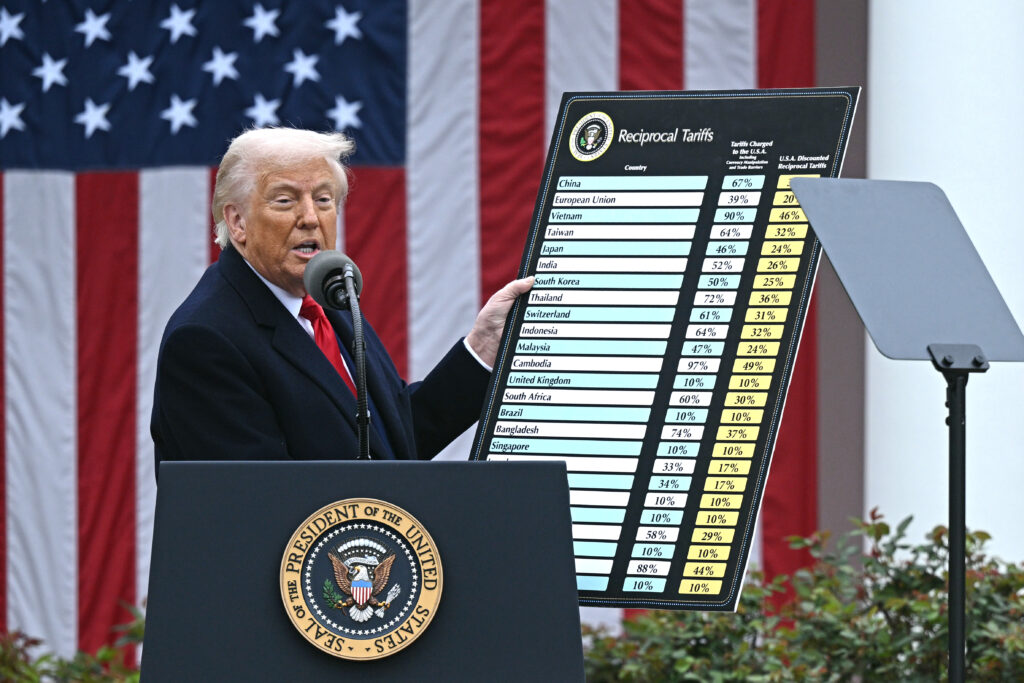
The yen fell against the dollar ahead of a Bank of Japan decision Tuesday, with officials expected to hold interest rates steady but tweak their bond purchase policy.The central bank last year said it would scale down its huge purchases of government bonds — part of attempts to move away from a quantitative easing programme designed to banish stagnation and harmful deflation.It is now considering slowing the pace of these cutbacks, analysts and media reports said.”Slowing the bond taper will help keep interest rates lower than otherwise, providing support to the economy amid heightened trade uncertainty,” Carol Kong, an analyst at the Commonwealth Bank of Australia, told AFP.Speculation of such a move “intensified after a surge in the ‘super long’ Japanese Government Bond (JGB) yields in recent months”, she explained.The dollar surged higher than 145 yen in morning trade, compared with levels of around 144.30 yen on Monday.”The recent softening of the yen could already partly reflect expectations for a cautious policy update from the BoJ… alongside negative spill-overs for Japan from the Middle East conflict,” said Lee Hardman of MUFG.The BoJ is expected to keep its main interest rate around 0.5 percent, lower than the US Federal Reserve’s 4.25-4.5 percent.Bank officials began lifting borrowing costs last year after nearly two decades of ultra-loose monetary policies aimed at kick-starting torpid economic growth in Japan.”The BoJ will likely hold off on rate hikes until there is further clarity on US trade policy,” Kong said.Japan, a key US ally and its biggest investor, is subject to the same 10 percent baseline tariffs imposed on most nations plus steeper levies on cars, steel and aluminium.Trump also announced an additional 24 percent “reciprocal” tariff on Japan in early April but later paused it along with similar measures on other countries.Prime Minister Shigeru Ishiba said Monday there had been no breakthrough on a US trade deal after talks with President Donald Trump on the sidelines of the G7 summit in Canada.”We still believe the Bank may hike rates in the second half of the year as it remains committed to normalising monetary policy,” said Katsutoshi Inadome of SuMi TRUST.”We expect that domestic demand will remain solid and that there is a chance economic conditions will improve to the point where the BoJ can consider interest hikes,” he said.

Oil prices drop, stocks climb as Iran-Israel war fears ease

Stocks rose and oil prices retreated Monday as fears of a wider Middle East conflict eased even as Israel and Iran pounded each other with missiles for a fourth day.The dollar dipped against the euro and pound, while safe-haven gold declined slightly.”As things stand, investors seem less fearful than they were going into the weekend of the possibility that the war between Israel and Iran spreads across the Middle East, and beyond,” said David Morrison, senior market analyst at financial services provider Trade Nation.”It appears that most of the Israeli airstrikes and missile launches avoided the most significant parts of Iran’s energy infrastructure. And so far Iran’s retaliation has done relatively little damage,” he added.Wall Street’s main stock indices pushed higher, with the broad-based S&P 500 finishing up nearly one percent after spending the entire day in positive territory.In Europe, London, Paris and Frankfurt all closed the day with gains.They tracked gains in Asia, where Tokyo closed up 1.3 percent, boosted by a weaker yen, while Hong Kong and Shanghai also advanced.Israel’s surprise strike against Iranian military and nuclear sites on Friday — killing top commanders and scientists — sent crude prices soaring as much as 13 percent at one point on fears about supplies from the region.However, concerns over the conflict spreading appeared to have receded, with both main oil contracts declining on Monday.”Unpleasant as it is to watch two sides trade missiles on a sustained basis, so long as the Straits of Hormuz remain quiescent it is hard to envisage a scenario where Friday’s gains can be sustained,” said Chris Beauchamp, chief market analyst at online trading platform IG.Analysts said the recent decision by the OPEC+ group of crude producing nations, led by Saudi Arabia and Russia, to raise output again in July also played a role.”There may need to be a major escalation in the conflict before we get another sharp upswing in oil and gold prices,” said Kathleen Brooks, research director at trading group XTB.Investors were gearing up for monetary policy decisions this week from the US Federal Reserve, Bank of England and Bank of Japan.All are expected to hold steady but traders will be keeping a close watch on their statements for clues on interest-rate outlooks, with US officials under pressure from President Donald Trump to cut borrowing costs.Also in focus is the G7 summit in the Canadian Rockies, which kicked off Sunday, where the Middle East crisis will be discussed along with trade after Trump’s tariff blitz.In corporate news, shares in Nippon Steel rose more than three percent in Tokyo after Trump on Friday signed an executive order approving its $14.9 billion merger with US Steel, bringing an end to the long-running saga. US Steel advanced 5.1 percent.Shares in Gucci owner Kering climbed almost 12 percent in Parison reports that the outgoing boss of French automaker Renault would take over as chief executive of the struggling luxury group.Kering announced the appointment after European markets closed.Renault shares slumped 8.7 percent, following its announcement on Sunday that Luca de Meo would step down in July. – Key figures at around 2030 GMT -New York – Dow: UP 0.8 percent at 42,515.09 (close)New York – S&P 500: UP 0.9 percent at 6,033.11 (close)New York – Nasdaq: UP 1.5 percent at 19,701.21 (close)London – FTSE 100: UP 0.3 percent at 8,875.22 (close)Paris – CAC 40: UP 0.8 percent at 7,742.24 (close)Frankfurt – DAX: UP 0.8 percent at 23,699.12 (close)Tokyo – Nikkei 225: UP 1.3 percent at 38,311.33 (close)Hong Kong – Hang Seng Index: UP 0.7 percent at 24,060.99 (close)Shanghai – Composite: UP 0.4 percent at 3,388.73 (close)Euro/dollar: UP at $1.1562 from $1.1549 on FridayPound/dollar: UP at $1.3579 from $1.3571Dollar/yen: UP at 144.79 yen from 144.07 yenEuro/pound: UP at 85.12 pence from 85.10 penceWest Texas Intermediate: DOWN 1.7 percent at $71.77 per barrelBrent North Sea Crude: DOWN 1.4 percent at $73.23 per barrelburs-jmb/des

Oil prices fall, stocks rise as Iran-Israel war fears ease

Stocks rose and oil prices retreated Monday as fears of a wider Middle East conflict eased even as Israel and Iran pounded each other with missiles for a fourth day.The dollar and safe-haven gold declined slightly.”As things stand, investors seem less fearful than they were going into the weekend of the possibility that the war between Israel and Iran spreads across the Middle East, and beyond,” said David Morrison, senior market analyst at financial services provider Trade Nation.”It appears that most of the Israeli airstrikes and missile launches avoided the most significant parts of Iran’s energy infrastructure. And so far Iran’s retaliation has done relatively little damage,” he added.Wall Street opened in the green, with the tech-heavy Nasdaq up around one percent in early deals, while London, Paris and Frankfurt were all higher in afternoon trading.That tracked gains in Asia, where Tokyo closed up 1.3 percent, boosted by a weaker yen, while Hong Kong and Shanghai also advanced.Israel’s surprise strike against Iranian military and nuclear sites on Friday — killing top commanders and scientists — sent crude prices soaring as much as 13 percent at one point on fears about supplies from the region.However, concerns over the conflict spreading appeared to have eased, with both main oil contracts retreating by more than one percent on Monday.Analysts said the recent decision by the OPEC+ group of crude producing nations, led by Saudi Arabia and Russia, to raise output again in July also played a role.”Financial markets are very good at absorbing geopolitical risk, and OPEC+’s supply boost is also helping to cushion the blow,” said Kathleen Brooks, research director at trading group XTB.”There may need to be a major escalation in the conflict before we get another sharp upswing in oil and gold prices,” she added.Analysts had warned that the spike could send inflation surging globally again, dealing a blow to long-running efforts by governments and central banks to get it under control.Investors were gearing up for monetary policy decisions this week from the US Federal Reserve, Bank of England and Bank of Japan.All are expected to stand pat but traders will be keeping a close watch on their statements for clues on interest-rate outlooks, with US officials under pressure from President Donald Trump to cut borrowing costs.There was little major reaction to data showing China’s factory output grew slower than expected last month as trade war pressures bit, while retail sales topped forecasts.Also in focus is the G7 summit in the Canadian Rockies, which kicked off Sunday, where the Middle East crisis will be discussed along with trade after Trump’s tariff blitz.In corporate news, shares in Nippon Steel rose more than three percent in Tokyo after Trump on Friday signed an executive order approving its $14.9 billion merger with US Steel, bringing an end to the long-running saga. Shares in Gucci owner Kering climbed over 11 percent in Paris on reports that the outgoing boss of French automaker Renault would take over as chief executive of the struggling luxury group.Renault shares shed almost eight percent percent, following its announcement on Sunday that Luca de Meo would step down in July. – Key figures at around 1340 GMT -West Texas Intermediate: DOWN 1.4 percent at $71.96 per barrelBrent North Sea Crude: DOWN 1.3 percent at $73.29 per barrelNew York – Dow: UP 0.6 percent at 42,458.20 pointsNew York – S&P 500: UP 0.8 percent at 6,022.67New York – Nasdaq: UP 1.0 percent at 19,593.77London – FTSE 100: UP 0.3 percent at 8,876.07 Paris – CAC 40: UP 0.6 percent at 7,728.56Frankfurt – DAX: UP 0.2 percent at 23,565.34Tokyo – Nikkei 225: UP 1.3 percent at 38,311.33 (close)Hong Kong – Hang Seng Index: UP 0.7 percent at 24,060.99 (close)Shanghai – Composite: UP 0.4 percent at 3,388.73 (close)Euro/dollar: UP at $1.1595 from $1.1540 on FridayPound/dollar: UP at $1.3601 from $1.3560Dollar/yen: DOWN at 143.88 yen from 144.04 yenEuro/pound: UP at 85.22 pence from 85.11 pence

Oil prices fall even as Israel-Iran strikes extend into fourth day

Stocks rose and oil prices pulled back on Monday as fears of a wider Middle East conflict eased even as Israel and Iran pounded each other with missiles for a fourth day.The dollar and safe-haven gold declined slightly. “European shares were surprisingly resilient against a backdrop of uncertainty,” said Russ Mould, investment director at AJ Bell.”The Middle East conflict remains a fluid situation and there is the potential for markets to still experience sudden jolts if the tension escalates further,” he cautioned.London, Paris and Frankfurt stock markets were all higher in midday trade. That tracked gains in Asia, where Tokyo closed up 1.3 percent, boosted by a weaker yen, while Hong Kong and Shanghai also advanced.Israel’s surprise strike against Iranian military and nuclear sites on Friday — killing top commanders and scientists — sent crude prices soaring as much as 13 percent at one point on fears about supplies from the region.However, concerns over the conflict spreading appeared to have eased, with both main oil contracts retreating Monday.”Financial markets are very good at absorbing geopolitical risk, and OPEC+’s supply boost is also helping to cushion the blow,” said Kathleen Brooks, research director at trading group XTB.”There may need to be a major escalation in the conflict before we get another sharp upswing in oil and gold prices,” she added.Analysts had warned that the spike could send inflation surging globally again, dealing a blow to long-running efforts by governments and central banks to get it under control.Investors were gearing up for monetary policy decisions this week from the US Federal Reserve, Bank of England and Bank of Japan.All are expected to stand pat but traders will be keeping a close watch on their statements for clues on interest-rate outlooks, with US officials under pressure from President Donald Trump to cut.There was little major reaction to data showing China’s factory output grew slower than expected last month as trade war pressures bit, while retail sales topped forecasts.Also in focus is the Group of Seven summit in the Canadian Rockies, which kicked off Sunday, where the Middle East crisis will be discussed along with trade after Trump’s tariff blitz.In corporate news, shares in Nippon Steel rose more than three percent in Tokyo after Trump on Friday signed an executive order approving its $14.9 billion merger with US Steel, bringing an end to the long-running saga. In London, betting company Entain surged 12 percent after it raised the annual revenue forecast for its US-based joint venture, BetMGM. Shares in Gucci owner Kering climbed over nine percent in Paris on reports that the outgoing boss of French automaker Renault would take over as chief executive of the struggling luxury group.Renault shares shed around seven percent, following its announcement Sunday that Luca de Meo would step down in July. – Key figures at around 1100 GMT -West Texas Intermediate: DOWN 1.5 percent at $71.87 per barrelBrent North Sea Crude: DOWN 1.3 percent at $73.27 per barrelLondon – FTSE 100: UP 0.6 percent at 8,900.54 pointsParis – CAC 40: UP 0.8 percent at 7,746.77 Frankfurt – DAX: UP 0.4 percent at 23,620.11Tokyo – Nikkei 225: UP 1.3 percent at 38,311.33 (close)Hong Kong – Hang Seng Index: UP 0.7 percent at 24,060.99 (close)Shanghai – Composite: UP 0.4 percent at 3,388.73 (close)New York – Dow:  DOWN 1.8 percent at 42,197.79 (close)Euro/dollar: UP at $1.1577 from $1.1540 on FridayPound/dollar: UP at $1.3578 from $1.3560Dollar/yen: UP at 144.05 yen from 144.04 yenEuro/pound: UP at 85.27 pence from 85.11 pence

Nepal begins commercial power export to Bangladesh

Nepal said Monday it has begun regular commercial electricity exports to Bangladesh, marking its entry into the international power market beyond neighbouring India.The landlocked Himalayan nation started transmitting 40 megawatts (MW) of electricity to Bangladesh via India on Sunday under a five-year agreement.”Nepal will continue supplying electricity to Bangladesh during the monsoon season from mid-June to mid-November,” Rajan Dhakal, spokesperson at Nepal Electricity Authority, told AFP.In October, the country signed a tripartite power export deal with the Bangladesh Power Development Board and India’s NTPC Vidyut Vyapar Nigam, which is facilitating access to the transmission line. The following month, the line was opened for only one day.”This is just the beginning of Nepal’s journey as an energy exporter,” Nepal’s energy minister Dipak Khadka said.”This highlights our energy surplus and commitment to regional energy security,” he posted on X Sunday.Four in five Nepalis did not have access to electricity at the turn of the century, according to the International Energy Agency, but a dam-building spree has since helped connect nearly all its 30 million people to the grid.The country now boasts an installed electricity capacity of more than 3,500 MW, with more power than it can currently consume during the rainy season.Nepal first began exporting electricity to India on a smaller scale in late 2021.Exporting power to Bangladesh comes as the country struggles with energy insecurity. With an electricity grid heavily reliant on fossil fuels, it has faced severe power outages over the past year.Some studies estimate that water-rich Nepal could have a total potential capacity of 72,000 MW, which is about 20 times the size of the current installed capacity.However, conservationists have criticised Nepal’s rush to develop its hydro potential, saying that environmental compliance safeguards are sometimes ignored.

China factory output slows but consumption offers bright spot

Growth in China’s factory output hit a six-month low last month as trade war pressures bit, official data showed Monday, while a bump in a key gauge of domestic consumption offered a rare bright spot for the economy.The United States and China this month agreed to a temporary truce in a standoff that saw tariffs hiked to eye-watering levels and upended global supply chains.But the impact of the row was highlighted by official figures showing industrial production rose just 5.8 percent last month, below the 6.0 percent predicted in a Bloomberg survey and its slowest pace since November. It was also below a forecast-beating 6.1 percent in April, according to the data published by the National Bureau of Statistics (NBS).”Weaker external demand was partly to blame,” Zichun Huang, China Economist at Capital Economics said in note. “Despite the tariff truce, the contraction in industrial sales for export appears to have deepened last month.”However, retail sales  — a key gauge of consumer demand — grew 6.4 percent year-on-year in May, the fastest since December 2023, according to the NBS.This topped the 4.9 percent forecast in the Bloomberg survey and was sharply up from April’s 5.1 percent increase.”It’s an encouraging sign of recovery, as policy support efforts filter through the economy,” Lynn Song, Chief Economist for Greater China at ING, said.”However, a more sustainable consumption recovery will likely require a turnaround of consumer confidence, which remains much closer to historical lows than historical averages,” he added.And Zhiwei Zhang, president and chief economist at Pinpoint Asset Management, wrote in a note that the retail sales figures “came as a surprise” — pointing to the possible impact of a government trade-in programme for consumer goods.The NBS said the world’s number two economy “maintained stability” last month as authorities “stepped up the implementation of more proactive and effective macro policies”.But it added that “there are still many unstable and uncertain external factors, and the internal momentum for expanding domestic demand needs to be further strengthened”.Beijing has struggled to sustain strong growth since the pandemic, grappling with deep-seated problems at home including a persistent slump in domestic consumption and a debt crisis in the property sector.Commercial property prices in a representative group of 70 cities fell month-on-month in May, reflecting continued consumer caution, the NBS said.The surveyed unemployment rate — another closely watched figure as millions of young people struggle to find suitable work — edged down to five percent in May from 5.1 percent the previous month, the bureau said.China is targeting economic growth of around five percent this year.But the picture has been complicated by trade tensions with Washington that erupted in a gruelling tit-for-tat tariff war after US President Donald Trump took office in January.The two sides have since agreed a pause on retaliatory levies but have not yet announced a lasting deal.

China factory output slumps but consumption offers bright spot

China’s factory output grew slower than expected last month as trade war pressures bit, official data showed Monday, while a bump in a key gauge of domestic consumption offered a rare bright spot for the economy.The United States and China this month agreed to a temporary truce in a blistering trade war that saw tariffs hiked to eye-watering levels and upended global supply chains.And the impact of the standoff was highlighted Monday as a report showed industrial production grew just 5.8 percent last month, below the 6.0 percent predicted in a survey of economists by Bloomberg.That was below a forecast-beating 6.1 percent in April, according to the data published by the National Bureau of Statistics (NBS).”Weaker external demand was partly to blame,” Zichun Huang, China Economist at Capital Economics said in note.”Despite the tariff truce, the contraction in industrial sales for export appears to have deepened last month.”However, retail sales  — a key gauge of consumer demand — grew 6.4 percent year-on-year in May, according to the NBS, topping the 4.9 percent forecast in the Bloomberg survey and sharply up from April’s 5.1 percent increase.Zhiwei Zhang, president and chief economist at Pinpoint Asset Management, wrote in a note that the retail sales figures “came as a surprise” — pointing to the possible impact of a government trade-in programme for consumer goods.The NBS said the world’s number two economy “maintained stability” last month as authorities “stepped up the implementation of more proactive and effective macro policies”.But it added that “there are still many unstable and uncertain external factors, and the internal momentum for expanding domestic demand needs to be further strengthened”.Beijing has struggled to sustain strong growth since the pandemic, grappling with deep-seated problems at home including a persistent slump in domestic consumption and a debt crisis in the property sector.Commercial property prices in a representative group of 70 cities fell month-on-month in May, reflecting continued consumer caution, the NBS said.The surveyed unemployment rate — another closely watched figure as millions of young people struggle to find suitable work — edged down to five percent in May from 5.1 percent the previous month, the bureau said.China is targeting economic growth of around five percent this year.But the picture has been complicated by trade tensions with Washington that erupted in a gruelling tit-for-tat tariff war after US President Donald Trump took office in January.The two sides have since agreed a pause on retaliatory levies but have not yet announced a lasting deal.

US Steel, Nippon partnership proceeds with security deal, ‘golden share’

The partnership between US Steel and Nippon Steel has reached a new phase, with an agreement on US national security guarantees, in addition to the so-called “golden share” advantage obtained by President Donald Trump’s administration.On Friday evening, Trump signed an executive order approving the partnership, bringing an end to the long-running saga over foreign ownership of a key national asset which began in December 2023, when US Steel and Nippon Steel announced plans for a $14.9 billion merger. Nippon’s acquisition of US Steel was held up by former president Joe Biden, who blocked it in his last weeks in the White House on national security grounds.Trump initially opposed Nippon Steel’s takeover plan, calling for US Steel to remain domestically owned, but he threw his support behind a “partnership” in May.”US Steel will REMAIN in America, and keep its Headquarters in the Great City of Pittsburgh,” the US president said in a Truth Social post.In a joint statement, US Steel and Nippon Steel said Trump “has approved the Companies’ historic partnership that will unleash unprecedented investments in steelmaking in the United States, protecting and creating more than 100,000 jobs.””In addition to President Trump’s Executive Order approving the partnership, the Companies have entered into a National Security Agreement (NSA) with the US Government,” they said, which calls for approximately $11 billion in new investments to be made by 2028.Trump’s executive order did not provide details about the NSA, but he reserved the authority to issue further orders “as shall in my judgment be necessary to protect the national security of the United States.”Friday’s announcement follows a review of the deal by the government’s Committee on Foreign Investment in the United States (CFIUS), which is tasked with analyzing the national security implications of foreign takeovers of US companies. On Saturday, Commerce Secretary Howard Lutnick insisted on the need for the “perpetual Golden Share,” which gives the US government the right to block any action it so chooses.Lutnick did not elaborate on the precise value of the share, saying only that it had “powerful terms that directly benefit and protect America, Pennsylvania, the great steelworkers of US Steel, and US manufacturers.”He gave a list of examples of actions that the US government would have to approve, including any relocation of US Steel headquarters, moving the company outside the United States, changing its name or moving jobs outside the country.

Oil prices soar, stocks slide after Israel strikes Iran

Oil prices soared and stocks sank Friday after Israel launched strikes on Iran, prompting retaliation from Tehran and stoking fears of a full-blown war.Oil futures rocketed more than 13 percent at one point before coming back to gains nearer seven percent, reigniting worries about a renewed spike to inflation.After a down day in Europe and Asia, Wall Street indices spent the entire day in the red before finishing the day down more than one percent.”After having a pretty solid run in May and the first part of June, markets found an excuse to take some profits,” said Art Hogan, chief market strategist of B. Riley Wealth.Shares in major airlines tumbled after flights around the Middle East were suspended.The dollar climbed higher, while gold — viewed as a safe haven investment — was close to its record high of above $3,500 an ounce set in April, having added around 30 percent since the start of the year.The drop in equities and rise in safe-haven assets “all go to show just how fragile sentiment remains in the face of major geopolitical events,” said David Morrison, senior market analyst at financial services provider Trade Nation. “The question now is whether investors view this flare-up as a relatively contained incident within the longstanding animosity between Israel and Iran, or if this is the spark that ignites a conflagration across the Middle East and then beyond?”On Friday, Iran fired a barrage of ballistic missiles at Israel in a counter-strike just hours after the Israeli strikes targeting the Islamic republic’s nuclear facilities and bases.Air raid sirens and explosions rang out across Israel after Prime Minister Benjamin Netanyahu took to the airways to issue a word of caution, saying he expected “several waves of Iranian attacks” in response.Smoke could later be seen billowing above the skyscrapers in downtown Tel Aviv, according to an AFP journalist, as Iran’s Revolutionary Guards said they had attacked dozens of targets in Israel.While Friday was a decisively negative day for equities, analysts described the selling as orderly.Investors “are paring back some risk, but this is hardly a panicky sell-off,” said Steve Sosnick of Interactive Brokers.The market is partially in “a wait and see approach to what happens over the weekend because it’s obviously a very fluid volatile situation,” Sosnick added.But further escalation would add more upward pressure to oil prices.Matthew Ryan, head of market strategy at global financial services firm Ebury, said: “The big fear for investors is that an escalation to the tensions will not only raise the risk of a prolonged conflict, but it could disrupt Iranian oil production.”Rising oil prices have “broader implications,” Ryan said, noting that they “could both weigh on the global growth outlook and keep inflationary pressures higher for longer.”This would complicate the decision-making of major central banks, which will have to decide between raising interest rates to curb inflation or cutting them to stimulate economies.- Key figures at around 2040 GMT -Brent North Sea Crude: UP 7.0 percent at $74.23 per barrelWest Texas Intermediate: UP 7.3 percent at $72.98 per barrelNew York – Dow:  DOWN 1.8 percent at 42,197.79 (close)New York – S&P 500: DOWN 1.1 percent at 5,976.97 (close)New York – Nasdaq Composite: DOWN 1.3 percent at 19,406.83 (close)London – FTSE 100: DOWN 0.4 percent at 8,850.63 (close)Paris – CAC 40: DOWN 1.0 percent at 7,684.68 (close)Frankfurt – DAX: DOWN 1.1 percent at 23,516.23 (close)Tokyo – Nikkei 225: DOWN 0.9 percent at 37,834.25 (close)Hong Kong – Hang Seng Index: DOWN 0.6 percent at 23,892.56 (close)Shanghai – Composite: DOWN 0.8 percent at 3,377.00 (close)Euro/dollar: DOWN at $1.1540 from $1.1584 on ThursdayPound/dollar: DOWN at $1.3560 from $1.3613Dollar/yen: UP at 144.04 yen from 143.48 yenEuro/pound: UP at 85.11 pence from 85.09 penceburs-jmb/sst