Afp Business Asia

Snakes on a plane: Indian smuggler caught with venomous vipers

A passenger smuggling dozens of venomous vipers was stopped after flying into the financial capital Mumbai from Thailand, Indian customs officials said.The snakes, which included 44 Indonesian pit vipers, were “concealed in checked-in baggage”, Mumbai Customs said in a statement late Sunday.”An Indian national arriving from Thailand was arrested,” it added.The passenger, details of whom were not released, also had three Spider-tailed horned vipers — which are venomous, but usually only target small prey such as birds — as well as five Asian leaf turtles.Mumbai Customs issued photographs of the seized snakes, including blue and yellow reptiles squirming in a bucket.The snakes are a relatively unusual seizure in Mumbai, with customs officers more regularly posting pictures of hauls of smuggled gold, cash, cannabis or pills of suspected cocaine swallowed by passengers.However, in February, customs officials at Mumbai airport also stopped a smuggler with five Siamang gibbons, a small ape native to the forests of Indonesia, Malaysia, and Thailand.Those small creatures, listed as endangered by the International Union for Conservation of Nature, were “ingeniously concealed” in a plastic crate placed inside the passenger’s trolley bag, customs officers said.In November, customs officers seized a passenger carrying a wriggling live cargo of 12 turtles, and a month before, four hornbill birds, all on planes arriving from Thailand.In September, two passengers were arrested with five juvenile caimans, a reptile in the alligator family. 

China ‘firmly rejects’ US claim that it violated tariff deal

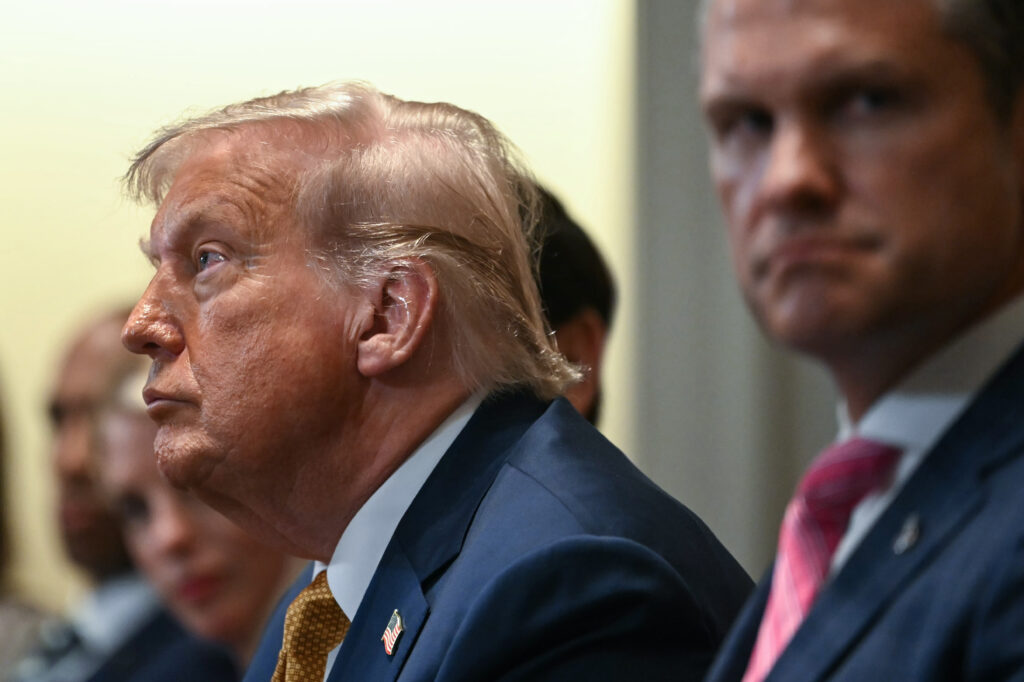
China said Monday it “firmly rejects” US claims that it had violated a sweeping tariffs deal, as tensions between the two economic superpowers showed signs of ratcheting back up.Beijing and Washington last month agreed to slash staggeringly high tariffs on each other for 90 days after talks between top officials in Geneva.But top Washington officials last week accused China of violating the deal, with Commerce Secretary Howard Lutnick saying Beijing was “slow-rolling” the agreement in comments to “Fox News Sunday”.China hit back Monday, saying Washington “has made bogus charges and unreasonably accused China of violating the consensus, which is seriously contrary to the facts”. “China firmly rejects these unreasonable accusations,” its commerce ministry said in a statement.US President Donald Trump said last week that China had “totally violated” the deal, without providing details.Beijing’s commerce ministry said it “has been firm in safeguarding its rights and interests, and sincere in implementing the consensus”.It fired back that Washington “has successively introduced a number of discriminatory restrictive measures against China” since the Geneva talks.The ministry cited export controls on artificial intelligence chips, curbs on the sale of chip design software and the revocation of Chinese student visas in the United States.”We urge the US to meet China halfway, immediately correct its wrongful actions, and jointly uphold the consensus from the Geneva trade talks,” the ministry said.If not, “China will continue to resolutely take strong measures to uphold its legitimate rights and interests,” it added.- Trump-Xi talks? -US officials have said they are frustrated by what they see as Chinese foot-dragging on approving export licences for rare earths and other elements needed to make cars and chips.But Washington’s Treasury Secretary Scott Bessent looked to ease the pressure on Sunday, saying the two sides could arrange a call between their respective heads of state to resolve their differences.”I’m confident… this will be ironed out” in a call between Trump and Chinese President Xi Jinping, Bessent said on CBS’s “Face the Nation”.He added, however, that China was “withholding some of the products that they agreed to release”, including rare earths.On when a Trump-Xi call could take place, Bessent said: “I believe we will see something very soon.”China has been less forthcoming, and the commerce ministry’s statement on Monday did not mention any planned conversations between the two leaders.The Geneva deal was “an important consensus reached by the two sides on the principle of mutual respect and equality, and its results were hard-won”, the ministry said.It warned Washington against “going its own way and continuing to harm China’s interests”.Global stocks finished mixed on Friday after Trump made his social media post accusing Beijing.The Hong Kong stock exchange was down around 2 percent shortly after opening on Monday.

US says trade row with China could ease after Trump-Xi talks

A logjam in the trade talks between the United States and China could be broken once Presidents Donald Trump and Xi Jinping speak, US officials said Sunday — a conversation they said could happen soon.Trump on Friday accused Beijing of violating a deal reached last month in Geneva to temporarily lower staggeringly high tariffs the world’s two biggest economies had imposed on each other, in a pause to last 90 days.China’s slow-walking on export license approvals for rare earths and other elements needed to make cars and chips have fueled US frustration, The Wall Street Journal reported Friday — a concern since confirmed by US officials. But US Treasury Secretary Scott Bessent seemed to take the pressure down a notch on Sunday, telling CBS’s “Face the Nation” that the gaps could soon be bridged.”I’m confident that when President Trump and Party Chairman Xi have a call that this will be ironed out,” Bessent said, however noting that China was “withholding some of the products that they agreed to release during our agreement.”When asked if rare earths were one of those products, Bessent said, “Yes.””Maybe it’s a glitch in the Chinese system. Maybe it’s intentional. We’ll see after the president speaks with” Xi, he said.On when a Trump-Xi call could take place, Bessent said: “I believe we will see something very soon.”Kevin Hassett, director of the White House’s National Economic Council told ABC that the call could happen “this week” but that he had no confirmation of a scheduled time.Since Trump returned to the presidency, he has slapped sweeping tariffs on most US trading partners, with especially high rates on Chinese imports.New tit-for-tat levies on both sides reached three digits before the de-escalation this month, where Washington agreed to temporarily reduce additional tariffs on Chinese imports from 145 percent to 30 percent.China, meanwhile, lowered its added duties from 125 percent to 10 percent.Commerce Secretary Howard Lutnick told “Fox News Sunday” that China was “slow-rolling the deal,” adding: “We are taking certain actions to show them what it feels like on the other side of that equation.””Our president understands what to do. He’s going to go work it out,” Lutnick said.Lutnick also said that a US court battle over Trump’s tariff strategy — one court’s ruling to block the tariffs has been stayed pending an appeal — would ultimately end with a win for the president. “Tariffs are not going away,” Lutnick said.- ‘We’ve got to be ready’ -Separate from the China deal, Trump said Friday he would double sector-specific tariffs on steel and aluminum to 50 percent starting June 4 — sparking ire from the European Union, which said it would retaliate.Hassett said China’s dumping of low-cost steel was hurting US industry — which in turn was hindering US military preparedness.”The bottom line is that we’ve got to be ready in case things don’t happen the way we want, because if we have cannons but not cannonballs, then we can’t fight a war,” Hassett told “This Week.” “And if we don’t have steel, then the US isn’t ready, and we’re not preparing ourselves for something,” he added. “We have to have a steel industry that’s ready for American defense.”

Key climate target of airline decarbonisation ‘in peril’: IATA

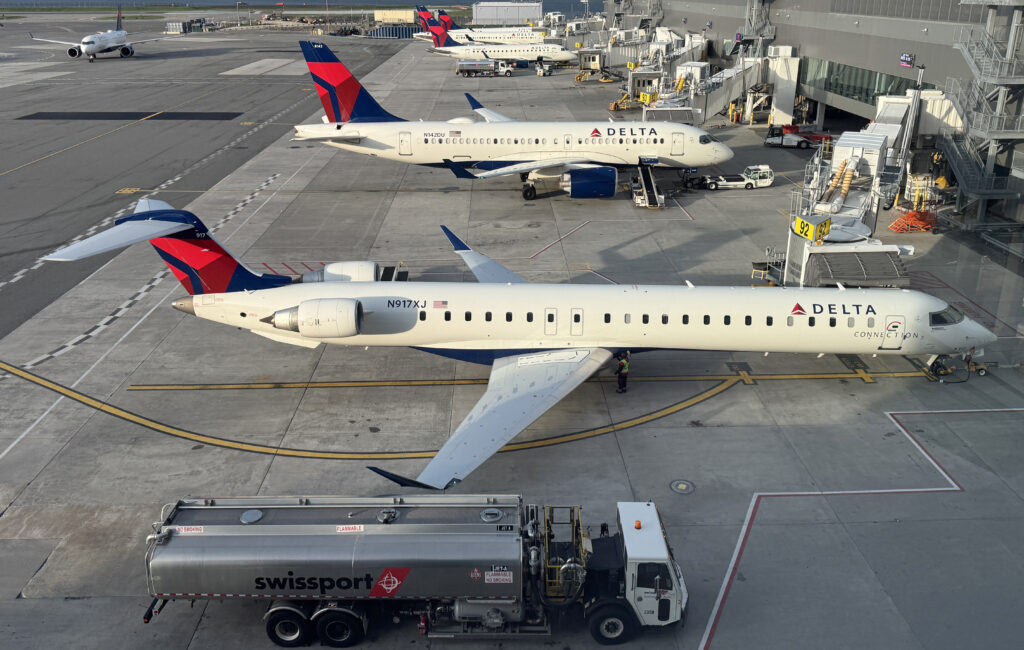
The airline industry’s flagship goal of decarbonising by 2050 is now “in peril” due to climate-sceptic policies, including those of US President Donald Trump, the leading airline association IATA warned on Sunday.The emergence of leaders favouring fossil fuels and recent regulatory rollbacks are “obviously a setback… it does imperil success on the 2050 horizon”, Marie Owens Thomsen, the International Air Transport Association’s senior vice president for sustainability, told reporters.”But I don’t think it’s going to halt or reverse progress. I think it will just slow progress,” she said at the IATA annual industry conference in India.Trump’s Republican administration is supporting the development of fossil fuels in contrast to his Democratic predecessor Joe Biden, who had massively supported the production of renewable aviation fuels through tax credits.UN aviation agency members, from the International Civil Aviation Organization (ICAO), have set the year 2050 as their goal for achieving net-zero carbon emissions for air travel — an industry often criticised for its outsized role in climate change.- ‘Entirely achievable’ -The air transportation industry has faced growing pressure to deal with its contribution to the climate crisis.Currently responsible for 2.5 percent to three percent of global CO2 emissions, the sector’s switch to renewable fuels is proving difficult, even if the aeronautics industry and energy companies have been seeking progress.To achieve net-zero emissions, airlines rely on non-fossil sources known as Sustainable Aviation Fuel (SAF).However, SAF biofuels are still three to four times more expensive than petroleum-based jet fuel.”Another problem, which is related, is the fact that oil is so cheap,” Owens Thomsen said. “I think that also diminishes the sense of urgency that people have.”A barrel of Brent North Sea crude, the international benchmark, stands below $65 as a result of Trump’s tariffs, his call to “drill baby drill” and especially a decision by OPEC+ to hike crude output quotas.This represents an immediate boon for airlines, whose fuel costs represent between a quarter and a third of operating expenses. SAF is seen as a crucial ingredient in hitting emissions targets. The biofuel produces lower carbon emissions than traditional jet fuel and is made from plant and animal materials such as cooking oil and fat.European Union rules require carriers to include two percent of SAF in their fuel mix starting this year, rising to six percent in 2030 before soaring to 70 percent from 2050.Owens Thomsen estimated on Sunday that $4.7 trillion in investment is needed to establish SAF sectors capable of meeting the needs of air transport by 2050.”It is entirely achievable,” she said, adding that the raw materials and technology already exist and simply need to be developed. “The money involved is very comparable to the money that was involved in creating the previous new energy markets, notably obviously wind and solar,” she said.That money could be found just by stopping subsidies to oil producers, she said.”The world is subsidising large oil companies to the height of $1 trillion per year,” she said.”With that money, if it were redirected in its totality, we could solve our energy transition in less than five years.”IATA also indicated on Sunday that it expects global SAF production to double this year compared with 2024 to 2.5 billion litres — slightly down from its previous projections of 2.7 billion litres.”This represents only 0.7 percent of total aviation needs,” IATA Director General Willie Walsh said. 

Indian airline IndiGo orders 30 Airbus A350 widebody planes

Indian airline IndiGo said on Sunday it had signed an order for 30 more Airbus A350-900s, bringing its shopping list for the widebody aircraft from the European aircraft manufacturer to 60.”We are placing a firm order for 30 Airbus A350-900s,” said Pieter Elbers, the CEO of IndiGo, which was founded in 2006 and is behind the largest contract by volume in the history of civil aviation — 500 Airbus single-aisle aircraft by 2023.The low-cost carrier, India’s biggest by market share, is positioning itself as a significant player in the long-haul market.”This strategic move will enable IndiGo to spread its wings further and expand its long-haul international network,” the company said in a statement.”This is yet another step in defining the airline’s long-term plans of international expansion.”Benoit de Saint-Exupery, Airbus commercial aircraft vice-president of sales, hailed “IndiGo’s incredible rise”.”You have democratised flying in India, and now you want to expand internationally,” he said.The A350 planes, with ranges of up to 15,000 kilometres (9,300 miles), will allow it to expand its network further.Overall, IndiGo has placed orders for around 1,000 aircraft from the A320 family, Airbus’s most successful model and rival of the Boeing 737 MAX, which has endured multiple setbacks after a series of safety scares.- ‘Phenomenal’ -Willie Walsh, director general of the International Air Transport Association (IATA), which began its annual industry conference in New Delhi on Sunday, said “the development of India’s air connectivity in recent years has been nothing short of phenomenal”.Indian domestic air growth is “running at over 10 percent” per year, Walsh said ahead of the conference.The growth of its economy has made India and its 1.4 billion people the world’s fourth-largest air market — domestic and international — with IATA projecting it will become the third biggest within the decade.Air India, IndiGo’s rival, ordered 100 more Airbus planes last year after a giant contract in 2023 for 470 aircraft — 250 Airbus and 220 Boeing.India’s domestic air passenger traffic reached a milestone last year by “surpassing 500,000 passengers in a single day”, according to India’s Ministry of Civil Aviation.The ministry boasts of a sector “experiencing a meteoric rise”.Railways remain hugely popular but travelling by trains crisscrossing a country about three-quarters the area of the European Union is often slow and chaotic.Prime Minister Narendra Modi, who will address IATA delegates on Monday, has made the development of the air sector a priority since coming to power in 2014.India has doubled its number of airports in the past decade to 157, with plans to have as many as 400 by 2047.Indian airline capacity is expected to reach 230 million seats in 2024, doubling since 2014, according to British aviation data provider OAG.However, such growth comes with immense demands for aircraft, skilled personnel, airports, and aviation safety.Some 10,000 pilots are expected to be trained in the next five years but India also faces a major challenge to supply flight crews, engineers, mechanics, and air traffic controllers.India already has the highest number of women pilots, who make up 15 percent of its captains, three times the global average. 

Indian airline IndiGo orders 30 Airbus A350 widebody planes

Indian airline IndiGo said on Sunday it had signed an order for 30 more Airbus A350-900s, bringing its shopping list for the widebody aircraft from the European aircraft manufacturer to 60.”We are placing a firm order for 30 Airbus A350-900s,” said Pieter Elbers, the CEO of IndiGo, a company founded in 2006 and already behind the largest contract by volume in the history of civil aviation — 500 Airbus single-aisle aircraft by 2023.The Indian low-cost carrier, the country’s biggest by market share, is positioning itself as a significant player in the long-haul market.”This strategic move will enable IndiGo to spread its wings further and expand its long-haul international network”, the company said in a statement.”This is yet another step in defining the airline’s long-term plans of international expansion”.The A350 planes, with ranges of up to 15,000 kilometres (9,300 miles), will allow it to further expand its network.Overall, IndiGo has placed orders for around 1,000 aircraft from the A320 family, Airbus’s most successful model and rival of the Boeing 737 MAX, which has endured multiple setbacks after a series of safety scares.Willie Walsh, director general of the International Air Transport Association (IATA), which began its annual industry conference in New Delhi on Sunday, said “the development of India’s air connectivity in recent years has been nothing short of phenomenal”.Indian domestic air growth is “running at over 10 percent” per year, Walsh said, ahead of the conference.The growth of its economy has made India and its 1.4 billion people the world’s fourth-largest air market — domestic and international — with IATA projecting it will become the third biggest within the decade.Last year, India’s domestic air passenger traffic reached a “historic milestone, surpassing 500,000 passengers in a single day”, according to India’s Ministry of Civil Aviation.The ministry boasts of a sector “experiencing a meteoric rise”.Railways remain hugely popular but travelling by trains crisscrossing a country about three-quarters the area of the European Union is often slow and chaotic.Prime Minister Narendra Modi, who is slated to address IATA delegates on Monday, has made the development of the air sector a priority since coming to power in 2014.India has doubled its number of airports in the past decade to 157, with plans to have as many as 400 by 2047.

Recycling contaminated soil from Fukushima: Japan’s dilemma

To reduce radiation across Japan’s northern Fukushima region after the 2011 nuclear disaster, authorities scraped a layer of contaminated soil from swathes of land.Now, as young farmers seek to bring life back to the region once known for its delicious fruit, authorities are deliberating what to do with the mass of removed soil — enough to fill more than 10 baseball stadiums.Here are some key things to know:- Why was the soil removed? -On March 11, 2011, Japan’s strongest earthquake on record triggered a huge tsunami that hit the Fukushima Daiichi nuclear plant, causing a devastating meltdown.Topsoil was collected as part of large-scale decontamination efforts that also included blasting buildings and roads with high-pressure jets of water.Almost all areas of Fukushima have gradually been declared safe, but many evacuees have been reluctant to return because they remain worried about radiation, or have fully resettled elsewhere.Fukushima has, however, welcomed new residents such as 25-year-old kiwi farmer Takuya Haraguchi.”I want people to become interested in and learn about what Fukushima is really like these days,” he told AFP.- Where is the soil being stored? -A vast quantity of soil — 14 million cubic metres — is being stored at interim storage facilities near the Fukushima Daiichi plant.The government has promised residents of Fukushima region that it will find permanent storage for the soil elsewhere in the country by 2045.For now, the huge mounds are kept inside guarded grounds, protected by layers of clean soil and a manmade sheet to prevent runoff into the environment.- What will Japan do with it? – The government wants to use the soil for building road and railway embankments among other projects.It has vowed to do this outside Fukushima to avoid further burdening the region, where the crippled nuclear plant generated electricity not for local residents, but for Tokyo and its surrounding urban areas.So far few takers have been found in other parts of Japan, and some local officials suggest that realistically, a portion of the soil may need to stay in Fukushima.The prime minister’s office recently said it would symbolically recycle some of the soil to show it is safe, with reports saying it will be used in flower beds.- How safe is the soil? -Around 75 percent of the stored soil has a radioactivity level equivalent to or less than one X-ray per year for people who directly stand on or work with it, according to the environment ministry.Asphalt, farm soil or layers of other materials should be used to seal in the radioactivity, said Akira Asakawa, a ministry official working on the Fukushima soil project.In a test, the government has constructed roads and fields in Fukushima by using the contaminated soil as filling material.Those locations did not show elevated levels of radioactivity, and there was no runoff of radioactive material to surrounding areas, Asakawa said.- What pushback has there been? -In 2022, local communities reacted angrily to plans floated by the national government to bring the Fukushima soil to a popular park in Tokyo and other areas near the capital.That plan has not moved forward and other locations have not yet been secured, despite public sympathy for the people of Fukushima.The environment ministry says it will step up efforts to explain the safety of its plan to the public from this year. 

Nintendo aims to match Switch success with new console

Nintendo hopes to match the runaway success of the Switch when its levelled-up new console hits shelves Thursday, with strong early sales expected despite the gadget’s high price.Featuring a bigger screen and more processing power, the Switch 2 is an upgrade to its predecessor, which has sold 152 million units since launching in 2017 — making it the third best-selling video game console of all time.But despite buzz among fans and robust demand for pre-orders, headwinds for Nintendo include uncertainty over US trade tariffs and whether enough people are willing to shell out.The Switch 2 “is priced relatively high” compared to the original device, company president Shuntaro Furukawa said at a financial results briefing in May.”So even if there is momentum around the launch, we know it will not be easy to keep that momentum going over the long term,” he warned.Sales of the Switch, which can connect to a TV or be played on the go, were boosted by the popularity of games like “Animal Crossing” as a pandemic lockdown pastime.The Japanese company forecasts it will shift 15 million Switch 2 consoles in the current financial year, roughly equal to the original in the same period after its release.The new device costs $449.99 in the United States, over a third more than the Switch. A Japan-only version is cheaper, at 49,980 yen ($350).New Switch 2 games such as “Donkey Kong Bonanza” and “Mario Kart World” — which allows players to go exploring off-grid — are also more expensive than existing Switch titles.Most original Switch games can be played on the Switch 2, and some Switch blockbusters such as “Zelda: Breath of the Wild” will have enhanced editions released for the new incarnation.- ‘Super excited’ -“People were a bit shocked by the price of ‘Mario Kart World’, the first $80 game that we’ve ever seen,” said Krysta Yang of the Nintendo-focused Kit & Krysta Podcast.While the company is “going to have to do some work” to convince more casual gamers that it’s worth upgrading, Nintendo fans are “super excited”, she told AFP.The Switch 2 will have eight times the memory of the first Switch, and its controllers, which attach with magnets, can also be used like a desktop computer mouse.Although the new console is not radically different, “a lot of people (are) saying, ‘this is what I wanted, I wanted a more powerful Switch — don’t mess with a good thing’,” said Yang, a former Nintendo employee.New functions allowing users to chat as they play online and temporarily share games with friends could also be a big draw, said David Gibson of MST Financial.”It’s a way to appeal to an audience which has got used much more to the idea of streaming games and watching games, as well as playing games,” he told AFP, predicting that the Switch 2 will break records in terms of early sales.And success is crucial for Nintendo.While the “Super Mario” maker is diversifying into theme parks and hit movies, around 90 percent of its revenue still comes from the Switch business, analysts say.- Tariff trouble? -Nintendo delayed pre-orders for the Switch 2 in the United States by two weeks as it assessed the impact from President Donald Trump’s global assault on free trade.But its pre-orders have since sold out in the US market and elsewhere, with the company boasting of particularly high demand in Japan.Furukawa said in May that Nintendo’s financial projections are based on the assumption of US tariffs of 10 percent on products produced in Japan, Vietnam, and Cambodia, and 145 percent on China.”Hardware for North America is mainly produced in Vietnam,” he added.Trump’s hefty so-called “reciprocal” tariff of 46 percent on goods from Vietnam is on pause, while those on China have been slashed.Tariff uncertainty could in fact push consumers to buy a Switch 2 sooner, because they are worried that the price could go up, Yang said.Charlotte Massicault, director of multimedia and gaming at the French retail giant Fnac Darty, told AFP that pre-sale demand has been “well above what we imagined”.”For us, this will be a record in terms of first-day sales for a games console,” she said.The Switch 2 is “less of a family-focused product, and more of a ‘gamer’ product” compared to the Switch, she said.”That’s what Nintendo wanted, and it works.”

‘Moving forward’: the Gen-Z farmer growing Fukushima kiwis

A short drive from the Fukushima nuclear disaster site, novice farmer Takuya Haraguchi tends to his kiwi saplings under the spring sunshine, bringing life back to a former no-go zone.Haraguchi was 11 years old when Japan’s strongest earthquake on record struck in March 2011, unleashing a tsunami that left 18,500 people dead or missing.The wall of water crashed into the Fukushima nuclear plant on the northeast coast, causing a devastating meltdown.At the time the bookish young Haraguchi, who grew up far away in Osaka, feared that radiation would make the whole country uninhabitable.But now, aged 25, the new resident of the rural town of Okuma says he believes in the future of Fukushima region.”Everyone knows about the nuclear accident. But not many people know about this area, and how it’s moving forward,” Haraguchi, tanned from working on his farm, told AFP.”By growing kiwis here, I want people to take an interest in and learn about what Fukushima is really like these days.”The region of Fukushima is renowned for its delicious fruit, from pears to peaches, but the nuclear disaster led many people in Japan to shun produce grown there.Just over 14 years later, following extensive decontamination work including stripping an entire layer of soil from farmland, authorities say food from Fukushima is safe, having been rigorously screened for radiation.Last year Fukushima peaches were sold at London’s Harrods department store, while in Japan some consumers now choose to buy the region’s produce to support struggling farmers.”The safety has been proven,” said Haraguchi, who often sports a kiwi-print bucket hat. “I think it’s important that we do it here.”- Starting from ‘zero’ -Haraguchi studied software engineering at university but dreamed of becoming a fruit farmer.He first visited Okuma in 2021 for an event targeted at students, and met residents trying to bring back kiwi farming in an effort to rebuild their community.He also met a veteran farmer, who moved away after the disaster and whose kiwis’ rich flavour left him stunned.Inspired, Haraguchi returned many times for research before starting his venture, called ReFruits, with a business partner who recently graduated from university in Tokyo.They manage 2.5 hectares (six acres) of land, and hope to harvest their first kiwis next year.Haraguchi regards the destruction seen by the Fukushima region not as a blight, but an opportunity.”Because it went to zero once, we can try and test all sorts of challenging new ideas,” he said.After the disaster, nuclear fallout forced all of Okuma’s 11,000 residents to flee their homes.Overall across Fukushima region, around 80,000 people were ordered to evacuate for their safety, while the same number again left voluntarily, authorities say.Since then the stricken plant’s reactors have been stabilised, although decommissioning work is expected to take decades.Sections of Okuma, previously a no-go zone, were declared safe for residents to start to return in 2019.Only a fraction of its previous population has come back — but young outsiders like Haraguchi are moving there, taking advantage of government subsidies for things like housing and business assistance.Now, of around 1,500 people living in Okuma, more than 1,000 are newcomers, including hundreds who work on the plant but also agriculture and even tech start-ups.- Radiation tests -Today dozens of sensors monitor radiation levels in Okuma, which are within officially set safety limits, but still higher than in areas far from the nuclear plant.Some parts, such as unused hillsides, remain off-limits.On Haraguchi’s farm, soil tests show a slightly elevated level of radiation that meets an internationally accepted food standard.Tests on fruit from Fukushima have also shown that the radiation levels are low enough for consumption, the government says.Kaori Suzuki, who leads the non-profit citizen science group “Mothers’ Radiation Lab Fukushima – TARACHINE”, warns however that risks could remain now and in the future.Among other activities, her group conducts its own radiation tests on Fukushima’s soil and food to help residents who are choosing local products to consume.Although “it’s up to individuals to decide what to eat… it’s better to be cautious, because people have become more relaxed”, she said.Haraguchi, who is travelling internationally to share his story and that of the region, hopes his work could eventually ease concerns about Fukushima’s fruit.”We don’t need to force our products on people who are uneasy about this place and its crops,” he said, adding that he was committed to transparency.”We need to sell our products to people who understand.”

Ecuador apologizes to farm workers deemed to live like slaves

Ecuador’s government apologized Saturday to some 300 people who worked as farmers for a Japanese textile firm in conditions which a court likened to modern-day slavery.These people worked on plantations that produced abaca, a fiber used in textiles and the auto industry.As of 2021, Furukawa’s plantations for abaca covered almost 23,000 hectares spread over three provinces on the Pacific coast, where the majority of the population is Black.Some workers gave birth to children in unsanitary and overcrowded camps, while others were denied proper medical attention after work-related injuries, according to testimony given at a news conference in Quito back in December.That month the Constitutional Court ordered Furukawa to pay $120,000 to each of 342 victims — a total of around $41 million. The company was also ordered to make a public apology to them. It has not complied with either order. The court said that over the course of five years Furukawa had people living in conditions of modern-day slavery in its abaca fields.It also ordered the government to apologize to the workers, and that is what happened Saturday.The company violated “national and international regulations that affected, in essence, human dignity,” Labor Minister Ivonne Nunez said.She said “the state, through the various ministries, as the sentence explains, turned a deaf ear” to the plight of the abused workers.Nunez spoke at a ceremony with other government ministers at Quito’s Independence Plaza, as ex-Furukawa workers chanted slogans such as “reparations, reparations” and “modern slavery, never again.”After the court ruling, Furukawa said it does not have the money to pay the damages ordered by the tribunal and called them disproportionate.Back in December, at a meeting at a human rights group’s headquarters, plantation workers told horror stories of their lives raising abaca.”We have been confronting the monster that is Furukawa,” Segundo Ordonez, a 59-year-old farmer, said at the meeting.