Afp Business Asia

Trade war cuts global economic growth outlook: OECD

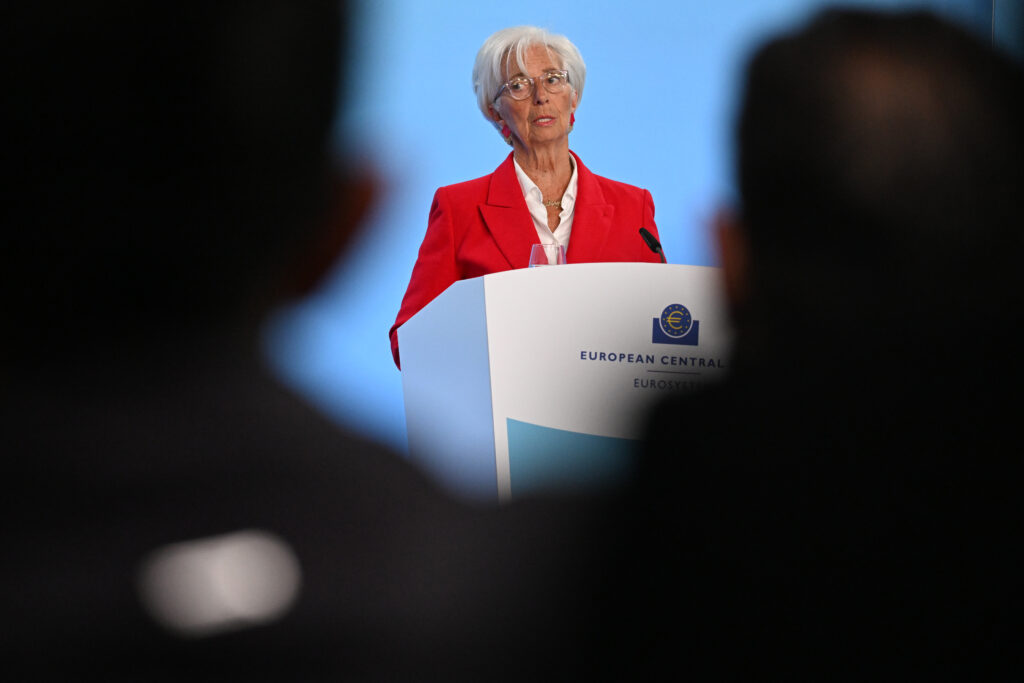
The OECD slashed its annual global growth forecast on Tuesday, warning that US President Donald Trump’s tariffs blitz would stifle the world economy — hitting the United States especially hard.After 3.3-percent growth last year, the world economy is now expected to expand by a “modest” 2.9 percent in 2025 and 2026, the Paris-based Organisation for Economic Co-operation and Development said.In its previous report in March, the OECD had forecast growth of 3.1 percent for 2025 and 3.0 percent for 2026.Since then, Trump has launched a wave of tariffs that has rattled financial markets.”The global outlook is becoming increasingly challenging,” said the OECD, an economic policy group of 38 mostly wealthy countries.It said “substantial increases” in trade barriers, tighter financial conditions, weaker business and consumer confidence, and heightened policy uncertainty will all have “marked adverse effects on growth” if they persist.The OECD downgraded its 2025 growth forecast for the United States from 2.2 percent to 1.6 percent.The world’s biggest economy is expected to slow further next year to 1.5 percent.Trump, who has insisted that the tariffs would spark a manufacturing revival and restore a US economic “Golden Age”, posted on his Truth Social platform before the OECD report’s publication: “Because of Tariffs, our Economy is BOOMING!”The OECD holds a ministerial meeting in Paris on Tuesday and Wednesday.US and EU trade negotiators are expected to hold talks on the sidelines of the gathering after Trump threatened to hit the European Union with 50-percent tariffs.The Group of Seven advanced economies is also holding a meeting focused on trade.”For everyone, including the United States, the best option is that countries sit down and get an agreement,” OECD chief economist Alvaro Pereira said in an interview with AFP.”Avoiding further trade fragmentation is absolutely key in the next few months and years,” Pereira said.Trump imposed in April a baseline tariff of 10 percent on imports from around the world. He unveiled higher tariffs on dozens of countries but has paused them until July to allow time for negotiations.The US president has also imposed 25-percent tariffs on cars and now plans to raise those on steel and aluminium to 50 percent on Wednesday.- US slowdown -In the OECD report, Pereira warned that “weakened economic prospects will be felt around the world, with almost no exception”.He added that “lower growth and less trade will hit incomes and slow job growth”.The outlook “has deteriorated” in the United States after the economy expanded by a robust 2.8 percent last year, the report said.The effective tariff rate on US merchandise imports has gone from two percent in 2024 to 15.4 percent, the highest since 1938, the OECD said.The higher rate and policy uncertainty “will dent household consumption and business investment growth”, the report said.The OECD also blamed “high economic policy uncertainty, a significant slowdown in net immigration and a sizeable reduction in the federal workforce”.While annual inflation is expected to “moderate” among the Group of 20 economies to 3.6 percent in 2025 and 3.2 percent in 2026, the United States is “an important exception”.US inflation is expected to accelerate to just under four percent by the end of the year, two times higher than the Federal Reserve’s target for consumer price increases.- Rising risks -The OECD slightly reduced its growth forecast for China — which was hit with triple-digit US tariffs that have been temporarily lowered — from 4.8 to 4.7 percent this year.Another country with a sizeable downgrade is Japan. The OECD cut the country’s growth forecast from 1.1 percent to 0.7 percent.The outlook for the eurozone economy, however, remains intact at one-percent growth.”There is the risk that protectionism and trade policy uncertainty will increase even further and that additional trade barriers might be introduced,” Pereira wrote.”According to our simulations, additional tariffs would further reduce global growth prospects and fuel inflation, dampening global growth even more,” he said.

Asian markets rise as traders eye possible Trump-Xi talks

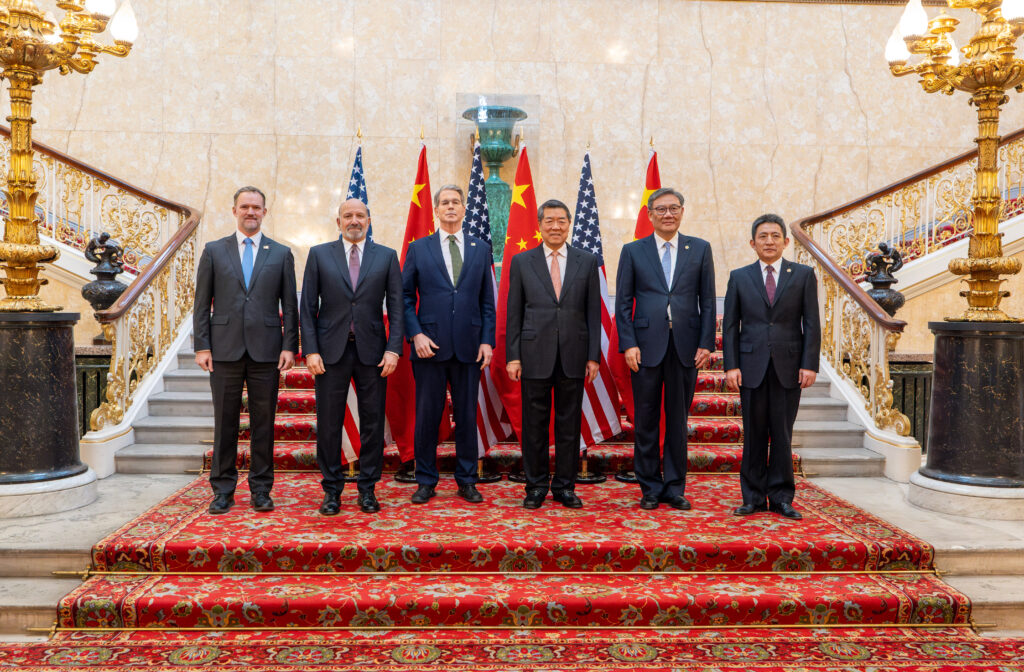
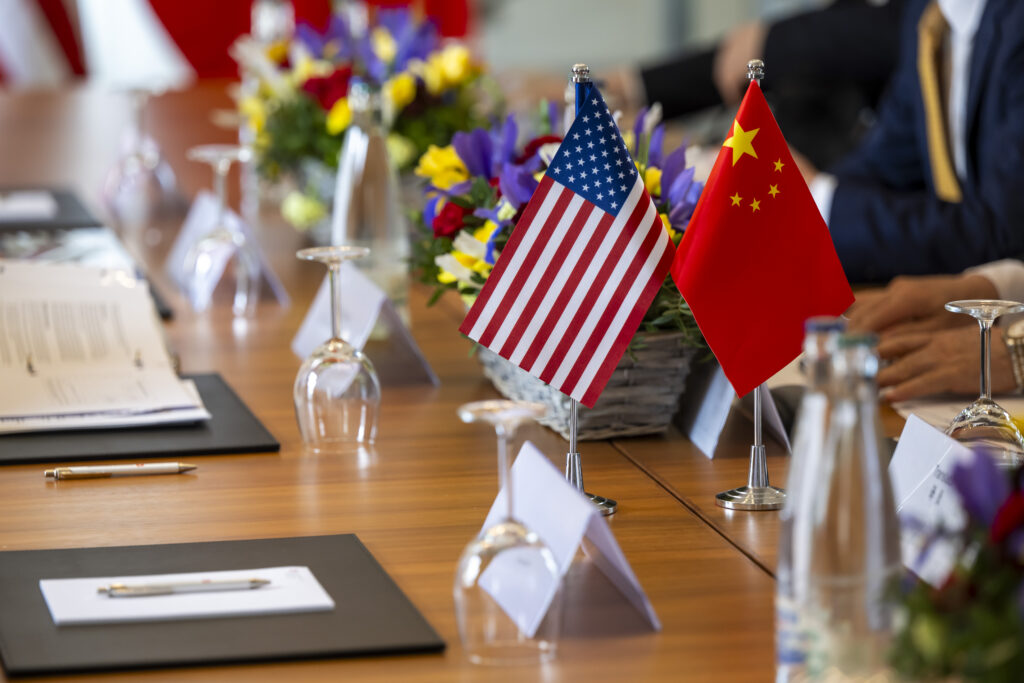
Asian stocks rallied Tuesday as investors kept tabs on developments in the China-US trade war amid speculation the countries’ leaders will hold talks soon.After a period of relative calm on the tariff front, Donald Trump at the weekend accused Beijing of violating last month’s deal to slash huge tit-for-tat levies and threatened to double tolls on steel and aluminium.The moves jolted Asian markets on Monday, but hopes that the US president will speak with Chinese counterpart Xi Jinping — possibly this week — has given investors some hope for a positive outcome.Meanwhile, oil prices extended Monday’s surge on a weak dollar and Ukraine’s strike on Russian bombers parked deep inside the country that stoked geopolitical concerns as well as stuttering US-Iran nuclear talks.Trump has expressed confidence that a talk with Xi could ease trade tensions, even after his latest volley against the Asian superpower threatened their weeks-old tariff truce.”They violated a big part of the agreement we made,” he said Friday. “But I’m sure that I’ll speak to President Xi, and hopefully we’ll work that out.”It is unclear if Xi is keen on a conversation — the last known call between them was in the days before Trump’s inauguration in January — but the US president’s economic adviser Kevin Hassett signalled on Sunday that officials were anticipating something this week.US Treasury Secretary Scott Bessent — who last week warned negotiations with China were “a bit stalled” — said at the weekend the leaders could speak “very soon”.Officials from both sides are set for talks on the sidelines of an Organisation for Economic Co-operation and Development (OECD) ministerial meeting in Paris on Wednesday.While there has been no movement on the issue, investors took the opportunity on Tuesday to pick up recently sold shares.Hong Kong gained more than one percent while Shanghai returned from a long weekend on the front foot.There were also gains in Tokyo, Sydney, Wellington, Singapore, Taipei and Manila. Seoul was closed for a presidential election.- Deals queued up? -The advances followed a positive day on Wall Street led by tech giants in the wake of a forecast-beating earnings report from chip titan Nvidia.Still, National Australia Bank’s Rodrigo Catril remained nervous after Trump’s latest salvos.”The lift in tariffs is creating another layer of uncertainty and tension,” he wrote in a commentary.”European articles suggest the lift in tariffs doesn’t bode well for negotiations with the region (and) UK steelmakers call Trump doubling tariffs ‘another body blow’,” he added.”The steel and aluminium tariffs also apply to Canada, so they will likely elicit some form of retaliation from there and while US-China trade negotiations are deteriorating due to rare earth, student visas and tech restrictions, steel tariffs will also affect China.”Separately, US Commerce Secretary Howard Lutnick on Monday voiced optimism for a trade deal with India “in the not too distant future”, adding that he was “very optimistic”.And Japanese trade point man Ryosei Akazawa is eyeing another trip to Washington for more negotiations amid speculation of a deal as early as this month.Also in focus is Trump’s signature “big, beautiful bill” that is headlined by tax cuts slated to add up to $3 trillion to the nation’s debt.Senators have started weeks of what is certain to be fierce debate over the mammoth policy package, which partially covers an extension of Trump’s 2017 tax relief through budget cuts projected to strip health care from millions of low-income Americans.Oil prices extended Monday’s surge that saw West Texas Intermediate briefly jump five percent on concerns about an escalation of the Russia-Ukraine conflict and suggestions Washington could hit Moscow with stricter sanctions.That compounded news that the OPEC+ producers’ grouping had agreed a smaller-than-expected increase in crude production.Traders were also monitoring tensions over Iran’s nuclear programme after Tehran said it would not accept an agreement that deprives it of what it calls “peaceful activities”.- Key figures at around 0230 GMT -Tokyo – Nikkei 225: UP 0.2 percent at 37,546.85 (break)Hong Kong – Hang Seng Index: UP 1.2 percent at 23,425.37Shanghai – Composite: UP 0.2 percent at 3,352.06Euro/dollar: DOWN at $1.1431 from $1.1443 on MondayPound/dollar: DOWN at $1.3532 from $1.3548Dollar/yen: UP at 143.05 yen from 142.71 yenEuro/pound: UP at 84.48 pence from 84.46 penceWest Texas Intermediate: UP 1.0 percent at $63.16 per barrelBrent North Sea Crude: UP 0.9 percent at $65.22 per barrelNew York – Dow: UP 0.1 percent at 42,305.48 points (close)London – FTSE 100: FLAT at 8,774.26 (close)

Stocks mixed, oil up on rising trade tensions, geopolitical risks

Oil prices surged Monday over renewed concerns about Russia’s war in Ukraine and relief over OPEC+ production, while stock markets were mixed as US-China trade tensions resurfaced after a brief lull.The dollar was under renewed pressure as traders digested US President Donald Trump’s recent threats to double steel and aluminum tariffs, while Wall Street’s main stock indices closed higher as traders looked through the trade turbulence to the strong earnings from US tech titans including Nvidia.”I think we are seeing a bit of continuation of the positive interpretation of the market from Nvidia’s earnings,” Angelo Kourkafas from Edward Jones told AFP, referring to the chip firm’s recent strong results. “Artificial intelligence remains a powerful driver for earnings,” he continued, adding that the financial markets had become “a little insensitive” to the constant tariff threats from the White House.European stock markets finished mostly in the red, though London ended the day up less than 0.1 percent.- Fresh US-China tensions -Trump reignited tensions with China last week when he accused the world’s second-largest economy of violating a deal that had led both countries to temporarily reduce huge tit-for-tat tariffs.Beijing rejected the “bogus” US claims on Monday and accused Washington of introducing “a number of discriminatory restrictive measures” against China in the weeks since the two sides brokered a trade truce in Geneva last month.Trump also ramped up tensions with other trade partners, including the European Union, by vowing to double global tariffs on steel and aluminum to 50 percent from Wednesday.”Trump’s pledge to double steel and aluminium import tariffs have caused fresh uncertainty, especially with the European Union vowing to retaliate against the measures,” said Susannah Streeter, head of money and markets at Hargreaves Lansdown.”Negotiations between the US and China also appear to be in disarray,” she added. The two sides are set for talks on the sidelines of an Organisation for Economic Co-Operation and Development (OECD) ministerial meeting in Paris on Wednesday.The Hong Kong and Tokyo stock markets both ended with sizeable losses Monday. Shanghai was shut for a Chinese public holiday.- Oil rises -Oil prices surged Monday, with the main US contract, the West Texas Intermediate (WTI), briefly jumping five percent before settling up 2.9 percent on the news that the OPEC+ producers’ grouping — Saudi Arabia, Russia, Iraq, UAE, Kuwait, Kazakhstan, Algeria and Oman — agreed on a smaller-than-expected increase in crude production.”Prices were also lifted by the increased military activity between Ukraine and Russia reported over the weekend,” said David Morrison, senior market analyst at financial services firm Trade Nation.”In addition, there were reports that the US may impose stricter sanctions on Moscow, and this helped boost prices,” he added. Ukraine said Sunday that it hit dozens of strategic Russian bombers parked at airbases far behind the front line.Traders were also monitoring tensions over Iran’s nuclear program after Tehran said it would not accept an agreement that deprives it of what it calls “peaceful activities.”- Key figures at around 2030 GMT -New York – Dow: UP 0.1 percent at 42,305.48 points (close)New York – S&P 500: UP 0.4 percent at 5,935.94 (close)New York – Nasdaq Composite: UP 0.7 percent at 19,242.61 (close)Paris – CAC 40: DOWN 0.2 percent at 7,737.20 (close)Frankfurt – DAX: DOWN 0.3 percent at 23,930.67 (close)London – FTSE 100: UP less than 0.1 percent at 8,774.26 (close)Tokyo – Nikkei 225: DOWN 1.3 percent at 37,470.67 (close)Hong Kong – Hang Seng Index: DOWN 0.6 percent at 23,157.97 (close)Shanghai – Composite: Closed for a holidayEuro/dollar: UP at $1.1443 from $1.1349 on FridayPound/dollar: UP at $1.3548 from $1.3463Dollar/yen: DOWN at 142.71 yen from 143.97 yenEuro/pound: UP at 84.46 pence from 84.30 penceBrent North Sea Crude: UP 3.0 percent at $64.63 per barrelWest Texas Intermediate: UP 2.9 percent at $62.52 per barrelburs-da/sla

S. Korea’s conservative contender Kim Moon-soo emerges from Yoon’s shadow

When his conservative South Korean party bowed to show remorse for ex-president Yoon Suk Yeol’s disastrous martial law decree, Kim Moon-soo sat alone and resolute in symbolic non-apology.The moment catapulted the labour activist-turned-lawmaker to fame that he now hopes to harness to become South Korea’s next president.”He’s essentially a presidential candidate that social media gave birth to,” Jeongmin Kim, executive director at the Korea Risk Group, told AFP.Internet users dubbed him “stubborn Moon-soo” in approval of the move, which helped drive a small uptick in his beleaguered party’s approval ratings.Yet the People Power Party (PPP) — Yoon’s former party — wasn’t always so keen on Kim Moon-soo’s candidacy.The PPP selected, unselected, and then selected him again as its nominee in a high-profile bout of infighting.It was symbolic of the turbulence that has rocked the party since Yoon’s botched bid to suspend civilian rule in December.On the campaign trail, Kim, 73, has sought to distance himself from the ousted president, who became the second conservative leader to be stripped of office, after Park Geun-hye in 2017.Kim offered his first apology “to the people suffering from the consequences of martial law” last month.”Martial law has not only made the economy and domestic politics difficult but has also caused significant challenges in exports and diplomatic relations,” he told South Korean media.Korea Risk Group’s Jeongmin Kim called the PPP’s candidate a “chameleon-like politician capable of political survival”.- Shift to the right -Born into a large family in North Gyeongsang province, about 300 kilometres (185 miles) from Seoul, Kim grew up in poverty after his father’s co-signing of a loan plunged them into debt.Kim was politically active by his final year of high school, when he was suspended for protesting against military leader President Park Chung-hee.He attended South Korea’s most prestigious university but started working in factories while studying for his degree and organising labour unions.He was arrested twice in the 1980s, first on charges of violating the Anti-Communism Law, and later under the National Security Act. Kim spent more than two-and-a-half years in prison and wrote in his biography about enduring electric shock and water torture.He was pardoned in 1988 and was stunned to find the country thriving.”My prediction that South Korean capitalism would eventually fail proved wrong,” Kim wrote in his biography, with the collapse of the Soviet Union also upending his world view and leading him to join the conservative party.Kim was elected to parliament in 1996 and later served two terms as governor of Gyeonggi province, South Korea’s most populous region.After being accused but not charged in an abuse of power scandal in 2011, Kim found his footing again among hard-right conservatives.His popularity with his party’s hard line was bolstered by his attempt to revise history textbooks in ways seen as favourable to former colonial power Japan, plus a high-profile fine for attending a church service during the Covid-19 pandemic.He was appointed labour minister by Yoon in 2024 and was widely seen as part of the disgraced leader’s inner circle.- ‘Written a miracle’ – Polls showed Kim trailing by at least 10 percentage points behind the opposition leader Lee Jae-myung and he was unable to convince third-place candidate, Lee Jun-seok of the Reform Party, to merge forces and make the election competitive.With polls opening on Tuesday, “the question is to what extent can candidate Kim Moon-soo narrow the gap”, said Heo Jin-jae, research director at Gallup Korea.”Any remarks that offend public sentiment could cost the candidates votes,” Heo said.Another key question is whether he can win over moderates.”The conservative base in South Korea is ideologically broad and Kim Moon-soo’s political character is quite distinct,” Kang Joo-hyun, a professor at Sookmyung Women’s University, told AFP.”Among moderates or pragmatists on the right, there’s hesitation about whether they can fully back him,” said Kang.In response to the sceptics, Kim recently recalled his last-minute victory in 1996, when he successfully ran for parliament.”You didn’t think I would become the (final) candidate, did you? Neither did I,” Kim told reporters on his first day of campaigning. “But we have written a miracle.”

Stocks retreat over trade row; oil surges on geopolitical risks

Oil prices surged Monday over renewed concerns about Russia’s war in Ukraine and relief over OPEC+ production, while stock markets mostly slid as US-China trade tensions resurfaced.The dollar was under pressure while Wall Street’s main stock indices traded mixed, with the Dow and the broad-based S&P 500 dipping while the tech-heavy Nasdaq was flat in midday trading.European stock markets finished mostly in the red, though London ended the day steady.US President Donald Trump reignited tensions with China last week when he accused the world’s second-biggest economy of violating a deal that had led both countries to temporarily reduce huge tit-for-tat tariffs.Beijing rejected the “bogus” US claims on Monday and accused Washington of introducing “a number of discriminatory restrictive measures” against China since they agreed on a truce last month.Trump also ramped up tensions with other trade partners, including the European Union, by vowing to double global tariffs on steel and aluminium to 50 percent from Wednesday.”Trump’s pledge to double steel and aluminium import tariffs have caused fresh uncertainty, especially with the European Union vowing to retaliate against the measures,” said Susannah Streeter, head of money and markets at Hargreaves Lansdown.”Negotiations between the US and China also appear to be in disarray.”The European Union on Saturday said it “strongly regrets” the tariffs move by Trump, warning it “undermines ongoing efforts to reach a negotiated solution” with the United States.The EU added that it stood “ready” to retaliate.The two sides are set for talks on the sidelines of an OECD ministerial meeting in Paris on Wednesday.A US trade court ruling against the tariffs last week briefly buoyed the markets, but the decision was frozen pending an appeal and the Trump administration insisted that the levies would not go away.”Overall, it feels as if investors are wary of adding to their exposure until they get more clarity on trade and tariffs,” said David Morrison, senior market analyst at financial services firm Trade Nation.The Hong Kong and Tokyo stock markets both ended with sizeable losses Monday. Shanghai was shut for a Chinese public holiday.Oil prices surged, with the main US contract, WTI, briefing jumping by five percent.The surge came after OPEC+ producers’ grouping agreed on a smaller-than-expected increase in crude production.”Traders had feared that OPEC+ would announce a significantly larger increase in production,” Morrison said.”Prices were also lifted by the increased military activity between Ukraine and Russia reported over the weekend. In addition, there were reports that the US may impose stricter sanctions on Moscow, and this helped boost prices.”Ukraine said Sunday that it hit dozens of strategic Russian bombers parked at airbases thousands of kilometres behind the front line.Traders were also monitoring tensions over Iran’s nuclear programme after Tehran said it would not accept an agreement that deprives it of what it calls “peaceful activities”.- Key figures at around 1540 GMT -New York – Dow: DOWN 0.6 percent at 42,036.30 pointsNew York – S&P 500: DOWN 0.3 percent at 5,896.78New York – Nasdaq Composite: FLAT at 19,109.61Paris – CAC 40: DOWN 0.2 percent at 7,737.20 (close)Frankfurt – DAX: DOWN 0.3 percent at 23,930.67 (close)London – FTSE 100: FLAT at 8,774.26 (close)Tokyo – Nikkei 225: DOWN 1.3 percent at 37,470.67 (close)Hong Kong – Hang Seng Index: DOWN 0.6 percent at 23,157.97 (close)Shanghai – Composite: Closed for a holidayEuro/dollar: UP at $1.1434 from $1.1349 on FridayPound/dollar: UP at $1.3552 from $1.3463Dollar/yen: DOWN at 143.34 yen from 143.97 yenEuro/pound: UP at 84.39 pence from 84.30 penceBrent North Sea Crude: UP 3.1 percent at $64.74 per barrelWest Texas Intermediate: UP 3.2 percent at $62.74 per barrelburs-rl/js

Stocks, dollar decline as Trump ups steel tariffs

Stock markets and the dollar recoiled Monday after President Donald Trump announced he would double US tariffs on global steel and aluminium, and accused China of violating a deal to slash tit-for-tat levies.Oil prices surged after OPEC and other key producers decided at the weekend to hike output for July — but by less than expected.Geopolitical fears also ramped up after Ukraine hit air bases deep inside major crude producer Russia, raising concerns over an escalation of the three-year war.”Trump’s pledge to double steel and aluminium import tariffs have caused fresh uncertainty, especially with the European Union vowing to retaliate against the measures,” noted Susannah Streeter, head of money and markets at Hargreaves Lansdown.”Negotiations between the US and China also appear to be in disarray after China.”Trump wrote in a Truth Social post that the elevated 50-percent rate on steel and aluminum would begin Wednesday.The Hong Kong and Tokyo stock markets both ended with sizeable losses Monday. Shanghai was shut for a Chinese public holiday.Eurozone stock markets were lower in midday deals, with eyes also on the European Central Bank, which is expected deliver a seventh-straight cut to interest rates on Thursday.London’s benchmark FTSE 100 index was flat nearing the half-way stage, with traders betting that the UK, which recently struck a trade agreement with the United States, may avoid the latest levy hike.The European Union on Saturday said it “strongly regrets” the tariffs move by Trump, warning it “undermines ongoing efforts to reach a negotiated solution” with the United States.The EU added it stood “ready” to retaliate.China on Monday said it “firmly rejects” US claims that it had violated a sweeping tariffs deal, as tensions between the two economic superpowers showed signs of ratcheting back up.Beijing and Washington last month agreed to slash staggeringly high tariffs on each other for 90 days after talks between top officials in Geneva.But top US officials last week accused China of violating the deal, with Commerce Secretary Howard Lutnick saying Beijing was “slow-rolling” the agreement in comments to “Fox News Sunday”.Kai Wang, Asia equity market strategist at Morningstar, warned that markets risked “greater volatility given the heightened uncertainty with regard to global growth”.Airlines on Monday revised down their traffic and profit forecasts for 2025, citing “headwinds” for the global economy, with industry chiefs warning of the risk of increased tariffs impacting the sector.The International Air Transport Association estimates fewer than five billion air journeys will take place this year, compared with the previously forecast 5.22 billion.- Key figures at around 1045 GMT -Paris – CAC 40: DOWN 0.7 percent at 7,696.95Frankfurt – DAX: DOWN 0.6 percent at 23,864.11London – FTSE 100: FLAT at 8,773.01 pointsTokyo – Nikkei 225: DOWN 1.3 percent at 37,470.67 (close)Hong Kong – Hang Seng Index: DOWN 0.6 percent at 23,157.97 (close)Shanghai – Composite: Closed for a holidayNew York – Dow: UP 0.1 percent at 42,270.07 (close)Euro/dollar: UP at $1.1420 from $1.1349 on FridayPound/dollar: UP at $1.3537 from $1.3463Dollar/yen: DOWN at 142.85 yen from 143.97 yenEuro/pound: UP at 84.37 pence from 84.30 penceBrent North Sea Crude: UP 3.7 percent at $65.10 per barrelWest Texas Intermediate: UP 4.1 percent at $63.28 per barrelburs-bcp

Snakes on a plane: Indian smuggler caught with venomous vipers

A passenger smuggling dozens of venomous vipers was stopped after flying into the financial capital Mumbai from Thailand, Indian customs officials said.The snakes, which included 44 Indonesian pit vipers, were “concealed in checked-in baggage”, Mumbai Customs said in a statement late Sunday.”An Indian national arriving from Thailand was arrested,” it added.The passenger, details of whom were not released, also had three Spider-tailed horned vipers — which are venomous, but usually only target small prey such as birds — as well as five Asian leaf turtles.Mumbai Customs issued photographs of the seized snakes, including blue and yellow reptiles squirming in a bucket.The snakes are a relatively unusual seizure in Mumbai, with customs officers more regularly posting pictures of hauls of smuggled gold, cash, cannabis or pills of suspected cocaine swallowed by passengers.However, in February, customs officials at Mumbai airport also stopped a smuggler with five Siamang gibbons, a small ape native to the forests of Indonesia, Malaysia, and Thailand.Those small creatures, listed as endangered by the International Union for Conservation of Nature, were “ingeniously concealed” in a plastic crate placed inside the passenger’s trolley bag, customs officers said.In November, customs officers seized a passenger carrying a wriggling live cargo of 12 turtles, and a month before, four hornbill birds, all on planes arriving from Thailand.In September, two passengers were arrested with five juvenile caimans, a reptile in the alligator family. 

China ‘firmly rejects’ US claim that it violated tariff deal

China said Monday it “firmly rejects” US claims that it had violated a sweeping tariffs deal, as tensions between the two economic superpowers showed signs of ratcheting back up.Beijing and Washington last month agreed to slash staggeringly high tariffs on each other for 90 days after talks between top officials in Geneva.But top Washington officials last week accused China of violating the deal, with Commerce Secretary Howard Lutnick saying Beijing was “slow-rolling” the agreement in comments to “Fox News Sunday”.China hit back Monday, saying Washington “has made bogus charges and unreasonably accused China of violating the consensus, which is seriously contrary to the facts”. “China firmly rejects these unreasonable accusations,” its commerce ministry said in a statement.US President Donald Trump said last week that China had “totally violated” the deal, without providing details.Beijing’s commerce ministry said it “has been firm in safeguarding its rights and interests, and sincere in implementing the consensus”.It fired back that Washington “has successively introduced a number of discriminatory restrictive measures against China” since the Geneva talks.The ministry cited export controls on artificial intelligence chips, curbs on the sale of chip design software and the revocation of Chinese student visas in the United States.”We urge the US to meet China halfway, immediately correct its wrongful actions, and jointly uphold the consensus from the Geneva trade talks,” the ministry said.If not, “China will continue to resolutely take strong measures to uphold its legitimate rights and interests,” it added.- Trump-Xi talks? -US officials have said they are frustrated by what they see as Chinese foot-dragging on approving export licences for rare earths and other elements needed to make cars and chips.But Washington’s Treasury Secretary Scott Bessent looked to ease the pressure on Sunday, saying the two sides could arrange a call between their respective heads of state to resolve their differences.”I’m confident… this will be ironed out” in a call between Trump and Chinese President Xi Jinping, Bessent said on CBS’s “Face the Nation”.He added, however, that China was “withholding some of the products that they agreed to release”, including rare earths.On when a Trump-Xi call could take place, Bessent said: “I believe we will see something very soon.”China has been less forthcoming, and the commerce ministry’s statement on Monday did not mention any planned conversations between the two leaders.The Geneva deal was “an important consensus reached by the two sides on the principle of mutual respect and equality, and its results were hard-won”, the ministry said.It warned Washington against “going its own way and continuing to harm China’s interests”.Global stocks finished mixed on Friday after Trump made his social media post accusing Beijing.The Hong Kong stock exchange was down around 2 percent shortly after opening on Monday.

US says trade row with China could ease after Trump-Xi talks

A logjam in the trade talks between the United States and China could be broken once Presidents Donald Trump and Xi Jinping speak, US officials said Sunday — a conversation they said could happen soon.Trump on Friday accused Beijing of violating a deal reached last month in Geneva to temporarily lower staggeringly high tariffs the world’s two biggest economies had imposed on each other, in a pause to last 90 days.China’s slow-walking on export license approvals for rare earths and other elements needed to make cars and chips have fueled US frustration, The Wall Street Journal reported Friday — a concern since confirmed by US officials. But US Treasury Secretary Scott Bessent seemed to take the pressure down a notch on Sunday, telling CBS’s “Face the Nation” that the gaps could soon be bridged.”I’m confident that when President Trump and Party Chairman Xi have a call that this will be ironed out,” Bessent said, however noting that China was “withholding some of the products that they agreed to release during our agreement.”When asked if rare earths were one of those products, Bessent said, “Yes.””Maybe it’s a glitch in the Chinese system. Maybe it’s intentional. We’ll see after the president speaks with” Xi, he said.On when a Trump-Xi call could take place, Bessent said: “I believe we will see something very soon.”Kevin Hassett, director of the White House’s National Economic Council told ABC that the call could happen “this week” but that he had no confirmation of a scheduled time.Since Trump returned to the presidency, he has slapped sweeping tariffs on most US trading partners, with especially high rates on Chinese imports.New tit-for-tat levies on both sides reached three digits before the de-escalation this month, where Washington agreed to temporarily reduce additional tariffs on Chinese imports from 145 percent to 30 percent.China, meanwhile, lowered its added duties from 125 percent to 10 percent.Commerce Secretary Howard Lutnick told “Fox News Sunday” that China was “slow-rolling the deal,” adding: “We are taking certain actions to show them what it feels like on the other side of that equation.””Our president understands what to do. He’s going to go work it out,” Lutnick said.Lutnick also said that a US court battle over Trump’s tariff strategy — one court’s ruling to block the tariffs has been stayed pending an appeal — would ultimately end with a win for the president. “Tariffs are not going away,” Lutnick said.- ‘We’ve got to be ready’ -Separate from the China deal, Trump said Friday he would double sector-specific tariffs on steel and aluminum to 50 percent starting June 4 — sparking ire from the European Union, which said it would retaliate.Hassett said China’s dumping of low-cost steel was hurting US industry — which in turn was hindering US military preparedness.”The bottom line is that we’ve got to be ready in case things don’t happen the way we want, because if we have cannons but not cannonballs, then we can’t fight a war,” Hassett told “This Week.” “And if we don’t have steel, then the US isn’t ready, and we’re not preparing ourselves for something,” he added. “We have to have a steel industry that’s ready for American defense.”

Key climate target of airline decarbonisation ‘in peril’: IATA

The airline industry’s flagship goal of decarbonising by 2050 is now “in peril” due to climate-sceptic policies, including those of US President Donald Trump, the leading airline association IATA warned on Sunday.The emergence of leaders favouring fossil fuels and recent regulatory rollbacks are “obviously a setback… it does imperil success on the 2050 horizon”, Marie Owens Thomsen, the International Air Transport Association’s senior vice president for sustainability, told reporters.”But I don’t think it’s going to halt or reverse progress. I think it will just slow progress,” she said at the IATA annual industry conference in India.Trump’s Republican administration is supporting the development of fossil fuels in contrast to his Democratic predecessor Joe Biden, who had massively supported the production of renewable aviation fuels through tax credits.UN aviation agency members, from the International Civil Aviation Organization (ICAO), have set the year 2050 as their goal for achieving net-zero carbon emissions for air travel — an industry often criticised for its outsized role in climate change.- ‘Entirely achievable’ -The air transportation industry has faced growing pressure to deal with its contribution to the climate crisis.Currently responsible for 2.5 percent to three percent of global CO2 emissions, the sector’s switch to renewable fuels is proving difficult, even if the aeronautics industry and energy companies have been seeking progress.To achieve net-zero emissions, airlines rely on non-fossil sources known as Sustainable Aviation Fuel (SAF).However, SAF biofuels are still three to four times more expensive than petroleum-based jet fuel.”Another problem, which is related, is the fact that oil is so cheap,” Owens Thomsen said. “I think that also diminishes the sense of urgency that people have.”A barrel of Brent North Sea crude, the international benchmark, stands below $65 as a result of Trump’s tariffs, his call to “drill baby drill” and especially a decision by OPEC+ to hike crude output quotas.This represents an immediate boon for airlines, whose fuel costs represent between a quarter and a third of operating expenses. SAF is seen as a crucial ingredient in hitting emissions targets. The biofuel produces lower carbon emissions than traditional jet fuel and is made from plant and animal materials such as cooking oil and fat.European Union rules require carriers to include two percent of SAF in their fuel mix starting this year, rising to six percent in 2030 before soaring to 70 percent from 2050.Owens Thomsen estimated on Sunday that $4.7 trillion in investment is needed to establish SAF sectors capable of meeting the needs of air transport by 2050.”It is entirely achievable,” she said, adding that the raw materials and technology already exist and simply need to be developed. “The money involved is very comparable to the money that was involved in creating the previous new energy markets, notably obviously wind and solar,” she said.That money could be found just by stopping subsidies to oil producers, she said.”The world is subsidising large oil companies to the height of $1 trillion per year,” she said.”With that money, if it were redirected in its totality, we could solve our energy transition in less than five years.”IATA also indicated on Sunday that it expects global SAF production to double this year compared with 2024 to 2.5 billion litres — slightly down from its previous projections of 2.7 billion litres.”This represents only 0.7 percent of total aviation needs,” IATA Director General Willie Walsh said.