Afp Business Asia

Nippon Steel shares soar as Trump reviews US Steel takeover

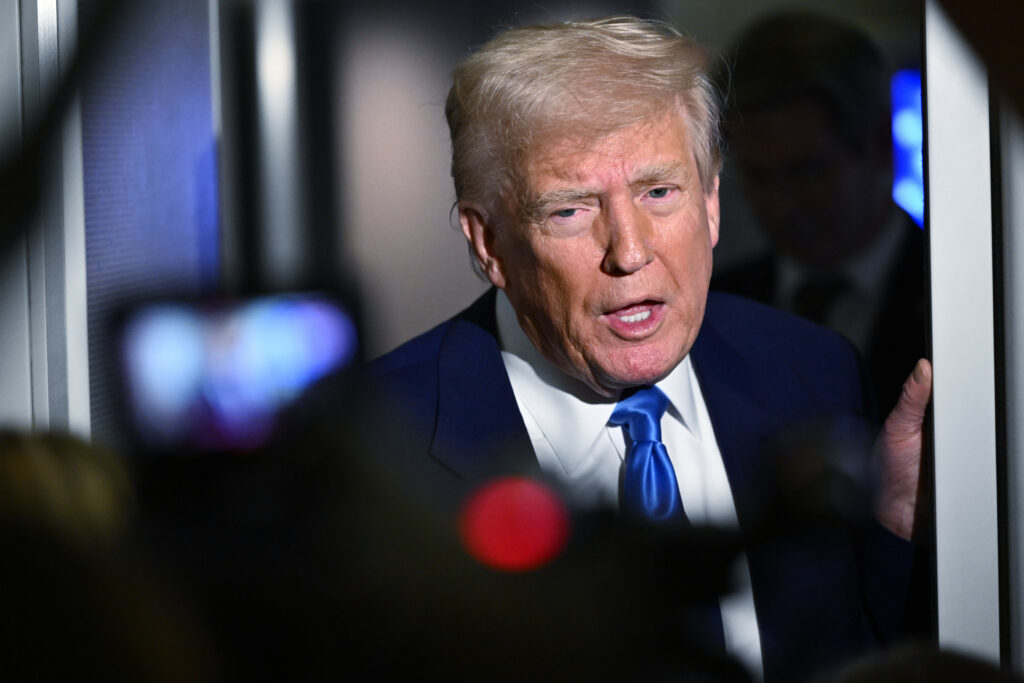
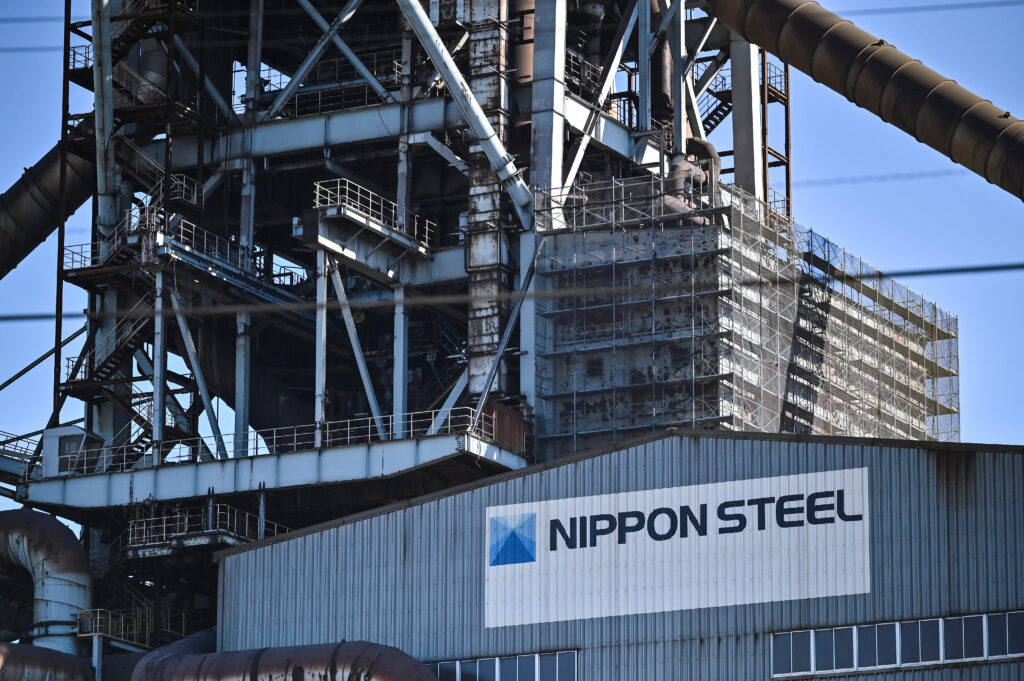
Nippon Steel shares soared Tuesday after US President Donald Trump launched a review of the company’s proposed takeover of US Steel that was blocked by his predecessor Joe Biden.Trump said Monday he had directed a government panel, the Committee on Foreign Investment in the United States (CFIUS), to conduct a review of the acquisition.This will “assist me in determining whether further action in this matter may be appropriate”, the president said in a White House memo to his Cabinet.US Steel shares closed up 16 percent Monday, and Nippon Steel gained as much as 11 percent in Tokyo on Tuesday.CFIUS, tasked with analysing the national security implications of foreign takeover of US companies, has 45 days to submit its recommendations to Trump.US Steel and Nippon Steel announced the proposed $14.9 billion merger in December 2023. It was originally meant to close by the end of 2024’s third financial quarter. However, months of scrutiny by US antitrust authorities and CFIUS — which failed to reach a consensus for its recommendation — forced then-president Biden to make a decision on the deal himself.Biden had criticised the deal for months, while holding off on a move that could hurt ties with Tokyo.But he blocked it in his last weeks in office on national security grounds.The two firms then filed a lawsuit against the Biden administration’s “illegal interference” in the transaction.The review Trump ordered on Monday involves “identifying potential national security risks associated with the proposed transaction and providing adequate opportunity to the parties to respond to such concerns”, his memo said.- ‘Urgent threat’ -US Steel said in a statement that Trump’s latest move “validates our Board’s bold decision to challenge President Biden’s unlawful order”.”Today’s decision by President Trump is pivotal as we work to deliver on new and historic levels of investment in American steelmaking,” it said.Nippon Steel said it was pleased Trump had ordered the review, saying the deal would allow US Steel to remain “a proud American company with products that are mined, melted and made in the United States by American workers”.”We look forward to a timely resolution so that we can begin making our planned investments that will position US Steel to be a leading global steel producer,” Nippon Steel said.But David McCall, president of the United Steelworkers union, criticised Trump’s move.”Regardless of how much scrutiny the proposed USS-Nippon deal receives, it does not alter the urgent threat it poses to our national and economic security, the long-term future of the steel industry or our members’ jobs,” he said.And Todd Tucker, director of industrial policy and trade at the Roosevelt Institute, said unions were concerned that the two companies would not invest enough to ensure the long-term sustainability of the US steel industry.Trump said during his 2024 campaign he wanted US Steel ownership to remain in the United States.In February, after meeting Japan’s prime minister, Trump said Nippon Steel would make a major investment in US Steel, but no longer attempt to take over the troubled company.burs-kaf/dhc
US giant to buy stake in cash-short Australian casino group

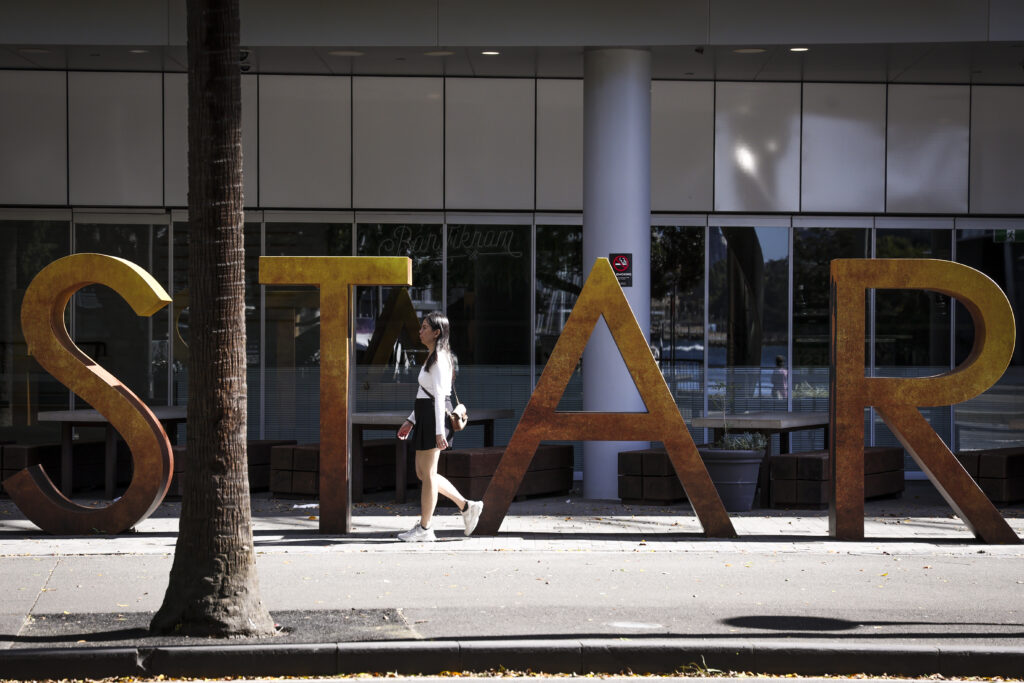
Troubled Australian casino operator Star Entertainment says it has been thrown an 11th hour multi-million dollar lifeline by US-based casino giant Bally’s Corporation.Star’s business — including casinos, bars, restaurants and hotels at resorts in Sydney, Brisbane and the Gold Coast — has been hovering close to entering administration for months.Bally’s has agreed to inject Aus$300 million (US$187 million) for a 56.7-percent stake in Star, the two firms said in separate statements late Monday.The US group is to make an initial payment of Aus$100 million on Wednesday, with the rest due after the approval of shareholders and regulators.”This transaction provides Bally’s the opportunity to infuse The Star with what it needs to regain its  position as Australia’s preeminent gaming destination,” Bally’s chairman Soo Kim said.Star said it was also talking to its biggest shareholder, Investment Holding, about joining the deal with an Aus$100 million injection.If that deal went ahead, Bally’s participation would drop to Aus$200 million.Shares in Star, which employs more than 8,000 people, have been suspended from trading since March 3 after it failed to post half-year financial results citing liquidity woes.The casino said in a statement late Monday it intended to “unanimously recommend” the deal to shareholders in the absence of a better offer.Bally’s manages 19 casinos across the United States, a golf course in New York and a horse racing track in Colorado.Star Entertainment last traded at Aus$0.11 a share with a market capitalisation of Aus$316 million — a far cry from its Aus$5 billion-plus value of seven years ago.Its finances were squeezed by the cost of developing its Brisbane resort, the threat of an anti-money laundering fine, and stricter regulation in the industry, according to the Australian Financial Review.The company has previously been accused of not adequately policing criminal infiltration and doing little to vet the sources of money coming into the business.

Trump vows no tariff pause as markets dive

US President Donald Trump on Monday threatened fresh tariffs of 50 percent on China and ruled out any pause in his aggressive new global trade policy, despite a dramatic market sell-off.Trump upended the world economy last week with sweeping tariffs that have raised fears of an international recession and triggered criticism even from within his own Republican Party.As the trade war escalates, Beijing — Washington’s major economic rival — unveiled its own 34 percent duties on US goods to come into effect on Thursday.The US president chastised China for ignoring his warning that targeted countries should not to retaliate.He said that if Beijing did not immediately back down the United States would impose additional 50 percent tariffs on China from Friday.”I have great respect for China but they can not do this,” Trump said in the White House. “We are going to have one shot at this… I’ll tell you what, it is an honor to do it.”With the incoming 34 percent rate and new 50 percent threat, the total extra tariffs on China this year could rise to 104 percent, the White House told AFP.- China responds -Beijing hit back, saying in a statement from its US embassy that “pressuring or threatening China is not a right way to engage.”Stock markets and oil prices collapsed further, as trading floors across the world endured waves of selling after last week’s sharp losses.Wall Street stocks finished lower following a volatile session, with both the Dow and S&P 500 ending down.But Hong Kong collapsed by 13.2 percent Monday, its worst day in nearly three decades.Trillions of dollars have been wiped off combined stock market valuations in recent sessions. Tokyo closed down by almost eight percent. Frankfurt fell as much as 10 percent in early trading before paring back losses.Trump doubled down again on Monday, saying he was “not looking” at any pause in tariff implementation.He also scrapped any meetings with China over tariffs, but said the United States was ready for talks with any country willing to negotiate.”There can be permanent tariffs, and there can also be negotiations, because there are things that we need beyond tariffs,” Trump said while meeting Israeli Prime Minister Benjamin Netanyahu, the first leader to lobby him in person over the levies.A 10 percent “baseline” tariff on US imports from around the world took effect Saturday, and a slew of countries will be hit by higher duties from Wednesday, including the levy of 34 percent for Chinese goods as well as 20 percent for EU products.Scores of countries have sought talks, Treasury Secretary Scott Bessent told Fox News, adding “through good negotiations, all we will do is see levels come down.”EU trade ministers were in Luxembourg on Monday to discuss the bloc’s response, with Germany and France having advocated a tax targeting US tech giants.”We must not exclude any option on goods, on services,” said French Trade Minister Laurent Saint-Martin.The 27-nation bloc should “open the European toolbox, which is very comprehensive and can also be extremely aggressive,” he said.But signs of divergence emerged from Ireland, whose low corporate tax rate has attracted US tech and pharmaceutical companies.Targeting services “would be an extraordinary escalation,” said Irish Trade Minister Simon Harris.- Inflation? Recession? -Bitcoin tumbled, while the dollar rebounded after sharp losses last week.”Don’t be Weak! Don’t be Stupid!” Trump urged Americans minutes before Wall Street opened. “Be Strong, Courageous, and Patient, and GREATNESS will be the result!”The 78-year-old Republican believes that the tariffs will revive America’s lost manufacturing base by forcing foreign companies to relocate to the United States, rather than making goods abroad.But most economists question his theory and say his tariffs are arbitrary.JPMorgan Chase CEO Jamie Dimon warned of coming inflation, adding “whether or not the menu of tariffs causes a recession remains in question, but it will slow down growth.”US Senator Ted Cruz — a staunch Trump loyalist — expressed widespread concern among Republican lawmakers over the impact on ordinary voters.He warned of a jobs crunch and rising prices, saying a recession would mean a “bloodbath” for Republicans in mid-term elections next year.

Stocks sink again as Trump holds firm on tariffs

Stock markets and oil prices slumped further on a black Monday for markets as US President Donald Trump stood firm over his tariffs despite recession fears.Trading floors across the globe experienced waves of further selling after last week’s sharp losses, with Trump telling Americans to “be strong, courageous, and patient,” minutes before the New York stock market opened to drops of over three percent.Both the Dow and S&P 500 finished volatile sessions lower while the Nasdaq mustered a modest gain.Much worse hit was Hong Kong, which collapsed by 13.2 percent in its worst day in nearly three decades.Trillions of dollars have been wiped off combined stock market valuations in recent sessions. Taipei stocks suffered their worst fall on record Monday, tanking 9.7 percent. Tokyo closed down by almost eight percent. Frankfurt fell as much as 10 percent in early trading before paring back losses to end the day down 4.1 percent.”The carnage in global equity markets has continued,” said Thomas Mathews, Asia Pacific head of markets at Capital Economics.A 10 percent “baseline” tariff on imports from around the world took effect Saturday.A slew of countries will be hit by higher duties from Wednesday, with levies of 34 percent for Chinese goods and 20 percent for EU products.Beijing last week announced its own 34 percent tariff on US goods, which will come into effect on Thursday.Trump on Monday threatened to slap an additional 50 percent tariff on China if Beijing did not withdraw its retaliation plans — heightening the prospect of another round of tit-for-tat hikes.Major US indices briefly surged into positive territory following a report that White House economic advisor Kevin Hassett said Trump was considering a 90-day tariff pause.But markets retreated when the White House denied the story posting Hassett’s interview on Fox News that had been misquoted.- Bitter medicine -Hopes that the US president would rethink his policy in light of the turmoil were dashed on Sunday when he said he would not make a deal with other countries unless trade deficits were solved.”Sometimes you have to take medicine to fix something,” he said of the market pain that has wiped trillions of dollars off company valuations, which impacts the retirement savings of many Americans.In a letter to shareholders, JPMorgan Chase CEO Jamie Dimon warned that Trump’s broad tariffs “will likely increase inflation.””Whether or not the menu of tariffs causes a recession remains in question, but it will slow down growth,” Dimon said, concluding that “the recent tariffs will likely increase inflation.”With the start of the first quarter earnings reports, the market is likely to get a flurry of updated outlooks by companies that could further dampen sentiment.Concerns about future energy demand saw oil prices slide more than two percent, having dropped some seven percent Friday. Both main contracts hit their lowest levels since 2021, but then cut losses.- Key figures around 2050 GMT -New York – Dow: DOWN 0.9 percent at 37,965.60 (close)New York – S&P 500: DOWN 0.2 percent at 5,062.25 (close)New York – Nasdaq Composite: UP 0.1 percent at 15,603.26 (close)London – FTSE 100: DOWN 4.4 percent at 7,702.08 (close)Paris – CAC 40: DOWN 4.8 percent at 6,927.12 (close)Frankfurt – DAX: DOWN 4.1 percent at 19,789.02 (close)Tokyo – Nikkei 225: DOWN 7.8 percent at 31,136.58 (close)Hong Kong – Hang Seng Index: DOWN 13.2 percent at 19,828.30 (close)Shanghai – Composite: DOWN 7.3 percent at 3,096.58 (close)West Texas Intermediate: DOWN 2.1 percent at $60.70 per barrelBrent North Sea Crude: DOWN 2.1 percent at $64.21 per barrelEuro/dollar: DOWN at $1.0904 from $1.0956 on FridayPound/dollar: DOWN at $1.2723 from $1.2887Dollar/yen: UP at 147.83 yen from 146.93 yen Euro/pound: UP at 85.68 pence from 85.01 penceburs-jmb/bjt

Trump vows huge new China tariffs as markets nosedive

US President Donald Trump on Monday threatened new tariffs of 50 percent on China, ratcheting up a trade war even as a dramatic selloff in global markets gathered pace.Trump upended the world economy last week with sweeping tariffs that have raised fears of an international recession and triggered criticism even from within his own Republican Party.In response to Trump’s tariffs, Beijing — Washington’s major economic rival — unveiled its own 34 percent duties on US goods to come into effect on Thursday.The US president on Monday chastised China for not heeding “my warning for abusing countries not to retaliate.”He said on social media that if China did not immediately back down “the United States will impose ADDITIONAL Tariffs on China of 50%, effective April 9th.”With the incoming 34 percent rate and new 50 percent threat, the total additional tariffs this year could hit 104 percent, the White House told AFP.Stock markets and oil prices collapsed further, as trading floors across the world were overcome by waves of selling after last week’s sharp losses.Wall Street was wracked by volatility, bouncing into positive territory on hopes of a 90-day pause in tariffs, only to sink lower when those were dashed by the White House.Hong Kong collapsed by 13.2 percent Monday, its worst day in nearly three decades.Trillions of dollars have been wiped off combined stock market valuations in recent sessions. Tokyo closed down by almost eight percent. Frankfurt fell as much as 10 percent in early trading before paring back losses.- ‘Don’t be weak’ -“Don’t be Weak! Don’t be Stupid!” Trump urged Americans minutes before Wall Street opened.”Be Strong, Courageous, and Patient, and GREATNESS will be the result!”Trump scrapped any meetings with China over its retaliation, but said the United States was ready to open talks with all countries willing to negotiate.A 10 percent “baseline” tariff on US imports from around the world took effect Saturday but a slew of countries will be hit by higher duties from Wednesday, with levies of 34 percent for Chinese goods and 20 percent for EU products.Chinese vice commerce minister Ling Ji said its tit-for-tat duties “are aimed at bringing the United States back onto the right track of the multilateral trade system.””The root cause of the tariff issue lies in the United States,” Ling told representatives of US companies on Sunday.EU trade ministers gathered in Luxembourg on Monday to discuss the bloc’s response, with Germany and France having advocated a tax targeting US tech giants.”We must not exclude any option on goods, on services,” said French Trade Minister Laurent Saint-Martin.The 27-nation bloc should “open the European toolbox, which is very comprehensive and can also be extremely aggressive,” he said.But signs of divergence emerged from Ireland, whose low corporate tax rate has attracted US tech and pharmaceutical companies.Targeting services “would be an extraordinary escalation,” said Irish Trade Minister Simon Harris.- Inflation? Recession? -Bitcoin tumbled, while the dollar rebounded after sharp losses last week.The 78-year-old Republican believes that the tariffs will revive America’s lost manufacturing base by forcing foreign companies to relocate to US soil, rather than making goods abroad.But most economists question his theory and say his tariff figures on importing countries are arbitrary.JPMorgan Chase CEO Jamie Dimon warned the tariffs “will likely increase inflation,” in a letter to shareholders.”Whether or not the menu of tariffs causes a recession remains in question, but it will slow down growth,” he said.”The market’s telling you in plain language: global demand is vanishing, and a global recession is on the cards and coming on fast,” said Stephen Innes at SPI Asset Management.US Senator Ted Cruz — a staunch Trump loyalist — warned of a jobs crunch and rising inflation that would threaten the Republican hold on Congress.Benjamin Netanyahu, prime minister of Israel — hit with 17 percent tariffs, despite being one of Washington’s closest allies — was due on Monday to become the first leader to meet Trump since last week’s announcement.

Trump warns against ‘stupid’ panic as markets plummet

US President Donald Trump cautioned against “stupid” panic on Monday as a global stock market rout deepened after Beijing retaliated against his tariffs offensive.Shares in New York joined the slump, with all three major US indices falling more than three percent in early trading.European equities were deep in the red but Asia fared worse, with Hong Kong’s Hang Seng index crashing 13.2 percent, its biggest drop since the 1997 Asian financial crisis, and Tokyo’s Nikkei 225 falling an eye-watering 7.8 percent.A 10-percent “baseline” tariff on imports from around the world took effect Saturday but a slew of countries will be hit by higher duties from Wednesday, with levies of 34 percent for Chinese goods and 20 percent for EU products.Minutes before the markets opened in New York, Trump posted that his tariff reforms were “a chance to do something that should have been done decades ago.””Don’t be Weak! Don’t be Stupid!… Be Strong, Courageous, and Patient, and GREATNESS will be the result!” he urged.Beijing announced last week its own 34-percent tariff on US goods, which will come into effect on Thursday.The move pushed Trump to chastise China for not heeding “my warning for abusing countries not to retaliate” as he called Beijing “the biggest abuser of them all” on tariffs.But Chinese vice commerce minister Ling Ji said the tit-for-tat duties “are aimed at bringing the United States back onto the right track of the multilateral trade system.””The root cause of the tariff issue lies in the United States,” Ling told representatives of US companies on Sunday.EU trade ministers gathered in Luxembourg on Monday to discuss the bloc’s response, with Germany and France having advocated a tax targeting US tech giants.”We must not exclude any option on goods, on services,” said French Trade Minister Laurent Saint-Martin.- ‘Aggressive’ options -The 27-nation bloc should “open the European toolbox, which is very comprehensive and can also be extremely aggressive,” he said.German Economy Minister Robert Habeck likewise said Europe should be prepared to use its trade “bazooka” — a new anti-coercion mechanism allowing it to punish any country using economic threats to exert pressure on the EU.But signs of divergence emerged from Ireland, whose low corporate tax rate has attracted US tech and pharmaceutical companies.Targeting services “would be an extraordinary escalation,” said Irish Trade Minister Simon Harris.Trump on Sunday had doubled down, saying “sometimes you have to take medicine to fix something.”He told reporters aboard Air Force One that world leaders were “dying to make a deal.”Trillions of dollars have been wiped off stocks worldwide since Trump announced the tariffs last week, and the losses deepened on Monday.JPMorgan Chase CEO Jamie Dimon warned the tariffs “will likely increase inflation,” in a letter to shareholders Monday.”Whether or not the menu of tariffs causes a recession remains in question, but it will slow down growth,” he said.Taipei recorded its heaviest loss on record as it sank 9.7 percent.The Stoxx Europe 600 index was down five percent in early afternoon deals, with more than 1.5 trillion euros of market capitalization going up in smoke over just a few days.The main US oil contract dropped below $60 a barrel for the first time since April 2021 on worries of a global recession.- Global demand ‘vanishing’ -“The market’s telling you in plain language: global demand is vanishing, and a global recession is on the cards and coming on fast,” said Stephen Innes at SPI Asset Management.US officials said more than 50 countries have reached out to Trump to negotiate.Japan’s Prime Minister Shigeru Ishiba said on Monday he had held a call with Trump in which they agreed to more talks on the tariffs.Benjamin Netanyahu, prime minister of Israel — hit with 17 percent tariffs, despite being one of Washington’s closest allies — was due on Monday to become the first leader to meet Trump since last week’s announcement.Vietnam, a manufacturing powerhouse with a big trade surplus with the United States, has already reached out and requested a delay of at least 45 days to thumping 46-percent tariffs.

Honda executive resigns over ‘inappropriate conduct’

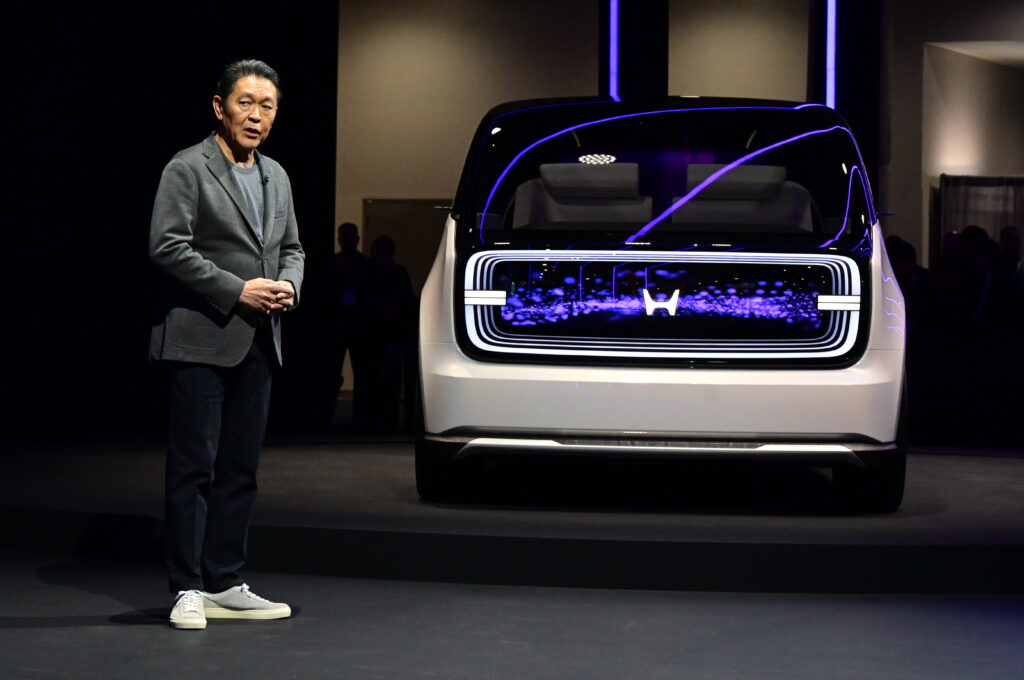
Honda’s executive vice president resigned on Monday over “an allegation of inappropriate conduct”, the Japanese automaker said.The incident occurred “during a social gathering outside of work hours”, Honda said in a statement without specifying what accusations were made against Shinji Aoyama, who is also the company’s director.”It is deeply regrettable that an individual positioned as a leader in the management of the company, and who is expected to set an example for the respect of human rights… has become the subject of an allegation of conduct contrary to these principles,” the company statement said.Honda declined to reveal details of Aoyama’s conduct, citing privacy concerns for the victim, Kyodo news agency reported.The firm’s audit committee had investigated the incident and presented a disciplinary action plan to the board of directors, who were “scheduled to make a decision”.However, Aoyama submitted his resignation letter before the board had made any move, the statement said.”The Company’s Board of Directors has determined that it is appropriate for Mr. Aoyama to resign from his position,” it said.Honda President Toshihiro Mibe will voluntarily return 20 percent of his monthly compensation for two months due to “the seriousness of this matter”, the company said.”The company sincerely apologises for any discomfort caused by such conduct, and for the significant disturbance and concern it has caused to all stakeholders.”

India’s Adani opens giant Sri Lanka container terminal

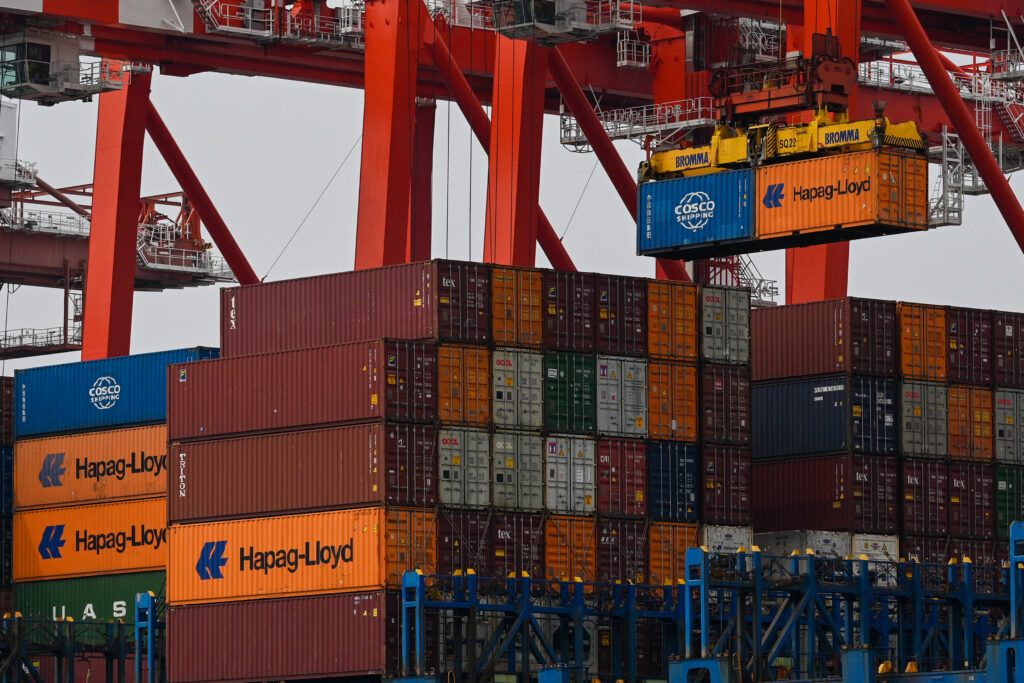
India’s Adani Group said on Monday it had opened an $800 million container terminal in Sri Lanka, right next to a similar facility operated by a Chinese company.The Adani development at Sri Lanka’s main seaport in Colombo is widely seen as a counter to the rival Chinese terminal and as a means for India to secure a foothold at the strategic facility.The launch of the Adani-operated facility came a day after Indian Prime Minister Narendra Modi concluded a state visit to Sri Lanka during which he secured defence and energy deals with Colombo.”The commencement of operations at CWIT (Colombo West International Terminal) marks a momentous milestone in regional cooperation between India and Sri Lanka,” billionaire chairman Gautam Adani, a key ally of Modi, said in a statement.Sri Lanka lies at a key halfway point along the main east–west international maritime route and Colombo is a major transhipment hub for South Asia.The company said it had completed 600 metres (660 yards) out of a final 1,400-metre long berth with a depth of 20 metres that is able to handle the largest container ships.- ‘Global maritime map’ -“Not only does this terminal represent the future of trade in the Indian Ocean, but its opening is also a proud moment for Sri Lanka, placing it firmly on the global maritime map,” Adani said.The joint venture went ahead despite the Indian conglomerate withdrawing in December a request for a US government-backed $533 million loan for the construction.The move followed an indictment in New York in November 2024, which accused the Adani Group of deliberately misleading international investors as part of a bribery scheme. Adani has denied any wrongdoing.The other partners in the Adani port venture are Sri Lanka’s publicly listed John Keells Holdings and the state-owned Sri Lanka Ports Authority.Construction began in early 2022, with the first phase featuring eight automated ship-to-shore cranes and 18 gantry cranes.There were no public statements from either side during Modi’s visit about Adani’s withdrawal from another venture, a $442 million wind power project in the north of Sri Lanka.That withdrawal followed a decision by President Anura Kumara Dissanayake’s administration to revoke a power purchase agreement with the Adani Group in order to negotiate lower energy prices.Dissanayake’s party had strongly criticised the deal as “corrupt” and called for it to be renegotiated.

Market panic deepens as Trump scolds China

US President Donald Trump lashed out at China on Monday as a stock market rout deepened after Beijing retaliated against his global tariffs offensive.European equities were deep in the red but Asia fared worse, with Hong Kong’s Hang Seng index crashing 13.2 percent, its biggest drop since the 1997 Asian financial crisis, and Tokyo’s Nikkei 225 falling an eye-watering 7.8 percent.A 10-percent “baseline” tariff on imports from around the world took effect on Saturday but a slew of countries will be hit by higher duties from Wednesday, with levies of 34 percent for Chinese goods and 20 percent for EU products.While other countries weigh their options, Beijing announced last week its own 34-percent tariff on US goods, which will come into effect on Thursday. Trump chastised Beijing early Monday for not heeding “my warning for abusing countries not to retaliate” as he called China “the biggest abuser of them all” on tariffs.Chinese vice commerce minister Ling Ji said the tit-for-tat duties “are aimed at bringing the United States back onto the right track of the multilateral trade system.””The root cause of the tariff issue lies in the United States,” Ling told representatives of US companies on Sunday, according to his ministry.EU trade ministers gathered in Luxembourg on Monday to discuss the bloc’s own response, with Germany and France having advocated a tax targeting US tech giants.”We must not exclude any option on goods, on services,” said French Trade Minister Laurent Saint-Martin.The 27-nation bloc should “open the European toolbox, which is very comprehensive and can also be extremely aggressive,” he said.German Economy Minister Robert Habeck likewise said Europe should be prepared to use its trade “bazooka” — a new anti-coercion mechanism allowing it to punish any country using economic threats to exert pressure on the EU.But signs of divergence already emerged, with Ireland, whose low corporate tax rate has attracted US tech and pharmaceutical companies, warning against that course of action.Targeting services “would be an extraordinary escalation at a time when we must be working for de-escalation,” said Irish Trade Minister Simon Harris.- Recession fears -Trump on Sunday doubled down on his demand to slash deficits with trading partners, saying he would not cut any deals unless that was resolved.”Sometimes you have to take medicine to fix something,” said Trump, whose administration has shrugged off the market panic.He told reporters aboard Air Force One that world leaders were “dying to make a deal.”Trillions of dollars have been wiped off stocks worldwide since Trump announced the tariffs last week, and the losses deepened on Monday, with US markets expected to open deep in the red.JPMorgan Chase CEO Jamie Dimon warned the tariffs “will likely increase inflation,” in a letter to shareholders Monday.”Whether or not the menu of tariffs causes a recession remains in question, but it will slow down growth,” he said.Taipei recorded its heaviest loss on record as it sank 9.7 percent.The Stoxx Europe 600 index was down five percent in early afternoon deals, with more than 1.5 trillion euros of market capitalization going up in smoke over just a few days.The main US oil contract dropped below $60 a barrel for the first time since April 2021 on worries of a global recession.”The market’s telling you in plain language: global demand is vanishing, and a global recession is on the cards and coming on fast,” said Stephen Innes at SPI Asset Management.- Status quo ‘gone’ -US officials said more than 50 countries have reached out to Trump to negotiate.Japanese Prime Minister Shigeru Ishiba, whose country faces a 24-percent levy, said Tokyo would present Trump with a “package” of measures to win relief from US tariffs ahead of a mooted call between the leaders.Benjamin Netanyahu, prime minister of Israel — hit with 17 percent tariffs, despite being one of Washington’s closest allies — was due on Monday to become the first leader to meet Trump since last week’s announcement.British Prime Minister Keir Starmer warned in a newspaper op-ed that “the world as we knew it has gone”, saying the status quo would increasingly hinge on “deals and alliances.”Vietnam, a manufacturing powerhouse with a big trade surplus with the United States, has already reached out and requested a delay of at least 45 days to thumping 46-percent tariffs.

Major garment producer Bangladesh says US buyers halting orders

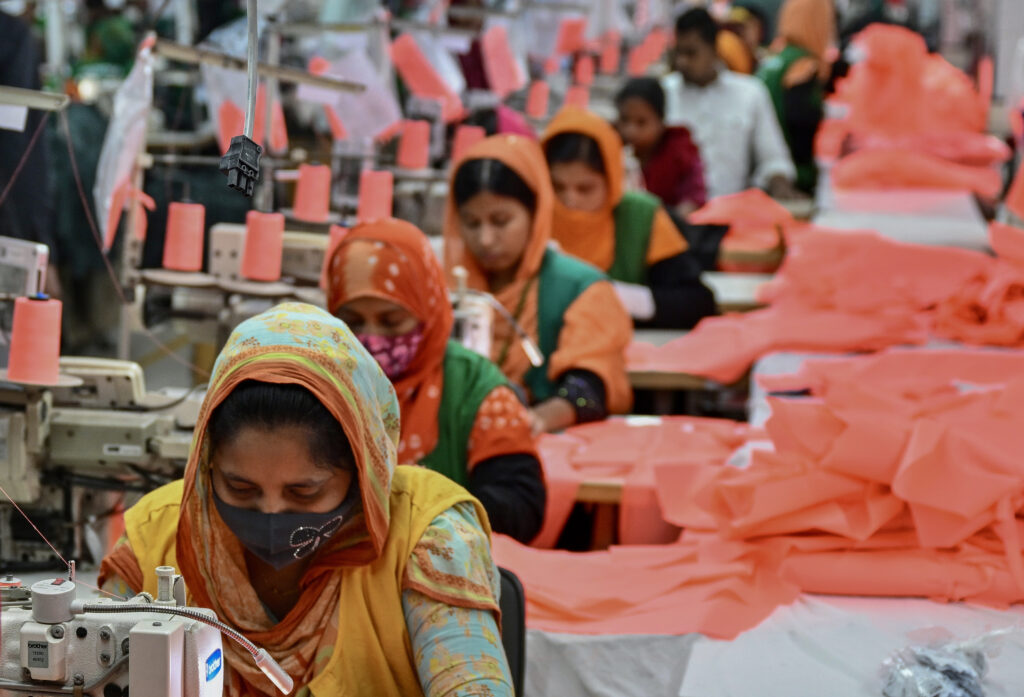
US buyers have begun halting orders from Bangladesh, the world’s second-biggest garment manufacturer, after punishing US tariffs that pushed the government in Dhaka to plead on Monday for a three-month pause to the levies.Textile and garment production accounts for about 80 percent of exports in Bangladesh and the industry has been rebuilding after it was hit hard in a student-led revolution that toppled the government last year.US President Donald Trump hit Bangladesh with biting new tariffs of 37 percent on Wednesday, hiking duties from the previous 16 percent on cotton products.Reports of the swift biting impact come as interim leader Muhammad Yunus pleaded with Trump to “postpone the application of US reciprocal tariff measures”, the government said in a statement.Yunus wrote to Trump to ask for “three months to allow the interim government to smoothly implement its initiative to substantially increase US exports to Bangladesh”, the statement added.Those products include “cotton, wheat, corn and soybean which will offer benefits to US farmers”, it read.”Bangladesh will take all necessary actions to fully support your trade agenda,” Yunus told Trump, according to the statement.- ‘In limbo’ -Manufacturers said the impact had been near immediate.Mohammad Mushfiqur Rahman, managing director of Essensor Footwear and Leather Products, said he received a letter from one of his buyers requesting a shipment halt.”My buyer asked me to stop a shipment of leather goods — including bags, belts, and wallets — worth $300,000 on Sunday,” Rahman told AFP.”He’s a long-time buyer and now both of us are in limbo over the issue.”Rahman, who has been operating since 2008, usually sends goods averaging about $100,000 to the United States every month.Bangladesh exported approximately $8.4 billion worth of goods to the United States last year, of which $7.34 billion came from the ready-made garments sector.Bengali newspaper Prothom Alo also quoted AKM Saifur Rahman, CEO of ready-made garments producer Wikitex-BD, saying that his US buyer had requested a halt to a shipment worth $150,000.”My US buyer said it is not possible to pass the extra cost on to their clients, so we need to lower the price,” Rahman told the daily.- ‘Request your patience’ -Md Anwar Hossain, government-appointed administrator of the Bangladesh Garment Manufacturers and Exporters Association (BGMEA), sent a letter to US-based buyers pleading for understanding.”We are aware that several brands and retailers have already reached out to their Bangladeshi suppliers, expressing concern and, in some cases, discussing possible measures to mitigate the impact,” Hossain wrote.”We understand the urgency, but transferring the burden downstream to suppliers at this early stage will only exacerbate the stress,” he added.”We humbly request your patience and support during this period as Bangladesh pursues a meaningful resolution.”But former BGMEA director Mohiuddin Rubel said some buyers have already asked for shipments to be put on hold until further notice.”In particular, smaller buyers are pressuring suppliers to either absorb the full tariff, or share the cost,” Rubel told AFP.