Afp Business Asia

Regulator clears Qatar Airways-Virgin Australia alliance

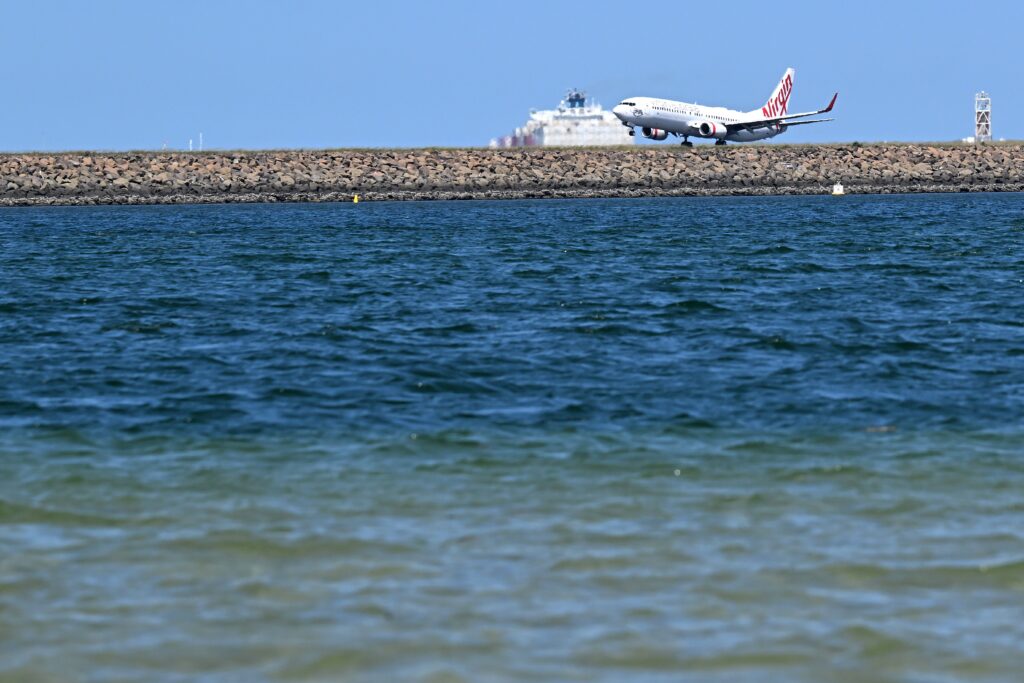
Australia’s competition regulator gave the go-ahead Friday for Qatar Airways to launch an alliance with Virgin Australia.The decision clears Qatar Airways to cooperate for five years in an “integrated alliance” with the Australian carrier, in which it will take a 25-percent stake.The pact would double flights between Doha and major Australian airports, the Australian Competition and Consumer Commission said.The boost in Australia-Middle East flights would create “minimal, if any, public detriment”, the authority’s commissioner, Anna Brakey, said in a statement.”This will likely place downward price pressure on these routes and will also give customers of Virgin Australia and Qatar Airways a greater choice of international flights with additional connectivity and loyalty program benefits,” she said.Under the pact, Qatar Airways and Virgin Australia plan to launch 28 new weekly services between Doha and the Australian cities of Sydney, Melbourne, Brisbane and Perth.The competition regulator’s decision was widely expected after it issued a draft determination in February proposing to grant authorisation.The two airlines, along with Virgin owner Bain Capital, announced the long-rumoured alliance proposal in October last year. The new flights are expected to stoke competition on expensive long-haul routes long dominated by Qantas.Qantas — along with its low-cost brand Jetstar — has a more than 60 percent share of the Australian market and boasts strong political clout.Virgin Australia started bankruptcy proceedings in 2020, laying off hundreds of staff as the Covid-19 outbreak grounded international flights. US private equity giant Bain Capital came to the airline’s rescue after the Australian government refused to bail out the majority foreign-owned company. Qatar Airways has been looking to increase its foothold in the Australian market.In 2023, Qatar launched a bid to put on 21 extra international flights to and from Australia each week. But the Australian government snubbed that request, citing a 2020 strip search scandal at Doha Airport as a “factor”. Women were pulled off 10 Qatar Airways flights at Doha Airport and forced to take invasive gynaecological exams after a baby was abandoned in an airport bathroom. Three Australian women lodged legal action against Qatar Airways following the ordeal, although the case was eventually dismissed. 
Trump’s auto tariffs spark global outcry as price hikes loom

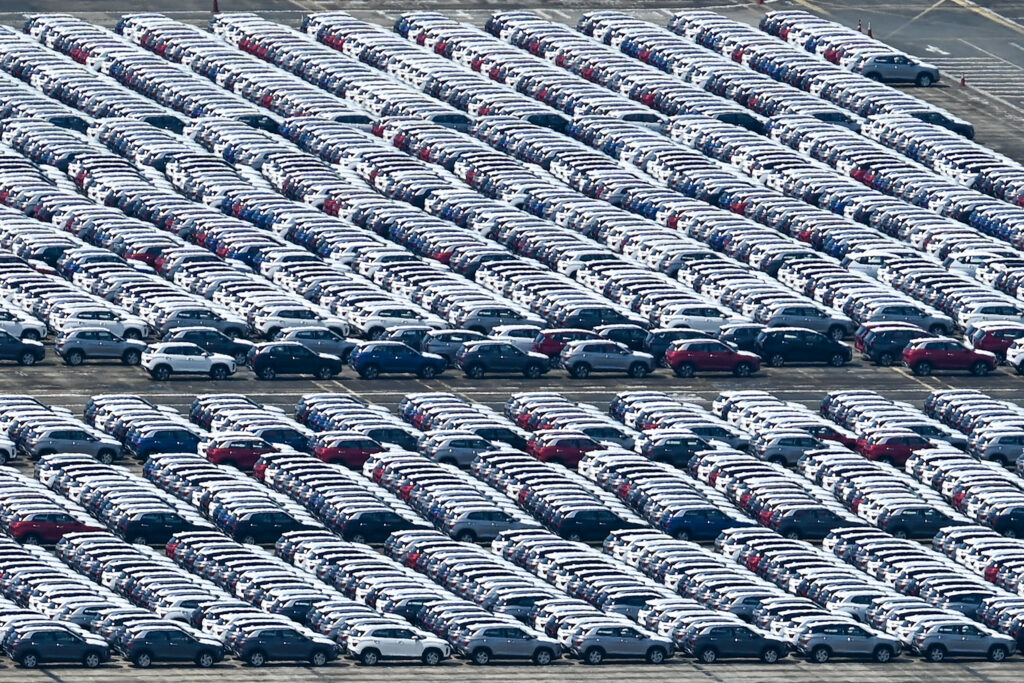
World powers on Thursday blasted US President Donald Trump’s steep tariffs on imported vehicles and parts, urging retaliation as trade tensions intensify and price hikes appear on the horizon.Major car exporter Germany called for a firm response from the European Union, while Japan said it “will consider all options.”Canadian Prime Minister Mark Carney said Thursday that the “old relationship” of deep economic, security and military ties with Washington “is over,” adding that he expected to speak with Trump in the next day or two.The 25 percent US duties, which take effect on April 3 at 12:01 am (0401 GMT), impact foreign-made cars, light trucks and vehicle parts.Experts warn of higher vehicle costs, and Italian carmaker Ferrari said it would raise prices on many models sold to the United States by up to 10 percent from next week.Global stock markets slumped with shares in automakers like Toyota, Hyundai, Mercedes and others falling. Wall Street’s main indexes closed lower as shares in General Motors and Ford fell.French Finance Minister Eric Lombard said the only solution for the European Union is to “raise tariffs on American products in response.”Carney, who earlier called the tariffs a “direct attack” on his country’s workers, said he convened a meeting to discuss trade options.Trump stepped up threats overnight, saying on social media that Canada and the EU could face “far larger” surcharges if they worked together “to do economic harm to the USA.”- Price surge -JPMorgan analysts estimate the tariffs on vehicles and parts over time could cause an increase of around $4,000 to $5,300 in average auto prices.It said around 82 percent of Ford’s US sales are produced domestically, with the corresponding figures for Stellantis at 71 percent and General Motors at 53 percent.The American Automotive Policy Council representing the big three automakers warned tariffs must be implemented in a way that “avoids raising prices for consumers” and preserves the industry’s competitiveness.Canadian Vehicle Manufacturers’ Association president Brian Kingston said the measures would bring higher costs for producers and consumers, alongside “a less competitive industry.”While Trump invoked emergency economic powers for some earlier tariffs, his auto levies build on a government investigation completed in 2019.- ‘Cheaters’ -About one in two cars sold in the United States are manufactured in the country. Among imports, about half come from Mexico and Canada, with Japan, South Korea and Germany also major suppliers.The White House estimates that of the US-made cars, their average domestic content is likely around 40 percent.Top Trump trade aide Peter Navarro on Wednesday blasted “foreign trade cheaters” who he said turned the US manufacturing sector into a “lower wage assembly operation for foreign parts.”He took aim at Germany and Japan for reserving construction of higher-value parts to their countries.Since returning to the presidency, Trump has imposed tariffs on imports from major trading partners Canada, Mexico and China — alongside a 25 percent duty on steel and aluminum.The latest levies add to those already in place for autos.But the White House said vehicles entering the United States under the US-Mexico-Canada Agreement (USMCA) can qualify for a lower rate depending on their American content.USMCA-compliant auto parts will remain tariff-free as officials establish a process to target their non-US content.Mexican President Claudia Sheinbaum said tariffs were contrary to the North American trade deal, but noted her country would wait until April before responding.- ‘Bargaining chip’ -Uncertainty over Trump’s trade plans have roiled financial markets, while consumer confidence slips.Trump has defended tariffs as a way to raise government revenue and revitalize US industry.Targeting imported cars however would have “a devastating impact” on many close US trading partners, said Asia Society Policy Institute vice president Wendy Cutler.Abby Samp of Oxford Economics said she expects “additional investments in US plants could be used as a bargaining chip to lower tariffs.”Besides automobiles, Trump is considering other sector-specific tariffs, including on pharmaceuticals, semiconductors and lumber.He has promised “Liberation Day” on April 2, when he is set to unveil reciprocal levies tailored to different trading partners, to address practices deemed unfair.

Autos lead market losses after Trump unveils sharp tariffs

Automakers were battered Thursday as stock markets fell on both sides of the Atlantic after US President Donald Trump announced significant tariffs on imported vehicles and parts, pressing ahead with tough trade policies many fear will spark a recession.On Wall Street, the Dow, the tech-heavy Nasdaq and the broad-based S&P 500 all slipped, with General Motors giving up 7.4 percent and Ford dipping 3.9 percent.In Tokyo, Toyota — the world’s top-selling carmaker — fell two percent. Honda shed 2.5 percent, Nissan was off 1.7 percent and Mazda dropped six percent.Seoul-listed Hyundai gave up more than four percent.Among European auto firms, Volkswagen shed 1.3 percent, Porsche lost 2.6 percent, Mercedes dropped 2.7 percent and BMW fell 2.5 percent, helping to push the Frankfurt DAX index down 0.7 percent.Jeep maker Stellantis lost more than four percent.India’s Tata Motors, which exports Jaguars and Land Rovers to the United States, also lost ground — leading analysts to speculate on where markets may be headed. “The trade war has escalated, and unsurprisingly, German carmakers are leading the declines or are among the biggest decliners today,” said StoneX Group analyst Fawad Razaqzada.Jochen Stanzl, chief market analyst with CMC Markets, added: “While investors see a fair chance for successful negotiations between the European Union and the US in the coming weeks, many prefer to wait for these discussions rather than speculate in advance.”Ultimately, these actions could follow familiar patterns of threats before negotiations that produce compromises which Trump can proudly present, Stanzl added.Recent speculation that Trump might not impose sector-specific tariffs in early April has “been entirely undermined by the fact that the president has instead opted to start announcing such measures ahead of that date,” said analyst Joshua Mahony of Scope Markets.There also had been indications that tariffs lined up for Trump’s so-called “Liberation Day” on April 2 could be less severe than feared.However, the White House’s habit of alternating between tough talk and leniency has fanned uncertainty, and the latest announcement did little to soothe nerves.”What we’re going to be doing is a 25 percent tariff on all cars that are not made in the United States,” Trump said Wednesday.The rate, which takes effect on April 3 at 12:01 am (0401 GMT), affects foreign-made cars and light trucks imported into America. The tariffs also apply to auto parts.The move has heightened concerns about the impact on global growth and corporate profits, particularly for carmakers in Mexico, Japan, South Korea, and Germany, said Daniela Sabin Hathorn, senior market analyst at Capital.com.About half of the cars sold in the United States are made within the country. Of the imported vehicles, about half come from Mexico and Canada, with Japan, South Korea and Germany also major suppliers.Japan’s government called the tariffs “extremely regrettable” while Canadian Prime Minister Mark Carney called it a “direct attack” on his country’s workers.Carney later added that the era of deep economic, security and military ties between Canada and the United States was “over.”French Finance Minister Eric Lombard warned: “The only solution for the European Union will be to raise tariffs on American products in response.”- Key figures around 2030 GMT -New York – Dow: DOWN 0.4 percent at 42,299.70 points (close)New York – S&P 500: DOWN 0.3 percent at 5,693.31 (close)New York – Nasdaq: DOWN 0.5 percent at 17,804.03 (close)London – FTSE 100: DOWN 0.3 percent at 8,666.12 (close) Paris – CAC 40: DOWN 0.5 percent at 7,990.11 (close)Frankfurt – DAX: DOWN 0.7 percent at 22,678.74 (close)Tokyo – Nikkei 225: DOWN 0.6 percent at 37,799.97 (close)Hong Kong – Hang Seng Index: UP 0.4 percent at 23,578.80 (close)Shanghai – Composite: UP 0.2 percent at 3,373.75 (close)Euro/dollar: UP at $1.0796 from $1.0757 on WednesdayPound/dollar: UP at $1.2947 from $1.2891Dollar/yen: UP at 151.04 yen from 150.54 yenEuro/pound: DOWN at 83.38 pence from 83.41 penceWest Texas Intermediate: UP 0.4 percent at $69.92 per barrelBrent North Sea Crude: UP 0.3 percent at $74.03 per barrel

US auto industry stunned by tariffs meant to save it

The 25 percent tariffs on automobiles announced by President Donald Trump are meant to revitalize American industry, but Detroit’s giants were stunned Thursday by their scale and faced a beating on Wall Street.While the implementation of the tariffs had been anticipated for weeks, their details surprised manufacturers and experts as the levies will not only apply to imports of finished vehicles but parts as well.That will be particularly painful because the sector relies on a complex global supply chain, sometimes involving multiple border crossings, with assembly in one country of parts manufactured in others.The levies kick in April 3 at 04:01 GMT, according to the decree signed by the Republican president on Wednesday.The manufacturing process at Ford and General Motors depends largely on a highly complex back-and-forth between the United States, Mexico, and Canada — the three countries linked by the USMCA, a free trade agreement signed by Trump during his first term.However, Trump’s decree doesn’t provide exemptions for imports under USMCA, dashing industry hopes that car parts would be spared.The tariffs include “crucial parts” — engines, transmissions, powertrains, and electrical components are on the list that could be expanded.Parts not originally manufactured in the United States will face 25 percent tariffs just like finished foreign vehicles.The White House noted that of the 16 million new vehicles sold in the United States last year, half were assembled in the country but contained only 40-50 percent American-made components.It also said the trade deficit for automotive parts was $93.5 billion.Stock Market DeclineManufacturers faced a drubbing in the stock market Thursday.General Motors plummeted 7.3 percent, while Ford closed down 3.8 percent and Stellantis 1.2 percent. US listed shares of Toyota and Honda fell by 2.8 percent and 2.7 percent, respectively.According to JPMorgan analysts, 82 percent of vehicles sold by Ford are produced in the United States, ahead of Stellantis (71 percent), Honda (68 percent), Toyota (57 percent), and General Motors (53 percent).Trump’s decree demands that manufacturers determine the percentage between US parts and foreign parts in components or finished vehicles entering the United States, with the 25 percent tariff imposed only on foreign-made parts.This presents a real challenge for manufacturers — who will be penalized for incorrect allocations — but also for the authorities to track them.An implementation delay has therefore been granted, allowing the Commerce Department time to figure out how to proceed.According to JPMorgan, once tariffs are collected across the entire intended scope, they would generate $82 billion annually. Trump claimed Wednesday that they would bring in “more than $100 billion.”JPMorgan estimated that the largest tariff bill would be paid by GM ($13 billion) while Ford should pay around $4.5 billion.Experts have no doubt that there will be a price increase for new vehicles in the United States, which will subsequently affect a weakened used car market as owners keep their vehicles longer.The president’s goal is to increase manufacturing in the United States, but relocating factories or reconfiguring a supply chain cannot happen overnight.Foreign nations have also threatened retaliatory measures which could further impact the sector.In the meantime, manufacturers will have to decide between fully passing on the additional cost to the end consumer, cutting into their margins, or a mix of both.The cost of an affected new vehicle could increase by 9-12 percent, or $4,000 to $5,300, JPMorgan anticipates.”With added cost pressures, automakers may pull back on incentives, which could make it more difficult for some consumers to find affordable options,” said Jessica Caldwell from Edmunds.According to Caldwell, insurance premiums should also increase due to inflation in spare parts costs.

Games publisher Ubisoft announces restructuring, billion-euro investment

In a bid to escape financial woes, French games giant Ubisoft said Thursday it was creating a new subsidiary around its most popular franchises such as “Assassin’s Creed” in partnership with China’s Tencent.The new unit, valued at around four billion euros ($4.3 billion), will be 25-percent controlled by Tencent, which will stump up 1.16 billion euros of new investment in exchange.Alongside “Assassin’s Creed”, the subsidiary will bring together “Far Cry” and “Tom Clancy’s Rainbow Six” — among the most popular long-running names in Ubisoft’s roster of game universes.Ubisoft appears to be making the most of last week’s successful launch of the latest “Assassin’s Creed” instalment, “Shadows”, on which much of its future was riding.Conditions for the Tencent deal include a bar on the French company losing its majority in the subsidiary for its first two years.Tencent cannot increase its stake for the next five years — unless Ubisoft loses its majority in the mean time.Chief executive Yves Guillemot called the step a “new chapter in (Ubisoft’s) history”.Last year brought a string of woes for Ubisoft, with several disappointing releases for would-be blockbuster games and a slump in its stock price.Spinning up the new subsidiary — whose name has not yet been announced — by the end of the year means the company is “crystallising the value of our assets, strengthening our balance sheet, and creating the best conditions for these franchises’ long-term growth and success,” Guillemot said.The deal also sees Tencent assert its hold on Ubisoft more strongly after climbing aboard in 2022.The Chinese firm holds almost 10 percent of the group’s stock — a threshold it is not allowed to cross before 2030 — while the founding Guillemot family owns around 15 percent.- Breaking the streak -Earlier this year, Ubisoft had said that it was “actively exploring various strategic and capitalistic options”.Finance chief Frederick Duquet said Thursday that “we received many expressions of interest that turned into several non-binding offers for different options”.In the end, directors opted to create the subsidiary as this “allowed Ubisoft to maintain control of its key assets, with a view to creating very large brands worth multiple billions in the coming years,” Duquet added.Ubisoft plans to make further announcements on changes to the group at a later stage.The company’s market capitalisation stood at 1.7 billion euros by close of trading in Paris Thursday — or less than half the valuation of the new subsidiary.Teams working on the three major franchises will be brought together in the new France-based unit, especially Ubisoft’s Montreal studios — one of the largest in the company.In total, the publisher employs around 18,000 people worldwide, 4,000 of them in France.”Assassin’s Creed Shadows” has pulled in three million players since its March 20 release, breaking a streak of disappointing launches for Ubisoft.The group will nevertheless push ahead with a cost-cutting plan drawn up in early 2023, under which it has already closed studios outside France and shed 2,000 jobs.Ubisoft’s troubles reflect wider doldrums in the video games sector over the past two years.

Trump’s auto tariffs spark global outcry as price hikes loom

World powers on Thursday blasted US President Donald Trump’s steep tariffs on imported vehicles and parts, vowing retaliation as trade tensions intensify and price hikes appear on the horizon.Major car exporter Germany urged a firm response from the European Union, while Japan said it “will consider all options.”The 25 percent US duties take effect starting 12:01 am Washington time (0401 GMT) on April 3 and impact foreign-made cars, light trucks and vehicle parts.Experts warn of higher vehicle costs, and Italian carmaker Ferrari said it would raise prices on many models sold to the United States by up to 10 percent from next week.Global stock markets plummeted with automakers like Toyota, Hyundai and Mercedes leading the plunge. In New York, shares in General Motors tumbled with Ford and Stellantis also declining.French Finance Minister Eric Lombard said the only solution for the EU is to “raise tariffs on American products in response.”Canadian Prime Minister Mark Carney said he convened a meeting to discuss trade options, while Mexico’s Economy Minister Marcelo Ebrard seeks “preferential treatment” for his country.But Trump ramped up his threats overnight, saying on social media that Canada and the EU could face “far larger” tariffs if they worked together “to do economic harm to the USA.”- Price surge -JPMorgan analysts estimate the tariffs on autos and parts could cause a $4,000 to $5,300 increase in average auto prices.It said 82 percent of Ford’s US sales are produced domestically, with the corresponding figures for Stellantis at 71 percent and General Motors at 53 percent.The American Automotive Policy Council representing the three automakers warned that the tariffs must be implemented in a way that “avoids raising prices for consumers” and preserves the industry’s competitiveness.”The steep and broad-based tariffs are likely to cause supply chain disruptions globally,” JPMorgan said in a note.Canadian Vehicle Manufacturers’ Association president Brian Kingston said the levies would bring higher costs for producers and consumers, alongside “a less competitive industry.”While Trump invoked emergency economic powers for some earlier tariffs, his auto levies build on a government investigation completed in 2019.- ‘Cheaters’ -About one in two cars sold in the United States are manufactured in the country. Among imports, about half come from Mexico and Canada, with Japan, South Korea and Germany also major suppliers.Of the US-made cars, their average domestic content is likely around 40 percent, the White House said.In a briefing Wednesday, Trump’s senior counselor Peter Navarro blasted “foreign trade cheaters” who he said turned the US manufacturing sector into a “lower wage assembly operation for foreign parts.”He took aim at Germany and Japan for reserving construction of higher-value parts to their countries.Since returning to the presidency, Trump has imposed tariffs on imports from major trading partners Canada, Mexico and China — alongside a 25 percent duty on steel and aluminum.The latest levies add to those already in place for autos.But the White House said that vehicles entering under the US-Mexico-Canada Agreement (USMCA) can qualify for a lower rate depending on their American content.USMCA-compliant auto parts will remain tariff-free as officials establish a process to target their non-US content.Mexican President Claudia Sheinbaum said tariffs were contrary to the North American trade deal, but her country would wait until early April before responding.- ‘Devastating impact’ -Uncertainty over Trump’s trade plans and worries they could trigger a downturn have roiled financial markets, with consumer confidence also slipping.Trump has defended levies as a way to raise government revenue and revitalize US industry.Targeting imported cars could strain ties with Washington’s allies, however.”Imposing 25 percent tariffs on imported cars will have a devastating impact on many of our close trading partners,” said Wendy Cutler, vice president at the Asia Society Policy Institute and a former US trade negotiator.Besides automobiles, Trump is eyeing other sector-specific tariffs, including on pharmaceuticals, semiconductors and lumber.Trump has promised a “Liberation Day” on April 2, when he is set to unveil reciprocal levies, tailored to different trading partners, to address practices that his government deems unfair.

Autos lead market losses after Trump tariffs

Automakers were battered Thursday and stock markets fell on both sides of the Atlantic after US President Donald Trump announced painful tariffs on imported vehicles and parts as he presses hardball trade policies many fear will spark a recession.On Wall Street, the Dow, the tech-heavy Nasdaq and the broader-based S&P 500 were all around half of one percent in the red more than two hours into trading, with General Motors giving up almost seven percent while Ford’s dip was just shy of three percent.In Tokyo, Toyota — the world’s top-selling carmaker — fell two percent, Honda shed 2.5 percent, Nissan was off 1.7 percent and Mazda dived six percent.Seoul-listed Hyundai gave up more than four percent.Among European auto firms, Volkswagen shed 1.3 percent, Porsche lost 2.6 percent, Mercedes lost 2.7 percent and BMW fell 2.5 percent, helping to push the Frankfurt DAX index down 0.7 percent.Jeep maker Stellantis lost more than four percent.  In Mumbai, India’s Tata Motors, which exports Jaguars and Land Rovers to the United States, lost more than five percent, leading analysts to speculate on where markets may be headed. “The trade war has escalated, and unsurprisingly, German carmakers are leading the declines or are among the biggest decliners today,” said StoneX Group analyst Fawad Razaqzada.”While investors see a fair chance for successful negotiations between the European Union and the US in the coming weeks, many prefer to wait for these discussions rather than speculate in advance,” suggested Jochen Stanzl, chief market analysts with CMC Markets.”Ultimately, these actions could follow familiar patterns: threats issued first, followed by negotiations, leading to compromises that the US president can proudly present,” said Stanzl.”Recent glee over the notion that Trump wouldn’t impose sector specific tariffs… (in early April) have been entirely undermined by the fact that the president has instead opted to start announcing such measures ahead of that date,” noted Joshua Mahony, analyst at Scope Markets.There had been previous indications that levies lined up for the president’s so-called “Liberation Day” on April 2 would be less severe than feared.However, the White House’s habit of alternating between tough talk and leniency has fanned uncertainty, and the latest announcement did little to soothe nerves.”What we’re going to be doing is a 25 percent tariff on all cars that are not made in the United States,” Trump said as he signed an order in the Oval Office.The move takes effect at 12:01 am Eastern time (0401 GMT) on April 3 and affects foreign-made cars and light trucks imported into America. Key automobile parts will also be hit within the month.”The move has intensified concerns about the impact on global growth and corporate profitability, particularly for carmakers in Mexico, Japan, South Korea, and Germany — key suppliers to the US market, said Daniela Sabin Hathorn, senior market analyst at Capital.com.About half of the cars sold in the United States are made within the country. Of the imported vehicles, about half come from Mexico and Canada, with Japan, South Korea and Germany also major suppliers.Japan’s government called the tariffs “extremely regrettable”, while Canadian Prime Minister Mark Carney called it a “direct attack” on his country’s workers.French Finance Minister Eric Lombard warned: “The only solution for the European Union will be to raise tariffs on American products in response.”- Key figures around 1645 GMT -New York – Dow: DOWN 0.4 percent at 42,271.33 pointsNew York – S&P 500: DOWN 0.3 percent at 5,708.51New York – Nasdaq: DOWN 0.3 percent at 17,838.09 London – FTSE 100: DOWN 0.3 percent at 8,666.12 (close) Paris – CAC 40: DOWN 0.5 percent at 7,990.11 (close)Frankfurt – DAX: DOWN 0.7 percent at 22,678.74 (close)Tokyo – Nikkei 225: DOWN 0.6 percent at 37,799.97 (close)Hong Kong – Hang Seng Index: UP 0.4 percent at 23,578.80 (close)Shanghai – Composite: UP 0.2 percent at 3,373.75 (close)Euro/dollar: UP at $1.0794 from $1.0757 on WednesdayPound/dollar: UP at $1.2959 from $1.2891Dollar/yen: UP at 151.10 yen from 150.54 yenEuro/pound: DOWN at 83.30 pence from 83.41 penceWest Texas Intermediate: UP 0.1 percent at $69.75 per barrelBrent North Sea Crude: FLAT at $73.79 per barrel

Global outcry as Trump heaps tariffs on foreign autos and parts

World powers on Thursday blasted US President Donald Trump’s steep tariffs on imported vehicles and parts, vowing retaliation as a widening trade war intensifies.Major car exporter Germany urged a firm response from the European Union, while Japan said it “will consider all options.”The 25 percent US duties take effect starting 12.01am eastern time (0401 GMT) April 3 and impact foreign-made cars, light trucks and vehicle parts.Global stock markets plummeted with automakers like Toyota, Hyundai and Mercedes leading the plunge. In New York, shares in General Motors tumbled with Ford and Stellantis also declining.France Finance Minister Eric Lombard said the only solution for the EU is to “raise tariffs on American products in response.”Canadian Prime Minister Mark Carney said he convened a meeting to discuss trade options, while Mexico’s Economy Minister Marcelo Ebrard seeks “preferential treatment” for his country.Trump ramped up his threats, saying on social media that Canada and the EU could face “far larger” tariffs if they worked together “to do economic harm to the USA.”Trump confidant and Tesla boss Elon Musk said his company would not be spared, writing on X that the price for parts “is not trivial.” However, because Tesla builds its cars for the US market domestically it will in fact emerge relatively unscathed compared to rivals.The American Automotive Policy Council warned that the tariffs must be implemented in a way that “avoids raising prices for consumers” and preserves the industry’s competitiveness.While Trump invoked emergency economic powers for some earlier tariffs, his auto levies build on a government investigation completed in 2019.- ‘Cheaters’ -The Center for Automotive Research previously estimated that US tariffs could raise the price of a car by thousands of dollars and weigh on the jobs market.About one in two cars sold in the United States are manufactured in the country. Among imports, about half come from Mexico and Canada, with Japan, South Korea and Germany also major suppliers.Of the US-made cars, their average domestic content likely around 40 percent, the White House said.Canadian Vehicle Manufacturers’ Association president Brian Kingston said levies would bring higher costs for producers and consumers, alongside “a less competitive industry.”In a briefing Wednesday, Trump’s senior counselor Peter Navarro blasted “foreign trade cheaters” who he said turned the US manufacturing sector into a “lower wage assembly operation for foreign parts.”He took aim at Germany and Japan for reserving construction of higher-value parts to their countries.Since returning to the presidency, Trump has imposed tariffs on imports from major trading partners Canada, Mexico and China — alongside a 25 percent duty on steel and aluminum.The latest levies add to those already in place for autos.But the White House said that vehicles entering under the US-Mexico-Canada Agreement (USMCA) can qualify for a lower rate depending on their American content.Similarly, USMCA-compliant auto parts will remain tariff-free as officials establish a process to target their non-US content.Mexican President Claudia Sheinbaum said tariffs were contrary to the North American trade deal, but her country would wait until early April before giving a “comprehensive response.”- ‘Devastating impact’ -Uncertainty over Trump’s trade plans and worries they could trigger a downturn have roiled financial markets, with consumer confidence also slipping.Trump has defended levies as a way to raise government revenue and revitalize US industry.Targeting imported cars could strain ties with Washington’s allies, however.”Imposing 25 percent tariffs on imported cars will have a devastating impact on many of our close trading partners,” said Wendy Cutler, vice president at the Asia Society Policy Institute and a former US trade negotiator.Washington has free-trade agreements with some affected parties, “calling into question the value of US commitments” under a trade deal, she added.Besides automobiles, Trump is eyeing other sector-specific tariffs, including on pharmaceuticals, semiconductors and lumber.Trump has promised a “Liberation Day” on April 2, when he is set to unveil reciprocal levies, tailored to different trading partners, to address practices that his government deems unfair.White House Press Secretary Karoline Leavitt said these would focus on countries that have been “ripping off the United States,” although Trump noted some numbers would be more conservative than many expected.

Autos lead market losses after Trump’s latest tariffs salvo

Share prices of automakers slid Thursday after US President Donald Trump announced painful tariffs on imported vehicles and parts as he presses hardball trade policies many fear will spark a recession.In Tokyo, Toyota — the world’s top-selling carmaker — fell two percent, Honda shed 2.5 percent while Nissan was off 1.7 percent, while Mazda dived six percent.Seoul-listed Hyundai gave up more than four percent.Among European auto firms, Peugeot and Jeep maker Stellantis shed 3.5 percent, Porsche four percent and BMW 1.8 percent.  In Mumbai, India’s Tata Motors, which exports Jaguar Land Rovers to the United States, lost more than five percent. US-listed car giants also tumbled with General Motors and Ford all deep in the red in after-hours trade.”Recent glee over the notion that Trump wouldn’t impose sector specific tariffs… (in early April) have been entirely undermined by the fact that the president has instead opted to start announcing such measures ahead of that date,” noted Joshua Mahony, analyst at Scope Markets.There had been indications also that levies lined up for the president’s “Liberation Day” on April 2 would be less severe than feared.However, the White House’s habit of alternating between tough talk and leniency has fanned uncertainty and the latest announcement did little to soothe nerves.”What we’re going to be doing is a 25 percent tariff on all cars that are not made in the United States,” Trump said as he signed an order in the Oval Office.The move takes effect at 12:01 am Eastern time (0401 GMT) on April 3 and affects foreign-made cars and light trucks. Key automobile parts will also be hit within the month.About half of the cars sold in the United States are made within the country. Of the imported vehicles, about half come from Mexico and Canada, with Japan, South Korea and Germany also major suppliers.Japan’s government called the tariffs “extremely regrettable”, while Canadian Prime Minister Mark Carney called it a “direct attack” on his country’s workers.And French Finance Minister Eric Lombard warned on Thursday: “The only solution for the European Union will be to raise tariffs on American products in response.”UK finance minister Rachel Reeves said Britain does not want to “escalate” trade wars, with London locked in talks with Washington over potentially securing a post-Brexit trade deal.”We are looking to secure a better trading relationship with the United States,” she told Sky News.Losses on London’s FTSE 100 index were offset by strong gains among clothes retailers, with Next jumping 6.9 percent after posting annual pre-tax profit above the symbolic £1 billion ($1.3 billion) level.Close rival Marks and Spencer won 3.4 percent.- Key figures around 1030 GMT -London – FTSE 100: DOWN 0.6 percent at 8,641.37 pointsParis – CAC 40: DOWN 0.4 percent at 8,002.76Frankfurt – DAX: DOWN 0.7 at 22,672.94 Tokyo – Nikkei 225: DOWN 0.6 percent at 37,799.97 (close)Hong Kong – Hang Seng Index: UP 0.4 percent at 23,578.80 (close)Shanghai – Composite: UP 0.2 percent at 3,373.75 (close)New York – Dow: DOWN 0.3 percent at 42,454.79 (close)Euro/dollar: UP at $1.0774 from $1.0757 on WednesdayPound/dollar: UP at $1.2918 from $1.2891Dollar/yen: UP at 150.95 yen from 150.54 yenEuro/pound: DOWN at 83.39 pence from 83.41 penceWest Texas Intermediate: DOWN 0.1 percent at $69.57 per barrelBrent North Sea Crude: DOWN 0.1 percent at $72.97 per barrel

Global outcry as Trump heaps 25% tariffs on foreign-built vehicles

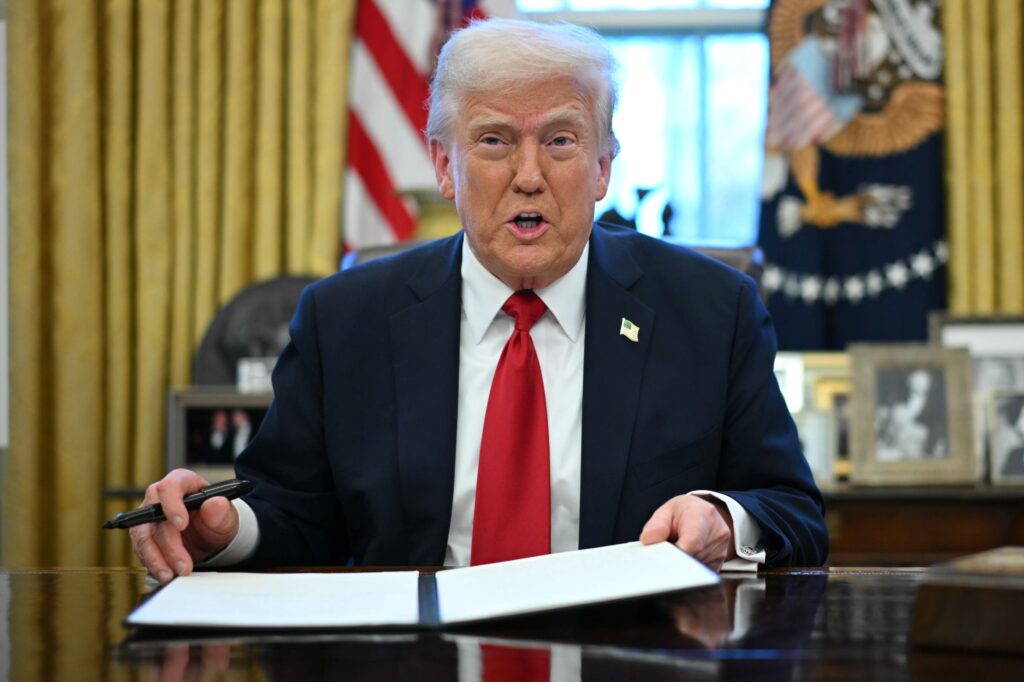
World powers on Thursday blasted US President Donald Trump’s steep tariffs on imports of vehicles and car parts, vowing retaliation as a widening trade war intensifies.Major car exporter Germany called for a firm response from the EU, while Japan said it “will consider all options.”Stock markets across Asia and Europe skidded into the red as auto manufacturers from Toyota to Hyundai and Mercedes led the plunge.The US duties will take effect at 12:01 am (0401 GMT) on April 3 and impact foreign-made cars and light trucks. Key automobile parts will also be hit within the month.”What we’re going to be doing is a 25 percent tariff on all cars that are not made in the United States. If they’re made in the United States, it is absolutely no tariff,” Trump said at the White House.France Finance Minister Eric Lombard condemned the “hostility,” saying that the “only solution for the European Union will be to raise tariffs on American products in response.”Canada’s Prime Minister Mark Carney said he had convened a meeting Thursday to “discuss our trade options.”As Washington’s major trading partners warned of retaliatory action, Trump ramped up his threats. “If the European Union works with Canada in order to do economic harm to the USA, large scale Tariffs, far larger than currently planned, will be placed on them both in order to protect the best friend that each of those two countries has ever had!” Trump posted on his TruthSocial network.But Trump’s levies rattled domestic manufacturers too, with his top ally and Tesla boss Elon Musk admitting his company would not be spared the pain.”To be clear, this will affect the price of parts in Tesla cars that come from other countries. The cost impact is not trivial,” Musk wrote on X.The association of American Automakers warned in a statement that the tariffs must be implemented in a way that “avoids raising prices for consumers” and preserves the industry’s competitiveness. – ‘Cheaters’ -The Center for Automotive Research has previously estimated that US tariffs –- including those on imported autos and metals –- could increase the price of a car by thousands of dollars and weigh on the jobs market.But Peter Navarro, Trump’s senior counselor for trade and manufacturing, in a briefing after Trump’s announcement, blasted “foreign trade cheaters” who he said turned America’s manufacturing sector into a “lower wage assembly operation for foreign parts.”He took aim at Germany and Japan for reserving the construction of higher-value parts to their countries.Since beginning his second term in January, Trump has imposed fresh tariffs on imports from major US trading partners Canada, Mexico and China — alongside a 25 percent duty on steel and aluminum.The latest levies will be in addition to those already in place.But the White House added that vehicles entering under the US-Mexico-Canada Agreement (USMCA) can qualify for a lower rate depending on their American content.Similarly, USMCA-compliant auto parts will remain tariff-free as officials establish a process to target their non-US content.- ‘Devastating impact’ -Uncertainty over Trump’s trade plans and worries they could trigger a downturn have roiled financial markets, with consumer confidence also falling in recent months.Trump has defended the levies as a way to raise government revenue and revitalize American industry.But targeting imported cars could strain ties with close partners such as Japan, South Korea, Canada, Mexico and Germany.”Imposing 25 percent tariffs on imported cars will have a devastating impact on many of our close trading partners,” said Wendy Cutler, vice president at the Asia Society Policy Institute and a former US trade negotiator.She added that Washington has free-trade agreements with some affected parties, “calling into question the value of US commitments” under a trade deal.About one in two cars sold in the United States are manufactured within the country. Among imports, about half come from Mexico and Canada, with Japan, South Korea and Germany also being major suppliers.And of the US-made cars, more than half were assembled from foreign parts, said a White House official.- ‘Liberation Day’ -Besides the automobile industry, Trump is also eyeing sector-specific tariffs, such as on pharmaceuticals, semiconductors and lumber.Wednesday’s announcement comes ahead of Trump’s so-called “Liberation Day” for the world’s biggest economy on April 2.He has promised reciprocal levies, tailored to different trading partners to remedy practices Washington deemed unfair. On Wednesday he said these duties will impact all countries.While Trump has invoked emergency economic powers for some recent tariffs, his auto levies build on a government investigation completed in 2019.The probe found that excessive imports were weakening the internal economy and might impair national security.