Afp Business Asia

Asian markets mixed ahead of key US jobs data

Asian equities were mixed on Friday as investors headed into the weekend awaiting the release of US jobs data, while traders kept a nervous eye on Washington where President Donald Trump is pressing ahead with a hardball trade agenda.The week was on course for a tepid end, having begun with another bout of volatility after Trump imposed tariffs on leading partners China, Canada and Mexico.He  delayed imposing the measures on his immediate neighbours for a month, but those directed at Beijing remain in place, sparking retaliatory levies and fuelling fears of another economically painful trade war between the superpowers.And while observers said China’s response was measured — likely owing to leaders wanting to keep their powder dry — they warned that the stand-off could heat up and other countries could also be in Trump’s sights.”It’s hard to predict where this kerfuffle will end up: a sudden deal to remove these tariffs again can’t be ruled out,” HSBC’s chief Asia economist Frederic Neumann said in a note.”More likely, however, is that even higher US tariffs will be imposed on China eventually. And other economies in the region may also receive scrutiny over time, as many run sizeable trade surpluses with the United States. “Even if the immediate hit to regional trade from the latest trade fuss should prove manageable, the increased uncertainty is bound to put a dent on cross-border direct investment.”Still, investors are for now enjoying the relative calm as analysts say the White House’s moves have so far been less strident than initially feared.Focus is on the US non-farm payrolls report due later in the day, with a below-forecast reading seen as boosting hopes for an interest rate cut.Hong Kong and Shanghai rose one percent thanks to gains in tech firms, while Singapore, Wellington, Bangkok and Taipei also edged up. Sydney, Seoul, Mumbai, Jakarta and Manila all dropped, with Tokyo weighed by a stronger yen.London, Paris and Frankfurt all fell at the open.The Japanese currency has picked up this week, and at one point on Friday hit 150.96 to the dollar, a level not seen since early December, helped by top central bank policy board member Naoki Tamura saying he wanted borrowing costs to rise to one percent by year end.They currently sit at 0.5 percent.The gains in Asia followed a broadly positive lead from Wall Street, though worries about the tech sector remain after last month’s release of a new chatbot by Chinese startup DeepSeek that has upended the battle for AI supremacy.A disappointing earnings release from Amazon — a day after a similar result from Google-Parent Alphabet — added to the jitters.- Key figures around 0810 GMT -Tokyo – Nikkei 225: DOWN 0.7 percent to 38,787.02 (close)Hong Kong – Hang Seng Index: UP 1.2 percent to 21,133.54 (close)Shanghai – Composite: UP 1.0 percent to 3,303.67 (close)London – FTSE 100: DOWN 0.2 percent at 8,710.79Euro/dollar: UP at $1.0390 from $1.0387 on ThursdayPound/dollar: UP at $1.2444 from $1.2436Dollar/yen: UP at 151.80 yen from 151.47 yenEuro/pound: UP at 83.51 pence from 83.50 pence West Texas Intermediate: UP 0.6 percent at $71.06 per barrelBrent North Sea Crude: UP 0.7 percent at $74.84 per barrelNew York – Dow: DOWN 0.3 percent at 44,747.63 (close) 

Most Asian markets rise ahead of key US jobs data

Most Asian equities advanced Friday as investors head into the weekend awaiting the release of US jobs data, while traders kept a nervous eye on Washington as the Trump administration presses ahead with a hardball trade agenda.The week appeared to be headed for a positive end after starting with another bout of volatility after the US president imposed tariffs on leading partners China, Canada and Mexico.He delayed imposing the measures on his immediate neighbours for a month, but those directed at Beijing remain in place, sparking retaliatory levies and fuelling fears of another economically painful trade war between the superpowers.And while observers said China’s response was measured — likely owing to leaders wanting to keep their powder dry — they warned that the stand-off could heat up, and other countries could also be in Trump’s sights.”It’s hard to predict where this kerfuffle will end up: a sudden deal to remove these tariffs again can’t be ruled out,” HSBC’s chief Asia economist Frederic Neumann said in a note.”More likely, however, is that even higher US tariffs will be imposed on China eventually. And other economies in the region may also receive scrutiny over time, as many run sizeable trade surpluses with the United States. “Even if the immediate hit to regional trade from the latest trade fuss should prove manageable, the increased uncertainty is bound to put a dent on cross-border direct investment.”Still, for now investors were enjoying the relative calm as analysts say the White House’s moves have so far been less strident than initially feared.Focus is now on the US non-farm payrolls report later in the day, with a below-forecast reading seen as boosting hopes for an interest rate cut.In morning trade, Hong Kong, Shanghai, Sydney, Singapore, Wellington and Taipei all rose, though Seoul and Manila dropped, with Tokyo weighed by a stronger yen.The Japanese currency has picked up this week and at one point hit 150.96 to the dollar, a level not seen since early December, helped by top central bank policy board member Naoki Tamura saying he wanted borrowing costs to rise to one percent by year end.They currently sit at 0.5 percent.The gains in Asia followed a broadly positive lead from Wall Street, though worries about the tech sector remain after last month’s release of a new chatbot by Chinese startup DeepSeek that has upended the battle for AI supremacy.A disappointing earnings release from Amazon — a day after a similar result from Google-Parent Alphabet — added to the jitters.- Key figures around 0230 GMT -Tokyo – Nikkei 225: DOWN 0.4 percent to 38,893.65 (break)Hong Kong – Hang Seng Index: UP 0.7 percent to 21,038.61 Shanghai – Composite: UP 0.7 percent to 3,294.15Euro/dollar: DOWN at $1.0381 from $1.0387 on ThursdayPound/dollar: DOWN at $1.2431 from $1.2436Dollar/yen: UP at 151.60 yen from 151.47 yenEuro/pound: UP at 83.52 pence from 83.50 pence West Texas Intermediate: FLAT at $70.59 per barrelBrent North Sea Crude: FLAT at $74.31 per barrelNew York – Dow: DOWN 0.3 percent at 44,747.63 (close) London – FTSE 100: UP 1.2 percent at 8,727.28 (close)
Australian team wrangles 102 venomous snakes from backyard

A team of Australian reptile catchers says it has topped the beloved children’s tale “The Hundred and One Dalmatians”, stumbling across a nest of 102 venomous snakes in a suburban backyard.Cory Kerewaro and his team were called to catch a pair of red-bellied black snakes spotted in a pile of gardening mulch in Sydney. They expected to wrangle “four or five” adults at most, Kerewaro told AFP on Friday, but stopped counting after pulling a “whole bunch” of baby snakes from the pile. They initially bagged about 40 of the slithering predators to take away. But the snakes kept coming. “Two of the females had given birth in the bag,” Kerewaro told AFP. “We counted them individually, one by one. We had 102 in total. “101 Dalmatians? How about 102 redbellies!” Kerewaro posted online alongside a picture of the snakes in a knotted heap. Red-bellied black snakes are less venomous than other Australian species, but their bite is still toxic enough to cause severe pain, nausea and vomiting. “They are a shy snake and will generally only deliver a serious bite under severe molestation,” according to the Australian Museum. Most would consider themselves extremely unfortunate to come across even one of the cold-blooded wrigglers.  But not Kerewaro, who said the find was unheard of in snake-catching circles. “No one has been there at the right time and won the snake lottery. It was just the right time, right place for us.”

‘Intolerable’ US claim sparks new row over Panama Canal

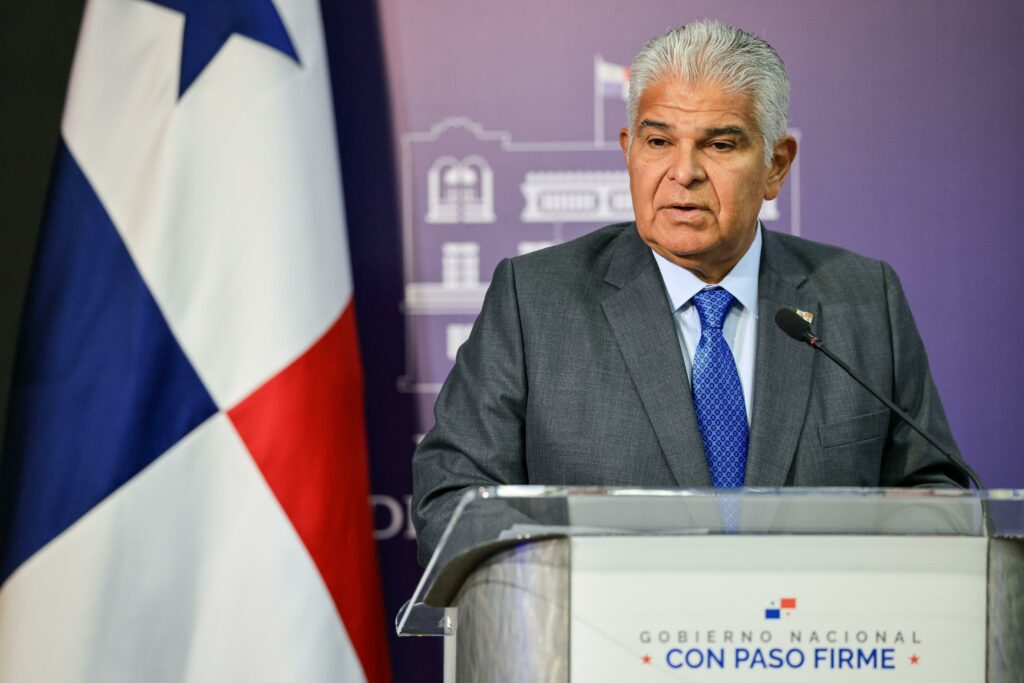
Panama on Thursday rejected the United States’ claim of securing free passage for its government vessels through the Panama Canal, while bowing to US pressure to quit a key Chinese project.Panamanian President Jose Raul Mulino told reporters the US assertion about the waterway was “intolerable,” adding that he rejected “bilateral relations based on lies and falsehoods.”Since winning the US election in November, President Donald Trump has refused to rule out the use of force to seize the canal built by Washington over a century ago and later handed over to Panama.Around 40 percent of US container traffic passes through the narrow body of water linking the Caribbean Sea with the Pacific Ocean.The new row between Panama and Washington erupted after the US State Department claimed that Panama had agreed to let American government vessels through the canal for free after talks last weekend between Mulino and Trump’s Secretary of State Marco Rubio.In a post on the social media platform X, the State Department claimed the decision would save the US government “millions of dollars a year.”Speaking Thursday in the Dominican Republic, Rubio argued that it was “absurd” for US naval vessels to have to pay “to transit a zone we are obligated to protect in time of conflict.”He stopped short however of claiming that an agreement had been reached. The Panama Canal Authority (PCA), an independent body that runs the waterway, said it had “not made any adjustments” to its tariffs but that it was open to dialogue on the matter.- ‘Not breaking the US’ -US government vessels — primarily from the navy — make up a small portion of the ships that pass through the canal.Trump has loudly complained that US vessels are being overcharged to use the shipping route.Mulino said that US government vessels, including navy vessels, paid “$6-7 million a year” for the right of passage.”It’s not as if the canal toll is breaking the economy of the United States,” he remarked.Beyond the tolls, Washington has appeared chiefly concerned about Chinese investment in the 50-mile (80-kilometer) long canal, which handles five percent of global maritime trade.CK Hutchison Holdings — owned by Hong Kong billionaire Li Ka-shing — has a concession to manage two of the canal’s five ports.Trump, who is scheduled to hold telephone talks on Friday with Mulino, has claimed that Beijing could close the canal to the United States in a crisis — a claim Panama strenuously denies.But in a key concession to Washington, Mulino on Thursday confirmed that Panama had pulled out of China’s massive Belt and Road Initiative (BRI) infrastructure program.- Chinese project torpedoed -Mulino said that the Panamanian Embassy in Beijing had given China the required 90-day notice of its decision not to renew its involvement in the program, which it joined in 2017.Panama is the first Latin American country to announce its withdrawal from President Xi Jinping’s signature, trillion-dollar program, which operates in over 100 countries.On Wednesday, China’s Foreign Affairs spokesman, Lin Jian, had argued that the partnership was yielding “fruitful results” and urged Panama to “resist external interferences.”The latest controversy over the Panama Canal comes at the end of Rubio’s week-long visit to Central America, his first as the US top diplomat.He had threatened action against Panama unless it made immediate changes to reduce Chinese influence on the canal but later appeared more conciliatory, hailing Mulino’s pledge to quit China’s infrastructure program as a “great step forward” for bilateral relations.Following Trump’s canal takeover threat, Mulino last month ordered an audit of Hutchison Holdings.”If they violate the terms of the concession or cause imminent economic harm to the country, we will act accordingly, but for now the audit is ongoing,” he said Thursday.

Shein, Temu face cost of adapting to new US customs rules

US tariffs on Chinese imports and the closing of a customs loophole will wreak disruption on the business models of e-commerce giants Shein and Temu, with consumers potentially bearing the brunt of the cost, analysts say.Boasting an enormous selection of ultra-cheap items at a time when inflation has shrunk household spending power almost everywhere, Shein and Temu have become a global phenomenon.The companies send out tens of billions of dollars worth of clothes, gadgets and other items from their vast network of factories in China annually — with the United States a crucial market. But over the weekend US President Donald Trump introduced additional levies of 10 percent on all Chinese imports, and scrapped a customs exemption for goods valued under $800. Before Trump’s announcement, the system allowed “Chinese exporters to deliver small parcels at low costs, a benefit that has translated directly into lower prices for US consumers,” Peking University’s Mingzhi Jimmy Xu told AFP.”Disrupting this system would impose higher shipping costs, leading to either higher retail prices or lower profit margins — both of which could fundamentally alter the business models of these platforms.”On Tuesday it seemed the damage could worsen when the US Postal Service announced it would suspend all parcels from China and Hong Kong in light of the tariffs — only to backtrack the next day.But losing the $800 “de minimis” exemption means e-commerce firms now face import duties, potentially more frequent inspections, and the need to meet regulations on issues like food safety and national security.Some items previously imported under the exemption might never have been allowed to enter the United States at all if they had had to follow these standards, Nomura analysts said.Trouble could be ahead elsewhere, too — on Wednesday the European Commission announced it would seek to impose new fees on e-commerce imports, though it said its actions were not coordinated with Washington.- ‘Not many other alternatives’ -In 2024, $46 billion dollars worth of small parcels were shipped to the United States under the de minimis exemption, according to Nomura. Between 20-30 percent of Temu’s sales come from the United States, and Shein relies on the country for 30-40 percent of its revenue, e-commerce expert Laetitia Lamari told AFP.It is such an important market that the closing of the loophole “would more likely mean continuing selling at a higher cost in the US rather than stopping”, Allison Malmsten from Beijing-based Daxue Consulting told AFP.That cost is likely to eventually pass on to the customer.”The American consumer doesn’t have many other alternatives: even Amazon Haul, Amazon’s low-cost offering of products under $20, gets its supplies… from China,” said Lamari. The closing of the loophole has been expected, Nomura analysts said, as scrutiny of the e-commerce sector’s quality control, workforce practice and environmental impact has increased.But the crackdown came earlier than expected, they wrote.- Adapting ‘not without risks’ -The effect will be “devastating for hundreds of thousands of small and medium-sized (SME) e-commerce businesses” in China and the United States, said the University of Delaware’s Sheng Lu.Bloomberg reported on Thursday that Chinese retailers selling on Shein and Temu have been asked to start paying an additional 30 percent levy to their logistics agents.The larger companies have other options for adaptation too.Rui Ma, founder of the Tech Buzz China newsletter, told AFP that Temu, Shein and others have already begun restructuring their operations in anticipation of the change. “Temu, for example, is rapidly expanding its semi-managed model, where goods are shipped in bulk to overseas warehouses instead of directly to customers,” she said.”The de minimis rule helped Temu break into international markets, but to truly dominate them, it was not a foundation they could rely on exclusively long-term.” Other options might include partnerships with American distributors, or trans-shipment — sending items via a third country that remains qualified for the de minimis exemption.But adapting “is not without risks”, said Peking University’s Xu, as the investment in warehouses and inventory management could hurt flexibility. “In the long run, platforms like Shein and Temu are likely to adapt,” he said. “But this adaptation may come at the expense of the very affordability and product diversity that have defined their success.”

EU quizzes Shein over ‘illegal’ products

The EU on Thursday told online fashion giant Shein to hand over information on risks linked to illegal products on its site, paving the way for a second probe into the Chinese-founded firm.The European Commission announced the request a day after confirming it was investigating the low-cost e-commerce platform for not abiding by the bloc’s consumer protection rules.”The Commission is requesting Shein to provide internal documents and more detailed information on risks linked to the presence of illegal content and goods on its marketplace,” it said.The EU’s regulator also asked for information on other issues, including the “transparency of its recommender systems” and protection of users’ personal data.”Shein must provide the necessary information by 27 February,” the commission said. “Based on the assessment of the replies, the Commission will determine the next steps”.The request could lead to a probe under the EU’s Digital Services Act (DSA), a mammoth law that forces the world’s largest tech firms to do more to protect European consumers online.”Shein shares the Commission’s objective of ensuring that EU consumers can shop online with peace of mind, we have received the request for information and are working to respond promptly,” the company said.Brussels has already launched a separate investigation into the popular fast-fashion site, which was founded in China in 2012 and is now headquartered in Singapore, for not doing enough to prevent the sale of products that do not meet European standards.After the probe was announced, the company said it would “engage” its partners at EU and national government-level.Shein is not the only online retailer originally from China in the crosshairs of Brussels over similar issues. The commission in October opened an investigation against Temu, which sells a vast array of goods at low costs.A commission spokesman explained many products tested were not compliant with EU rules and safety standards. This could have serious consequences, the spokesman added, citing as examples a baby’s pacifier that could come apart and choke the child, or a light fitting that could cause an electric shock.

Honda-Nissan merger talks ‘basically over’: source

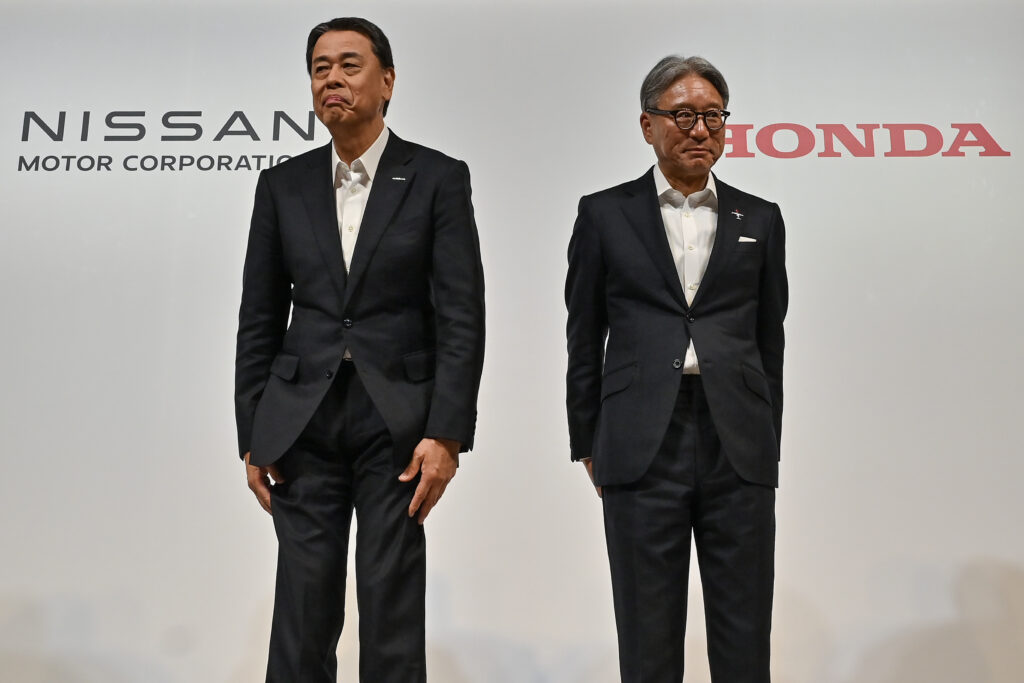
Nissan’s board is in the process of abandoning merger talks with Honda and could be open to other partners, a source close to the matter told AFP on Thursday and local media reported.The discussions unravelled after Honda proposed to make its struggling rival a subsidiary instead of the plan announced in December to integrate under a new holding company.”The latest conditions put on the table by Honda are unacceptable for Nissan… It was almost an affront,” the source said, confirming information reported in Japanese media.”It needs to be formalised, but basically, it’s over.”The source said Nissan was “open” to forming other strategic partnerships within the automobile or technology sectors.But the company “needs to be extremely creative, and reflect carefully on the synergies involved”, they said.Bloomberg also reported on Thursday that Nissan was looking for a new ally from the US-based tech sector, citing unnamed sources.Nissan and Honda’s intention to join forces — creating the world’s third-largest automaker — had been seen as a bid to catch up with Tesla and Chinese electric vehicle firms.Honda’s CEO insisted in December that it was not a bailout for Nissan, which last year announced thousands of job cuts after reporting a 93 percent plunge in first-half net profit.Nissan said Wednesday it would “establish a direction and make an announcement around mid-February” after reports said the company was walking away from the Honda talks.Reports in December said Taiwanese electronics behemoth Foxconn had unsuccessfully approached Nissan to buy a majority stake.It then reportedly asked Renault to sell its 35 percent stake in Nissan — a pursuit that was put on hold before the merger talks were announced.The source said Thursday that Nissan’s board of directors had agreed to abandon the talks on Tuesday.Japanese news agency Kyodo meanwhile reported that Nissan’s CEO Makoto Uchida met with Honda’s chief Toshihiro Mibe in Tokyo on Thursday and conveyed his intention to terminate the merger talks, citing a source close to the matter.- ‘Need for a strong partner’ -Nissan has weathered a turbulent decade, including the 2018 arrest of former boss Carlos Ghosn, who later jumped bail and fled Japan concealed in a music equipment box.The company is also saddled with billions of dollars of debt that will reportedly mature over the next two years.”I think Honda didn’t want (the merger) any more, so they proposed something that was unacceptable,” the source said.”I mean, let’s be serious: even if Nissan has problems… it’s not in a situation where it can accept becoming Honda’s subsidiary.”Market analysts at CreditSights said that “Nissan’s need for a strong partner remains, but its negotiating position is impaired by its weak profit outlook and stock price.”They also pointed to a “the lack of clarity regarding progress and ultimate success of its turnaround initiatives” continues to impact Nissan’s weak near-term profit outlook.

South Korea ministries, police block DeepSeek access

South Korean ministries and police said Thursday they were blocking DeepSeek’s access to their computers, after the Chinese AI startup did not respond to a data watchdog request about how it manages user information.DeepSeek launched its R1 chatbot last month, claiming it matches the capacity of artificial intelligence pacesetters in the United States for a fraction of the investment, upending the global industry.South Korea, along with countries such as France and Italy, have asked questions about DeepSeek’s data practices, submitting a written request for information about how the company handles user information.But after DeepSeek failed to respond to an enquiry from South Korea’s data watchdog, a slew of ministries confirmed Thursday they were taking steps to limit access to prevent potential leaks of sensitive information through generative AI services.”Blocking measures for DeepSeek have been implemented specifically for military work-related PCs with Internet,” a defence ministry official told AFP.The ministry, which oversees active-duty soldiers deployed against the nuclear-armed North, has also “reiterated the security precautions regarding the use of generative AI for each unit and soldier, taking into account security and technical concerns”, it added.South Korea’s police told AFP they had also blocked access to DeepSeek, while the trade ministry said that access had been temporarily restricted on all its PCs. The trade, finance, unification and foreign ministries also all said they had blocked the app or had taken unspecified measures.- Bans ‘not excessive’ -Last week, Italy launched an investigation into DeepSeek’s R1 model and blocked it from processing Italian users’ data.Australia has also banned DeepSeek from all government devices on the advice of security agencies.Kim Jong-hwa, a professor at Cheju Halla University’s artificial intelligence department, told AFP that amid growing rivalry between the United States and China he suspected “political factors” could be influencing the reaction to DeepSeek — but said bans were still justified.”From a technical standpoint, AI models like ChatGPT also face numerous security-related issues that have not yet been fully addressed,” he said.”Given that China operates under a communist regime, I question whether they consider security issues as much as OpenAI does when developing innovative technologies,” he said. “We cannot currently assess how much attention has been paid to security concerns by DeepSeek when developing its chatbot. Therefore, I believe that taking proactive measures is not too excessive.”Beijing on Thursday hit back against the ban, insisting the Chinese government “will never require enterprises or individuals to illegally collect or store data”.”China has always opposed the generalisation of national security and the politicisation of economic, trade and technological issues,” foreign ministry spokesman Guo Jiakun said.Beijing would also “firmly safeguard the legitimate rights and interests of Chinese enterprises,” Guo vowed.- ‘Complex competition’ -DeepSeek says it uses less-advanced H800 chips — permitted for sale to China until 2023 under US export controls — to power its large learning model.South Korean chip giants Samsung Electronics and SK hynix are key suppliers of advanced chips used in AI servers.The government announced on Wednesday an additional 34 trillion won ($23.5 billion) investment in semiconductors and high-tech industries, with the country’s acting president urging Korean tech companies to stay flexible. “Recently, a Chinese company unveiled the AI model DeepSeek R1, which offers high performance at a low cost, making a fresh impact in the market,” acting President Choi Sang-mok said Wednesday.”The global AI competition may evolve from a simple infrastructure scale-up rivalry to a more complex competition that includes software capabilities and other factors.”

Google shares slump but other AI gains lift US stocks

Wall Street stocks forged higher Wednesday, propelled by resurgent optimism about AI while oil prices tumbled on trade war uncertainty and bearish US petroleum inventory data.Shares of Google parent Alphabet took a hit, slumping around seven percent after the company announced plans to spend an eye-popping $75 billion in 2025 on AI development programs.But AI-linked companies such as Arm, Broadcom and Nvidia surged higher in anticipation of strong performances.”The market has kind of separated out the weakness seen in Alphabet as sort of just an Alphabet issue,” Briefing.com’s Patrick O’Hare told AFP.”You take that big CapEx number and that’s a little bit staggering, obviously,” he said.”If they’re going to spend $75 billion in 2025, that should be pretty good for, you know, a company like Nvidia,” he added, referring to the major chip designer whose shares closed 5.2 percent higher.The move “helped energize the AI trade a bit,” he added. Following a mixed day on European and Asian bourses, all three major US indices advanced. The S&P 500 finished 0.4 percent higher.Tensions between the United States and China have soared in recent days as the world’s two largest economies slapped a volley of import tariffs on each other.Analysts noted that China’s tariff response this week was relatively modest, providing some hope that a full-blown crisis could be avoided.But “the problem with trade wars is they can escalate quickly, leading to potential issues such as inflation, job losses and even recession”, said Kate Marshall, lead investment analyst at Hargreaves Lansdown. Hong Kong’s stock market closed down nearly one percent, with e-commerce giant JD.com sinking almost four percent and rival Alibaba also falling after US Postal Service officials suspended a duty-free exemption for low-value packages imports from China. In an apparent climbdown, the USPS on Wednesday morning said it would “continue accepting all international inbound mail and packages from China and Hong Kong Posts.”Beijing had responded with fury to the move, accusing the United States of “politicizing trade and economic issues and using them as tools.”Uncertainty about US-China relations also weighed on the oil market, with major crude contracts losing more than two percent.Crude prices were also dented by weekly US stockpile data that showed commmercial stocks rose 8.7 million barrels, more than four times the expected amount.In company news, shares in Japan’s Nissan fell around five percent following reports that the carmaker decided to withdraw from merger talks with rival Honda.Shares in Honda soared more than eight percent by the close.- Key figures around 2140 GMT -New York – Dow: UP 0.7 percent at 44,873.28 (close)New York – S&P 500: UP 0.4 percent at 6,061.48 (close)New York – Nasdaq Composite: UP 0.2 percent at 19,577.02London – FTSE 100: UP 0.6 percent at 8,623.29 (close) Paris – CAC 40: DOWN 0.2 percent at 7,891.68 (close)Frankfurt – DAX: UP 0.4 percent at 21,585.93 (close)Tokyo – Nikkei 225: UP 0.1 percent to 38,831.48 (close)Hong Kong – Hang Seng Index: DOWN 0.9 percent to 20,597.09 (close)Shanghai – Composite: DOWN 0.7 percent to 3,229.49 (close)Euro/dollar: UP at $1.0397 from $1.0379 on TuesdayPound/dollar: UP at $1.2502 from $1.2480Dollar/yen: DOWN at 152.63 yen from 154.34 yenEuro/pound: FLAT at 83.16 pence West Texas Intermediate: DOWN 2.3 percent at $71.03 per barrelBrent North Sea Crude: DOWN 2.1 percent at $74.61 per barrelburs-jmb/dw

Google shares slump as trade tensions rattle markets

Shares in Google parent Alphabet slumped on Wednesday as its earnings disappointed investors and it was ensnared in rising trade tensions.Meanwhile, Chinese e-commerce firms took a hit from news that the US Postal Service was suspending inbound parcels from China and Hong Kong, a move that followed tit-for-tat tariffs hikes by Washington and Beijing. The USPS later reversed its decision, but the European Commission said it would seek to impose new fees on e-commerce imports.Shares in Alphabet slumped more than eight percent at the open of trading, with lower-than-expected revenue growth in its cloud division raising questions about its ability to compete with rivals in the heated AI infrastructure market.Alphabet also announced plans to invest approximately $75 billion in capital expenditures in 2025, a figure that surprised analysts and highlighted the mounting costs of AI development.”Investors were also unhappy about its capital expenditures, something that China’s cut-price, AI assistant DeepSeek, has thrown into sharp relief,” said David Morrison, senior market analyst at Trade Nation.The tech sector has already been roiled by the unveiling of DeepSeek, stoking concerns that the eye-watering investments made in AI in recent years may not ever return profits.”All this comes after China has said it will launch an antitrust probe into Google as part of its retaliation against Trump’s fresh tariffs,” he added.Tensions between the United States and China have soared in recent days as the world’s two largest economies slapped a volley of import tariffs on each other.Analysts noted that China’s tariff response this week was relatively modest, providing some hope that a full-blown crisis could be avoided.”Everything seems to be in limbo on the tariff front, subject to change for better or worse,” said Briefing.com analyst Patrick O’Hare.”The market is trying to hold it together, offering some grace that there won’t be a worst-case tariff scenario that invites stagflation, yet it is fair to say that it is dismayed by the uncertainty all the tariff talk has generated,” he added.But “the problem with trade wars is they can escalate quickly, leading to potential issues such as inflation, job losses and even recession”, said Kate Marshall, lead investment analyst at Hargreaves Lansdown. Hong Kong’s stock market closed down nearly one percent, with e-commerce giant JD.com sinking almost four percent and rival Alibaba also falling.Shanghai dropped after it returned from a week-long break, while Tokyo reversed earlier losses. Amid uncertainty, gold hit a fresh peak of $2,877 an ounce as investors rushed into the haven metal.”The $2,900 level is now in sight for gold, as the metal’s impressive rally goes on,” said Chris Beauchamp, Chief Market Analyst at online trading platform IG. “Safe haven buying, central bank purchases and continuing softness in the dollar have made life much more amenable for the commodity, and if tariffs rear their head again we should see the metal make fresh gains,” he added.In other company news, shares in Japan’s Nissan fell around five percent following reports that the carmaker had decided to withdraw from merger talks with rival Honda.Shares in Honda soared more than eight percent by the close.- Key figures around 1630 GMT -New York – Dow: UP 0.1 percent at 44,607.62 pointsNew York – S&P 500: DOWN 0.1 percent at 6,030.92New York – Nasdaq Composite: DOWN 0.4 percent at 19,577.02London – FTSE 100: UP 0.6 percent at 8,623.29 (close) Paris – CAC 40: DOWN 0.2 percent at 7,891.68 (close)Frankfurt – DAX: UP 0.4 percent at 21,585.93 (close)Tokyo – Nikkei 225: UP 0.1 percent to 38,831.48 (close)Hong Kong – Hang Seng Index: DOWN 0.9 percent to 20,597.09 (close)Shanghai – Composite: DOWN 0.7 percent to 3,229.49 (close)Euro/dollar: UP at $1.0422 from $1.0383 on TuesdayPound/dollar: UP at $1.2519 from $1.2480Dollar/yen: DOWN at 152.20 yen from 154.32 yenEuro/pound: UP at 83.23 pence from 83.16 penceWest Texas Intermediate: DOWN 2.1 percent at $71.19 per barrelBrent North Sea Crude: DOWN 2.0 percent at $74.71 per barrelburs-rl/cw