Afp Business Asia

US TikTok ban looms as Trump seeks last-ditch solution

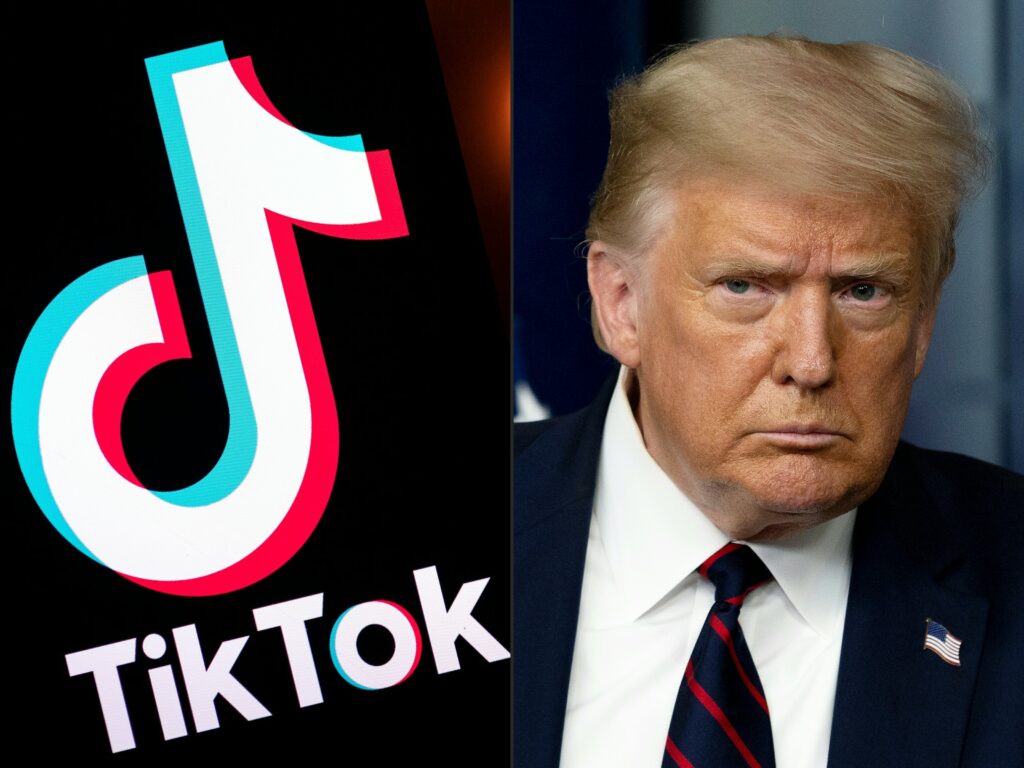
TikTok has pledged to “go dark” in the United States on Sunday, threatening access for 170 million app users without 11th-hour guarantees from the government, as President-elect Donald Trump says he is considering a reprieve — after he takes office.After months of legal tussles, the US Supreme Court on Friday upheld a law that would ban the popular video-sharing platform in the name of national security, unless its Chinese owners reach a deal to sell it to non-Chinese buyers by Sunday.Only months after overwhelmingly backing the law, lawmakers and officials were now fretting about the ban, with all eyes on whether Trump can swoop in and find a way to save the app.From teenage dancers to grandmothers sharing cooking tips, TikTok has been embraced for its ability to transform ordinary users into global celebrities when a video goes viral.It also has a fan in Trump, who has credited the app with connecting him to younger voters, contributing to his election victory in November.After discussing TikTok with Chinese President Xi Jinping on Friday, Trump told NBC News on Saturday that he could activate a 90-day reprieve from the ban after he reclaims the Oval Office.”I think that would be, certainly, an option that we look at. The 90-day extension is something that will be most likely done, because it’s appropriate,” he said, ahead of Monday’s inauguration.”If I decide to do that, I’ll probably announce it on Monday.”The law allows a 90-day delay if the White House can show progress toward a viable deal, but TikTok owner ByteDance has flatly refused any sale.TikTok said late Friday its US services would “go dark” unless the government “immediately provides a definitive statement to satisfy the most critical service providers assuring non-enforcement” of the law calling for the platform’s ban.The administration of outgoing President Joe Biden has said it will leave the matter to Trump and White House spokeswoman Karine Jean-Pierre qualified TikTok’s latest statements as a “stunt.”After the court defeat, TikTok CEO Shou Chew appealed to Trump, thanking him for his “commitment to work with us to find a solution.”Trump “truly understands our platform,” he added.TikTok has been lobbying furiously to thwart the law’s implementation, with Chew set to attend Trump’s inauguration on Monday.The law requires Apple and Google to remove TikTok from their app stores, blocking new downloads. The companies could face penalties of up to $5,000 per user who can access the app.Oracle, which hosts TikTok’s servers, would also be legally obligated to enforce the ban.But it was not immediately clear how quickly users would feel the effects, and the Justice Department said implementing the ban could take time.None of the companies responded to requests for comment on Saturday.- Offers for TikTok -A last-minute proposal made Saturday by the highly-valued start-up Perplexity AI offered a merger with the US subsidiary of TikTok, a source with knowledge of the deal told AFP.That deal could allow parent company ByteDance a possible solution without selling off the app entirely. The plan, first reported by US broadcaster CNBC, would see the creation of a new joint venture combining the assets of US TikTok and Perplexity AI, which has been backed by Amazon founder Jeff Bezos. The proposal did not include a price for the transaction, but the source estimated it would be at least $50 billion.Frank McCourt, the former Los Angeles Dodgers owner, has also made an offer to purchase TikTok’s US activity and said he’s “ready to work with the company and President Trump to complete a deal.”Canadian investor Kevin O’Leary, who is involved in that offer, told Fox News that ByteDance was offered $20 billion for TikTok’s US operation.He acknowledged the legal uncertainty over the case, with it remaining an open question whether an executive order by Trump to halt the ban would override the law.”Congress wrote this law to be virtually president-proof,” warned Adam Kovacevich, chief executive of industry trade group Chamber of Progress.Sarah Kreps, a professor of government and law at Cornell University, said “if an executive order conflicts with an existing law, the law takes precedence, and the order can be struck down by the courts.”If TikTok is forced into a shutdown, its US-based rivals Instagram Reels and YouTube Shorts would benefit.Thousands of worried TikTok users have protectively turned to Xiaohongshu (“Little Red Book”), a Chinese social media network similar to Instagram. Nicknamed “Red Note” by its American users, it was the most downloaded app on the US Apple Store this week. 

TikTok’s journey from fun app to US security concern

As a law that could get TikTok banned in the United States is poised to go into effect, here is a look at the rise of the video-sharing social media platform.- Genesis -In 2016, Beijing-based ByteDance launched Douyin, an app for sharing short videos, in the Chinese market.ByteDance released TikTok for the international market the following year, shortly before buying “lip-synching” app Musical.ly and merging it into TikTok.The social network became a hit, with its algorithm serving up endless collections of short, looping and typically playful videos posted by users.- Pandemic boom -TikTok’s popularity soared during the Covid-19 pandemic declared in 2020, as people enduring lockdowns relied on the internet for diversion and entertainment.As a result, authorities worldwide began eyeing TikTok’s influence and addictive appeal.TikTok became one of the most downloaded apps in the world, as officials grew increasingly wary of the potential for the Chinese government to influence ByteDance or access user data.India banned TikTok in July 2020 due to tensions with China.- Targeted by Trump -While Donald Trump was US president in 2020, he signed executive orders to ban TikTok in the United States.Trump accused TikTok, without proof, of siphoning off US users’ data to benefit Beijing and of censoring posts at the direction of Chinese officials.Trump’s decision was made as his government clashed with Beijing on an array of issues.During a failed bid for reelection in 2020, the Republican continued to campaign on an anti-China message.Between legal challenges and Trump’s loss to Joe Biden in that year’s presidential election, the executive orders did not take effect.- Billion mark -In September 2021, TikTok announced it had one billion monthly users worldwide.But concerns grew about TikTok users facing risks of addiction, propaganda and spying.In 2022, BuzzFeed reported that ByteDance employees based in China had accessed TikTok users’ non-public information.ByteDance tried to cool privacy concerns by hosting user data on servers managed in the United States by Oracle.The move did not ease concerns, however, with TikTok banned from devices used by the US military.An array of other government agencies and academic institutes followed suit, forbidding members from using TikTok.TikTok’s Singaporean chief executive Shou Chew was grilled by members of the US Congress during a six-hour hearing in March 2023.- Sell or go -TikTok was back in the hot seat in the United States in 2024 when President Joe Biden authorized a law requiring TikTok to be banned if ByteDance does not sell the app to a company not associated with a national security adversary.Washington’s stated aim was to cut the risk of Beijing spying on or manipulating TikTok users, particularly the 170 million US users of the app.TikTok remains adamant that it has never shared user data with the Chinese government or done its bidding at the social network.ByteDance sued the US government, arguing the law violates free speech rights.A final decision in that case was made Friday by the US Supreme Court, which upheld a law going into effect on January 19.In a major defeat for TikTok, the court ruled that the law does not violate free speech rights and that the US government had demonstrated legitimate national security concerns about a Chinese company owning the app.President-elect Trump, who returns to office on Monday, has signaled he might intervene on TikTok’s behalf.The company, however, has said that unless the outgoing Biden administration makes “definitive” assurances that the law will not be implemented, it would be forced to “go dark.”

‘More sad than shocked’: TikTok users brace for ban

“I almost, like, don’t know how to define myself without TikTok,” content creator Ayman Chaudhary sighed, reflecting the consternation of millions over US authorities’ scheduled banning Sunday of the hugely popular app.After months of legal tussles, the US Supreme Court on Friday upheld a law that would ban the video-sharing platform — used by 170 million Americans — in the name of national security, unless its Chinese owners reach an 11th-hour deal to sell it to American buyers.”I’m more sad than shocked,” the 24-year-old Chaudhary told AFP. “But still, it’s sad and disappointing that the US government has come together to ban an app instead of banding together to adopt a law that matters about health or education.” It remains uncertain whether TikTok will turn out the lights Sunday — for a single day or forever. Potential buyers exist, though TikTok’s owner, Chinese tech company ByteDance, has systematically refused to part with its crown jewel.President-elect Donald Trump, just days from his second inauguration, said Friday that he “must have time” to decide whether to enforce the high court’s ruling. He promised a decision “in the not too distant future.”Until then, Ayman and countless other content creators have been left gloomily contemplating a future without TikTok.- Mandarin ‘out of spite’? -“I started five years ago in 2020 during (the Covid-19) quarantine, and I’ve been employed, like, through TikTok, and now it just feels like suddenly I’m unemployed,” said Ayman, an avid reader who offers book recommendations on the platform, earning enough from ads and sponsors to pay her bills. Like thousands of other worried TikTok users, she has protectively created a profile on Xiaohongshu (“Little Red Book”), a Chinese social media network similar to Instagram. Nicknamed “Red Note” by its American users, it was the most-downloaded app on the American Apple Store this week. People are turning to Red Note, Ayman said, as “kind of a protest, because it is a Chinese-owned app, and TikTok is being banned because it’s, like, Chinese-owned.”The language-teaching app Duolingo made a clear pitch to people looking for life after TikTok.”Learning Mandarin out of spite? You’re not alone,” Duolingo posted on X. “We’ve seen a 216% growth in new Chinese (Mandarin) learners in the US compared to this time last year.”On TikTok, many American creators have published videos combining their favorite moments on the app with farewell messages urging fans to follow them to other platforms, including Xiaohongshu — while openly mocking the concerns of American lawmakers. – ‘Micro-influencers’ -“Most students don’t buy the narrative that there’s Chinese spies that are controlling the algorithm” on TikTok, said Chris Dier, a history teacher who shares educational videos on TikTok and uses them as well in his classes.He said students “think that the United States government is not a fan of TikTok because… the government can’t easily control it.”Xiaohongshu, which is entirely in Mandarin, would not appear to provide a realistic long-term alternative for frustrated American users. Popular even before the pandemic, TikTok exploded among young people living in quarantine, and became a must-have resource for many small companies and start-ups.”It’s a scary time for a lot of smaller creators, because I think TikTok is one of the very few platforms on the internet where micro-influencers can really thrive,” said Nathan Espinoza, who has more than 550,000 subscribers on the app. Indeed, the social network has built its success not so much via personal recommendations as through its ultra-powerful algorithm, which lets it rapidly identify users’ interests and funnel content of particular interest to them. “I’m a more YouTube-centric creator now,” Espinoza said. “But I wouldn’t be where I am today without TikTok, because that first viral video showed me that it’s possible, and there’s an audience for the type of videos that I make.”

Global equities rally, pushing London and Frankfurt to new records

Global equities rallied on Friday as traders digested corporate results and prepared for US President-elect Donald Trump’s inauguration next week, pushing London’s benchmark FTSE 100 and Frankfurt’s DAX 40 index to new all-time highs.All three major indices on Wall Street closed higher, with the Nasdaq Composite propelled by a rise in tech stocks. “The sentiment in the market has changed dramatically,” Steve Sosnick from Interactive Brokers told AFP, noting the rally had been “very broad-based.”He added that there seemed to be “a bit of enthusiasm” that Trump’s likely economic policies would be good for the financial markets. Trump is due to be sworn in as US president on Monday.- Buoyant markets -The UK’s index of blue-chip companies jumped to 8,533.43 points, surpassing an intra-day record achieved in May last year. “After years of trying, and failing, to play catch up (with peers), the FTSE 100 appears to have finally caught the ball of investor enthusiasm,” noted Susannah Streeter, head of money and markets at Hargreaves Lansdown. “Although fresh volatility is expected on global markets after President Trump returns to the White House, there may be more appetite to shelter in the resilience of the UK market,” she added.In Frankfurt, the DAX struck 20,924.50, besting a peak set just last month.Chinese markets also closed higher Friday after fresh data showed the country’s economy grew slightly quicker than expected last year.The five-percent expansion was in line with the government’s target but the weakest since 1990 — excluding the pandemic years — as leaders fought to address weak consumption and a real estate debt crisis.A surge in the final quarter was helped by a string of stimulus measures and a boost in retail sales.”Amid a relentless barrage of economic pessimism, China’s economy defied expectations with a robust five-percent growth last year, nailing the government’s ambitious target,” said independent analyst Stephen Innes. “Although slightly outpacing analyst forecasts, this growth fell just shy of the 5.2 percent expansion seen in 2023, painting a picture of an economy with both promising highs and undeniable challenges,” Innes added.- UK concerns -In London, stocks have been boosted in recent days by a drop in UK government bond yields after a spike in state borrowing costs last week sent the pound tumbling.Sterling was lower Friday, reflecting ongoing strains for the British economy, which is struggling to grow despite falling inflation. Official data Friday revealed a surprise drop in UK retail sales in December.The FTSE 100 contains numerous multinationals whose revenues are largely earned in dollars, enabling them to profit from a falling pound.London and its European peers — along with Wall Street — have won support this week also as traders forecast more interest-rate cuts this year from major central banks.Indices have also rallied thanks to some positive company earnings and easing geopolitical concerns.- Key figures around 2145 GMT -New York – Dow: UP 0.8 percent at 43,487.83 points (close)New York – S&P 500: UP 1.0 percent at 5,996.66 (close)New York – Nasdaq Composite: UP 1.5 percent at 19,630.20 (close)London – FTSE 100: UP 1.4 percent at 8,505.22 (close)Paris – CAC 40: UP 1.0 percent at 7,709.75 (close)Frankfurt – DAX: UP 1.2 percent at 20,903.39 (close)Tokyo – Nikkei 225: DOWN 0.3 percent at 38,451.46 (close)Hong Kong – Hang Seng Index: UP 0.3 percent at 19,584.06 (close)Shanghai – Composite: UP 0.2 percent at 3,241.82 (close)Euro/dollar: DOWN at $1.0272 from $1.0306 on ThursdayPound/dollar: DOWN at $1.2168 from $1.2237Dollar/yen: UP at 156.20 yen from 155.17 yenEuro/pound: UP at 84.41 pence from 84.18 penceBrent North Sea Crude: DOWN 0.6 percent at $80.79 per barrelWest Texas Intermediate: DOWN 1.0 percent at $77.88 per barrelburs-bcp/rl/gv/da-tmc/aha

US to tighten trade rules to hit low-cost China shipments

The United States unveiled a new rule Friday to tighten an exemption allowing low-value imports to enter the country duty-free, taking aim at Chinese shipments that might be benefiting from it.The proposal disqualifies certain products from the low-value, or “de minimis,” exemption, which allows goods valued at $800 or below to come into the United States without paying duties or certain taxes.”Both the volume and combined worth of low-value, or de minimis, shipments to the United States have risen significantly over the past ten years,” said Secretary of Homeland Security Alejandro Mayorkas in a statement.He added that the exemption has “undermined American businesses and workers” while allowing foreign products to flood US ports of entry, making it harder to screen the goods for security risks.”The actions announced today to tighten this exemption will strengthen America’s economic and national security,” he said.The number of shipments claiming the exemption rose from about 139 million in fiscal year 2015 to more than a billion in 2023.US officials have pointed to the growth of Chinese-founded online retailers Shein and Temu — known for selling items at low prices — as a key factor behind this increase.National Economic Advisor Lael Brainard accused Chinese-founded e-commerce platforms of trying to “gain an unfair trade advantage” by using the rules.With the new proposed rule, products subject to tariffs imposed under Section 301 of the Trade Act, for example, would not qualify for duty-free treatment under the de minimis exemption.The section has been a key tool used to justify levies against China in recent years.Section 301 tariffs hit about 70 percent of Chinese textile and apparel imports, meaning the move would reduce the number of shipments entering through this exemption.Packages containing products subject to Section 232 tariffs on steel and aluminum goods, as well as Section 201 safeguards impacting solar manufacturing, are also targeted.In a notice on Friday, US Customs and Border Protection (CBP) said low-value e-commerce shipments pose the same risks as higher-value ones.The large volume of imports and smaller amount of data received about low-value shipments make it increasingly tough to “target and block illicit synthetic drugs such as fentanyl and synthetic drug raw materials and related manufacturing equipment from entering the country,” said the CBP.In 2024, more than 120 US lawmakers raised “grave concerns” over the de minimis “trade loophole” in a letter and urged President Joe Biden to close it.Further action on the matter will fall to incoming President-elect Donald Trump, who takes office next week.

London, Frankfurt hit record highs as global equities rally

London’s benchmark FTSE 100 and Frankfurt’s DAX 40 index reached all-time highs Friday as global equities rallied and the dollar climbed on renewed optimism for the global economy.The UK’s index of blue-chip companies jumped to 8,533.43 points, surpassing an intra-day record achieved in May last year of 8,474.41. “After years of trying, and failing, to play catch up (with peers), the FTSE 100 appears to have finally caught the ball of investor enthusiasm,” noted Susannah Streeter, head of money and markets at Hargreaves Lansdown. “Although fresh volatility is expected on global markets after President (Donald) Trump returns to the White House, there may be more appetite to shelter in the resilience of the UK market.”In Frankfurt, the DAX struck 20,924.50, besting a peak set just last month.Wall Street’s three main indices also pushed solidly higher.”The speculative energy surrounding President Trump’s arrival to the White House on Monday” helped to drive the gains as well as a drop in US Treasury yields, said Briefing.com analyst Patrick O’Hare.While a strong US economy and earnings are helping to lift equities, there are concerns that Trump’s planned tariffs and tax cuts could fire up inflation once more.He has set his eyes in particular on hitting Chinese imports, which risks not only strong retaliation but further weakening China’s economy, the world’s second biggest after the United States.Chinese share indices closed higher Friday after data showed China’s economy grew slightly quicker than expected last year.The five percent expansion was in line with the government’s target but the weakest since 1990 — excluding the pandemic years — as leaders fought to address weak consumption and a real estate debt crisis.A surge in the final quarter was helped by a string of stimulus measures and a boost in retail sales.”Amid a relentless barrage of economic pessimism, China’s economy defied expectations with a robust five percent growth last year, nailing the government’s ambitious target,” said independent analyst Stephen Innes. “Although slightly outpacing analyst forecasts, this growth fell just shy of the 5.2 percent expansion seen in 2023, painting a picture of an economy with both promising highs and undeniable challenges,” Innes added.- UK concerns -In London, stocks have been boosted in recent days by a drop in UK government bond yields after a spike in state borrowing costs last week sent the pound tumbling.Sterling was lower Friday, reflecting ongoing strains for the British economy, which is struggling to grow despite falling inflation. Official data Friday revealed a surprise drop to UK retail sales in December.The FTSE 100 contains numerous multinationals whose revenues are largely earned in dollars, enabling them to profit from a falling pound.London and its European peers — along with Wall Street — have won support this week also as traders forecast more interest-rate cuts this year from major central banks.Indices have rallied also thanks to some positive company earnings and easing geopolitical concerns.- Key figures around 1630 GMT -New York – Dow: UP 1.0 percent at 43,591.91 pointsNew York – S&P 500: UP 1.2 percent at 6,009.69New York – Nasdaq Composite: UP 1.7 percent at 19,674.02London – FTSE 100: UP 1.4 percent at 8,505.22 (close)Paris – CAC 40: UP 1.0 percent at 7,709.75 (close)Frankfurt – DAX: UP 1.2 percent at 20,903.39 (close)Tokyo – Nikkei 225: DOWN 0.3 percent at 38,451.46 (close)Hong Kong – Hang Seng Index: UP 0.3 percent at 19,584.06 (close)Shanghai – Composite: UP 0.2 percent at 3,241.82 (close)Euro/dollar: DOWN at $1.02 from $1.0306 on ThursdayPound/dollar: DOWN at $1.21 from $1.2237Dollar/yen: UP at 155. yen from 155.17 yenEuro/pound: UP at 84. pence from 84.18 penceBrent North Sea Crude: DOWN 0.7 percent at $80.75 per barrelWest Texas Intermediate: DOWN 0.8 percent at $77.27 per barrelburs-bcp/rl/gv

Trump’s economic plans could cause inflation: IMF chief economist

Donald Trump’s economic plans risk reigniting US inflation, International Monetary Fund (IMF) chief economist Pierre-Olivier Gourinchas told AFP, a few days before the president-elect returns to the White House. Trump’s proposals to hike tariffs and curtail immigration would likely constrain the supply side of the economy and push up prices, Gourinchas said in an interview.Other proposals the president-elect has floated, such as cutting red tape and taxes, could also fuel inflation by boosting demand, he added. “The bottom line is, when we look at the risk for the US, we see an upside risk on inflation,” he said. Gourinchas spoke to AFP at the IMF’s headquarters in Washington, a day before the publication of its key World Economic Outlook (WEO) report on Friday. In the WEO update, which did not account for Trump’s proposals due to policy “uncertainty,” the IMF raised its forecast for global growth and sharply hiked its outlook for the US economy. Many economists see Trump’s tariff and immigration plans as inflationary, but Trump and his advisors have pushed back, arguing that the overall package of measures he plans to enact should help keep prices in check.Traders have pared back the number of rate cuts they expect the US Federal Reserve to make in 2025, assigning a roughly 80 percent chance that it will make no more than two quarter-point cuts this year, according to data from CME Group. Gourinchas said the IMF expects the Fed to cut rates by half a percentage point in both 2025 and 2026, a forecast in line with the median projection of Fed officials surveyed in December. – Deflation risk in China -In the world’s second-largest economy, which is grappling with a crisis in the property sector and growing uncertainty about global trade policy, the situation looks starkly different. In its WEO report, the IMF forecasts that China’s growth will continue to cool, but on a slightly shallower path thanks to the government’s recent package of fiscal support designed to support the slowing economy. “If you look at China, the concerns are with maybe entering a deflation regime, having the property sector crisis become worse,” Gourinchas said. “In terms of policies, we certainly think that the Chinese are going in the right direction, but maybe the Chinese authorities can do more,” he said. If they do not, China runs the risk that the recent economic support proves insufficient, potentially leading to a larger slowdown in growth, he added.Data from Beijing published Friday showed that China’s growth hit five percent last year, slightly above expectations but short of the 5.2 percent increase recorded in 2023.

London stock market hits record high as global equities rally

London’s benchmark FTSE 100 index reached an all-time high Friday as global equities rallied and the dollar climbed on renewed optimism for the global economy.The index jumped to 8,490.84 points, surpassing an intra-day record achieved in May last year of 8,474.41. Around 1015 GMT, it stood at 8,484.67 points, up 1.1 percent compared with Thursday’s close.”After years of trying, and failing, to play catch up (with peers), the FTSE 100 appears to have finally caught the ball of investor enthusiasm,” noted Susannah Streeter, head of money and markets at Hargreaves Lansdown. “Although fresh volatility is expected on global markets after President (Donald) Trump returns to the White House, there may be more appetite to shelter in the resilience of the UK market.”Trump completes an extraordinary comeback Monday when he is inaugurated for a second term as US president.While a strong US economy and earnings are helping to lift equities, there are concerns that Trump’s planned tariffs and tax cuts could fire up inflation once more.He has set his eyes on hitting in particular Chinese imports, which risks not only strong retaliation but further weakening China’s economy, the world’s second biggest after the United States.Chinese share indices closed higher Friday after data showed China’s economy grew slightly quicker than expected last year.The five percent expansion was in line with the target set by Beijing but the weakest since 1990 — excluding the pandemic years — as leaders fought to address weak consumption and a painful debt crisis in the vast property sector.A surge in the final quarter was helped by a string of stimulus measures and a boost in retail sales.”Amid a relentless barrage of economic pessimism, China’s economy defied expectations with a robust five percent growth last year, nailing the government’s ambitious target,” said independent analyst Stephen Innes. “Although slightly outpacing analyst forecasts, this growth fell just shy of the 5.2 percent expansion seen in 2023, painting a picture of an economy with both promising highs and undeniable challenges,” Innes added.- UK concerns -In London, stocks have been boosted in recent days by a drop in UK government bond yields after a spike in state borrowing costs last week sent the pound tumbling.Sterling was lower Friday, reflecting ongoing strains for the British economy, which is struggling to grow despite falling inflation. Official data Friday revealed a surprise drop to UK retail sales in December.The FTSE 100 contains numerous multinationals whose revenues are largely earned in dollars, enabling them to profit from a falling pound.”Weakness of sterling, which makes overseas earnings more valuable on repatriation, has led to the UK’s primary index… (gaining) favour with investors,” said Richard Hunter, head of markets at Interactive Investor.London and its European peers — along with Wall Street — have won support this week also as traders forecast more interest-rate cuts this year from major central banks.Indices have rallied also thanks to some positive company earnings and easing geopolitical concerns.Oil prices rose slightly as Israel’s security cabinet met Friday to vote on a Gaza ceasefire and hostage release deal that should take effect this weekend.- Key figures around 1015 GMT -London – FTSE 100: UP 1.1 percent at 8,484.67 pointsParis – CAC 40: UP 1.1 percent at 7,719.74Frankfurt – DAX: UP 1.1 percent at 20,874.76Tokyo – Nikkei 225: DOWN 0.3 percent at 38,451.46 (close)Hong Kong – Hang Seng Index: UP 0.3 percent at 19,584.06 (close)Shanghai – Composite: UP 0.2 percent at 3,241.82 (close)New York – Dow: DOWN 0.2 percent at 43,153.13 (close)Euro/dollar: DOWN at $1.0301 from $1.0306 on ThursdayPound/dollar: DOWN at $1.2202 from $1.2237Dollar/yen: UP at 155.64 yen from 155.17 yenEuro/pound: UP at 84.41 pence from 84.18 penceBrent North Sea Crude: UP 0.1 percent at $81.39 per barrelWest Texas Intermediate: UP 0.2 percent at $78.05 per barrelburs-bcp/ajb/lth

Chinese economic growth among slowest in decades

China posted one of its slowest rates of economic growth in decades Friday, as leaders nervously eye a potential trade standoff with incoming US president Donald Trump.Beijing has announced in recent months its most aggressive support measures in years in a bid to reignite an economy suffering on multiple fronts, including a prolonged property market debt crisis and sluggish consumer spending.However, calls for even further policy help came after official figures showed the Chinese economy grew five percent in 2024.While the reading from Beijing’s National Bureau of Statistics (NBS) was slightly above the 4.9 percent forecast in an AFP survey of analysts, it was still short of the 5.2 percent increase recorded in 2023.The growth took place in the face of a “complicated and severe environment with increasing external pressures and internal difficulties”, the NBS said.Retail sales, a key gauge of consumer sentiment, rose 3.5 percent — a major slump from the 7.2 percent growth seen in 2023 — although industrial output increased 5.8 percent from 4.6 percent the previous year.However, the 5.4 percent jump in economic growth seen in the final four months far outpaced the five percent forecast in a Bloomberg survey and was much better than the same period in 2023.The data provided “mixed messages”, said Zhiwei Zhang, president of Pinpoint Asset Management.Beijing’s recent policy shift had “helped the economy to stabilise in (the fourth quarter), but it requires large and persistent policy stimulus to boost economic momentum and sustain the recovery”, he said.Zichun Huang, China economist at Capital Economics, said she expected growth to “continue accelerating in the coming months”.”The government’s property support measures seem to be providing some relief, with the pace of house price falls slowing and new home sales showing some recovery,” she said.- Trouble ahead? -The GDP growth rate is the lowest recorded by China since 1990, excluding the financially tumultuous years of the Covid-19 pandemic.Analysts surveyed by AFP estimated growth could fall to 4.4 percent in 2025, and even drop below four percent the following year.China has so far failed to rebound from the pandemic, with domestic spending mired in a slump and indebted local governments dragging on growth.In a rare bright spot, official data this week showed that exports reached a historic high last year.But gathering storm clouds over China’s massive trade surplus mean Beijing may not be able to count on overseas shipments to boost an otherwise lacklustre economy.Trump, who will begin his second term next week, has promised to unleash heavy trade sanctions on China.NBS data also showed on Friday that output from thermal plants — fuelled primarily by coal — increased 1.5 percent year-on-year in 2024.China’s production of fossil fuels, including coal and natural gas also jumped, the data showed, casting doubt on hopes that the country’s emissions began to decline last year.Beijing has introduced a series of measures in recent months to bolster the economy, including cutting key interest rates, easing local government debt and expanding subsidy programmes for household goods.- Confidence ‘crisis’ -Observers were closely watching Friday’s data release for signs those measures had succeeded in reviving activity.China’s central bank has hinted that it will cut rates further in 2025, part of a key shift characterised by a “moderately loose” monetary policy stance.However, analysts warn more efforts are needed to boost domestic consumption as the outlook for Chinese exports becomes more uncertain.”Monetary policy support alone is unlikely to right the economy,” Harry Murphy Cruise of Moody’s Analytics told AFP.”China is suffering from a crisis of confidence, not one of credit,” he wrote.Ting Lu, Chief China Economist at Nomura, wrote that Beijing, “encouraged” by its achievement of last year’s goal, was unlikely to change its annual growth goal of around five percent for the year ahead.”We are concerned that Beijing may not ramp up its efforts enough in carrying out the hard work after seeing some short-term green shoots,” Lu wrote.”Despite today’s sanguine data, now is not the time for Beijing to rest on its laurels.”

‘No money’: gloom on Beijing streets as economic growth slows

Consumers pinching pennies, businesses seeing fewer customers, and a pervading sense that the economy just isn’t bouncing back — the mood was grim in Beijing as China posted some of its lowest growth in decades.Government data on Friday showed the economy grew by five percent in 2024, hitting a much-touted government target but its lowest since 1990 with the exception of the Covid-19 pandemic years.And while officials acknowledged the economy remains beset by “risks and hidden dangers”, they insisted it had “recovered remarkably” and that progress was being made in reversing its steady decline.However, there was little sign of that optimism on the chilly streets of Beijing on Friday morning.”The economy has clearly gone downhill,” Yang Aihua, a 35-year-old tea vendor from central Hubei province, told AFP.”There’s a fear of consuming and spending money because there is no money,” she said.She said she had noticed a clear decline in custom in her shop, and that those who were coming in were spending less.”For us who do business, it’s obvious that there are much fewer customers coming to our store, and customers’ consumption levels don’t compare to before,” Yang said.- Money fears -Guo Jian, a petroleum and petrochemicals industry worker, agreed, saying there was a clear decline in consumer optimism after a post-pandemic rebound.”Consumption levels are lower than before,” the 54-year-old from northern Shaanxi province told AFP.People were making “cuts to bigger purchases and extra purchases” as a result, Guo said.Low consumption has remained a consistent bugbear for China’s economy as it struggles to regain momentum. Beijing has sought to get consumers spending again, last week expanding a subsidy scheme for common household items from water purifiers and refrigerators to laptops and electric vehicles.But tea seller Yang said she remained worried about spending too much.”I’m afraid of thoughtlessly spending money,” she said.”Before, I might have been willing to spend money on handbags. But now I feel so clearly that I make less, so I can’t spend as much as I used to either.”Another bystander said her low wages meant the consumption slump didn’t concern her too much.”Because we are labourers, we earn the lowest, basic level of income,” cleaner Li Chunyu told AFP.”We don’t think of consuming so much,” she said. – Bleak prospects -Li, who said she had been in Beijing for 10 years, believed there were still many more opportunities in China’s bustling capital than in her hometown in the neighbouring province of Hebei.”If it was so difficult, or if I couldn’t stand it anymore, I wouldn’t stay this long, right?”The Chinese economy’s five percent expansion in 2024 would be the envy of many Western economies that are languishing in the doldrums of growth below one percent.However, it’s a far cry from the double-digit growth that drove China’s rapid rise to a global economic superpower. Officials vowed on Friday the economy would rebound this year despite analysts projecting 2025’s growth could be even lower.Yang agreed that the mood in China remained bleak.”What regular people feel is that they don’t have money.”