AFP USA

AI-powered ‘nudify’ apps fuel deadly wave of digital blackmail

After a Kentucky teenager died by suicide this year, his parents discovered he had received threatening texts demanding $3,000 to suppress an AI-generated nude image of him.The tragedy underscores how so-called sextortion scams targeting children are growing around the world, particularly with the rapid proliferation of “nudify” apps — AI tools that digitally strip off clothing or generate sexualized imagery.Elijah Heacock, 16, was just one of thousands of American minors targeted by such digital blackmail, which has spurred calls for more action from tech platforms and regulators.His parents told US media that the text messages ordered him to pay up or an apparently AI-generated nude photo would be sent to his family and friends.”The people that are after our children are well organized,” John Burnett, the boy’s father, said in a CBS News interview.”They are well financed, and they are relentless. They don’t need the photos to be real, they can generate whatever they want, and then they use it to blackmail the child.”US investigators were looking into the case, which comes as nudify apps — which rose to prominence targeting celebrities — are being increasingly weaponized against children.The FBI has reported a “horrific increase” in sextortion cases targeting US minors, with victims typically males between the ages of 14 and 17. The threat has led to an “alarming number of suicides,” the agency warned.- Instruments of abuse -In a recent survey, Thorn, a non-profit focused on preventing online child exploitation, found that six percent of American teens have been a direct victim of deepfake nudes.”Reports of fakes and deepfakes — many of which are generated using these ‘nudifying’ services — seem to be closely linked with reports of financial sextortion, or blackmail with sexually explicit images,” the British watchdog Internet Watch Foundation (IWF) said in a report last year.”Perpetrators no longer need to source intimate images from children because images that are convincing enough to be harmful — maybe even as harmful as real images in some cases — can be produced using generative AI.”The IWF identified one “pedophile guide” developed by predators that explicitly encouraged perpetrators to use nudifying tools to generate material to blackmail children.  The author of the guide claimed to have successfully blackmailed some 13-year-old girls.The tools are a lucrative business.A new analysis of 85 websites selling nudify services found they may be collectively worth up to $36 million a year.The analysis from Indicator, a US publication investigating digital deception, estimates that 18 of the sites made between $2.6 million and $18.4 million over the six months to May.Most of the sites rely on tech infrastructure from Google, Amazon, and Cloudflare to operate, and remain profitable despite crackdowns by platforms and regulators, Indicator said.- ‘Whack-a-mole’ -The proliferation of AI tools has led to new forms of abuse impacting children, including pornography scandals at universities and schools worldwide, where teenagers created sexualized images of their own classmates.A recent Save the Children survey found that one in five young people in Spain have been victims of deepfake nudes, with those images shared online without their consent.Earlier this year, Spanish prosecutors said they were investigating three minors in the town of Puertollano for allegedly targeting their classmates and teachers with AI-generated pornographic content and distributing it in their school.In the United Kingdom, the government this year made creating sexually explicit deepfakes a criminal offense, with perpetrators facing up to two years in jail.And in May, US President Donald Trump signed the bipartisan “Take It Down Act,” which criminalizes the non-consensual publication of intimate images, while also mandating their removal from online platforms.Meta also recently announced it was filing a lawsuit against a Hong Kong company behind a nudify app called Crush AI, which it said repeatedly circumvented the tech giant’s rules to post ads on its platforms.But despite such measures, researchers say AI nudifying sites remain resilient.”To date, the fight against AI nudifiers has been a game of whack-a-mole,” Indicator said, calling the apps and sites “persistent and malicious adversaries.”burs-ac/des

Panic grips Haitian migrants in US as Trump pushes deportations

The 500,000-strong Haitian community in the United States is in a state of panic as the Trump administration pushes to deport those who fled here after a huge 2010 earthquake.”I came here seeking refuge, and now they want to kick me out,” said Clarens, who obtained temporary protected status (TPS) following the quake that leveled much of his Caribbean island home.”I believed in the American dream, and I thought I could bring the rest of my family here. I thought we would be able to thrive in the United States.”In Miami and New York, where the Haitian diaspora is largest, fear of being returned to the destitute, violent, largely lawless and gang-ridden island is widespread.”It’s total panic, the whole community is suffering because even if your temporary status has not yet been revoked, ICE (Immigration and Customs Enforcement) agents are on the streets and can arrest anyone,” said Clarens, which is not his real name.After cancelling an extension of the protective status granted to 520,000 of Clarens’s countrymen to February 2026, Trump definitively cancelled it in June.While a New York court has blocked Trump’s move, Haitian-American immigration lawyer Stephanie Delia warned the reprieve will likely be short-lived.”If it ends February 3, which sadly we expect that it will, you’re talking about (people) who for 15 years have relied on something and have built their life on,” she said.In Brooklyn’s “Little Haiti” neighborhood, many in the diaspora are too afraid to go to church, work, or even the doctor for fear of being arrested by ICE agents.- ‘Slaughterhouse’ -“The number of TPS people, so mostly Haitians and people from Latin America, has dropped sharply at the clinic. From 300 to 30 a day. People are afraid,” said the head of a clinic in the neighborhood who requested anonymity.Guerline Jozef, director of the Haitian Bridge Alliance, said she was aware of many people afraid to go outdoors, including one woman in “complete distress.” “She had to flee Haiti 20 years ago, and was able to get that protection in 2010. Now her fear is what is going to happen — primarily with her children,” Jozef said.Haitian activist Pascale Solages warned that without legal status, “people will no longer be able to work, pay their rent, and will end up on the street.”Faced with the choice of being arrested and removed, or “self-deporting”, some migrants are fleeing to Canada.”We are receiving many inquiries and calls. We are seeing 10 to 15 people per day,” said Marjorie VilleFranche, director of Maison d’Haiti, a support organization in Montreal, home to a large Haitian community.Under an agreement on safe third countries, Haitians in the United States can apply for asylum in Canada if they have family there. Others can cross the land border and request asylum within two weeks.Canada’s Border Services Agency said more than 8,000 asylum seekers crossed at the Saint-Bernard-de-Lacolle crossing between Quebec and New York State in the first six months — up from 4,613 in the same period in 2024.Most of those were Haitian.Clarens said he could not imagine travelling to Canada without his family and waiting years for an asylum ruling.The prospect of returning home is even more daunting.Haiti is plagued by gang violence with more than 3,000 people killed in the first six months of 2025, the UN says. The gangs control most of the capital city, Port-au-Prince. Haiti is run by a weak, non-elected transitional government and has not held an election of any kind since 2016.”Gangs control everything — they have informants monitoring those who enter and leave the country. In their minds, if you live in the United States, you must have money,” Clarens said. “We’d be kidnap targets. Sending us back there is like sending us to our deaths, to the slaughterhouse.”

Three quarters of US teens use AI companions despite risks: study

Nearly three in four American teenagers have used AI companions, with more than half qualifying as regular users despite growing safety concerns about these virtual relationships, according to a new survey released Wednesday.AI companions — chatbots designed for personal conversations rather than simple task completion — are available on platforms like Character.AI, Replika, and Nomi.Unlike traditional artificial intelligence assistants, these systems are programmed to form emotional connections with users. The findings come amid mounting concerns about the mental health risks posed by AI companions.The nationally representative study of 1,060 teens aged 13-17, conducted for Common Sense Media, found that 72 percent have used AI companions at least once, while 52 percent interact with such platforms a few times per month. Common Sense Media is a leading American nonprofit organization that reviews and provides ratings for media and technology with the goal of providing information on their suitability for children.The survey revealed that 30 percent of respondents use the platforms because “it’s entertaining” and 28 percent are driven by curiosity about the technology. However, concerning patterns emerged: one-third of users have chosen to discuss serious matters with AI companions instead of real people, while 24 percent have shared personal information including real names and locations.Perhaps most troubling, 34 percent of teen users reported feeling uncomfortable with something an AI companion had said or done, though such incidents were infrequent.”The reality that nearly three-quarters of teens have used these platforms, with half doing so regularly, means that even a small percentage experiencing harm translates to significant numbers of vulnerable young people at risk,” the report said.The survey revealed an age divide in trust levels. While half of all teens expressed distrust in AI companion advice, younger teens (ages 13-14) were more likely than older teens (15-17) to trust advice from these systems. Despite widespread usage, most teens maintained perspective on these relationships: two thirds found AI conversations less satisfying than human interactions, and 80 percent spent more time with real friends than AI companions.Based on the findings, Common Sense Media recommended that no one under 18 use AI companions until stronger safeguards are implemented.”Companies have put profits before kids’ well-being before, and we cannot make the same mistake with AI companions,” the report said.

Trump says Coca-Cola to switch to cane sugar in US

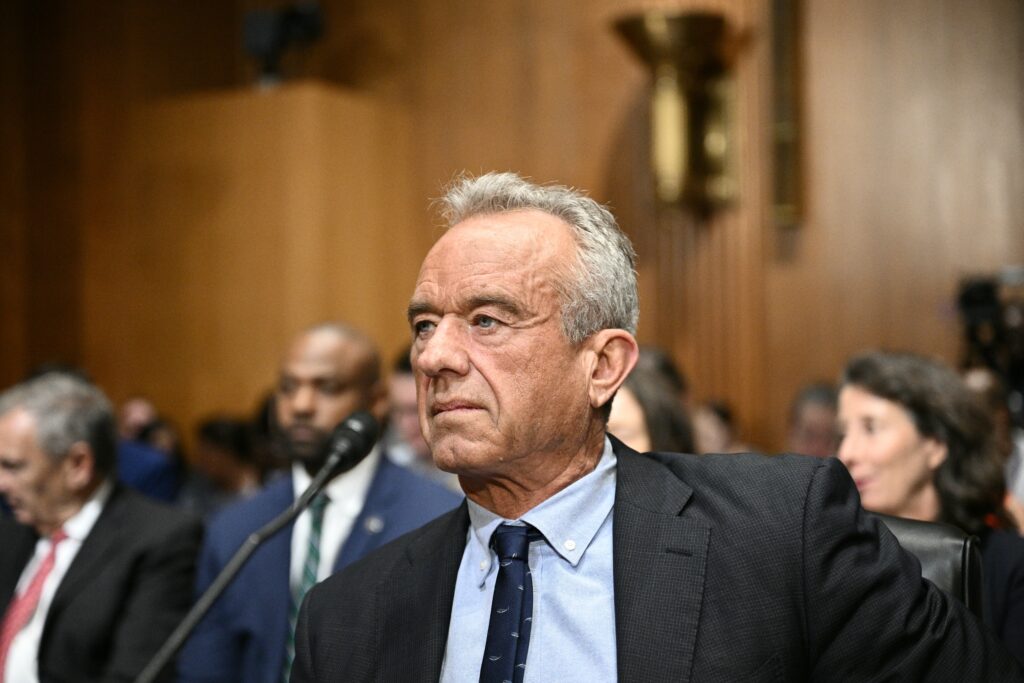
Beverage giant Coca-Cola has agreed to use real cane sugar in its US production, President Donald Trump announced Wednesday on social media.The company currently uses high-fructose corn syrup (HFCS) in its domestic beverages — a sweetener that has long drawn criticism from Health Secretary Robert F. Kennedy Jr. and his Make America Healthy Again movement.”I have been speaking to Coca-Cola about using REAL Cane Sugar in Coke in the United States, and they have agreed to do so,” Trump wrote on his Truth Social platform.”I’d like to thank all of those in authority at Coca-Cola. This will be a very good move by them — You’ll see. It’s just better!”The US president did not explain what motivated his push for the change, which would not impact his well-known favorite beverage, Diet Coke.Since his return to the White House, Trump has re-installed a special button in the Oval Office which summons a helping of the sugar-free carbonated drink.Coca-Cola did not immediately confirm the ingredient shift.”We appreciate President Trump’s enthusiasm for our iconic Coca‑Cola brand. More details on new innovative offerings within our Coca‑Cola product range will be shared soon,” the company said in a short statement.HFCS became popular in the 1970s, with its use skyrocketing thanks to government subsidies for corn growers and high import tariffs on cane sugar.Any shift away from corn is likely to draw backlash in the Corn Belt, a Midwestern region that has been a stronghold of support for Trump.Both HFCS and sucrose (cane sugar) are composed of fructose and glucose. However, they differ structurally: HFCS contains free (unbonded) fructose and glucose in varying ratios — 55/45 in soft drinks — while sucrose consists of the two sugars chemically bonded together.These structural differences, however, don’t appear to significantly affect health outcomes. A 2022 review of clinical studies found no meaningful differences between HFCS and sucrose in terms of weight gain or heart health.The only notable distinction was an increase in a marker of inflammation in people consuming HFCS. Overall, both sweeteners appear similarly impactful when consumed at equal calorie levels.Despite this, Mexican Coke — which is made with cane sugar — is often sold at a premium in US stores and prized for its more “natural” flavor.Trump’s prized Diet Coke is sweetened with aspartame — a compound classified as a “possible carcinogen” by the International Agency for Research on Cancer (IARC).

Trump slams own supporters as Epstein row grows

US President Donald Trump blasted his own supporters and “stupid” Republicans Wednesday as he went on the attack against anyone questioning his administration’s handling of the case of dead sex criminal Jeffrey Epstein.Trump took his most combative tone yet to try and shut down the issue, after days of struggling to brush off a conspiracy theory that his base has long embraced, but which he now claims is a Democratic hoax.Trump, 79, began on Wednesday by saying that “my PAST supporters have bought into this ‘bullshit’, hook, line and sinker”, in a post on his Truth Social network, and calling them “weaklings.”He later took aim at his own party.”It’s all been a big hoax, it’s perpetrated by the Democrats. And some stupid Republicans and foolish Republicans fall into the net and so they try and do the Democrats’ work,” Trump told reporters in the Oval Office.Trump is facing the most serious split in his loyal right-wing base since he returned to power, over claims that his administration is covering up lurid details of disgraced financier Epstein’s crimes to protect rich and powerful figures.Epstein died by suicide in a New York prison in 2019 — during Trump’s first term — after being charged with sex trafficking in a scheme where he allegedly groomed young and underage women for sexual abuse by the rich and powerful.The Trump-supporting far-right has long latched on to the scandal, claiming the existence of a still-secret list of Epstein’s powerful clients and that the late financier was in fact murdered in his cell as part of a cover-up.Trump supporters expected the Republican to answer their questions on his return to office this January but now find themselves being told the conspiracy theories are false.The Justice Department and FBI said in a memo made public earlier this month there is no evidence that the disgraced financier kept a “client list” or was blackmailing powerful figures.They also dismissed the claim that Epstein was murdered in jail, confirming his death by suicide, and said they would not be releasing any more information on the probe.- Trump’s changing tune -Trump doubled down when he faced repeated questions on the issue Wednesday during a visit with Bahrain’s visiting crown prince, pinning the blame for the wild conspiracy theories on his opponents.He then sought to deflect, rattling off what he said were a list of his economic and foreign policy achievements and complaining that people were instead “talking about a guy who obviously had some very serious problems who died three, four years ago.””And the sad part, it is people that are really doing the Democrats work. They’re stupid people.”Asked if his post describing supporters who questioned the White House’s line as “past” was effectively disowning them, Trump replied: “I lost a lot of faith in certain people, yes.”Trump is one of the many currently famous people who were formerly friends with Epstein, but denies having gone to his notorious US Virgin Islands home.He said ahead of his election he would have “no problem” releasing files on the case.But his administration’s attempts to brush the issue under the carpet instead have sparked fury among supporters.Beyond that, the issue has opened a schism within his administration, sparking a fiery blow-up between Attorney General Pam Bondi and Deputy FBI Director Dan Bongino, who is said to be considering resigning.Trump on Wednesday reiterated that Bondi could release “whatever’s credible” in the files.But criticism of Trump’s handling of the issue continued — even from some of his closest allies.Republican Senator Ted Cruz told reporters: “I have long said we should release everything.”Retired general Michael Flynn, Trump’s former national security advisor in his first term who resigned after lying to the FBI about his contacts with Russia, said the “roll out of this was terrible, no way around that.””It is NOT about Epstein or the left. It is about committing crimes against CHILDREN,” added Flynn, a frequent stoker of conspiracy theories whom Trump appointed to a board overseeing US military service academies back in March.

October execution date set for Texas man in ‘shaken baby’ case

A Texas judge on Wednesday set a new execution date for an autistic man convicted in a problematic “shaken baby” case.Judge Austin Reeve Jackson set October 16 as the date for Robert Roberson to be executed by lethal injection for the 2002 death of his two-year-old daughter, Nikki.Roberson, 58, had been scheduled to die on October 17 of last year at the state penitentiary in Huntsville but his execution was put on hold after he was subpoenaed to testify before a Texas House of Representatives committee.The Texas Supreme Court temporarily stayed his execution in response to the extraordinary subpoena from state lawmakers looking into Roberson’s controversial conviction and the use of “junk science” in criminal prosecutions.A bipartisan group of 86 Texas lawmakers had urged clemency for Roberson, citing “voluminous new scientific evidence” that cast doubt on his guilt.Roberson would be the first person executed in the United States based on a diagnosis of shaken baby syndrome, according to his lawyers.His case has drawn the attention of not only Texas lawmakers but also best-selling American novelist John Grisham, medical experts and the Innocence Project, which works to reverse wrongful convictions.Also among his supporters is the man who put him behind bars — Brian Wharton, the former chief detective in the town of Palestine — who has said “knowing everything that I know now, I am firmly convinced that Robert is an innocent man.”Gretchen Sween, one of Roberson’s attorneys, criticized the decision to set an execution date while the Texas Court of Criminal Appeals is considering new evidence in the case.”Texans should be outraged that the court has scheduled an execution date for a demonstrably innocent man,” Sween said in a statement.”Everyone who has taken the time to look at the evidence of Robert Roberson’s innocence… has reached the same conclusion: Nikki’s death was a terrible tragedy.”Robert did not kill her. There was no crime.” Roberson has always maintained his innocence and his lawyers said his chronically ill daughter died of natural and accidental causes, not abuse.The diagnosis of shaken baby syndrome, made at the hospital where Roberson’s daughter died, was erroneous, they said, and the cause of death was pneumonia, aggravated by doctors prescribing improper medication.Roberson’s autism spectrum disorder, which was not diagnosed until 2018, also contributed to his arrest and conviction, according to his lawyers.There have been 26 executions in the United States this year, including four in Texas.

Goldman Sachs profits jump as CEO eyes more merger activity

Goldman Sachs reported a jump in second-quarter profits Wednesday behind significant increases in financial advisory revenues that chief executive David Solomon said could presage an uptick in dealmaking.”Anecdotally, the level of dialogue is significantly increased,” Solomon told analysts on a conference call after the investment bank’s earnings surpassed analyst estimates.There is a greater “confidence level on the part of CEOs, that significant scaled industry consolidation is possible,” said Solomon, who attributed the shift to the Trump administration’s more favorable posture towards mergers compared with regulators in the Biden administration.Later in an interview with CNBC, Solomon also said he was sensing a “little bit of an acceleration” in the economy as sentiment has improved. In April he warned of increased recession as President Donald Trump’s aggressive initial tariff launch roiled markets.The comments came as the big US investment bank scored a 20 percent increase in profits to $3.5 billion compared with the year-ago period, easily topping analyst expectations.Revenues rose 15 percent to $14.6 billion.Goldman said increases in advisory fees reflected strength in the Americas, Europe, the Middle East and Africa.Its investment banking fees backlog rose compared with the end of the first quarter, suggesting more mergers and acquisitions (M&A) and initial public offerings lie ahead.In its markets division, Goldman’s gains were particularly pronounced in equities, where it enjoyed significantly higher revenues in financing and “intermediation,” where Goldman acts as a middleman between two parties in a transaction.These increases helped to offset lower revenues in Goldman’s Asset and Wealth Management business.Goldman’s strong results — which echo those at JPMorgan Chase, Citigroup and other large banks this week — add to the industry’s momentum at a time when the Trump administration has signaled regulatory relief expected to free up billions of dollars in capital that had been required after the 2008 financial crisis. – Tariff uncertainty -During the conference call, Solomon described the M&A market as “remarkably resilient.” Year-to-date dealmaking volumes are running 30 percent over the same period in 2024, even after sluggish activity in the first half of the quarter.Solomon pointed to NRG’s $12 billion acquisition of energy assets from LS Power Equity Advisors and Salesforce’s $8 billion purchase of Informatica as reflective of deal acceleration.Bankers had been bullish on dealmaking after Trump’s November election victory. But in the first quarter, investment banks said such activity was placed on the backburner as the White House focused on fast-changing trade policy. Executives at rival financial services companies expressed hope Tuesday for more deals, with clients opting to charge ahead despite tariff uncertainty. Trump has threatened steep tariff increases on countries that don’t reach trade deals with Washington.Solomon expressed measured optimism about the economy.”It’s hard to say that confidence is not higher on July 15 than it was on May 15,” Solomon told CNBC. “And if confidence is higher, you’re going to see that in behavior.”Shares of Goldman Sachs rose 0.4 percent in afternoon trading.

Trump says not firing Fed chair — but not ruling out

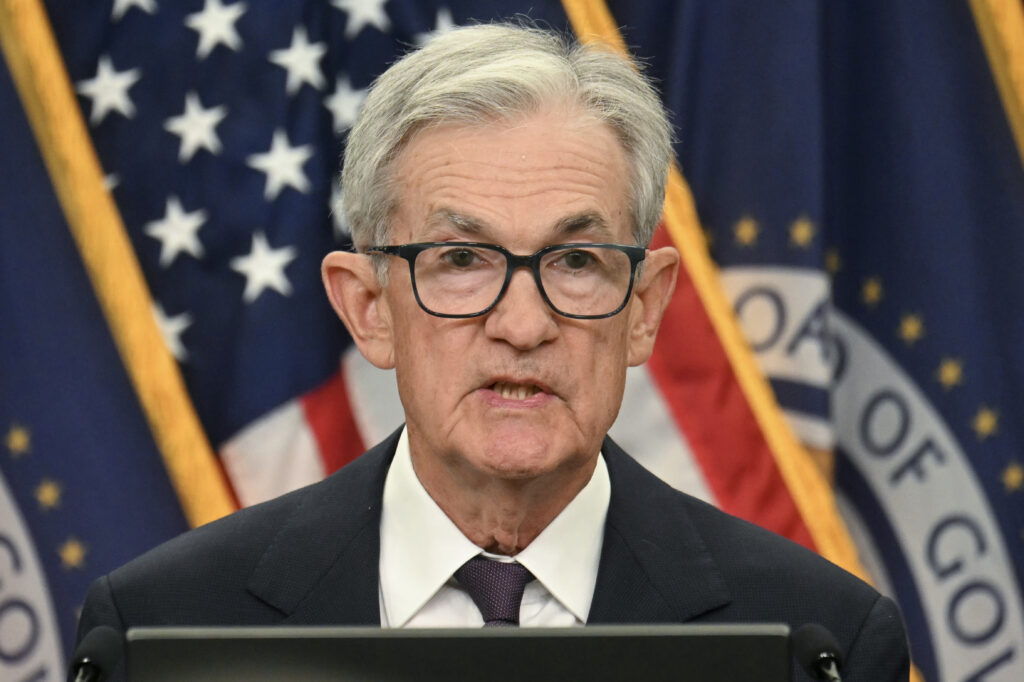
US President Donald Trump said Wednesday that he was not currently planning to fire Federal Reserve Chair Jerome Powell, but added that he did not rule it out.Trump’s mixed messaging, after months of escalating attacks on the independent central bank chief, sent the yield on the 30-year US Treasury bond surging above five percent.Asked about whether he would eject Powell, Trump said he is “doing a lousy job but no, I’m not talking about that.””I don’t rule out anything, but I think it’s highly unlikely,” he added.Trump noted that he would in any case be able to make a change at the top of the Fed when Powell’s term ends next year.”We’ll pick somebody that’s good,” Trump said. “We want to see lower interest rates.”Powell’s term at the helm of the US central bank does not conclude until May 2026, and his term as a Fed governor is up at a later date.The Fed chair has said that he did not plan to step down early, and considers the central bank’s independence over monetary policy to be a matter of law.A Supreme Court order recently suggested that Fed officials cannot be taken out of their jobs over policy disagreements, meaning they have to be removed “for cause,” which could be interpreted to mean wrongdoing.- Fireable offense? -The US leader has repeatedly lashed out at Powell for not lowering interest rates more quickly, calling the central banker a “numbskull” and “moron” recently.Late Tuesday, Trump suggested that a $2.5 billion renovation plan at the Fed could be sufficient cause to force Powell out. Asked by a reporter if the spending was a fireable offense, Trump said: “I think it sort of is.”The US leader on Wednesday floated the possibility of “fraud” involved with the renovation, but provided no details substantiating the allegation.The president has received political backing from his party for firing the Fed chair, US media reported Wednesday, noting that he told a room of Republican lawmakers that he would do so.A White House official told CNBC: “They expressed approval for firing him. The president indicated he likely will soon.”The New York Times reported that Trump showed off a draft letter to oust Powell at his meeting with about a dozen House Republicans late Tuesday, although the president said Wednesday that he only “talked about the concept” of removing Powell instead.Trump added Wednesday that many people want the top job at the Fed, saying: “I think it’s one of the easiest jobs in government, you show up once a month and you make a statement about where the economy is going, and we’re going to raise or lower interest rates.”Financial markets took a hit after reports about Trump’s plans, although they recouped some losses after his later remarks.The dollar initially fell by one percent against the euro before regaining ground, while safe haven asset gold logged gains.Wall Street’s main indexes stumbled, while the yield on the 30-year US bond surged on market worries.The Dow Jones Industrial Average was flat while the broad-based S&P 500 Index and tech-focused Nasdaq both lost 0.1 percent.

Trump says Indonesia to face 19% tariff under trade deal

US President Donald Trump said Tuesday that he had struck a trade pact with Indonesia resulting in significant purchase commitments from the Southeast Asian country, following negotiations to avoid steeper tariffs.Indonesian goods entering the United States would face a 19 percent tariff, Trump said in a post on his Truth Social platform. This is significantly below the 32 percent level the president earlier threatened.”As part of the Agreement, Indonesia has committed to purchasing $15 Billion Dollars in US Energy, $4.5 Billion Dollars in American Agricultural Products, and 50 Boeing Jets, many of them 777’s,” Trump wrote.Boeing shares closed down 0.2 percent after the announcement.The Trump administration has been under pressure to wrap up trade pacts after promising a flurry of deals recently, as countries sought talks with Washington to avoid the US president’s tariff plans.But Trump has so far only unveiled other deals with Britain and Vietnam, alongside an agreement to temporarily lower tit-for-tat levies with China.Last week, Trump renewed his threat of a 32 percent levy on Indonesian goods, saying in a letter to the country’s leadership that this would take effect August 1.It remains unclear when the lower tariff level announced Tuesday will take effect for Indonesia. The period over which its various purchases will take place was also not specified.Trump said on social media that under the deal, which was finalized after he spoke with Indonesian President Prabowo Subianto, goods that have been transshipped to avoid higher duties would face steeper levies.He separately told reporters that other deals were in the works, including with India, while talks with the European Union are continuing.Indonesian presidential spokesman Hasan Nasbi said Wednesday the deal was “progress that cannot be called small”.”It is an extraordinary negotiation conducted directly by our President with President Donald Trump,” he said, confirming the new 19 percent rate.He told AFP Prabowo would deliver a statement about the deal on Wednesday afternoon after landing from a visit to Europe.Indonesia’s former vice minister for foreign affairs, Dino Patti Djalal, told a Foreign Policy event Tuesday that government insiders had indicated they were happy with the new deal.- Tariffs drive -Trump in April imposed a 10 percent tariff on almost all trading partners, while announcing plans to eventually hike this level for dozens of economies, including the EU and Indonesia.But days before the steeper duties, customized to each economy, were due to take effect, he pushed the deadline back from July 9 to August 1. This marked his second postponement of the elevated levies.Instead, since early last week, Trump has been sending letters to partners, setting out the tariff levels they would face come August.So far, he has sent more than 20 such letters including to the EU, Japan, South Korea and Malaysia.Canada and Mexico, both countries that were not originally targeted in Trump’s “reciprocal” tariff push in April, also received similar documents outlining updated tariffs for their products.But existing exemptions covering goods entering the United States under a North American trade pact are expected to remain in place, a US official said earlier.Trump has unveiled blanket tariffs on trading partners in part to address what his administration deems as unfair practices that hurt US businesses.Analysts have warned that without trade agreements, Americans could conclude that Trump’s strategy to reshape US trading ties with the world has not worked.”In the public’s mind, the tariffs are the pain, and the agreements will be the gain. If there are no agreements, people will conclude his strategy was flawed,” William Reinsch, senior adviser at the Center for Strategic and International Studies, previously told AFP.

‘Epstein files’ explained: Why Trump is under pressure

A perceived lack of transparency over the US investigations into notorious sex offender Jeffrey Epstein has carved a rare chasm between President Donald Trump and his typically loyal Republican base.As Trump struggles to quell his supporters’ obsessions with the case — one long surrounded by conspiracy theories — AFP outlines its history and why it has caused so much outrage.- Origins of the Epstein case -Jeffrey Epstein, a wealthy American financier, was first charged with sex offenses in 2006 after the parents of a 14-year-old girl told police that he had molested their daughter at his Florida home.He avoided federal charges — which could have seen him face life in prison — due to a controversial plea deal with prosecutors that saw him jailed for just under 13 months.In July 2019, he was arrested again in New York and charged with trafficking dozens of teenage girls and engaging in sex acts with them in exchange for money. Prosecutors said he worked with employees and associates to ensure a “steady supply of minor victims to abuse.”Epstein pleaded not guilty to the charges against him. On August 10, 2019, while in custody awaiting trial, authorities said he was found dead in his prison cell after hanging himself.A separate case against Epstein’s girlfriend Ghislaine Maxwell, who was jailed in 2022 for helping him abuse girls, detailed Epstein’s connections with high-profile figures like Britain’s Prince Andrew and former US president Bill Clinton. Both have denied any wrongdoing.- Why are there conspiracy theories? -Some people believe that authorities are concealing details about the Epstein case to protect rich and powerful elites who associated with him, including Trump.Those ideas have gripped Trump’s “Make America Great Again” (MAGA) movement — but demands for more transparency have crossed the political aisle.  One key theory centers on a rumored client list of individuals who committed sex offenses alongside Epstein. The Trump administration has insisted that no such list exists.Skeptics also allege suspicious circumstances in Epstein’s death such as the security cameras around his cell apparently malfunctioning on the night he died, alongside other irregularities.- Trump and the Epstein case -Trump, who as a New York property magnate rubbed shoulders with Epstein, said when re-running for president that he would “probably” release files related to the case.But since taking office, many of Trump’s supporters have been disappointed by what they see as a failure to deliver. The 79-year-old himself was dragged into the conspiracy theories after his former advisor Elon Musk claimed in June — in a now-deleted X post — that Trump was “in the Epstein files.”The Trump administration’s efforts to appease demands for a full disclosure of the so-called Epstein files have largely fallen short.A bundle released in February that promised to shed light on the Epstein case contained little new information. Meanwhile, an almost 11-hour video published this month to dispel theories Epstein was murdered fell flat. The camera angle showed a section of the New York prison on the night Epstein died, but appeared to be missing a minute of footage, fueling more speculation online.And a memo from the Justice Department and FBI last week saying the Epstein files did not contain evidence that would justify further investigation was met by calls for the heads of each agency to resign.- What comes next? -Trump has been towing a delicate line — saying he supports the release of any “credible” files related to Epstein while dismissing the case as “pretty boring stuff.”But even the normally authoritative president seems unable to arrest the disruption, as critics and even key allies call for more transparency.Mike Johnson, the Republican speaker of the House, has not followed Trump’s line on the issue and has instead urged the Justice Department to make public any documents linked to Epstein.Meanwhile, Democrats have seized on the rift between Trump and his party by demanding his administration publish the full evidence held by prosecutors in their case against Epstein.