AFP USA

US singer Chris Brown denies more charges in UK assault case

American R&B singer Chris Brown on Friday pleaded not guilty in a UK court to further charges stemming from an alleged London nightclub brawl in 2023.Fans of the singer, who is in the middle of an international tour, packed the public gallery at London’s Southwark Crown Court.Brown, who had a troubled relationship with Barbadian singer Rihanna, turned to face his supporters at the end of the hearing, waving and blowing them a kiss.”I love you Chris,” one of them said.He formally entered not guilty pleas to charges of assault occasioning actual bodily harm and having an offensive weapon — a bottle — in a public place.Brown, who is on £5.0 million ($6.7 million) bail, spent nearly a week in jail in May before being released.Police arrested him at a five-star hotel in the northwestern city of Manchester hours after he reportedly flew in by private jet.Judge Tony Baumgartner earlier gave him the green light to continue his scheduled tour, which began on June 8 in Amsterdam.Under the terms of his bail, Brown will forfeit the £5.0 million guarantee if he fails to return for court proceedings.- Not guilty pleas -At a hearing last month, Brown entered a not guilty plea to the more serious charge of attempting to cause grievous bodily harm with intent.The charges all relate to the same alleged incident at Tape, an exclusive private members’ club in Hanover Square in London, on February 19, 2023, while Brown was touring in the UK.The victim was allegedly struck several times with a bottle before being pursued, punched and kicked.Brown appeared in the dock on Friday with co-defendant Omololu Akinlolu, 39, also a US national, with whom he is jointly charged.Akinlolu also entered a not guilty plea to the same actual bodily harm charge.At the earlier hearing he denied the charge of attempting to cause grievous bodily harm.Both men are expected to stand trial in October 2026.

Son of Mexico’s ‘El Chapo’ set to plead guilty in US drugs case

A son of Mexican drug kingpin Joaquin “El Chapo” Guzman is expected to plead guilty to narcotics charges in a Chicago court Friday as part of a deal in return for a reduced sentence.Nicknamed “El Raton,” or “The Mouse,” Ovidio Guzman signed a deal dated June 30 indicating he would enter a guilty plea to avoid a jury trial and a potentially harsher sentence if convicted.During a hearing scheduled to be held in a Chicago court, the guilty plea is expected to be formalized after months of negotiation with the prosecution. Ovidio Guzman, 35, is accused of conspiring in a continuing criminal enterprise, importing and distributing fentanyl, laundering money, and using firearms. His guilty plea will likely result in a far shorter prison term than the life sentence given to his father El Chapo following a high-profile trial held in 2018.He could offer US authorities “valuable information” about the cartel and its protectors, Mike Vigil, former head of operations for the Drug Enforcement Administration, told AFP.Ovidio Guzman gained prominence in October 2019 when Mexican authorities detained him — only to release him later on orders from then president Andres Manuel Lopez Obrador amid a standoff between law enforcement and gang members.Ovidio Guzman was recaptured in January 2023, while Lopez Obrador was still in office, and later extradited to the United States.US authorities accuse Ovidio and his three brothers of leading Los Chapitos, a faction of the Sinaloa Cartel designated by the administration of US President Donald Trump as a global “terrorist” organization. His father, one of the world’s most infamous drug traffickers, is serving a life sentence in a US prison.The United States alleges Ovidio Guzman and his associates trafficked fentanyl into the country, where the opioid epidemic is linked to tens of thousands of deaths.The Sinaloa cartel is one of six Mexican drug trafficking groups that Trump has designated as terrorist organizations.Another son, Joaquin Guzman Lopez, was arrested after arriving in the United States last July on a private plane with cartel co-founder Ismael “El Mayo” Zambada, who claimed he had been kidnapped.The arrests sparked cartel infighting that has left more than 1,200 people dead and 1,400 missing in Sinaloa state, located in northwestern Mexico.In its aggressive policy against drug cartels, the Trump administration announced additional sanctions against Los Chapitos in June for fentanyl trafficking and increased the reward to $10 million for each of the fugitive brothers.

Honduran teen deported by US feels like foreigner in native country

Emerson Colindres had just finished high school when he was sent back to Honduras by the United States, a country that he had called home since he was eight years old.Now, like many other young deportees who emigrated to the United States as children, he is struggling to adapt to life in a homeland that feels foreign to him.The 19-year-old’s life changed dramatically on June 4, when he was arrested while attending an appointment with US Immigration and Customs Enforcement (ICE) in Cincinnati, Ohio.He had never been in trouble with the law before.After two weeks in prison, the teenager was put on a charter flight with other deportees and sent to Honduras.Colindres had left his home country in 2014 with his mother and sister to escape a life of poverty, entering the United States as undocumented immigrants.Since US President Donald Trump returned to the White House in January, thousands of young migrants have been deported to the countries where they were born, but which they barely know.Washington has deported 11,823 Hondurans this year, according to official figures from the Central American nation.Of those sent back, 2,846 were under the age of 20.- From Cincinnati to Guapinol -On the same day Colindres was detained, ICE notified his mother Ada Bell Baquedano and his 16-year-old sister Alison that they had a month to leave the United States.For years, the family had tried to obtain asylum or legal residency there, but without success.They now live in a small metal-roofed house belonging to Colindres’s grandmother in Guapinol, a hot and dusty village in the municipality of Marcovia, located in one of the poorest areas of Honduras.Colindres has no friends in the country where he was born.”I don’t know anyone, I don’t know what it’s like here,” he told AFP at an airport near the capital Tegucigalpa while waiting for his mother and sister, who returned to Honduras from the United States voluntarily.- ‘I miss everything’ -In the United States, Colindres’s family lived in a two-story apartment in Cheviot, a suburb of Cincinnati.His mother cleaned houses and sold food while Colindres attended a public high school, where he was a keen soccer player.”It’s hard to adapt (to Honduras) because I’m not used to it, but I have to,” Colindres said.”I miss everything about there,” he said, adding that he had planned to go to university to study psychology and play soccer, hoping to become a professional athlete.- Starting again -In the United States, Colindres had a promising future, his mother said.”He always had support from his coach and his soccer team,” the 38-year-old told AFP.”They were helping him to find a university. And they were also helping him coach children. Those people were a key part of Emerson’s life,” Baquedano said.”What harm can a kid who plays soccer, attends church and goes to school do to a country?”Before emigrating to the United States, Baquedano sold bread on the street, but she is not yet sure how she will earn a living in Honduras this time.”Right now, I’m trying to come to terms with what happened, then start making a new life here,” she said.

Trump to visit flood-ravaged Texas amid scrutiny

US President Donald Trump was set to visit Texas on Friday as questions mounted over the response to flash floods that have left at least 120 people dead, including dozens of children.The Republican leader and First Lady Melania Trump will meet first responders and local officials in central Texas’s Hill Country, a week after heavy rainfall and an overflowing river swept away houses, trees, cars and people.They were due around midday in Kerrville, a city in the worst-affected Kerr County where at least 96 people died.”I would have done it today, but we’d just be in their way,” Trump told reporters when asked on Sunday about visiting the impacted communities.The urgent search for more than 170 missing people, including five girls who were at summer camp, entered the eighth day as rescue teams combed through mounds of debris and mud.But with no live rescues reported this week, worries have swelled that the death toll could still rise.Trump has brushed off questions about the impact of his cuts to federal agencies on the response to the flood, which he described as a “100-year catastrophe” that “nobody expected.”On Thursday, Homeland Security Department head Kristi Noem defended the immediate response as “swift and efficient.”But she previously said Trump wanted to “upgrade the technologies” of the “ancient” weather warning system.- FEMA questions -The floods, among America’s deadliest in recent years, have also reopened questions about Trump’s plans to phase out disaster response agency FEMA in lieu of greater state-based responsibility.FEMA began its response to the Texas flash floods over the weekend after Trump signed a major disaster declaration to release federal resources.But the president has so far avoided addressing questions about its future. Noem insisted FEMA should be “eliminated” in its current form at a government review meeting on Wednesday.Officials in Kerr County, which sits astride the Guadalupe River in an area nicknamed “Flash Flood Alley,” said at least 36 children were killed in the flash floods that struck at the start of the Fourth of July weekend.Details have surfaced about reported delays of early alerts at a local level that could have saved lives.Experts say forecasters did their best and sent out timely and accurate warnings despite the sudden weather change.White House Press Secretary Karoline Leavitt also defended National Weather Service (NWS) alerts as “early and consistent.”- Special session -Kerr County Sheriff Larry Leitha said “it was between 4:00 or 5:00 (am) when I got notified” of incoming emergency calls.ABC News reported Thursday that at 4:22 am on July 4, a firefighter in Ingram, upstream of Kerrville, had asked the Kerr County Sheriff’s Office to alert residents of nearby Hunt to the coming flood.The network said its affiliate KSAT obtained audio of the call, and that the first alert did not reach Kerr County’s CodeRED system for a full 90 minutes.In some cases, it said, the warning messages did not arrive until after 10:00 am, when hundreds of people had already been swept away by raging waters.The flooding of the Guadalupe River was particularly devastating for summer camps on its banks, including Camp Mystic, where 27 girls and counselors died. Five other Mystic campers and a counselor remain missing.Governor Greg Abbott has scheduled a special session of the Texas Legislature to discuss the disaster, beginning July 21. Kerrville Police Sergeant Jonathan Lamb said the session would be “a starting point” for reviewing ways to improve warning systems for weather events.

Why is Trump lashing out at Brazil?

US President Donald Trump has announced a 50 percent tariff on Brazilian imports as he accused the country’s leftist leadership of orchestrating a “witch hunt” against his right-wing ally, former leader Jair Bolsonaro.In a letter Wednesday to counterpart Luiz Inacio Lula da Silva, Trump insisted that Bolsonaro’s trial — for allegedly plotting a coup to hold on to power after 2022 elections he lost — “should not be taking place.”Trump has historically reserved his tariff ire for countries with which the United States runs a negative trade balance. Brazil is not one.Analysts say ideological considerations, not economics, are behind the US president’s actions in defense of Bolsonaro, dubbed the “Trump of the Tropics.”- Firm friends -“Brazil came up on Trump’s radar now because Bolsonaro’s trial is advancing and there are Republican lawmakers who brought the issue to the White House,” Leonardo Paz, a political scientist at Brazil’s Getulio Vargas Foundation, told AFP. Eduardo Bolsonaro, the former president’s son and a Brazilian congressman, recently moved to the United States where he lobbies for pressure on Brasilia and the judges presiding over his father’s coup trial. Lula blames Bolsonaro’s son for troubling the bilateral waters, and Supreme Court Justice Alexandre de Moraes has ordered an investigation into whether the US-based campaign constitutes obstruction of justice.Moraes is an arch foe of Bolsonaro, who has labeled the justice a “dictator.”US Secretary of State Marco Rubio spoke in May of a “great possibility” of sanctions against Moraes, who has clashed repeatedly with rightwingers and former Trump ally Elon Musk in a quest to stamp out online disinformation.Bolsonaro calls Trump a “friend” and says they are both victims of “persecution.”- ‘Non-economic reasons’ -In his missive to Lula, Trump complained of “a very unfair trade relationship” with Brazil.But official Brazilian figures show a near two-decade sustained surplus in favor of the United States. Last year, it was almost $284 million.The United States is Brazil’s third-largest trading partner after China and the European Union. It imports mainly crude oil and semi-finished iron and steel products from the South American powerhouse.Brazil in turn primarily imports non-electric engines and machines, and fuel from up north.In a sign of Brazilian business jitters, the Sao Paulo Federation of Industries called Thursday for a “calm” response to the “non-economic reasons” for Trump’s tariffs.Lula has said Brazil would be willing to reciprocate, in spite of Trump’s warning of further escalation if it did so.- Free speech tussle -Trump also complained of Brazilian “attacks” on free speech and “hundreds of SECRET and UNLAWFUL censorship orders to US media platforms” issued by Brazil’s Supreme Court.Last month, the court toughened social media regulation, upping the accountability of platforms for user content in a groundbreaking case for Latin America on the spread of fake news and hate speech.Last year, Moraes blocked Musk’s X platform for 40 days for failing to comply with a series of court orders against online disinformation.He had also ordered the suspension in Brazil of Rumble, a video-sharing platform popular with conservative and far-right voices — including Trump’s son Don Jr. — over its refusal to block a user accused of spreading disinformation.Detractors accuse the judge of running a campaign to stifle free speech.- BRICS brawl -“It didn’t help that the BRICS summit was held in Brazil at a time a narrative exists in the United States portraying the bloc as anti-Western,” said Paz.Meeting in Rio de Janeiro, the group on Sunday spoke out against Trump’s “indiscriminate” tariff hikes, prompting the president to threaten further trade penalties.Members China, Russia and India refrained from hitting back, but Lula took it upon himself to defend the “sovereign” nature of BRICS governments, insisting: “We don’t want an emperor.”Behind the scenes, Brasilia has been negotiating with Washington for months to try and avoid the worst of Trump’s tariff war.A member of Lula’s entourage told AFP that Trump’s attack on Brazil was partly inspired by “discomfort caused by the strength of the BRICS,” whose members account for about half the world’s population and 40 percent of global economic output.

‘Hurting more than ever’: Immigration raids paralyze LA Fashion District

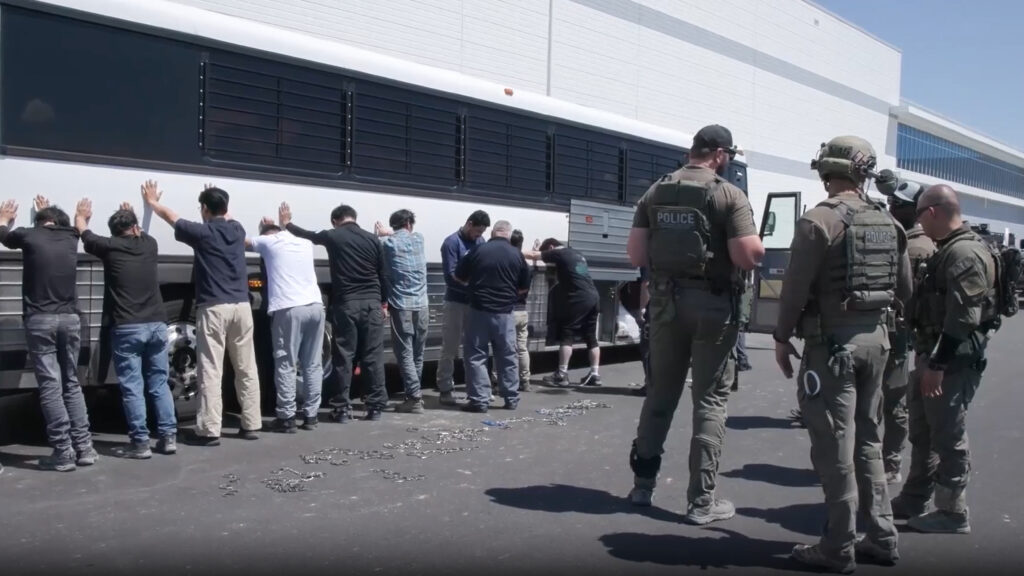
At Cuernavaca’s Grill, a Mexican restaurant in the Fashion District of downtown Los Angeles, owner Nayomie Mendoza is used to seeing customers line up for lunch.But the vibrant neighborhood filled with boutiques and shops has become a ghost town amid raids by US Immigration and Customs Enforcement (ICE) agents carrying out President Donald Trump’s hard-line policy of sweeping up and deporting undocumented immigrants.Even in the early summer season when tourists flock to the southern California city, Mendoza is left staring at empty tables.”A lot of our neighbors are afraid to go out” because of the ICE presence in Los Angeles, Mendoza said, with the city boasting a significant Latino workforce.”Our sales… they’ve been down by 80 percent,” Mendoza told AFP.”It’s hurting more than ever.”The “saving grace” for the restaurant in this time has been delivery orders, she said.- ‘Worse than COVID’ -As a so-called “sanctuary city” with hundreds of thousands of undocumented people, Los Angeles has been in the crosshairs of the Trump administration since the Republican returned to power in January.After ICE raids spurred unrest and protests last month, Trump dispatched the National Guard and US Marines to quell the disruption.Washington does not seem to be backing down anytime soon.”Better get used to us now, because this is going to be normal very soon. We will go anywhere, anytime we want in Los Angeles,” US Border Patrol official Gregory Bovino told broadcaster Fox News on Monday.”The federal government is not leaving LA,” he added.Local businesses dependent on foot traffic are the collateral damage of the raids, Mendoza said.”This is probably worse than COVID,” she said, referring to mandatory lockdowns during the pandemic.Manuel Suarez, a street vendor near Cuernavaca’s Grill, agreed.”Now is worse because during the pandemic, even though it was a pandemic, there were sales,” said the toy vendor, who has worked in the Fashion District for 35 years.”Now it’s completely in crisis,” he told AFP.Suarez said many merchants have closed their stores as a precaution as raids intensify in the city, or have otherwise cut the number of employees due to drops in sales.- ‘Cat and mouse’ -“Here in downtown and in LA, there’s been a lot of raids because of ICE, so it has brought fear into our Latin community,” said Jose Yern, manager of Anita’s Bridal Boutique, a Fashion District shop specializing in dresses for Latin American “quinceanera” coming-of-age ceremonies.”They are scared to come in (to the district). But if they’re coming in, they’re coming specifically to a specific store, doing what they need to do, and then heading back home,” he added.Shopkeepers communicate with one another via walkie-talkies, reporting any noise, helicopter or law enforcement presence to warn those who are undocumented.”It’s unfortunate that the government does not understand that when it attacks us, we all lose,” said a vendor who did not want to disclose his name for privacy reasons.”But we are not leaving. What’s going to happen here is that we are going to be playing cat and mouse. Let’s see who tires out first.”

US targets attempts to dodge Trump tariffs with China in crosshairs

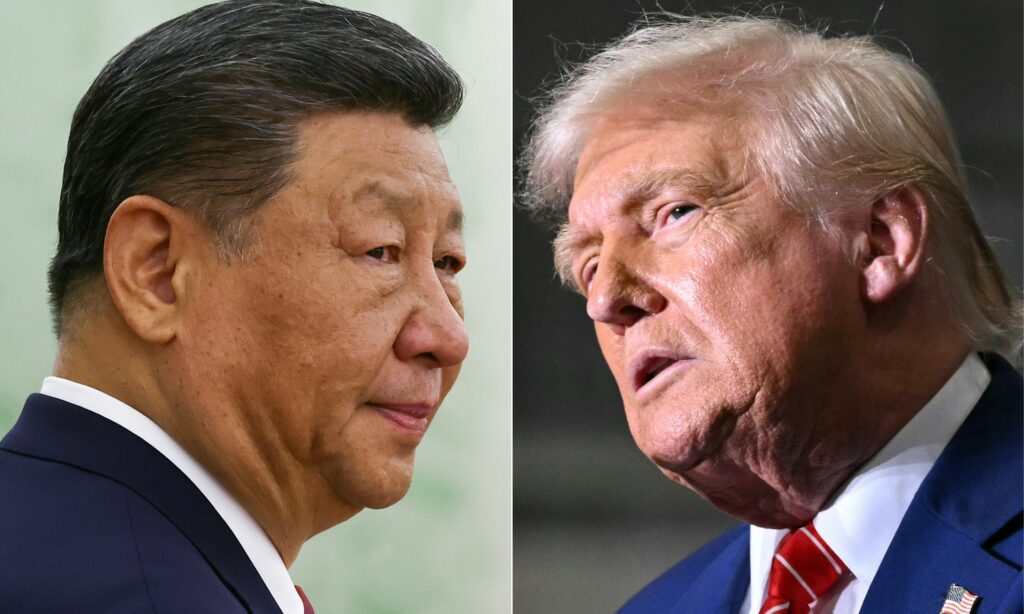
As President Donald Trump ramps up tariff threats on US trading partners, his administration is taking aim at a tactic said to be used by Chinese companies to dodge the levies by moving goods through third countries.The issue is “transshipping,” or having products pass through a country to avoid harsher trade barriers elsewhere, a practice Washington has accused Chinese companies of.”Goods transshipped to evade a higher Tariff will be subject to that higher Tariff,” Trump warned in letters issued since Monday, days after unveiling a trade pact with Vietnam that promised steeper duties for such goods too.”The clause is less about Vietnam per se and more about signaling that rules-of-origin games across the broader Asian production network will attract a premium penalty,” said Barath Harithas, senior fellow at the Center for Strategic and International Studies.He told AFP the White House is likely making two points at once: closing a back door to China and putting the rest of Asia on notice.Noting that Vietnam was “the single biggest winner from Chinese supply-chain diversion since the first Trump tariffs in 2018,” Harithas said the US administration is keen to avoid a repeat of this situation.Ten of the 14 countries first to receive Trump’s tariff letters this week were in Asia and mostly Southeast Asia, which sits between Chinese component suppliers and western consumer markets.”Washington’s message seems to be: ‘Either help us police Chinese evasion or absorb higher duties yourselves,'” Harithas said.- ‘Whack-a-mole’ -“I think it is clear that transshipment of Chinese goods so far this year is massive,” said Robin Brooks, a senior fellow at the Brookings Institution.While there has been a drop in direct exports from China to the United States, this is “more than offset by” trade shifts elsewhere, he told AFP. In a recent report, Brooks noted that Chinese exports to both Thailand and Vietnam started surging “anomalously” in early 2025 as Trump began threatening widespread tariffs.It is unclear if all of these goods end up in the United States.But he cast doubt on the likelihood that domestic demand in both these countries rocketed right around the time that Washington imposed fresh duties, saying tariffs tend to instead bog down global trade due to uncertainty.Similarly, Chinese exports to the European Union, he said, also rose markedly in early 2025.”It’s a little bit like whack-a-mole,” Brooks said, adding that as long as Washington maintains different tariff rates for different countries, business will try to take advantage of the lowest levels.This in turn could be a reason that US inflation remains muted despite wide-ranging duties including a 10 percent rate on almost all US trading partners, and levels of up to 50 percent on sector-specific imports like steel and aluminum.Transshipment is not a China-specific issue. Concerns also flared in recent years over goods bound for Russia — skirting European export controls — after Moscow’s invasion of Ukraine.- Complications -But it is difficult to draw a line defining product origins.While Washington may take issue with Chinese-headquartered companies moving production facilities to third countries, for example, many firms genuinely export components for value-added manufacturing to take place.In Vietnam, raw materials from the world’s second biggest economy are the lifeblood of manufacturing industries. There is massive uncertainty over how an incoming 40 percent US tariff on goods passing through the country — double the 20 percent rate applied to Vietnamese goods — might be applied.Emily Benson, head of strategy at Minerva Technology Futures, said the Trump administration appears to be trying to simplify an otherwise complex web of legal definitions.”But whether or not that will work for other trading partners remains to be seen,” she said.While products from China might be impacted, she believes the White House’s intentions stretch beyond Beijing.”They’re trying to load a bunch of negotiations on to this reciprocal (tariffs) vehicle,” she added. “And they want other countries to play by the rules.”

Trump says Canada to face 35 percent tariff rate starting Aug 1

Canada will face a 35 percent tariff on exports to the United States starting August 1, President Donald Trump said Thursday in a letter to Prime Minister Mark Carney.It was the latest of more than 20 such letters issued by Trump since Monday, as he continues to pursue his trade war threats against dozens of economies.Canada and the US are locked in trade negotiations in hopes to reach a deal by July 21 and the latest threat seemed to put that deadline in jeopardy.Canada and Mexico are both trying to find ways to satisfy Trump so that the free trade deal uniting the three countries – known as the USMCA – can be put back on track.The United States-Mexico-Canada Agreement replaced the previous NAFTA accord in July 2020, after Trump successfully pushed for a renegotiation during his first term in office.It was due to be reviewed by July next year, but Trump accelerated the process by launching his trade wars after he took office in January.Canadian and Mexican products were initially hard hit by 25 percent US tariffs, with a lower rate for Canadian energy.Trump targeted both neighbors saying they did not do enough on illegal immigration and the flow of illicit drugs across borders.But he eventually announced exemptions for goods entering his country under the USMCA, covering large swaths of products. Potash, used as fertilizer, got a lower rate as well.The letter on Thursday came despite what had been warming relations between Trump and Carney.The Canadian leader came to the White House on May 6 and had a cordial meeting with Trump in the Oval Office. They met again at the G7 summit last month in Canada, where leaders pushed Trump to back away from his punishing trade war. 

Released pro-Palestinian protest leader sues Trump for $20 mn

Mahmoud Khalil, one of the most prominent leaders of US pro-Palestinian campus protests, sued the Trump administration Thursday for $20 million over his arrest and detention by immigration agents.Khalil, a legal permanent resident in the United States who is married to a US citizen and has a US-born son, had been in custody following his arrest in March.The 30-year-old was freed from a federal immigration detention center in Louisiana last month, hours after a judge ordered his release on bail.”The administration carried out its illegal plan to arrest, detain, and deport Mr. Khalil ‘in a manner calculated to terrorize him and his family,’ the claim says,” according to the Center for Constitutional Rights which is backing Khalil.Khalil suffered “severe emotional distress, economic hardship (and) damage to his reputation,” the claim adds.The Columbia University graduate was a figurehead of student protests against US ally Israel’s war in Gaza, and the Trump administration labeled him a national security threat.Khalil called the lawsuit a “first step towards accountability.””Nothing can restore the 104 days stolen from me. The trauma, the separation from my wife, the birth of my first child that I was forced to miss,” he said in the statement.”There must be accountability for political retaliation and abuse of power.”Khalil has previously shared his “horrendous” experience in detention, where he “shared a dorm with over 70 men, absolutely no privacy, lights on all the time.”Assistant Department of Homeland Security Secretary Tricia McLaughlin said “the Trump Administration acted well within its statutory and constitutional authority to detain Khalil, as it does with any alien who advocates for violence, glorifies and supports terrorists, harasses Jews, and damages property.”President Donald Trump’s government has justified pushing for Khalil’s deportation by saying his continued presence in the United States could carry “potentially serious adverse foreign policy consequences.”Khalil’s detention came amid Trump’s campaign against top US universities in recent months, with the president facing off against Columbia, Harvard and other schools over foreign student enrollment while cutting federal grants and threatening to strip accreditation. Beyond his legal case, Khalil’s team has expressed fear he could face threats out of detention.

‘Bad day:’ Trump reflects on assassination bid one year later

US President Donald Trump says “mistakes were made” but he’s satisfied with the investigation into his near-assassination a year ago, as the Secret Service announced disciplinary actions Thursday against six staff members.In excerpts of an interview on Fox News’ “My View with Lara Trump” show, airing Saturday, Trump, 79, said the elite close-protection service “had a bad day.””There were mistakes made. And that shouldn’t have happened,” Trump said in the interview conducted by his daughter-in-law Lara Trump, who has her own show on the Trump-friendly news channel.The Republican — whose ear was nicked by a bullet while he addressed an election rally in Butler, Pennsylvania — noted that the would-be assassin had access to a “prime building” overlooking the rally.One bystander was killed and two other people in addition to Trump were wounded before a counter-sniper killed the gunman — 20-year-old Thomas Crooks.The sniper “was able to get him from a long distance with one shot. If he didn’t do that, you would have had an even worse situation,” Trump said. “His name is David and he did a fantastic job.”Speaking of the post-incident investigation and “the larger plot,” Trump said “I’m satisfied with it.””It was unforgettable,” he said, recalling the drama. “I didn’t know exactly what was going on. I got whacked. There’s no question about that. And fortunately, I got down quickly. People were screaming.”The Secret Service said in a statement that the July 13, 2024, attack was “nothing short of a tragedy” and “an operational failure that the Secret Service will carry as a reminder of the critical importance of its zero-fail mission.”The agency cited communication, technical and human errors and said reforms were underway, including on coordination between different law enforcement bodies and establishment of a division dedicated to aerial surveillance.Six unidentified staff have been disciplined, the Secret Service said. The punishments range from 10 to 42 days suspension without pay and all six were put into restricted or non-operational positions.Among measures beefing up security, is an expansion of the fleet of armored golf carts to carry the president. Trump spends frequent weekends at his golf courses and in September last year was allegedly the target of a failed assassination plot while playing in Florida.”The agency has taken many steps to ensure such an event can never be repeated in the future,” Secret Service Director Sean Curran said in a statement.